Introduction
The 1908 young turk revolution and the 1911 Xinhai Revolution transpired in close temporal proximity. Nevertheless, both revolutions were curtailed due to their inadequate advancement during the period. On May 19, 1919, the commencement of the Turkish War of Independence, marked by Mustafa Kemal Atatürk’s arrival in Samsun, coincided with the Chinese youth’s uprising against imperialism on May 4. The success of the Turkish Revolution, marked by the victory in the War of Independence and the triumph of the Northern Expedition, coincided with the Kuomintang’s (KMT) ascension to power in China.
Following the Treaty of Nanjing, which concluded the First Opium War (1839-42), China endured a century characterized by humiliation and inequitable treaties, culminating in the Chinese Revolution of 1949. Chinese progressives and revolutionaries have drawn parallels between the Chinese Revolution and the Turkish Revolution in the early 20th century by assessing the historical and political contexts and the nations' stances against imperialism. The primary reason for this situation is that the Ottoman Empire and the Qing Dynasty, both formidable empires of their time, began to disintegrate concurrently, experienced semi-colonization by Western powers, and underwent revolutionary processes that occurred nearly simultaneously with analogous aims and objectives. The two states, located at the western and eastern extremities of the continent, were designated by the West as the “sick man of Asia.” The revolutionaries in both states sought measures to salvage and rejuvenate the failing state. The Turkish and Chinese revolutions, occurring concurrently, aimed to exchange insights and enhance their movements. Members of the Communist Party of China and Kuominang authored multiple papers highlighting the historical parallels between Mustafa Kemal Atatürk and Sun Yat-sen. This study aims to examine the perceptions of revolutionaries in China on Sun Yat-sen at the onset of the 20th century, as well as the historical connection between him and the Turkish Revolution and Atatürk. Keywords: China, Kemalist Revolution, Mustafa Kemal Atatürk, Sun Yat-sen, Xinhai Revolution. During this time, Western countries coerced the Qing Dynasty with the prospect of war and acquired several political and economic concessions, including customs advantages, rights to coastline and river navigation, as well as towns and ports (Wang, 2005Wang, D. (2005). China’s Unequal Treaties: Narrating National History. Lexington Books.; Jianlang, 2016Jianlang, W. (2016). Unequal Treaties and China. 1. Silkroad Press.). Following the onset of China’s subjugation by Western powers, initiated by the Opium War in 1840, many resistance movements against imperialism emerged, notably the Taiping Uprising, the Boxer Rebellion, the Xinhai Revolution of 1911, and the Chinese Revolution of 1949. Particularly following China’s defeat in the First Sino-Japanese War (1894-1895), the realization emerged that the nation should pursue reform and Western modernization.
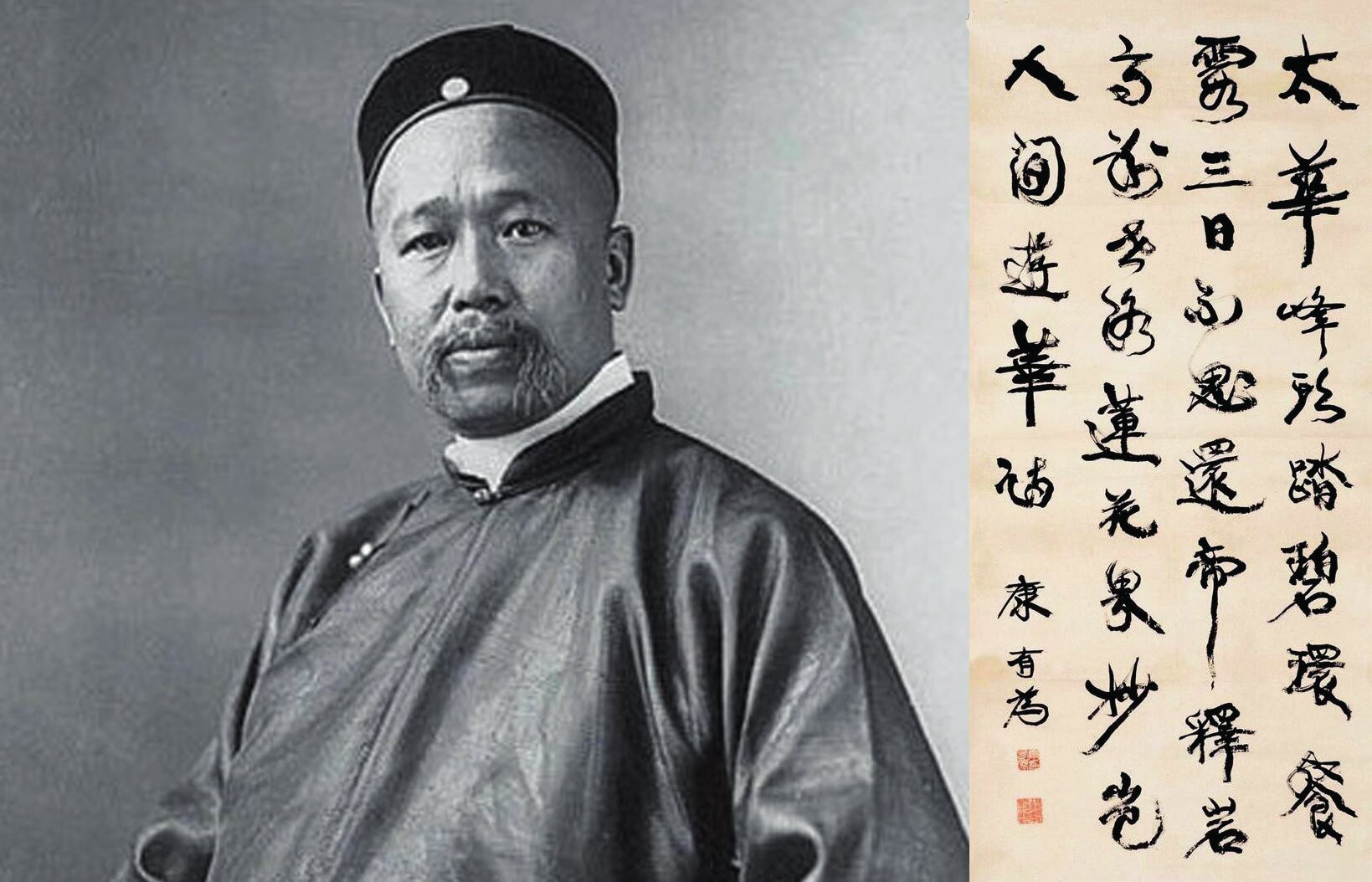
Kang Youwei, a Qing dynasty reformist, sent recommendations to Emperor Guangxu in 1898 advocating for the construction of a constitutional government (Fidan, 2013Fidan, G. (2013). Çin’den Görünen Osmanlı: Çinli Düşünür Kang Youwei’in Türk Seyahatnamesi. İstanbul: Yeditepe Yayınları.). Youwei reported that both empires were in decline; however, he was uncertain which would collapse first. He commended Midhat Pasha’s reforms amid the demise of the Ottoman Empire, highlighted the parallels between the Ottoman Empire and the Qing Dynasty, and asserted that Turkish reforms may serve as a model for the Chinese (Fidan, 2013: 10Fidan, G. (2013). Çin’den Görünen Osmanlı: Çinli Düşünür Kang Youwei’in Türk Seyahatnamesi. İstanbul: Yeditepe Yayınları.).
The 1906 Iranian Constitutional Revolution and the 1908 Young Turk Revolution inspired revolutionaries in China. Chinese revolutionaries not only commended the burgeoning revolutionary movement in Asia but also assimilated lessons from their errors (Ying, 1995: 81-82Ying, F. [ 樊英 ] (1995). 中国近代民族主义与亚洲民 族的觉醒 [Modern Chinese Nationalism and the Awakening of Asian Nations], 湘潭师范学院学报 [ Journal of Xiangtan Normal University ], Issue 5, 80- 83.). Sun Yat-sen asserted that the issue of China’s division by Western powers could solely be averted by revolution. He referenced the Young Turk Revolution and stated: China has been referred to as the ‘Sick Man of the Far East.’ However, the issue of splitting Turkey, the ‘Sick Man of the Near East,’ has been addressed by revolution. In what ways can China’s position differ?” (Wei, 1994Wei, J. L. (1994). Prescriptions for Saving China: Selected Writings of Sun Yat-sen. Hoover Instituion Press.).
Another instance is Song Jiaoren, a prominent figure in the Xinhai revolution, who shown a keen interest in the burgeoning Young Turk revolutionary movement. Jiaoren posited that China and the Ottomans have a shared destiny (Gong, 2023: 909-910Gong, Chen (2023). Revolutionaries on revolutionaries: how Chinese Xinhai revolutionaries and Young Turks viewed each other, Middle Eastern Studies, 59:6, 903-915). Hu Hanmin, a prominent leader of the Kuomintang, authored an article entitled “To Our Soldiers Regarding the Turkish Revolution” in the Kuomintang’s journal Minbao in 1910, wherein he referenced the Young Turk Revolution (Hu, 1910Hu, Ha. 胡汉民 (1910). 就土耳其革命告我国军人 [To Our Soldiers Regarding the Turkish Revolution]. 民报 [ Min bao ], 第 期, 1-25.). In the same edition, Minbao editors featured a seven-page news commentary entitled “Turkish Revolution” (Minyi, 1910Minyi (1910). The source article does not provide a separate full bibliographic entry for this citation.). Conversely, Li Dazhao, a co-founder of the CPC, believed that the youth will serve as a crucial force and the forefront of the revolutionary drive for China’s regeneration. In his 1916 piece, Dazhao referenced the Young Turks while providing examples pertinent to China (Dazhao, 2006: 166-171Dazhao, L. (2006). 李大钊全集第一卷 [Li Dazhao Collected Works 1] 人民出版社 [ The People Press ].; Shan, 2024: 85Shan, P. F. (2024). Li Dazhao China’s First Communist. New York: Suny Press.). On August 6, 1908, Sun Yat-sen remarked subsequent to the Young Turk Revolution: “Turkey’s European territories have been forfeited due to partition.” The Powers have intervened in their sole remaining province, Macedonia, by sending political officials and police to the region. Consequently, sovereignty will soon transfer from Turkey. But in precisely the places where the Powers have penetrated and intervened, the Revolutionary Party of Turkey (Committee of Union and Progress) waged an armed struggle, capturing at one stroke the leading general of the Turkish emperor.
Subsequently, the soldiers revolted and defected to the Revolutionary Party.
During this period, the various nations refrained from intervening due to the revolution; therefore, they discontinued their intervention, merely observing the events unfold. Subsequently, upon the abdication of the Turkish emperor and the successful conclusion of the revolution, they escalated their actions by withdrawing their political officials and police, granting the Revolutionary Party autonomy to operate independently.
Moreover, today they are sending commendations to the Turkish populace and lauding them for their ability to assert themselves.” (Wei, 1994Wei, J. L. (1994). Prescriptions for Saving China: Selected Writings of Sun Yat-sen. Hoover Instituion Press.).
Kang Youwei visited Istanbul in 1908 amidst the Young Turk Revolution and documented his impressions regarding the upheaval. Youwei’s research posits that the Ottoman Empire served as a paradigm for the Qing Dynasty due to the historical ties between the two nations dating back to the Huns and their concurrent struggles with analogous issues (Fidan, 2013Fidan, G. (2013). Çin’den Görünen Osmanlı: Çinli Düşünür Kang Youwei’in Türk Seyahatnamesi. İstanbul: Yeditepe Yayınları.).
The initial phase of CPC leadership likened Mustafa Kemal and the CHP to Sun Yat-sen and the Kuomintang, designating it as the Nationalist Party, and asserted that the Chinese revolution should emulate the Turkish Revolution to achieve success (Demircan & Zhangxu, 2023Demircan, N. & Ye, Z. (2023). An analysis on Cai Hesen’s Türkiye writings. Belt and Road Initiative Quarterly, 4(4), 46-66.; Zhigao, 2010Zhigao, H. [ 黄志高 ] (2010). 1921- 1925 年中国共产 党对凯末尔革命的观察与反应 [Observation and Reaction of Communist Party of China to Turkish Revolution During 1921-1925], Journal of University of Science and Technology Beijing, Vol 26, No 2, June. **).
No comprehensive study exists regarding the motivations behind Chinese revolutionaries’ interest in the Turkish revolutions and Mustafa Kemal Atatürk. Articles authored by Huang Zhigao (2010Zhigao, H. [ 黄志高 ] (2010). 1921- 1925 年中国共产 党对凯末尔革命的观察与反应 [Observation and Reaction of Communist Party of China to Turkish Revolution During 1921-1925], Journal of University of Science and Technology Beijing, Vol 26, No 2, June. **), Wu Haiyong (2013Haiyong, W. 吴海勇 (2013). 国共合作决策关键期 土耳其革命对中共的影响 [The Impact of the Turkish Revolution on the CPC during the Critical Period of KMT-CPC Cooperation], 历史回溯, 上 海党史与党建, July, 22-24.), Chen Gong (2023Gong, Chen (2023). Revolutionaries on revolutionaries: how Chinese Xinhai revolutionaries and Young Turks viewed each other, Middle Eastern Studies, 59:6, 903-915), and Sun Menglin in collaboration with Huang Zhigao (2019aMenglin, S. and Zhigao, H. (2019). Analysis on Li Dazhao’s Thought of National Rejuvenation during May 4th Movement. Journal of Shenyang University of Technology (Social Science Edition), 12: 1, February, 93-96.) exist. Furthermore, last year we evaluated Cai Hesen’s essays on Turkey, one of the founding members of the CPC, with Ye Zhangxu (2023Demircan, N. & Ye, Z. (2023). An analysis on Cai Hesen’s Türkiye writings. Belt and Road Initiative Quarterly, 4(4), 46-66.). Regrettably, the current research is not well recognized in Turkey or the worldwide academic community because it is published in Chinese. This study will address a significant academic gap by comprehensively evaluating the perspectives of China’s reformists, revolutionaries, and the inaugural leadership cadre of the CPC regarding the Kemalist Revolution, particularly focusing on the historical connection between Sun Yat-sen and Mustafa Kemal and the circumstances that facilitated this association.
Assessment of Sun Yat-sen by CPC Cadres
The inaugural leaders of the CPC regarded Sun Yat-sen’s revolutionary endeavors as the cornerstone of the Chinese Democratic Revolution and acknowledged its significance for China (Yanfu, 2001Yanfu, X. 谢启福 (2001). 伦党的第一代领导对孙中山的评价 [The Fair Judgement on Dr. Sun Yat-sen by the First Generation of the CPC’s Leadership], Journal of Yanbian Communist Party Institute, Vol 16, No 6, November, 44-46.). The CPC aimed to fulfill Sun Yat-sen’s incomplete fight by advancing the bourgeois revolution towards socialism and ensuring the triumph of the Chinese Revolution. Conversely, Sun Yat-sen’s revolutionary determination motivated the members of the CPC. Mao Zedong stated, “Sun Yat-sen’s revolutionary endeavors have encountered numerous challenges and fluctuations over the past 40 years.” However, he consistently grew more robust, resolute, and determined, exerting greater effort. Another CPC official, Dong Biwu, stated, “Sun Yat-sen organized and directed the revolutionary movement under exceedingly challenging circumstances.” He endured numerous defeats. Nonetheless, he possessed a firm conviction in the justness of his endeavor and remained undeterred by any setbacks” (Yanfu, 2001Yanfu, X. 谢启福 (2001). 伦党的第一代领导对孙中山的评价 [The Fair Judgement on Dr. Sun Yat-sen by the First Generation of the CPC’s Leadership], Journal of Yanbian Communist Party Institute, Vol 16, No 6, November, 44-46.). Sun Yat-sen’s revolutionary resolve appears to have impacted both Mao Zedong and Dong Biwu. Mao Zedong stated, “While many others succumbed to fear and fled in the face of adversity, Dr. Sun remained steadfast.” During his initial encounter with Sun Yat-sen, Dong Biwu was profoundly influenced by Sun Yat-sen’s revolutionary optimism and remarked that he advised him “not to be disheartened by failure, to persist diligently, that the revolution was not a mere coincidence, and that as long as we learn from our failures and rectify our errors, we can perpetuate the revolution by presenting effective solutions” (Yanfu, 2001Yanfu, X. 谢启福 (2001). 伦党的第一代领导对孙中山的评价 [The Fair Judgement on Dr. Sun Yat-sen by the First Generation of the CPC’s Leadership], Journal of Yanbian Communist Party Institute, Vol 16, No 6, November, 44-46.).
Early leadership of the CPC contended that the revolutionary heritage of Sun Yat-sen and the Three People’s Principles played a crucial role in the triumph of the Chinese Revolution. Dong Biwu stated, “This revolution significantly contributed to the awakening of the Chinese populace and the dismantling of the prevailing systems of imperialism and feudalism” (Yanfu, 2001Yanfu, X. 谢启福 (2001). 伦党的第一代领导对孙中山的评价 [The Fair Judgement on Dr. Sun Yat-sen by the First Generation of the CPC’s Leadership], Journal of Yanbian Communist Party Institute, Vol 16, No 6, November, 44-46.). Conversely, some individuals in the Qing Dynasty believed that issues might be addressed by reform. The CPC’s adoption of Sun Yat-sen’s legacy was motivated by his departure from the reformists in favor of a revolutionary approach. Dr. Sun aimed to abolish the two-thousand-year-old feudal monarchy and establish a republic founded on popular sovereignty. In an article published on March 12, 1926, marking the first anniversary of Sun Yat-sen’s demise, Li Dazhao emphasized that the national revolutionary struggle spearheaded by Sun Yat-sen constituted the pivotal and paramount aspect of China’s national liberation narrative. Dazhao asserts that Sun’s upbringing during a time of significant suffering in China was essential in shaping his revolutionary disposition. In a 1926 article, Dazhao asserted that Sun Yat-sen’s teachings acted as a guiding compass for the revolution’s advancement and played a role in the global revolutionary wave by facilitating Asia’s awakening (Dazhao, 2006a: 150-152Dazhao, L. (2006). 李大钊全集第一卷 [Li Dazhao Collected Works 1] 人民出版社 [ The People Press ].).
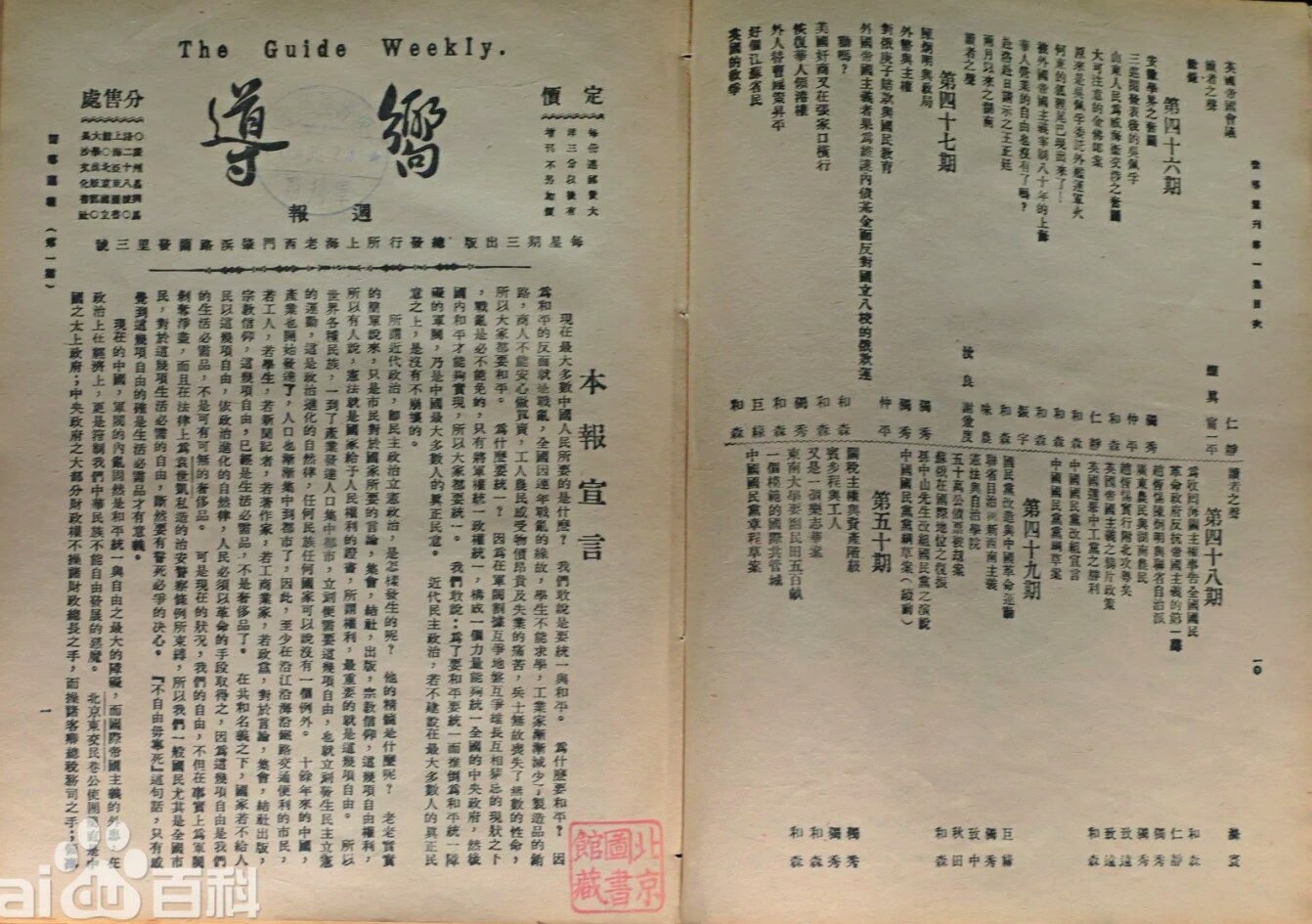
Following Sun Yat-sen’s demise, a dedicated issue concerning him was produced in The Guide Weekly (Chinese: 向导 ), the inaugural journal of the CPC. This special issue features a statement from the CPC Central Executive Committee in The Guide Weekly regarding the death of Sun Yat-sen, affirming the CP- C’s ongoing collaboration with the Kuomintang. It was underscored that, notwithstanding Sun Yat-sen’s demise, China persisted in its resistance against imperialism and its domestic allies, the warlords (The Central Executive Committee of the Communist Party of China, 1925aThe Central Executive Committee of the Communist Party of China 中国共产党中央执行委员会 (1925a). 中国共产党为孙中山之死告中国民众 [The Communist Party of China appeals to the Chinese people for the death of Sun Yat-sen], The Guide Weekly, Issue 107, March 21.). The open letter of condolence issued by the CPC Central Executive Committee to the Kuomintang emphasized the necessity of maintaining unity between the CPC and the Kuomintang, in accordance with Sun Yat-sen’s doctrine and his revolutionary teachings (The Central Executive Committee of the Communist Party of China, 1925bThe Central Executive Committee of the Communist Party of China 中国共产党中央执行委员会 (1925a). 中国共产党为孙中山之死告中国民众 [The Communist Party of China appeals to the Chinese people for the death of Sun Yat-sen], The Guide Weekly, Issue 107, March 21.).
In his paper “Sun Yat-sen’s Death and the National Revolution,” Cai Hesen, a leader of the CPC, asserted that the policy of the Chinese Revolutionary Movement should be deliberated following Sun Yat-sen’s demise. Hesen’s focal points in his article are as follows: “The core of the Chinese National Revolution is the downfall of international capitalist imperialism and the demolition of the Chinese warlords who serve as its agents. (…) The Chinese revolution is integral to the global revolutionary movement, like to previous revolutionary revolutions in colonies such as Turkey, Iran, India, Egypt, and beyond. For the Chinese revolution to succeed, it must integrate with the global revolutionary movement, specifically the revolution of the Western proletariat, as both confront a common adversary and seek to dismantle capitalist imperialism. Sun Yat-sen’s testament is notably precise: ‘I have devoted myself to the national revolution for 40 years, and my objective is to pursue freedom and equality for China.’ To attain this objective, I must mobilize the populace and consolidate them to combat together as a nation, regarded as an equal among the nations of the globe. Prior to the October Revolution in Russia in 1917, the global landscape was dominated by capitalist imperialist regimes. Will it prevail? Similar to the previous shortcomings of the Turkish revolutionary movement, the current success of the Turkish revolution was contingent upon the triumph of the October Revolution and engagement with the Soviet Union. Consequently, while Sun Yatsen’s four decades of expertise did not provide immediate success, his legacy undeniably facilitated future achievements. Upon his death, Sun Yat-sen bequeathed extensive revolutionary experience and the Kuomintang. The subjugated populace of the nation must embrace Sun Yatsen’s esteemed heritage to fulfill the Chinese revolution” (Cai, 1978: 364-371Cai, H. (1978). 蔡和森文集 [The Collected Works of Cai Hesen]. Hunan: 人出社 [People’s Publishing House].).
Hesen asserted that Sun Yat-sen epitomized the overcoming of imperialism and warlords. Hesen’s depiction of the revolutions in China, Turkey, Iran, India, and Egypt as movements that undermined imperialism, along with his mention of Turkey’s collaboration with Soviet Russia, indicates his emphasis on the historical link between the Kemalist Revolution and Sun Yat-sen. Mao Zedong was significantly affected by Sun Yat-sen’s legacy in his adolescence and adopted the Three People’s Principles. Mao Zedong stated in his 1927 report on the peasant movement in Hunan: “The primary aim of the national revolution is to dismantle these feudal forces. In a matter of months, the peasants achieved what Dr. Sun Yat-sen aspired to accomplish, yet failed to realize, during the forty years he dedicated to the national revolution. (Mao, 2000: 58Mao, Z. (2000). Seçme Eserler I. İstanbul: Kaynak Yayınları.).
Some peasants are capable of reciting Dr. Sun Yatsen’s Testament. They select the concepts of “freedom,” “equality,” “the Three People’s Principles,” and “unequal treaties” and implement them, if rather clumsily, in their daily existence. When an individual resembling the gentry confronts a peasant and asserts their superiority by refusing to yield on a pathway, the peasant will retort indignantly, “Hey, you local despot, are you not aware of the Three People’s Principles?” Previously, when peasants from the vegetable farms on the periphery of Changsha visited the city to sell their produce, they were often subjected to harassment by the authorities. They have now discovered a weapon, which is none other than the Three People’s Principles. When a police officer strikes or curses at a farmer selling vegetables, the peasant promptly responds by quoting the Three People’s Principles, thereby silencing the officer.” (Mao 2000: 87-88Mao, Z. (2000). Seçme Eserler I. İstanbul: Kaynak Yayınları.).
In his 1937 report titled “The Tasks of the CPC in the Period of Resistance to Japan,” Mao said the following about the Three People’s Principles: “The Communist Party of China possesses its distinct political and economic agenda. Their ultimate agenda is socialism and communism, distinct from the Three People’s Principles. The Communist Party’s agenda for the democratic revolution and the Three People’s Principles articulated by the Kuomintang’s First National Congress are fundamentally not in opposition.
Consequently, rather than dismissing the Three People’s Principles, we are prepared to implement them resolutely” (Mao, 2000: 374-375Mao, Z. (2000). Seçme Eserler I. İstanbul: Kaynak Yayınları.).
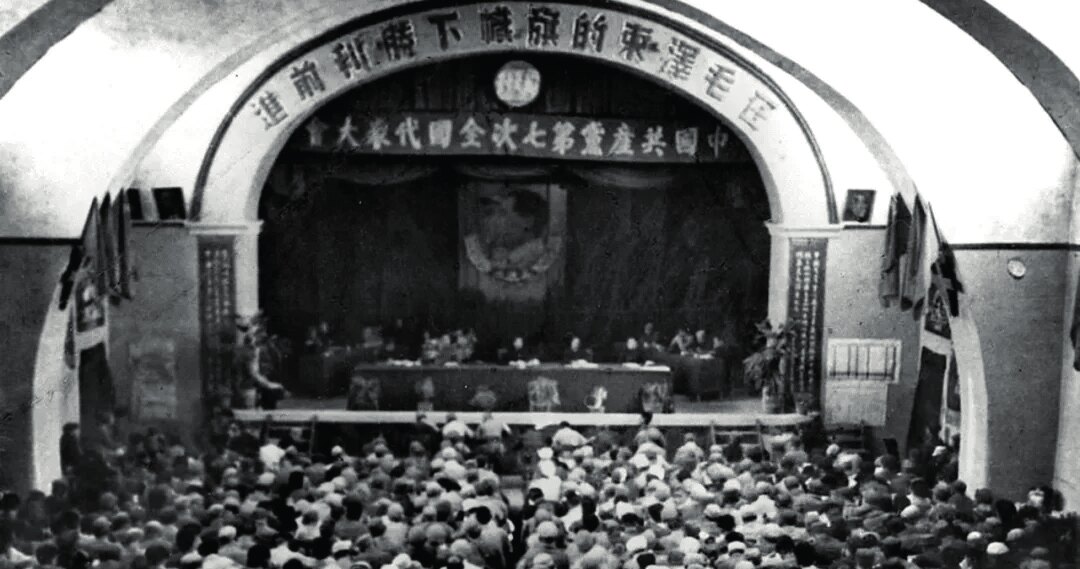
The 7th National Congress of the CPC was the most significant national congress convened during the New Democratic Revolution. At the 7th National Congress convened in Yan’an in 1945, Mao Zedong referenced Sun Yat-sen repeatedly in his reports and speeches. Sun Yat-sen was referenced twice in the address at the preparatory meeting of the 7th National Congress; the report “On the Coalition Government” cited Sun Yat-sen 27 times, including 6 direct quotations (Chenggui, 2005Chenggui (2005). The source article does not provide a separate full bibliographic entry for this citation.). Mao Zedong’s primary perspective on Sun Yat-sen at the 7th National Congress of the CPC was that “we must maintain an open mind to elevate the banner of Sun Yat-sen” (Chenggui, 2005Chenggui (2005). The source article does not provide a separate full bibliographic entry for this citation.).
The CPC’s endorsement of Sun Yat-sen and the Three People’s Principles has undergone transformation over time. During the United Front period, throughout the War of Resistance Against Japan, Sun Yat-sen was endorsed to galvanize the entire nation, emphasizing the industrious spirit of the Three People’s Principles. The CPC leaders periodically condemned the Kuomintang for straying from Sun Yatsen’s tradition (Zhang, 2019Zhang, W. (2019). Pushing Political Agenda in Name of SUN Yet-sen: Changes in the Political Implications of the CPC’s Commemoration of SUN Yat-sen in the Past 100 Years. Journal of Shenzhen University, Vol. 36, No. 2, 146-160.).
The Sinicization of Marxism, in the context of remembering Sun Yat-sen, positions Sun Yat-sen as the forerunner and the CPC as his successor, thereby establishing a democratic revolution agenda and a united front strategy. The Sinification of Marxism, in its narrative honoring Sun Yat-sen, saw him as the forerunner and the CPC as the successor, so formulating the democratic revolution agenda and the united front strategy. Following Sun Yat-sen’s demise, the CPC depicted him as the emblem of the national revolution, thus reinforcing and broadening the united front under the auspices of the Three People’s Principles. Consequently, Sun Yat-sen’s endeavors and agenda were seen as the incomplete impetus of China’s national democratic revolution (Zhang, 2019Zhang, W. (2019). Pushing Political Agenda in Name of SUN Yet-sen: Changes in the Political Implications of the CPC’s Commemoration of SUN Yat-sen in the Past 100 Years. Journal of Shenzhen University, Vol. 36, No. 2, 146-160.).
On April 29, 2005, Hu Jintao, General Secretary of the CPC, and Lien Chan, Chairman of the Kuomintang, convened in Beijing. This marked the inaugural meeting between the leaders of the CPC and the Kuomintang following the Chinese Civil War. In his address, Hu Jintao stated: “Dr. Sun Yat-sen is a distinguished patriot and national hero. He is the eminent pioneer of the Chinese national revolution. Dr. Sun Yat-sen bequeathed numerous significant spiritual legacies to the Chinese nation and its populace. It is commendable for us to inherit and perpetuate indefinitely” (Chenggui, 2005: 61Chenggui (2005). The source article does not provide a separate full bibliographic entry for this citation.).
The Perspective of CPC Leaders on the Parallels Between Sun Yat-sen and Mustafa Kemal
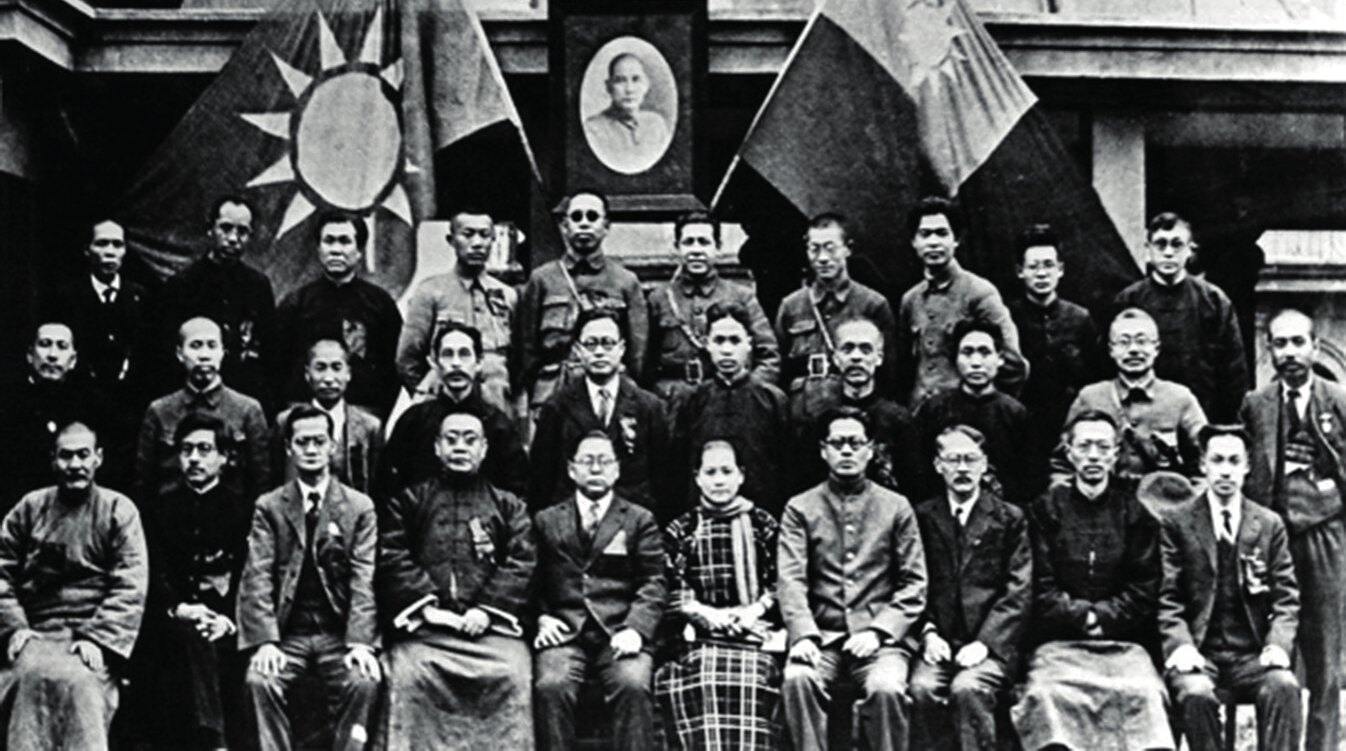
The formation of the United Front between the CPC and the KMT heightened the CPC leadership’s interest in Sun Yat-sen, his Three People’s Principles, and the Turkish Revolution (Demircan & Ye, 2023Demircan, N. & Ye, Z. (2023). An analysis on Cai Hesen’s Türkiye writings. Belt and Road Initiative Quarterly, 4(4), 46-66.). The analogous challenges faced by China and Turkey at the same timeframe, along with Turkey’s collaboration with Soviet Russia during the War of Independence and the triumph of the revolution, prompted the CPC to exhibit significant interest in the Kemalist Revolution (Zhigao, 2010Zhigao, H. [ 黄志高 ] (2010). 1921- 1925 年中国共产 党对凯末尔革命的观察与反应 [Observation and Reaction of Communist Party of China to Turkish Revolution During 1921-1925], Journal of University of Science and Technology Beijing, Vol 26, No 2, June. **). Gao Junyu and Cai Hesen, the initial leaders of the CPC, fervently endorsed the Turkish army’s triumph in the Great Offensive and the success of the War of Independence (Demircan & Ye, 2023Demircan, N. & Ye, Z. (2023). An analysis on Cai Hesen’s Türkiye writings. Belt and Road Initiative Quarterly, 4(4), 46-66.). On September 22, 1922, in the official publication of the Kuomintang, Minguo Ribao ( 民国 日报 ), a writer using the pseudonym Eshi composed a poem entitled “The Victory of Mustafa Kemal Pasha,” characterizing Turkey’s triumph as “the victory of the oppressed nations” and stating, “We can all die for Mustafa Kemal” (Demircan, 2023Demircan, N. & Ye, Z. (2023). An analysis on Cai Hesen’s Türkiye writings. Belt and Road Initiative Quarterly, 4(4), 46-66.). Qu Qiubai, an early leader of the CPC, asserted that Sun Yat-sen’s paramount historical accomplishment was the formation of a unified front with Soviet Russia and the CPC, alongside his support for the workers and peasants, which constituted the correct trajectory for the triumph of the Chinese revolution (Longyan, 2012Longyan, Z. 周龙燕 (2012). 瞿秋白对孙中山及其三民主义之评价的当下性思考 [Modern Revelations Of Qu Qiubai’s Evaluation on Sun Yat-sen and the Three People’s Principles]. Journal of Xuzhou Institute of Technology (Social Sciences Edition), 27: 5, September, 81-85.). The CPC cadres linked the Turkish Revolution to the Chinese Revolution, characterizing Mustafa Kemal Atatürk and Sun Yat-sen as the leaders of the bourgeois democratic revolution. Li Dazhao was instrumental in convincing CPC leaders to establish the First United Front with the KMT (Shan, 2024: 163Shan, P. F. (2024). Li Dazhao China’s First Communist. New York: Suny Press.). Li Dazhao asserted that China had not achieved the capitalist industrial development characteristic of the West and that its working class remained underdeveloped, leading him to lack optimism for a proletariat revolution (Meisner, 1967: 210Meisner, Maurice (1967). Li Ta-Chao and the Origins of Chinese Marxism. Cambridge: Harvard University Press.).
The triumph of the Turkish revolution motivated the Chinese populace to embrace the ethos of national resurgence and captured the interest of the CPC leadership at the time, which regarded it as a model for the revitalization of the Chinese country (Menglin & Zhigao, 2019aMenglin, S. and Zhigao, H. (2019). Analysis on Li Dazhao’s Thought of National Rejuvenation during May 4th Movement. Journal of Shenyang University of Technology (Social Science Edition), 12: 1, February, 93-96.). The Soviet Union utilized the Turkish Revolution as a model to facilitate the success of the Chinese Revolution. Notably, Comintern Representative Marin and the leaders of the CPC often used Turkey as a model for establishing a united front between the Kuomintang and the CPC, as well as for securing the backing of Soviet Russia (Haiyong, 2013Haiyong, W. 吴海勇 (2013). 国共合作决策关键期 土耳其革命对中共的影响 [The Impact of the Turkish Revolution on the CPC during the Critical Period of KMT-CPC Cooperation], 历史回溯, 上 海党史与党建, July, 22-24.; Demircan & Ye, 2023Demircan, N. & Ye, Z. (2023). An analysis on Cai Hesen’s Türkiye writings. Belt and Road Initiative Quarterly, 4(4), 46-66.). The perspective of CPC officials toward the Kemalist Revolution at that time indicated China’s strategic aim to ally with Soviet Russia and collaborate with Sun Yat-sen (Zhigao, 2010Zhigao, H. [ 黄志高 ] (2010). 1921- 1925 年中国共产 党对凯末尔革命的观察与反应 [Observation and Reaction of Communist Party of China to Turkish Revolution During 1921-1925], Journal of University of Science and Technology Beijing, Vol 26, No 2, June. **).
In his essay in The Guide Weekly on October 12, 1925, Chen Duxiu asserted that Soviet Russia’s assistance to Turkey was devoid of any colonial intentions. He asserted that Soviet Russia was besieged by imperialism from multiple fronts and hence required collaboration with oppressed nations such as China, Germany, and Turkey. Duxiu asserted that the global community ought to establish a unified front with nations like China, Germany, and Turkey to counter imperialist aggression (Jianshu, 2009: 526-531Jianshu, Ren任建樹 (2009), 陈独秀著作选编1923-1925第三卷 [Selected Writings of Chen Duxiu 1923-1925, Volume III]. Shanghai: 上海人民出版社 [Shanghai People’s Publishing House].).
In a subsequent piece released on November 7, Duxiu asserted that the October Revolution in Russia not only facilitated the national freedom of workers and peasants but also influenced global revolutions, aiding movements in Turkey, China, and Iran (Jianshu, 2009: 537-540Jianshu, Ren任建樹 (2009), 陈独秀著作选编1923-1925第三卷 [Selected Writings of Chen Duxiu 1923-1925, Volume III]. Shanghai: 上海人民出版社 [Shanghai People’s Publishing House].). In his article published in The Guide Weekly on April 16, 1924, Chen Duxiu asserted that the Chinese monarchy was sustained by Confucianism and cited Turkey’s abolition of the caliphate following its transition to a republican government (Jianshu, 2009: 251-252Jianshu, Ren任建樹 (2009), 陈独秀著作选编1923-1925第三卷 [Selected Writings of Chen Duxiu 1923-1925, Volume III]. Shanghai: 上海人民出版社 [Shanghai People’s Publishing House].).
Duxiu frequently highlighted Turkey as a model to promote collaboration between the CPC and the KMT in his essays. Chen Duxiu’s sole piece focusing on Turkey was penned after to the dissolution of the Caliphate. Duxiu assessed Turkey’s triumph in the War of Independence, its collaboration with Soviet Russia, and the dissolution of the Caliphate as significant actions. He asserted that China remained subordinate to imperialist forces and warlords and that the revolutionary movements in Turkey ought to serve as a model for China (Jianshu, 2009: 228Jianshu, Ren任建樹 (2009), 陈独秀著作选编1923-1925第三卷 [Selected Writings of Chen Duxiu 1923-1925, Volume III]. Shanghai: 上海人民出版社 [Shanghai People’s Publishing House].). Duxiu asserted in his article that feudal powers aligned with imperialist forces to oppose revolutionary movements, hence indicating that Turkey had achieved a significant objective.
In 1927, Yi Sheng, a Kuomintang member, commended Turkey for independently accomplishing its revolution in his piece entitled “Premier Sun taught us to learn from Turkey.” He asserted that Sun Yatsen drew inspiration from the Kemalist Revolution, remarking, “Dr. Sun, in his inaugural lecture on nationalism, commended Turkey and its capacity to collaborate with the Russian Revolution in pursuit of its own liberation” (Yisheng, 1927Yisheng (1927). The source article does not provide a separate full bibliographic entry for this citation.). Furthermore, Hu Hanmin, a prominent figure of the KMT’s right faction, together with Sun Yat-sen’s son, Sun Ke, traveled to Turkey in 1928 to see the Turkish Revolution. In a 1930 speech reflecting on his observations in Turkey, Hu Hanmin noted that during his interactions with Turkish officials, the principle of nationalism from Sun Yat-sen’s Three People’s Principles was robust in Turkey, while the principles of democracy and people’s welfare received minimal attention. (Öztürk, 2018: 8-12Öztürk, A. (2018). Cumhuriyetin İlk Yıllarında Çin Guomindang Partisi Üyelerinin Türkiye Ziyareti: Hu Hanmin’in Türkiye Gözlemleri. Doğu Asya Araştırmaları Dergisi, 1(2), 1-32.; Fidan, 2017Fidan, G. (2017). Cumhuriyet’in Çinli Misafirleri. İstanbul: Türkiye İş Banka Kültür Yayınları.).
The KMT cadres showed significant interest in the Kemalist Revolution, prompting them to swiftly establish diplomatic contacts with Turkey to gain insights from the Turkish Revolution. He Yaozu, a distinguished commander of the KMT, was designated as the inaugural ambassador of the Republic of China to Turkey. He Yaozu stated, “I will observe the Turkish Revolution and endeavor to implement it in our nation” (Demircan, 2021: 31Demircan, N. (2021/2022). Interactions Between Two Republics: The Republic of Turkey and the Republic of China. Belt & Road Initiative Quarterly, 3(1), 26-39.). Furthermore, in his 1936 article “Nation-Building in Turkey and Three People’s Principles,” Yaozu asserted that the ideals and actions of Kemalism aligned with China’s Three People’s Principles (Fidan, 2017: 88-99Fidan, G. (2017). Cumhuriyet’in Çinli Misafirleri. İstanbul: Türkiye İş Banka Kültür Yayınları.). In 1940, Mao Zedong remarked on individuals in China during the 1920s and 1930s who considered the Kemalist Revolution a viable model for China: “Following the failure of the First Great Revolution in 1927, did not certain members of the Chinese bourgeoisie fervently advocate for Kemalism?” However, where is China’s Kemal? Perinçek, 1991: 164.
During the Second Sino-Japanese War, the achievements of the Turkish War of Independence served as an inspiration for Chinese revolutionaries. The Kuomintang cadres made comparisons between Ankara, the epicenter of the Turkish revolution, and Chongqing, the capital of the Second Sino-Japanese War, through articles such as “Chongqing is Our Ankara,” “China’s Ankara,” and “Sichuan is China’s Ankara” (Demircan & Ye, 2024Demircan, N. & Ye, Z. (2024). Ankara as a Role Model during the Second Sino-Japanese War: “Chongqing is Our Ankara!”. BRIQ Belt and Road Initiative Quarterly, 6(1), 92-103.).
A newspaper account from November 12, 1938, conveyed the profound sorrow experienced upon the announcement of Mustafa Kemal Atatürk’s death, the President of the Republic of Turkey, coinciding with the anniversary of Sun Yat-sen’s birth. The report states, “Turkey, referred to as the sick man of the Near East, and China, identified as the sick man of the Far East, are akin to brothers.” The two nations were in a nearly despondent predicament. Fortunately, a leader and savior appeared, ultimately establishing two new nations and illuminating the darkness” (Yi, 1938Yi, S. [ 一士 ] (1938). 孫中山與凱末爾 [Sun Yatsen and Kemal]. 南华日报 [ South China Daily ], November 12, p.4). The correspondence of the birth and death dates of Sun Yat-sen and Mustafa Kemal Atatürk, the concurrent decline of their respective nations, and the assertion that the trajectories of these countries transformed under the influence of these two revolutionary leaders illustrate the historical link perceived by the Chinese concerning the destinies of both nations.
The Turkish and Chinese revolutions are fundamentally analogous as both are anti-imperialist and anti-feudal; nonetheless, their trajectories diverge markedly. Although the proposals presented by the two leaders exhibit commonalities, they also diverge regarding state experience and standing. The concepts of Nationalism, Populism, and Statism in Mustafa Kemal Atatürk’s Six Arrows exhibit parallels with the principles of Nationalism, Democracy, and People’s Welfare in Sun Yat-sen’s Three People’s concepts (Sanyi, 2022Sanyi, W. (2022). Mustafa Kemal Atatürk’s’ Halkçılık and Devletçilik’: A Comparison with Sun Yat-sen’s Political Thought. BRIQ Belt and Road Initiative Quarterly, 3(1), 40-49.). Conversely, Mustafa Kemal emerged from a military background, whereas Sun Yat-sen, the leader of the temporary government formed in Nanjing, lacked the requisite prestige, financial resources, and a formidable army until 1924 (Dong, 1998Dong, L. 卢旭东 (1998). 浅析孙中山革命与基马尔革命之异同 [Analyzing the Similarities and Differences between Sun Yat-sen’s Revolution and Kemal’s Revolution], 广东社会科学,Issue 2.). The parallels between the two revolutions have incited China’s intellectual and revolutionary scholars to investigate and delve deeper.
Conclusion
The interest of Chinese revolutionaries with the Turkish Revolution and Mustafa Kemal Atatürk stems from the analogous destinies of the Qing Dynasty and the Ottoman Empire during the same era, as well as the parallel trajectories of the 1908 Young Turk Revolution and the Xinhai Revolution. Moreover, throughout the emergence of national revolutions and the formation of nation-states in Asia, Chinese revolutionaries emphasized mutual learning and deriving insights from historical errors. Chinese revolutionaries created a link between Sun Yat-sen and Mustafa Kemal Atatürk, highlighting their shared anti-imperialist stance, their overthrow of monarchies, and their leadership in the bourgeois democratic revolution.
Chinese revolutionaries highlighted the anti-imperialist positions of Sun Yat-sen and Mustafa Kemal Atatürk, their contributions to the dismantling of monarchies, and their leadership in promoting the bourgeois democratic revolution. A further element affecting the relationship between the CPC cadres and the association between the Turkish and Chinese revolutions was the assistance rendered by Soviet Russia to Turkey throughout its War of Independence, alongside the camaraderie developed between the two nations. The CPC cadres anticipated that the partnership model developed between Turkey and Soviet Russia may also be relevant to China. Additionally, Chinese intellectuals and revolutionaries meticulously observed the revolutionary and reformative developments occurring in Turkey. Chinese revolutionaries shown significant interest in the dissolution of the sultanate, the termination of capitulations, and the modernizing initiatives in language and education.