Introduction
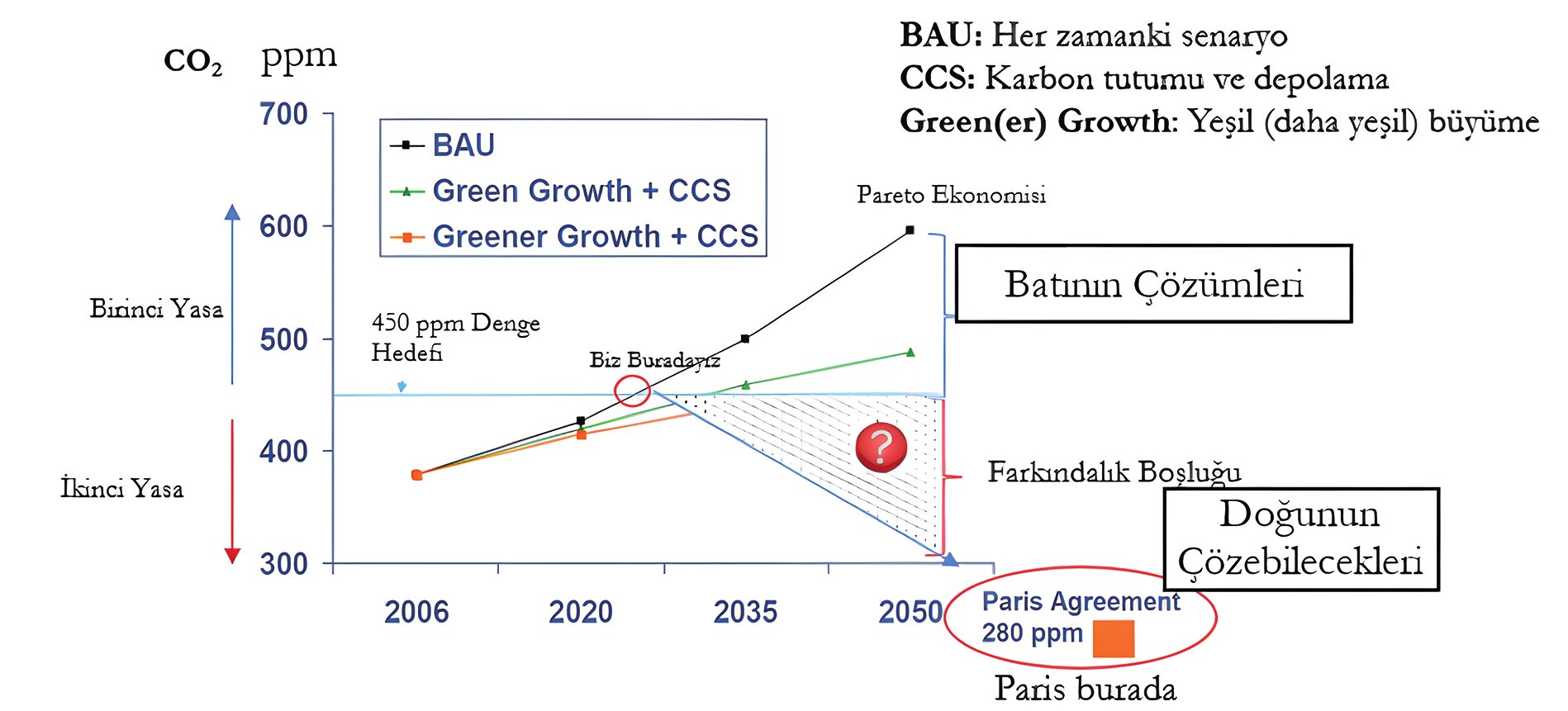
The european union has taken a series of measures and released directives and restrictions concerning global warming (Ersen, 2024Ersen, P. (2024). Avrupa Yeşil Mutabakatı: Temel Bilgiler ve Türkiye’nin Uyumu, BAZ Girişim. Retrieved June 20, 2024 from). Carbon Border Adjustment Mechanism (CBAM). In this context, the European Union declared a comprehensive policy and strategy package in 2019. The most important section is the Carbon Border Adjustment Mechanism (CBAM), which will virtually affect all the countries, worldwide, with direct or indirect trade connections with the EU Countries (T.C. Avrupa Birliği Başkanlığı, 2024T. C. Avrupa Birliği Başkanlığı. (2024). Sınırda Karbon Düzenleme Mekanizması (SKDM). Retrieved June 20, 2024 from). Aligning with the Paris Agreement, the objective is to keep the global warming temperature below 1.5°C until 2053 by reducing greenhouse gas emissions. Accordingly, the concentration of CO2 gas in the atmosphere is expected to decrease to about 280 ppm (parts per million). Human-induced greenhouse gas emissions cause global warming leading to several global challenges, such as ozone layer depletion (Kılkış, 2019Kılkıs, B. (2019). The Importance of Exergy Rationality And Storage For 100% Renewable Targets In Decoupling Sustainable Development And Ozone Depletion, Workshop on Considering Unlocking Energy Efficient Opportunities And Exploring Low GWP Non-HFC Alternative Technologies In The Cooling Sector And Safety Standards While Phasing-Down HFC Under The Kigali Amendment. UNIDO, September 16-17, 2019, Antalya, Türkiye.), wide climatic and meteorological disasters of unusual magnitude, deterioration in ecosystems, decline in agriculture and animal husbandry, decrease in clean water resources, air quality, and increase in magnitude and frequency of pandemics (Kılkış, 2020Kılkış, B. (2020). Küresel Salgının Hatırlattıkları, Iklimsel Isınma ve Klima Sistemleri, Tesisat Mühendisliği. MMO, Sayı 177/Özel Sayı-Haziran 2020, s: 16-24.; Kılkış, 2021Kılkış, B. (2021). Küresel Kapitalizmde Küresel Salgınlar, Iklimsel Isınma ve Atmosfer, BRIQ Working Paper Series, No: 2, Kuşak ve Yol Çalışmaları Uygulama ve Araştırma Merkezi (KUYÇAM), Istinye Üniversitesi. E-ISSN 2718-0581 e.). Causes for all such problems include CO2 emissions due to fossil fuel use, inefficiencies, and primarily but most often ignored quality mismatches among different energy sources, equipment, and systems. The latter, two to five times more than direct missions at the source is often ignored as shown in Figure 1. Every thousand Gton of CO2 released into the atmosphere causes the global average temperature to increase by 0.45°C, and an average of 37 Gton of CO2 gas continues to be released every year because of energy use alone (IPCC, 2023IPCC. (2023). Climate Change 2023 Synthesis Report. WMO, UNEP, ISBN: 978-92-9169-164-7, Retrieved June 15, 2024 from; Architecture2030Architecture2030. (2024). Why the Built Environment? Retrieved June 16, 2024 from environment/#:~:text=Of%20those%20total%20emissions%2C%20building,for%20an%20additional%2015%25%20annually, 2024Architecture2030. (2024). Why the Built Environment? Retrieved June 16, 2024 from environment/#:~:text=Of%20those%20total%20emissions%2C%20building,for%20an%20additional%2015%25%20annually).
The total annual global CO2 emission is around 60 Gton CO2/year. Among the root causes that have the ability to explain most of these emissions measured in the air, it is the ignorance of the fundamental fact that all energy sources and applications are not equal on earth, and they have different qualities, which means ability to do useful work and to add value. Humanity must duly respect all energy sources and the environment In Asian and Near Eastern cultures, respect for energy and water resources are among these. Western culture, on the other hand, lacks this quality awareness and views energy as a commodity that can only be bought and sold on the stock exchange. In addition, the current Western culture depends on the Pareto principle and the free market rules (linear economy) and tries to solve global warming in a narrow mold. However, global warming is a three-dimensionally complex problem. In this respect, although the amount of CO2 in the atmosphere can be measured accurately (Visible), many root causes on earth remain ignored and unaccounted for. Consequently, adequate, and sustainable solutions cannot be implemented. Figure 1 clarifies this problem. In essence, only the Eastern culture can solve the unawareness issue and sustainably develop and implement realistic solutions by giving attention to the quality of energy rather than the quantity of energy (Figure 2). Emissions due to quality mismatches are invisible to us on Earth.
Assessment of Carbon Emissions and Green Transformation from the Perspective of Turkic Republics
Within the framework of the EU’s Green Transformation Strategy, it is aimed to reduce carbon emissions by 55% compared to 1990 levels in 2030 and to become the first climate-neutral continent in 2050. The tools and measures to achieve these limited targets, however, are concerned with direct emissions only, as seen in Figure 1. In recent years, it has been observed that even these modest goals will not be achieved with today’s technology. Unless wide awareness of CO2 emissions due to quality mismatches is established and implemented, it will not be possible to satisfy the Paris Agreement.
Despite the importance of recognizing the quality mismatches and trying to solve them with sustainable and fair measures, the West keeps franticly striving to reach the Paris Agreement by 2050, by simply activating impositions such as carbon tax at the border and carbon trading rules, all based on linear economy only. Without solid scientific foundations, these measures are grossly insufficient, unfair, and unpractical. Yet they are trying to enforce their rules to all countries, including Türkiye, the Turkic States, and all Asian and far Eastern countries, and collect tax money.
Among the Western solutions in agriculture and animal husbandry, only agricultural insurances and limited financial supports within the linear economy rules and interest stand out. These are far from being permanent solutions to global warming and, in fact, confine agriculture and animal husbandry in a vicious circle sokmaktadır (Kılkış, 2020aKılkış, B. (2020). Küresel Salgının Hatırlattıkları, Iklimsel Isınma ve Klima Sistemleri, Tesisat Mühendisliği. MMO, Sayı 177/Özel Sayı-Haziran 2020, s: 16-24.; Aydınlık Gazetesi, 2020Aydınlık Gazetesi. (2020). Sigortalama Yetmez Yeşil Tarım Atağı Şart! Haber, 6 Aralık 2020.; Kılkış, 2020bKılkış, B. (2020). Küresel Salgının Hatırlattıkları, Iklimsel Isınma ve Klima Sistemleri, Tesisat Mühendisliği. MMO, Sayı 177/Özel Sayı-Haziran 2020, s: 16-24.). In a proper response by the East with effective and sustainable solutions against such ineffectiveness and inconveniences across the globe, integrated farming cooperatives along the Belt and Road must be established in close coordination and integration of light agricultural industry and rural communities, attached to these cooperatives, which generate and share their own energy (Kılkış, 2022Kılkış, B. (2022). Yeşil Hidrojen: Kuşak ve Yol Girişimi’nin ortak bağı. BRIQ Kuşak ve Yol Girişimi Dergisi, 3(3), 6-20.). Inconsistencies and insufficiencies in the European Union’s decarbonization initiatives are reaching significantly unreasonable levels. For example, according to a law that is on the agenda to be implemented in Denmark, animal owners will be charged a carbon tax of one hundred Euros for one cow, for every year. Farm animals existed throughout history and their global warming effects were not an issue until the Industrial Revolution, but now the blame is being put on them. This bill shows the West’s inadequacy against global warming. If this tax is implemented in a broader sense, such an irrational tax may be demanded from animal owners when exporting meat or live animals to the West.
Moreover, animal husbandry is at the forefront in all Turkic States and other Eastern countries and grossly supports their economies.
A cow owner may not get free by just paying 100 Euros every year for the same cow. If a farmer collects the manure and utilizes it to generate heat and electricity in a biogas facility as an effective remedy against global warming, the farmer may have to pay a second tax for the CO2 coming out from the exhaust of the biogas facility (cogeneration), since the positive energy flow chain is not foreseen in the tax law and the anthropogenicity is not considered. The Danish bill does not look at the continuation of the energy chain by saying the tax is per cow, whatever you do, and does not take into account positive appraisal stages. It looks at each system one by one. On the contrary, the same farmer when selling a product produced by using his electricity and heat to the EU countries, another carbon tax will be collected at the border. Electricity and fertilizer products are at the top of the border carbon tax list. While the EU struggles with such inconsistencies, we should focus on realistic, innovative, and rational solutions with cultural fairness and greater respect for our future and environment and create our own carbon market against their impositions. There must be a regional carbon trading at the border system with Belt Road alternatives. Only with these methods can we eliminate the dangers that the West will bring to the Turkic States and all Belt Road countries.
If this tax is considered scientifically consistent by some circles in the EU, then it is necessary to look at the environmental footprint of an F-35 jet aircraft belonging to the Royal Danish Air Force in proportion to this tax. This single aircraft will emit 3.5 tons of CO2 from its turbine exhausts by spending fossil fuel in just 15 minutes in a hovering position over the ground. This emission is equivalent to the cumulative CO2 emissions of three cows for a complete year. As a result, if this aircraft repeats this vertical take-off hovering and landing action 15 times in a year, it will have to pay a tax of 4500 Euros. This amount excludes the tax liability of the same aircraft during level flights during the year. In the same context, since Afşin-Elbistan-A lignite thermal power plant generates approximately 4 billion kW-h of electricity annually, it may have to pay 0.2 billion Euros in taxes- equivalent to two million cows annually. If this electrical energy is exported to neighboring countries (bordering EU countries such as Greece and Bulgaria), a tax will be imposed at the border in proportion to the portion exported.
As a result, while EU countries keep themselves busy by taking precautions against global warming with such inconsistencies, particularly important opportunities arise for us. By conducting algorithmic studies about new carbon market models, we should reach a position that enables us to collect carbon taxes, instead of them at the new border against the EU impositions, as opposed by the Belt Road and the Turkic States. This will be possible because the new model will recognize and respect the virtues of energy quality, of which the EU does not want to see. With such a realistic and fair approach, the Eat will protect their trade rights and all sectors, including livestock and agriculture, from unfair carbon competition, and will set a role model for Western countries by achieving the Paris Agreement targets on time and will ahead of them. This leadership will also reflect on political power. It is obvious that the goals of the Paris Agreement cannot be achieved as long as the so-called linear, or circular, one-dimensional economy, which ties everything to money, continues to be in force.
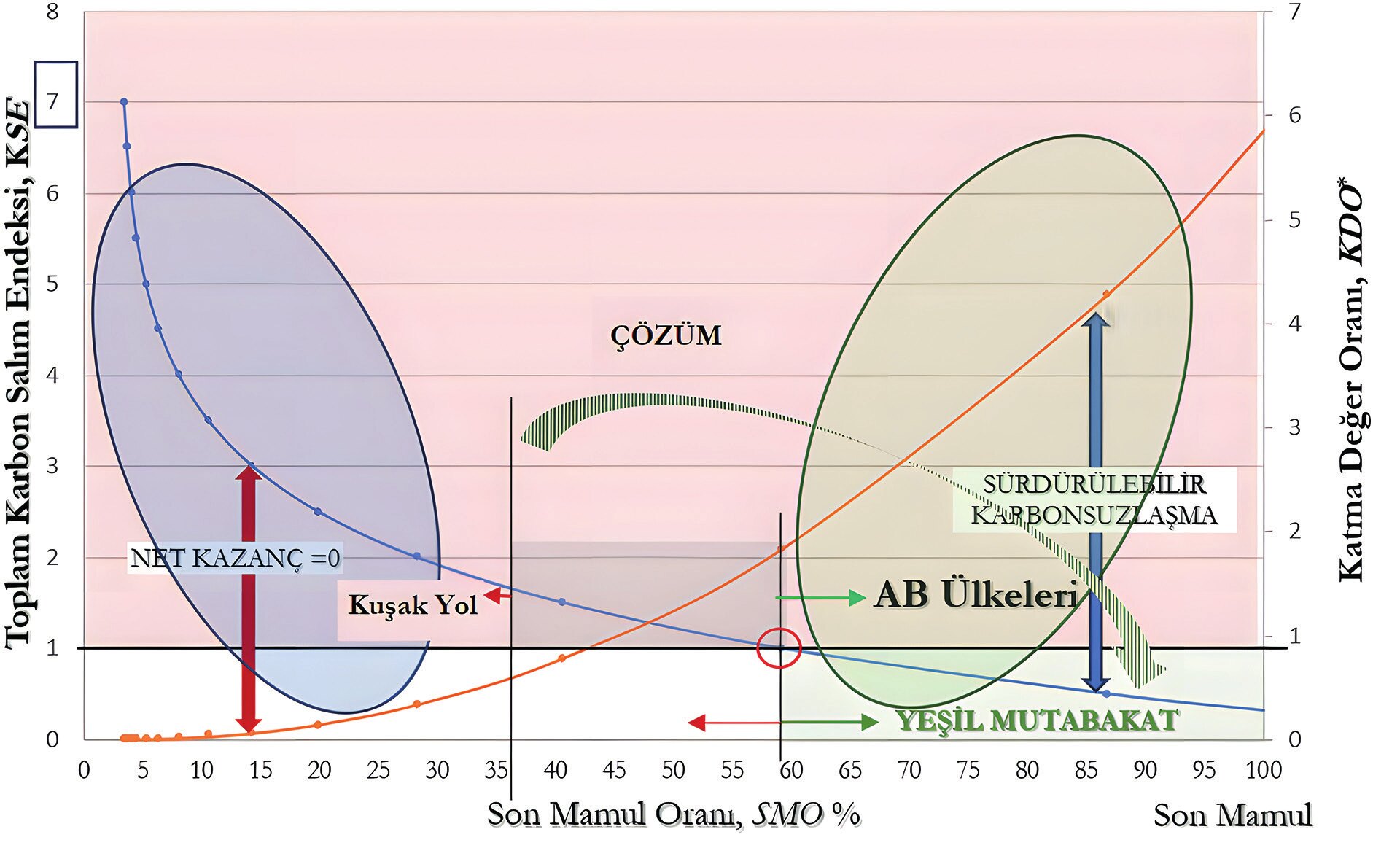
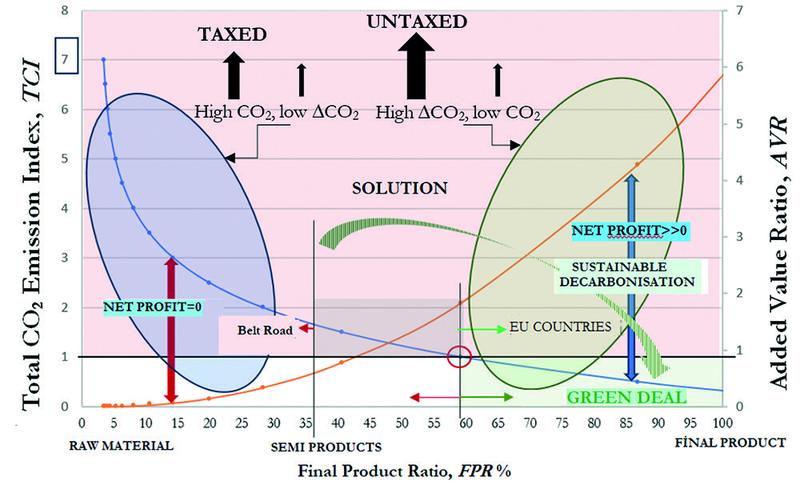
Among these problems, the biggest threat from the West will apply to Turkic States and all Belt Road countries, except certain developed countries (such as China and India, the Russian Federation is already subject to disproportionate sanctions.) Figure 3 shows the major threat. The basic economy of Asian countries is based on agriculture, animal husbandry, mining, and semi-finished goods. According to Figure 3, which represents today’s conflict between West and East, EU countries dominantly practice extended R&D activities and novel engineering designs. These activities have low CO2 emission responsibilities and high DCO2 responsibilities due to the nature of such practices. Despite this controversy, they generate exceedingly high added values and high selling prices. In essence, the EU countries simply assemble and touch them up the semi-finished products with high DCO2 emissions that they conceal and keep untaxed, yet unfairly attribute CO2 emissions to other countries and charge high carbon taxes at their border. Other countries, on the other hand, mostly sell their semi-finished products to EU countries with a small profit margin, consuming much energy, practicing some production line developments, and emitting larger amount of CO2, thus facing large carbon taxes. As a result, these counties will not have a net profit, as shown on the left-hand-side of should also be considered cumulatively. The Final Production Ratio, FPR of Turkic states and Belt Rad countries must reach to at least 60% in their industry and farming, from today’s average ratio of approximately 35%. Only if this gap is closed, then these countries may achieve sustainable decarbonization and net profitability targets in accordance with the Paris Agreement.
Otherwise, commodities produced along the Belt Road, including Turkic states, will face carbon taxes at the EU border. The EU will sell back finished products with minimal emissions but with high revenues. For example, if a cow is exported and returns as a meat product, cow tax will be charged on departure and little or no tax will be charged upon arrival at the border. EU countries need us as intermediate producers to keep their advantage and maintain their large profits. In fact, this is an opportunity to close the gap by leaping to finished products rather than keeping on semi-finished products or raw material.
A new and joint Belt Road customs line must be drawn. According to Figure 3, EU countries have low CO2 emissions but high and hidden (Untaxed) DCO2 emissions. Because DCO2 emissions are recorded somewhere else, or even by some other countries, which offset the quality mismatches of the original location face unfair taxes. This is another issue that must be taken care of to eliminate this taxing problem. The new Belt and Road customs line must be drawn flexible enough to recognize the origin of DCO2, not the final offset point. To overcome all these difficulties, a series of sustainable measures must be taken, and Belt Road boundaries must be adaptively protected.
Recommendations
• Creation of a Joint Scientific and Technological Strategy Center
• Development and implementation of cross-country coordinated state farms based on renewable and waste energy (Kılkış, 2022Kılkış, B. (2022). Yeşil Hidrojen: Kuşak ve Yol Girişimi’nin ortak bağı. BRIQ Kuşak ve Yol Girişimi Dergisi, 3(3), 6-20.; Kılkış, 2024Kılkış, B. (2024). Hemp, Energy And Environment, Technology of Hemp, Int. Interdisciplinary Research Conference, 21-22 May 2024, OSTIM, Ankara Türkiye.).
• Making the Common Central Bank functional (competing with the EU Central Bank)
• Establishing a competing fund to the IMF
• Creation and introduction of a common currency (such as the Euro)
• Developing and implementing a common carbon market model
• Developing a carbon tax algorithm at the Belt Road border for imports from the West and collecting taxes on emissions that the EU countries in Figure 1 do not want to see and keep concealing.
• Implementation of a banking system competing with the World Bank (WB)
• Expanding and coordinating Shanghai Cooperation Organization and the Belt Road initiative
• Establishment of a new and protectionist customs union between the Belt Road and the Turkic Republics
• Preparation and implementation of new criteria for carbon markets (based on the value of energy), realistic laws and directives
• Preparation of scientifically valid and fair CO₂ emission accounting standards challenging the ISO standards
• Accelerating and supporting the transition of all Eastern countries from semi-finished products to finished products (Figure 3)
• Establishment of customs exemptions specific to Belt Road
• New location adaptive carbon taxes at the Belt Road customs line should include DCO₂ and CO₂, thus be higher for EU countries
• Issuing standards specific to Belt Road countries in the field of Green Building and Green Industry certification