What can be said about Turkey’s recent advancements and deficiencies in science, technology, and innovation policies based on an evaluation of their methodology and tangible outcomes?
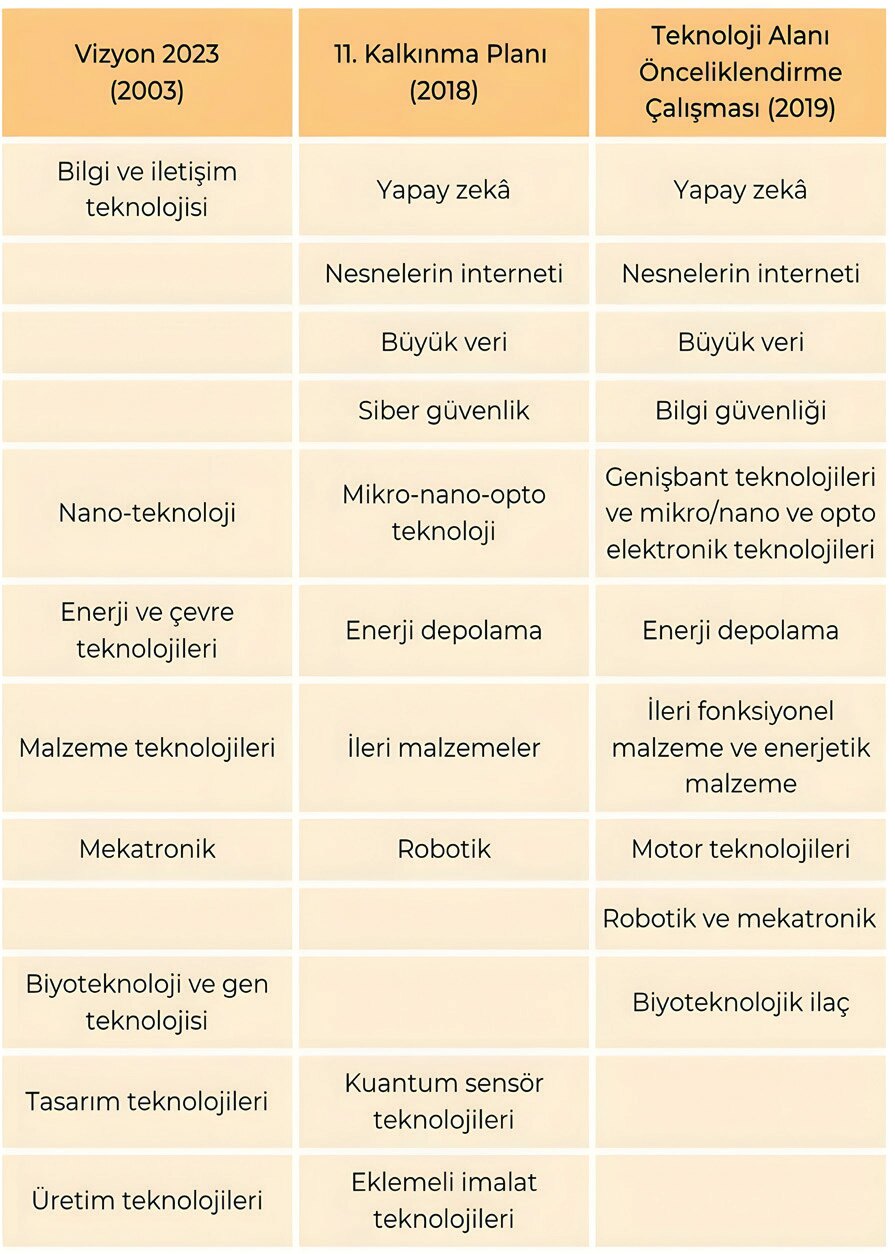
Prof. Dr. İbrahim Semih Akçomak: A comprehensive analysis over an extended period is necessary to address this topic. What methods have we employed to implement policies since the 1960s, and what criteria do we use for their evaluation? We should discuss this further. Between the 1960s and the 1980s or 1990s, we instituted a policy akin to a scientific framework. While it may not be classified as scientific policy, it mostly pertains to enhancing the research climate within institutions. Industrial R&D, as a concept and definition, remains mostly undeveloped, with few exceptions such as the PTT Research Laboratory (PTT-ARLA). When did this alteration occur? Changes commenced in the latter half of the 1990s. The formation of the TÜBİTAK Technology and Innovation Funding Programmes Directorate (TEYDEB), the Technology Development Foundation of Türkiye (TTGV), and he Small and Medium Enterprises Development Organization (KOSGEB) established an institutional framework to facilitate industrial R&D. Following the establishment of this institutional framework, support for industrial R&D commenced. In the initial phase, support is uniformly administered to all actors and beneficiary firms without any selection criteria. Industrial research and development in Turkey primarily commenced in this manner. We are discussing subsidies that are uniformly applied to all enterprises, such as research and development incentive schemes. We gradually began to forsake this practice after the year 2000, aligning with the global trend. The selection process commenced, and we began to identify sectors. We commenced the selection of technologies. We are currently selecting items. The TOGG instance represents technical product selection. This can also be incorporated into the new industrial policy; nevertheless, the prevailing trend in Turkey and globally is to concentrate on a particular sector or technology.
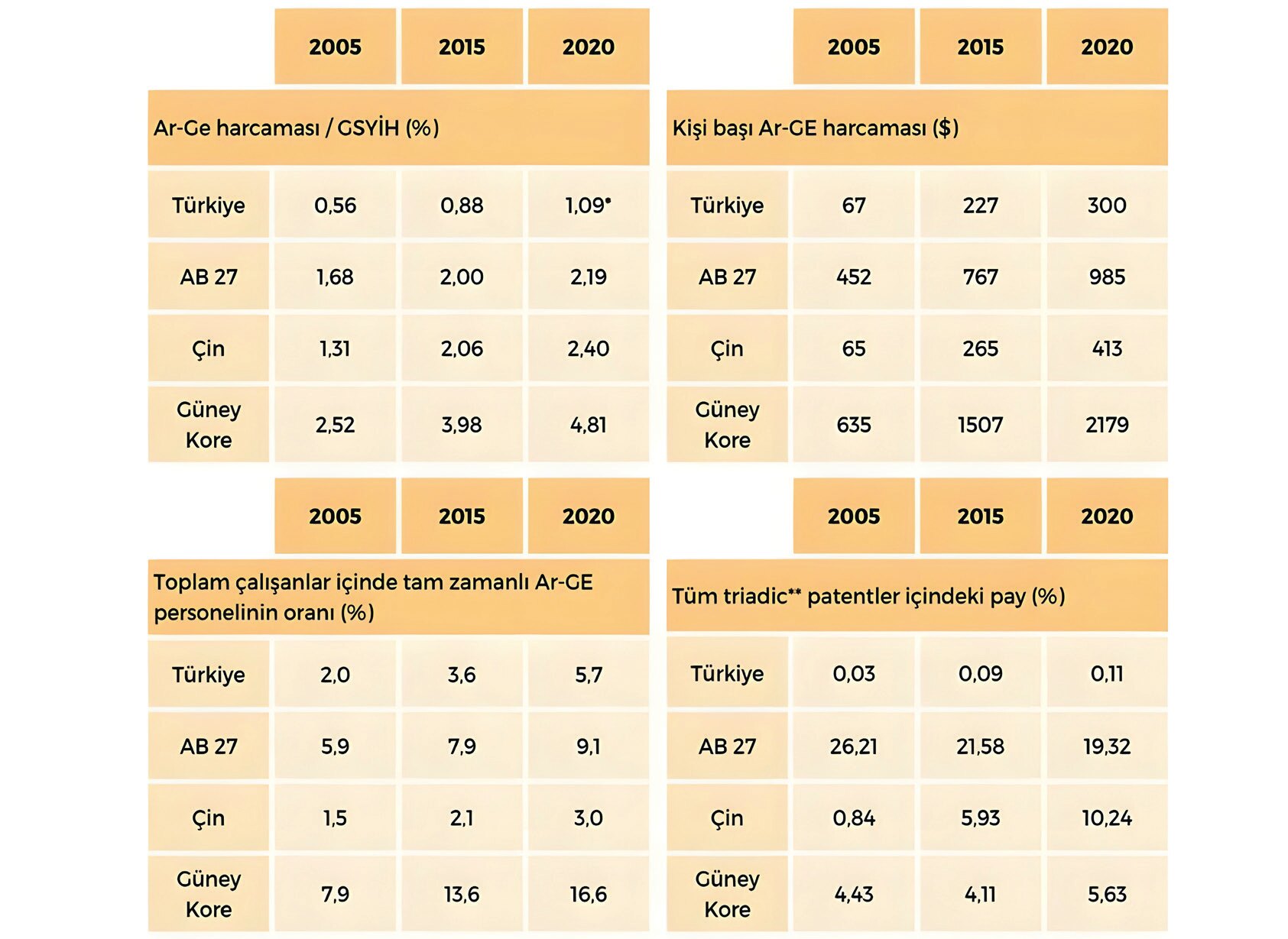
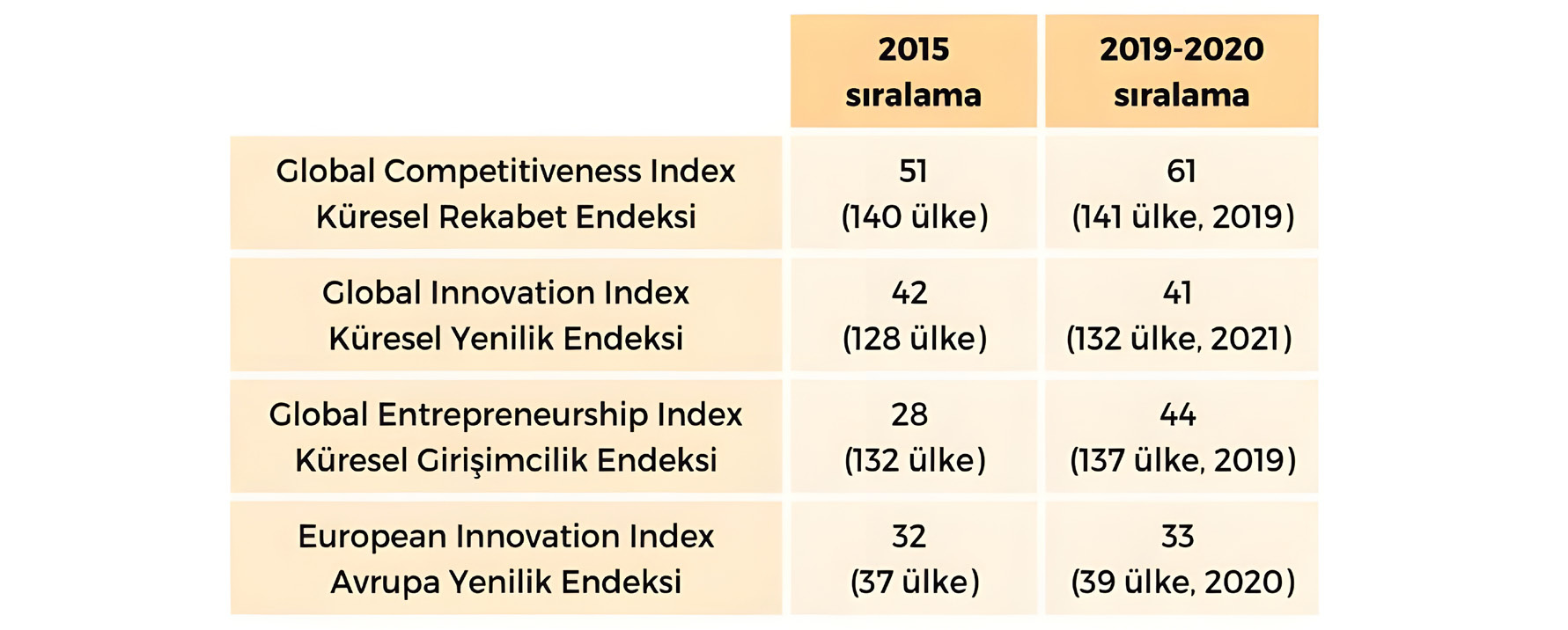
The situation was identical in China and South Korea. It was similar in Europe and America. Turkey similarly pursued the same trajectory. Additionally, in recent years, there has been a trend of increased governmnet involvement in science and technology policy. Some refer to it as mission-oriented policy, while others term it new industrial policy, particularly in European discourse. The role designated to the government remains largely unchanged. These policies encompass mechanisms through which the government actively establishes a market and consistently sustains specific sectors and technologies by providing early-stage funding to a certain degree. Turkey is endeavoring to align with this trend. There are, at very least, several examples. The newly unveiled HIT-30 program, which aspires to establish itself as a global hub for high-tech manufacturing by 2030, along with TOGG, may serve as exemplars. If you inquire, “We are attempting to adhere to this trend, but what successes have we typically attained?” For instance, let us juxtapose it with two decades prior, focusing just on the participants inside the system and human capital. In the early 2000s, there existed technology companies, albeit insufficient in number. Technoparks are absent, the quantity of technology development and support experts is minimal, and around 70-80 enterprises are located within KOSGEB’s Technology Development Centers (TEKMER). The system’s capacity is significantly constrained. Turkey’s most significant accomplishment over the 20-25 year period was the expansion of the number of participants in the system and the development of substantial human capital. Currently, numerous enterprises are situated in technoparks, and they have achieved varying degrees of success. Moreover, there has been a substantial increase in human capital. We have trained specialists capable of offering mentorship to technology companies, overseeing specialized processes, facilitating technology transfer, managing operations in technoparks, and administering the entrepreneurship ecosystem. The major accomplishment of the policies enacted during this period was this.
The most significant failing was the insufficiency of impact analysis and the deterioration of governmental capacity. I believe Turkey’s government capacity is inadequate to attain the next level. Some refer to this as government capacity, while others denote it as the dynamic powers of the state. The government must fundamentally reorganize itself, regarding both people resources and structure, to execute specific policies. Furthermore, the effect assessment of the enacted policies is not performed in Turkey. The completed impact analysis lacks full technical compliance. Consequently, in the absence of impact analysis, we are unaware of the actual efficacy of the adopted policies. The inquiry “If they do not function, what actions should we undertake?” remains unresolved.
Entrepreneurial and Procreative State What should the government’s role be regarding public-private sector ties in research and technology, and more generally, under the above conditions?
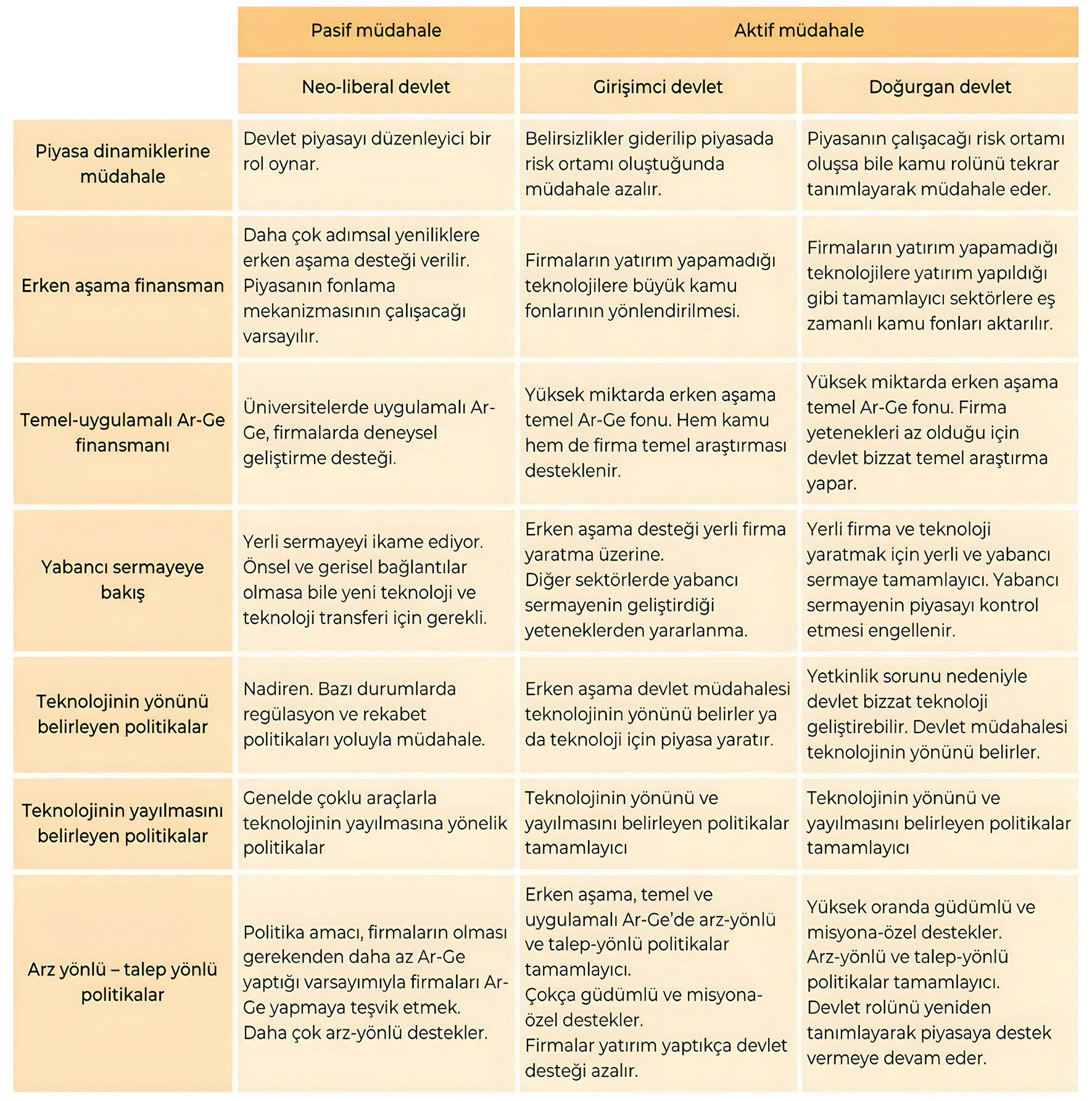
Prof. Dr. İbrahim Semih Akçomak: Prof. Dr. İbrahim Semih Akçomak: The government’s increased intervention in the market is, in fact, a prevailing tendency. When did it commence? This tendency has arisen in Europe and America after 2010-2015, indicating its development over the past decade, or possibly even less. A policy framework exists wherein the government intervenes in the market more effectively and, at times, establishes the market, facilitating the development of specific technologies through various tools in the early stages. Turkey is endeavoring to align with this trend in some capacity. Generally, when considering the role of the government, it should be more proactive; however, at what stage should this occur? There exist two distinct opinions on that matter. One of these is the concept known as the entrepreneurial state. Uncertainty is a critical feature in technology development. In an atmosphere of uncertainty, corporations refrain from investing, necessitating government intervention to stimulate corporate investment. If it is unable to achieve this, the government independently invests and seeks to transform the climate of uncertainty into one of risk. But when a risk environment starts to form, it gradually pulls back from supporting this technology or sector. In this regard, we see the example of an entrepreneurial state structure in America, France, and Germany. And then there is a more procreative state structure, as we would say, like the one in China, South Korea, and Taiwan.
The concept of the procreative state refers to a state that, like an entrepreneurial state, endeavors to transform the uncertain landscape of technological production into a manageable risk environment. However, even in the face of a risky environment, it persistently redefines its position and supports the industry and technology. Companies and technology are perceived as the embodiment of the market. A market is evolving, although it is evident that the government consistently influences its development. This occurs via many funding channels. It is one of the countries that effectively utilizes Chinese development banking. They constructed a versatile structure capable of facilitating substantial financial transfers to corporations. Furthermore, they instituted public economic businesses. In industries such as automotive and computer technology, they created two or three public economic entities and facilitated competition among them. They established a state capacity capable of designing diverse organizations and policy instruments. By the government continuously redefining its role, I refer to the persistent engagement in active market intervention through various policy instruments. Not merely “initially, to furnish funding during the nascent phases, to participate, after which disengage from this technology or sector.” I am referring to the government persistently rethinking its role and supporting that sector until it genuinely establishes itself as a technology leader. The most exemplary sector in China is, in fact, information technology. Prior to the early 2000s, had China functioned as an entrepreneurial state, it would have established enterprises such as Huawei, then receded to see the market mechanism in action. However, it did not accomplish that. They successfully established an information technology industry capable of developing the 5G standard due to the government’s continued backing for these enterprises.
Need for Quantitative and Qualitative Impact Analysis What strategies should be employed for the optimal allocation and utilization of constrained resources in science and technology via government investments to attain maximum effect and value?
Prof. Dr. İbrahim Semih Akçomak: Two significant factors exist. The initial aspect is government capability. The current mission-oriented policies I referenced, which involve a more proactive role for the state, or the new industrial strategy, entail a highly intricate array of policy designs. They can be highly subjective, frequently constituting interventions that lack a rule-based framework. This is occasionally subject to criticism. A regulatory-based policy framework has been advocated by mainstream economics. This comprehension frequently transcends it. Consequently, he frequently faces criticism. However, the execution of programs advocating for increased government intervention necessitates substantial governmental capability. This indicates that bureaucrats and public officials in the state must possess specific competences related to human capital. Simultaneously, effective state organization is essential for our adaptation to this new policy framework. For instance, notions like continuity, adaptability, resilience, and cooperation emerge prominently. The second aspect is that to accurately discuss efficiency and impact, an impact study must be conducted. The notion is fundamentally straightforward. Consider a policy framework. The government intervenes with companies involved in research and development, as well as innovative initiatives, and allocates specific money. Does this investment genuinely produce a measurable impact? For instance, the government promotes research and development investments and allocates cash for R&D to corporations. Do R&D subsidies alter corporate behavior about research and development activities? Do firms begin allocating their own resources to research and development? Are they beginning to get further patents? Is it possible for them to generate additional employment opportunities? It is essential to assess the efficacy of the policy instruments by examining several output variables. This is referred to as quantitative impact analysis. The qualitative impact analysis is significant for that reason as well. The quantitative impact study indicated that the policy design was ineffective. The government did not exert the anticipated level of influence. The government must pose the inquiry “why.” “When it inquires, ‘Why and how can we enhance this?’ we must perform a qualitative analysis.” At the organizational level, we must engage directly in the field and inquire, “Indeed, we have organized these supports in this manner, but what is ineffective, and what do you perceive as lacking?” We ought to inquire, “How can we reorganize this?” This is significantly connected to government capacity. In countries with robust government capability, impact analysis has been included in policymaking, becoming nearly intrinsic to the process. An initial impact assessment must be performed prior to policy formulation. “What results do we anticipate from the policy design, how will it impact which stakeholders, does the innovation system genuinely require such a design, and does it possess the capability to derive benefits from it?” Subsequently, upon the implementation of the policy, a mid-term impact assessment is required. An effect analysis is performed at the conclusion of the policy design or after an extended duration. Policies must be crafted with flexibility in mind. When design issues occur, data from both quantitative and qualitative impact analyses is utilized to promptly address those issues. The policy design must be adjusted in accordance with the knowledge. In instances when this is not accomplished, we cannot discuss any influence or efficacy. Policy designs must be based on data.
A Setting for Competency Assessment Mitigates Brain Drain Are the existing science and technology strategies being executed effectively in mitigating brain drain in Turkey? What variables inhibit their effectiveness?
Prof. Dr. İbrahim Semih Akçomak: The current policy framework contains limited specialized designs intended to mitigate brain drain and attract foreign talents. Programs such as TÜBİTAK 2232 are designed to incentivize researchers who are citizens of the Republic of Turkey and possess research experience in natural sciences, engineering and technology, social and human sciences, medical sciences, and agricultural sciences to return to Turkey from abroad and resume their work domestically. I am uncertain about the efficacy of those designs. There is a great demand for intellectual talent in the domains of Science, Technology, Engineering, and Mathematics (STEM) in both Europe and America. Specialized programs are established to cultivate a workforce in STEM subjects, deter emigration, and attract foreign immigrants. Occasionally, these foster specific sectors and technology, thereby generating a workforce. Occasionally, it offers direct assistance to the labor. It provides certain benefits; for instance, a segment of the wage is exempt from taxation. Competent individuals are primarily drawn to environments that facilitate the application of their skills.