Introduction
Following the establishment of the People’s Republic of China in 1949, the nation rapidly encountered diplomatic isolation due to a complicated international landscape. Western nations, spearheaded by the United States, claiming ideological disparities and global strategic interests, declined to acknowledge the new Chinese government and sought to restrict its advancement through economic
sanctions and military intimidation. By that time, the Cold War framework had already been established, prompting the United States’ position on China to compel the Communist Party of China to forgo collaboration with the United States, opt for an alliance with the Soviet Union for survival and security, and adopt a “Leaning to One Side” diplomatic approach. “Leaning to One Side” emerged as the foundational tenet of New China’s diplomatic strategy during that period and served as a significant manifestation of its revolutionary diplomacy.
This circumstance compelled New China to progressively seek a means to overcome isolation, foster collaboration with developing nations by endorsing anti-imperialist and anti-colonial initiatives, and establish the groundwork for its subsequent integration into the international system. In April 1955, delegates from 29 Asian and African nations convened in Bandung, Indonesia, for the inaugural Asia-Africa Conference, often known as the Bandung Conference. The Bandung Conference was the inaugural extensive international assembly convened by Asian and African nations to deliberate on regional matters and the concerns of their peoples, excluding Western colonial powers. The Bandung Conference marked the commencement of China’s diplomatic strategy, transitioning from the predominant “Leaning to One Side” revolutionary ideology to a policy of seeking common ground while setting aside disagreements and promoting peaceful coexistence.
Before the Bandung Conference: From “Leaning to One Side” to peaceful coexistence
The historical logic of the “one-sided” diplomatic strategy
In the initial years following the establishment of the People’s Republic of China in 1949, it adopted a “Leaning to One Side” diplomatic strategy, aligning politically with the Soviet Union and collaborating with nations within the socialist bloc, thus standing by the socialist countries led by the Soviet Union. The “Leaning to One Side” policy encompasses two key aspects: Initially, a thorough political disengagement from capitalist nations, eliminating all misconceptions regarding Western countries. Second, avoiding a stance of straddling
two boats—one foot in socialism and the other in Western capitalism (Liu, 2004Liu, M. (2004). Socialism with Chinese characteristics. Beijing: Tsinghua University Press.). The “Leaning to One Side” policy, signifying China’s unequivocal endorsement of the socialist bloc, also mirrored New China’s perception of nationalist nations, significantly shaped by the Soviet Union’s dichotomous camp theory. This perspective posits that nationalist nations were deemed components of the Western imperialist bloc, and any ideologies labeled as “revisionist” or “neutralist”—those lacking a strong alignment with socialism—were deemed unacceptable. This method seemed to be an unavoidable selection for New China’s domestic and international policies. This diplomatic strategy stemmed from various internal and external influences operating concurrently throughout the Cold War (Li, 2017Li, T. (2017). A study on China’s “lean to one side” foreign policy in the early years of the PRC. Journal of Luoyang Institute of Science and Technology (Social Science Edition), 32, 74–78.). Concerning the origins of the “Leaning to One Side” foreign policy, Chinese scholars highlight the crucial influence of ideological and historical elements, asserting that this policy’s development was predicated on the Chinese Communist Party and the government’s evaluation of national interests (Cheng, 2007Cheng (2007). The source article does not provide a separate full bibliographic entry for this citation.), ideology (Liu, 2006Liu, J. (2006). International strategy and Chinese diplomacy. Contemporary Chinese History Studies, 1.), and international conditions, especially the interplay of political dynamics involving China, the United States, and the Soviet Union (Wu, 2011Wu, C. (2011). Establishing the “lean to one side” foreign policy: An international perspective. Journal of the University of International Relations, 3.). This policy resulted from a thorough analysis and assessment of multiple aspects.
At that juncture, the conflict between the two camps had already crystallized, with the stark ideological and social system split being the most salient characteristic of international relations. The U.S. strategy of endorsing Chiang Kai-shek and countering communism exacerbated the nascent China’s inclination to forge an alliance with the Soviet Union to safeguard its national interests. Scholars typically analyze the fundamental implications of the “Leaning to One Side” foreign policy from two viewpoints: “alliance” and “independence.”
The primary implication of the “Leaning to One Side” foreign strategy asserts that the Chinese revolution was integral to the global proletarian socialist revolution and underscores that China’s revolutionary success was contingent upon the support of the socialist Soviet Union. This approach aimed to forge an alliance with the Soviet Union to obtain robust external backing (Li, 2017Li, T. (2017). A study on China’s “lean to one side” foreign policy in the early years of the PRC. Journal of Luoyang Institute of Science and Technology (Social Science Edition), 32, 74–78.). Moreover, independence served not only as the foundation for the Chinese Communist Party’s formulation of the “Leaning to One Side” foreign policy but also as the core concept it steadfastly maintained throughout its execution. The primary objective of the policy was to uphold national sovereignty and dignity in international relations while preventing external interference in China’s domestic affairs, relying on the strength of its people rather than foreign powers to safeguard national security and foster economic development.
One of the important manifestations of “Leaning to One Side”: The Korean War
Shortly after the establishment of New China, in order to protect its sovereignty and security, and guided by the diplomatic policy of “Leaning to One Side,” China engaged in military conflicts to support Vietnam against France and the United States, as well as North Korea, to defend the socialist bloc.
Initially, according to plans articulated by those like George Kennan, U.S. military deployments during the Cold War were to emphasize Europe. The establishment of the People’s Republic of China in 1949 and the Soviet Union’s successful detonation of its inaugural atomic bomb necessitated a strategic pivot by the United States towards the East Asian region (Christensen, 1996: 85Christensen, T. J. (1996). Useful adversaries: Grand strategy, domestic mobilization, and Sino-American conflict, 1947-1958. Princeton University Press.; Chang, 1990: 29–41Chang, G. H. (1990). Friends and enemies: The United States, China, and the Soviet Union, 1948-1972. Stanford University Press.).
The Korean Peninsula, governed by wartime accords and a temporary trusteeship jointly administered by the United States and the Soviet Union, inevitably emerged as the most unstable and violent area in East Asia during the Cold War. On September 8, 1949, U.S. forces commenced landings at Incheon and Busan, while Soviet troops stationed south of the 38th parallel progressively retreated northward, delineating a divide of the peninsula along the 38th parallel (Niu, 2015Niu, J. (2015). From Cairo to Bandung: The Origins of the Post-war East Asian Order (1943-1955). Journal of Historical Sciences, 6, 7-30.).
The partition of the peninsula resulted in the establishment of two governments in North and South Korea, a circumstance deemed intolerable by Koreans on both sides of the demarcation. The regime of Kim Il-sung in North Korea promptly initiated diplomatic endeavors to garner support from the Chinese Communist Party and the Soviet Union for the forcible unification of the peninsula. In May, Kim Il-sung’s emissary, Kim Il, clandestinely visited China and conferred with Mao Zedong, who counseled North Korea to forgo the notion of launching an assault (Kovalev, 1949/2003). On December 26, during his inaugural visit to Moscow, Mao Zedong informed Stalin that “the paramount issue now is to secure peace” and that “resolving China’s critical issues is contingent upon the prospect of peace” (Stalin & Mao, 1949Stalin & Mao. (1949/2015). Records of Stalin-Mao meetings: Sino-Soviet treaty and the Taiwan issue. In Z. Shen (Ed.), Selections from Russian declassified archives: Sino-Soviet relations, 1949.3–1950.7 (Vol. 2, pp. 175– 178). Oriental Publishing Center./2015Stalin & Mao. (1949/2015). Records of Stalin-Mao meetings: Sino-Soviet treaty and the Taiwan issue. In Z. Shen (Ed.), Selections from Russian declassified archives: Sino-Soviet relations, 1949.3–1950.7 (Vol. 2, pp. 175– 178). Oriental Publishing Center.). Due to geopolitical security concerns, Mao Zedong initially pursued a peaceful growth environment for the nascent Chinese rule and opposed North Korea’s use of military action.
Nonetheless, neither the United States nor the Soviet Union intended to uphold peace on the Korean Peninsula. In January 1950, U.S. President Truman directed the State and Defense Departments to reevaluate America’s objectives in both war and peace, as well as the implications of those objectives on strategic planning (Mitrovich, 2000: 50Mitrovich, G. (2000). Undermining the Kremlin: America’s strategy to subvert the Soviet bloc, 1947-1956. Cornell University Press.). The request resulted in the formulation of
NSC-68, a strategy document that first predicted a possible military confrontation with the Soviet Union, designating 1954 as “the most perilous year” (U.S. Department of State, 1950: 267U.S. Department of State. (1950). F oreign relations of the United States (FRUS), 1950 (Vol. 1). U.S. Government Printing Office.). This plan demonstrated the United States’ urgent intention to mobilize domestically for rivalry with the Soviet Union, prioritizing crisis mitigation and peace maintenance as secondary concerns (Wang, 2024Wang, Y. (2024). From peaceful coexistence to a shared future for mankind: A historical leap. Qiushi, (14).). Equipped with nuclear capabilities, the Soviet Union grew increasingly assertive in its interactions with the United States and implemented interventionist tactics on the Korean Peninsula. Upon discovering that the United States had diminished its support for the Syngman Rhee administration, the Soviet Union promptly devised military assistance strategies for North Korea. On January 30, during discussions between Mao Zedong and Stalin over assistance to the Vietnamese Communist Party, Stalin communicated via telegram to Kim Il-sung his readiness to host Kim in Moscow and offer requisite support after assessing the circumstances (Stalin & Mao, 1949Stalin & Mao. (1949/2015). Records of Stalin-Mao meetings: Sino-Soviet treaty and the Taiwan issue. In Z. Shen (Ed.), Selections from Russian declassified archives: Sino-Soviet relations, 1949.3–1950.7 (Vol. 2, pp. 175– 178). Oriental Publishing Center./2015Stalin & Mao. (1949/2015). Records of Stalin-Mao meetings: Sino-Soviet treaty and the Taiwan issue. In Z. Shen (Ed.), Selections from Russian declassified archives: Sino-Soviet relations, 1949.3–1950.7 (Vol. 2, pp. 175– 178). Oriental Publishing Center.).
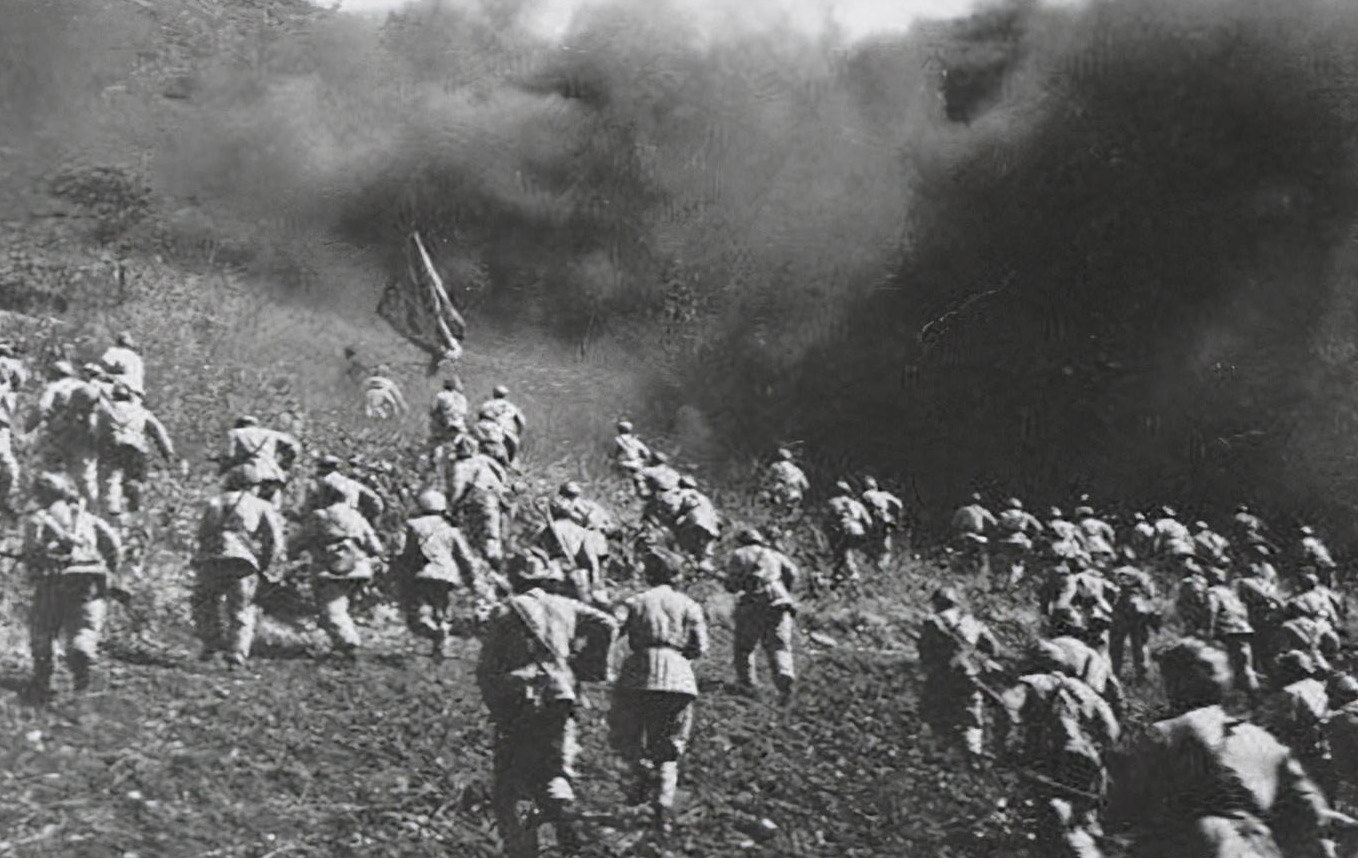
The Korean War commenced on June 25, 1950. The Korean Peninsula serves as a natural barrier for China’s northeastern territory, posing a direct security threat for China. China would face a direct threat if the entire peninsula were to fall under American control. Alongside geopolitical security reasons, China’s “Leaning to One Side” policy significantly influenced its actions, positioning North Korea, a socialist state, as a natural ally due to its ideological affinities with China and the Soviet Union. This common ideology bolstered collaboration between the two nations, prompting China to unequivocally support North Korea to maintain a congenial and reasonably stable neighbor.
By endorsing North Korea, China not only reinforced its standing within the socialist bloc but also augmented its strategic security in the context
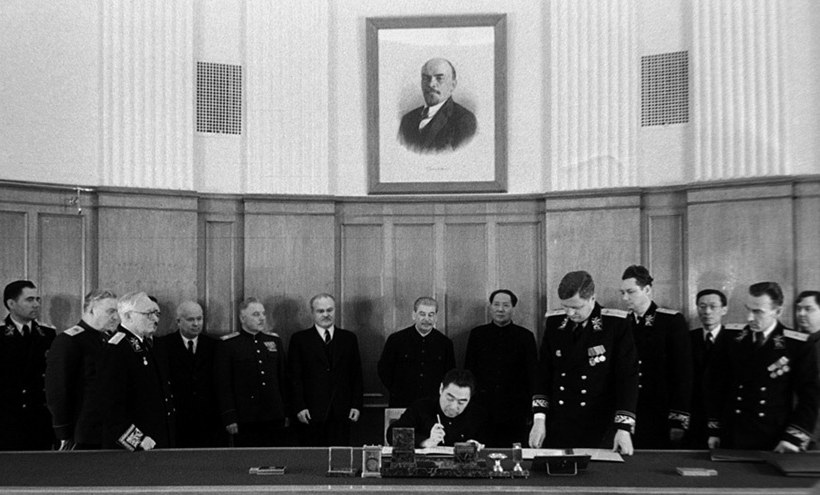
of the Cold War. This stance resulted in extended conflict with Western nations, complicating China’s diplomatic relations. In the final phases of the war, Chinese officials redirected their attention to domestic economic development and modified foreign policy to enhance the regional environment and uphold national security, as the Korean conflict became increasingly localized. Since the signing of the Sino-Soviet Treaty of Friendship, partnership, and Mutual Assistance on February 14, 1950, Mao Zedong and the Chinese Communist Party have sought to forge an equitable partnership with the Soviet Union, rather than a subordinate one. Relations with other socialist nations were governed by the ideals of peaceful coexistence, emphasizing mutual equality and sovereignty.
In 1953, at the concluding phase of the Korean War armistice negotiations, India was designated as the chair of the Neutral Nations Repatriation Commission. According to the Korean Armistice Agreement, India, as a non-combatant nation, was tasked with overseeing the repatriation of prisoners of war. This position facilitated regular engagements between India, China, North Korea, and United Nations forces. During the negotiations, Chinese Premier and Foreign Minister Zhou Enlai engaged with Indian Prime Minister Jawaharlal Nehru via diplomatic channels over prisoner return and the execution of the armistice agreement. Notwithstanding the disparities on the issue, the interactions fostered mutual confidence and established a basis for future Sino-Indian relations (Kim, 1993Kim, H. J. (1993). The partition of Korea after World War II: A global history. Palgrave Macmillan.).
Moreover, India’s impartial diplomatic stance affected China’s management of major power relations throughout the Cold War. This experience established the theoretical basis for the subsequent promotion of peaceful coexistence and the non-aligned movement by the two governments among Third World nations.
The Proposal of the Five Principles of Peaceful Coexistence
The Korean War exacerbated the antagonistic relationship between the two camps of the Cold War, with China firmly aligned with the Soviet bloc and significantly disdained by the West. The demise of Stalin in 1953 presented China with a pivotal opportunity to adjust and finally relinquish its “Leaning to One Side” diplomatic approach. The “Leaning to One Side” policy enabled the nascent China to solidify its standing in a polarized ideological landscape, safeguard the new regime’s development, and facilitate post-war economic recovery; however, it also inherently embodied a bias stemming from ideological disparities. This approach, by delineating ideological boundaries in international relations, curtailed China’s autonomy in its interactions with Western nations and newly sovereign nationalist states in Asia and Africa. It also diminished China’s diplomatic flexibility and obstructed the pursuit of independence and essential national interests. In order to dismantle the Western blockade on the newly established People’s Republic of China and alleviate its frequent diplomatic isolation globally, China aimed to actualize Mao Zedong’s vision of “the Chinese people have stood up.” This endeavor initiated a new era of diplomatic inquiry and endeavor, with one of the most significant accomplishments being the formal introduction of the Five Principles of Peaceful
Coexistence (Yu, 2015Yu, H. (2015). From peaceful coexistence to win-win cooperation: China’s historic choice as a rising power. Public Diplomacy Quarterly, 4, 1–9.). The Five Principles of Peaceful cohabitation, first articulated by Zhou Enlai in 1953, include: mutual respect for sovereignty and territorial integrity, non-aggression, non-interference in domestic affairs, equality and mutual benefit, and peaceful cohabitation. These concepts evolved become a fundamental international diplomatic guidline for China.
In April 1949, Mao Zedong, representing the People’s Liberation Army, articulated two principles for the establishment of diplomatic ties with foreign nations. He asserted that the People’s Republic of China was prepared to forge diplomatic relations predicated on “equality, mutual benefit, and reciprocal respect for sovereignty and territorial integrity” with nations that “do not support the reactionary Kuomintang.” On October 1st, Chairman Mao Zedong proclaimed from the Tiananmen Gate to the world: “We are prepared to establish diplomatic relations with any foreign government that adheres to the principles of equality, mutual benefit, and respect for territorial sovereignty.” Within a year of the establishment of the People’s Republic of China, the nation swiftly and comprehensively eradicated imperialist privileges and influences, instituted the People’s Customs, and, while forging diplomatic ties with the Soviet Union and 11 other socialist nations, secured recognition from 13 countries. The list comprises, in sequential order, the Soviet Union, the Mongolian People’s Republic, Czechoslovakia, Poland, Hungary, Romania, Bulgaria, East Germany, Albania, Vietnam, Yugoslavia, India, and North Korea. The acknowledgment of these nations signified the gradual validation of the worldwide legitimacy of the new China, particularly the formation of diplomatic relations with socialist states. These nations not only acknowledged New China diplomatically but also fostered political and economic collaboration across various dimensions. During this time, New China’s foreign policy underwent significant expansion (Zhang et al., 2015Zhang, B., Lei, Y., & Niu, J. (2015). The Bandung Conference in the historical context: China’s century-long entanglement with the international system. World Affairs, 8, 14–24.). India, Indonesia, Myanmar, Sweden, Denmark, Switzerland, and Finland were the inaugural non-socialist nations to establish diplomatic ties with the new China.
The “Peaceful United Front Policy” originated in 1952 and was fully developed by 1954, centered around the Five Principles of Peaceful Coexistence.
The “Peaceful United Front Policy” originated in 1952 and was fully developed by 1954, centered around the Five Principles of Peaceful Coexistence. In late 1953, the Chinese government, in conjunction with the Indian Ministry of Foreign Affairs, established a delegation comprising Indian representatives, including Gol, the joint secretary of the Indian Ministry, Ambassador Lai Jiawen, and Tibet Studies expert Luba Lakari, to negotiate trade and communication matters between India and Tibet, China. On December 31, Premier Zhou Enlai convened with the delegation in Zhongnanhai and, for the first time, articulated the comprehensive Five Principles of Peaceful Coexistence. On April 29, 1954, China and India executed the “Agreement on Trade and Communication between the Tibet Autonomous Region of China and India,” formally integrating the Five Principles of Peaceful Coexistence into an international treaty. During Premier Zhou Enlai’s visit to Myanmar in June of the same year, he and Myanmar Prime Minister U Nu reaffirmed the Five Principles of Peaceful Coexistence, with Zhou Enlai asserting that these principles
were relevant not only to China’s foreign policy but also to other nations. The assertion was founded on China’s scientific evaluation of the contemporary international context and epitomized the accurate inference derived from past lessons (Wang, 1994Wang, W., et al. (Eds.). (1994). Documentary of the People’s Republic of China: Triumph 1953–1956. Beijing: Red Flag Publishing House.).
During the global landscape of the era, the Cold War between the United States and the Soviet Union intensified in the 1950s, with both powers vying for influence in the Third World. The Soviet Union persistently pursued advancements in the Third World, but the United States endeavored to preserve its dominance in the area, resulting in considerable confrontations between the two superpowers. Conversely, the heightened consciousness of the populations in Asia and Africa, along with the subjugation by colonial administrations, catalyzed anti-imperialist, anti-colonial, and nationalist movements. Individuals in North Africa, Asia, and the Americas revolted in defiance and achieved national sovereignty. Independent nations in Asia and Africa begun to emphasize their impartial position on the global scene. Countries in Asia and Africa, traditionally passive in international forums, began engaged in the early 1950s inside the United Nations and other global platforms. For instance, India, within the United Nations, consistently advocated for Asian and Arab nations to demand a truce in Korea and a diplomatic end to the Korean conflict, audaciously challenging U.S. military policy.
China’s proposal of the Five Principles of Peaceful Coexistence during this period reflected its position and perspective on the rivalry between the United States and the Soviet Union in the Third World. China staunchly resisted imperialism, colonialism, and hegemony, while vigorously endorsing the national liberation movements of Third World nations. China likewise condemned the imprudent actions of the United States and the Soviet Union in the developing world.
The Five Principles of Peaceful Coexistence represented a stance against warfare and involvement in the domestic matters of sovereign nations, alongside a firm repudiation of aggression and militaristic forces. The Five Principles also highlighted that China’s foreign policy was independent and self-determined. Deng Xiaoping asserted, “China does not utilize the American card, nor the Soviet card, and we do not permit others to employ the China card” (Li & Zhu, 2001Li, C., & Zhu, P. (Eds.). (2001). Contemporary international relations. Shanghai: Shanghai Jiao Tong University Press.). China has comprehensively acknowledged the collective aspiration of Third World nations to repudiate power politics and collaborate in the quest for peace. The Five Principles of Peaceful Coexistence, promoted by China, profoundly illustrate its commitment to fostering consensus with Third World nations and reconciling conflicts with them. Consequently, unlike the earlier revolutionary mindset of “Leaning to One Side,” the notion of “seeking common ground while reserving differences” regarding ideology and political systems emerged as the cornerstone of the Five Principles of Peaceful Coexistence. The establishment of these principles prompted a transformation in China’s diplomatic concepts and strategic policies.
In the Bandung Conference: Exploration of New Diplomatic Routes
Preparation for the Conference: The Indonesian Initiative and the Bogor Conference
The concept of uniting Asian and African nations against colonialism predates the Bandung Conference. The nations, spearheaded by India, convened initially in Colombo and subsequently in Bogor to deliberate on the organizing of an Afro-Asian Conference. The countries involved in the Colombo Conference, which was held in April 1954, acknowledged and endorsed the initiative of Indonesian Prime Minister Ali Shastro Amizoyo to organize the Asian-African Conference. Subsequently, at the Bogor Conference in late 1954, the five nations of India, Indonesia, Myanmar, Ceylon (Sri Lanka), and Pakistan released a joint communiqué in which they officially resolved to convene the inaugural Asian-African Conference in 1955, known as the Bandung Conference. In alignment with the “principle of independent government,” the participating nations nominated 30 countries, including China, to attend the Asian-African Conference (National Museum of China, 2021National Museum of China. (2021, March 31). Announcement of the Central People’s Government of the People’s Republic of China. Retrieved November 1, 2024 from).
Prior to the Bandung Conference, in October and December of 1954, Indian Prime Minister Jawaharlal Nehru and Burmese Prime Minister U Nu had already proposed the notion of organizing an Afro-Asian conference during their travels to China. In October 1954, at a meeting organized for Nehru’s visit to China, Premier Zhou Enlai suggested concrete actions to form an international peace coalition and enhance diplomatic initiatives. Zhou categorized countries within the capitalist bloc into three types: the first, spearheaded by the United States, represented the war party; the second, led by the United Kingdom and France, embodied the status quo group; and the third, guided by India, constituted the peace and neutral side. The Chinese government sought to isolate the United States, win over the second group of nations, and combine with the third category (Central Literature Research Office, 1997: 419–420).
Upon the revelation of the proposal to convene the Afro-Asian Conference, Premier Zhou Enlai promptly acknowledged its significance as a historic event, not only for Asia and Africa but
also for contemporary international relations, heralding the commencement of a new era in which Asian and African nations would govern their own destinies. China need to participate in the conference, as it presents a significant opportunity to broaden its diplomatic horizons, enhance international interactions, and forge new alliances. Zhou Enlai articulated his endorsement: “We endorse Indonesian Prime Minister Sukarno’s initiative for the Afro-Asian Conference, along with Prime Minister Nehru’s sponsorship of the event. We are prepared to attend this conference as it promotes Asian and global peace and fosters the expansion of calm zones, which will alleviate tensions” (Tang, 2003: 6Tang, H. (Ed.). (2003). Zhou Enlai’s journey to the Bandung Conference. Beijing: China Workers Publishing House.). Mao Zedong placed significant emphasis on the Afro-Asian Conference, which excluded imperialist and colonialist nations. He assigned Zhou Enlai to personally devise the strategy for China’s involvement in the meeting
It is noteworthy that some pro-Western journalists at the Bogor Conference questioned China’s invitation to the Bandung Conference. Of the 30 countries invited to the meeting, only six Asian nations—Afghanistan, Pakistan, Burma, India, Indonesia, and the Democratic Republic of Vietnam—had established diplomatic relations with China. Among the five founding nations of the conference, Ceylon had not yet established diplomatic relations with China, retaining solely commercial links. However, during the Bogor Conference, the predominant number of Afro-Asian nations endorsed the invitation for China to participate. Burmese Prime Minister U Nu exhibited the most steadfast position, declaring, “If the conference excludes the largest nation in Asia—the People’s Republic of China—then Burma will likewise refrain from attending.”
At that time, China maintained trade agreements with Democratic Vietnam, India, Ceylon, Burma, and Indonesia, semi-official trade accords with Japan and Pakistan, and direct trade relations with Egypt, Syria, and Nepal; nonetheless, it exhibited minimal trade engagement with other Middle Eastern and African nations (Ministry of Foreign Affairs of the People’s Republic of China, 1955Ministry of Foreign Affairs of the People’s Republic of China Archives. (1955). Draft plan for participation in Asian-African Conference trade activities (Revised draft). Archive No. 207-00070-03(1), March 12, 1955.). The data suggests considerable potential for advancement in China’s political, diplomatic, economic, and trade connections with Afro-Asian nations. The invitation extended to China for participation in the Bandung Conference demonstrated the initiating countries’ confidence in China, which had considerable ramifications for China’s endeavors to extricate itself from Soviet influence, adopt an independent and peaceful foreign policy, and enhance its international affiliations. It is noteworthy that certain Afro-Asian nations, influenced and dominated by the United States during that period, held negative perceptions of communist states. For instance, Egypt maintained many contacts with Taiwan throughout that period and subsequently became the inaugural Arab and African nation to establish diplomatic relations with China.
Before the Bandung Conference, China’s connections with Afro-Asian nations were problematic. In light of impediments posed by adversarial forces spearheaded by the United States and the ramifications of the Taiwan Question, the Chinese leadership was compelled to meticulously prepare in advance and steadfastly maintain its position throughout the summit. China aimed to enhance its diplomatic relations with Afro-Asian nations during this critical event, guided by the Five Principles of Peaceful Coexistence (Xia, 2005Xia, L. (2005). China’s efforts to build relations with Asian and African countries before and after the Bandung Conference. Journal of China Foreign Affairs University, 2, 74–80.).
In January 1955, the Ministry of Foreign Affairs finalized the Preliminary Plan for Cultural and Friendship Preparations for Participation in the Afro-Asian Conference, along with the Draft of the Preliminary Work Plan for Participation in the Afro-Asian Conference. On January 15, Indonesian Prime Minister Ali Sastroamidjojo, representing the five initiating nations of the Colombo Conference, cordially invited China to partake in the Afro-Asian Conference scheduled for April in Bandung. On February 10, Premier Zhou Enlai, representing the Chinese government, dispatched a telegram in which he expressed his enthusiastic acceptance of the offer. On April 4, Zhou Enlai composed essential documents, including the Draft Plan for Participation in the Afro-Asian Conference and the Draft Plan for Visiting Indonesia, which were presented for evaluation by Mao Zedong and others. On April 5, Mao Zedong presided over an extended meeting of the Politburo, during which these documents were meticulously examined and ratified. The draft Plan for Participation in the Afro-Asian Conference indicated that China’s overarching policy at the conference should focus on broadening the global peace front, advancing national independence movements, and fostering conditions for the establishment and enhancement of diplomatic and other relations with diverse Afro-Asian nations. This approach fundamentally encapsulated the values of peaceful coexistence. The Chinese delegation was keen to participate in this significant international meeting, which was conducted for the first time without the presence of the Soviet Union (Party History Research Office of the CPC Central Committee, 2011Party History Research Office of the CPC Central Committee. (2011). History of the Communist Party of China (Volume II) (1949–1978). Party History Publishing House.).
Conference process: Zhou Enlai’s diplomatic practice
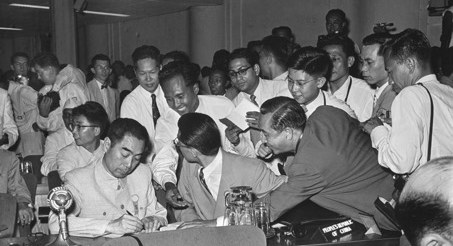
On April 18, 1955, the Bandung Conference opened ceremoniously. During this epoch-making seven-day conference, the Chinese delegation put forward the policy of “seeking common ground while reserving differences” and, based on its pre-established strategy of dealing with possible differences and controversies at the Asian-African Conference, successfully resolved some of the questions and
problems at the Conference, thus making a significant contribution to the successful conclusion of the Conference. According to China’s judgment, the key to overcoming the differences between China and some Asian and African countries that still expressed skepticism towards China lay in clarifying the position of the Chinese government - that is, China, as an independent socialist country, should seek common ground while reserving differences and coexist peacefully with Asian and African countries. At the Bandung Conference, Premier Zhou Enlai formally articulated the Five Principles of Peaceful Coexistence, while clarifying the doubts of certain countries.
In response to the Taiwan Question posed by the U.S. Embassy in Indonesia, China promptly released a statement aimed at alleviating tensions in the Taiwan region, indicating its readiness to engage in negotiations with the United States on equitable terms. The declaration asserted, “The Chinese populace is amicable towards the American populace. The Chinese populace exhibits no inclination to participate in hostilities with the United States. The Chinese government is prepared to engage in negotiations with the U.S. government to address and alleviate tensions in the Far East, particularly concerning the Taiwan region” (Ministry of Foreign Affairs of the People’s Republic of China & Central Documentary Research Office, 1990: 134Foreign Ministry of the People’s Republic of China, Central Document Research Office. (1990). Selected diplomatic works of Zhou Enlai. Beijing: Central Document Publishing House.). Despite the U.S. authorities’ negative reception of Zhou Enlai’s conciliatory stance at the Bandung Conference and their call for United Nations intervention in the Taiwan Question, which China found wholly unacceptable (Developments Over Week End Relating to Chou En-lai’s Negotiation Proposal, 1955Developments Over Week End Relating to Chou En-lai’s Negotiation Proposal (1955). The source article does not provide a separate full bibliographic entry for this citation.), the Chinese delegation’s statement received considerable acclaim from the attending nations. Through a resolute position and adept diplomatic strategies, China successfully alleviated the pressure imposed by the U.S. regarding the Taiwan Question, averting a stalemate at the conference (Li, 2020: 70–85Li, Q. (2020). Reexamining U.S. policy on the Asian-African Conference: From the perspective of the East Asian Cold War. American Studies Quarterly, 34, 70–85.).
Due to the diverse ideologies of the participating countries and the anti-communist propaganda led by hostile forces, such as the United States, many countries harbored doubts and fears about China. At the conference, some even proposed opposing not only colonialism but also communism, arguing against adopting the term “peaceful coexistence” coined by the Chinese Communist Party. Faced with the risk of these intense debates causing the conference to end in discord, Zhou Enlai calmly reassured the participants, stating that he had anticipated attempts by Western powers to manipulate and exacerbate ideological differences among countries. He remarked:
Premier Zhou Enlai declared, “China is a country with freedom of religious belief. It not only has seven million Communist Party members but also tens of millions of Muslims and Buddhists, as well as millions of Christians and Catholics”
“Participants in this conference include countries involved in military treaties, members of the Southeast Asia Treaty Organization or the Baghdad Pact, and even countries in the North Atlantic Treaty Organization. There are socialist countries as well as nationalist ones. Given this diversity, it is natural for many disagreements to arise...” He further elaborated: “Although participating countries have differing opinions, acknowledging these differences itself is a form of agreement! If there is a common ground to be found, it is the Five Principles of Peaceful Coexistence.”
Hearing Zhou’s remarks, several national leaders nodded in agreement and expressed their admiration (Tang, 2003: 299–300Tang, H. (Ed.). (2003). Zhou Enlai’s journey to the Bandung Conference. Beijing: China Workers Publishing House.). Zhou emphasized that while
Asian and African countries differ in ideology and social systems, this should not hinder their pursuit of common ground and solidarity. The Five Principles of Peaceful Coexistence could serve as the foundation for building friendly cooperation and neighborly relations among Asian and African nations. To address the sensitive issue of ideology, which often triggers debates and conflicts, China deliberately adopted a “no debate” strategy, avoiding revolutionary or ideological rhetoric in response to criticism and accusations. By proposing that “acknowledging differences itself constitutes agreement”, China deeply implemented the diplomatic philosophy of seeking common ground while preserving differences. This approach not only defused tensions at the Bandung Conference but also allowed the proceedings to continue, leaving a lasting impression of China’s peaceful posture.
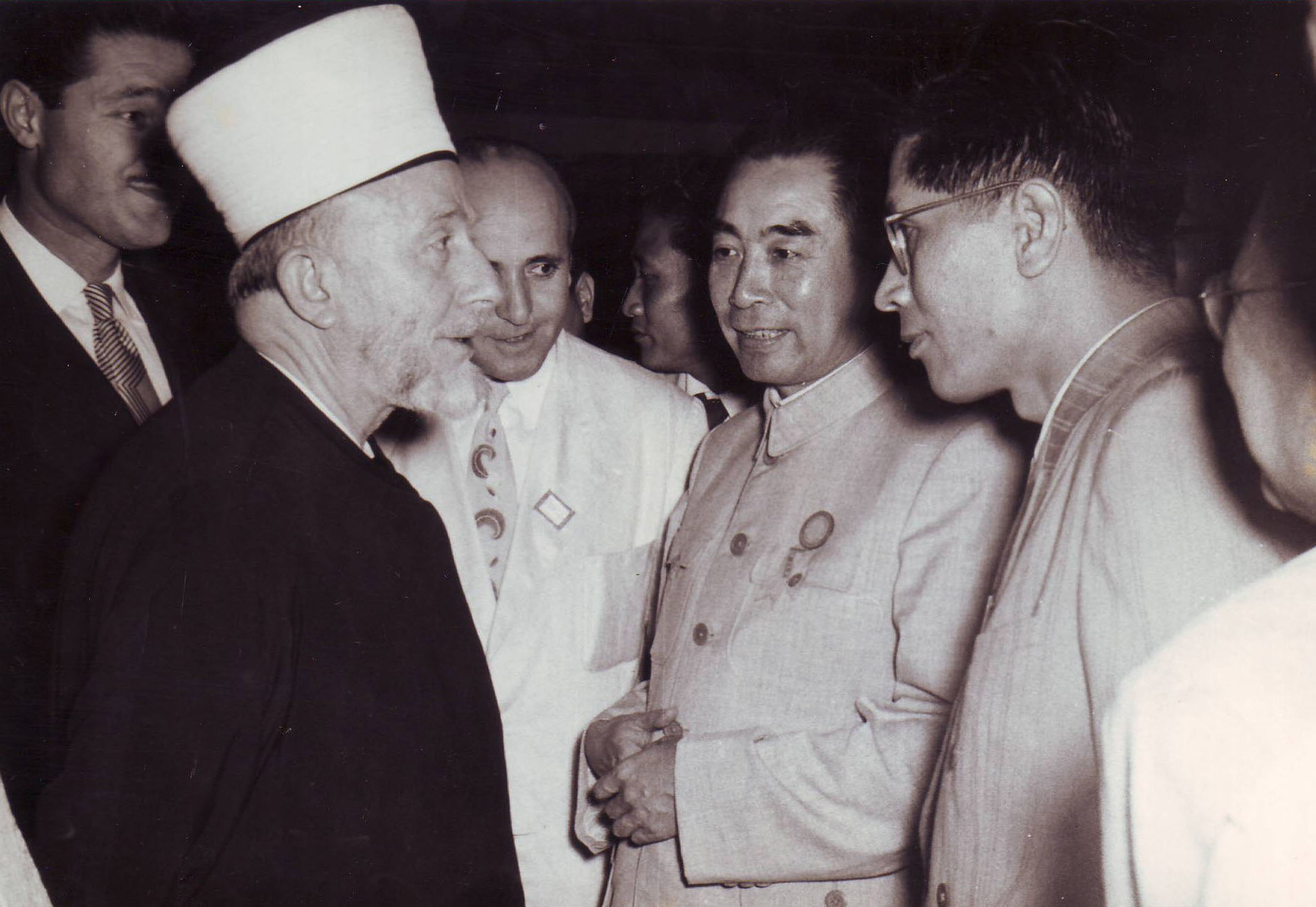
Regarding the issue of religious freedom, China was mindful that many participating countries at the Bandung Conference were Muslim nations. In preparing for the conference, China deliberately invited Da Pusheng, Vice Chairman of the China Islamic Association, to serve as an advisor to the delegation. Zhou Enlai regarded freedom of religious belief as a principle universally recognized by modern nations. While communists are atheists, they respect religious beliefs. In the Asian-African family, individuals with and without religious faith can coexist and unite. Premier Zhou Enlai declared, “China is a country with freedom of religious belief. It not only has seven million Communist Party members but also tens of millions of Muslims and Buddhists, as well as millions of Christians and Catholics” (Central Documentary Research Office, 1997: 466). This statement garnered goodwill from Muslim countries and other nations with religious populations, improving their perception of China.
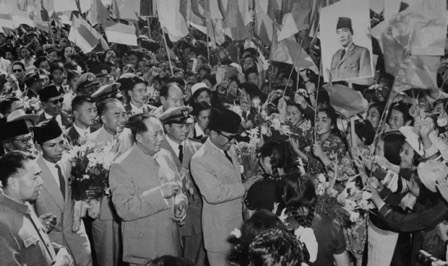
Finally, Premier Zhou Enlai emphasized analyzing the issue of the so-called “exporting revolution” under the previous “Leaning to One Side” policy. The Bandung Conference, as the first in history without the participation of Western colonial powers, aimed to oppose colonial rule and oppression by Western colonial states while also resisting interference and “the export of revolution” by the two superpowers, the United States and the Soviet Union. Although China participated in the conference as an ally of the Soviet Union under the “Leaning to One Side” policy, this underscored China’s efforts in diplomacy to break free from this policy’s constraints and seek greater diplomatic autonomy. The core tasks of China’s participation in Conference were to “expand the global peace united front” and “promote national independence movements”, rather than to advance a global socialist revolution. Zhou Enlai made it clear during the conference that China’s revolution succeeded through the efforts of the Chinese people and was not imported externally. Therefore, the success of China’s revolution would not hinder its peaceful cooperation and solidarity with Asian and African countries. China’s diplomacy was moving away from the Soviet Union’s goal of world revolution and the constraints of the Soviet-Eastern bloc. Instead, it sought to guide its foreign policy with the “revolutionary” paradigm of the Global South, focusing on national independence and liberation rather than the goals of the Western or Soviet blocs (Liu, 2019Liu, Z. (2019). Diplomatic philosophy in the PRC’s 70year history: Revolution, equality, and leadership. Global Review, 11, 33–53 + 153–154.). During the conference, Zhou Enlai also had extensive engagements with leaders of many Asian and African countries, including those without diplomatic relations with China. These interactions laid a solid foundation for China to expand its circle of international friends and overcome diplomatic isolation in the future.
Outcome of the Conference: The Ten Principles of Bandung
On the evening of April 24, 1955, the final plenary session of the Bandung Conference unanimously adopted the Final Communiqué of the Asian-African Conference, the first document in human history issued in the name of 29 Asian and African countries. In the seventh section of the communiqué titled “Declaration on the Promotion of World Peace and Cooperation”, it explicitly stated: “All nations should have the right to choose their own political and economic systems and their way of life in accordance with the purposes and principles of the United Nations Charter” (Tang, 2003: 350–351Tang, H. (Ed.). (2003). Zhou Enlai’s journey to the Bandung Conference. Beijing: China Workers Publishing House.). The communiqué also put forward the historically and practically significant Ten Principles of Bandung, which encompassed the entirety of the Five Principles of Peaceful Coexistence and extended them further. This demonstrated a consensus among Asian and African countries, including China, to continue promoting the Five Principles of Peaceful Coexistence as an international diplomatic norm.
The Bandung Conference represented an effort by New China to transition from “revolutionary diplomacy” to “national diplomacy” in its diplomatic strategic shift.
The Final Communiqué of the Asian-African Conference reached agreements on opposing colonialism and securing and safeguarding national independence and adopted resolutions and declarations aimed at promoting world peace and cooperation. It affirmed the shared aspiration of Asian and African
peoples to oppose aggressive wars and uphold world peace. The Bandung Conference also passed resolutions to enhance economic and cultural cooperation among Asian and African countries, marking a milestone in international political and economic cooperation (Ministry of Foreign Affairs of the People’s Republic of China Archives, 2007: 95–119Foreign Ministry of the People’s Republic of China Archives. (2007). Selected diplomatic archives of the People’s Republic of China (Vol. 2): Chinese delegation attending the 1955 Asian-African Conference. Beijing: World Affairs Press.).
As a newly independent significant power in Asia, Africa, and Latin America, New China actively engaged in the Bandung Conference and contributed constructively, acquiring unparalleled diplomatic influence (Zhang, 2015Zhang, B., Lei, Y., & Niu, J. (2015). The Bandung Conference in the historical context: China’s century-long entanglement with the international system. World Affairs, 8, 14–24.). Zhou Enlai’s diplomatic strategies garnered overwhelming acclaim from the participating nations and astonished the global community. Shortly after the conference, the U.S. Department of State evaluated the Bandung Conference in a telegram, observing that Zhou Enlai “largely succeeded in convincing other delegations of the peaceful nature of Peking’s intentions and the feasibility of peaceful coexistence with Communist China. He further elevated his personal stature as an Asian leader.” The report additionally said that Zhou “may have established the foundation at Bandung for a succession of peace initiatives and for the eventual recognition of Communist China within the international community, especially in the United Nations. Zhou has significantly elevated the worldwide stature of his regime by approving a moderate, statesmanlike closing communiqué and highlighting ideals aligned with the United Nations.” The assessment determined, “Regardless of his intentions, Zhou’s actions at Bandung appear to have instigated a shift in the Cold War, marked by a revitalized optimism regarding the prevention of armed conflict—a shift that may, in reality, complicate the maintenance of peace” (U.S. Department of State, 1955State Department of the United States. (1955, May 2). Outgoing telegram from Department of State to American Embassy Moscow, No. 916. RG 59, General Records of the Department of State 1955–1959, General Decimal File, Box 2670. NARA II.). This illustrates that Zhou Enlai’s diplomatic initiatives profoundly ingrained China’s peaceful stance within global awareness. The Bandung model, defined by the pursuit of commonality while acknowledging differences and promoting peaceful coexistence, is set to have a significant and enduring impact on the global arena.
The Bandung Conference represented an effort by New China to transition from “revolutionary diplomacy” to “national diplomacy” in its diplomatic strategic shift. During the meeting, the Chinese delegation, led by Zhou Enlai, deliberately minimized and circumvented ideological and social system elements characteristic of revolutionary diplomacy. This event marked a pivotal transition in China’s departure from the “leaning to one side” approach towards an independent foreign policy of peaceful coexistence, liberating itself from the limitations of the bipolar bloc theory. The Bandung Conference was the inaugural extensive international assembly attended by China in the absence of Soviet involvement. Zhou Enlai abstained from overly defending the Soviet Union or devising policies under its influence. This incident illustrated that, despite its collaboration with the Soviet Union, China upheld an independent position in its foreign policy. In a telegram dispatched by the U.S. Department of State to the American Embassy in Moscow in February 1955, the Department observed, “Zhou Enlai’s actions suggest that he aims to foster the perception that Asian nations could coexist harmoniously with Peking without becoming embroiled in the geopolitical rivalry between Moscow and Washington” (Outgoing Telegram from Department of State to American Embassy Moscow, 1955State Department of the United States. (1955, May 2). Outgoing telegram from Department of State to American Embassy Moscow, No. 916. RG 59, General Records of the Department of State 1955–1959, General Decimal File, Box 2670. NARA II.).
After the Bandung Conference: The evolution of Chinese Foreign policy
Subsequent to the Bandung Conference, China persisted in its endeavors to fortify links with Asian and African nations. In July 1955, the Ministry of Foreign Affairs presented the Opinions on Enhancing and Cultivating Friendly Relations with Asian and African Nations. The Chinese government underscored its commitment to cultivating such partnerships by submitting the Asian-African Conference (Draft) to the central government. The draft recommended drawing insights from the Asian-African Conference and offered essential steps in various domains: fostering amicable encounters, increasing publicity initiatives, conducting research, and training personnel for engagements with Asian and African nations (Xia, 2005Xia, L. (2005). China’s efforts to build relations with Asian and African countries before and after the Bandung Conference. Journal of China Foreign Affairs University, 2, 74–80.). During these initiatives, adhering to the Five Principles of Peaceful Coexistence, China cultivated amicable diplomatic relations with various Asian and African nations, signifying the second wave of diplomatic recognition in China’s contemporary diplomatic history. From April 1955, upon the conclusion of the Bandung Conference, to 1964, China forged diplomatic relations with 25 Asian and African countries. In late May 1956, China and Egypt released a joint communiqué establishing diplomatic ties, so Egypt became the inaugural African nation to recognize the People’s Republic of China. This accomplishment was inextricably linked to the robust camaraderie established between Premier Zhou Enlai and Egyptian Prime Minister Nasser during the Bandung Conference. By 1964, 30 of the 49 nations that had formed diplomatic relations with China were nationalist countries from Asia and Africa, representing the majority. Moreover, Latin American countries also overcame U.S. opposition to engage in friendly exchanges with China, significantly improving China’s international standing.
During the global surge of national liberation, China served as a crucial catalyst. The Five Principles of Peaceful Coexistence were introduced, encapsulating aspects of idealism and experimentation. These concepts encompassed universal values in international relations, facilitating their broad acceptance.
It is important to recognize that the constant adherence to and application of the Five Principles as diplomatic norms for developing nations has been a protracted historical endeavor. Subsequent to the Bandung Conference, China’s endorsement of revolutionary movements in Asia, Africa, and Latin America—especially in neighboring Southeast Asian nations—partially contravened the principle of “non-interference in internal affairs” outlined in the Five Principles. The revival of revolutionary diplomatic thought from the pre-Bandung period signified an intricate stage in China’s diplomatic strategy, which developed through experimentation. Following the establishment of the People’s Republic of China, the nation encountered dual challenges: navigating international affairs at the state level and bolstering revolutionary movements within the socialist camp. The former necessitated compliance with fundamental principles of international relations, whereas the latter required the execution of proletarian internationalist duties (Zhang et al., 2015Zhang, B., Lei, Y., & Niu, J. (2015). The Bandung Conference in the historical context: China’s century-long entanglement with the international system. World Affairs, 8, 14–24.).
Observing both domestic and international circumstances, Mao Zedong formulated the strategic concept of the “Three Worlds” and frequently emphasized China’s position as a Third World country in diplomatic engagements, initiating adjustments to China’s foreign policy.
Beginning in the late 1950s, numerous evaluations by China regarding the international and domestic landscape—such as “the Eastern wind prevails over the Western wind,” “the world revolution is on
the verge of its climax,” and “revolution causes war or revolution eliminates war”—suggest that China’s perception of the world during that period was somewhat skewed. Mao Zedong first endorsed the Five Principles of Peaceful Coexistence put forward by Zhou Enlai. He ultimately saw that these concepts did not truly embody the fundamental principles of proletarian internationalism. After Mao attended the Moscow meeting of world communist and workers’ parties in 1957, the divergence in their understanding of international affairs deepened. This shift led China to adopt a more radical stance in the postwar national liberation movements. By the time of the “Cultural Revolution,” China became increasingly self-isolated, positioning itself as the center of world revolution. China had joined the international system and sought to reform and perfect it, but for a period, China made certain missteps and took a detour. Due to various factors, the status of the Five Principles of Peaceful Coexistence within China’s foreign policy fluctuated during this time. These principles, however, is still reflected in China’s diplomatic practices, particularly in adhering to multilateral diplomacy and strengthening cooperation with developing countries. For instance, in 1956, when the Egyptian government announced the nationalization of the Suez Canal and faced intervention from Western nations, China firmly supported Egypt’s decision in international forums (Luo, 1998Luo (1998). The source article does not provide a separate full bibliographic entry for this citation.). Similarly, in the 1960s, China actively responded to the needs of Tanzania and Zambia by providing assistance to construct a railway connecting the two countries, supporting African nations in achieving independence and economic development (Zhou, 2000Zhou (2000). The source article does not provide a separate full bibliographic entry for this citation.).
By the early 1970s, as political forces in other regions of Asia, Africa, and Latin America gained momentum, China achieved significant breakthroughs in its diplomacy: in October 1971, the People’s Republic of China regained its legitimate seat at the
United Nations; in February 1972, the issuance of the Joint Communiqué between China and the United States marked the beginning of normalized relations between the two nations. Observing both domestic and international circumstances, Mao Zedong formulated the strategic concept of the “Three Worlds” and frequently emphasized China’s position as a Third World country in diplomatic engagements, initiating adjustments to China’s foreign policy.
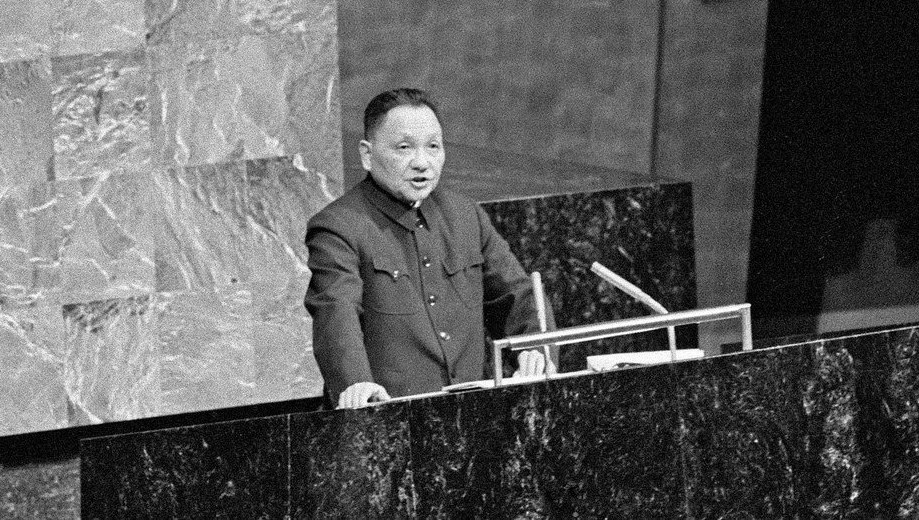
The “Three Worlds” strategic concept was elaborated by Deng Xiaoping at the United Nations on April 10, 1974. Deng stated, “From the changes in international relations, the world today can be divided into three interconnected yet contradictory aspects, or three worlds. The United States and the Soviet Union constitute the First World. Developing countries in Asia, Africa, Latin America, and other regions form the Third World. Developed countries situated between these two constitute the Second World.”
He further pointed out, “The United States and the Soviet Union are the greatest international exploiters and oppressors of our time... The vast majority of Third World countries were once colonies or semi-colonies, and after gaining independence, they still face the historical tasks of eliminating the remnants of colonialism, developing their national economies, and consolidating their national independence. Third World countries strongly demand changes to the highly unequal international economic relations and have proposed many reasonable reform initiatives, which the Chinese government and people warmly support and firmly endorse” (Shi, 2024: 14-15Shi, Y. (2024). “China belongs to the Third World”: The 50th anniversary of the “Three Worlds” strategic concept. China Archives, (03), 14–15.).
After the launch of the Reform and Opening-Up policy, under the influence of Deng Xiaoping, opposing hegemonism, maintaining world peace, and strengthening solidarity and cooperation with the Third World increasingly became core elements of China’s foreign policy.
In May 1984, while outlining the fundamental principles of contemporary Chinese diplomacy, Deng Xiaoping emphasized: “China currently belongs to the Third World, and even when it develops and becomes prosperous in the future, it will still belong to the Third World” (Deng, 1993: 56Deng, X. (1993). Selected works of Deng Xiaoping (Vol. 3). Beijing: People’s Publishing House.). Chinese leaders increasingly used the term “independent and peaceful foreign policy” to summarize the country’s basic diplomatic approach during international exchanges. Following the end of the Cold War in the 1990s, China’s basic foreign policy withstood significant global changes and remained largely consistent. It continued to evolve by incorporating new elements in response to shifting circumstances, demonstrating stability and continuity while establishing a comprehensive framework for external relations.
Conclusion
The Bandung Conference served as a pivotal moment in the evolution of New China’s diplomatic strategy, establishing a pragmatic basis for the Five Principles of Peaceful Coexistence. The Bandung Conference illustrates that substantial advancements in international cooperation can only be achieved by pursuing shared objectives while honoring differences. Amidst nations with varied ideologies and divergent interests, the People’s Republic of China has adeptly mitigated disputes and achieved extensive consensus by prioritizing commonalities while setting aside disparities. The diplomatic principles and the ethos of togetherness, camaraderie, and collaboration exemplified by the Bandung Conference remain profoundly relevant today, 70 years post-anniversary. Since that time, China’s diplomatic decisions in response to the evolving global landscape have been defined by confusion, passivity, and diversion; yet, they have generally progressed under the framework of the Five Principles of Peaceful Coexistence.
Since the 18th National Congress of the Communist Party of China, China has entered a new era, with the Central Committee, led by Xi Jinping, introducing the concept of building a community with a shared future for mankind. This is a significant enrichment and development of the idea of peaceful coexistence in the modern context. Amid challenges to globalization and complexities in international relations, China adheres to the Five Principles of Peaceful Coexistence, advocating for dialogue and consultation to resolve differences and promoting the construction of a new type of international relations and a community with a shared future for mankind. This initiative is the best continuation, promotion, and elevation of the principles of peaceful coexistence, providing new answers to the questions of “what kind of world to build and how to build it” in the current era (Wang, 2024Wang, Y. (2024). From peaceful coexistence to a shared future for mankind: A historical leap. Qiushi, (14).). During the Bandung Conference, China successfully broke Western isolation and blockades, establishing itself as a reliable partner for Third World countries. Today, through multilateral platforms such as the BRICS cooperation mechanism and G20 summits, China collaborates with developing countries to advocate for reforms in the global governance system. The Belt and Road Initiative, proposed in 2013, emphasizes infrastructure construction and economic cooperation to enhance connectivity with countries along its routes. This demonstrates China’s commitment to peaceful development and international cooperation, reflecting the enduring value of the Bandung Conference in contemporary global strategies.