Introduction
The unassuming international conference, convened in 1955 in a secluded region of Asia, Bandung, Indonesia, emerged as one of the most significant international gatherings of the 20th century. This year commemorates the 70th anniversary of the conference. The Asia-Africa Conference, referred to as the Bandung Conference, emerged as a beacon of optimism, illuminating the circumstances of a post-war world
ensnared in significant tension between two political factions, amidst the lingering devastation of pre-war ruins and the persistence of colonialism. The Final Declaration of the Conference, finalized on April 24, 1955, serves as the principal document affirming the independence and equality of both large and small nations, their collaboration in economic and cultural domains, the Asian-African stance against racial discrimination, the right to self-determination for nations, and the principle of peaceful coexistence.
In the latter half of the 20th century, humanity significantly eradicated severe colonialism, somewhat bridging the disparity between small and large nations, while fostering enhanced economic and cultural collaboration among developing countries. The Non-Aligned Movement, which gained significant influence in the international sphere throughout the 1960s and 70s, controlled the United Nations General Assembly and made substantial contributions to global peace. Palestinian author Edward Said articulates the historical significance of Bandung with the following statement: “The Bandung Conference, convened in 1955, represents the most pivotal political initiative in history, wherein the East collectively attained its liberation from Western Empires” (Said, 1998Said, E. (1998). Oryantalizm - Sömürgeciliğin Keşif Kolu. (Çev: N. Uzel). Istanbul: İrfan Yayınevi.).
Following the demise of its founding leaders, shifts in the international context influenced the Bandung spirit, albeit it could not be entirely eradicated. The Bandung Spirit is a source of inspiration in contemporary times.
The Non-Aligned Movement in the latter part of the 20th century, which led to the establishment of new regional entities such as BRICS and the Shanghai Cooperation Organization (SCO), motivated several regional organizations to draw inspiration from the Bandung Spirit.
The achievements of the Non-Aligned Movement were not enduring; following the demise of its founding leaders, shifts in the international context influenced the Bandung spirit, albeit it could not be entirely eradicated. The Bandung
Spirit is a source of inspiration in contemporary times.
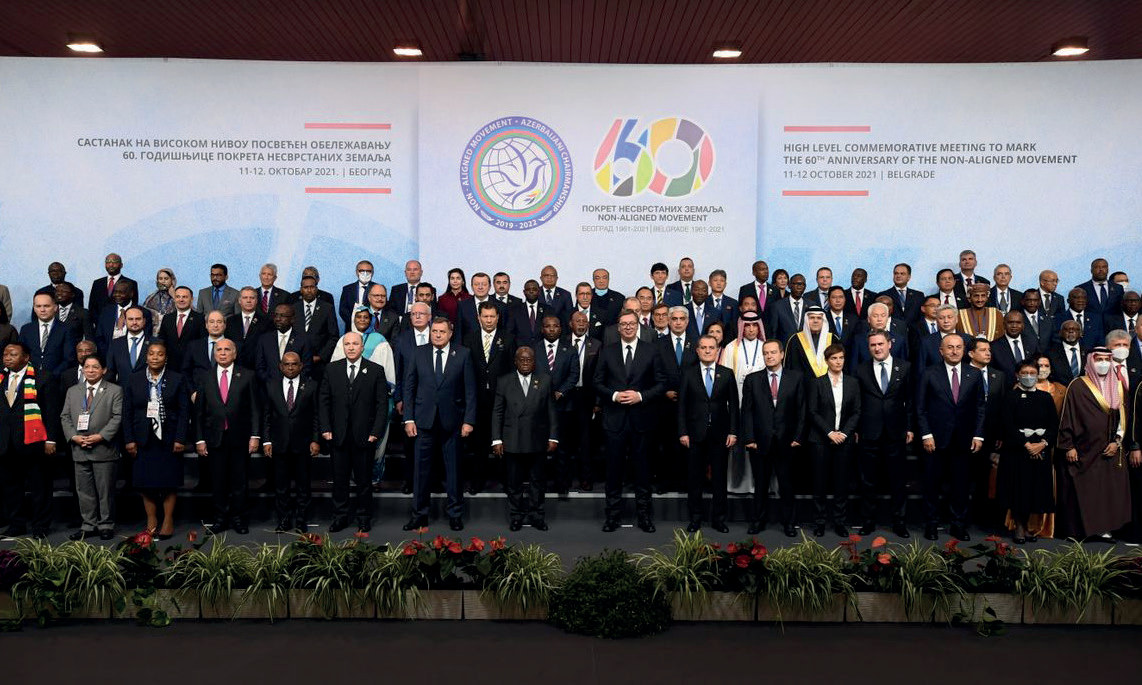
The 60th anniversary of the Non-Aligned Movement, which was marginalized by Western powers following the dissolution of the Soviet Union, was commemorated with grand festivities in Belgrade, Serbia, and Bandung, Indonesia. During the summit in Belgrade, which was attended by 105 countries and 9 organizations, United Nations Secretary-General António Guterres delivered a speech. In his inaugural address over video conference as president, Azerbaijani President İlham Aliyev underscored the transnational nature of the Non-Aligned Movement, advocating for global peace, justice, and solidarity (Saragih, 2015Saragih, B. B. (2015, 4 24). Asian, African leaders reenact Bandung walk. The Jakarta Post. Retrieved from November 3, 2024).
A separate commemorative ceremony occurred in Asia. A coalition of leaders, comprising Chinese President Xi Jinping, Indonesian President Joko Widodo, and Swaziland King Mswati, convened in Bandung at the Independence Building, the original site of the Bandung Conference, to commemorate its 60th anniversary at 09:20 local time, departing from the Savoy Homann Hotel. He proceeded on foot. The memorial event took place at the same location, Independence Building (Saragih, 2015Saragih, B. B. (2015, 4 24). Asian, African leaders reenact Bandung walk. The Jakarta Post. Retrieved from November 3, 2024).
Indonesian President Joko Widodo, Chinese President Xi Jinping, Zimbabwean President Robert Mugabe, Myanmar President U Thein Sein, Egyptian Prime Minister Ibrahim Mahlab, and Venezuelan Vice President Jorge Arreaza discussed issues pertaining to emerging nations. They highlighted significant challenges in safeguarding their rights and interests, as well as in their growth, and commended the Bandung Spirit, emphasizing the importance of their efforts for collective welfare (Xinhua, 2015Xinhua (2015). The source article does not provide a separate full bibliographic entry for this citation.). Xi Jinping asserted that Asian-African nations, motivated by the Bandung Spirit, have strengthened via collaboration, advanced by enhancing regional cooperation, and played greater responsibilities on both regional and international stages (Xi, 2015Xi, J. (2015). Full text: Xi’s speech at the AsianAfrican Summit. Retrieved from October 1, 2024).
A significant event occurred in Beijing one year ago. Chinese leader Xi Jinping remembered the 5 Principles of Peaceful Coexistence during a ceremony marking the 70th anniversary of their declaration. The Chinese leader asserted that the concept of cohabitation originated in Asia but rapidly disseminated globally, highlighting that the concepts of the Bandung Spirit, established by Asian-African nations, emerged from the “5 Principles of Peaceful Coexistence” (Xi Jinping, 2024Xi, J. (2024). 70th Anniversary of Five Principles. Retrieved from October 1, 2024). He reminded them that it was enshrined in the agreement with China, India, and Burma, the framework of which was established by Chinese Prime Minister Zhou Enlai and Indian Prime Minister Pandit Nehru. The principles included respect for territorial integrity and sovereignty,
non-aggression, non-interference in internal affairs, development of ties based on equality and mutual benefit, and economic cooperation (Sander, 2000, p. 337Sander, O. (2000). Siyasi Tarih II (5 b.). İstanbul: İmge Yayınları.).
The Bandung Conference conveyed three fundamental messages: Initially, it exhibited indications of the resurgence of the oppressed amidst the swift decline of US imperialism and the West’s descent into a profound crisis. Secondly, Serbia’s announcement to rejoin the Non-Aligned Movement, originally spearheaded by Tito but which distanced itself following his demise. Serbian President Vucic emphasized that over 100 nations opted for an alternative course in the unstable and bipolar world of 1961, stating, “The Non-Aligned Movement represented the countries striving for independence and sovereignty.” “We, as Serbia, persist in our struggle,” he stated. (AA, 2024AA. (2021). Bağlantısızlar Hareketi kuruluşunun 60. yılını kutluyor. Retrieved from November 10, 2024).
Thirdly, and of greater significance, the contributions of the Non-Aligned Movement to global peace and international collaboration are reintroduced to the agenda. In a context of global crises, the Non-Aligned Movement has rekindled aspirations for peace and stability, which are essential for everyone.
The Global Landscape Prior to the Bandung Conference
The objective of the “Asia-Africa Conference” was articulated as the pursuit of a new international order. The battle that commenced in Europe post-World War II transitioned to Asia throughout the 1950s. The surrender of Japan following the devastating bombings of Hiroshima and Nagasaki marked the initial indication of significant tension. The defeat in Tokyo created significant military and political voids in the nations controlled by Japanese forces during the war, both in the Pacific and Southeast Asia. Following the victory of the people’s forces in China over the Western-supported Kuomintang, they proclaimed the foundation of the People’s Republic of China on October 1, 1949, significantly influencing the destiny of the Far East. Western powers shifted the Cold War to the Far East to curtail the dissemination of revolutionary China’s influence, and following the Soviet Union, they adopted a strategy of “containment” regarding China (Kennan, 1947Kennan, G. F. (1947). The Sources of Soviet Conduct. Foreign Affairs, 25(4), 566–582.). To comprehend the Bandung Spirit, it is essential to recall the events that transpired in the region at that period.
The Korean War: Korea was significantly impacted by the Chinese revolution. Following Japan’s defeat, the discord between the USA and Soviet Union factions in Korea concluded in initial reconciliation. The two major countries retracted their occupation forces in 1948 and recognized the 38th parallel as the boundary. Nevertheless, the circumstances altered
after the 1950 elections, when pro-Western Syngman Rhee’s party secured merely 48 seats, while other parties obtained 120 seats. In opposition to the changing circumstances, North Korean forces advanced south of the 38th Parallel. Subsequently, the USA intervened by mobilizing the United Nations. China responded to the US action by stating, “Korea is China’s neighbor” (Sander, 2000, p. 252Sander, O. (2000). Siyasi Tarih II (5 b.). İstanbul: İmge Yayınları.). Following the crossing of the 38th Parallel by US/UN forces, China intervened, transforming the conflict into a war between US/UN and Korea/China. The cease-fire negotiations, initiated when the conflict was centered around the 38th Parallel, were finalized in 1953. Korea was partitioned into two entities: North Korea and South Korea (Cumings, 1996Cumings, B. (1996). The Origins of the Korean War.; Stueck, 1997Stueck, W. (1997). The Korean War: An International History. Princeton University Press.).
Vietnam War: During World War II, Japan seized Indochina, a French colony. Recognizing its impending defeat in 1945, Japan proclaimed the formation of three autonomous republics in Indochina (Vietnam, Laos, and Cambodia) and designated Bao Dai as the leader of Vietnam. The Vietnamese communists resisted by founding the Vietminh, led by Ho Chi Minh. Uncle Ho, a moniker for Chi Minh, initiated the guerilla warfare by proclaiming the Democratic Republic of Vietnam at the conclusion of 1946. In 1954, the capture of Dien Bien Phu by Vietnamese resistance fighters altered the destiny of the region, as it housed France’s principal garrison. Conceding defeat, France opted to withdraw from Indochina. The United States will address the ensuing gap in the future (Lawrene, 2010, p. 94Lawrene, M. A. (2010). The Vietnam War: A Concise International History. Oxford University Press.; Zhai, 2000, p. 112Zhai, Q. (2000). China and the Vietnam Wars, 19501975. University of North Carolina Press.).
Following France’s withdrawal, Britain, the USA, France, and the Soviet Union convened in Geneva in May 1954 and concluded an accord on the subsequent matters: Vietnam was partitioned at the 17th Parallel. The Democratic Republic of Vietnam was founded in the north, while a Western-aligned administration was formed in the south. The objective was to have elections in 1956 and achieve national unification; however, this did not occur. Consequently, for the third instance following Germany and Korea, a nation was bifurcated into two entities. As North Vietnam aligned with the Soviet bloc, South Vietnam associated itself with the United States. Hostilities between the factions in Vietnam intensified, resulting in a violent civil war. The conflict concluded with the defeat of the pro-US forces in 1975 (Lawrene, 2010Lawrene, M. A. (2010). The Vietnam War: A Concise International History. Oxford University Press.; Zhai, 2000Zhai, Q. (2000). China and the Vietnam Wars, 19501975. University of North Carolina Press.).
Formation of SEATO: The United States, while controlling the Soviet Union, which was at the gates of Berlin after the conclusion of World War II, solidified its supremacy in Europe by founding NATO in 1949. In the early 1950s, the USA, faced with developments akin to those in Europe, sought to construct a comparable Cold War framework in Southeast Asia and next to China. SEATO (Southeast Asia Treaty Organization) was established in 1954 in
Manila, the capital of the Philippines. On the day the agreement was executed, along with an additional protocol, eight nations (Britain, France, Australia, New Zealand, USA, Pakistan, Philippines, Thailand) proclaimed that Indochina was under the aegis of SEATO, regarded as the NATO of the Indochina region. The USA established SEATO in response to the Geneva Agreement (Sander, 2000, p. 260Sander, O. (2000). Siyasi Tarih II (5 b.). İstanbul: İmge Yayınları.). The Bandung Conference was organized to safeguard against the detrimental forces at the period when the Cold War impacted Southeast Asia and the southern coasts of Asia.
India before Bandung: The idea of Indian Prime Minister Pandit J. Nehru, the endorsement of Indonesian President Ahmed Sukarno, and the autonomy of the People’s Republic of China/Asia. The Bandung Conference of 1955 established it, resulting from the endeavors of the newly unified young states.
The marginalized populations of Asia and Africa convened in Bandung, located on Indonesia’s Java Island, despite substantial divergences in their foreign policies and goals (Sander, 2000, p. 386Sander, O. (2000). Siyasi Tarih II (5 b.). İstanbul: İmge Yayınları.). The conference centered on the tenets of “Peaceful Coexistence”.
Asian Relations Conference in Delhi
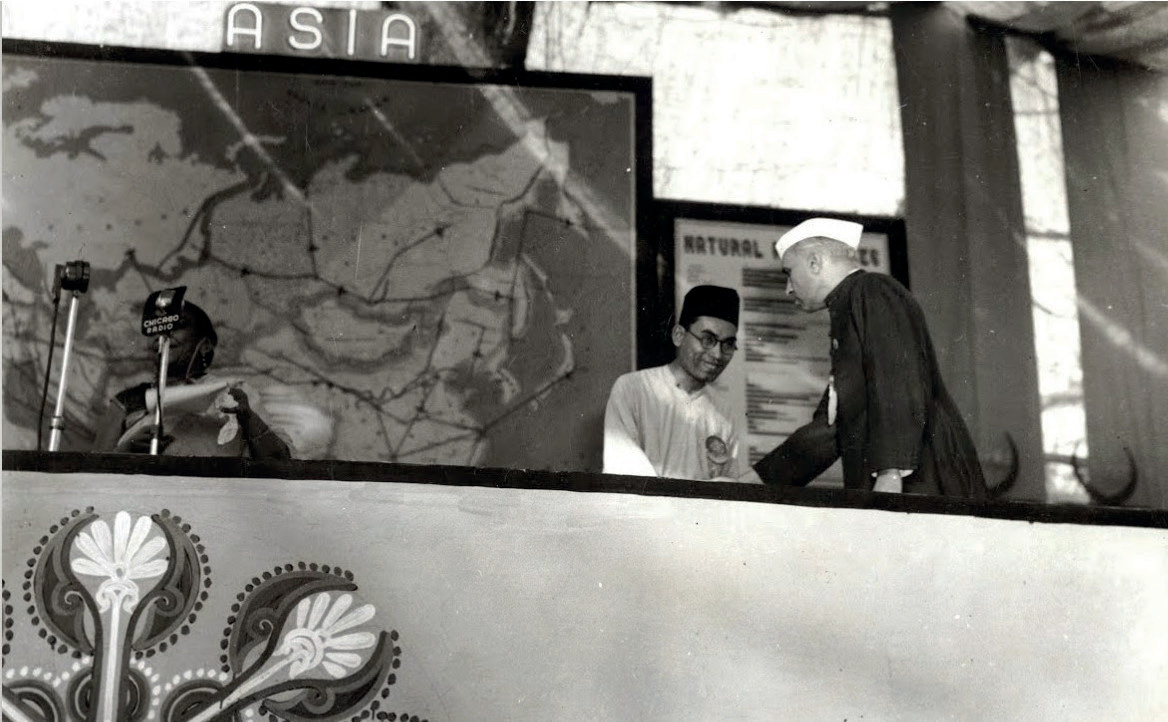
The Asian Relations Conference occurred in Delhi, India, from 23 March to 2 April 1947. (Akalın, 2024Akalın, C. (n.d.). Bandung Konferansı’nın Önceli: “Asya İlişkileri Konferansı” (1947). Retrieved from November 10, 2024, AsyaKonferans1947.). The Indian Council of World Affairs (ICWA) convened the gathering on behalf of the Indian National Congress Party (Tharoor, 2007, p. 149Tharoor, S. (2007). Nehru: The Invention of India. New Delhi: Penguin Books India.). The Asian Relations Conference is regarded as the precursor to the Bandung Conference; however, India engaged in various international meetings prior to and subsequent to this conference, including the World Trade Union Conference (February 1945), the World Trade Union Congress (September 1945), the Subject Peoples’ Conference (London, October 1945), and the International Labor Conference (Geneva, July 1947). Nehru and his party, the National Congress Party, implemented these programs prior to the conclusion of World War II. This clearly indicates Nehru’s interest and his aspiration to contribute to the world community established post-World War II. The Asian Relations Conference represents an endeavor to develop the Asian component of the newly created world order. RC Majumdar, 2008
Participants from Afghanistan, Armenia, Azerbaijan, Bhutan, Burma, China (before to the establishment of the PRC), Laos, Egypt, Georgia, India, and Indonesia The Conference in Delhi was attended by Iran, Cambodia, Kazakhstan, Kyrgyzstan, Korea (undivided at the time), Egypt, Mongolia, Nepal, the Philippines, Thailand, Ceylon (now Sri Lanka), Tajikistan, Tibet, Türkiye, Turkmenistan, Uzbekistan, and Vietnam (Nanda, 2003, p. 107Nanda, P. (2003). Rediscovering Asia: Evolution of India’s Look-East Policy. New Delhi: Lancer Publishers & Distributors.). Delegates from the United States of America. The
Soviet Union, British-administered Malaya, Australia, New Zealand, and Palestine participated in the conference as observers. The United States obstructed Japan’s participation (Tharoor, 2007Tharoor, S. (2007). Nehru: The Invention of India. New Delhi: Penguin Books India.).
Nehru articulated the objective of the meeting a year prior, in his address on 22 August 1946, stating: “The conference will foster amicable relations among neighboring nations; it will consolidate ideas and experiences to elevate living standards; it will reinforce cultural, social, and economic connections among the peoples of Asia”
Nehru articulated the objective of the meeting a year prior, in his address on 22 August 1946, stating: “The conference will foster amicable relations among neighboring nations; it will consolidate ideas and experiences to elevate living standards; it will reinforce cultural, social, and economic connections among the peoples of Asia” (Nanda, 2003Nanda, P. (2003). Rediscovering Asia: Evolution of India’s Look-East Policy. New Delhi: Lancer Publishers & Distributors.). The Asian Conference in Delhi convened prior to 15 August 1947, the date on which India’s independence was officially proclaimed.
Nehru, in his inaugural address as the host of the conference, emphasized four key points: the necessity for Asian unity; the declaration of Asia’s ascendance on the global arena; the importance of refraining from consistently promoting anti-Western sentiments; and the growing imperative for regional collaboration. Nehru underscored that the conference request originated from numerous Asian nations and that the assembly was a manifestation of
the prevailing sentiment that “the time has come to unite and progress collectively” (Nehru, 2003Nehru, P. (2003). Rediscovering Asia: Evolution of Vatan (1955). Bandung’da Komünizme Hücum Edildi. India, Look-East Policy. New Delhi: (21 Nisan).).
In February 1946, British Prime Minister Atlee directed his cabinet to initiate negotiations with Indian leaders to establish a new Indian Constitution. India. The legal status of the Republic was to be established. Nevertheless, England was actively attempting to partition India and inciting bigotry (Tharoor, 2007, p. 149Tharoor, S. (2007). Nehru: The Invention of India. New Delhi: Penguin Books India.). Following the refusal of Indian officials to reach a compromise, the Islamic Union’s declaration of “Direct Action Day” on August 6, 1946, prompted hundreds of thousands of Muslims to protest in the streets. Intense confrontations erupted in numerous cities and towns, particularly in Calcutta, resulting in the deaths of tens of thousands from both factions (Nanda, 2003, p. 107Nanda, P. (2003). Rediscovering Asia: Evolution of India’s Look-East Policy. New Delhi: Lancer Publishers & Distributors.). The assembly of the Asian Conference in Delhi in March 1947, within that historical context, should
be regarded as an integral aspect of the foundational intent of the Republic of India (Akalın, n.d.Akalın, C. (n.d.). Bandung Konferansı’nın Önceli: “Asya İlişkileri Konferansı” (1947). Retrieved from November 10, 2024, AsyaKonferans1947.).
The Delhi Conference garnered attention from Indonesian nationalist groups engaged in a parallel quest for independence. Indonesian leader Dr. Ahmed Sukarno extended an invitation to Nehru to visit Indonesia on October 9, 1945. The Bandung process commenced at that time. Nehru acknowledged Sukarno’s invitation by asserting that “the struggle for freedom is interconnected in India, Java, or elsewhere,” although the British obstructed this visit (Nanda, 2003, p. 104Nanda, P. (2003). Rediscovering Asia: Evolution of India’s Look-East Policy. New Delhi: Lancer Publishers & Distributors.).
The Indian delegation’s appeal for enhanced collaboration was echoed by other delegates. Afghan delegate Abdülmecit Khan stated, “To survive, we must coexist,” while Bhutan delegate Jigme Dorji expressed his aspiration that “the conference will become a symbol of love and solidarity in Asia.”
Bandaranaike from Ceylon remarked, “The conference pertains to a much larger issue.” He articulated his desire that “it would mark the inception of a federation of free and equal Asian nations.” Indonesian Prime Minister Shutan Shariar expressed his hope that “the conference will significantly contribute to unifying Asian nations.” Vietnamese delegate Mai The Chau stated, “We extensively discussed the unity of Asia.” “Let us act immediately,” he stated. He advocated for action (Nanda, 2003, p. 111Nanda, P. (2003). Rediscovering Asia: Evolution of India’s Look-East Policy. New Delhi: Lancer Publishers & Distributors.).
China’s Contributions
The Communist Party of China (CPC), which spearheaded the declaration of the People’s Republic on October 1, 1949, maintained favorable relations with Moscow in foreign policy; however, unlike members of the Soviet Bloc, its concept of peace was predicated on the struggle against imperialism and colonialism. The United States’ support for Taiwan and Japan’s rearmament heightened China’s security apprehensions. Chinese Prime Minister Zhou Enlai’s assertion that “Asian people will never forget that the first atomic bomb was detonated on Asian soil” underscores the regional security concerns of the People’s Republic of China (Zhou, 1981Zhou, E. (1981). Asia Will Never Forget. Selected Works of Zhou Enlai (pp. 45-47).Foreign Languages Press.).
Zhou Enlai’s attendance at the conference commenced under unfavorable circumstances. An assassination attempt occurred on the Air India aircraft leased by the PRC from Hong Kong (Chen, 2001Chen, J. (2001). Mao’s China and the Cold War. University of North Carolina Press.). Zhou evaded disaster by altering his flight at the last time; nonetheless, 11 other passengers perished in the incident.
China’s international political circumstances progressively enhanced following the Bandung meeting. The presence of numerous neutral states at the meeting contributed to the decline of the US-backed strategy of economically and diplomatically isolating the PRC (Westad, 2006Westad, O. A. (2006). The Global Cold War: Third World Interventions and the Making of Our Times. Cambridge University Press.). The People’s Republic of China acquired the authority to represent China in the United Nations Security Council in 1971 (UN, 1971UN. (1971). Admission of the People’s Republic of China. UN General Assembly Resolution 2758.).
Indonesia’s Contributions
Ahmet Sukarno, the host of the Bandung Conference, is the man who proclaimed Indonesia’s independence following the defeat of the occupying Japanese forces. Post-independence, it was imperative to construct the nation by combating feudal aspects and the vestiges left by Western influence. Only by this method could a sovereign state endure. Sukarno’s initiative to host the Asia-Africa Conference might be regarded as a component of his endeavor to establish an autonomous state.
In the 1955 general elections, Sukarno’s Indonesian Nationalist Party secured the highest number of votes, but the religiously affiliated Masyumi and Nahdatu’l-Ulema, along with the Indonesian Communist Party, garnered closely contested ballots. Nevertheless, as no party can secure a majority, a stable coalition government cannot be established. Niyazi Berkes’ observation from his 1958-59 visit to Indonesia is insightful: “When Indonesians confronted the challenge of founding a new independent state, they lacked experience in legislative, executive, and judicial matters, particularly following World War II. They were astonished by the events that transpired upon achieving independence, a consequence of the turmoil instigated by the war” (Berkes, 1999Berkes, N. (1999). Asya Mektupları (3 ed.). İstanbul: Yapı Kredi Yayınları.).
Additional sources indicate that the nationalization process in Indonesia was more arduous than in Türkiye and Iran, which possess robust state traditions. Ricklefs, 1993. Sukarno implemented a strategy of equilibrium among nationalists, religious factions, and communists. During that period, the Indonesian Communist Party steadily increased in strength, ultimately becoming the predominant political party in the nation (Mortimer, 2006Mortimer, R. (2006). Indonesian Communism Under Sukarno: Ideology and Politics, 1959-).
The initiative for the Bandung Conference originated in Indonesia. In January 1954, at the behest of Indonesia’s Prime Minister, Dr. Upon Ali Saastroamiijojo, Ceylon, Burma, India, Pakistan, and Indonesia convened in Colombo, Ceylon’s capital, and resolved to conduct a meeting in Bandung in 1955 (Mackie, 2005Mackie, J. A. (2005). Bandung 1955: Non-Alignment and Afro-Asian Solidarity.; Kahin, 1956Kahin, G. M. (1956). The Asian-African Conference: Bandung, Indonesia, April 1955.).
Bandung-Asia-Africa Conference
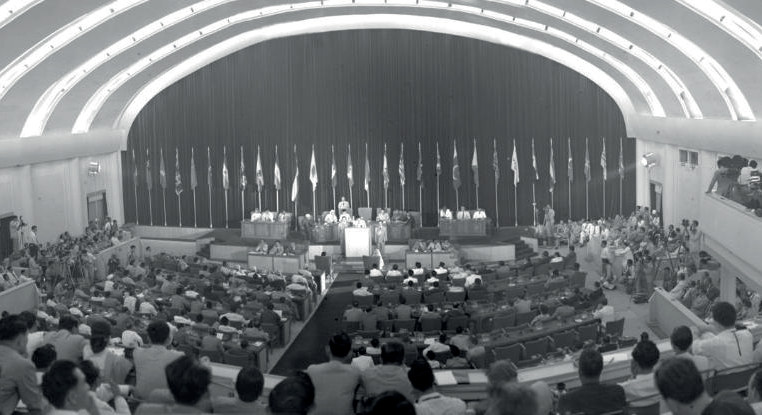
The summit aimed to foster unity and solidarity among newly established African and Asian nations to safeguard their sovereignty against the United States and Soviet Russia. The meeting, aimed at maximizing participation, took place in Bandung, Java Island, on 18 April 1955. The Bandung Conference was designated to take place at the headquarters and the Convordia building.
At that time, Convordia Hall was the largest venue in Bandung, selected for its proximity to the Savoy Homann Hotel and Preanger Hotel in the city center. The structure was renovated to accommodate the requirements of the international conference, subsequently renamed Gedung Merdeka (Independence Building).
Subsequently, meetings of the Indonesian House of Representatives convened in this edifice (Mackie, 2005Mackie, J. A. (2005). Bandung 1955: Non-Alignment and Afro-Asian Solidarity.; Kahin, 1956Kahin, G. M. (1956). The Asian-African Conference: Bandung, Indonesia, April 1955.).
“Indeed, the diversity among us is undeniable; both small and large nations are represented, alongside individuals practicing religions such as Buddhism, Islam, Christianity, Confucianism, Hinduism, Jainism, Sikhism, Zoroastrianism, Shintoism, and others.” This hall contains representatives of every political ideology and economic system, including democracy, monarchy, theocracy, socialism, and capitalism. However, if there is consensus in aspiration, what detriment does variety present?
Representatives from Afghanistan, Burma, Cambodia, Ceylon, Egypt, Abyssinia, the Gold Coast (Ghana), India, Indonesia, Iraq, Japan, Jordan, Laos, Lebanon, Nigeria, Libya, Nepal, Pakistan, Iran, the Philippines, Saudi Arabia, Siam (Thailand), Sudan, Syria, North Vietnam, South Vietnam, Yemen, the People’s Republic of China, and Turkiye, along with Cyprus leader Makarios, the former mufti of Jerusalem, and a spokesperson for the African National Congress, were in attendance. Neither South Korea nor North Korea received an invitation. Israel was excluded due to the opposition of Arab nations. (Türk Diplomasi Arşivi, n.d.Türk Diplomasi Arşivi (n.d.), T.C. Dışişleri Bakanlığı Türk Diplomasi Arşivi. 538, 273722408.; Kahin, 1956Kahin, G. M. (1956). The Asian-African Conference: Bandung, Indonesia, April 1955.; Mackie, 2005Mackie, J. A. (2005). Bandung 1955: Non-Alignment and Afro-Asian Solidarity.) On April 26, 1955, the Israeli Prime Minister
expressed his disappointment at his nation’s exclusion from the delegation (Türk Diplomasi Arşivi, n.d).
In his inaugural address on April 18, 1955, Indonesian President Ahmed Sukarno commenced by chanting the Bismillah, emphasizing the multifaceted solidarity of the oppressed. “Indeed, the diversity among us is undeniable; both small and large nations are represented, alongside individuals practicing religions such as Buddhism, Islam, Christianity, Confucianism, Hinduism, Jainism, Sikhism, Zoroastrianism, Shintoism, and others.” This hall contains representatives of every political ideology and economic system, including democracy, monarchy, theocracy, socialism, and capitalism. However, if there is consensus in aspiration, what detriment does variety present? This meeting embodies fraternity, not antagonism (Sukarno, 1955Sukarno, A. (1955). Opening Speech at the Bandung Conference. Retrieved from October 10, 2024).
Sukarno articulated that apprehensions should be set aside and that the objective of formulating a strategy advantageous to all mankind should be embraced. The agenda was subsequently advanced. The agenda issues approved by 24 of the 29 countries included: 1- Cultural cooperation; 2- Economic cooperation; 3- Issues faced by nations under foreign domination; 4- Human rights and the right to self-determination; 5- Utilization of atomic energy. 6- Weapons of mass devastation; 7- Advancement of global peace and collaboration. Subsequent to the deliberations, the heads of the delegation convened another meeting and reorganized the agenda. The topic of atomic energy was eliminated from the agenda. The approved agenda topics included: 1) Economic Cooperation, 2) Cultural Cooperation, 3) Human Rights and the Right to Self-Determination (Akşam, 1955Akşam. (1955). 18 Nisan, s.2; 24 Nisan, s.1-2).
During the committee deliberations, particularly within the political committee, significant divergences of opinion arose between members of pro-Western governments and those of opposing states. The initial faction, pro-Western, was spearheaded by Turkey, Iraq, and Pakistan, whereas the subsequent faction was led by India, the People’s Republic of China, and Egypt (Nehru, 2003Nehru, P. (2003). Rediscovering Asia: Evolution of Vatan (1955). Bandung’da Komünizme Hücum Edildi. India, Look-East Policy. New Delhi: (21 Nisan).). Certain Arab states (Iraq, Jordan, Lebanon, and Libya) endorsed Western perspectives, but others (Egypt, Saudi Arabia, Syria, and Yemen) promoted neutrality. Laos and Cambodia aligned with the neutralists in accordance with the guarantees provided by Nehru and Zhou Enlai.
Leader of Egypt, Gamal Abdel Nasser. Abdul Nasser vehemently denounces Israel and insists that the matter be prioritized, expressing his sadness and condemnation of racial prejudice in South Africa. Nasser expressed his support for enhancing collaboration between his country and those in Asia and Africa. He asserted that small states possess the right to contribute constructively to the regulation of international relations and the alleviation of global tensions. Furthermore, the Egyptian Government maintains that the United Nations Organization is essential for ensuring and maintaining peace and security, and it will persist in its support for this organization (Ayın Tarihi, 1955Ayın Tarihi. (1955). s. 127-129; s. 252.).
A particularly tense moment during the discussion occurs between the Philippine envoy and Chinese Premier Zhou Enlai. Zhou Enlai, responding defensively to the allegations, asserted that it was the United States, rather than his side, that engaged in damaging actions, expressing a wish to instigate conflict in Formosa, and thereafter posed the challenge: “We are communists.” What implications does this hold for other nations globally? If you doubt our peaceful endeavors, I extend an invitation to all of you to visit China. Assess our nation by dispatching your representatives at your convenience. “We seek commonality between our regime and others” (Milliyet, 1955Milliyet. (1955). (20 Nisan 1955), s.7.).
It is noteworthy that Nehru, who turned his back to the Philippine delegate during the speech, supported Zhou Enlai's speech with applause.
Nehru-Zorlu conflict during the conference
A specific parenthesis must be established for Türkiye-India ties at the conference. Nehru, an admirer of Atatürk and a staunch advocate for republican Turkey on the global stage, responded vehemently to Zorlu’s pro-Western stance (Nehru, 1955Nehru, P. (2003). Rediscovering Asia: Evolution of Vatan (1955). Bandung’da Komünizme Hücum Edildi. India, Look-East Policy. New Delhi: (21 Nisan).).
During the conference’s discourse on colonialism, the Turkish delegation collaborated with Iran, Iraq, Lebanon, Pakistan, and the Philippines to formulate a single proposal advocating for the denunciation of the detrimental actions of international communism. During his address at the Conference, the leader of the Turkish delegation asserted that numerous free and independent governments are confronting a renewed assault from colonialism, and that communism is involved in subversive actions and, when deemed necessary, the application of force (Akşam, 1955Akşam. (1955). 18 Nisan, s.2; 24 Nisan, s.1-2). In his address, F. R. Zorlu contended that the threat of rape inhibits free states from forming coalitions like the North Atlantic Pact, the Balkan Pact, and the Southeast Asia Defense Pact. Zorlu asserts, “Our hope for the preservation of peace and security stems from the collaboration of individuals who cherish unity and freedom, demonstrating that rape is neither successful nor acceptable” (Olaylarla Türk Dışpolitikası 1919Lancer Publisher & Distributors. Olaylarla Türk Dış Politikası 1919-1995. (2020).-1995Lancer Publisher & Distributors. Olaylarla Türk Dış Politikası 1919-1995. (2020)., 2020Lancer Publisher & Distributors. Olaylarla Türk Dış Politikası 1919-1995. (2020).).
This speech was bound to elicit severe reactions from the newly independent nations. Zorlu presents a singular perspective. Nehru contended that “NATO represents the opposing facet,” asserting that “aligning with either bloc constitutes an unacceptable humiliation for an Asian-African nation” and underscoring that “NATO is a formidable defender of colonialism” (Nehru, 1955Nehru, P. (2003). Rediscovering Asia: Evolution of Vatan (1955). Bandung’da Komünizme Hücum Edildi. India, Look-East Policy. New Delhi: (21 Nisan).). At a subsequent address, F. Rüştü Zorlu declared that Turkey’s participation at Bandung was compelled by Western influence. “At the last minute we went to Bandung.
Our allies strongly advocated for this collaboration, claiming that failure to participate would have detrimental consequences” (Olaylarla Türk Dış Politikası 1919Lancer Publisher & Distributors. Olaylarla Türk Dış Politikası 1919-1995. (2020).-1995Lancer Publisher & Distributors. Olaylarla Türk Dış Politikası 1919-1995. (2020)., 2020Lancer Publisher & Distributors. Olaylarla Türk Dış Politikası 1919-1995. (2020).). The error was acknowledged years later, but it was too late. The Turkish government’s stance in Bandung resulted in a significant loss of respect for Turkey among Asian-African nations.
The Bandung Conference is no exception; the error originates from Prime Minister Adnan Menderes’ foreign policy, which was endorsed by French imperialists in their opposition to Algeria during the War of National Liberation. Turkey will rectify these errors over time (AA, 2021AA. (2021). Bağlantısızlar Hareketi kuruluşunun 60. yılını kutluyor. Retrieved from November 10, 2024).
Bandung Conference in Turkish Press
The Turkish media, including Akşam, Milliyet, Cumhuriyet , and Vatan , monitored the Bandung Conference, albeit constrained by the resources available at that time. The press covered the conference news. In 1955, regarded as the zenith of the Cold War era, the Turkish press was significantly influenced by the currents of anti-communism.
The liberal Vatan newspaper reported on its front page that 30 states, representing over half of the global population, commenced the “Bandung Conference,” while diverting attention from the core issues pertinent to the conference.
Consequently, the Turkish press chose to interpret Bandung through an anti-communist lens rather than focusing on the dissolution of colonialism and the rise
of new nations in historical context; newspapers emphasized the statements of Foreign Minister F. Rüştü Zorlu, who advocated for Western positions. In reality, the majority of these periodicals were not supportive of the government; yet, the prevailing anti-communist sentiments of the day influenced both the government and the opposition.
The liberal Vatan newspaper reported on its front page that 30 states, representing over half of the global population, commenced the “Bandung Conference,” while diverting attention from the core issues pertinent to the conference. It emphasized: “Nasser’s reception by Nehru” and “Nasser’s invitation to Communist China” (Vatan, 1955: 1-7Vatan (1955). Bandung Konferansı. (17 Nisan).). During the conference’s opening news, Vatan persists in its anti-communist stance with headlines like “Communism Attacked in Bandung” (Vatan, 1955: 1-7Vatan (1955). Bandung Konferansı. (17 Nisan).) Vatan emphasizes the Nehru-Zorlu rivalry, asserting, “Fatin Rüştü Zorlu thwarted one of Nehru’s initiatives.” (Vatan, 1955: 1-7Vatan (1955). Bandung Konferansı. (17 Nisan).). This story is evidently disconnected from reality and is, furthermore, highly inappropriate on a platform dedicated to the struggle against colonialism. The newspaper’s coverage on the conclusion of the Conference reiterates Zorlu’s circular rhetoric: “Zorlu, ‘Cooperation is Necessary for Peace’” (Vatan, 1955: 1-7Vatan (1955). Bandung Konferansı. (17 Nisan).). The Vatan , which covered F. Rüştü Zorlu’s return to the country, diverges from events in Bandung and emphasizes Zorlu’s statement: “F. Rüştü Zorlu: Turkey’s concept of peace, security, and collective defense was received with comprehension” (Vatan, 1955: 1-7Vatan (1955). Bandung Konferansı. (17 Nisan).).
The perspective of the center-leaning Turkish newspaper Cumhuriyet on the Bandung Conference is analogous to that of the liberal Vatan newspaper. The initial report in the newspaper regarding the inauguration of the Asia-Africa Conference was titled “Iraqi Delegate’s Assault on Communism” (Cumhuriyet, 1955: 1-6Cumhuriyet. (1955). Irak Delegesinin Komünizme Hücumu. (19 Nisan).). The representative of Iraq, a monarchy, is among the delegates of the Westernist faction at Bandung. The forthcoming edition of the newspaper persists in its publication with
reports on various assaults against Communism. The Prime Ministers of India and Red China expressed anger when the Prime Ministers of Pakistan and the Philippines criticized Communism (Cumhuriyet, 1955: 1-7Cumhuriyet. (1955). Irak Delegesinin Komünizme Hücumu. (19 Nisan).).
Concluding the meeting, Cumhuriyet cedes the stage once more to Minister of Foreign Affairs F. Rüştü Zorlu: “I am pleased that the proliferation of communism was referenced, despite its absence in the final communiqué.” This minor joy is attributed to Zorlu! Ultimately, Cumhuriyet assigns the evaluation piece at the conclusion of the conference to the renowned anti-communist author and Turkestan delegate, Ruzi Nazar, who asserts, “Communism was defeated in Bandung” (Cumhuriyet, 1955: 1-7Cumhuriyet. (1955). Irak Delegesinin Komünizme Hücumu. (19 Nisan).). Right-wing and pro-Western criticisms of communism over Bandung exist, although the attribution of the phrase “communism’s defeat in Bandung” is credited to Ruzi Nazar. This conclusion reached by Nazar surpasses the viewpoint of Cold War strategist Dulles.
Western Positions on Bandung
Western authorities meticulously observe the changes in the Far East, which transformed significantly with the founding of the People’s Republic of China and the Korean War.
USA: The presence and, more significantly, the organizational potential of the neutralists intensified Washington’s concerns on a potential connection between Bandung and “the Communists.” On 25 January, the State Department issued a circular telegram to select diplomatic missions, including Ankara, indicating that: (a) Communists will endeavor to manipulate the Conference; (b) the primary objective of the Communists at the Conference will be to sever the ties between free Asian nations and their Western allies; (c) the Conference will serve as a platform for Communist propaganda throughout the region.
(d) Non-Communist countries must exercise extreme caution and vigilance; otherwise, they risk endorsing resolutions that imply shared objectives with the Communist bloc, which could be misinterpreted by non-Communist nations not involved in the Conference (FRUS, 1955FRUS. (1955) East Asian Security, Cambodia, Laos, Vol. XXI. Eisenhower Library, Whitman File, Cabinet Meetings.).
British officials, who closely monitor colonial developments, exhibit greater realism than their American counterparts; they recognize the influence of the Bandung Spirit from the first. On 4 February 1955, the British Foreign Ministry conveyed its concerns in a note to the Commonwealth High Commission, just prior to the Conference. The Ministry of Foreign Affairs indicates a significant risk that the Conference may be affected by communist antagonism towards the West.
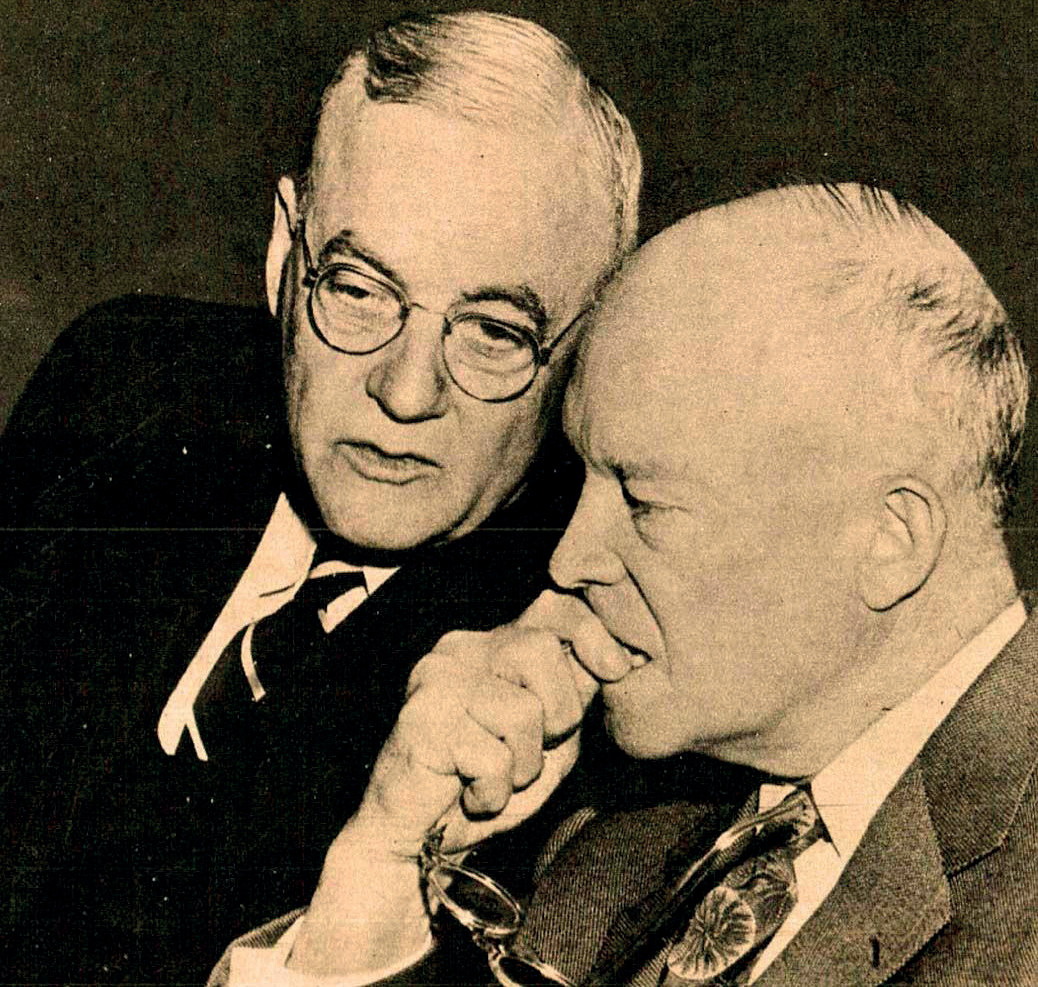
J.F. Dulles, the Minister of Foreign Affairs, assessed the Bandung Conference a few days post-event to a gathering of 38 individuals, including US President Eisenhower, his vice president, and notable politicians such as H. Humphrey. Dulles expresses initial apprehension regarding the potential dominance of PRC leader Zhou Enlai at the conference; however, he contends that it was primarily influenced by a coalition of amicable Asian nations advocating for collaboration with the West. He assesses that the conference’s final declaration is a document in which the USA will also engage, excluding the Palestine issue. He asserts that parallels to colonialism parallel
the sentiments of the United States. J.F. Dulles asserted that the conference undermined Nehru, resulting in a significant deterioration of his reputation. Dulles noted that Chinese Prime Minister Zhou Enlai distinguished himself by astute moves. Minister J.F. Dulles highlights that despite the Soviet Union facing severe condemnation for “colonialism” during the conference, the PRC foreign minister refrained from defending the Soviets (FRUS, 1955FRUS. (1955) East Asian Security, Cambodia, Laos, Vol. XXI. Eisenhower Library, Whitman File, Cabinet Meetings.).
The initial perception of the USA is that the circumstances are not sufficiently dire to incite anxiety. The conference, overall, does not devolve into anti-Western feeling, nor does it transform into unqualified pro-Soviet sentiment. Nehru’s apprehension with the perception of being aligned with either group proved beneficial in this regard.
Dulles’s evaluation of Bandung rapidly deteriorated because to the actions of the emerging states in the region that gained strength and assumed the initiative. The United States perceives no alternative but to occupy the substantial void created by England and France on behalf of Western imperialists. The resilience of Democratic Korea, Vietnam, Laos, and Cambodia, coupled with India’s growing influence in the Non-Aligned Movement, determines the trajectory of Southeast Asia in the contemporary era.
United Kingdom: British officials, who closely monitor colonial developments, exhibit greater realism than their American counterparts; they recognize the influence of the Bandung Spirit from the first. On 4 February 1955, the British Foreign Ministry conveyed its concerns in a note to the Commonwealth High Commission, just prior to the Conference. The Ministry of Foreign Affairs indicates a significant risk that the Conference may be affected by communist antagonism towards the West.
Conversely, the Times daily states: “Despite certain apprehensive moments, the 29 nations represented at the Asia-Africa conference, which concluded yesterday, successfully reached a unanimous agreement
on the communiqué summarizing their negotiations. The conference, initially divided into three factions— anti-Communists, Communists, and neutrals—did not achieve a successful compromise” (Murat, 2018Murat, T. (2018). Bandung Konferansı ve Türkiye. Fırat Üniversitesi Sosyal Bilimler Dergisi 28 (2): 363-379.). The publication paradoxically asserts failure while delineating triumph.
Soviet disposition The Soviet perspective is elucidated through the Turkish Ministry of Foreign Affairs Archive. Pravda published two pieces regarding the conference. The Kızılyıldız newspaper features an article on the topic as well. All Soviet newspapers feature the declaration released at the conclusion of the Conference. Pravda, dated 28 April 1955, characterizes the event as the ‘Great Emancipation of the Peace Forces’ (Türk Diplomasi Arşivi, 1955Türk Diplomasi Arşivi (1955). The source article does not provide a separate full bibliographic entry for this citation.).
Soviet Union: The Turkish Foreign Affairs Archive indicates that two pieces regarding the Conference
were published in Pravda. The Kızılyıldız newspaper likewise disseminated a story on the topic. All publications published the declaration released at the conclusion of the Conference. Pravda, on April 28, 1055, characterizes the event as the ‘Great Success of the Forces of Peace’ (Türk Diplomasi Arşivi, 1955Türk Diplomasi Arşivi (1955). The source article does not provide a separate full bibliographic entry for this citation.).
Non-Alignement Movement After Bandung
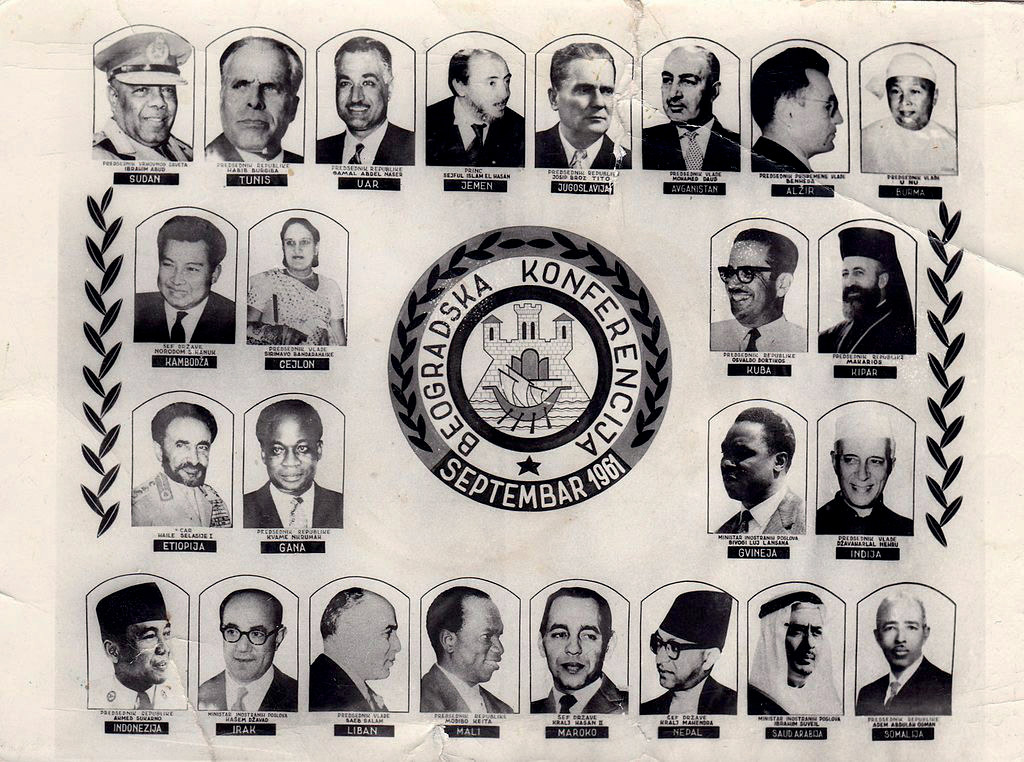
Subsequent to the Bandung Conference, the proliferation of states attaining independence accelerated significantly. In 1961, the Non-Aligned Preparatory Conference convened in Belgrade as a precursor to subsequent sessions. Consequently, the Bandung Spirit evolved into a structured entity. The drafted regulation specifies that the invited countries must adhere to the following principles:
The harmonious coexistence of nations with
diverse social and political structures necessitates the pursuit of an independent policy.
Must have consistently advocated for national liberation and independence,
Should not have engaged in military pacts or
Cold War conflicts and arrangements between East and West,
No military bases belonging to any state benefiting from the Cold War shall be established on its territory (Sander, 2000Sander, O. (2000). Siyasi Tarih II (5 b.). İstanbul: İmge Yayınları.).
Of the 27 resolutions made at the Belgrade conference, 16 pertained directly or indirectly to the provisions of the UN Charter. This and similar conferences demonstrated that “neutrality” and “non-alignment” were the prevailing philosophies in the Asian-African context (Sander, 2000Sander, O. (2000). Siyasi Tarih II (5 b.). İstanbul: İmge Yayınları.). Sixty states participated in the Non-Aligned Meeting convened in Cairo in 1964, representing half of the sovereign states globally at that time.
Conclusion
The Final Declaration of the Conference, which finished on April 24, is the essential text that defines the framework of the post-colonial international society. The core of the Final Declaration, summarized in the appendix, encompasses the eradication of colonialism, the independence and equality of nations regardless of size, collaboration in economic and cultural domains, opposition to racial discrimination, the right to self-determination for nations, and the principle of peaceful coexistence.
Although it appears straightforward currently, the truth is somewhat different. The convening of 29 Asian-African nations, despite their diverse political and social systems, to together address shared challenges and reach unanimous agreements that would significantly influence international dynamics is a notable diplomatic achievement. P. Nehru is indisputably the principal architect of this triumph. Bandung is the inaugural significant assembly when Chinese Prime Minister Zhou Enlai, who faced substantial criticism throughout the conference, made his worldwide debut.
The Bandung Spirit, which catalyzed the Non-Aligned Movement in the latter half of the 20th century, invigorates contemporary regional organizations such as BRICS, which oppose dollar supremacy and, consequently, US hegemony, in pursuit of a new international order, and the Shanghai Cooperation Organization, which focuses on combating terrorism and extremism. Organizations like the Shanghai Cooperation Organization (SCO) and several regional entities, both large and small, remain motivated by the Bandung Spirit.
The Bandung Conference concluded with the Final Declaration, leading to the formation of an influential bloc of Asian-African nations within
EK FOTO B
the United Nations in international politics, the establishment of the Non-Aligned Movement, formalized in 1961, and the consolidation of Asian-African countries as a significant entity within the United Nations. It generates repercussions that influence global equilibria, such as Subsequent events plainly demonstrated that this significantly helped to global peace and stability during that period.
The Bandung Spirit endures to this day. A testament to this is the commemoration of Bandung’s 70th anniversary through a series of events. The Indonesia-Africa meetings in Bali and the China-Africa meetings in Beijing address various issues faced by developing countries (Independent, 2024Independent Türkçe. (2024). Bandung Konferansı’ndan Afrika Zirvesi’ne: Endonezya-Afrika İlişkileri. Retrieved from November 5, 2024).
In the latter part of the 20th century, humanity significantly eradicated severe colonialism, diminished the disparity between small and large nations to a degree, and enhanced economic and cultural collaboration among developing countries.
The Bandung Spirit proclaimed to the world the commencement of a new epoch. A cursory examination of the international landscape recognizes the Bandung Spirit’s contribution to the significant transformations occurring. Currently, the Bandung Spirit extends beyond the Asia-Africa context, permeating all five continents and the globe.