Introduction
“Youth” has been defined in the political thought of the 19th and 20th centuries as having value. The fact that old regimes are considered “old” is a manifestation of an understanding that sees the collapse of these regimes as fateful within the framework of a perception of history compatible with natural functioning. Thus, “youth” represents the new, the living. M. Mesnier says that May 4 in China aims to bring about the emergence of the “new man” and that this “new man” is the “young man” because only young people are seen as not sufficiently corrupted by the traditions of the past. It is believed that they can destroy the old culture and become the founders of a new culture and society (Mesnier, 1973: 15).
At the same time, youth has become an essential issue in belles-lettres, firstly in novel characters, in the context of the possibility of building a new “self.” In China, especially in a period starting with the New Culture Movement, modernist novelists influenced by the romanticism movement have produced quite voluminous works in terms of quantity, based on the concepts of youth and self, intending to rejuvenate the nation (Jin, 2017: 355-359Jin, H. (2017), “Zhou Yucai Writes ‘A Mad Man’s Diary‘ Under The Pen Name Lu Xun”, A New Literary History of Modern China (içinde), Edt. David Der-Wei Wang, Cambridge – Massachusetts: The Belknapp Press, pp. 254-259.; Lei, 2017: 295-300; Leo, 1973: 75Leo, O.F. L. (1973), “The Romantic Temper of May Fourth Writers”, Reflections On The May Fourth Movement: A Symposium, Edt. Benjamin Schwartz, Cambridge, Massachusetts: Published by East Asian Research Center, Harvard University, pp. 69-84.). Socialist writers, especially Lu Xun (1881-1936), who can be described as social realists in terms of their style, defined tradition as a mental cannibal and imagined the youth of modern China, freed from traditional patterns, through the characters they created (Wang, 2017: 306-310Wang H. (2017). “Lu Xun and Tombstones”, A New Literary History of Modern China (i çinde ), Edt. David Der – Wei Wang, Cambridge – Massachusetts: The Belknapp Press, pp. 306-310.; Leo, 1973: 69Leo, O.F. L. (1973), “The Romantic Temper of May Fourth Writers”, Reflections On The May Fourth Movement: A Symposium, Edt. Benjamin Schwartz, Cambridge, Massachusetts: Published by East Asian Research Center, Harvard University, pp. 69-84.).
The concepts of “Young China” and “Young Chinese” are part of the “Young-Jeune” movements that emerged in Europe and the Ottoman Empire. As discussed below, these movements influenced the concept in China. However, “Young China and Young Chinese” are not as widespread as “Young Turks” in terms of usage. In this study, the concepts of “Young China and Young Chinese” are analyzed in detail, and the youth movements and modernist ideas that emerged in China in the 20th century are discussed as factors that shaped “Young China.”
The fact that the concepts of “Young China” and “Young Chinese” are not as popular as “Young Turks” or “La Giovine Italia” may be related to the existence of political organizations in China. The “Young” movements in Europe and the Ottoman Empire emerged as secret societies known for their Freemasonry organizational style. Although there were many secret societies in China in the 19th and 20th centuries, the United League of China (Tongmenghui), the Chinese Nationalist Party (Guomingdang), and the Communist Party of China stood out as nationalist and modernist political organizations representing “Young China.”
The intellectuals who advocated a constitutional monarchy against absolute monarchy, especially reformist Liang Qichao, who first used the concept of “Young China,” came to the fore with their conservative attitudes during the New Culture Movement. For this reason, in this work, “Young China” was not considered a static concept but a dynamic one. The reformist “young people” of the 19th century began to “age” politically and culturally, especially after 1912; representatives of modernist-republican political and cultural movements began to represent “Young China.” However, as discussed below, the modernist attitudes of the representatives of these movements did not affect their political and cultural thoughts to the same extent.
China has continued to debate its ties to its historical tradition to the present day. The debates between “fathers and sons” were also important during the New Culture Movement. However, while “tradition” was always on the agenda as a topic of discussion, it was no longer possible to defend the legacy of the traditional political system, even with a reformist program. At the end of this period, it can be said that at least the “republic” idea was dominant in China.
The 1911 Xinhai Revolution, in a political sense, opened the door to the 20th century in China. However, regarding mentality worlds, the New Culture Movement was one of the most crucial turning points in forming the political-cultural climate that established the 20th century in China, with a revolutionary significance.
This study first discusses the birth of the “Young China” concept and its usage in China. The publication works and social relations before the birth of the “New Culture Movement,” in which the “Young Chinese” took their place in the historical scene and shaped themselves both politically, organizationally, and mentally, are discussed. The accumulations in the formation of this movement are pointed out. The May 4 Movement, which sparked the explosion created by this movement, is examined, and the contradictions created by the anti-imperialist line that had to be carried out simultaneously with the occidentalist emphasis of the “New Culture” are pointed out. Indeed, these contradictions have significantly impacted the discussions of the Enlightenment, and those who defended a different “enlightenment” inherited from tradition within the “New Culture Movement” While drawing attention to the political climate that enabled the spread of modernist ideas such as liberal, anarchist, social democrat, feminist, Marxist, and romantic nationalist, especially in universities and large urban centers, and discussing the foundations on which “Young China” would be established, the role played by this movement in the establishment of the Communist Party of China was emphasized.
The Birth of the Concept of “Young China” and the Process That Prepared the “New Culture Movement”
As T. Weston has also stated, the perspective that attributed the beginning of the “New Culture Movement” to Chen Duxiu’s establishment of the Youth Magazi ne (Qingnian zazhi) in September 1915 and then moved on to the magazine’s mature stages without paying attention to its antecedents is disproportionate by focusing on the peak of the “New Culture Movement” rather than its origins and development, posing the danger of an academic study that is rich in insights into the cultural and intellectual iconoclastic aspects of the movement but weak in terms of its political roots (Weston, 1998: 255Weston, T.B. (1998). The Formation and Positioning of the New Culture Community, 1913-1917, Modern China, Vol. (24-3), pp. 255-284.).
It is essential to go back to the beginning of the 20th century to discuss the New Culture Movement, which had a revolutionary impact on the mentality of the “Young Chinese,” to grasp the historical background that gave rise to the movement. Of course, the processes that prepared the way for the emergence of “Young China” can be traced back to 1861, when China’s modernization efforts began, or to 1895, when constitutional monarchists were influential and Chinese nationalists emerged. However, in addressing the problem of modernization in China as a mentality problem that will accompany political transformation, the discussions that began on the reasons for the failure of the 1911 Revolution are critical. However, in addressing the issue of modernization in China as a problem of mentality that would accompany political transformation, the discussions that began on the reasons for the failure of the 1911 Revolution are significant. Therefore, it is more functional to start the process that nourished the New Culture Movement as of 1912, along with the birth of the concept. Otherwise, as C. Furth emphasizes, the May 4th and the New Culture Movement that started with it have rich historical precedents, especially between 1898 and 1912, as a campaign against imperialism and cultural renewal (Furth, 1973: 59Furth, C. (1973), “May Fourth in History”, Reflections On The May Fourth Movement: A Symposium, Edt. Benjamin Schwartz, Cambridge, Massachusetts: Published by East Asian Research Center, Harvard University, pp. 59-68.).
The concept of “Young China” was first mentioned in the Qingyi bao (China Discussion) magazine on February 10, 1900, in the work of reformist Liang Qichao titled “Shaonian Zhongguo shuo” (Ode to a Young China). M. Song, who emphasized that it was put forward as a good new concept to popularize the “ideal of national rejuvenation,” later argued that all titles containing “young and youth” were derivatives of “Young China” (Song, 2015: 28Song, M. (2015). Young China: National Rejuvenation and the Bildungsroman, 1900–1959, Cambridge, Massachusetts: Published by Harvard University Asia Center.). In the decades following Liang’s invention of “Young China,” especially in the Republic’s first decade, youth became the central symbolic figure of almost all social reforms and cultural and political revolutions in modern China (Song, 2015: 15-16Song, M. (2015). Young China: National Rejuvenation and the Bildungsroman, 1900–1959, Cambridge, Massachusetts: Published by Harvard University Asia Center.).
The name “Young China” can be seen more commonly after 1912. Huang Yuangyong (1885-1915), who was a friend of Chen Duxiu (1879-1942), who published the New Youth magazine at the center of the “New Culture Movement,” and one of his influences, published the weekly Young China newspaper in January 1912. This newspaper was republished weekly under the same name by Wang Guangqi (1891-1936) as the publication organ of the “Young China Society” during the May Fourth Period (Song, 2015: 28-29 and 101Song, M. (2015). Young China: National Rejuvenation and the Bildungsroman, 1900–1959, Cambridge, Massachusetts: Published by Harvard University Asia Center.).
It is possible to come across the name “Young China” in the youth movements that emerged during this period. The first modern Chinese student movement of the 20th century took place in 1902 under the leadership of the “Young China Revolutionary Army” (Shaonian Zhoungguo zhi geming jun), founded by Nanyang College students (Song, 2015: 100Song, M. (2015). Young China: National Rejuvenation and the Bildungsroman, 1900–1959, Cambridge, Massachusetts: Published by Harvard University Asia Center.). During this period, student demonstrations in 1903 over the postponement of the evacuation of Russian troops from Manchuria are noteworthy. The anti-American boycott launched by Chinese merchants in 1905 was strongly supported by students, and many social groups, from dockworkers to small shopkeepers, supported this boycott. Furth also mentions the existence of many more local anti-imperialist student movements between 1903 and 1908 (Furth, 1973: 60Furth, C. (1973), “May Fourth in History”, Reflections On The May Fourth Movement: A Symposium, Edt. Benjamin Schwartz, Cambridge, Massachusetts: Published by East Asian Research Center, Harvard University, pp. 59-68.). It should not be overlooked that these movements were the first modern student actions of the “Young Chinese” who fed into May 4.
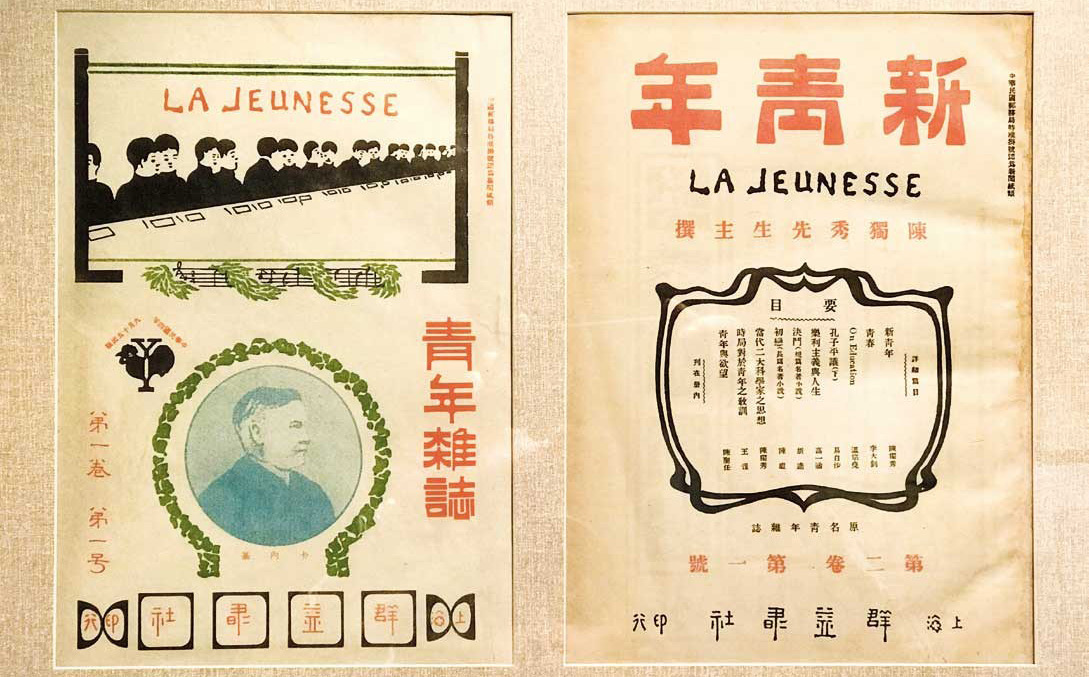
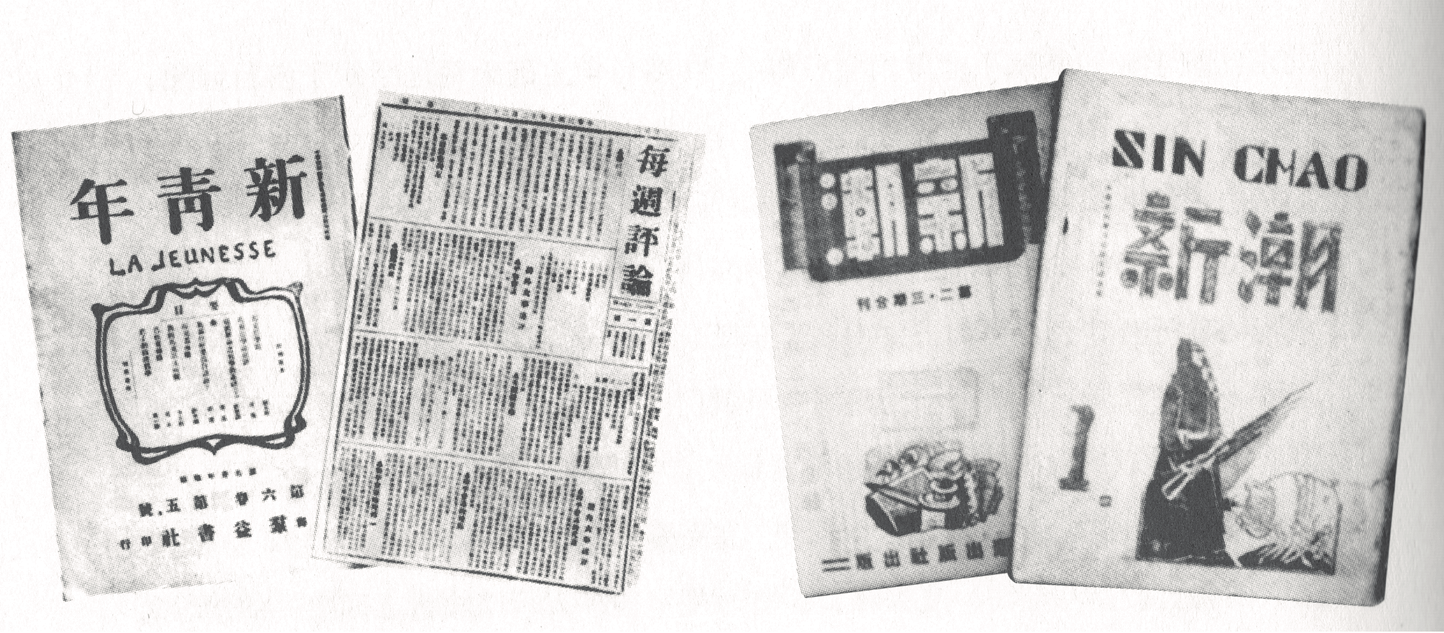
M. Song says that Liang Qichao used the concept of “Young China” under the influence of the “La Giovine Italia” (Young Italy) movement founded by Giuseppe Mazzini, who was the pioneer of the movements bearing the adjective “Young.” He also draws attention to many articles published in the New Youth magazine on the “Young Germany” movement and its British, French, and American counterparts. Also, he emphasizes the Young Turk movement as the pioneer of the Young China idea (Song, 2015: 40-44Song, M. (2015). Young China: National Rejuvenation and the Bildungsroman, 1900–1959, Cambridge, Massachusetts: Published by Harvard University Asia Center.). M. Mesnier also shares thoughts similar to Song’s. He says that Chen Duxiu named his magazine Youth and then New Youth to make it iconoclastic and cosmopolitan, and by writing the name of the magazine as La Jeunesse in the middle of the area that Chinese sentences on the main cover, he established his universal connection with the Young Movements (Mesnier, 1973: 15).
In 1912, when the leader of the Beiyang Army, Yuan Shikai (1859-1916), took power and the second revolutionary attempt to protect the Republic failed, the Chinese Nationalist Party led by Dr. Sun Yat-Sen (1866-1925) was banned and many of its members were forced to flee the country, sparking a new debate in China about the fate of the “Republic.” As opposed to the view of the Chinese Revolutionary Party, which was organized in Japan by the forces left over from the Chinese Nationalist Party, which prioritizes political problems and armed struggle, a division has emerged among those who argue that the main reason for the failure of the “Republic” should be sought in cultural and mental structures. These thinkers argue that a struggle should be waged to transform society. So much so that, against Dr. Sun’s practice that goes as far as taking fingerprints of its members with his view that the main reason for the defeat was the organizational situation, Huang Xing (1874-1916), one of the leaders of the Xinhai Revolution, objected and called for a more in-depth discussion, which was influential among intellectuals (Fenby, 2019: 133Fenby, J. (2019), History of Modern China: The Fall and Rise of A Great Power 1850 to the Present. U.K.: Penguin Books.; Weston, 1998: 262Weston, T.B. (1998). The Formation and Positioning of the New Culture Community, 1913-1917, Modern China, Vol. (24-3), pp. 255-284.).
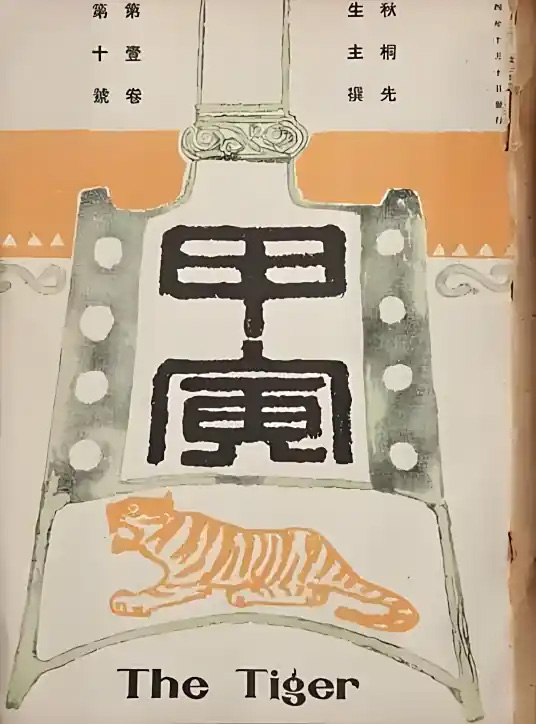
One of the most essential sources that nourished the “New Culture Movement,” The Tiger (Jiayin zazhi), was started to be published in Tokyo by Zhang Shizhao (1881-1873) in May 1914 as a product of this process. The support of intellectuals who had not joined the Chinese Revolutionary Party, both in Japan and Shanghai, through their social and economic networks, was important in the publication of the magazine. The “European Affairs Discussion Group” established in Tokyo, the Far East Book Company (Taidong tushuju), where intellectuals came together in Shanghai, and the Truth Magazine (Zhengyi zazhi), which started to be published in Shanghai in January 1914, were influential in the publication of The Tiger magazine, both in terms of writers and financial support (Weston, 1998: 269Weston, T.B. (1998). The Formation and Positioning of the New Culture Community, 1913-1917, Modern China, Vol. (24-3), pp. 255-284.).
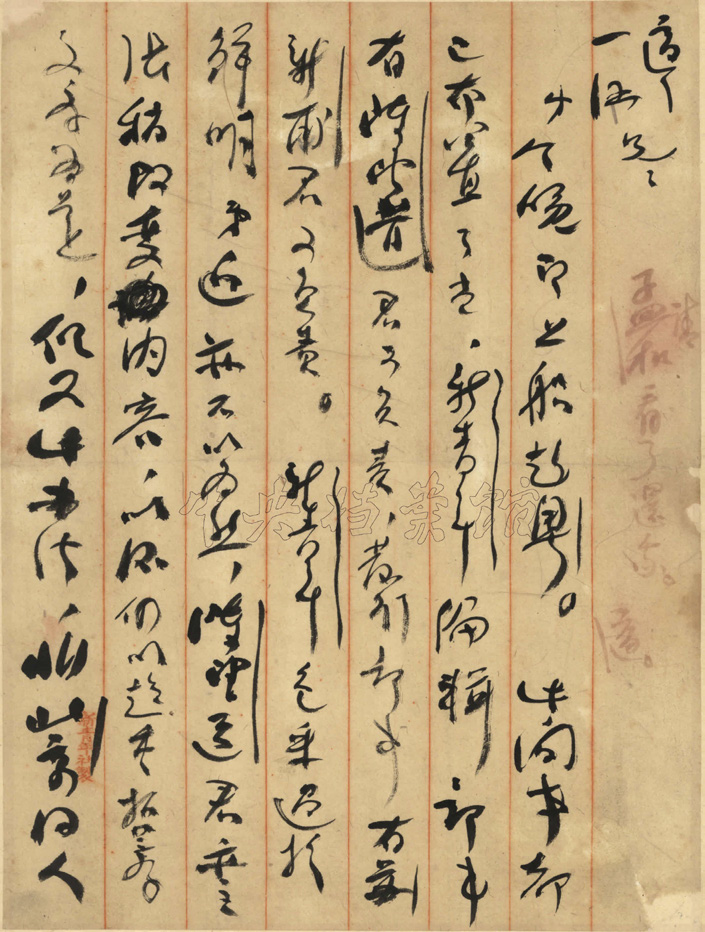
The Tiger was published monthly, with an average of two hundred pages, between May 1914 and October 1915 (it was not published between November 1914 and May 1915). It was the most influential political magazine of the Yuan Shikai era. It facilitated the emergence of the “New Culture Movement” by addressing fundamental themes such as the social and cultural norms essential for successful democracies, the relationship between the person and the state, and citizens’ need to cultivate greater self-awareness about political responsibility. The connection between Tiger and the “New Culture Movement” is striking not only at the intellectual level but also in social networks (Weston, 1998: 256Weston, T.B. (1998). The Formation and Positioning of the New Culture Community, 1913-1917, Modern China, Vol. (24-3), pp. 255-284.). Weston states that there are many names in common between the writers of The Tiger and the writers of New Youth , and thus, the social networks that formed the New Culture Movement were established before. He emphasizes that many people who played essential roles in the New Culture Movement, especially Chen Duxiu, Li Dazhao (1889-1927), Gao Yihan (1885-1968), Liu Wendian (1889-1958), Yi Baisha (1886-1921), and Xie Wulia (1884-1964), were writers in The Tiger magazine (Weston, 1998: 268Weston, T.B. (1998). The Formation and Positioning of the New Culture Community, 1913-1917, Modern China, Vol. (24-3), pp. 255-284.). New Youth , which was at the center of the New Culture Movement, was published in September 1915. Chen Duxiu decided to publish a new magazine because he thought The Tiger was too much of a theoretical publication. He thought publishing a more popular publication that would appeal to the youth was necessary. The Tiger , however, could not withstand Yuan’s pressure and ceased its activities. Zhang, relieved by Yuan’s death in 1916, first reprinted the old issues of The Tiger , which attracted enormous interest. Zhang, who started to republish The Tiger under the name Daily Tiger (Jiayin Rikan) in January 1917, was accompanied by Li Dazhao and Gao Yihan, prominent writers of the New Youth , as editors. Chen Duxiu also wrote letters to Wu Yu and Hu Shi asking them to send articles for Daily Tiger , which is vital for understanding the continuity of the bond and social relations between the two magazines (Weston, 1998: 278Weston, T.B. (1998). The Formation and Positioning of the New Culture Community, 1913-1917, Modern China, Vol. (24-3), pp. 255-284.).
One of the two centers where the “Young China” idea gained strength before the May 4th Movement was the New Youth magazine, and the other was Peking University, which included some of the magazine’s directors and writers. Peking University took on a new appearance, with Cai Yuanpei (1868-1940) becoming rector at the beginning of 1917. Zhang’s decision to close down his magazine in early 1917 paved the way for the New Youth even more. Cai Yuanpei, on the other hand, continued the ongoing connection between The Tiger and the New Youth by inviting Chen and Zhang to Peking University (Weston, 1998: 279Weston, T.B. (1998). The Formation and Positioning of the New Culture Community, 1913-1917, Modern China, Vol. (24-3), pp. 255-284.).
Despite the increasing security concerns in China, where central authority and control weakened after Yuan’s death, it created a suitable environment for discussing and disseminating ideas. Thus, the social networks at Peking University played an essential role in the formation of “Young China” and “New Culture.”
The slogan of the New Youth , whose writers included the distinguished intellectuals of the period; Li Dazhao, Lu Xun (1881-1936), Hu Shih (1891- 1962), Liu Bannong (1891-1934), and Yi Baisha, was “science and democracy” (Çin Komünist Partisi Tarihi, 2012: 34Çin Komünist Partisi Tarihi. (2012). Çin Komünist Partisi (ÇKP) Merkez Komitesi Parti Tarihi Araştırma Enstitüsü. (Çev. Tomas Aliyev). İstanbul: Canut Yayınları.). The magazine, which had an important place in Chinese political life, adopted the principle of not intervening in political issues and set itself the task of “a mentality revolution that would destroy the old feudal cultural codes” (Grieder, 1970: 176Grieder, J. B. (1970). Hu Shih and the Chinese Renaissance: Liberalism in the Chinese Revolution, 1917-1937. Massachusetts: Harvard University Press.). As with The Tiger ’s emergence, Hu Shi, Chen Duxiu, and Lu Xun insisted that China’s ills stemmed from the failure to purge cultural and mental structures, distinct from students’ political initiative (Schwartz, 1973: 7Schwartz, B. (1973), “Introduction.” Reflections On The May Fourth Movement: A Symposium, Edt. Benjamin Schwartz, Cambridge, Massachusetts: Published by East Asian Research Center, Harvard University.).
These journals and organizations, which were active between 1912 and 1919, provided the intellectual background that led to the emergence of the “May 4 and New Culture Movement” and further developed the concept of “Young China,” which began to take its place in both national and international literature during this period (Ishikawa, 2013: 3Ishikawa, Y. (2013). The Formation of the Chinese Communist Party (trans. Joshua A. Fogel). New York: Columbia University Press.).
B. Schwartz says, “When we look at the May Fourth Movement from the perspective of the thirty years that preceded it, we see that it no longer resembles a mountain range rising from a flat plain, but a relatively high mountain range in a long section of complex mountainous terrain” (Schwartz, 1973: 2Schwartz, B. (1973), “Introduction.” Reflections On The May Fourth Movement: A Symposium, Edt. Benjamin Schwartz, Cambridge, Massachusetts: Published by East Asian Research Center, Harvard University.). According to Schwartz, the May Fourth Movement should be seen as a culmination of existing tendencies rather than a qualitatively new beginning (Schwartz, 1973: 10Schwartz, B. (1973), “Introduction.” Reflections On The May Fourth Movement: A Symposium, Edt. Benjamin Schwartz, Cambridge, Massachusetts: Published by East Asian Research Center, Harvard University.). May 4th and the New Culture Movement brought many young people onto the stage of history as actors. However, the source that nourished this youth, in other words, the efforts of the generation of Chen Duxiu, Lu Xun, and Zhang Sishao, who were defined as the “old youth” as of 1919, both before and during the “New Culture Movement” (Song, 2015: 65Song, M. (2015). Young China: National Rejuvenation and the Bildungsroman, 1900–1959, Cambridge, Massachusetts: Published by Harvard University Asia Center.). As Mesnier said, for the “Young Men” of 1919, Chen Duxiu was an “anti-father” father character (Mesnier, 1973: 18).
4 May 4th and the Beginning of the New Culture Movement
Although China maintained its political unity in appearance, in reality, it was fragmented under the leadership of various military cliques, and the years 1915-1927 were characterized as the “Warlord” period. The most powerful person among these warlords during the May 4 and New Culture Movement period was Duan Qirui (1865-1936). Duan, the leader of the Anhui clique of the Beiyan Army, China’s fragmented modern armed force, is remembered for the unequal agreements he made with international powers, especially Japan, while also considering the interests of his clique. Due to the Japanese support that Duan needed to suppress the opposition of many important provinces, especially the Manchurians and the Fengtian Army, he became a target of patriotic students (Fenby, 2019: 141Fenby, J. (2019), History of Modern China: The Fall and Rise of A Great Power 1850 to the Present. U.K.: Penguin Books.). To fight against Duan Qirui’s signing of the Sino-Japanese Military Agreement under the name of Mutual Defense Against Enemies in May 1918, Chinese students studying in Japan decided to organize the “Chinese Youth League,” launched campaigns to boycott education, and returned to China to join the fight “against the warlords.” After this process, patriotic socialist and nationalist societies were established in universities in China under the names of “Patriotic Student Association” and “Student Association for National Salvation” (Çin Komünist Parti Tarihi, 2012: 32Çin Komünist Partisi Tarihi. (2012). Çin Komünist Partisi (ÇKP) Merkez Komitesi Parti Tarihi Araştırma Enstitüsü. (Çev. Tomas Aliyev). İstanbul: Canut Yayınları.).
China, which participated in World War I with the Allied Powers, expected the regions from which it had previously been deprived of its sovereign rights to be returned to it within the framework of the Wilson Principles after the war, and for unequal international agreements to end. The only change was that the regions under German control were given to Japan, the most dangerous power for China. While the Paris Peace Conference (January 18, 1919 - January 21, 1920) was ongoing, a critical process that shaped China’s future was experienced as a result of the events that grew with the great support given to the Chinese youth by the workers, intellectuals, petty bourgeoisie, and national bourgeoisie on May 4, 1919, when the press announced the text of the agreement.
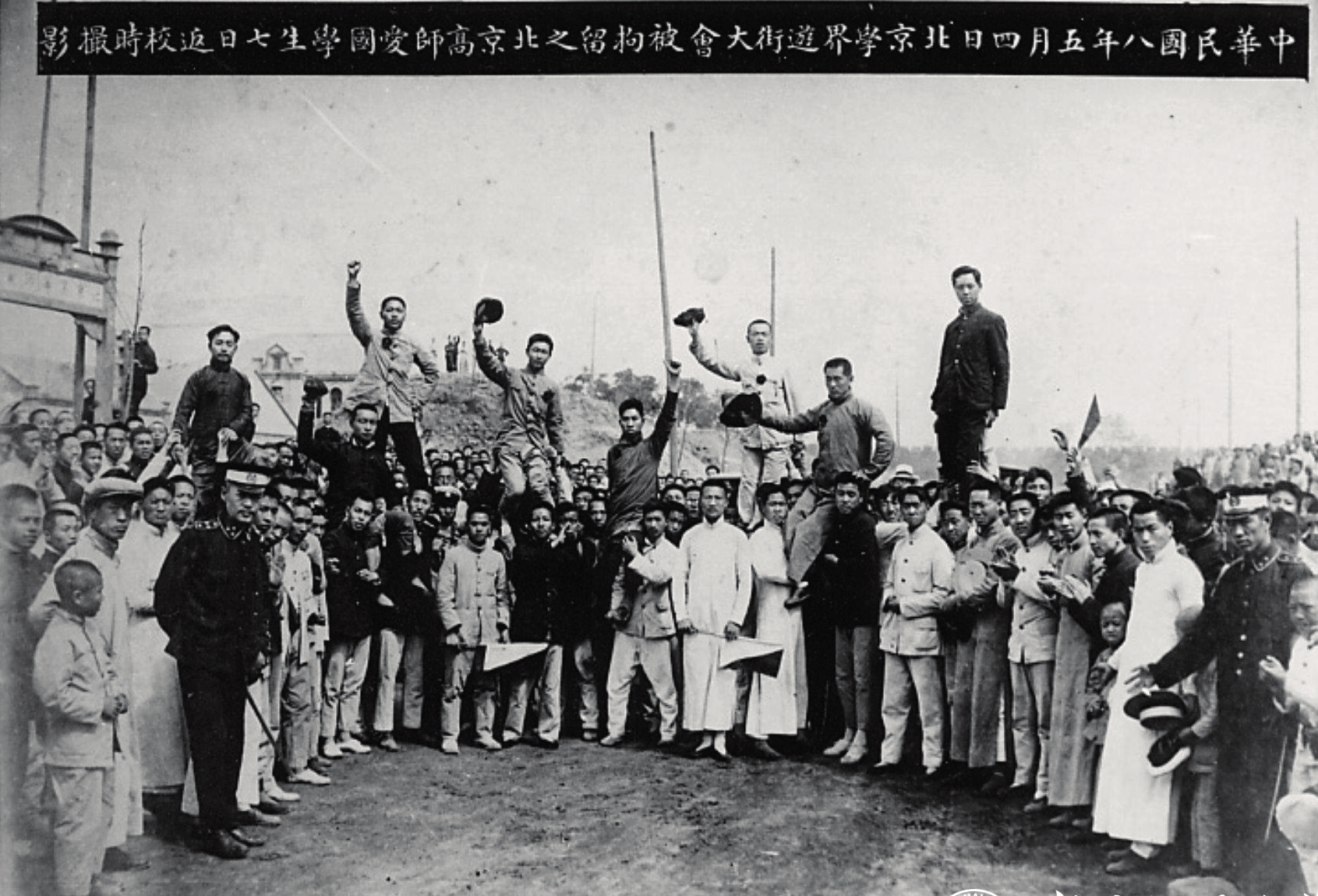
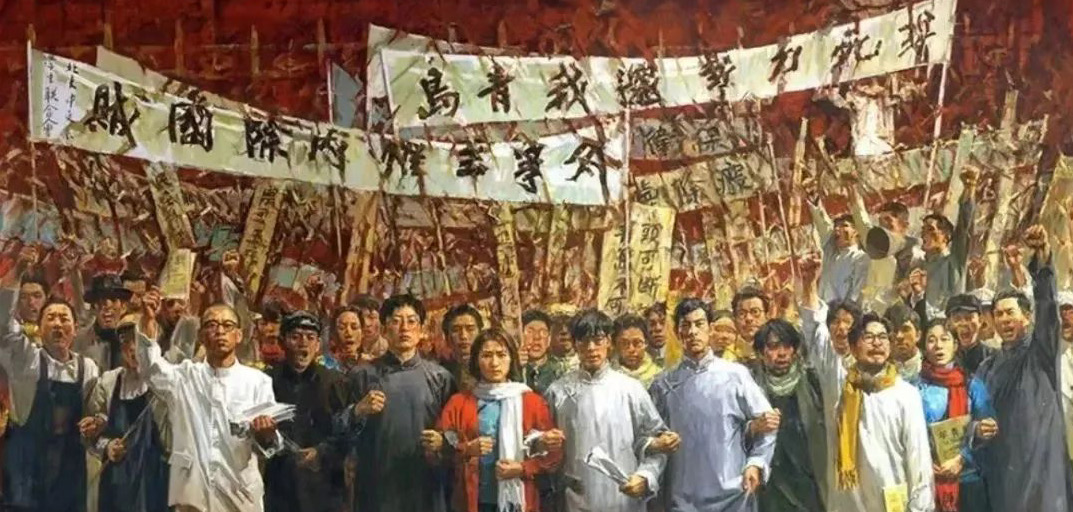
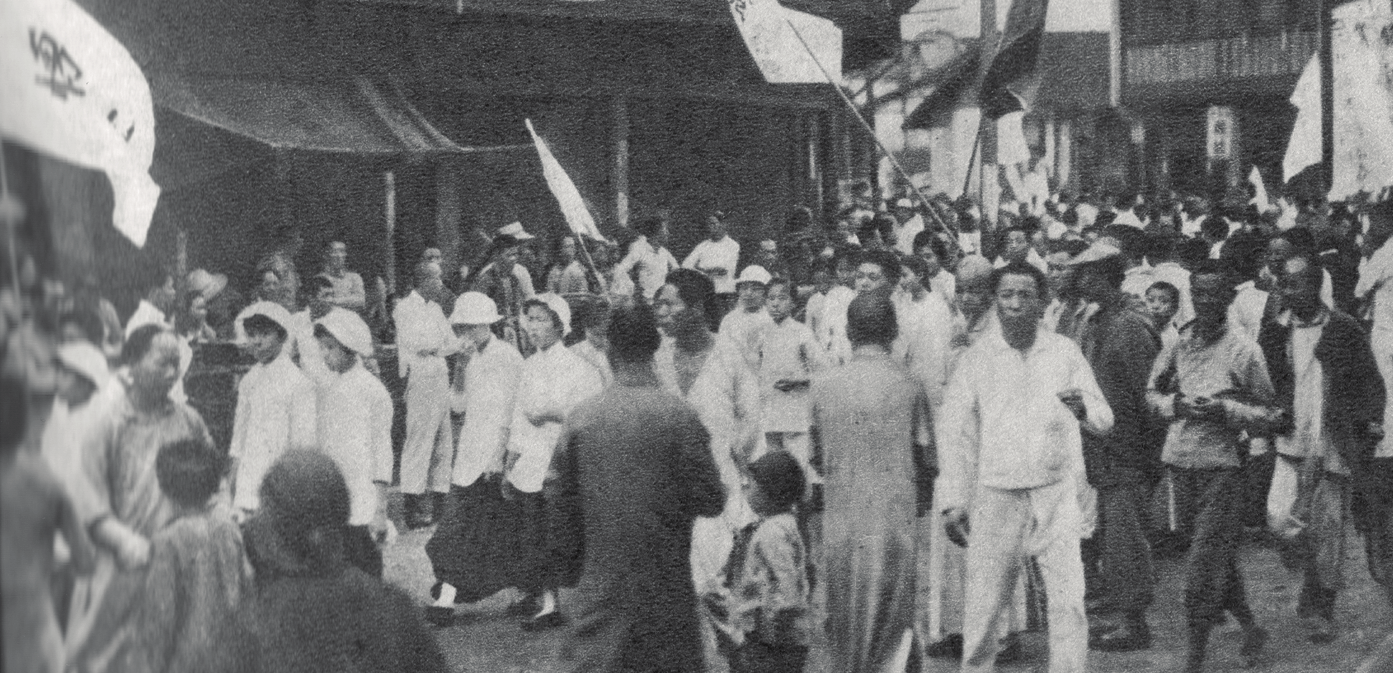
On May 4, over 3,000 students from Peking University and thirteen colleges gathered in Tiananmen Square, chanting “Fight for Sovereignty, Down with the Traitors,” “Rescind Japan’s Twenty-One Demands,” and “Return Qingdao to China”. They also demanded the punishment of three pro-Japanese bureaucrats, Cao Rulin (1877-1966), Zhang Zongxiang (1879-1962), and Lu Zongyu (1876-1941), who were northern warlords. As of June 5, workers, shopkeepers, and businesspeople in Shanghai supported the protests, and strikes and demonstrations took place. Then, with strikes and protests spreading throughout the country, the protests initiated by students on May 4 turned into a general patriotic movement. On June 7, the central government released the students arrested in the demonstrations and dismissed three Japanese collaborators. On June 27, Chinese workers and students in Paris surrounded the house where Lu Zengxiang (1871-1949), the head of the Chinese delegation at the Paris Peace Conference, was staying the day before the agreement was signed, and Lu could not afford to attend the signing ceremony (Mitter, 2004: 3-10Mitter, R. (2004). A Bitter Revolution: China ’ s Struggle With The Modern World. New York: Oxford University Press).
The official historiography of the Communist Party of China emphasizes the common struggle practice of social classes as one of the most important legacies of May 4 (Çin Komünist Partisi Tarihi, 2012: 37Çin Komünist Partisi Tarihi. (2012). Çin Komünist Partisi (ÇKP) Merkez Komitesi Parti Tarihi Araştırma Enstitüsü. (Çev. Tomas Aliyev). İstanbul: Canut Yayınları.). According to B. Schwartz, May 4 included a small group of students and intellectuals. Later, he says that the common struggle practice of social classes in this process, which is frequently emphasized in Marxist literature, is exaggerated and that nationalist feelings ensured irregular and scattered social participation in big cities. At the same time, its effect was not felt in rural areas (Schwartz, 1973: 1Schwartz, B. (1973), “Introduction.” Reflections On The May Fourth Movement: A Symposium, Edt. Benjamin Schwartz, Cambridge, Massachusetts: Published by East Asian Research Center, Harvard University.).
Considering the weak ties between the 1911 Xinhai Revolution and the masses, May 4th is essential, even if it was effective only in certain large cities, as it serves as a litmus test for the objective positions of social classes and interest groups in China. In China, where landowners and bureaucratic groups controlling public resources tend to deal with imperialists for the sake of power, the participation of social forces that can participate in the democratic revolution by establishing a tie between their economic interests and patriotism is quite critical in terms of quality. With the undeniable impact of the October Revolution of 1917, it is pretty problematic to try to downplay the role of May 4 in strengthening the mass ties of the Chinese Nationalist Party during this period. The CPC’s claim to the patriotic and nationalist stance of May 4 at all times is critical in strengthening the idea that class struggle and the struggle for independence are inseparable from each other in the democratic revolution process. Even if it is an exaggeration to claim that May 4 and the New Culture Movement were a series of one event, the figures of the New Culture Movement show that the “Young Chinese” began to rise with May 4. In this process, in addition to the actions and strikes, dozens of institutions such as newspapers, magazines, workshops, student groups, and research institutes were put into operation to find solutions to the problems China was experiencing. As of 1920, there were around four hundred patriotic-nationalist, socialist-anarchist, and communist publications (Çin Komünist Partisi Tarihi, 2012: 37-39Çin Komünist Partisi Tarihi. (2012). Çin Komünist Partisi (ÇKP) Merkez Komitesi Parti Tarihi Araştırma Enstitüsü. (Çev. Tomas Aliyev). İstanbul: Canut Yayınları.).
New Culture Movement: The Challenge of the “Young Chinese”
Mitter states the following about the New Culture Movement: “These activists revolutionized the Chinese language, replaced the old classical form with the vernacular, ended the debate about new political systems, and discarded the social rules regarding traditional relations between men and women. This was a movement that involved mainly young and urban patriots. It was therefore associated with the Fourth of May. Yet that day was only one symbol of a much larger change in Chinese society” (Mitter, 2004: 18Mitter, R. (2004). A Bitter Revolution: China ’ s Struggle With The Modern World. New York: Oxford University Press).
Some of the results of the movement were later criticized by those involved, as discussed below. Nevertheless, Mitter’s words indicate that the “New Culture Movement” achieved its goals to a great extent. Of course, not all the actors involved in the movement had the same intentions. It is impossible to claim that the movement was homogeneous at the level of the actors. The participants made a lively discussion and literary environment possible by representing the broadest range of modernist thought. The common aspect of this process, which is too colorful to be reduced to a single attitude, is the participants’ reckoning with tradition (Schwartz, 1973: 9Schwartz, B. (1973), “Introduction.” Reflections On The May Fourth Movement: A Symposium, Edt. Benjamin Schwartz, Cambridge, Massachusetts: Published by East Asian Research Center, Harvard University.). This reckoning, as in many countries, began with the introduction of the spoken language of the people as a written language against the “high language,” which was one of the strongest aspects of tradition and allowed traditional authorities to retain a monopoly on knowledge. The pioneer of the language debate in China in 1919 was the famous liberal thinker Hu Shih, considered one of the “old youth.”
Hu Shih, a “Westernized” Chinese, became a brilliant student and intellectual in the United States, where he spent seven years for higher education and doctoral studies, and his reputation spread in academic circles before he even arrived in China. Invited to Peking University by Cai Yuanpei and starting to teach in the philosophy department, Hu Shih was strongly influenced by Liang Qichao and Yan Fu, as well as Herbert Spencer and Social Darwinism in his early youth (Grieder, 1970: 25-30Grieder, J. B. (1970). Hu Shih and the Chinese Renaissance: Liberalism in the Chinese Revolution, 1917-1937. Massachusetts: Harvard University Press.), and in the United States, as a follower of John Dewey, he defended the functionalist pragmatic “philosophy of experimentation” (Chan, 2023: 4Chan, L. (2013). Hu Shih, Hu Shih | Chinese Philosopher, Diplomat & Educator | Britannica. (Erişim Tarihi: 07.08.2023).). Arguing that the fundamental issue in China is a change in mentality, Hu advocated the establishment of “supervision and control mechanisms” as the most crucial solution against “bad government” (Fund, 2010: 182Fund, E. (2010). Intellectual Foundations of Chinese Modernity: Cultural and Political Thought in the Republican Era. New York: Cambridge University Press.). Of course, the operation of these mechanisms primarily depends on a change in mentality.
Hu sparked a significant debate in the country with his article A Proposal for Reform in Literature” in the first issue of New Youth in 1917 (Chan, 2023: 5Chan, L. (2013). Hu Shih, Hu Shih | Chinese Philosopher, Diplomat & Educator | Britannica. (Erişim Tarihi: 07.08.2023).). The main topic of the debate, which Chen Duxio also participated in favor of and further expanded, was the demand for pai-hua, or the mother tongue, to be the national language of China instead of the “dead” wen-yen, or classical language (Goldman, 1973: 85Goldman, M. (1973), “Left-Wing Criticism of the Pai-hua Movement”, Reflections On The May Fourth Movement: A Symposium, Edt. Benjamin Schwartz, Cambridge, Massachusetts: Published by East Asian Research Center, Harvard University, pp. 85-94.; Snow, 2015: 189Snow, E. (2015). Çin Üzerinde Kızıl Yıldız. (Çev. Enis Esmer). İstanbul: Yordam Kitap.). On the other hand, Liang Qichao, who supported the free discussion environment and the May 4th movement, opposed using the daily spoken language as the written language. Still, Du Yaquan (1873-1933) deepened the debate. Du’s essay “On the Native Language,” published in the Oriental Compendium magazine at the end of 1919, initiated the polemics between the New Youth and Oriental Compendium magazines that would continue for a long time (Wang, 2015: 66Wang, H. (2015). Çin’ in Yirminci Yüzyılı: Devrim, Geri Çekilme ve Eşitli ğe Giden Yol. (Çev. Ümit Şenesen). İstanbul: Yordam Kitap.).3 Hu came to the forefront as the representative of “Westernism” in China and soon came under criticism from nationalist and Marxist circles because of his style of writing, which he wanted to bring to a “scientific” form. All modernist nationalist movements reflected the tension between “Westernism” and national culture in their countries with a certain intensity (Mesnier, 1973: 21). Anti-imperialist nationalist and Marxist movements, on the one hand, tried to modernize their countries; on the other hand, they tried to put forward various abstentions against excessive Westernization. Sun Yat-Sen, who was in a much more revolutionary position than Hu, did not neglect to develop ties with traditional Chinese thought (Chen, 2011: 4Chen, A. H. Y. (2011). “The Concept of ‘Datong’ in Chinese Philosophy as an Expression of the Idea of the Common Good.” (Erişim Tarihi: 21.07.2023).). Socialists such as Mao Zedong, Mao Dun, and Lu Xun, on the other hand, tried to create an abstinence with “Chinese” words and expressions that had equivalents in social practice, against the “new stereotypes” created by Hu’s “pai-hua” initiative (Goldman, 1973: 90-94Goldman, M. (1973), “Left-Wing Criticism of the Pai-hua Movement”, Reflections On The May Fourth Movement: A Symposium, Edt. Benjamin Schwartz, Cambridge, Massachusetts: Published by East Asian Research Center, Harvard University, pp. 85-94.).
Mao Zedong, on the other hand, associated the writing style of the CPC, especially that of the Soviet-influenced leaders, with the new stereotypes that developed during the New Culture Movement led by Hu, and emphasized the following in a speech he made in 1942: During the May 4th Movement, modern-minded people opposed the use of the classical Chinese language and defended the spoken language; opposed traditional dogmas, defended science, and democracy. … One of the most outstanding achievements of the May 4th Movement was to expose the ugliness of this old stereotyped writing and old dogma and call on the people to rebel against them. (…) But then foreign stereotypes and foreign dogma emerged. (…) Foreign stereotypes must be eliminated; empty and abstract rhetoric must be ended, and dogmatism must be put aside. They must be replaced by the living and vital Chinese style and spirit that the Chinese people love so much. Only those unaware of the “i” of internationalism can separate the internationalist essence from the national form. On the contrary, we must tightly combine the two” (Mao, 2013: 56-57 and 72Mao, Z. (2013). Seçme Eserler Cilt III. (Çev. Yok). İstanbul: Kaynak Yayınları.).
Du Yaquan attempted to achieve the balance that Mao tried to establish between the Western form and the style and essence of the Chinese people in the New Culture Movement period with the “Theory of Harmony” discussed below. Still, unlike Mao, he put the “classical form” on the other side of the scale, not the “form of the Chinese people.” Nevertheless, those familiar with Mao’s writings and speeches know that he often referred to classical texts as references, although not formally.
The debate that Hu initiated over “language” was not only addressed as a mentality and culture issue by the young masses who became politicized during the May 4 protests, but it also evolved into a political power debate. Although the New Youth magazine wanted to draw a clear line between itself and politics, the young masses whose mentalities they tried to change dragged them along and politicized them. In the great demonstrations on May 4 and the following days, the young people, armed with “new ideas,” called for the renewal of political institutions and spent the year of 1919 actively with many new organizations. Hu was pleased that the demand for change that would transform China’s modernization and social structure came from outside the political establishment. Hu saw politics solely through the eyes of politicians and other political elites within the institutional world. In fact, in one of his articles, he said, “Young China, with its reawakened hope and energy, is now slowly but steadily working for Chinese democracy in these new channels of activity” (Hu, 1919: 350, as cited in Grieder, 1970: 178). However, he did not want to see the politicization of the mass movement and the evolution of the nature of politics from state- and elite-centered to mass- and party-centered. For this reason, he saw “politicization” as entering into the rules of Duan and other warlords and becoming corrupt. He argued that intellectual and cultural transformation would have more profound consequences than political struggle. Thus, he argued that creating a democratic society would be an intellectual success, not a political success. This idea undoubtedly contains an elitism that can be seen as “the reformation of society by the intellectual” (Grieder, 1970: 179Grieder, J. B. (1970). Hu Shih and the Chinese Renaissance: Liberalism in the Chinese Revolution, 1917-1937. Massachusetts: Harvard University Press.). Liberalism’s anxiety for the democratization process manifests in the masses’ politicization. When democracy is established as the participation of the people in decision-making processes rather than political elitism, liberals reject any initiative that the masses believe could limit the freedom of the individual, especially via demand for equality, and that they would suppress this freedom with majority decisions. Dr. Hu’s liberal ideas also greatly influence his political elitism.
J. Grieder (1973Grieder, J.B. (1973). “The Question of ‘Politics’ in the May Fourth Era”, Reflections May Fourth Movement: A Symposium, Edt. Benjamin Schwartz, Cambridge, Massachusetts: Published by East Asian Research Center, Harvard University, pp. 95-102.) emphasizes that the politicization of problems by the youth in the New Culture Movement was the irreversible defeat of the evolutionary logic of liberalism in China. The discussion that started between Hu and Li Dazhao in the summer of 1919 on “problems and isms” and Chen Duxiu’s stance on this issue being in favor of Li brought the relationship between the masses and politics to the agenda of Chinese intellectuals (Grieder, 1973: 96Grieder, J.B. (1973). “The Question of ‘Politics’ in the May Fourth Era”, Reflections May Fourth Movement: A Symposium, Edt. Benjamin Schwartz, Cambridge, Massachusetts: Published by East Asian Research Center, Harvard University, pp. 95-102.). Although the intellectual line that distanced itself from politics started with Kaplan and was continued in the first period of the New Youth, the New Youth after May 4 heralded the new era of the “revolutionary intellectual” who did not neglect the political struggle and especially the guidance of Marxism regarding China’s problems.
Ultimately, Dr. Hu’s hopes of “not becoming politicized,” the movement that he thought would be limited to transforming students’ intellectual activities, ways of thinking, and lifestyles, resulted in the masses, especially the youth, establishing ties with the Guomindang and giving birth to the CPC from within the movement. The most significant result of May 4th is that political movements that do not establish ties with the masses cannot determine China’s future. China has long since passed the stage where it could solve its problems with coups d’état and has entered a revolutionary process. If there is a matter of revolution, the outcome is determined not by experts or intellectuals but by the tendency of the masses. Thus, the May 4th Movement taught the New Culture Movement, which revealed the source of the negative situation in China as a matter of mentality, that mentality is transformed in the struggle practice of the masses. Of course, the mental world of societies can also be transformed by the state’s ideological apparatus and socializing tools. However, let’s consider that the cliques that hold political power in China are the feudal power elements that emerged in the late Qing period.
It should be determined that the problem of political power that will use these tools and instruments is more pressing, and in the absence of this, the masses can only be transformed through political practice. In addition, creating the ground that will enable the masses to participate in the political process, or seeing them as passive, and teaching crowds and attaching appropriate identity labels to them, is also a matter of political choice. These two lines were important in China’s political decisions after 1949.
In this period, apart from New Youth, essential publications such as Weekly Review, The Morning Post, and Beijing News, and the thought workshops led by anarchists in universities were also among the centers of current discussions (Çin Komünist Partisi Tarihi, 2012: 34Çin Komünist Partisi Tarihi. (2012). Çin Komünist Partisi (ÇKP) Merkez Komitesi Parti Tarihi Araştırma Enstitüsü. (Çev. Tomas Aliyev). İstanbul: Canut Yayınları.). In addition, the names of the magazines that were active in this period, such as The Dawn, Young China, New Society, People ’ s Tocsin, The New Woman, Plain People, Upward, and Strife, are striking in terms of understanding the spirit of the period (Spence, 1990: 312Spence, J. D. (1990). The Search for Modern China. New York: W. W. Norton & Company.). According to Arif Dirlik, around 1919, during the May Fourth period, anarchism pervaded radical thought on social and cultural change, and “communism” was identified with “anarcho-communism.” According to Dirlik, “Marxism was not only one of the competing socialisms of the May Fourth period, it was also the weakest, both in terms of the number of people devoted to it and the familiarity of Chinese intellectuals with it, and Leninism was almost non-existent as an ideology” (Dirlik, 1989: 10Dirlik, A. (1989). The Origins of Chinese Communism. New York: Cambridge University Press.).
On July 25, 1919, the Deputy Foreign Commissar of Soviet Russia, Lev Karakhan (1889-1937), published an official text, later known as the “First Karakhan Manifesto,” the full name of which was “Declaration to the Chinese People and the Northern and Southern Governments of China”. According to the manifesto, Soviet Russia demonstrated its will to redress all injustices against China during the Tsarist period. It declared the invalidity of all agreements made during this period regarding economic and political sovereignty against China. The most important article in the manifesto was about the return of the Chinese Eastern Railway (a section of the Old Siberian Railway) to China without compensation. Soviet Russia later stated that there was no question of a “free transfer” and a misunderstanding due to a faulty translation from the French of the Manifesto (Spence, 1990: 307Spence, J. D. (1990). The Search for Modern China. New York: W. W. Norton & Company.). Although this issue later caused friction between Stalin and Mao, it was hailed as an unprecedentedly praiseworthy statement under the day’s circumstances. This statement from Soviet Russia during the most significant patriotic movement in Chinese history caused the anarchist-socialist youth in the country to take a great interest in Marxism-Leninism and the Bolshevik Revolution (Etō, 1986: 108Etō, S. (1986). China’s International Relations 1911 – 1931. J.K. Fairbank – A. Feurberker (Ed.) The Cambridge History of China: Volume 13 Republican China 1912-1949 Part 2 içinde (s. 74-115). Cambridge: Cambridge University Press.). In response to this manifesto, a “Russian Studies” column was placed in the Yeni Gençlik magazine, creating an excellent opportunity for Bolshevism to spread in China (Ishikawa, 2013: 60Ishikawa, Y. (2013). The Formation of the Chinese Communist Party (trans. Joshua A. Fogel). New York: Columbia University Press.). This interest led to an effort to compare Russia and China’s situations and seek a solution to China’s problems. Russia, with its large population, a very backward economic infrastructure, and cultural environment, was compared to China, with its rotten political structure under the Tsar’s rule. China, which has a border of thousands of kilometers with Russia, was seen as one of the countries that needed to be dealt with first by the Comintern. Thus, all conditions became suitable for the rise and organization of the communist movement in China (Çin Komünist Partisi Tarihi, 2012: 35-36Çin Komünist Partisi Tarihi. (2012). Çin Komünist Partisi (ÇKP) Merkez Komitesi Parti Tarihi Araştırma Enstitüsü. (Çev. Tomas Aliyev). İstanbul: Canut Yayınları.). Indeed, Dirlik emphasizes that Chinese anarchists and non-Marxist-Leninist socialists transformed the May 4 movement under the influence of the October Revolution, adopted Bolshevik ideology, and became Chinese communists (Dirlik, 1989: 5Dirlik, A. (1989). The Origins of Chinese Communism. New York: Cambridge University Press.). Indeed, within a few years, the anarchist movement in China rapidly lost its influence, and the youth in this movement turned to the CPC. While older anarchists sharpened their ideas that rejected class struggle and, after the CPC was founded, became members of the Goumindang’s most anti-communist right wing (Modern China, 1998: 185-187Modern China: An Encyclopedia of History, Culture and Nationalism. (1998). Wang, K.W. (Ed.). New York: Garland Publishing. (Erişim Tarihi: 26.04.2025)).
Among Chinese socialists, Jiang Kanghu (1883- 1954), Zhang Dongsun (1886-1973), and Zhang Junmai (Carson Chang) (1887-1969) continued to be important figures of Chinese socialists during this period and afterwards and attracted attention with their necessary theoretical expansions, albeit eclectic. Influenced by Bertrand Russell’s guild socialism, these people saw capitalism as a “necessary evil” for transitioning to socialism. However, it had certain benefits (employment, technology, etc.), and argued that the bourgeoisie in the country should be supported for this purpose. They were also strongly influenced by Kant and saw the sense of “responsibility” as the most critical part of legality. Zhang Junmai, referring to the Japanese “bushido” tradition, and Zhang Dongsun, referring to Buddhism, tried to localize the theories of these thinkers by establishing a connection between Kant and Russell (Fund, 2010: 202-205Fund, E. (2010). Intellectual Foundations of Chinese Modernity: Cultural and Political Thought in the Republican Era. New York: Cambridge University Press.; Zhao, 2023: 233Zhao, X. (2023), Tempered Radicalism: Zhang Dongsun and Chinese Guild Socialism, 1913–1922. International Review of Social History. 68 (2). s. 233–256.).
It should also be noted that Bertrand Russell and John Dewey, who greatly influenced Chinese intellectuals, visited China during the May 4th Movement. Russell, who spent 1920-1921 in China, visited many Chinese cities, including Changsha in the interior of Hunan Province, gave lectures, and met with intellectuals and students. John Dewey, who was friends with Hu Shih, lived in Beijing between 1919 and 1920. Like Russell, he also actively met with Chinese intellectuals and students through conferences, courses, and study groups. In late 1922, Albert Einstein also visited China. In early 1923, Nobel Prize-winning Indian poet Rabindranath Tagore organized a series of conferences in China to present his views on constructing rural communities based on the principles of aesthetics, non-violence, self-sufficiency, and collective work. Apart from these names, many foreign activists and scientists came to China during the May 4 period. These visits are remarkable examples of understanding the dimensions of May 4 (Spence, 1990: 317Spence, J. D. (1990). The Search for Modern China. New York: W. W. Norton & Company.).
The Reformists’ Reaction
During the May 4th movement, fundamentally an Enlightenment initiative advocating for science and reason against traditional values, some intellectuals actively contradicted Western values by drawing on Chinese traditions. As a result of the damage caused by World War I to the belief in liberal thought and values and the reaction caused by the easy disregard of the Wilson Principles when it came to the interests of the great powers, a different “enlightenment” practice came to the fore. Moreover, China is not the only regional example in this regard.
The March 1st Movement in Korea revived patriotic, libertarian, and socialist ideas on a similar basis, and ideas that criticized the West while benefiting from Western thought and their tradition were expressed (Ishikawa, 2013: 31Ishikawa, Y. (2013). The Formation of the Chinese Communist Party (trans. Joshua A. Fogel). New York: Columbia University Press.). In fact, Wang Hui also sees the defenses of the nationalist and constitutional reformist Liang Qichao (1873-1929), who questioned the West in terms of “civilization” and returned to Confucian values in the face of the destruction caused by the World War, as part of the practice of “enlightenment” (Wang, 2015: 55Wang, H. (2015). Çin’ in Yirminci Yüzyılı: Devrim, Geri Çekilme ve Eşitli ğe Giden Yol. (Çev. Ümit Şenesen). İstanbul: Yordam Kitap.).
In a climate where Chinese modernists accused Western imperialism of turning its back on the legacy of the Enlightenment and the French Revolution, it was impossible for Liang and his circle not to be influenced by the spirit of the period. Liang and the famous reformist thinker Yan Fu’s (1854- 1921) critiques of “Enlightenment and modernization,” drawing on Neo-Confucian ideas as well as Friedrich Nietzsche, Henri Bergson, Rudolph Eucken, Hans Driesch, and Bertrand Russell, can be evaluated within the scope of “counter-modern critiques of modernization” or “modernism theories of counter-modernization” (Fund, 2010: 22Fund, E. (2010). Intellectual Foundations of Chinese Modernity: Cultural and Political Thought in the Republican Era. New York: Cambridge University Press.). However, unlike purist reactionaries, Liang and Yan criticized Western experience by appealing to thinkers who emerged from the West along with Confucianism. However, purist reactionaries have no reason to appeal to the West in this context; they are uncomplicatedly attached to what they have always been, namely “Old Chineseness”. The most significant difference between Liang and Yan and those who participated in the May 4th Movement is that, while Liang and Yan proposed Confucianism to all humanity as a diet to get rid of Western civilization’s detrimental effect, the “progressives”, in the face of the destruction caused by the capitalist world system in China, embraced the ideologies taken from Western political thought and the science they thought was on the side of the workers. Indeed, Wang Hui also emphasizes that “the New Culture Movement launched a full-scale attack against Kang Youwei (1858-1927) and his supporters, who raised the banners of ‘science’ and ‘democracy’ and wanted a return to the monarchy,” and that among the warlords, there was a great challenge to those who were trying to rebuild the monarchy, and therefore the old political system and its ideological-cultural world, especially those who were thinking of enthroning the last Qing Emperor Pu-Yi (Wang, 2015: 55Wang, H. (2015). Çin’ in Yirminci Yüzyılı: Devrim, Geri Çekilme ve Eşitli ğe Giden Yol. (Çev. Ümit Şenesen). İstanbul: Yordam Kitap.). Du Yaquan, from Liang’s circle, who tried to find a middle ground between reformists and modernists, attempted to establish a balance between Western and Eastern thought with the “theory of harmony” (Tiaohe Lun).
Seeing science and morality as equal values, Du says that science improves material life, while morality ensures the continuation of spiritual life. In this context, Du argues that Herbert Spencer, whose ideas he was influenced by, such as Liang and Yan, point to the importance of social cooperation and mutual aid for the progress of humanity, and claims that morality does not contradict the “survival of the fittest.” Evaluating political developments in Europe from the perspective of the “theory of harmony,” Du argues that a single ideology cannot encompass everything and that different ideologies exist for the benefit of each other; that rival ideologies always share common ground, and therefore the differences between them do not exclude the possibility of synthesis; that ideologies, which are products of the human mind, cannot have natural boundaries; and that thinking people must communicate with others. He emphasizes that conflicts of ideas are normal. Still, that progress is achieved by resolving these conflicts, and people should therefore be open-minded and not deny other views without going to extremes. Du, who advocates harmony as the engine of progress, integrates “harmony” with the moral understanding inherited from Confucianism (Fund, 2010: 88Fund, E. (2010). Intellectual Foundations of Chinese Modernity: Cultural and Political Thought in the Republican Era. New York: Cambridge University Press.).
“Romantics of Young China” in the Literary Front of New Culture
Mingwei Song emphasizes that the young characters in the novels of the period shine through the magnificent and sublime image of “Young China,” a central symbolic sign in modern Chinese nationalist discourse and expressing the constant yearning for national rejuvenation (Song, 2015: 8Song, M. (2015). Young China: National Rejuvenation and the Bildungsroman, 1900–1959, Cambridge, Massachusetts: Published by Harvard University Asia Center.). This image is particularly reflected through the characters created by Lu Xun, Ye Shengtao, and Mao Dun. Chinese literature of the period is a subject of study in terms of understanding the “Young Chinese.”
Another literary group that attracted attention during this period was the representatives of Chinese romanticism. Romantics, who emerged as a philosophical thought discussing the relationship between the part and the whole during the Napoleonic Wars in Europe, wove the political-cultural world of nationalism with their extremely passionate style of expression, preferring emotions over reason, culture over the universal, and the community over the individual.4 Starting with the Sturm und Drang movement, the influence of Romantic nationalists on Young Movements and nationalist organizations in Europe is well known. As discussed above, in China, all modernist political forces had to defend the values of the “Enlightenment” under the banner of their struggle against tradition. Their nationalist and Enlightenment attitudes can also be observed as a tension experienced by all non-European modernist nationalists. When it came to taking a political stance, nationalists couldn't make a political-cultural opening that glorified the rural and country values to erase all the remnants of the traditional historical power bloc. Later, after long struggles, Mao Zedong paved the way for romanticizing these values through the “spirit of the Chinese people.” This influence can also be seen in Mao’s poems. Since Mao Zedong made this view dominant in the 1940s, it can be estimated that it was difficult for Chinese romantics to show up in politics in 1919. For this reason, Leo Ou-fan Lee emphasizes the existence of Chinese romantics who tried to stay out of politics during this period. He even says that the debate in the Ottoman Empire about “should art be made for art’s sake or society?” became a subject of discussion between the literary canon represented by Lu Xun in China and the romantics (Yeh, 2017: 295Yeh, W. (2017). “Hu Zhimo and Chinese Romanticism.” A New Literary History of Modern China (içinde), Edt. David Der – Wei Wang, Cambridge – Massachusetts: The Belknapp Press, pp. 295-300.; Leo, 1973: 72Leo, O.F. L. (1973), “The Romantic Temper of May Fourth Writers”, Reflections On The May Fourth Movement: A Symposium, Edt. Benjamin Schwartz, Cambridge, Massachusetts: Published by East Asian Research Center, Harvard University, pp. 69-84.).
Conclusion
Following the patriotic demonstrations that began on May 4, 1919, the political elites that would leave their mark on China’s future rose to prominence, the political importance of the mass line was understood, all monarchist tendencies were eliminated, gender equality became one of the fundamental issues of Chinese politics, and the New Culture Movement, which had a significant impact on the establishment of the Communist Party of China, is one of the milestones in the creation of “Young China.”
The Chinese Nationalist Party (Guomindang), which gained strength as a result of this movement, met with the masses, gained the support of Soviet Russia, and paved the way for the reunification of China, in alliance with the CPC. The young people of this period, who found a place for themselves in the Guomindang and the CPC, whose paths diverged as of 1927, became decisive in the future of China both with these parties and in the organizations that formed alliances with them.
Although the 1911 Xinhai Revolution ensured the declaration of the republic, it could not eliminate the political elites within the traditional power bloc. After a while, China entered the most turbulent period in its history. It can be said that this turbulent process continued in various stages until the 1949 Chinese Revolution. The “Young Chinese”, who determined the future of China with the May 4 and New Culture Movement, carried out the cultural transformation and new political forms that would complete the deficiencies of 1911 and bring China back to its feet with great defiance during this period, thus constructing China’s most important revolutionary process.
Although “Young China and Young Chinese” do not have a place in Chinese political memory as much as “Young Turks” as a concept, “youth” has been one of the most critical issues and subjects of modern Chinese politics. In the establishment of the CPC, when Mao assumed the leadership in the CPC during the Cultural Revolution on June 4, 1986, and 1989, “youth” was one of the most essential elements of Chinese politics. In its becoming such an active subject in Chinese history, the influence of May 4 and the New Culture Movement cannot be denied in terms of the revolution in mentality, the understanding of the importance of the mass line in politics, and the emergence of organizational structures on the stage of history.