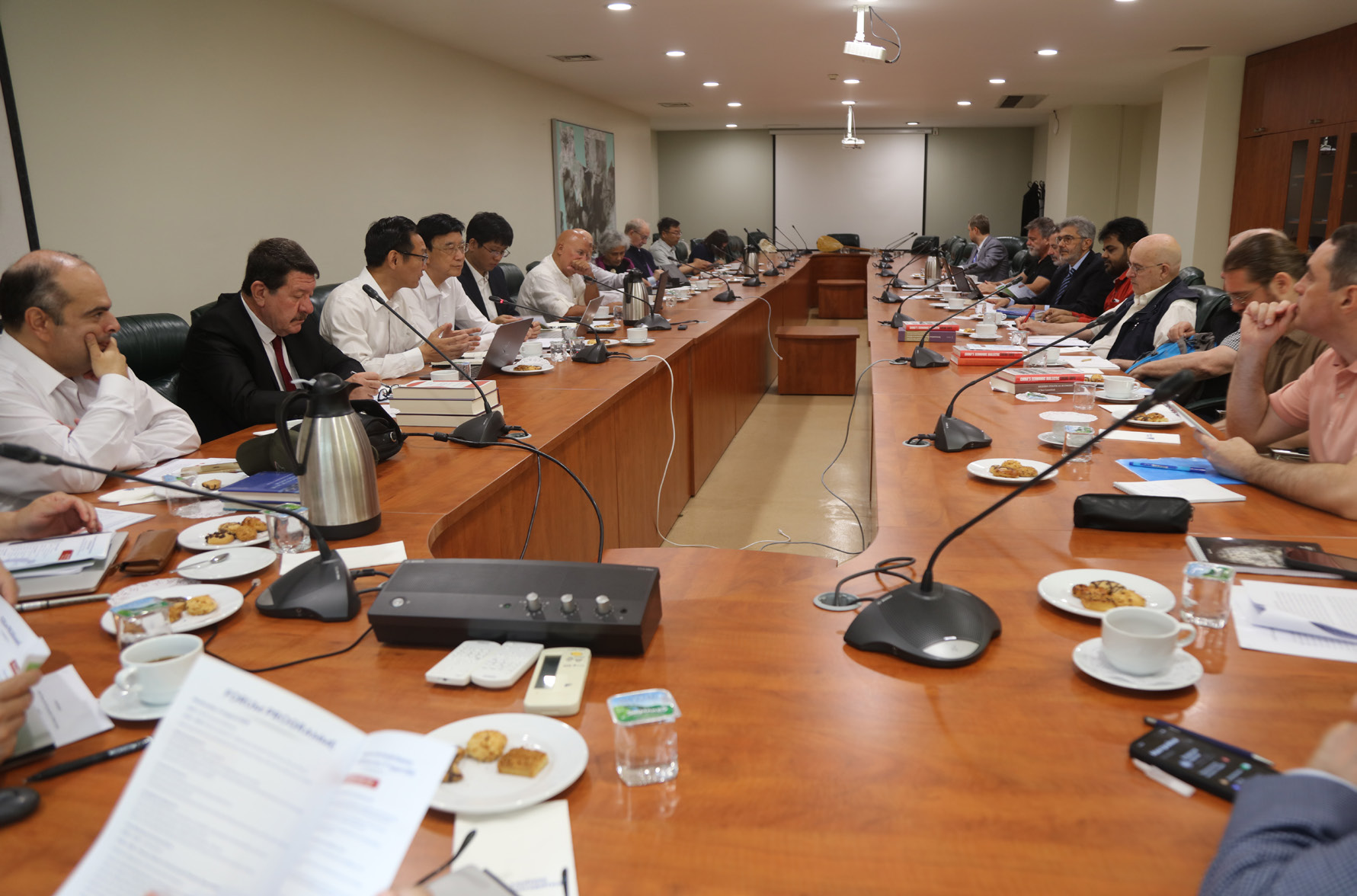
The 18th Annual Forum of the World Association for Political Economy (WAPE), organized for the first time in Turkey, was successfully completed after three days of sessions. Academics and experts from 16 countries evaluated the course of the world on the axis of multipolarity. Papers were presented in concurrent sessions, and a lively exchange of views took place with questions and contributions from participants.
On August 6, WAPE concluded with a meeting of Council members, which takes place at least once a year. Award recipients were selected, and it was decided that the 19th Forum would be held in London, the 20th in Palermo, and the 21st in Moscow in the hope of ending the war. Three new academics from Turkey were accepted to join the WAPE Council. Prof. Dr. Erinç Yeldan, Prof. Dr. Melih Baş, and Assoc. Prof. Dr. Deniz Tansi were elected as WAPE Council members.
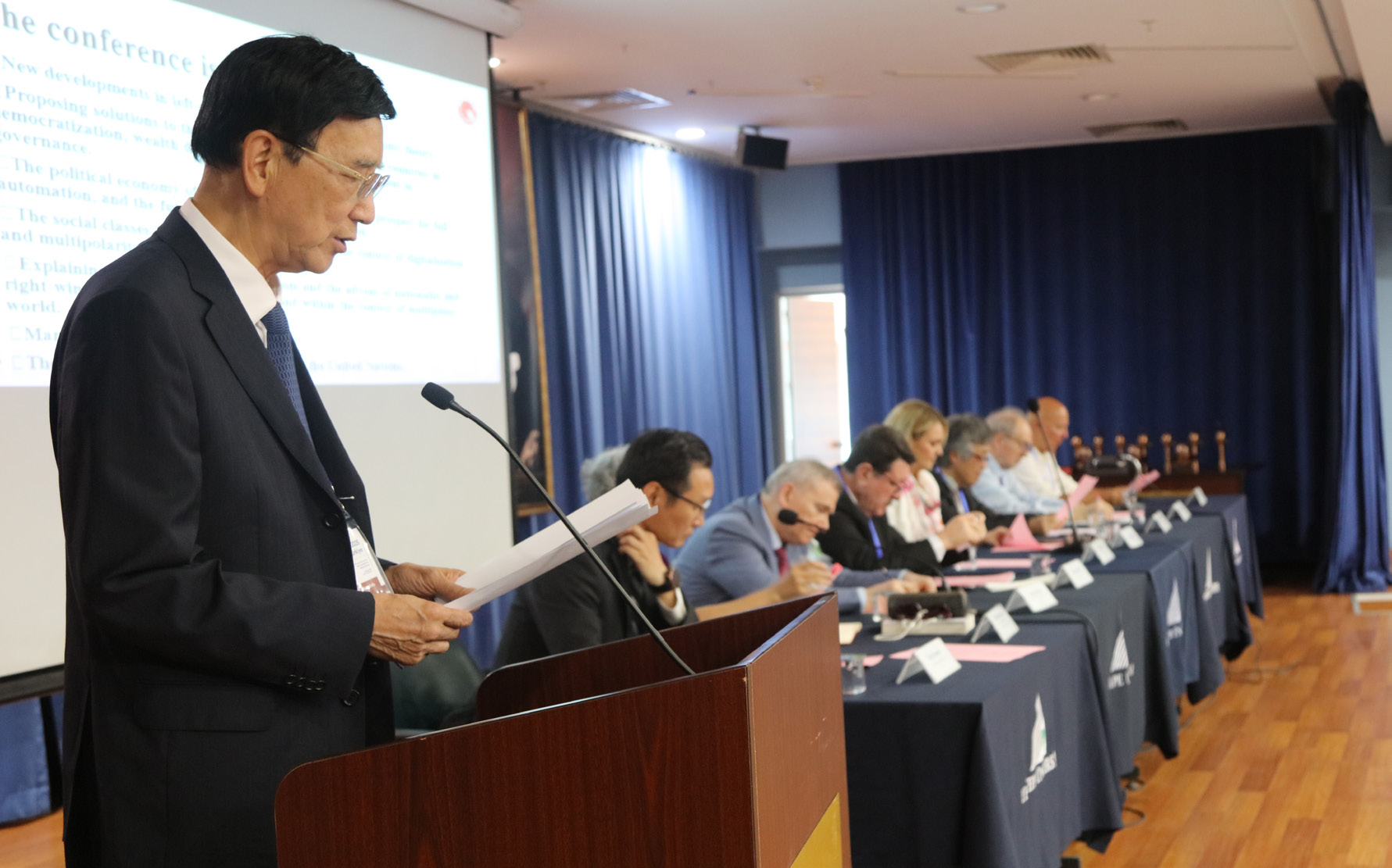
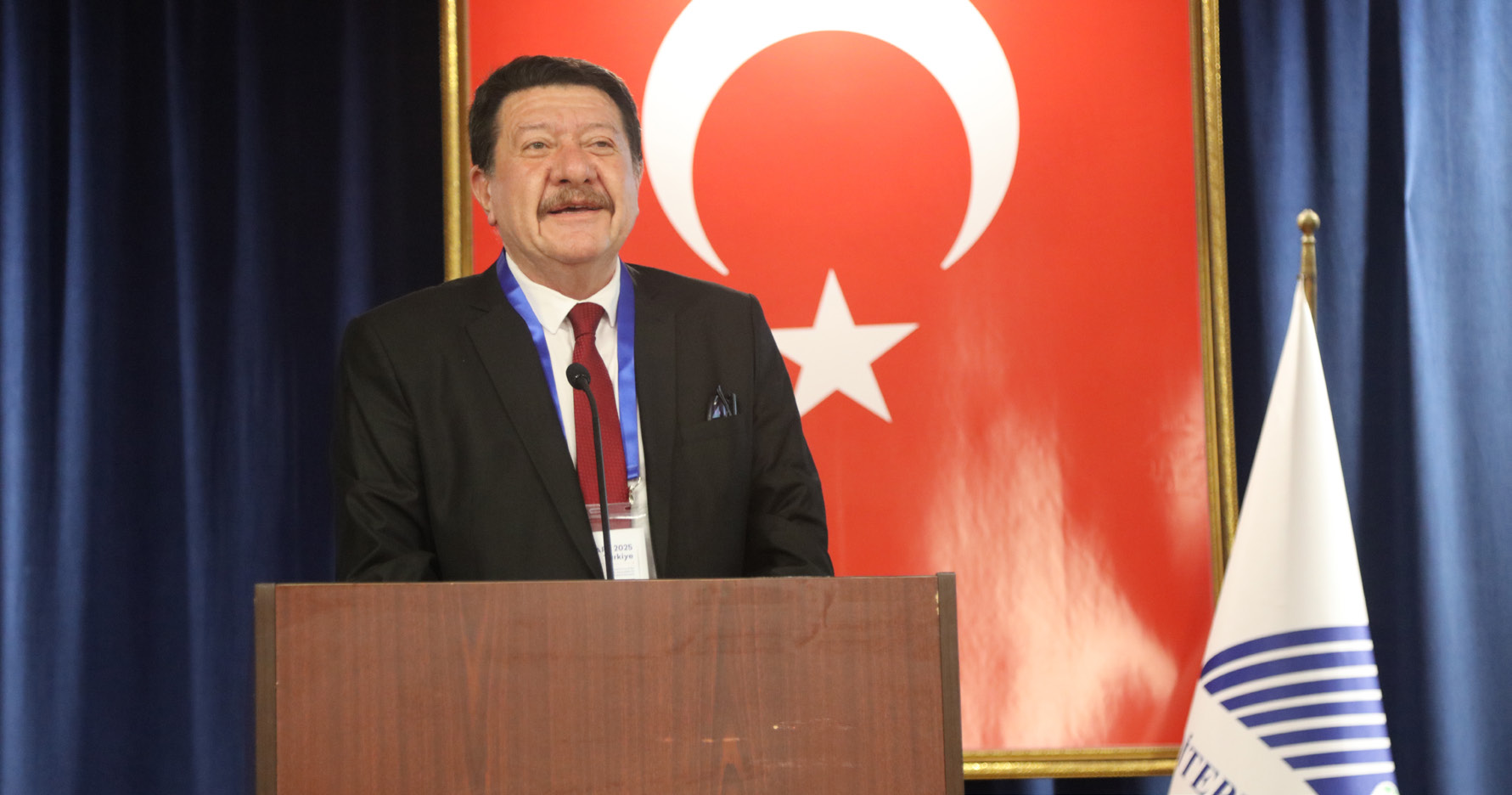
The Forum started on the afternoon of August 6 with the opening session chaired by Prof. Xiaoqin Ding, Secretary General of WAPE. Yeditepe University Vice Rector Prof. Dr. İpek Karaaslan, WAPE President Prof. Cheng Enfu, and Turkish-Chinese Business Development and Friendship Association President Adnan Akfırat delivered the opening speeches. Following the speeches, the “Marxian Economics Award” and “the Distinguished Achievement Award in Political Economy for the 21st Century” were presented to the winners.
LIFETIME CONTRIBUTION AWARD TO KORKUT BORATAV
Veteran Turkish economist Prof. Dr. Korkut Boratav was among the academics who received the “Marxian Economics Award.” In the same category, Prof. Dr. Jian Xinhua from Wuhan University in China, Prof. Dr. Radhika Desai from the University of Manitoba in Canada, and Prof. Dr. He Ganqiang from Nanjing University of Finance and Economics in China were also awarded.
The “Distinguished Achievement Award in Political Economy for the 21st Century” was presented to Alberto Lombardo from the University of Palermo, Italy; Prof. Dr. Özgür Orhangazi and Prof. Dr. Erinç Yeldan from Kadir Has University; Prof. Dr. Li Zhengtu from Shanghai International Studies University, China; Prof. Dr. Stavros Mavroudeas and Assoc. Prof. Dr. Costas Passas from Panteion University, Greece; Assoc. Prof. Dr. Costas Passas from Panteion University in Greece, Assoc. Prof. Dr. Sabah Alnasseri from York University in Canada, Prof. Dr. Liu Runqiu from Sichuan University in China, Prof. Dr. Andrii Grytsenko from National Academy of Sciences in Ukraine, Assoc. Prof. Dr. Sousuke Morimoto from Rikkyo University in Japan, Prof. Dr. Vincent James Hooper from SP Jain School of Global Management in Australia and Assoc. Prof. Dr. Li Linan from Xiamen Institute of Technology in China.
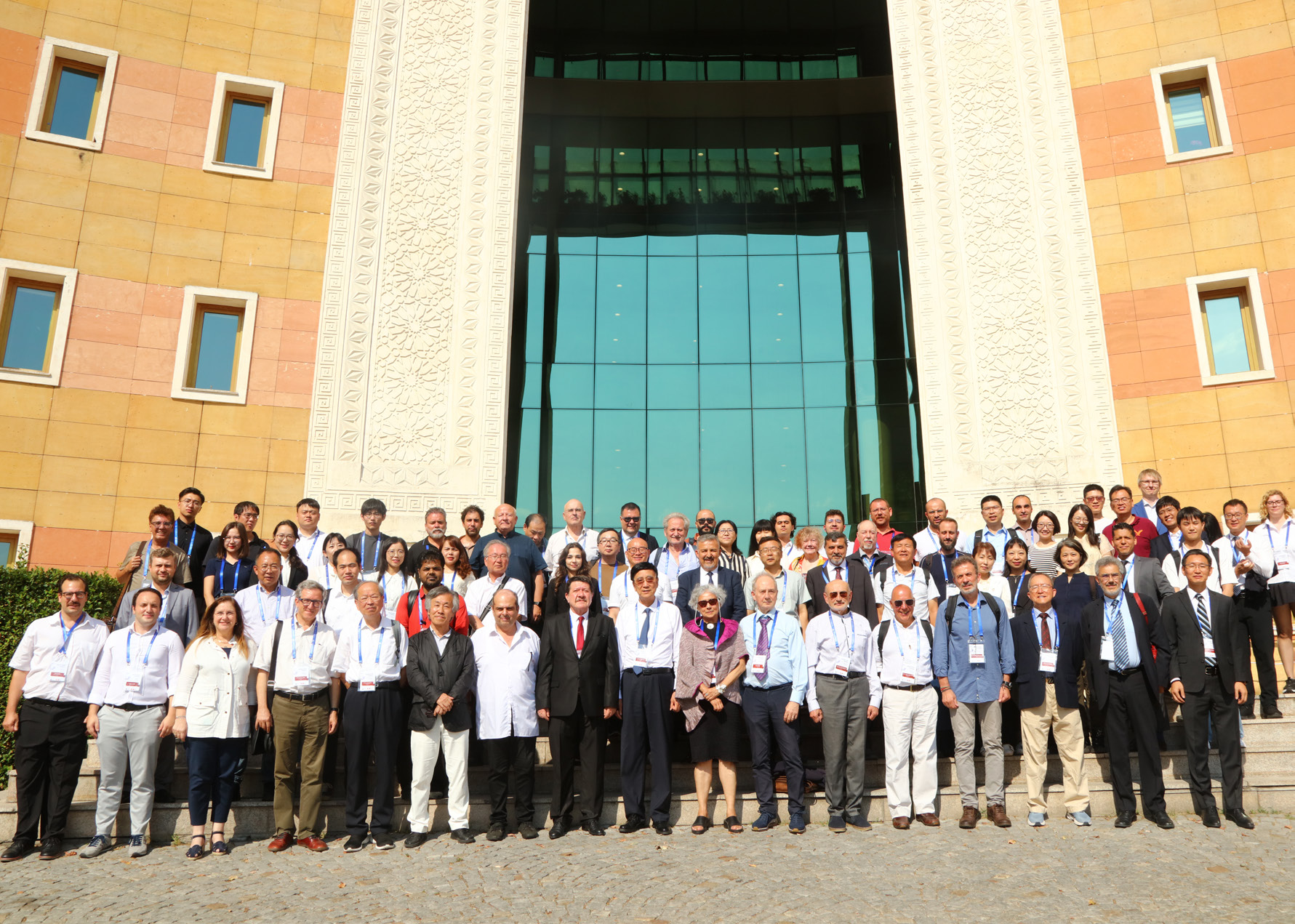
After the traditional sapling planting ceremony as part of the forum, a group photo was taken in front of the rectorate.
Founded in 2006 and based in Paris, the World Association for Political Economy (WAPE) is an international academic society. The president of the WAPE is Prof. Dr. Cheng Enfu from the Chinese Academy of Social Sciences. The annual forums, which have been organized in cities such as Beijing, Berlin, Johannesburg, Hanoi, Moscow, Shanghai, Fuzhou, and Athens, were hosted for the first time in Turkey this year by Yeditepe University in cooperation with the China Business Development and Friendship Association.
The Opening Speech of the 18th Annual Forum of the WAPE Prof. Dr. Cheng Enfu Chair of WAPE, Academician of the Chinese Academy of Social Sciences Dean of the Marxism Research Institute of Shanghai University of Finance and Economics
Dear Prof. Mehmet Durman and Mr. Adnan Akfırat, Dear WAPE members, experts, and scholars, We are very glad to gather in beautiful Istanbul, Turkey, to have the 18th Annual Forum of the World Association for Political Economy themed “Multipolarity in the 21st Century: Challenges and Opportunities in Political Economy” and grant the “Marxian Economics Award” and “the Distinguished Achievement Award in Political Economy for the 21st Century” for the year of 2025. First of all, on behalf of the WAPE, I sincerely thank the leaders and conference staff of Yeditepe University and the Turkish-Chinese Business Development and Friendship Association for your strong support and meticulous preparation, and I warmly welcome experts and scholars from all over the world!
This forum will discuss in depth of the law of unbalanced development of the world economy and the new pattern of international economic development; the rise of emerging economies and their impact on the world power structure; the development of “the Belt and Road” international cooperation, the BRICS and the SCO; the challenge of US dollar hegemony and its alternative monetary scheme and the establishment of a new international economic order; the role of regional alliances and the reshaping of a multi-level governance system; ecological challenges and resource policies in a multi-level world pattern; the evolution of labor relations and production systems at this stage; the geopolitical political economy of technology and digital governance; the historical logic and theoretical logic of the multi-polar process; new developments in left-wing international political economy theory; challenges and countermeasures faced by the democratization, wealth distribution and people’s participation in governance of countries in the Global South; artificial intelligence and exploitation of surplus value; the issue of class change in the world and countries under the digital background; the ineffectiveness of neoliberalism and neo Keynesianism; the theories, policies, and models of modern Marxist political economy, and among many other important topics.
Comrades and friends, I believe there are several important theoretical and practical issues worth pondering.
First, how should we assess the current global economic landscape? The present international economic environment is characterized by complexity and severity. Influenced by the convergence of multiple crises—including contractionary monetary policies and elevated real interest rates in major economies such as the United States, Europe, and Japan, persistently high energy prices, sluggish growth in real household incomes, and declining confidence—the global economy faces intertwined short-term challenges and long-term structural contradictions. Consequently, downward pressure on economic growth continues to intensify, with recession risks progressively escalating. The bleak economic outlook has led to divergent national interests among different types of countries, with competitive-cooperative relations among major global powers or blocs undergoing profound realignment. In some cases, zero-sum games between major powers have even escalated into “negative-sum games.” The intricate contradictions of contemporary capitalism have rendered the global economy increasingly characterized by imbalances, disharmony, instability, and multifaceted crises. Trade wars and currency conflicts persist among developed nations as well as between developed and developing countries, with repercussions reverberating globally. The hegemonic practices of protectionist powers, led by the United States, manifest as acts of dominance, bullying, and coercive diplomacy. By politicizing, instrumentalizing, and weaponizing economic, trade, and technological issues, these actions represent a distorted form of trade protectionism and constitute contemporary manifestations of neo-imperialism and neo-colonialism. Such conduct is inevitably inflicting severe damage upon the development of the world economy. This has inevitably provoked countermeasures from other nations, exacerbating global conflicts, frictions, and confrontations, thereby adversely impacting the development of the world economy and the livelihoods of people across nations. Only through collective solidarity and active opposition to all forms of hegemonic practices can the global economic landscape progressively improve.
Second, how should we perceive the current new landscape of the global economy? Since the financial and economic crisis that erupted in the United States and the West in 2008, and the Russia-Ukraine conflict and Middle East conflicts triggered by the U.S. and the West in 2022, the global economic landscape has increasingly shifted toward an “East rising, West declining” trend. Specifically, the economic significance and share of global GDP contributed by the U.S.-led Western economies, represented by the G7, have declined. Conversely, the economic importance and GDP contributions of Eastern and Southern nations, represented by China, Russia, and other BRICS countries, have risen.
On April 9, 2023, data released by the UK-based macroeconomic research firm Acorn Macro Consulting revealed that, based on purchasing power parity (PPP), the BRICS bloc—comprising five major emerging economies—has surpassed the Group of Seven (G7) in its share of global GDP. Specifically, the BRICS nations accounted for 31.5% of global GDP, while the G7 contributed 30.7%. Notably, the expanded BRICS coalition in recent years has demonstrated an even greater economic footprint and heightened contribution to global output.
The emerging international economic landscape characterized by “the East rising and the West declining” is fundamentally shaped by the internal and external contradictions of the United States, as well as the mechanisms and patterns of hegemonic decline. This transformation also stems from the proactive efforts of Global South nations, which—based on their domestic realities—actively engage in global development cooperation, expand development pathways, and uphold self-reliance and independent development.
On November 10, 2022, during the 21st session of the United Nations, Pakistan, acting on behalf of the Group of 77 member states and China, introduced a draft resolution entitled “Towards a New International Economic Order.” Subsequently, on November 21, 2022, the United Nations adopted this resolution at its 22nd session. This landmark resolution represents a significant step toward establishing a just multipolar world order and fostering a new paradigm in international economic relations.
Third, how should we evaluate the scientific validity and practical applicability of various neoliberal and Keynesian economic theories? Since the late 1970s, neoliberal economics has risen to prominence and gradually become the dominant paradigm in global economic thought. However, the implementation of neoliberal theories and policies has yielded economic outcomes—both nationally and globally—that fall short of the performance achieved during the Keynesian era. Instead, these policies have exacerbated regional disparities, widened international inequalities, intensified class contradictions, and aggravated debt crises. Ultimately, their inherent vulnerabilities and failures have been exposed through successive financial crises, economic downturns, fiscal crises, and social welfare crises. Even during the era of technological supremacy, lucrative arms trade, and economic dominance, the United States remains unable to escape the “compound crisis”—an intricate interplay of economic downturns, social unrest, and political instability triggered by financial crises.
Both traditional and contemporary Keynesian economics demonstrate a degree of objectivity and progressiveness in theory and policy compared to classical and neoliberal approaches. However, these two dominant schools of economic thought fundamentally fail to address the practical challenges faced by national and global economic development. Marx and Engels profoundly elucidated the fundamental contradiction of capitalism—namely, “the contradiction between the socialization of production and the private ownership of the means of production under capitalism.” They further identified this foundational contradiction and its derivative conflicts as the root cause of various societal crises and contradictions inherent to capitalist systems. Neoliberalism, along with both traditional and contemporary Keynesianism, fails to resolve the inherent contradictions between socialized, globalized, and intelligent large-scale production under capitalism and its foundation in private ownership of production means, particularly private monopoly ownership. The dominance of private monopoly ownership, coupled with its resistance to national and international regulatory mechanisms, constitutes the root cause of severe contradictions and systemic crises observed across nations and globally. These manifest in domains including but not limited to technological development, ecological sustainability, investment patterns, production systems, exchange relations, distribution mechanisms, consumption models, and public welfare.
Fourth, how should we evaluate the scientific validity and practical applicability of Marxist economics and its contemporary theories of upholding fundamental principles while breaking new ground? The Marxist-Leninist economic system, guided by scientific methodology, has evolved through critical reflection on capitalism and imperialism coupled with scholarly innovation. Its core paradigms and fundamental conclusions withstand rigorous logical scrutiny and empirical verification. The emerging phenomena and distinctive characteristics observed in the economic development of contemporary socialism and capitalism have garnered extensive attention and research within global academic circles. Numerous economists, both domestic and international, continue to employ Marx’s scientific methodology and penetrating insights to transcend the narrow approaches and theoretical frameworks of modern mainstream Western economics. They actively explore the intrinsic mechanisms and laws governing modern economic development, yielding a wealth of original and innovative research outcomes. Under my leadership, the international innovative Marxist academic team adheres to Marxist-Leninist political economy as its foundation while incorporating scientific elements from both global Marxist scholars and modern Western economic theories. Our fundamental objective is to construct a new paradigm that surpasses not only classical Marxist-Leninist economic theory and Soviet economic models but also modern mainstream Western economic theories. This paradigm aims to establish an economic framework reflective of the global economic landscape—essentially, a Marxist-oriented “postmodern economics” and an internationally innovative Marxist school. For detailed theoretical constructs, policy implications, and methodological approaches of this school, readers may refer to our multilingual publications. As an open academic community, we welcome scholars worldwide to engage in collaborative research and intellectual exchange.
Fifth, how can we adopt more academically competitive strategies in a multipolar world and a diverse economic theoretical landscape? I contend that to foster sustainable global economic and social development while addressing the opportunities and challenges in the political-economic sphere of this multipolar era, we must advocate for increased and more effective collaborative actions and collective advocacy among Marxist economists worldwide. Individual or small-group efforts by scholars from various countries cannot fundamentally alter the current dominance of mainstream bourgeois economics. Our association and the distinguished experts present here should embrace this historic responsibility and mission by strengthening multilateral alliances among Marxist and left-wing economists across nations. Through progressive consolidation, we must build a robust theoretical front, continuously innovating while upholding foundational principles to advance modern Marxist economics—thereby enhancing its international academic influence and securing greater discursive power in global theoretical and policy debates.
From a broader global and theoretical perspective, Marxist and left-wing academic societies, media platforms, forums, and educational institutions worldwide should unite to enhance mutual exchanges on leftist theories, strategies, and tactics. By seeking common ground while reserving differences, minimizing unnecessary debates, and jointly advancing theoretical innovations in modern Marxist economics, these efforts should translate into practical applications. Together, they must counteract the adverse influence of mainstream bourgeois theories and policies promoted by monopoly capital, striving collaboratively to foster global peace, development, justice, security, and social welfare.
Finally, I wish the annual conference a complete success, and may everyone enjoy fruitful exchanges and maintain good health!
Opening Remarks at the 18th WAPE Forum Adnan Akfırat Chairman of the Turkish–Chinese Business Development and Friendship Association Vice Chair of the World Association for Political Economy
Distinguished participants, dear colleagues, İstanbul’a hoş geldiniz!
Welcome to Istanbul, welcome to Türkiye, not only a land connecting two continents but also a leading country in West Asia and one of the foremost pioneers in the global struggle for a multipolar world.
Today, the most pressing reality we face is that the world is no longer unipolar. Understanding and analyzing political, economic, social, and cultural developments these days requires us to recognize the dynamics of multipolarity.
But the establishment of a multipolar world is not an automatic or spontaneous process. It is built on extraordinary efforts, creative labor, sacrifice, and even bloodshed. This hopeful and transformative development is the result of relentless human endeavor.
Economically, one of the most decisive factors in breaking imperialist hegemony has been China’s remarkable development, made possible through socialism. China’s productive power, which now reaches across the globe, has transformed the Asia-Pacific into a new epicenter of commodity production and trade. This grand awakening in Asia has created a favorable climate for the development of national economies across West Asia, Central Asia, Africa, and Latin America.
On the geopolitical front, the armed resistance of the peoples of West Asia has forced a shift in U.S. imperialist strategy. President Trump’s commitment to ending wars was not merely political rhetoric—it was born out of geopolitical necessity.
Terrorism rooted in ethnic and religious separatism, which has plagued developing nations for the past half-century, is steadily losing relevance in this new multipolar order. The decision of the PKK— one of the world’s largest terrorist organizations— to lay down its arms and integrate with the Turkish nation and state is a direct victory for multipolarity. In Syria, the so-called SDF forces are also moving toward integration with the Syrian government and state. We now see the conditions emerging for the resolution of such conflicts in countries ranging from Ukraine, Pakistan, Iran, Myanmar, and Kashmir to the Philippines, Sudan, Nigeria, Ethiopia, Colombia, and even China.
Dear friends, To further develop this new multipolar world, two critical tools are required: innovation and unity.
Innovative thinking—creating new paths when none seem available—is essential in launching a new era. As our ancestors demonstrated when Sultan Mehmet the Conqueror transported his ships over land during the siege of Constantinople, bold initiative shapes history. We have a saying in Turkish: “The horse belongs to the rider; the sword belongs to the bearer.”
In times of great transformation, what matters is not quantity but quality. The small becomes mighty, the weak grow strong, and ideas once confined become the spiritual fuel of millions.
The second key lies in unity. Even as U.S. imperialism wanes, it remains the world’s most powerful military force, and the dollar continues to dominate global finance. To confront such an immense force, our greatest weapon will be solidarity—that amounts to political, military, economic, technological, cultural, and social cooperation.
Establishing an international union that responds to the needs of a multipolar world and determining which powers will take the initiative is an urgent agenda item. I believe that political economists play a significant role in shaping this initiative.
Dear friends, This year, the WAPE Forum is being held for the first time in a West Asian country, and we are honored that it is in Türkiye. I would like to extend my deepest gratitude to Mr. Bedrettin Dalan, the Chairman of the Board of Trustees at Yeditepe University and my dear elder brother, for his generous support in hosting this important event.
I would also like to express my appreciation to WAPE President Prof. Cheng Enfu and Secretary General Prof. Allen Ding for their bold decision to bring the 18th Forum to Türkiye.
I want to offer heartfelt thanks and praise to Associate Professor Deniz Tansi, who represented Yeditepe University on the WAPE 18 Forum Organizing Committee and worked tirelessly to ensure its success.
The 18th WAPE Forum is indeed a historic gathering—in terms of both its participants and its content. We have designed a space where the challenges and possibilities of multipolarity are discussed through a broad range of perspectives and rich intellectual diversity. We are embracing the great revolutionary teacher Mao Zedong’s principle: “Let a hundred flowers bloom; let a hundred schools of thought contend.” We aim to learn from one another and build common ground for all humanity.
Over the past three months of preparations for this forum, I was unfortunately incapacitated by a severe case of vertigo. I have only been able to appear here today out of necessity. During this period, the responsibility of organizing this major event was shouldered—and fulfilled brilliantly—by a young and dynamic secretariat team under the leadership of Mr. Süheyl Baybalı, Secretary General of the Turkish-Chinese Business Development and Friendship Association. On behalf of WAPE, I extend my sincere thanks to them.
I wish all of us a rich, creative, well-contested, and fruitful Forum.
Thank you once again for your presence and participation.
Statement of the 18th Forum of the World Association for Political Economy August 2025, Türkiye
The World Association for Political Economy (WAPE) is an international academic organization voluntarily formed by Marxist, Marxian, and other critical political economists and related academic groups worldwide. It aims to integrate the study of the political economy of our world, the global research forces in Marxist economics, and the theories and methods of evolving Marxist economics to study the world economy and national economic development; promote economic and cultural exchanges among the peoples of the world; and enhance their wellbeing. Since its first forum held in Shanghai, China, in 2006, WAPE has organized over twenty academic conferences in countries such as China, Japan, France, the United States, Mexico, Brazil, Vietnam, South Africa, India, Russia, Germany, Canada, and Greece. In 2025, marking the 20th anniversary of WAPE’s founding, we convened the 18th forum at Yeditepe University in Türkiye. The theme of this conference is “Multipolarity in the 21st Century: Challenges and Opportunities in Political Economy.” After in-depth discussions at this forum, we present the following statements: 1. The ongoing contemptible televised genocide in Gaza is a standing indictment of contemporary imperialism. It violates the basic postulates of humanity and human society. It is the most egregious instance of the malignant wars instigated by imperialist powers. They hinder human social progress and the improvement of livelihoods. Such wars include the Russia-Ukraine conflict, now in its third year; the recent Iran-Israel conflict; one that could possibly break out on the Korean peninsula; the one threatened against liberation forces in the Sahel; and the one threatened against China over Taiwan. Such wars not only cause immense loss of life and property in the regions concerned, but they also inflict more human suffering by causing incalculable damage to international supply chains, productivity, and production relations. Marxist political and geopolitical economists worldwide should strengthen cooperation and conduct in-depth research on significant economic theories and practices related to such imperialist war.
2. This year marks the 80th anniversary of the victory over German-Italian-Japanese fascism and the 80th anniversary of the adoption of the United Nations Charter. The world today is undergoing changes unseen in a century at an accelerated pace. Opposing imperialism and hegemonism in economic, political, cultural, and military fields is critical to world peace, development, and security in the current era. The US’s attempt to create a unipolar world system dominated by it never succeeded and is today in a shambles. A multipolar world order is taking shape instead. It recognizes the historical necessity of human socioeconomic development worldwide through development paths and models based on people’s national conditions.
3. The world today is experiencing a new round of scientific and technological revolution, represented by new energy, new materials, digital technology, and artificial intelligence, as well as the sweeping transformation of the global political and economic landscape driven by this revolution. Rather than contributing to this revolution, the imperial world is instead engaged in speculation and disruption, creating uncertainties and instabilities in international political, economic, and social relations. They pose risks and challenges that test the political wisdom of leaders worldwide. As the profound changes unseen in a century accelerate, traditional mainstream theories explaining international political and economic relations increasingly reveal their inherent flaws. There is an urgent need for groundbreaking theoretical innovations, based on Marxism, to guide the new economic and political landscape and achieve the reshaping of the international economic order, as emphasized by the United Nations General Assembly for many years.
4. Today, senile monopoly capitalism is preoccupied with speculation and predatory lending through which to suck out value produced by working people and oppressed and exploited nations. It is incapable of expanding production, let alone doing it in an egalitarian manner that spreads prosperity to working people. Currently, BRICS+ countries and many others opposed to imperialism and hegemonism contribute more to global economic growth than the G7 countries. Building a community with a shared future for humanity signifies a shift in world history from the capitalist paradigm of “control and plunder” to one of “wide consultation, joint contribution, and shared benefit.” Marxist political economists worldwide must grasp this historical trend and make theoretical contributions to reshaping a just and equitable global economic governance system.
5. The postwar system of international economic governance system was dominated by the imperialist countries. They ensured that the system led to the continuous flow of international surplus value and profits into the pockets of the private monopoly bourgeoisie in these countries. Today, unable to ensure such flows through the system, the imperialist countries have taken to leveraging technological, financial, and institutional hegemony through sanctions and blocking of trade and capital flows that fail to reinforce their declining imperial power while nevertheless damaging development. To reverse the deepening global polarization of wealth, the developmental rights and interests of Global South countries must be fully respected, supported, and protected.
6. The already failing dollar system and its weaponization have severely disrupted normal economic exchanges among nations and harmed the developmental interests of peoples worldwide for decades. Therefore, we call for the reconstruction of a genuinely egalitarian and productively focused international monetary system that better aligns with the development of international productive forces, facilitates universal and equal interactions among nations, and ensures equal development opportunities and shared benefits for all countries and their peoples.
7. The ecological emergency, composed of pollution, biodiversity loss, and climate warming, is among the most significant challenges facing humanity today. The international community must work together to transform production methods and jointly forge a path for global ecological civilization. Marxist political economists worldwide should enhance exchanges and cooperation, shoulder the responsibility for the productive transformation necessary to address the ecological emergency, and deepen theoretical and policy research in environmental political economy and resource political economy.
8. The threat of nuclear war is closer today than ever. Militarily aggressive imperialist countries cannot be trusted to refrain from a repeat performance, as they have already shown their readiness to use nuclear weapons without justification and have used depleted uranium weapons with impunity since. Marxist and critical political and geopolitical economists worldwide must work on solutions that move the world away from the current balance of terror to build a world based on a balance of security, development, environmental sustainability, and peace.
9. The development of digital technology and artificial intelligence has the potential to boost productivity. However, the privatization and monopolization of technology inevitably distorts its development so as to extract surplus value and promote monopoly, threatening employment and the economic rights of the vast majority of laborers. China’s proposal for the Global AI Governance Initiative, advocating wide consultation, joint contribution, and shared benefits, and its call to establish a World AI Cooperation Organization, are highly necessary and beneficial.
10. The complexity and contradictions of capital movement in the era of increasing multipolarity are manifold. They include contradictions among imperialist nations, between the bourgeoisie of imperialist nations and the working class of developing nations, within imperialist nations between the bourgeoisie and the working class, between imperialist nations and the Global South or socialist nations, and among more and less powerful imperialist nations. These intertwined contradictions significantly increase global instability. Therefore, achieving a just multipolar world requires opposing 21st-century imperialism, hegemonism, neoliberalism, neocolonialism, and neofascism in all their forms.
11. In a multipolar world, it is clear that the ideas that will advance humanity and broaden horizons are independence, public ownership, and peoplism. It has become clear that Marxism, developed under the needs of the age and each country, will be the founding and liberating ideology of the 21st century. The task before us is to establish a new international organization to institutionalize international cooperation. Drawing on the experiences of past international organizations, we must create a new international organization based on the fundamental dynamics of a multipolar world.
Marxist political economists of the world, unite and work diligently to build a peaceful, just, prosperous, and happy multipolar world!