Introduction
Islamophobia has a long-standing history in the world. Since its inception, the Western Christian world has harbored fear, hatred, and prejudice towards Islam. Over hundreds of years, mutual attacks between the two sides have fueled these sentiments, leading to deep-rooted historical tensions that pose significant threats to contemporary interaction between Christian civilization and Islamic civilization. In the 21st century, a series of international events such as the 9/11 terrorist attacks, the emergence of the terrorist organization ISIS, and the European refugee crisis have reignited anti-Islam and anti-Muslim sentiments in the Western World. This resurgence of Islamophobia has become a critical issue of the international community nowadays.
Türkiye, situated at the crossroads of Europe and Asia, serves as a convergence point for Western and Eastern cultures, as well as Christian and Islamic civilizations. It has been the target of Islamophobia as early as the Ottoman Empire period, which stems not only from the military fear arising from the expansion of an imperial power, but at a deeper level from the cultural fear brought about by heterogeneous Islamic civilization. In the 21st century, under the leadership of President Recep Tayyip Erdoğan, whose Justice and Development Party (AKP) has Islamist roots, Türkiye considers itself the heir to the Ottoman Empire, Islam’s last fortress, and the leader of Islamic civilization. Faced with the escalating issue of Islamophobia in recent years, Türkiye, positioning itself as the leader within the Islamic world, has assumed the responsibility of combating Islamophobia and safeguarding Muslims’ interests (Tol, 2019Tol, G. (2019). Turkey’s Bid for Religious Leadership: How the AKP Uses Islamic Soft Power. Foreign Affairs. Retrieved February 7, 2024 from; Gürcan, 2019Gürcan, Efe Can. (2019). Political geography of Turkey’s intervention in Syria: underlying causes and consequences (2011-2016). Journal of Aggression, Conflict and Peace Research, 11(1), 1–10.).
Existing literature on Islamophobia predominantly delves into its definition, implications, and manifestation in certain countries or regions. However, Türkiye’s efforts to combat Islamophobia remain largely unexplored. Thus, this paper aims to examine Türkiye’s responses, motivations, and challenges in confronting Islamophobia. The findings may hopefully contribute to a more comprehensive understanding of Türkiye’s role in international relations and the interaction of civilization in the contemporary world.
Understanding Islamophobia from the Turkish Perspective
In the English context, the term “Islamophobia” is a compound word made from “Islam” and “phobia”. First used in 1923, it mainly refers to the “irrational fear of, aversion to, or discrimination against Islam or people who practice Islam” (Merriam-Webster, n.d.Merriam-Webster. (n.d.). Islamophobia. In Merriam-Webster.com dictionary. Retrieved January 18, 2024 from). According to the explanation provided by the United Nations (n.d.United Nations. (n.d.). International Day to Combat Islamophobia 15 March. United Nations. Retrieved February 25, 2024 from), Islamophobia is “a fear, prejudice and hatred of Muslims that leads to provocation, hostility and intolerance by means of threatening, harassment, abuse, incitement and intimidation of Muslims and non-Muslims, both in the online and offline world”. In 1997, the Runnymede Trust, a non-governmental organization focused on racial relations and civil rights, published a report entitled “Islamophobia: A Challenge for Us All”, which marked the emergence of Islamophobia in contemporary discourse. Since then, especially following the 9/11 attacks in 2001, the concept of Islamophobia has been commonly employed by the media, citizens, and NGOs, particularly in Western countries (Bleich, 2012Bleich, E. (2012). Defining and Researching Islamophobia. Review of Middle East Studies, 46(2), 180–189.). In recent years, with the spread of Islamophobia and the resulting normalization of hatred, hostility, and violence, some international organizations and sovereign states have gradually become aware of the potential threat of Islamophobia and begun to incorporate it into political agenda.
From the Turkish perspective, the phenomenon of Islamophobia can be traced back to the era of the Ottoman Empire. With the early conquest and expansion of the Islamic Empire, Western Christian civilization experienced frequent military invasions and cultural shocks from a heterogeneous civilization. Such interaction left Westerners, who were still at a disadvantage at that time, feeling vulnerable in the face of both tangible security threat and intangible spiritual menace. Consequently, a sense of intuitive fear and animosity towards Islam and Muslims began to emerge among Western societies. As Western nation-states ascended and the Ottoman Empire declined, the once dominant power spanning Asia, Africa, and Europe was gradually reduced to the “Sick Man of Europe”, and Christian civilization and Islamic civilization had since changed their positions in the arena. During the era of Western colonial expansion, prevalent arguments such as Eurocentrism and Orientalism were utilized extensively, demonizing Islam and Muslims through colonial and imperialist discourse. With these ideas in mind, the stereotypical perception of Muslims in the Western world as being ignorant, backward, and barbaric gradually developed. As a result, the previous Christians’ fear and hostility towards Muslims, and the contempt and discrimination of the self-proclaimed rational and civilized West towards the ignorant and barbaric East, intertwined over time, eventually entrenching the negative perceptions of Western Christian civilization towards Eastern Islamic civilization (He, 2013He, J. Y. (2013). The Evolution of American Hegemony and Islamophobia. World Economics and Politics, (4), 125-142.).
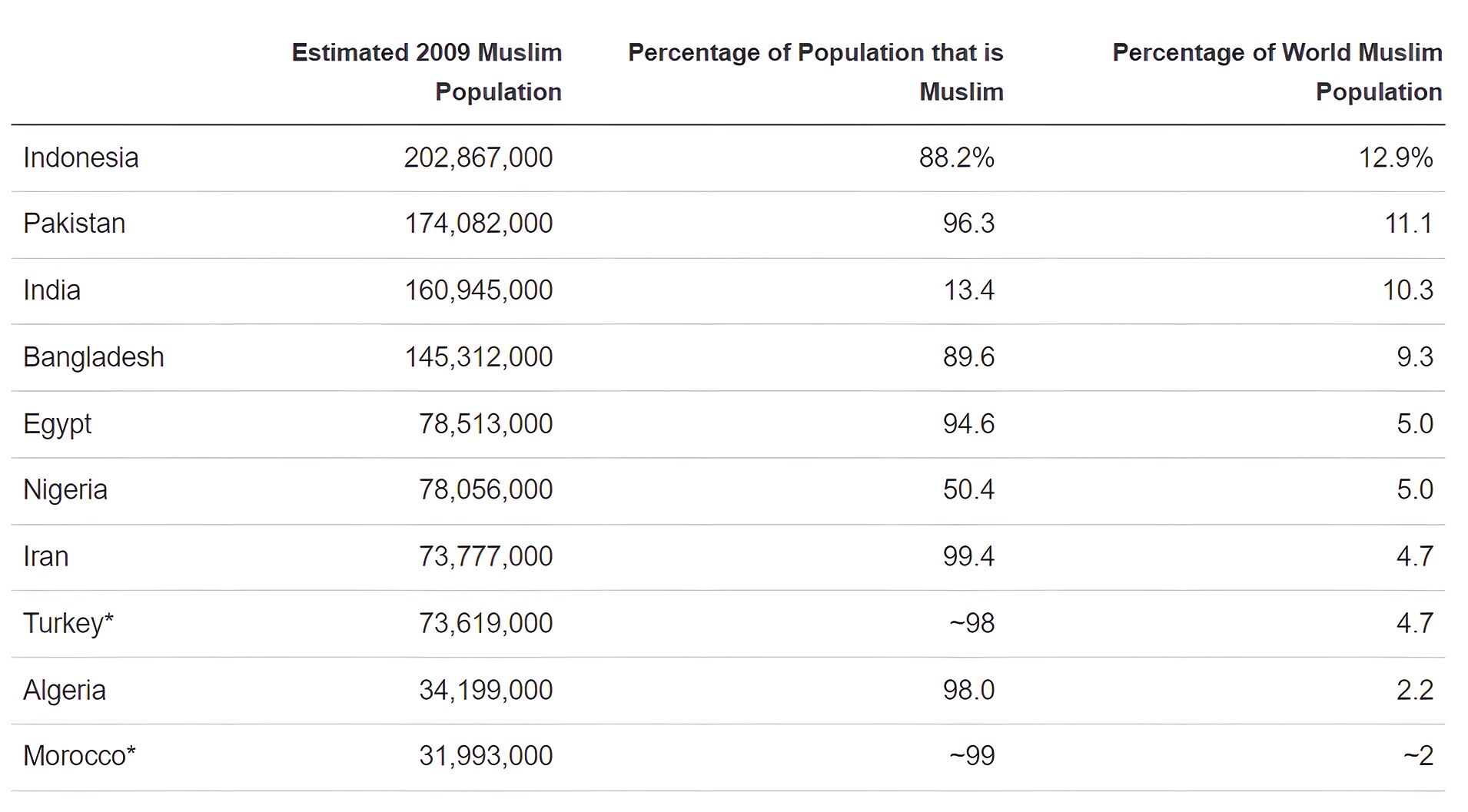
To this day, despite Türkiye’s transition to a secular nation-state, which no longer poses serious military and cultural threats to the West as it once did, lingering prejudices persist in Western societies. According to a report on the global Muslim population released by the Pew Research Center in 2009, Türkiye’s Muslim population constitutes 4.7% of the world’s Muslim population with approximately 73,619,000 people, and around 98% of Türkiye’s population is Muslim (Pew Research Center, 2009Pew Research Center. (2009). Mapping the Global Muslim Population. Pew Research Center. Retrieved February 7, 2024 from). Thus, it is naturally difficult for Türkiye to avoid the growing Islamophobia in the West, while the negative perception of Muslims in the West will also profoundly affect the interaction between the two sides in the international arena. The accession of Türkiye to the European Union, for instance, is one of the typical cases that exemplify the detrimental effects of Islamophobia.
Since 1959, Türkiye has endeavored to establish relations with the European Economic Community, the predecessor of the EU. In 1987, Türkiye formally applied for full membership to the European Economic Community. Subsequently, during the Helsinki meeting in 1999, the European Council granted Türkiye EU candidate status. Nevertheless, despite the initiation of negotiations in 2005, Türkiye’s accession to the EU is still pending. The lengthy process reflects contradictions and differences between the two sides in many aspects, which not only encompass economic and other material elements, but also involve psychological elements such as religion, identity, and so on. According to the materials organized by Li, interviews conducted with Turkish elites in 1999 reveal that the economic issue is regarded as the biggest obstacle to the EU membership, followed by the religious issue (Li, 2008Li, B. Z. (2008). Turkey’s Basic Standpoint on the EU Membership. Chinese Journal of European Studies, (3), 125-142.). In fact, as the Turkish economy grows, the “culturally too different” criticism has become a subtle opposition to Turkish membership in the EU, primarily grounded in Türkiye’s non-Christian identity, which has come to constitute the major impediment to its accession (Kirişci, 2008Kirişci, K. (2008). Religion as an Argument in the Debate on Turkish EU Membership. In D. Jung & C. Raudvere (Eds.), Religion, Politics, and Turkey’s EU Accession (pp. 19-39). Palgrave Macmillan.). A report released by Eurobarometer in 2006 shows that nearly 60% of respondents totally or tend to agree that “the cultural differences between Turkey and the European Union Member States are too significant to allow it to join the EU” (Eurobarometer, 2006Eurobarometer. (2006). Eurobarometer 66.1 - Variable Report. Eurobarometer. Retrieved February 20, 2024 from). The phenomenon of Islamophobia, to a certain extent, is a manifestation of cultural conflict. As Islamophobia rages in Western societies, negative attitudes towards Islam and Muslims in EU member states will further deteriorate, which is likely to reinforce the idea of “cultural differences”. This trend will inevitably hinder Türkiye’s accession process.
Türkiye’s Responses to Islamophobia
In response to the severe situation of spreading Islamophobia, Türkiye has adopted the strategy of “parallel tracks”, incorporating multiple measures. At the practical level, Türkiye employs a combination of bilateral diplomacy, multilateral diplomacy, and foreign propaganda to promote the institutionalization and normalization of the fight against Islamophobia. At the spiritual level, Türkiye emphasizes its national image and soft power in an attempt to change the stereotypes in non-Islamic societies. Focusing on the core objective of anti-Islamophobia, the above two main lines are interconnected and complementary, which would appear to “treat both the symptom and the root cause.”
At the practical level, first and foremost, Türkiye actively engages in bilateral diplomatic activities and negotiations with relevant states where incidents of Islamophobia have occurred, urging them to take practical actions to combat Islamophobia. For instance, Rasmus Paludan, a far-right and anti-Islam activist, burned the Quran near a mosque and outside the Turkish embassy in Denmark in January 2023, which infuriated the Turkish government. Subsequently, the Danish ambassador was summoned to the Turkish foreign ministry, where Turkish officials strongly denounced the authorization granted for such provocative act that constitutes a hate crime and stated that “Denmark’s attitude is unacceptable” (“Quran burned,” 2023Quran burned in front of Denmark mosque, Turkish embassy. (2023). Al Jazeera. Retrieved January 27, 2024 from). As a result of Türkiye’s initiatives, Denmark eventually enacted legislation in December, which effectively criminalizes Quran-burning protests grounded in “inappropriate treatment of writings with significant importance for a recognized religious community” (Altun, 2023Altun, T. (2023). Türkiye to continue multidimensional diplomacy in 2024 to address growing Islamophobia. Anadolu Agency. Retrieved February 27, 2024 from). Similarly, in response to the Quran-burning incidents in Sweden, Türkiye utilized its NATO membership as a lever to exert pressure on Sweden, promoting the latter to make concessions on relevant issues and take measures to combat Islamophobia. In this regard, President Erdogan once made it clear that Türkiye will not allow Sweden to join the NATO as long as Sweden permits the holy book to be burned and torn (Fraser & Tanner, 2023Fraser, S. & Tanner, J. (2023). Erdogan: Sweden can’t join NATO if Quran-burning is allowed. AP News. Retrieved January 15, 2024 from).
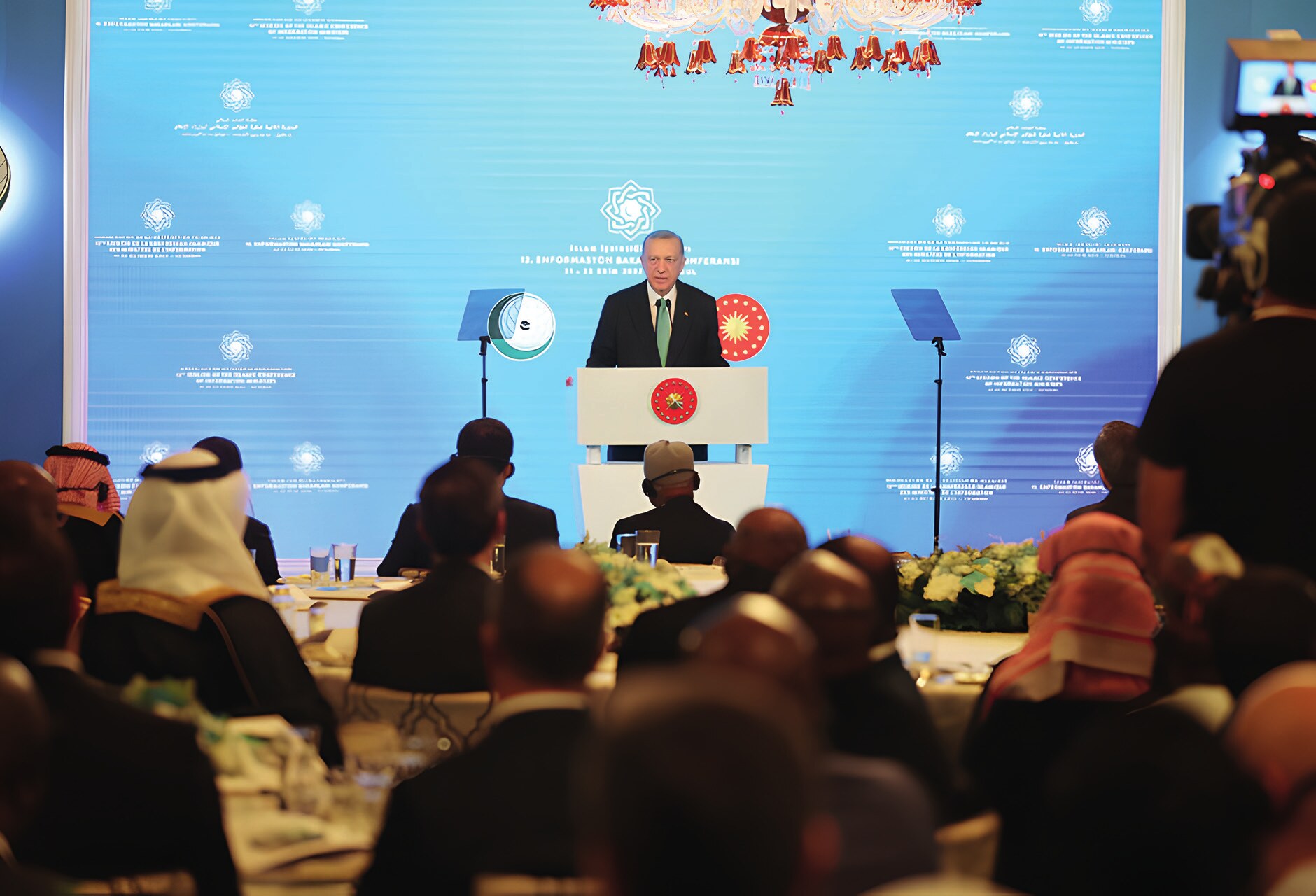
In addition, in terms of multilateral diplomacy, Türkiye frequently conducts actions on international platforms such as the United Nations (UN), the Organization of Islamic Cooperation (OIC), and Organization for Security and Cooperation in Europe (OSCE), aiming to institutionalize the efforts against Islamophobia. For example, as a result of Türkiye’s effective efforts in consultation with the OIC, the United Nations General Assembly adopted the resolution in 2022 that proclaimed March 15 as the “International Day To Combat Islamophobia” (Republic of Türkiye Ministry of Foreign Affairs, 2023Republic of Türkiye Ministry of Foreign Affairs. (2023). No: 72, 15 March 2023, Press Release Regarding 15 March the International Day To Combat Islamophobia [Press release]. Retrieved February 20, 2024 from). As the OIC Summit Chair, Türkiye swiftly convened an emergency meeting following the tragic Christchurch mosque shootings on 15 March 2019, discussing the escalating violence fueled by Islamophobia, racism, and xenophobia (“Türkiye calls OIC meeting,” 2019Turkey calls OIC meeting on Islamophobia after NZ attacks. (2019). Al Jazeera. Retrieved January 19, 2024 from). Within the framework of the OSCE, as one of the founding members, Türkiye raised and emphasized the necessity for enhanced cooperation to address the increasing Islamophobia in OSCE region, calling for strengthening the OSCE’s capacity to effectively respond to such challenges (Republic of Türkiye Ministry of Foreign Affairs, n.d.Republic of Türkiye Ministry of Foreign Affairs. (n.d.). Türkiye and the Organization for Security and Co-operation in Europe (OSCE). Retrieved February 20, 2024 from).
Last but not least, Türkiye’s efforts to combat Islamophobia through foreign propaganda take on a normalized pattern. Foreign propaganda serves as a potent supplement to diplomatic activities, facilitating the efficient transmission of signals and information to other states. Turkish diplomats, as well as President Erdogan himself, have consistently addressed the issue of Islamophobia at press conferences, international meetings, social media, and other public occasions. In this way, they attempt to underscore the increasing prevalence and severity of Islamophobia, call for global solidarity in the fight against Islamophobia, and assert Türkiye’s leadership in the combat. For instance, President Erdogan has publicly stated that Islamophobia is as dangerous as the virus, which is spreading rapidly in the so-called liberal democracies and has developed a tendency to disrupt the daily lives of Muslims and threaten the peace of societies, while Türkiye is playing a leading role in the fight against Islamophobia in the international arena (Günerigök, 2021Günerigök, S. (2021). Turkey taking leading role against Islamophobia: Erdogan. Anadolu Agency. Retrieved January 27, 2024 from). Through explicit statements and regular propaganda, Türkiye is constantly expanding its influence and representativeness in the Islamic world.
At the spiritual level, firstly, Türkiye employs both counter-terrorism measures and media strategies to improve the international image of Islam and Muslims, seeking to dispel the Islamophobia-related mindsets and stereotypes. In the contemporary international community, the international public opinion, largely shaped and dominated by the hegemony of Western discourse, is filled with Western-centric ideologies that exhibit evident biases. The disparity in discourse power has resulted in limited opportunities for many states to propaganda their own views on global issues. Often, they can only respond passively, being “led by the nose”, and Islamophobia is a typical product of this pattern. From the pre-World War II period to the post-Cold War era, Western media have gone through the deductive logic of “imaging – typecasting – uglifying – demonizing - terrorizing”, which reshaped and fabricated a negative image of the Islamic world that is far away from its original nature, thereby reinforcing Islamophobia in the Western world (Ma, 2008Ma, L. R. (2008). Global Soft Environment Governance and Media Hegemony: From the “Islamophobia” and “China Threat Theory”. Journal of Hui Muslim Minority Studies, (3), 114-121.). In recent years, the frequent occurrence of violent extremism in the name of Islam has heightened concerns among European people regarding the recurrence of violent incidents like the London subway bombings, which has consequently exacerbated intolerance and exclusion against Muslims (Yilmaz, 2016Yilmaz, I. (2016). The Nature of Islamophobia: Some Key Features. In D. Pratt & R. Woodlock (Eds.), Fear of Muslims? International Perspectives on Islamophobia (pp. 19-29). Springer.). In response, Türkiye is committed to fighting terrorist organizations in order to refute claims of a link between Islam and extremism, terrorism and separatism. This strategy integrates counter-terrorism with anti-Islamophobia, underscoring the potential link between overlooking Islamophobia and the breeding and spread of terrorist threats (Karaaslan & Guder, 2019Karaaslan, Y. S. & Guder, I. (2019). Turkey warns West against ignoring Islamophobia. Anadolu Agency. Retrieved February 5, 2024 from). Furthermore, Türkiye has taken proactive steps in establishing institutionalized communication channels, exemplified by the initiation of a joint TV project in collaboration with Pakistan and Malaysia (Latif, 2019Latif, A. (2019). Turkey, Pakistan, Malaysia unite to fight Islamophobia. Anadolu Agency. Retrieved February 18, 2024 from). This TV channel project embodies Türkiye’s media strategy in the fight against Islamophobia. It aims to create an English-language media platform similar to the BBC, which can provide a platform to speak out in the international community, eliminate discrimination and prejudice, and promote a more positive image of Islam and Muslims.
Secondly, Türkiye takes advantage of its soft power, with culture and tourism as two significant instruments, to fight against the rise of Islamophobia and anti-Turkish sentiments around the world (Ugurlu & Dikme, 2017Ugurlu, S. & Dikme, C. (2017). Turkey to use ‘soft power’ against rise of Islamophobia. Anadolu Agency. Retrieved January 21, 2024 from). By presenting the harmonious blend of Islamic tradition and modernization, Türkiye highlights the diversity and inclusiveness of its society. In fact, since the Justice and Development Party came to power in 2002, Türkiye has begun to develop a more comprehensive public diplomacy, making greater use of the cultural tool, which in turn has created a new situation of cultural diplomacy (Donelli, 2019Donelli, F. (2019). Persuading through Culture, Values, and Ideas: The Case of Turkey’s Cultural Diplomacy. Insight Turkey, 21(3), 113-134.). In the past decade, Türkiye has advanced its cultural diplomacy on two complementary levels: high culture and popular cultural. At the level of high culture, the propaganda, education, and exchange of Turkish culture are facilitated through public agencies, such as the Yunus Emre Institute, Türk İşbirliği ve Koordinasyon Ajansı Başkanlığı (Turkish Cooperation and Coordination Agency), and Diyanet İşleri Başkanlığı (Presidency of Religious Affairs). At the level of popular culture, based on the Türkiye Radyo ve Televizyon Kurumu (Turkish Radio and Television Corporation), Türkiye employs the international broadcasting and TV series production to disseminate the Turkish vision, create a positive Turkish image, and promote Turkish culture (Donelli, 2019Donelli, F. (2019). Persuading through Culture, Values, and Ideas: The Case of Turkey’s Cultural Diplomacy. Insight Turkey, 21(3), 113-134.). In addition, tourism is another important means of enhancing Türkiye’s soft power and combating Islamophobia. During the AKP government’s ruling period, there are unprecedented shifts in Turkish foreign policy orientation that include emphasis on soft power especially towards targeted regions, which has been proved effective: data shows that there is a positive correlation between soft power target regions and the number of in-bound tourists from those regions (Şen, 2019Şen, O. (2019). Targeted soft power in Turkish new foreign policy and its impact on origins of inbound tourists. Journal of Tourism Theory and Research, 5(1), 65-74.).
Motivations behind Türkiye’s Responses
In essence, Türkiye’s efforts in combating Islamophobia extend beyond mere propaganda and practical actions, behind which are various strategic considerations of the Turkish government. Overall, Türkiye’s responses are grounded in Türkiye’s national interests, the moderate Islamic attributes of the AKP, and the historical and cultural traditions of Islam.
Firstly, Türkiye is motivated by the necessity to safeguard its multiple national interests in politics, economy, and security. In terms of political interests, the main issue at stake is the leadership in the Islamic world. In the framework of the OIC, some powerful states like Saudi Arabia, Egypt, and Türkiye have attempted to shape the organization’s agenda in accordance with their respective national interests, and the rivalry between Saudi Arabia and Türkiye for the leadership of Islamic world has been an important area of contention (Liu & Zhao, 2019Liu, Z. M. & Zhao, Y. C. (2019). From Distant Coexisting to Dominance Competition: A Logic Analysis of Turkey and Saudi Arabia’s Competition for Regional Leadership Since the Middle East Turbulence. World Economics and Politics, (8), 39-61.). Türkiye shares similar Islamic religious and cultural traditions with other Muslim states who are victims of Islamophobia. As an important member of the OIC, Türkiye bears the responsibility of protecting the interests, dignity, and independence of Muslims. Combating Islamophobia globally in a high-profile and visible manner is beneficial for Türkiye to enhance its influence and discourse power among Islamic states and obtain greater support on international issues, thereby creating its leadership in the Islamic world.
In terms of economic interests, combating Islamophobia can help to maintain Türkiye’s economic interests to some extent. Several Western states, such as the UK and the US, are main ravaging places of Islamophobia and also serve as important trading partners for Türkiye. According to statistics from the World Bank in 2021, Türkiye’s major trading partner countries for exports are Germany (8.57%), the United States (6.54%), the United Kingdom (6.08%), Italy (5.09%), and Iraq (4.94%), four of which are Western states. Among Türkiye’s major import partners, the top five also include two Western states: Germany, ranking fourth with 8.00%, and the United States, ranking fifth with 4.84% (World Integrated Trade Solution, 2021World Integrated Trade Solution. (2021). Turkey trade balance, exports and imports by country 2021. World Integrated Trade Solution. Retrieved January 13, 2024 from). Under the influence of Islamophobia, Western investors will inevitably be concerned about the potential risks of engaging in economic activities with Türkiye, which consequently undermines their willingness to trade with Türkiye. Worse still, the Turkish economy has been losing momentum due to the deteriorating external environment and heterodox monetary policies, and two devastating earthquakes in 2023 have further exacerbated Türkiye’s fragile economic situation (The World Bank, 2023The World Bank. (2023). Türkiye Overview. The World Bank. Retrieved February 15, 2024 from). Therefore, whether it is based on stabilizing economic relations with Western states or improving domestic economic conditions, the fight against Islamophobia appears to be a pivotal instrument for Türkiye to safeguard its economic interests.
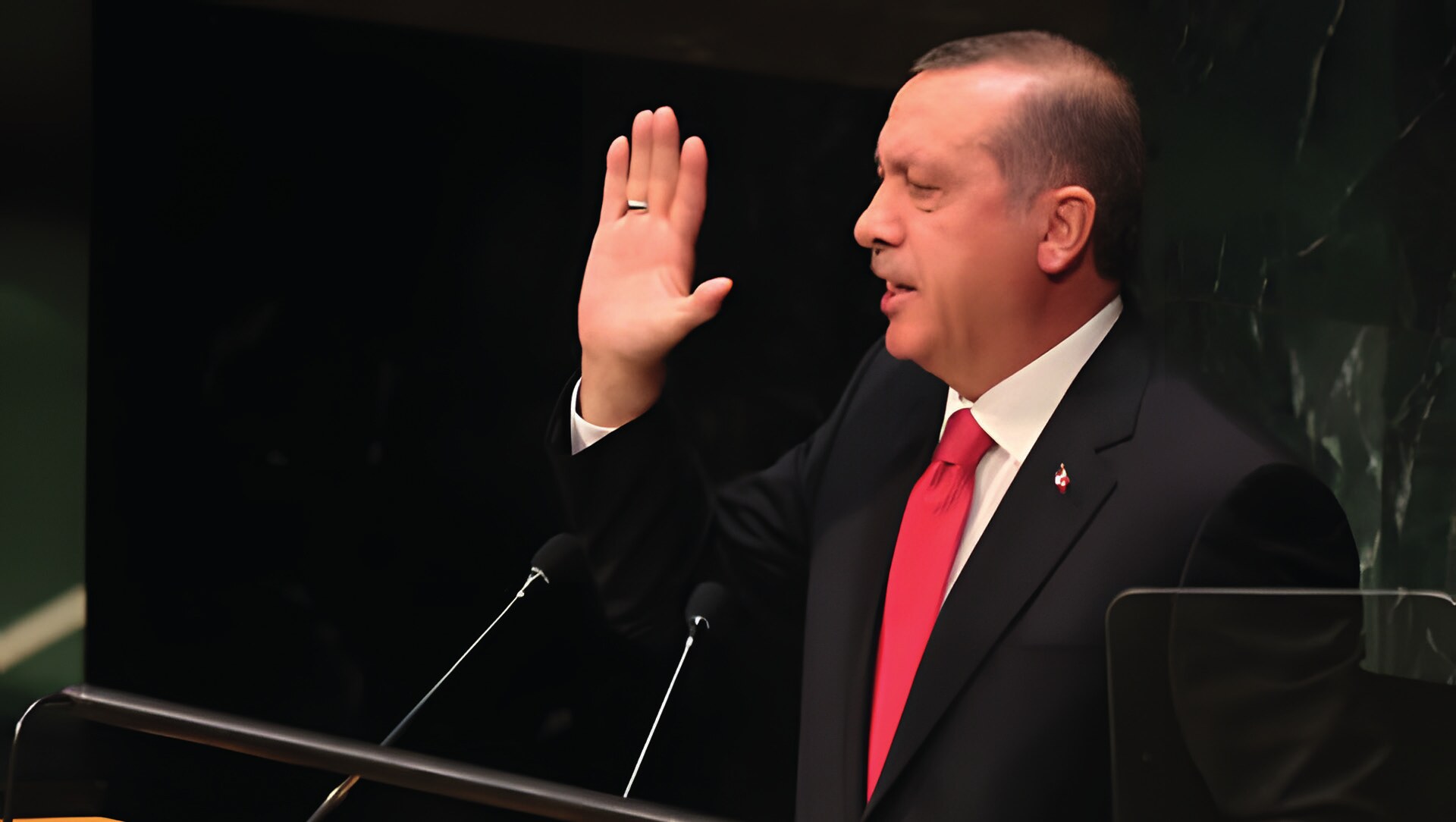
In terms of security interests, combating terrorism and Islamophobia are interconnected. Simultaneous efforts in addressing both issues are beneficial to mitigate religious antagonism, reduce the breeding ground for terrorism, and eventually maintain Türkiye’s national security. The proliferation of Islamophobia may deepen the opposition between Christian and Islamic civilizations and lead to the increase of extreme acts of violence, ultimately ensnaring both sides into the trap of terrorism. Thus, combatting Islamophobia is intrinsically related to combatting terrorism, both of which are manifestations of maintaining security interests. President Erdogan has once “strongly condemned coupling terrorism with Islam” and stressed that Türkiye fights terrorism itself, so too is Islamophobia (General Assembly of the United Nations, 2014General Assembly of the United Nations. (2014). General Debate Turkey. General Assembly of the United Nations. Retrieved January 10, 2024 from).
Secondly, Türkiye’s responses to Islamophobia are significantly shaped by the moderate Islamic attributes of the AKP. Since 2002, the AKP has been in power and has become one of the most influential Islamic political parties in the Middle East. By its very nature, the ideology of the AKP is characterized by a combination of conservatism and moderate Islamism, which constitutes one of the forms of the “Turkish Model”, namely “a stable democratic system based on secularism and ruled by moderate Islamic political forces” (Zan, 2012Zan, T. (2012). “Turkey Mode”: Past and Present. Journal of Xinjiang Normal University (Edition of Philosophy and Social Sciences), 33(2), 10-22.). Under the leadership of the political strongman Erdogan, the AKP, with pan-Islamism as the root of its culture and values, relies on certain successful historical practices of the Ottoman period to realize the domestic and global vision of contemporary Türkiye (Dong, 2022Dong, M. Y. (2022). A Primary Exploration on Turkey’s Diplomacy of Geopolitical Aggressiveness. West Asia and Africa, (2), 141-155.). Consequently, Türkiye’s domestic and foreign policies exhibit a distinct Islamic orientation, and the fight against Islamophobia aligns closely with the party’s ideology. Moreover, combating Islamophobia could favor the party’s popularity. The voter base of the AKP, commonly known as the “Black Turks” as opposed to the “White Turks”, consists mainly of the working class from urban suburbs, emerging conservative elites, and religious extremists within the Kurdish population in the Southeast (Li & Robins, 2016Li, B. Z. & Robins, P. (2016). Strong Governance and Vulnerability of Erdogan Regime in Türkiye. Contemporary International Relations, (11), 31-39.). These conservative and marginalized Islamists see the AKP as a representation for their own interests and give it full support. By combating Islamophobia, the AKP government could demonstrate its determination and ability to protect the interests of Muslims, which aligns with the desires of its voter base. In this way, the party will not only obtain the trust and support of existing supporters, consolidating the foundation of governance, but also attract other voters who fear the repercussions of Islamophobia, thus expanding its support base.
Thirdly, Türkiye’s efforts are based on the preservation of its Islamic historical and cultural heritage. Türkiye boasts a rich Islamic historical and cultural heritage, with the historical legacy of serving as an Islamic empire in Eurasia that possess three holy sites: Mecca, Medina, and Jerusalem. The supreme ruler of the empire, known as the Sultan, also holds the esteemed position of Caliph, the highest spiritual leader in the Islamic world. Consequently, the Sultan often assumes the role of both ruler and guardian of the Islamic world. Following the establishment of the Republic of Türkiye, the Islamic tradition, spanning nearly a millennium, did not vanish in the process of secularization. Instead, it quietly hibernated and returned to the center stage with the process of Islamic revival, still playing an important role in contemporary Turkish society. Nevertheless, under the onslaught of Islamophobia and the propaganda campaign of the Western media, the Islamic traditions are often perceived as a menace to Western values. They are frequently associated with negative connotations such as terror, extremism, and violence, while the positive values of justice, mercy, and tolerance inherent in Islam are selectively ignored. Such discourse that demonizes Islam and Muslims is the very embodiment of cultural racism and hegemonism. Islamophobia, which associates Islam with terrorism, has been seriously hindering the coexistence of diverse cultures (Sevencan & Kazanci, 2021Sevencan, S. & Kazanci, H. (2021). Islamophobia hinders coexistence of diverse cultures, says Turkish official. Anadolu Agency. Retrieved January 17, 2024 from adresinden alındı.). Therefore, in order to preserve the glorious historical and cultural traditions of Islam, combating Islamophobia is a critical breakthrough point.
Challenges ahead for Türkiye
As mentioned above, Türkiye has consistently emphasized the need to address Islamophobia on international occasions and has implemented specific measures to promote this process. However, Türkiye is likely to encounter numerous challenges in achieving its strategic objective due to several factors.
First of all, the intricate and pervasive nature of Islamophobia poses significant difficulties to its resolution. As a complex and multifaceted social phenomenon with diverse roots, Islamophobia presents different dynamics in different countries or regions, behind which are various influencial factors such as politics, economy, culture, religion, and so on. These factors become intertwined as the situation changes, making Islamophobia progressively complicated. Nowadays, with the continuous evolution of concepts and drastic changes in reality, Islamophobia has become a grand issue encompassing religious discrimination, racism, and cultural racism (Cakmak, 2022Cakmak, B. N. (2022). Islamophobia continues to spread like plague in West: Turkish president. Anadolu Agency. Retrieved February 25, 2024 from). In light of this, while Türkiye has adopted the strategy of “parallel tracks” in an attempt to tackle both the symptoms and the root causes of the issue, it is still unable to comprehensively address all aspects of this intricate social problem.
In addition, stereotypes caused by Islamophobia are difficult to change. Created by the joint manipulation of Western political circles, academia, and the media, the phenomenon of Islamophobia has a long history, in which the West has shaped an unrealistic positive self-image through denigrating dissenters (Ma, 2008Ma, L. R. (2008). Global Soft Environment Governance and Media Hegemony: From the “Islamophobia” and “China Threat Theory”. Journal of Hui Muslim Minority Studies, (3), 114-121.). Tracing its roots, Islamophobia is largely a discourse trap concocted by the West. In order to pursue their own interests, the West presupposes a negative image of Islam and Muslims and reinforces this stereotype in their subsequent practices, eventually falling into the logical trap of self-fulfilling prophecy. As a result, Muslims have become the global “scapegoats”, blamed for various negative social phenomena such as illegality, crime, violence, and so on and so forth (Kaya, 2020Kaya, A. (2020). Right-wing populism and Islamophobism in Europe and their impact on Turkey-EU relations. Turkish Studies, 21(1), 1-28.). Currently, the Western media still holds the international discourse power and continues to utilize the propaganda machine to spread stereotypes and negative images of Islam and Muslims. In contrast, Türkiye lacks comparable propaganda capabilities to counterbalance such narrative, thus making it extremely difficult to challenge the Western discourse hegemony and eliminate biases.
Furthermore, in the fight against Islamophobia, Türkiye’s aspiration for leadership in the Islamic world will encounter resistance from certain Islamic states. In the Islamic world, the struggle over regional religious leadership is one of the focal points of the regional leadership struggle between Türkiye and Saudi Arabia, and their competition over ideological and geopolitical interests has been escalating since the Middle East turbulence (Liu & Zhao, 2019Liu, Z. M. & Zhao, Y. C. (2019). From Distant Coexisting to Dominance Competition: A Logic Analysis of Turkey and Saudi Arabia’s Competition for Regional Leadership Since the Middle East Turbulence. World Economics and Politics, (8), 39-61.). Besides, not all Muslim states have taken practical actions against Islamophobia. Some Muslim states that have codependency relationship with the West may be reluctant to make statements that could disturb the West, and some like the United Arab Emirates even “financially support anti-Muslim circles” (Kizil, 2021Kizil, N. (2021). Turkey can successfully pioneer anti-Islamophobia fight: Experts. Daily Sabah. Retrieved January 20, 2024 from). Therefore, challenges from within the Islamic world are ahead for Türkiye.
Lastly, the rise of the right-wing populism in Europe has cast a deep shadow over Türkiye’s efforts. As extreme right-wing ideas started to gain public support in Europe, some center-right parties began to cater to the extreme right so as to retain the loyalty of their fringe voters, while the center-left, which often advocates for anti-racist initiatives, has become more silent for similar reasons (Yinanç, 2017Yinanç, B. (2017). It is getting more difficult to fight Islamophobia in Europe: UN official Gün Kut. Hurriyet Daily News. Retrieved February 21, 2024 from). Against the backdrop of rising right-wing forces, Türkiye’s efforts to combat Islamophobia will struggle to produce the desired results.
China’s Response: Global Civilization Initiative
From China’s perspective, despite the fact that Islamophobia poses far less of a threat to China than it does to Muslim states like Türkiye, China still upholds the idea of “a community with a shared future for mankind”, calling on all states to respect cultural diversity and oppose Islamophobia. The Chinese government has consistently expressed its resolute opposition to Islamophobia through diplomatic channels. For instance, on the first International Day to Combat Islamophobia, Wang Wenbin, spokesperson for the Ministry of Foreign Affairs of the People’s Republic of China, reiterated China’s consistent stand against religious discrimination and hatred, and stressed that the United States, the only state in the world that had enacted a ban specifically targeting the Muslim community, should take practical actions to eliminate Islamophobia (Le, 2023Le, X. M. (2023). China on the First International Day to Combat Islamophobia: U.S. Should Take Practical Actions to Eliminate Islamophobia. China News Service. Retrieved January 17, 2024 from). In response to the Quran-burning incidents, China has clearly conveyed its strong condemnation and opposition to all forms of Islamophobia, emphasizing China’s longstanding advocacy for mutual respect, tolerance, and understanding among civilizations (Xing & Li, 2023Xing, C. & Li, J. Z. (2023). China Strongly Condemns the Recurrence of Quran-burning Incidents in Relevant Countries. China News Service. Retrieved January 22, 2024 from). In 2022, China, as one of the co-sponsors, supported the United Nations General Assembly in adopting the resolution to designate March 15 each year as the International Day to Combat Islamophobia, which vividly demonstrates China’s consistent position of insisting on dialogue among civilizations and opposing the so-called clash of civilizations (Ministry of Foreign Affairs of the People’s Republic of China, 2022Ministry of Foreign Affairs of the People’s Republic of China. (2022). China-Arab Cooperation in New Era. Ministry of Foreign Affairs of the People’s Republic of China. Retrieved February 3, 2024 from). China’s attitude and response to Islamophobia, as described above, coincides with that of Türkiye to a certain degree.
From a broader perspective, the Global Civilization Initiative (GCI) can be seen as a Chinese approach to addressing Islamophobia. Proposed by President Xi Jinping on March 15, 2023, the Global Civilization Initiative emphasizes the significance of upholding principles such as equality, dialogue, and inclusiveness among civilizations. It advocates that states around the world should let “cultural exchanges transcend estrangement”, “mutual learning transcend clashes”, and “coexistence transcend feelings of superiority”. These ideas fully embody China’s unique perspective on civilization: harmony without uniformity. Every country in the world is a unique mosaic of peoples, beliefs, systems, and so on (Tangen, 2023Tangen, E. (2023). Global Civilization Initiative (GCI). Taihe Institute. Retrieved February 22, 2024 from). Pride and prejudice will only lead to endless conflicts such as Islamophobia. Countries need to keep an open mind to seek common ground while reserving differences. Only in this way can humanity create a bright future.
Conclusion
As a large Muslim state, Türkiye cannot avoid the severe challenges posed by Islamophobia and has been suffering from it in terms of its accession to the EU, national image, and so on. Based on national interests, ideology, Islamic traditions, and other considerations, Türkiye has implemented targeted measures from two dimensions of reality and perception to combat Islamophobia, but these efforts have encountered numerous challenges. So far, Türkiye’s strategy has not yielded significant results. While progress has been made in addressing specific incidents of Islamophobia at the practical level, there is still a long way to go at the spiritual level. As the Chinese saying goes, “It is easy to capture a thief in the mountains, but hard to eliminate the stereotype in the mind.” In the foreseeable future, Türkiye will continue its unwavering fight against Islamophobia, and the struggle between the two sides will also continue for a long time with an outcome that is yet to be seen.
Looking at its historical origins, it is not difficult to find out that the dichotomy of West and East, Christian civilization and Islamic civilization embodied in Islamophobia coincides with the theory of “clash of civilizations” put forward by Huntington. These ideas are intertwined and collectively form the theoretical underpinnings of Islamophobia. Under such binary opposition, there seems to be an insurmountable gap between the two civilizations. In its essence, Islamophobia can be understood as a facet of the broader Western discourse of clash of civilizations. To completely solve the problem of Islamophobia from the root, it is necessary to start from the concept and theory of civilization, break the Western discourse hegemony, and construct and promote a more inclusive civilization view. As early as 2005, Türkiye, together with Spain, launched “The Alliance of Civilizations Initiative”, which aimed at strengthening mutual respect between different cultures. Likewise, in 2023, China put forward its version of civilization view, namely the Global Civilization Initiative. The practices of the two countries are both positive attempts to smash prejudiced civilization views and build inclusive civilization views. Although the international order is still dominated by the Western-centric view of civilization, these efforts above can hopefully contribute to the change of the status quo to a greater or lesser extent.