Introduction
Agriculture is one of the most talked about sectors in the world in recent years. Climate change, hunger, wars, chaos and food prices have made agriculture more talked about. Agricultural production is important not only for feeding and improving nutrition, but also because it is one of the main economic resources of many countries. Agricultural production not only ends hunger but also plays an important role as a key to economic and social development. With this in mind, agricultural production has become much more internationalized in the last 15-20 years. Agriculture and food trade has become more internationalized due to increasing logistics and diversity of diets, as well as increasing problems. Much higher quantities and values of agriculture and food are now traded. In this situation, on the one hand, the search for international integration in agriculture in the world is increasing, and on the other hand, countries are looking for ways to trade more. Advances in trade have made countries grow in the agricultural field and have almost become playmakers. The agriculture of the Turkic World, which has a great potential, can play an important role in world agriculture by joining forces. Türkiye can play a leading role in the regional agricultural economy and trade by bringing its knowledge and technology to this geography. Türkiye, which ranks 10th in agricultural production in the world, will be able to have more say in the world together with its member countries through agricultural trade with the Turkic World countries.
Basic Dynamics of Turkish Agriculture
Türkiye has a significant competitive advantage with its rich biodiversity, the presence of an agriculture-based industry, natural structure, climatic characteristics, geographical location and ranking in the top 10 in the world in the production of nearly 55 crops (FAO, 2022FAO (2022). The source article does not provide a separate full bibliographic entry for this citation.). Türkiye is an important player in agriculture as it connects Asia and Europe and is close to a rich demand center such as the European continent. On the other hand, the fact that Central Asia is on the path of developing cooperation with countries with fertile natural resources and lands offers important opportunities for Central Asian countries as well as for Türkiye in the future. Rational and sustainable utilization of these opportunities will increase the economic, agricultural and commercial capacity of the countries according to the win-win principle.
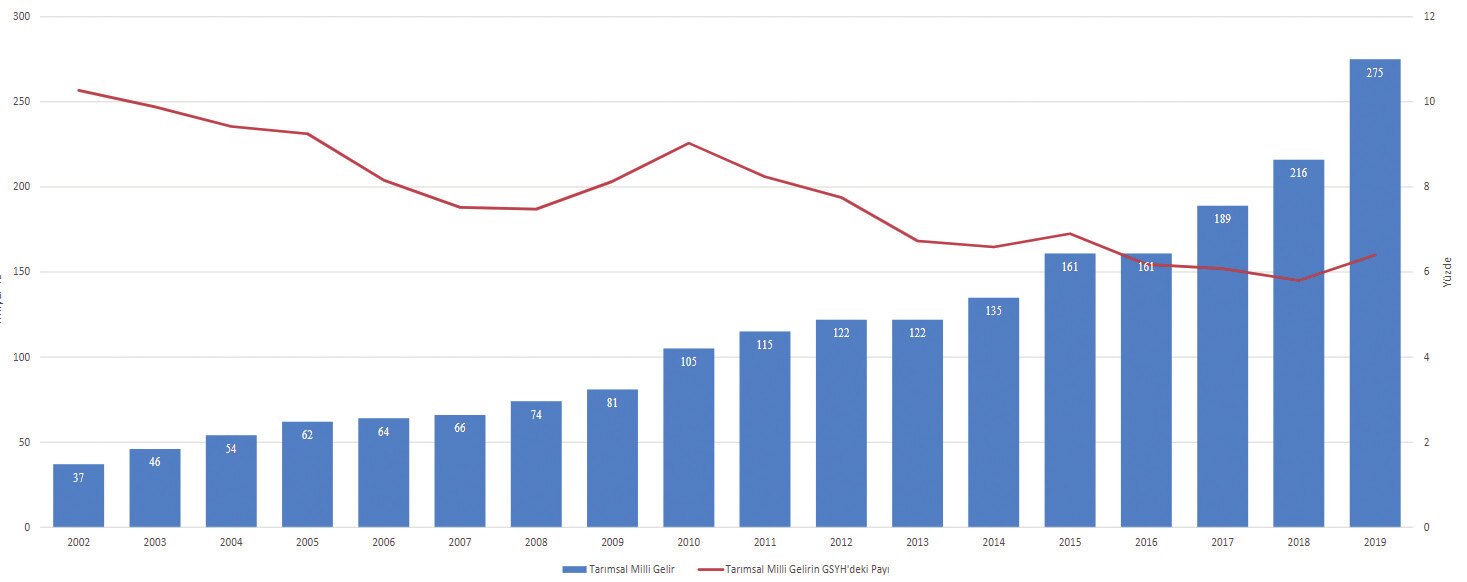
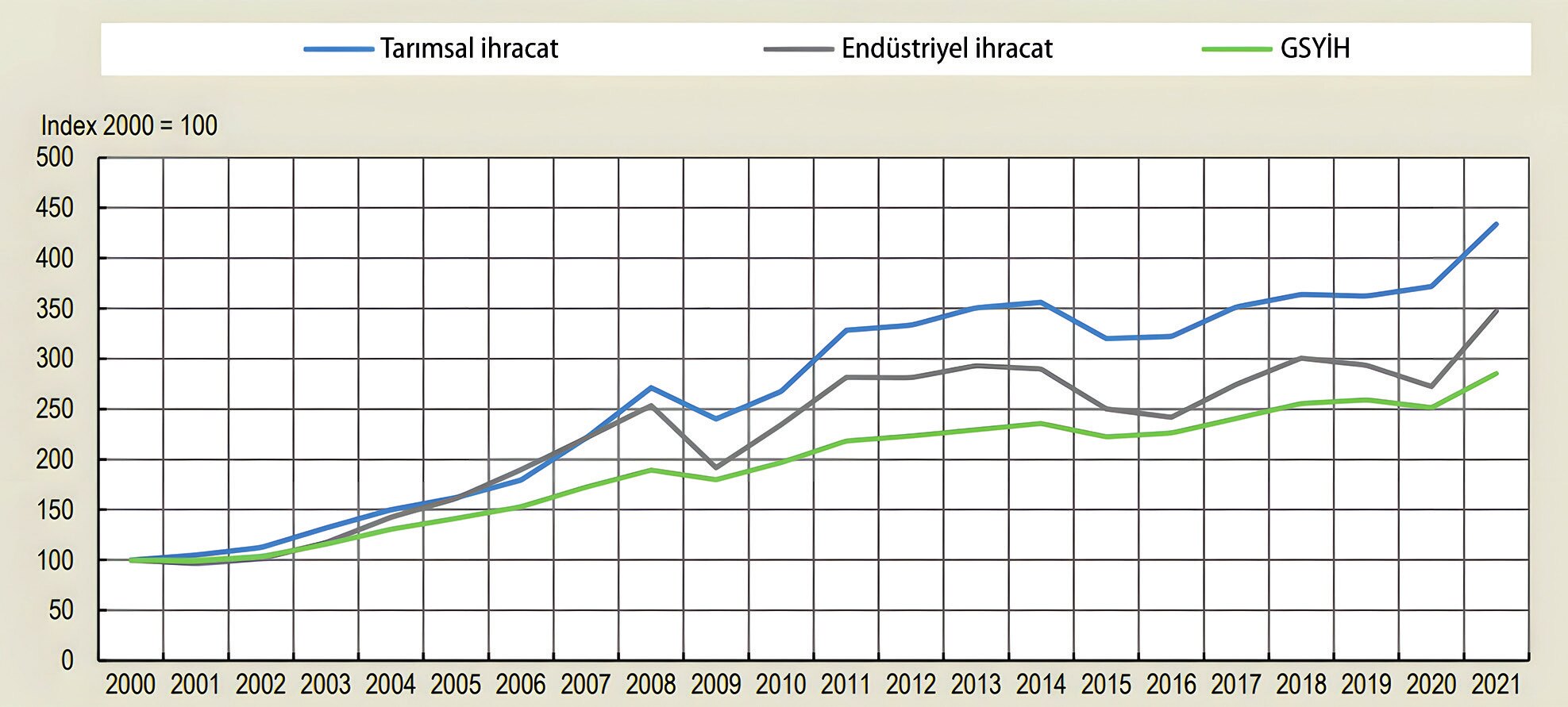
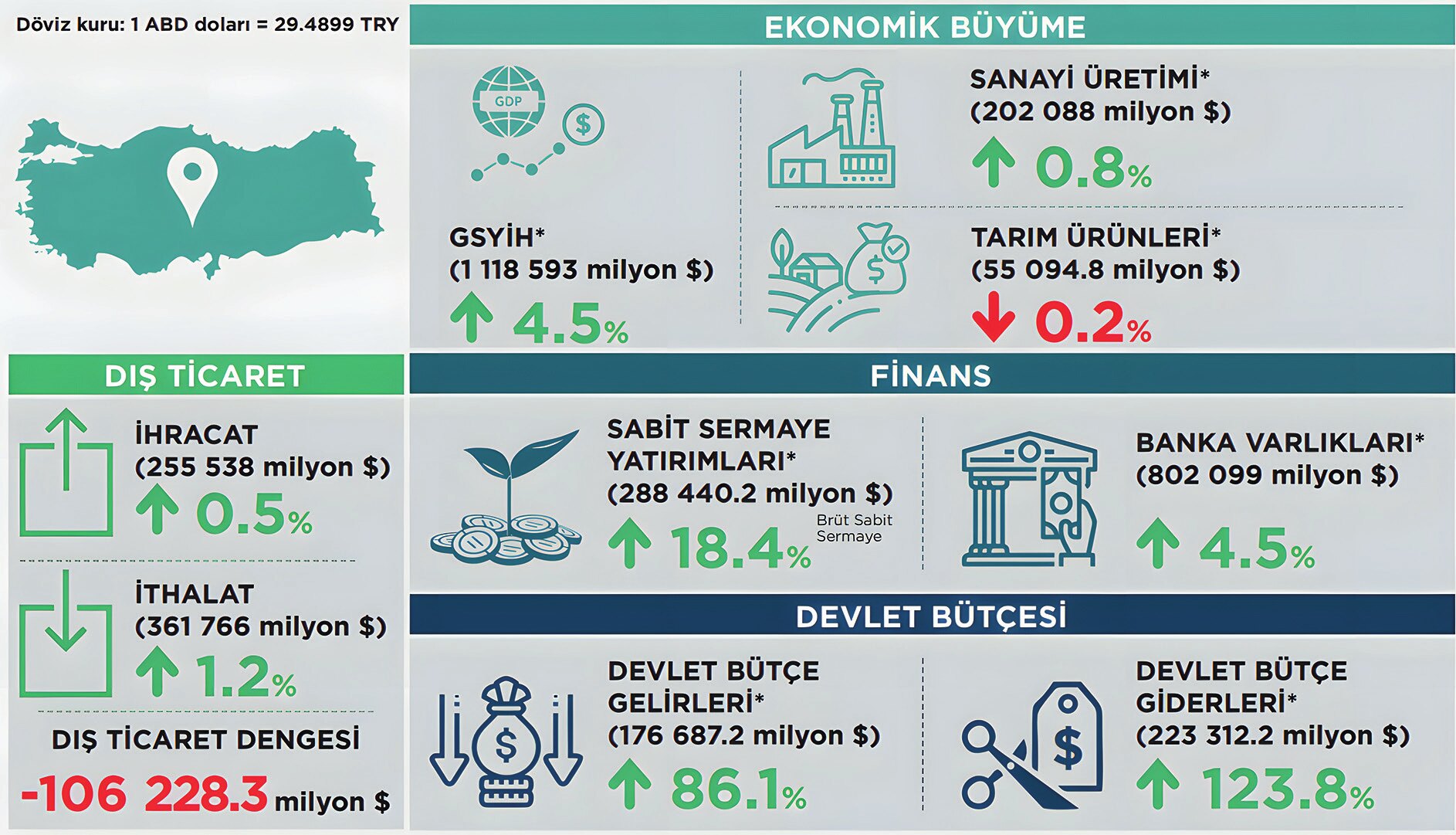
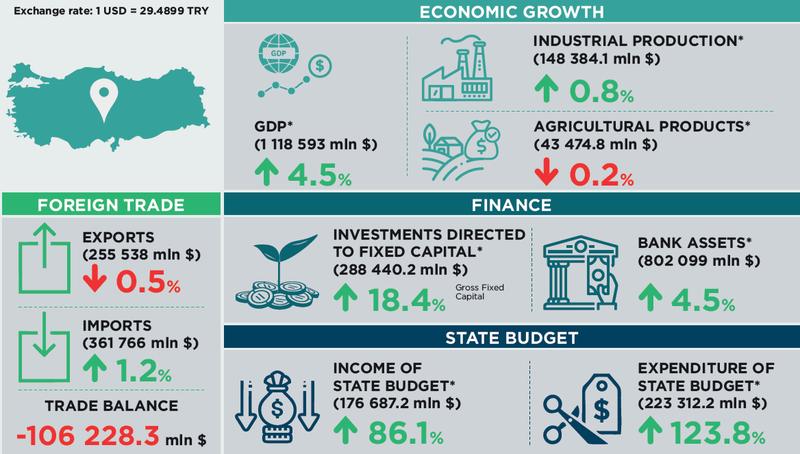
Although the relative importance of the agricultural sector in gross domestic product (GDP) has declined over the years, production in real terms has shown a steady upward trend. In 1980, the agricultural sector accounted for 25.8% of national income, but this share started to decline due to the economic policies pursued in the 1980s, and the contribution of the agricultural sector to GDP was realized as 4.8% in 2022. In 2022, the agricultural sector grew by 0.6% and its contribution to the economic growth of 5.4% was limited.
Looking at the general state of agriculture in Türkiye, it can be seen that it has reached an important position in the global agricultural and food economy. In particular, vegetable, fruit, cereal and animal production has more than tripled. For example, in the 2002-2020 period, milk production increased from 8.4 million tons to 22.96 million tons; meat production from 420 thousand tons to 1.2 million tons; seed production from 145 thousand tons to 1.24 million tons; fodder crop production from 758 thousand tons to 2.46 million tons; fruit production from 14.5 million tons to 23.6 million tons; vegetable production from 25.8 million tons to 31.2 million tons; and grain production from 30.83 million tons to 37.2 million tons (Ministry of Agriculture and Forestry and FAO data). Sunflower, maize, potato, onion, onion, banana, pomegranate, tea and strawberry production has generally increased consistently over the last 20 years. Wheat, sugar beet, apricot, pistachio, fig, apricot, pistachio, pistachio, fig and red meat production has fluctuated.
World Agriculture and the Position of Türkiye-Turkic States
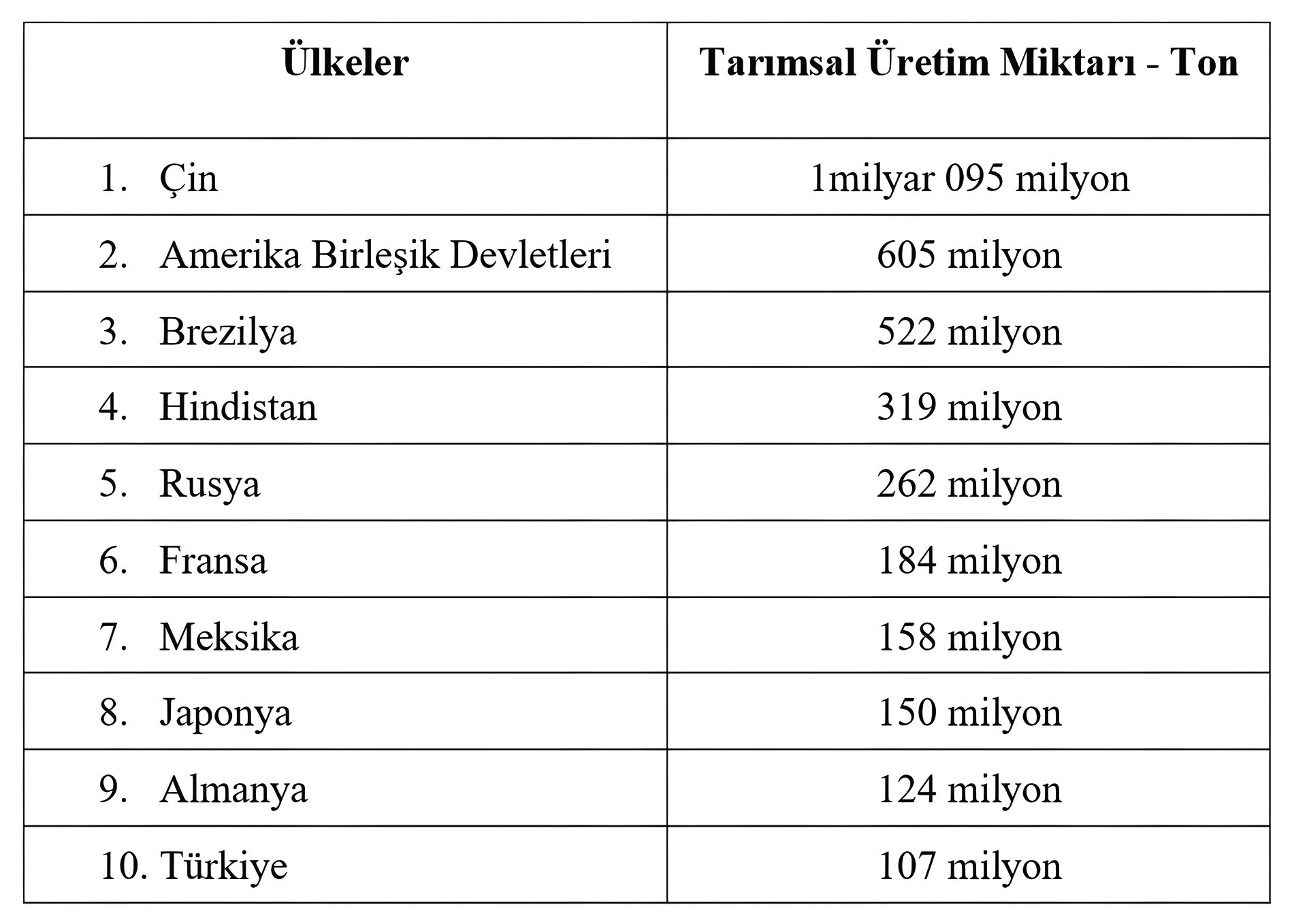
As of 2023, the top 10 countries that produce the most agricultural products and shape world agriculture are China, the United Statesof America, Brazil, India, Russia, France, Mexico, Japan, Germany and Türkiye. These top 10 agricultural producing countries play an important role in the global agricultural sector, both with their production and their contribution to feeding the world’s population. These countries produce and export a variety of agricultural products such as cereals, fruits, vegetables, meat and meat products, milk and dairy products, aquaculture products and undertake important missions in the global agricultural economy.
As can be seen in Table 1, the country with the highest agricultural production in the world is China with 1 billion 095 million tons. Türkiye ranks 10th with 107 million tons of production.
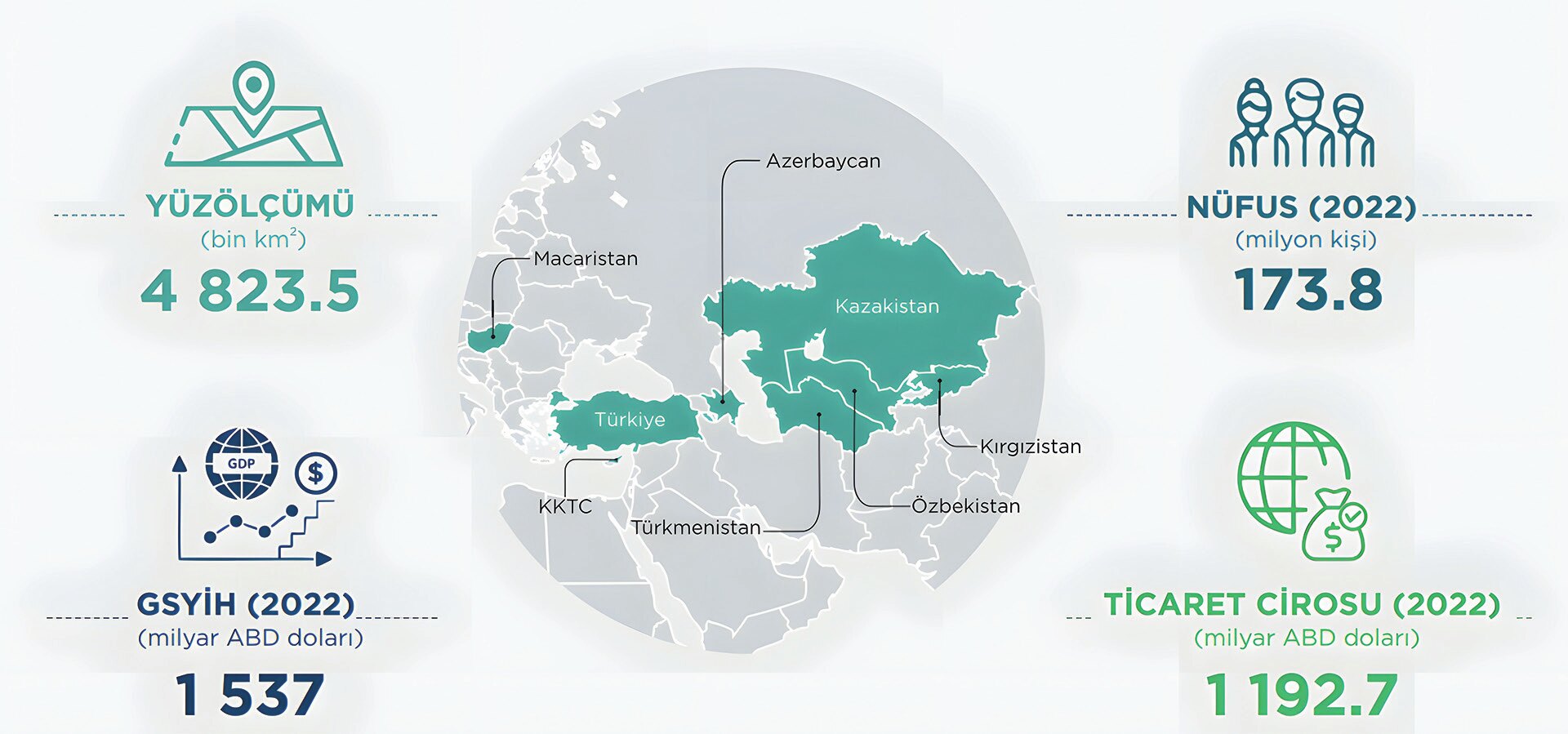
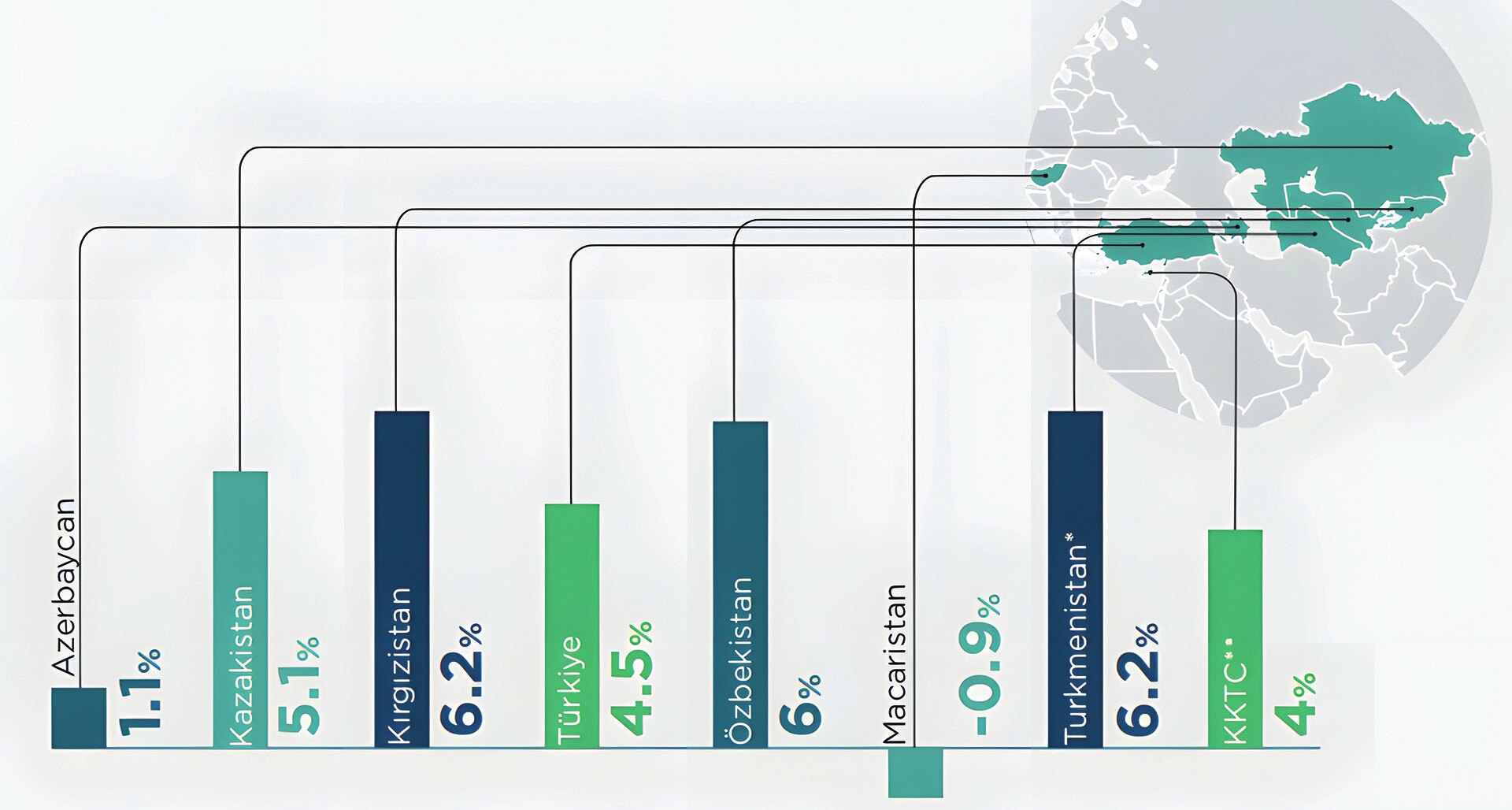
As can be seen in the table, Kazakhstan, Kyrgyzstan, Uzbekistan, which are members of the Organization of Turkic States (OTS) and observer members Hungary, Turkmenistan and KKTC are not included in this list, while only Türkiye is included. This situation is important both in terms of Türkiye’s position in the world and its place in the OTS. OTS countries can become pioneers in agriculture through a new agricultural integration under the leadership of Türkiye.
When the agricultural situation of the countries with the highest agricultural production in the world is analyzed, the following come to the fore (geeksforgeeks, 2024Geeksforgeeks. (2024). Retrieved July 10, 2024 from):
The World’s Largest Producer – China
China is a major contributor to the world’s food supply. It produces 1,095 million tons of agricultural products, making it the world’s largest producer. China is driving global improvements in production, prices and productivity. With 10.6% of the world's agricultural land, China accounts for more than 30% of global output. Seeking to maintain security of food supply, China is making great efforts to strengthen its hand in global agricultural production by acquiring agricultural land and global agricultural companies in different geographies such as Asia, Europe and Africa.
• China is a leading producer of main crops such as rice, wheat and corn. It also specializes in growing fruits, vegetables and specific crops such as tea, cotton and tobacco.
• China feeds 22% of the world’s population despite having 7% of arable land. In the twentieth century, China struggled to feed its large population.
• China has a large cattle industry and the most popular meat is pork. It also produces large amounts of chicken, beef and dairy products to meet domestic demand.
• China has invested in agricultural research and development, advanced farming techniques and mechanization to increase sector output and productivity.
The World’s 2nd Largest Producer Country - United States of America
The United States of America is the world’s second largest agricultural producer, producing 605 million tons of agricultural products.
• The United States is a major producer of main crops such as corn, soybeans, wheat and cotton. It also specializes in the production of specialty crops such as almonds, citrus fruits and grapes.
• The United States of America has a thriving livestock industry, with cattle, poultry and pork making a major contribution to agricultural production. It also produces significant quantities of dairy products.
• The United States of America is one of the world's leading exporters of agricultural products, including grain, meat, dairy, fruits and vegetables. It is important for global food security and trade.
• In the United States, of America corn was the largest crop, with production of 247.882.000 tons. Soybeans ranked second with 74.598.000 tons.
The World’s 3rd Largest Producer Country – Brazil
Brazil is the world's third largest agricultural producer, producing 522 million tons of agricultural products.
• Brazil is endowed with vast agricultural resources, such as fertile soils, good climate and abundant water, which allow the production of many different types of crops.
• Brazil is a major producer of soybeans, sugar cane, corn, coffee and oranges. It is the world's largest supplier of soybeans and meat.
• Brazil's livestock sector is growing, with cattle, poultry and pork production contributing a large share of agricultural production and export earnings.
• Brazil has 2,1 billion decares of land, of which 867.4 million decares are used for cultivation.
The World’s 4th Largest Producer Country – India
India is the world's fourth largest agricultural producer, producing 319 million tons of agricultural products.
• India’s diverse geographical and climatic conditions favor many different crops, including cereals such as rice, wheat and millet, as well as legumes, oilseeds, fruits and vegetables.
• Rice and wheat are main crops in India, one of the world’s largest producers. India is also a major producer of pulses such as chickpeas, lentils and beans.
• India has a large livestock sector, with cattle, buffaloes, poultry and goats making a major contribution to agricultural production. Milk production is particularly important as India is the world’s largest milk producer.
• nIndian agriculture provides about 58% of Indians’ livelihoods. According to the latest data, agriculture is the main source of income for half of the population and accounts for 17% to 18% of GDP.
World’s 5th Largest Producer Country – Russia
Russia is a major contributor to the world’s food supply and is the world’s fifth largest agricultural producer, producing 262 million tons of agricultural products.
• Russia’s vast land area, covering multiple climate zones, provides many opportunities for agricultural production, including cereals, oilseeds and livestock.
• Grains such as wheat, barley and corn are widely grown in Russia and the country is one of the world’s leading wheat exporters. Oilseeds such as sunflowers and soybeans also contribute significantly to agricultural productivity.
• Russia’s livestock sector is expanding; production of cows, pigs and poultry is growing steadily to meet domestic demand and support export markets.
• Cereal agriculture accounts for about half of the total cultivated area.
The World’s 6th Largest Producer Country – France
France is the 6th largest contributor to the world’s food supply, producing 184 million tons of agricultural products.
• France is characterized by the cultivation of wheat, barley, corn and sugar beet, all of which are mains of agriculture. France is also famous for its wine production with vineyards spread over a large part of the country.
• Another important aspect of French agriculture is that cattle, sheep, poultry and dairy production contribute significantly to the country’s agricultural production.
• France is a major exporter of agricultural products, including wine, dairy products, cereals and luxury foods.
• There are more than 730,000 farms in France. Around 7% of the population earn a living from agriculture, fishing or related sectors such as forestry.
The World’s 7th Largest Producer Country – Mexico
With an agricultural production of 158 million tons, Mexico is the world’s seventh largest producer and a major contributor to the food supply.
• Maize, beans and chile peppers are the main crops of Mexican agriculture and represent the country’s diverse culinary and cultural background.
• Mexico has a large livestock sector, with the production of cattle, poultry and pork contributing significantly to the country’s agricultural production.
• Mexico is an important agricultural exporter, exporting fruits, vegetables, avocados, strawberries and beer. Its proximity to the United States and important trade links help boost its export potential.
• In Mexico, fodder crops cover about 15% of the agricultural land and contribute about 50% to livestock production.
The World’s 8th Largest Producer Country – Japan
Japan is the eighth largest agricultural producer in the world, producing 150 million tons of agricultural products.
• Due to land constraints, Japan focuses on high-value commodities such as rice, vegetables and fruit, as well as specialty crops such as tea and flowers.
• Japan is famous for applying modern agricultural technologies such as precision farming, robotics and vertical farming to increase productivity while working on limited land.
• While agriculture accounts for only 2% of GDP in Japan, about 10% of the population lives on farms.
• Rice is the most important agricultural product. Rice is one of the most important products in traditional Japanese culinary culture, which combines rice with grains, seafood, vegetables, mountain herbs and other ingredients.
The World’s 9th Largest Producer Country – Germany
Germany is a major contributor to the world’s food supply, ranking 9th, producing 124 million tons of agricultural products.
• Germany’s leading agricultural products include wheat, sugar beet, cabbage, barley, pork, chicken, potatoes, milk, cereals and in some regions fruit vegetables and wine.
• Forestry and agriculture cover about 80% of the country’s surface area. In 1997, the former western states were dominated by family farms. They were the dominant players in agriculture.
• Around 87% of German farmers farm less than 12 decares.
• In Germany, vineyards cover the southern and western parts of the river valleys.
• Germany is a major exporter of agriculture, including dairy products, meat, fruit and vegetables.
The World’s 10th Largest Producer Country – Türkiye
Türkiye makes a major contribution to the world’s food supply. With 107 million tons of agricultural production, it is the world’s tenth largest agricultural producer. As a major agricultural producer, Türkiye grows a variety of crops and is characterized by the production of cereals, fruits, vegetables and livestock. Türkiye has a highly favorable agricultural geography, including fertile plains, coastal areas and hilly terrain, which allows for the production of various crops.
• Türkiye specializes in the production of various crops, including cereals such as wheat, barley and maize, as well as fruits such as citrus fruits, grapes, hazelnuts, apricots, pistachios and figs.
• Türkiye also has a large livestock sector producing meat, dairy and poultry products for both domestic and international markets.
• Agriculture is vital to the Turkish economy, contributing around 5-6% of GDP and employing around 20% of the population.
Turkish agriculture has grown by 94% in USD terms over the last two decades. Compared to Türkiye in terms of production value, countries such as China (477.20%), India (377.63%), Indonesia (354.27%), Thailand (271.72%), Bangladesh (264.12%), Egypt (218.44%), Brazil (206.79%) and Malaysia (204.96%) have experienced higher growth. These countries differ from Türkiye both in terms of geographical size and population. However, Turkish agriculture (94.11%) has also made more progress than that of countries such as the US (81.11%), Spain (64.28%), France (48.91%), South Korea (42.56%) and Italy (24.62%). Türkiye produces more than 1.29% of global agricultural output compared to its 0.8% share of world agricultural area. Compared to Kazakhstan and Argentina, Türkiye has less agricultural land but produces more output. In terms of international trade, it accounts for 1.57% of global agricultural exports and 1.14% of imports (Merdan, 2024 and İstikbal, 2022Merdan, K. (2024). Türkiye’nin Tarım Sektörü: Tarımının Dünü, Bugünü ve Yarını. Bingöl Üniversitesi İktisadi ve İdari Bilimler Fakültesi Dergisi, Cilt: 8, Sayı: 1, s. 47-70.).
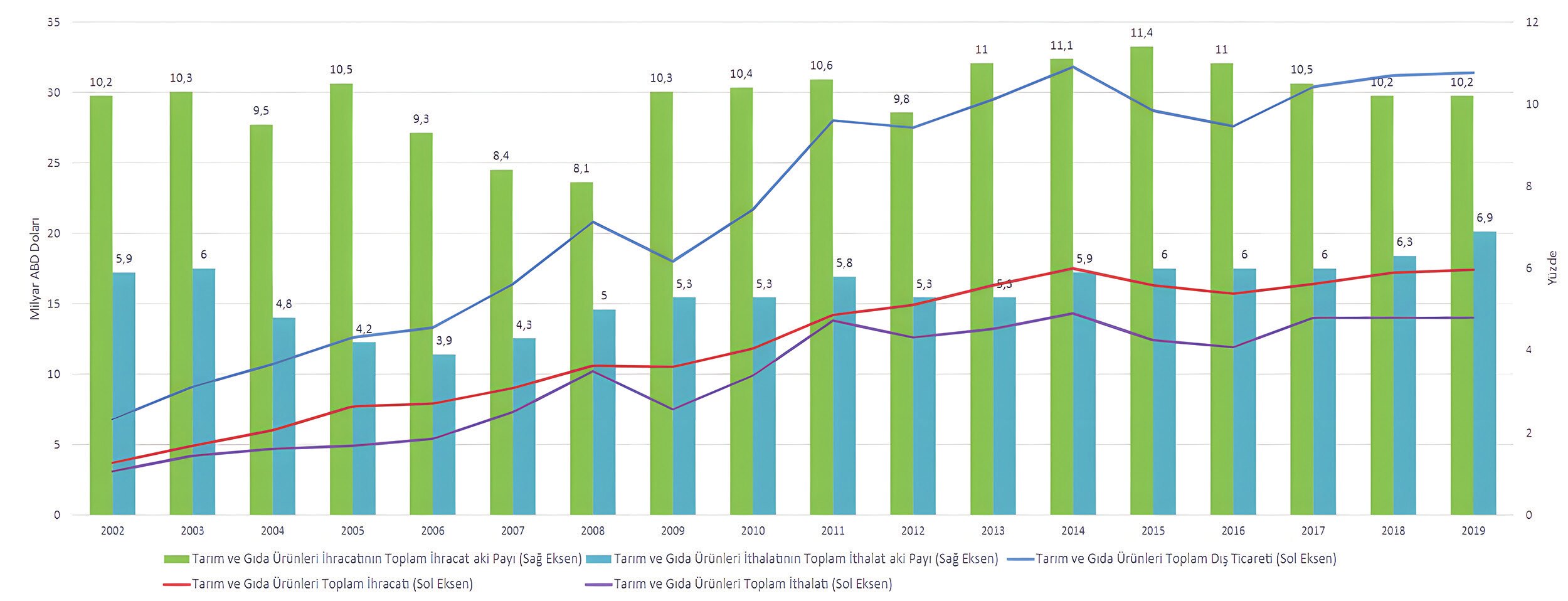
According to FAO 2020 data, the volume of agricultural foreign trade in the world is 2.92 trillion ($). Approximately 73% of the agricultural production value of $4.0 trillion is subject to export/import between countries. In 2020, the US ranked first in world agricultural exports with a share of $139.6 billion and 9.57%. Other major exporters of agricultural products are the Netherlands, Brazil, Germany, China, France, and Spain. Türkiye ranks 23rd with $20.7 billion. China ranks first in agricultural imports with $172.46 billion and 11.31% share. The US, Germany, the Netherlands, Japan, Japan, the UK and France are among the other major importing countries. Türkiye ranks 23rd in imports as well as exports with $15.2 billion. In 2020, the share of Türkiye’s agricultural exports in total exports was 12.21% and the share of agricultural imports in total imports was 6.93% (FAO, 2021 and TAGEM, 2021FAO. (2021). Retrieved July 1, 2024 from).
According to the results obtained from the projections made for Türkiye’s agricultural foreign trade, exports, which were $20.7 billion in 2020, are expected to be $21.5 billion with the average values obtained for 2021 and $25.1 billion on average in 2025 with the increases in the following years, and imports, which were $15.2 billion in 2020, are expected to be $15.7 billion with the average values obtained for 2021 and $18.4 billion on average in 2025 with the increases in the following years (FAO, 2021 and TAGEM, 2021FAO. (2021). Retrieved July 1, 2024 from).
Exports of agricultural products, which were $702 billion in 2005, reached $1.15 trillion in 2010 and $1.39 trillion in 2015. As of 2020 data, total world exports of agricultural products amounted to $1.6 trillion. “Meats and edible offal” ranks first in world agricultural product exports with $134.1 billion. With $130.7 billion, “Pome fruits and nuts” is the next most important export chapter. “Soft drinks, spirits and vinegar”, “Grain”, “Fish, crustaceans and molluscs” are other important export items. In 2020, the US ranked first in world agricultural exports with a share of $139.6 billion and 9.57%. Other major exporters of agricultural products are the Netherlands, Brazil, Germany, China, France and Spain. Türkiye ranks 23rd with $20.71 billion (FAO, 2021 and TAGEM, 2021FAO. (2021). Retrieved July 1, 2024 from).
Agricultural product imports, which were $740.3 billion in 2005, reached $1.18 trillion in 2010 and $1.42 trillion in 2015. As of 2020 data, total world agricultural product imports were $1.6 trillion. “Edible fruits and nuts” rank first in world agricultural product imports with $139.1 billion. “Meats and edible offal” are the other most important import products with $135.1 billion. Cereals, soft drinks, alcoholic beverages and vinegar, oilseeds, and fruits; various grains, seeds, fish, crustaceans, mollusks and others constitute important import items. China ranks first in agricultural product imports with $172.46 billion and a share of 11.31%. The US, Germany, the Netherlands, Japan, the UK and France are among other important importing countries. Türkiye ranks 23rd in imports as well as exports with a share of $ 16.0 billion (FAO, 2021 and TAGEM, 2021FAO. (2021). Retrieved July 1, 2024 from).
While the world agricultural foreign trade volume was $ 940.03 billion in 2001, this value increased over the years and approached $ 3 trillion in 2020. As a result of both export and import increases, the world agricultural foreign trade volume has approximately tripled by 2020 compared to 2001 (TAGEM, 2021TAGEM. (2021). Tarımsal Dış Ticaret Sektör Politika Belgesi 2021-2025. s.1-83, Ankara.).
In 2001, Türkiye’s exports of agricultural products amounted to $4.07 billion, but increased significantly over the years, reaching $20.71 billion in 2020 5-fold increase over 2001. In 2001, the share of exports of agricultural products in general exports was 12.99%, and in 2008, it had the lowest share with 8.21%. There have been increases over time and the share of agricultural exports in overall exports was 12.21% in 2020.
US, Netherlands, Germany and France are important export markets for Turkish agricultural exports. According to 2020 data, “Pome fruits and nuts” ranked first in Türkiye’s agricultural product exports with $4.83 billion. With $2.36 billion, “Vegetables, fruits, nuts and other parts” are the next most important export products. “Cereals, flour, starch or milk preparations, pastry products”, “Edible vegetables and some roots and tubers”, “Animal and vegetable fats and oils”, “Milling products, malt; starch, inulin, wheat gluten” are Türkiye’s other major export items, respectively. Türkiye’s agricultural exports increased by 165% between 2005-2020 and 24% between 2015-2020 (TA- GEM, 2021TA- GEM (2021). The source article does not provide a separate full bibliographic entry for this citation.).
When the export developments by countries are analyzed, it is seen that the countries in the first ranks are generally the same over the years. In 2020, the US is the leading country with exports of $193 billion and a share of 9.5%. The US was followed by Brazil with $135.1 billion (6.7%), the Netherlands with $121.8 billion (6%), Germany with $87.4 billion (4.3%) and China with $95.8 billion (4.8%). Türkiye ranked 21st with nearly $30 billion in agricultural exports, accounting for 1.5% of global exports.
In 2001, Türkiye’s imports of agricultural products amounted to $1.55 billion, increasing significantly over the years and reaching $15.2 billion in 2020. In 2020, imports increased approximately 9 times compared to 2001. In 2001, the share of agricultural imports in overall imports was 3.75%. As a result of the increases in the imports of agricultural products, the share of agricultural imports was realized as 6.93% in 2020. Among the countries that import the most agricultural products, the US, China, Germany and the Netherlands are in the first place. In 2005, imports of agricultural products amounted to 3.46 billion dollars, reaching 7.68 billion dollars in 2010 and 11.24 billion dollars in 2015. As of 2020 data, Türkiye’s total agricultural product imports amounted to $15.21 billion. According to 2020 data, “Cereals” ranked first with $3.28 billion and “Oilseeds and fruits; miscellaneous grains, seeds” ranked second with $2.38 billion in Türkiye’s agricultural product imports. Remains and debris of the food industry and animal and vegetable fats and oils constitute the other important import items, respectively (TAGEM, 2021TAGEM. (2021). Tarımsal Dış Ticaret Sektör Politika Belgesi 2021-2025. s.1-83, Ankara.).
Agricultural Trade of the Turkic States
The amount of value added created in agriculture in the countries is $94 billion. Azerbaijan accounts for $3.8 billion, Kazakhstan $11.5 billion, Kyrgyzstan $1.3 billion, Türkiye $58.5 billion, Uzbekistan $18.9 billion. Agricultural trade among the Turkic States is $5 billion. The total agricultural exports of the Turkic States are $43.3 billion. In this case, the share of the Turkic States in world agricultural exports can be expressed as 2-3%.
It is predicted that this increase in demand will be reflected in prices through an increase in value added and will increase Türkiye’s export volume at the global level, especially in European and American markets. This is where cooperation with the Turkic States in these products can lead to both product increase and more economic gains.
In Conclusion: Keys for Türkiye’s Playmaking in Turkish World Agriculture
Türkiye’s agricultural trade with Central Asian countries is of strategic importance due to its central location. Türkiye, the world’s 10th largest agricultural producer, has a strong position and advantage in agricultural product trade with Central Asian and therefore Turkic World states and exports various agricultural products to this region. Türkiye exports products such as information, technology, wheat, barley, cotton, vegetables, fruits and vegetable oils to this geography, although it varies from country to country. Türkiye’s high-quality food processing technologies and agricultural machinery are also attractive to these countries.
A significant part of Türkiye’s agricultural trade with Central Asia is supported by international cooperation and transportation projects such as the Organization of Turkic States and the Middle Corridor Project. These initiatives further strengthen Türkiye’s trade and economic relations with Central Asian countries. The Middle Corridor Project also contributes to increasing trade in agricultural products by improving Türkiye’s road and rail connections with Central Asia. At this point, Türkiye can take and strengthen its position as a playmaker in the agriculture of the Turkic World thanks to its know-how, technological potential and agricultural trade with Central Asian countries. Türkiye’s knowledge sharing and capacity building projects in the field of agricultural research and innovation, and the presence of university education and publication activities in the field of agriculture will further contribute to the sustainable trade between the countries. In other words, thanks to its geographical location, diversity of agricultural products, agricultural education, R&D and extension activities and international cooperation, Türkiye can successfully fulfill its role of increasing its trade volume and weight in this geography in line with the common interest of the Turkic States.
Türkiye can realize a wide range of agri-food trade with Central Asian countries, especially the Turkic States, with its diversity and production potential and opportunities in agriculture and food. The products that Türkiye can export to this geography and develop trade can be as follows: • Fruits and vegetables • Cereals and legumes • Nuts and oilseeds • Olives and olive oil, Pistachios • Spices and medicinal and aromatic plants • Tea • Animal products • Eggs and poultry products • Prepared foods and processed products • Food additives and processed agricultural products Undoubtedly, these agri-food products that Türkiye can sell can be both fresh and processed. These products, which have export potential, can gain more competitive chances in these markets with their quality and availability advantages. Moreover, thanks to Türkiye’s advanced logistics and transportation networks, these products can be delivered to the target markets quickly and safely, and can also contribute to the utilization of the products of the Turkic States.
Türkiye has key areas that can contribute to this geography and are key to Türkiye’s role as a playmaker in the agriculture of the Turkic World. Their proper and timely utilization will bring gains to all countries. Türkiye’s potential role in these key areas can both strengthen its own economy and contribute to the development of the agri-food sector of countries with the same interests. Some of these keys include: • Strategic location and logistics • Trade agreements, strengthening trade relations and strong agri-food diplomacy • Advanced agri-food technologies, knowhow accumulation and knowledge-experience sharing • High value investments and joint ventures • Market research, creating target markets and accessing world markets • High standards of food safety, quality product-certification, quality control on-site and at the border • Education-publication programs, academic working environment and capacity building • A qualified and experienced workforce integrated with the World In conclusion, Türkiye has an important geopolitical position as a strategic bridge between Asia and Europe. This position makes Türkiye important in terms of agri-food corridors, energy corridors and trade routes. At this point, Türkiye is turning towards multilateral economic cooperation and different trade agreements. Türkiye’s participation in China’s Belt and Road Initiative and increasing trade ties with Africa, as well as talks with BRICS countries, will increase its economic diversity and effectiveness in agricultural production and foreign trade in the multipolar world order.