Introduction
First of all, we should point out that the effects of the Turkish Revolution were not limited to the Turkish people but had worldwide consequences. Türkiye became the pioneer and symbol of the rise of the oppressed peoples of Asia, Africa and Latin America.
Another dimension of the worldwide importance of the Turkish Revolution is that it entered into a unity of fate with the Soviet Revolution, which was a breaking point of history in the 20th century. The two revolutions were in solidarity, they supported each other.
A distinction must be made when examining the worldwide effects of the Turkish Revolution. During the years of the Turkish War of Independence, most of the Asian, African and Latin American countries were living under the colonial yoke. The torch of independence lit by Mustafa Kemal Pasha, who advocated for full
independence, had to shine like a sun, the arm and wing of imperialism had to be broken, and freedom had to prevail on earth. The message reached all directions and shook the world. More importantly, the model created by the Turkish Revolution became an example for the peoples of the oppressed world.
The Soviet Revolution could not be a development-progression model for oppressed countries. On the other hand, the Turkish Revolution was viable with the conditions of oppressed countries, and promised salvation in colonial, semi-colonial, and semi-feudal countries under the yoke of imperialism. It should be emphasized that the interaction of the Turkish Revolution, especially with the Indian national movement, played a very important role in the collapse of British colonialism and inspired salvation movements in China (within the CCP) (Nehru, 2016Nehru, P. C. (2016). Dünya Tarihi-Kesitler. (Trans. C. Akalın). İstanbul, Türkiye: Kaynak Yayınları.; Mao, 1976Mao (1976). The source article does not provide a separate full bibliographic entry for this citation.; Demircan, 2021Demircan, N. (2021/2022). Interactions Between Two Republics: The Republic of Türkiye and the Republic of China. Belt & Road Initiative Quarterly, 3(1), 26-39./2022Demircan, N. (2021/2022). Interactions Between Two Republics: The Republic of Türkiye and the Republic of China. Belt & Road Initiative Quarterly, 3(1), 26-39.; Alan, 2020Alan, E. (2020). The views of Chinese Revolutionary Gao Junyu on the Turkish Revolution. Belt & Road Initiative Quarterly, 1(3).).
After the Sakarya victory of the Turkish Army (September 1921), the name Mustafa Kemal created great excitement, especially in the Islamic world. His pictures were hung in shops and everywhere from Algeria to Indonesia, sermons were read in mosques, his name was referred to as “fearless, the invincible man” (Koloğlu, 1994Koloğlu, O. (1994). Gazi’nin Çağında İslam Dünyası. Boyut Kitapları.), and he was hailed as the “New Selahattin Eyyubi1”.
It should be noted that the imperial attack targeting Türkiye, the successor of the Ottoman state, which was the guardian of the Islamic Caliphate for 400 years, caused a particularly strong reaction in the Islamic world. Islamic countries other than Iran groaned under the colonial yoke at that time. Western imperialists both exploited and humiliated these countries. The arguments of “Asian despotism” and “Anti-democratic character of Islam” tied the hands of the intellectuals of Islamic countries. The nationalist program of the revolution not only affected the intellectuals but also affected the social structure of Asia by shaking up the large masses of peasants, laborers, women and even tribal people.
After the Turkish Revolution, Asia was no longer be the old Asia.
The Republic of Türkiye, which was declared in October 1923 and gained a completely secular character with the abolition of the Caliphate in 1924, opened new horizons to the Islamic world.
The Turkish Revolution cracked the old world with the Soviet Revolution. The idea of the Republic, which came from China with Sun Yat Sen, spread rapidly in the world with Mustafa Kemal Pasha. The Turkish Revolution is, in a way, the Asian leg of the French Revolution, which brought ‘equality, freedom and solidarity’ to the West. The Turkish Revolution shaped the map of Western Asia and re-established the balance of power.
The Interaction of the Turkish Revolution with the Soviet Revolution
In February 1917, the uprising that broke out in St. Petersburg and Moscow, which first resulted in the overthrow of the Tsardom and then turned into a great social revolution with the October Revolution, was watched carefully by the intellectuals and progressists of Türkiye. Turkish-Tatar revolutionaries living in Russia also played partial roles in the Soviet Revolution, but the opinion of Turkish revolutionaries in Anatolia towards the Soviet Revolution.
After World War I, the imperial powers tried to prevent Turkish-Russian cooperation. Under these circumstances, Mustafa Kemal and his allies understood the importance of the Soviet Revolution well. The unilateral withdrawal of the Soviet forces from the Anatolian lands they occupied and their declaration of the secret Sykes-Picot Agreement, which divided the Turkish-Ottoman state, greatly impressed the Turkish nationalists. Journalist Falih Rıfkı Atay, one of Atatürk’s close colleagues, expresses this fact clearly:
“If Lenin had not overthrown Tsarism, if Russia had not reached its glory days. Istanbul would be Russian. One wonders if we should put a bust of Lenin in an Istanbul corner”(Atay, 1969Atay, F. R. (1969). Çankaya. İstanbul, Türkiye: Doğan Kardeş Matb.).
The fate of the revolutionaries of the two countries first converged in the Caucasus. The Entente forces tried establishing a Caucasian wall based on pro-Western Dashnak (nationalist Armenians) and Menshevik Georgians to keep Baku oil away from Russians and prevent the Anatolian movement from uniting with the Soviets.
Mustafa Kemal Pacha saw the collapse of the Caucasus Great Wall as necessary for the victory of the War of Independence. Mustafa Kemal’s plan was “to save Izmir (Western Anatolia) by creating a foothold in the East (Caucasus).”
The two revolutions supported each other and conducted joint military operations. General Kazım Karabekir, the commander of the Turkish forces in Eastern Anatolia, explains this situation as follows:
“Today, we have no choice but to work hand in hand with the Bolshevik armies for the liberation of Anatolia. (Karabekir, 2000:665Karabekir, K. (2000). İstiklal Harbimiz (Vol1). Emre yayınları.).”
M. Kemal Pasha, in the telegram he sent to Lenin on April 26, 1920, called for “joining their military forces with the Bolsheviks”, demanded that “Azerbaijan and Georgia be forced to join the Soviet Republics”, and proposed a joint operation
against Armenia (Atatürk, 2002c:114Atatürk, M.K. (2002a). Atatürk'ün Bütün Eserleri. (Vol 3). Kaynak Yayınları.). This telegram was the first foreign policy action of the Turkish National Assembly (Meclis) (Perinçek, 2016:51Perinçek, M. (2016). Türk-Rus Diplomasisinin Gizli Sayfaları. Kaynak yayınları.). Dashnak Armenia was destroyed as a result of Turkish-Soviet cooperation. The Soviet leaders, especially Stalin, supported the operation of the Turkish armies towards Armenia. The Turkish-Soviet alliance in the Caucasus was strengthened with the signing of the Moscow Agreement on March 16, 1921, and especially the Treaty of Kars on October 13, 1921. The only way for Russian-Turkish cooperation through the Caucasus was the liquidation of Dashnak Armenia. The news that heralded the meeting of the Turkish and Soviet armies in Nakhchivan on August 14 was met with applause in the Parliament in Ankara (Atatürk, 2002d:174Atatürk, M.K. (2002a). Atatürk'ün Bütün Eserleri. (Vol 3). Kaynak Yayınları.). On the other hand, Turkish and Soviet forces also cooperated in Georgia and Dagestan.
The Turkish-Soviet Agreement of March 16 1921, was the first document signed by the Turkish government with a great Western power.
In the meantime, it should be noted that the Soviets provided financial and military aid to Türkiye upon the request of M. Kemal Pasha. The gold was transported to Anatolia by land via Erzurum and by sea over the Black Sea. In his speech of thanks when M. Kemal received the incoming gold from the ambassador, Aralov, he said, “It is a great blessing for us, but the heart of the Russian people is more valuable” (Perinçek, 2016:67Perinçek, M. (2016). Türk-Rus Diplomasisinin Gizli Sayfaları. Kaynak yayınları.).
An important step of the Turkish-Soviet military alliance was the visit of the Soviet delegation headed by General Frunze to Ankara in December 1921. Mustafa Kemal Pasha and Frunze dealt with military issues. The remarkable aspect of the meeting is that M. Kemal shared some secrets with Frunze that he did not reveal even to the deputies (Perinçek, 2016:79Perinçek, M. (2016). Türk-Rus Diplomasisinin Gizli Sayfaları. Kaynak yayınları.).
Another remarkable event in terms of military cooperation is that M. Kemal Pasha invited the Soviet ambassador S. Aralov, the Azerbaijani ambassador İ. Abilov and the Russian military attaché Zvonaryev to the Western Front on March 27 1922, before the Great Turkish Offensive.
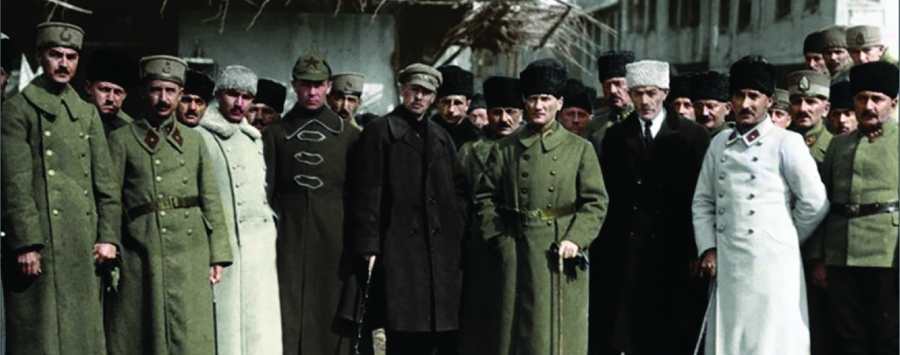
According to British archival documents, the Parliamentary government secretly agreed with the Soviet government on defense and attack issues before the Great Offensive (Perinçek, 2016:79Perinçek, M. (2016). Türk-Rus Diplomasisinin Gizli Sayfaları. Kaynak yayınları.). During the preparations for the Great Offensive, photographs show Soviet commanders with M. Kemal Pasha.
Atatürk emphasized the common goals of the Turkish Revolution and the Soviet Revolution: “The armed national uprising movement that emerged in Anatolia was very similar to Soviet Russia in political positions and targets” (Kemalist Eğitimin Tarih Dersleri, 2001:59).
The Soviet government recognized the Ankara government with the Moscow Agreement signed in March 1921. This act, which meant great support for the national government, relieved Ankara and increased its self-confidence. Türkiye and the Soviet Union maintained close relations in troubled years until 1932, when the Soviet Union was recognized by the USA and accepted into the League of Nations. Ankara would represent the SU in international relations (Perinçek, 2016Perinçek, M. (2016). Türk-Rus Diplomasisinin Gizli Sayfaları. Kaynak yayınları.).
Friendship with the Soviets became the basic principle of Turkish foreign policy until World War II. After the 1929 world crisis, the Turkish economy, which turned to statism, both received economic aid and switched to a planned economy with the support of Soviet experts. The Soviet Delegation, participating in the ceremonies of the 10th anniversary of the Republic, was greeted with cries of “Priezdim” (you brought blessings) (Cumhuriyet Gazetesi, 1933Cumhuriyet Newspaper. (1933, October 27). [Makale Başlığı]. Cumhuriyet, (Issue 1), p. 1).
Interaction with India
More support for the Turkish National Struggle came from India. The prevailing opinion is that the aid came from Indian Muslims. However, when the Indian national struggle is examined closely, it should be noted that the National Struggle received great support from the non- Muslim segments of Indian society, especially Hindus. Even more important was the contribution that the interaction with Ankara has contributed to the unity of India.
Interest in Türkiye in India increased at the end of the 19th century. The emergence of British aspirations in India increasingly shaped the Indian national movement. It is
no coincidence that the founding of national parties2 in both countries coincided with the 100th anniversary of the French Revolution.
National Unity in India
The foundations of the Hindu-Muslim union of the two major factions in India were laid in 1916, during the world war. At the Lucknow Congress of the National Congress Party, the two sections reached an agreement on the essence of the Constitution. According to Nehru, the Muslim handshake with the Congress Party was largely the result of the anger at the British attitude towards Türkiye (Nehru, 2015:131Nehru, J. (2015). Türkiye ve Batı Asya Tarihi. İstanbul: Kaynak Yayınları.).
World War I ended with the victory of Britain, but uncertainties and chaos appeared in many areas.
Although British Prime Minister Lloyd George stated on January 5, 1918, that they “do not intend to deprive Türkiye of its Turkishdominated capital and its lands in Asia Minor and Thrace”, the British presence behind Emir Hussein’s rebellion deepened the suspicions of Indian Muslims (Yılmaz, 2008:129Yılmaz, H. (2008). Kurtuluş Savaşımız ve Asya Afrika’nın Uyanışı. Kaynak Yayınları.). The election of Muhammad Ali as the president of the “All India Islamic Union”, followed by Dr Ansari’s submission of Muslim demands to the Governor-General in India at the end of 1918 initiated attempts against the British. The massacre by British forces in the Sikh holy city of Amritsar in April 1919 intensified the national reaction. The Greek landing of troops in Izmir on May 15, 1919, angered the anti- British, especially the Muslims. The national poet of the Indians, Dr Muhammad Iqbal, glorified the national struggle, in which he had confidence in its victory, with the feeling that “the Turkish lion will awaken, roar again, will make the enemy tremble”. Beginning with the line “May God Help Him”. He continues his poem, “Address to Kemal Pasha”, “Jump wherever your horse goes, don’t think, we are often dulled in these squares because of precaution” (İkbal, 1956:87-88İkbal, M. (1956). Şarktan Haber (A.N. Tarlan, Trans.). Ankara: Publisher.).
The Meaning of the Indian Caliphate Movement
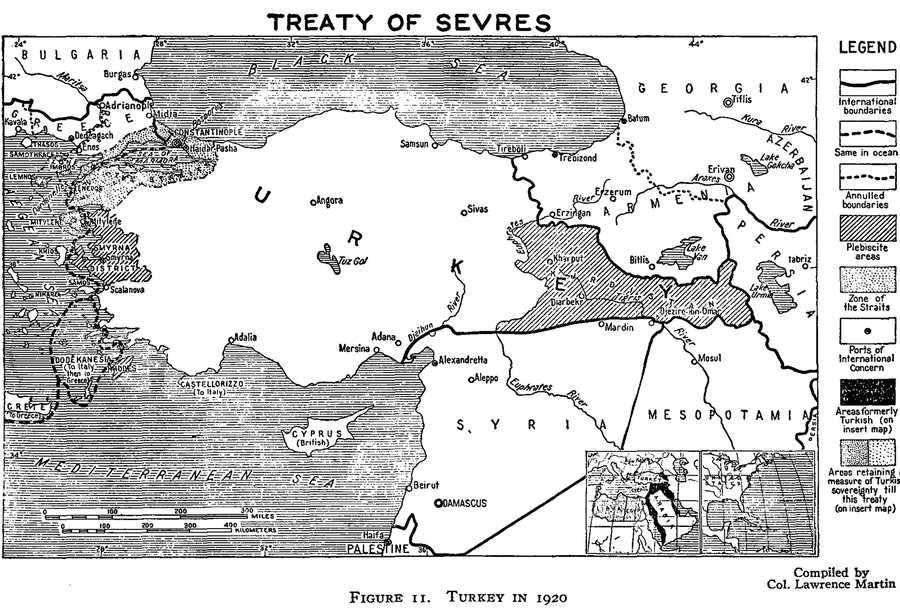
As the National Struggle intensified in Türkiye after the occupation of Istanbul by the Allied Powers and the imposition of the Treaty of Sèvres, a movement began in India with the slogan of “Justice for Türkiye” grew stronger (Şimşir, 2009:205Şimşir, B. (2009). Doğu’nun Kahramanı Atatürk. İstanbul: Bilgi Yayınevi.).
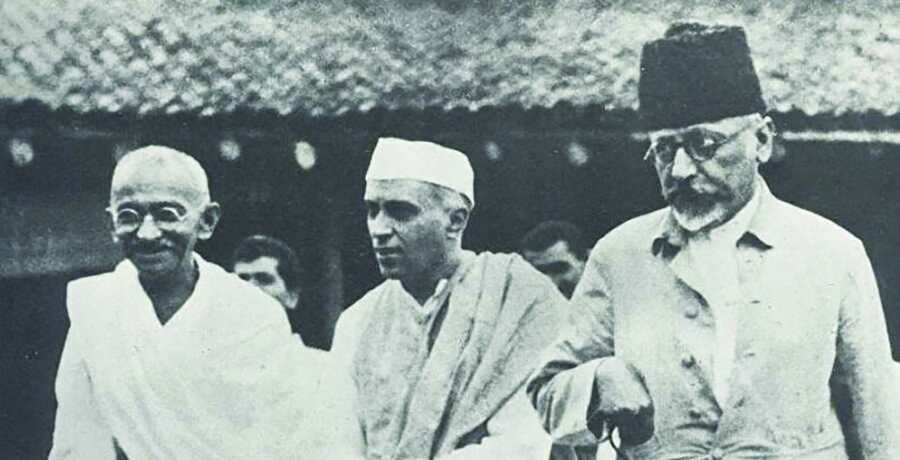
The Indian Caliphate Movement made great moral and material contributions to the National Struggle in Türkiye. Although it was started by Muslims, the material-spiritual support was given by Hindus, Muslims and Sikhs. It came from all the Indian people. The support given to the Chalifat Movement is the foundation of the national program and the beginning of the cooperation (Sarkar, 2007:144Sarkar, S. (2007). Modern India. Mac Millan.). The principles of the Indian Caliphate Movement were developed by the brothers Mohammed and Şevket Ali, who came to Anatolia during the National Struggle period and met with Mustafa Kemal on December 7 1920 (Yılmaz, 2008:106Yılmaz, H. (2008). Kurtuluş Savaşımız ve Asya Afrika’nın Uyanışı. Kaynak Yayınları.).
Those who led the Caliphate Movement aimed to obtain results in favor of Türkiye/ Muslims by putting pressure on the British authorities before the Peace Conference (January 1919). The “Caliphate”, which became active in the middle of 1919, demanded that the status of the Ottoman State be preserved as before the war and that Istanbul, the center of the Caliphate, should not be touched. The movement became stronger with the contributions of the Indian Ulema Society, a powerful religious-political organization, with a wide network of madrasahs and mosques.
At this point, Gandhi, the leader of the Congress Party, stepped in. He supported the
initiative by joining the Central Committee of the Caliphate Movement. India’s resistance was no longer unique to Muslims. According to one Indian writer, “If the Hindus joined the Muslims, it was because their Asian character, Chinese and the Japanese were also upset. It wasn’t their religion that got hurt, it was their Asian pride.” (Metta, 1921Metta, V. B. (1921, December). New York Times Current History.)
The “Caliphate” began to exert pressure on England to get their demands accepted: by sending delegations, making written applications, and organizing opposition. At the congress convened under the presidency of Gandhi in Bombay on August 2, 1919, the oppression of Greece in Türkiye was commemorated with hatred, and a mobilization was declared to help the Turks. The Caliphate
Committee convened in Delhi on November 23 1919, and took an open stance against the British for the first time.
From the first conference held in Delhi to the Bombay Conference (February 1920), when the declaration of the Caliphate Movement was published, significant donations were collected from the public to support the Turkish War of Independence.
On January 19, 1920, the text jointly signed by Gandhi, Muhammad Ali, Şevket Ali and M. Ali Jinnah addressed the Indian Governor General as “Muslim - Indian we stand shoulder to shoulder, we blame the British” (Koloğlu, 2007:7Koloğlu, O. (2007). Kurtuluş Savaşı’nda Hint Desteği. ICANAS Kongresi 2007.). Gandhi saw support for the Caliphate Movement as a movement to build national unity.
The signing of the Treaty of Sèvres, which the British imposed on the Ottoman government on August 10, 1920, accelerated the unity in India’s political classes. The Muslims had no choice but to join Gandhi’s anti-British “Non- Cooperation” movement. In the conditions of the day, the case of Türkiye stood out. The Caliphate Congress convened for the second time in Nagpur on December 26, 1920, with a large crowd of approximately 15,000 people. “Congress recognizes that unless major mistakes committed are corrected, there is no way for India to be satisfied. The caliphate issue, the Punjab issue and the restoration of damaged national pride. After that, he agrees that independence is the only way to prevent the repetition of similar mistakes (Yılmaz, 2008Yılmaz, H. (2008). Kurtuluş Savaşımız ve Asya Afrika’nın Uyanışı. Kaynak Yayınları.).” Gandhi’s warm relations with the Indian masses caused M. Ali Jinnah to withdraw from politics. Jinnah, who became passive after the Nagpur Congress, immigrated to London.
Ankara (Mustafa Kemal Pasha) evaluates the February 14, 1921 process as follows: “The incident taking place in India is the most important issue of today. (…)The murderous and brutal action taken by the British against a national manifestation in Punjab, on the other hand, the partition of Türkiye and the proposed treaty opened the eyes of Indian politicians. (Yılmaz, 2008Yılmaz, H. (2008). Kurtuluş Savaşımız ve Asya Afrika’nın Uyanışı. Kaynak Yayınları.)”
After the Nagpur Congress, general strikes (hartal), layoffs and riots gained momentum again. In Kolkata, the student strike grew day by day. Domestic stores and shops were closed in Delhi. Workers working in oil wells also participated in the strike (Yılmaz, 2008:123Yılmaz, H. (2008). Kurtuluş Savaşımız ve Asya Afrika’nın Uyanışı. Kaynak Yayınları.).
The British promised autonomy to India in February 1921.
The latest situation in India was explained in the newspaper Hakimiyet-i Milliye dated March 4, 1921: “Indians strongly criticize the cruel policy pursued by European states against Türkiye in the Indian Assembly” (Yılmaz, 2008:126Yılmaz, H. (2008). Kurtuluş Savaşımız ve Asya Afrika’nın Uyanışı. Kaynak Yayınları.).
At the end of 1921, the situation in India took a dire turn against the British. The expectation of rebellion increased in the British colonies. Gandhi said that the British policy of India could only be answered with an internal revolution and called the Indians to desert the Anglo-Indian army (Yılmaz, 2008:127Yılmaz, H. (2008). Kurtuluş Savaşımız ve Asya Afrika’nın Uyanışı. Kaynak Yayınları.). The Indian National Congress convened in Ahmedabad on December 27 1921, congratulated Mustafa Kemal Pasha for the Sakarya Victory and stated that “Indian people will continue to help in the preservation of Türkiye’s independence” (Yılmaz, 2008:128Yılmaz, H. (2008). Kurtuluş Savaşımız ve Asya Afrika’nın Uyanışı. Kaynak Yayınları.).
The victory of the Turkish Army on August 30 created a great impact in India. The victory was celebrated with ceremonies for days. Mustafa Kemal Pasha became a symbol of independence for Indian Muslims and Hindus.
More striking is what happened before September 9. Friday, September 8, is a day of worship in India. Mosques were illuminated in the country after the Friday prayer, God was prayed to for the victory of the Turkish army, and “Zindabad3 Mustafa Kemal” was written on the walls of the mosques. Çotani once again
congratulated “Mustafa Kemal Pasha and his victorious armies” with emotional words in the telegram he sent just after September 9. In the Çanakkale and Izmit regions, Indian soldiers exiled to the front on behalf of the British escaped from their armies and joined the Turkish army with the rank of officer (Hülagü, 1999Hülagü, M. (1999, November). Milli Mücadele Dönemi Türkiye-İslam Ülkeleri Münasebetleri. AAMD, Issue 45.).
In the All India Islamic Union Congress convened on January 27 1923, the victory of M. Kemal Pasha was mentioned: “The sword of Mustafa Kemal Pasha succeeded what we could not achieve with calls and prayers for four years.”
The Indian Caliphate Movement, besides paying special attention to Türkiye, also supported the anti-imperialist struggles of other peoples. Condemning the British to send Indian troops to China, the Movement
declared its support for the freedom struggle of the Chinese people at the Lucknow Congress (Bengalee Newspaper, 1927Bengalee Newspaper. (1927, February 27).).
Financial aid for Indian Muslims
Indian aid was not limited to solidarity and pressure on the British. The aid campaign for the Turks continued throughout the National Struggle. Research indicates that Indian aid amounted to 675,000 Turkish liras. The first aid of Indian Muslims reached Ankara in February 1922. Mustafa Kemal Pasha, in his telegram to the Ministry of Foreign Affairs, mentioned the first aid from India: “144,440 Ottoman lira were received, which is the equivalent of 26,000 British lira which were sent from India to help Türkiye” (Atatürk, 2002e:266Atatürk, M.K. (2002a). Atatürk'ün Bütün Eserleri. (Vol 3). Kaynak Yayınları.).
Afghanistan Reality
Afghan lands witnessed great conflicts between Britain and Tsarist Russia in the 19th century. Emanullah Khan of Afghanistan, who gained limited independence from England after the world war, aimed to preserve the independence and modernize the country. Afghanistan and Türkiye were in search of support against the British. The Soviet Revolution relieved both countries.
The Turkish delegation, who went to Moscow to sign an agreement with the Soviets, also signed an agreement with Afghanistan. This agreement, which preceded the Treaty of Moscow (1921), was the first international agreement signed by the Ankara government. The relations established by the Ankara government with Afghanistan and Indian Muslims disturbed Britain and were an important achievement of Turkish foreign policy (Oran, 2022:209Oran, B. (Ed.). (2022). Türk Dış Politikası (Vol I).).
Reflections in Iran
Iran, which connects Asia to Europe on the East-West axis, is similar to Türkiye in historical and geographical terms. Strong state tradition and wealth in thought and language have always made Iran important in history. The difference between Iran from other Islamic countries is that it has preserved its independent existence.
Like Türkiye, Iran could not keep up with the imperialism of capitalism that developed in the West in the 19th century and became semi-colonial. Iranian
intellectuals found the solution in modernization. The 1906 Constitutional Revolution brought the basic principles of modernization to the country: parliamentary dominance, democratic rights, and central government. Turkish and Iranian intellectuals cooperated in the process of leading to the constitutional government.
The Iranian Constitutional Revolution did not succeed for various reasons. Then, the increasing imperial appetite upon the discovery of oil in the Persian Gulf caused the north of the country to be occupied by Russia and the south by the British during the First World War. World War I increased poverty in Iran, and local riots exacerbated the difficulties. The view that these difficulties could only be overcome by establishing an independent state and making Western institutions and understandings dominant became stronger among Iranian intellectuals. The victory of the Turkish Revolution left deep scars.
The strong modernization movement carried Reza Shah first to the Ministry of War and then to power to prevent instability. The advocates of modernization were the ideas whose foundations were laid with the Constitutional Revolution. Reza Shah was promodernization, but timidity about Türkiye among the intellectuals also affected the Shah. The distant attitude of Turkish nationalism towards religion, although it influenced Iranian intellectuals, the abolition of the Sunni Caliphate by the Turkish Republic created relief among the Shiites. Still, the Shiite mullahs were ambivalent towards the secular Turkish nationalists’ attitude towards religion.
The Turkish administration overcame Iran’s shyness by following constructive policies in the 1920s. The “Friendship and Security Agreement” signed in 1926 eased the relations between the two countries and improved mutual trust (Oran, 2022Oran, B. (Ed.). (2022). Türk Dış Politikası (Vol I).).
The Shah, who abolished the capitulations in 1928, suppressed the opposition of the ulama inside. The
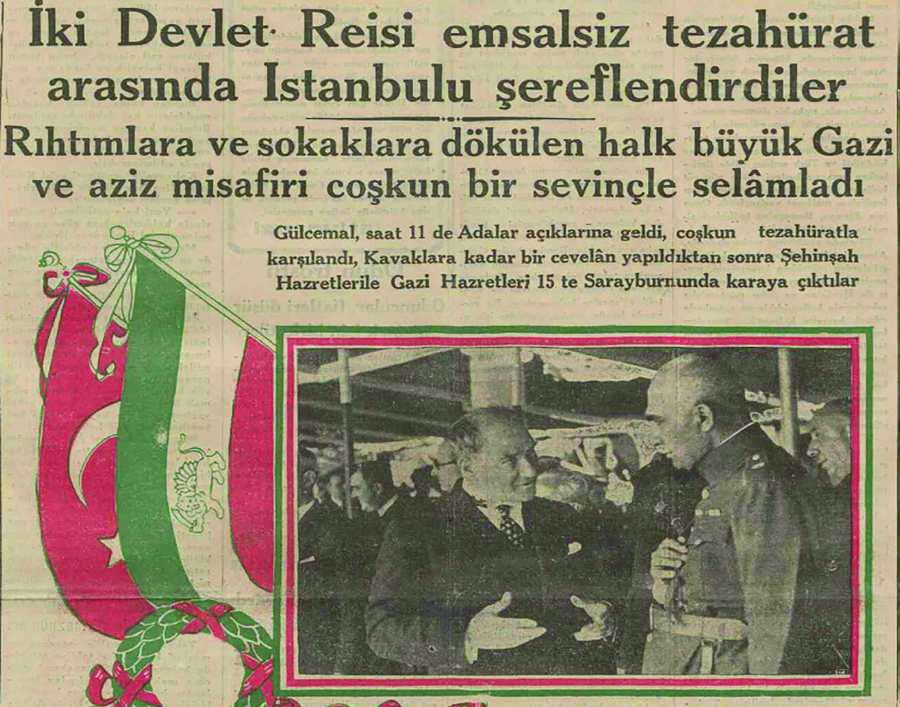
visit of Iranian Shah Reza Pahlavi to Türkiye in 1934 brought relations to the next level. Having reached Trabzon via Tabriz in June, the Shah met with Atatürk and other Turkish leaders in Ankara. Atatürk was very respectful to the Shah, and the Shah, who was impressed by what he saw, extended his visit, which was planned as a week, to two months.
On his return, he tried to apply what he saw in Türkiye in his country, but he encountered resistance from the mullahs. The “Kashf-i Hijab Law”, which forced the security forces to remove the veils by force, was enacted in 1936 (Gökalp & Georgeon, 2007Gökalp, İ. & Georgeon, F. (2007). Kemalizm ve İslam Dünyası. Kaynak Yayınları.).
As World War II approached, Iran would be invaded from the north and south
once again, and upon the Shah’s rapprochement with Germany, the Shah would
be forced to leave his throne to his son (Abrahamian, 2009Abrahamian, E. (2009). Modern İran Tarihi. İş Bankası Kültür Yayınları.).
Western Asia - Arab World
The shocks of the Turkish Revolution were felt most in the Islamic world. Syria, Iraq, Jordan, Palestine, and Hijaz shared the same fate with the Turks until the last moment. Iraq and Syria, which joined the Ottoman Empire after Yavuz Selim’s campaign to Iran and Egypt in the 1510s, continued their existence as Ottoman provinces until the 20th century. This union was broken by the ambitions of the Anglo-French imperialists to dominate the Middle East.
The discovery of oil resources in the Persian Gulf at the beginning of the 20th century whet the appetite of British imperialism. France had its eyes on the Eastern Mediterranean.
Britain and France agreed with Russia and shared the Ottoman lands in Western Asia with the Sykes- Picot Agreement in 1916.
In September 1918, when the Ottoman forces were defeated and left the Syrian territory, France filled the void and invaded Syria. The atmosphere changed radically after France’s imperial intention, which emerged quickly. The Paris Peace Conference and Versailles Treaty (1919) finalized the entry of Iraq and Palestine under the British mandate and Syria-Lebanon under the French mandate. This meant their separation from the Turks.
According to the Arab- British historian Albert Hourani, “Arab nationalism was greatly influenced by the Young Turks, especially the success of K. Atatürk” (Koloğlu, 1994:371Koloğlu, O. (1994). Gazi’nin Çağında İslam Dünyası. Boyut Kitapları.). II. After World War II, when Anglo-French colonialism was defeated and liquidated worldwide, the Arabs, in the process, attained the national state they longed for.
Syria
Post World War era was years of turmoil. Syrian nationalists took an ambivalent attitude towards the Turks in the face of the promises of the French. However, when they noticed that France would not leave their country, they asked the Turks for help in resisting the invaders. M Kemal Pasha was against the French Mandate in Syria initially. Still, he prioritized the Turkish national struggle since the Turks were in serious trouble (Perinçek, 2015:123-159Perinçek, D. (2015). Kemalist Devrim-8: Birinci Dünya Savaşı ve Türk Devrimi (Genişletilmiş 3. Basım).).
Proposals for Türkiye and Syria to form a confederation were put forward in those years. Although the leaders of the National Struggle were not against it, they adopted the attitude of “first Syria to form an independent Arab state then to consider unification in the Confederation” (Atatürk, 2002b:354Atatürk, M.K. (2002a). Atatürk'ün Bütün Eserleri. (Vol 3). Kaynak Yayınları.).
During the arrival of M Kemal Pasha in Mersin (south of Turkiye) in 1923, Syrian Muslims, carrying black flags, shouted, “Turkish-Arab Friendship; Don’t forget your Syrian compatriots, save us,” M. Kemal Pasha, who received the Syrian delegation, said that “it is unacceptable for a country that has been part of the Ottoman state for centuries to groan under the yoke of foreigners” and said: “I want Syria to determine its own destiny. (Şimşir, 1999Şimşir, B. (1999). Dış Basında Laik Türkiye’nin Doğuşu. Bilgi Yayınevi.)”
Syria, an old Arab country, is one of the countries that was most affected by the construction of the Turkish Republic. In particular, the principles of independence and secularism inspired Syrian progressives. The basic principles of the BAAS Party, which led the national struggle, were “Unity” (unity of the Arabs), “Liberty” (liberation from the colonial yoke) and “Socialism” (populism, statist national economy). According to Wallachia- Bitar, who advocated that sovereignty should be taken from God and given to the people, the Arab nation showed continuity in history. What had to be done was to ensure the resurrection. The charter of the BAAS Party, prepared by Michel Aflaq in 1951, opened new horizons for Arab societies. The reason why the party gave special importance to secularism was to increase the resistance of the nation against colonialism. The French sowed the seeds of new problems by forming separate religious
constituencies. Muslims, Greek Catholics and Orthodox, and Jews were compelled to vote for their religious group (Nehru, 2016:805Nehru, P. C. (2016). Dünya Tarihi-Kesitler. (Trans. C. Akalın). İstanbul, Türkiye: Kaynak Yayınları.).
National integration consisted in opposing sectarianism. The BAATH Party opposed the distribution of seats in the Parliament according to beliefs. On the other hand, he accepted Islam as one of the basic elements of Arab identity.
According to Michel Aflaq (Christian Arab origin), “Socialism was the religion of life, its victory over death. He was struggling for life by giving jobs to everyone, revealing everyone’s talents” (Tibi, 1998:290Tibi, B. (1998). Arap Milliyetçiliği. Yöneliş Yayınları.).
According to Wallachia, the unified Arab society would gain a new identity and establish a morally ideal socialist society. Between 1948- 51, the party carried its activities outside Syria under the slogan “a united Arab state”. It was effective in Jordan, Lebanon and Iraq.
Iraq
Iraq, which is on the way to India and has rich oil deposits, was targeted by the British during the First World War. “In World War I, the British made Iraq the base of their operation against Türkiye” (Nehru, 2016:818Nehru, P. C. (2016). Dünya Tarihi-Kesitler. (Trans. C. Akalın). İstanbul, Türkiye: Kaynak Yayınları.). The Turks were driven north, and the British entered Baghdad and reached Mosul. At the end of the war, the whole of Iraq was occupied by Britain.
Iraq, separated from Anatolia after the War, was given to the British mandate with the Paris Agreement (1919). In other words, the partition designed with the secret Sykes-Picot in 1916 was implemented after the War.
“The surrender of Iraq’s mandate to the British led to strong protests in the early 1920s, gradually becoming an uprising. The uprising in Iraq was crushed largely with the help of Indian troops" (Nehru, 2016:818Nehru, P. C. (2016). Dünya Tarihi-Kesitler. (Trans. C. Akalın). İstanbul, Türkiye: Kaynak Yayınları.).
The Iraqi uprising was suppressed by Britain partly by force, partly by the promise of independence.
Britain forcibly suppressed the resistance, “British planes established the power of London with bombs" (Nehru, 2016:819Nehru, P. C. (2016). Dünya Tarihi-Kesitler. (Trans. C. Akalın). İstanbul, Türkiye: Kaynak Yayınları.). Turkish commander Özdemir Bey, sent to Revandüz to organize the struggle, started to fight against British forces. He came into contact with Kurdish tribes. Upon gaining certain successes, the British government not only started an intense air bombardment in the Kurdish region of Iraq but also brought the issue to the diplomatic field, prevented the demarcation of the border in the Lausanne Treaty (1923) and took Kirkuk and Mosul outside the Turkish borders. Türkiye’s proposal to hold a plebiscite for Mosul and Kirkuk was rejected by the British-influenced League of Nations (Oran, 2022Oran, B. (Ed.). (2022). Türk Dış Politikası (Vol I).).
Continuing its well-intentioned efforts after the Treaty of Lausanne, Türkiye officially recognized Iraq. In 1926, the “Turkish-Iraqi Border and Good Neighborhood Agreement” was signed with Britain and Iraq. Britain concluded the operation to break Iraq out of Anatolia. Arab nationalism continued on its path. Nehru noted that in the 1920s-30s Britain “used airplanes as a ‘police force’ in semi-colonial countries” (Nehru, 2016:821Nehru, P. C. (2016). Dünya Tarihi-Kesitler. (Trans. C. Akalın). İstanbul, Türkiye: Kaynak Yayınları.). He underlined that it was “cheaper and more receptive, but terribly cruel and deadly”. The ideas of Confederation with Türkiye were discussed among Iraqi Arab
nationalists and Syrian Arab nationalists, but these ideas could not be implemented (Ataturk, 2018Ataturk (2018). The source article does not provide a separate full bibliographic entry for this citation.).
Hard and bloody struggles occurred in Iraq between those who advocated rapprochement with Türkiye and those subject to British control.
Republican Türkiye gradually developed its relations with Iraq, which gained partial independence. King of Iraq Faisal visited Ankara in July 1931 upon the invitation of Türkiye. Atatürk congratulated Iraq, which was accepted as a member of the League of Nations in 1932 (Atatürk, 2002f:28Atatürk, M.K. (2002a). Atatürk'ün Bütün Eserleri. (Vol 3). Kaynak Yayınları.).
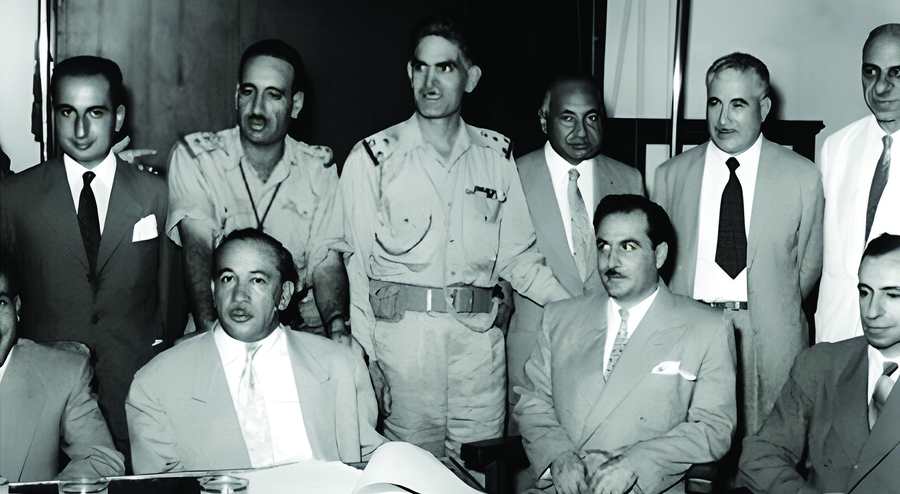
Arab nationalists, whom the British managed to suppress for a long time, destroyed the kingdom with a coup in 1958 and declared the republic.
Egypt
Egypt, which unites West Asia and Africa, is one of the region’s most important countries with its geography, history, and central position among the Arabs. Egypt preserved these characteristics within the Turkish Ottoman state as well. Egypt connected the Turks with Africa and the Indian world through the Red Sea. In the 1878 Berlin Congress, the British imperialists allegedly seized Egypt and Cyprus temporarily as a price for supporting the Ottoman Empire. In World War I, they used Egypt as their main base for regional conflicts. Arab sources confirm that the Turkish national awakening shook Arab intellectuals.
The awakening in Egypt developed parallel to that in Türkiye. Saad Zağlul Pasha, who rose from the peasantry, defying the British in 1881-82, made attempts for independence. With the approach of peace in 1918, the nationalists became active again. The WAFD Party was formed at this time. Saad Zaglul and other leaders were once again arrested. The arrest sparked a bloody riot. The city
of Cairo and some centers fell into the hands of revolutionary committees (Nehru, 2016:786Nehru, P. C. (2016). Dünya Tarihi-Kesitler. (Trans. C. Akalın). İstanbul, Türkiye: Kaynak Yayınları.). Then protesters changed tactics and switched to passive resistance. When the actions were successful, the “partial independence” granted by the British government in 1922 was proposed to Egypt. Egypt rejected it because London was putting forward conditions against partial independence.
After a while, power was transferred to King Faruk with the new Constitution imposed on Egypt, and the British continued their activities and interventions.
Gamal Abdel Nasser and Arab Nationalism
Gamal Abdel Nasser was born on January 15, 1918, in a poor neighborhood of Alexandria, where his father was a post office worker. He was named Gamal (Cemal, in Turkish) after the Ottoman governor of Syria, Cemal Pasha.
While serving in Sudan, he founded the secret Free Officers organization to end British rule and kingdom rule, together with three officers (Zekeriya Muhyettin, Abdulhakim Amir, and Enver Sadat) whom he befriended.
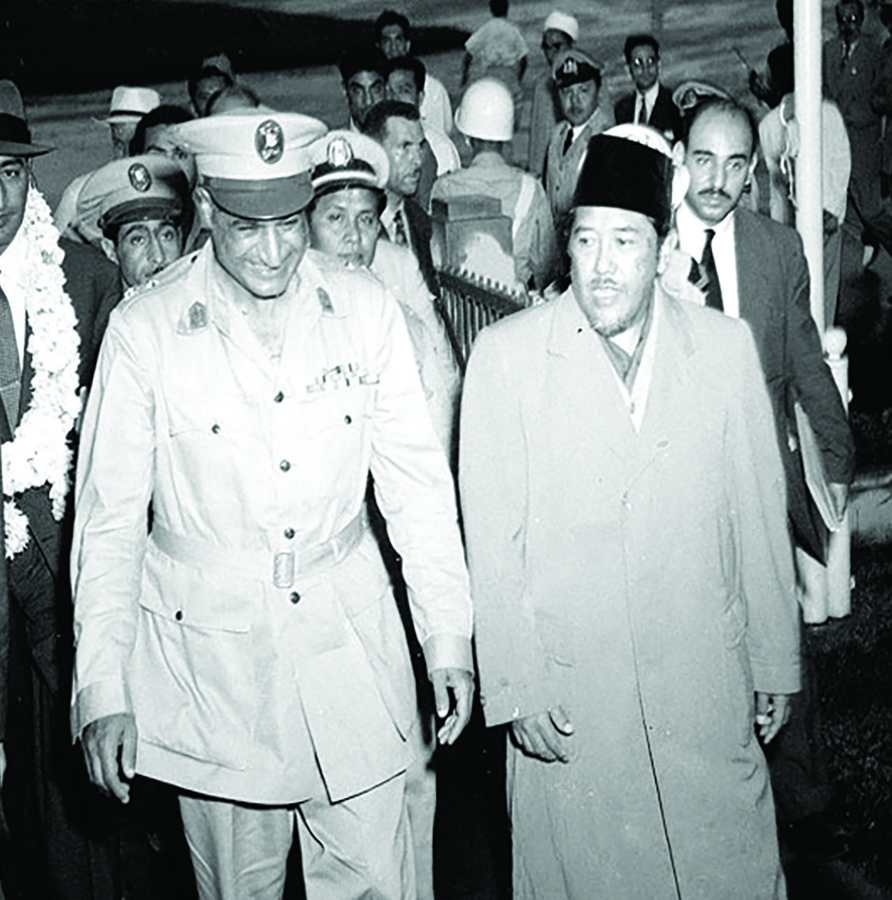
The Free Officers junta seized power in a bloodless coup on June 23 1952, and overthrew King Faruk. Power passed into the hands of the Revolutionary Command Council under Nasser. In June 1953, the Republic was proclaimed, and a treaty was signed with Britain about evacuating the Suez Canal.
During his presidency, Gamal Abdel Nasser initiated a series of radical reforms in the country. He started with land reform. When the loan request for the dam designed to be built in Aswan was rejected by the US and UK, he nationalized the Suez Canal, which was under British control. The expropriation of other British and French companies followed the takeover of Suez.
Britain, France and Israel launched a joint military operation against Egypt. Israel attacked Egypt. British and French air forces bombarded Egyptian airfields. The crisis ended with the United Nations’ decision to cede control of the Suez Canal to Egypt. Nasser consolidated his power. He became respected as the leader of the Arab world. The Non-Aligned Movement, which he led with Nehru and Tito, was very influential in the second half of the 20th century.
Gamal Abdel Nasser is Mustafa Kemal of Arab world.
Algeria
Located in the middle of the North African coastline, Algeria is the most populated of the North African countries, with a population approaching 45 million. Algeria’s past is intertwined with the Umayyads, the Mamluks, and the last 500 years of history with the Turks. The calendars show the year 1830 when the Algerian province, which was connected to the Ottoman Empire by Turkish sailors in the 1530s and ruled by the Turkish-origin “Dayı”⁴ sent from the center, namely Istanbul, was torn from the Ottoman lands by the French colonial administration.
Due to the revival of Arab Nationalism after the First World War, especially after the Turkish and Soviet Revolutions, Arab nationalism started to rise in Morocco, Syria, Egypt, and North Africa. French/Western sources have always sought the influence of the French left at the root of this rise. Even a superficial study reveals that the Turkish Revolution is the main source of inspiration for the struggle for nationhood in Algeria, although the French Left has a share. Haji, one of the pioneers of local nationalism, states that the idol of the national awakening was Mustafa Kemal Pasha.
During the First World War, the colonial powers took action against the “Sick Man”, that is, the Ottoman state, which held the Arab Near East (Maşrik), which includes Palestine. Then the Turkish national struggle began. Stating that Türkiye was discussed in every corner at Telemsen at that time, Mesali El Hac describes the happiness he felt when he received the news of victory from Anatolia with these words: “Mustafa
Kemal Pasha’s military achievements had great repercussions in the Islamic world, they encouraged the people. We admired the photographs of Turkish soldiers and Mustafa Kemal that we saw in the newspapers, and we cut these pictures and wore them like a magic talisman" (Gökalp & Georgeon, 2007:178Gökalp, İ. & Georgeon, F. (2007). Kemalizm ve İslam Dünyası. Kaynak Yayınları.).
In 1927, Messali El Hacı developed the following program with his friends:
- Independence of the three North African countries
- Distribution of land to the Fellahs (poor Arab peasants)
- Creation of a national assembly based on universal suffrage
- Priority to the Algerian state in the public services (Banking, mining, railways, ports) it holds (Gökalp & Georgeon, 2007Gökalp, İ. & Georgeon, F. (2007). Kemalizm ve İslam Dünyası. Kaynak Yayınları.).
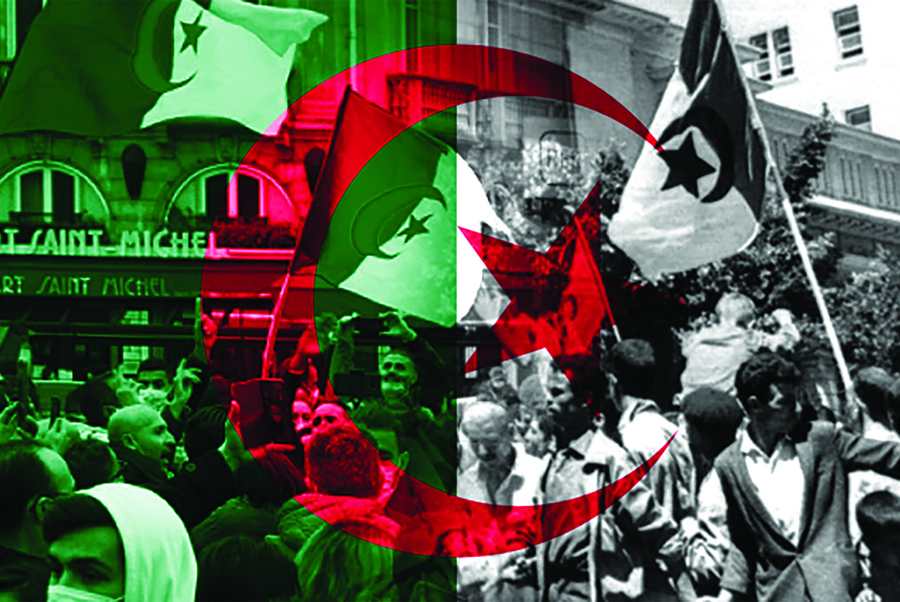
The Algerian People’s Party was established in 1937 as a continuation of the Mesali El Hacı’ movement. The period was the rule of the moderate Popular Front in France. The Popular Front took a softer approach to anticolonial movements. The Algerian flag was waved on the streets of Algeria for the first time.
During World War II, when France was defeated in front of Germany and the country came under the rule of the Vichy Regime, the “homeland defense” discussions intensified in France.
After World War II, the liquidation process of colonialism created great dynamism in Algeria. The nationalist trend led by Ferhat Abbas and the Islamist trend of Sheikh Abdulhamid Bin Badis united under the roof of the National Liberation Front. Front lead the Independence Movement to victory after bloody conflicts. Charles de Gaulle, who formed a government with wide powers due to the crisis, turned to find a political solution to the problem. The Republic of Algeria was proclaimed, and France was expelled.
It is evident from Mesali Hac's notes, who first raised the flag of independence in his country, that the Turkish Revolution has left deep traces, especially in Algeria and Tunisia.
Libya
Ottoman territory Libya was attacked by Italians, intending to expand in 1912. Some
Turkish volunteer officers went to Libya to organize the resistance, but the Turkish government dealing with the Balkan War could not protect Libya. Libya fell under Italian occupation. However, the Libyan people did not accept this invasion. The Libyan ruler Sheikh Sunusi took refuge in the Ottoman state and voluntarily participated in the Turkish national struggle (Erdaş, 2023Erdaş, S. (2023). Şeyh Ahmed Eş-Şerif Es- Senûsî (1873-1933). Atatürk Encyclopedia. Atatürk Research Center. adresinden alınmıştır.).
On the other hand, a patriot named Ömer Muhtar started a new resistance movement in Berka against Italy in 1922. He carried out successful raids with the guerrilla forces he gathered from the tribes living in Cebelü'l-Ahdar and inflicted heavy losses on the Italian forces. Despite the cessation of aid from Egypt and Syria, he continued his resistance with the help of the villagers until 1931. On September 11, 1931, he was wounded in a battle and was taken prisoner by the Italians. Sentenced to death by a war tribunal headed by the Italian general Graziani and hanged in Saluk. (Kavas, 2007Kavas, A. (2007). Ömer el-Muhtar. TDV İslam Research Center. adresinden alınmıştır.).
Echoes of Turkish Victory in the Oppressed Countries
The Turkish Revolution is the first example in which a country defeated in World War I tore up the agreement imposed by the victors. In this respect, it created a shock in the international arena.
The reactions of the world of the oppressed rose after the Great Victory and the
Proclamation of the Republic.
The turning point in the War of Independence was the Great Offensive. Nehru describes his feelings after the Battle of Sakarya as follows:
“I remember very well how delighted we were when we heard about Mustafa Kemal’s great expressed struggle against the Greeks. I mean the war he won in Afyonkarahisar in August 1922. Many of us were in the Lucknow
District prison, and for the victory of the Turks, we decorated our prison barracks from right and left with whatever we could find, and we tried to light up that evening, albeit in a dim way" (Nehru, 2016:51-52Nehru, P. C. (2016). Dünya Tarihi-Kesitler. (Trans. C. Akalın). İstanbul, Türkiye: Kaynak Yayınları.).
Muslims and nationalists worldwide, including Azerbaijan, Morocco, Tunisia, Algeria, Kenya, and Croatia-Bosnia, celebrated Turkish revolutionaries through telegrams (Şimşir, 2009:216Şimşir, B. (2009). Doğu’nun Kahramanı Atatürk. İstanbul: Bilgi Yayınevi.).
Declaration of the Republic
The victory of the National Struggle should be welcomed with great joy, especially by the oppressed, by the people who suffered greatly from the persecution of the Great Powers. Equally important is that Türkiye overthrew the sultanate and started to build a republic. Upon the proclamation of the Republic, the Indian Caliphate Central Committee stated the following in its message to Gazi Mustafa Kemal dated November 13 1923:
“We regard the establishment of the Republic as a great honor and respect for the progress of Islam… Indian Muslims recognize the Republic of Türkiye as the hope of Progress-i Islam” (Şimşir, 2009:228Şimşir, B. (2009). Doğu’nun Kahramanı Atatürk. İstanbul: Bilgi Yayınevi.).
The Turkish Republic was the second Republic in Asia after the Chinese Republic.
The proclamation of the Republic was welcomed not only in the world of the oppressed but also by Western countries with the peace and tranquility it brought to the region.
M. Kemal Atatürk did not hesitate to heal the wounds. After the Lausanne Peace, he extended his hand to Greece. As a result, Greek Prime Minister Venizelos and Ataturk were nominated for the Nobel Peace Prize.
The Sadabat Pact signed between Türkiye- Iran-Iraq-Afghanistan with the efforts of Atatürk in 1937 brought peace to a geography that was turned into a bloodbath by the British-French imperialists, and West Asia turned into a lake of peace on the eve of the upcoming world war.