Since the 1980s, with the implementation of the policy of “Reform and opening up”, China’s development has attracted the attention of the whole world. It had become the world’s largest developing country, with the possibility of overtaking the United States in economic terms. For some time now, a number of hypotheses have been put forward about the relationship between the dominant power and the developing countries. For example, American political scientist Graham Allison put forward the Thucydides Trap Theory (Allison, 2017Allison, G. (2017), Destined for War: Can America and China Escape Thucydides’s Trap?, Chen Dingding and Fu Qiang trans., Shanghai: Shanghai People’s Publishing House.) and American political theorist Joseph S. Nye, Jr presented the “Kindleberger Trap Theory” (Nye. Jr, 2017Nye, J. Joseph, S. (2017). The Kindleberger Trap. Project Syndicate. Jan 9, 2017.).
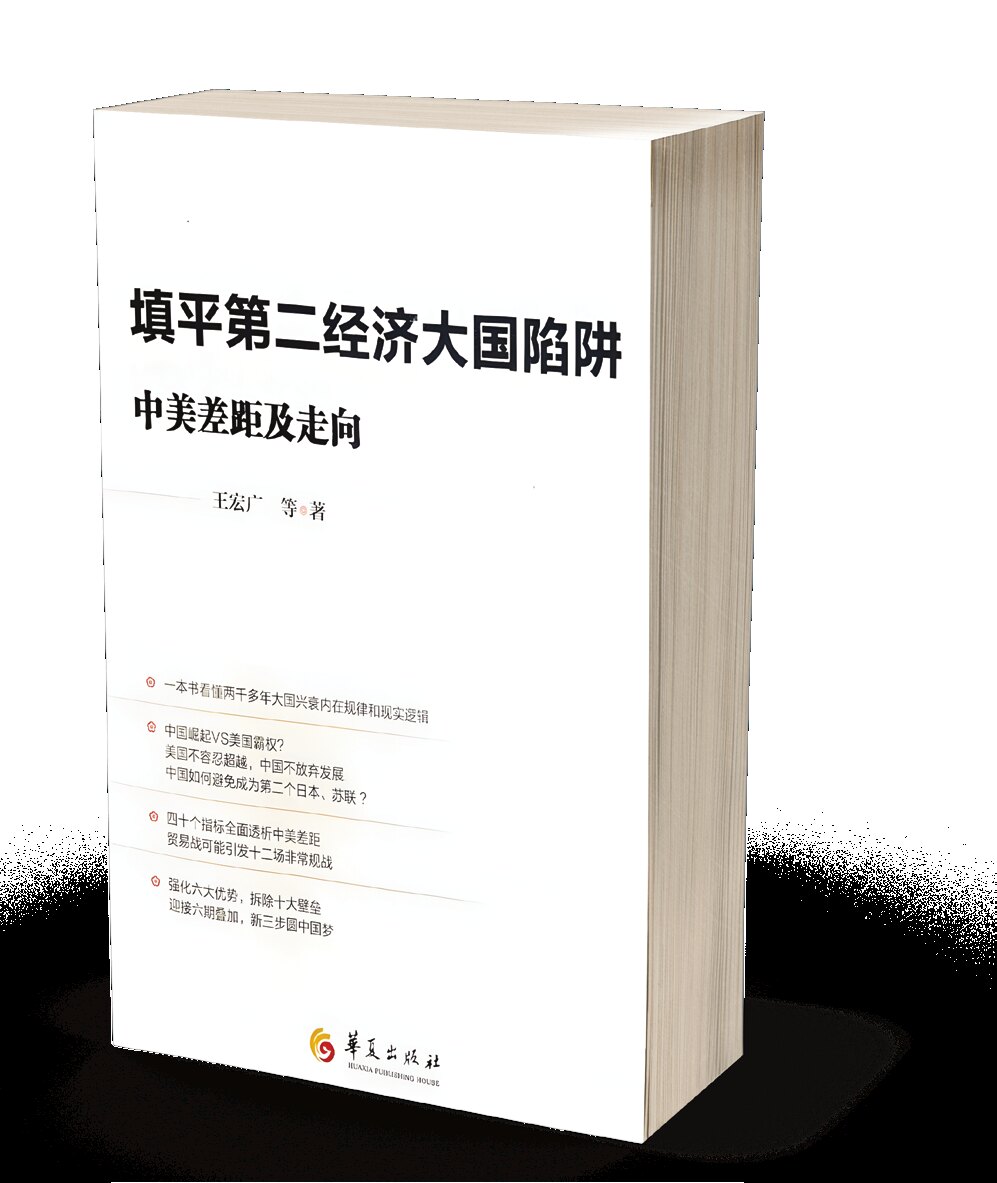
Any theory is a theoretical essence abstracted from the proposer’s observation of social phenomena. It is influenced by the political, economic, and cultural conditions of the society in which the proposer lives. Therefore, when studying the issue of Sino-American competition, the observation and summary of Chinese scholars on Chinese society should be equally emphasized. Among them, Prof. Wang Hongguang advanced the theory of Trap For the Second Largest Economy , which is unique in perspective, clear in logic, rigorous in argumentation and supported by a large amount of data. It enables us to see the root of the trade friction between the United States and China, as well as the nature of the Sino-US science and technology war. This book China-U.S. Gap and Its Destiny: Breaking the Trap For the Second Largest Economy establishes a systematic and comprehensive exposition of this theory. In addition, the author Prof. Wang Hongguang is one of China’s top biomedical talents and a special expert of the National Committee of the Chinese People’s Political Consultative Conference (CPPCC) for participation in politics. His suggestions and recommendations in the field of science and technology have been adopted by the government many times. Given the author’s special status, his thoughts and conclusions represent the judgment of the Chinese government’s think tank and are highly consistent with China’s strategic direction.
What’s the Trap for the Second Largest Economy?
Since the US became the first economic power in 1890, the second economic power changes almost every 16 years. Britain, Germany, France, the Soviet Union, Japan and other former second largest economies have all lost the second place and fallen towards economic decline. Based on this pattern, the author defines “the Trap for the Second Largest Economy” as the pattern in which the second economic power, after a certain period of development, loses its status due to economic recession for a variety of reasons.
According to the book, the reasons for the successive decline of “the second largest economy” can be broadly categorized into three types. First, the second power’s own decision-making errors. Second, the largest power’s successful containment. Third, external factors. If the biggest power and the second power are regarded as the trap setter and the trap defender respectively, then the trap setter will continue to promote power strategy, gunboat strategy, geo-politic strategy. It has also developed six means to maintain the hegemonic position. They are: to promote the idea “human rights over sovereignty”, take hold of monetary system, make use of international rules, impose trade wars, launch warfare, and seize technological talent. If the trap defender lacks awareness, or rushes into ill decision, it would be caught in the snare. For instance, Germany waged World War two times and ended up becoming consumed by it. The Soviet Union’s ideology collapsed and lost without a fight. Japan lacked strategic vision and willingly became the political, military and diplomatic attachment of United States. Besides that, the European Union is institutionally, financially and culturally aligned with the US instead of standing alone.
How did China become the second largest economy?
Over the past 40 years, China has created an economic miracle. Zhu Tian pointed out that it is normal for China’s economic growth rate to be higher than that of developed countries. Since it is convenient for China to borrow and learn many economic policies directly rather than spare time to research and develop them thoroughly once again. The true mystery of China’s economic growth is the fact that China’s economic growth rate is much higher than that of other developing countries (Zhu, 2017Zhu (2017). The source article does not provide a separate full bibliographic entry for this citation.). Giovanni Arrighi stated that China will replace the United States as the world’s hegemony and lead the world on a different, hybrid, non-capitalist, market-based development path (Arrighi, 2007Arrighi, G. (2007). Adam Smith in Beijing: Lineages of the Twenty-first Century, London: Verso.). Whether China will replace the United States is still up in the air, but its economic development is following a different path to that of the West, with the emergence of many distinctive denationalization practices.
Generations of economists have been looking for the secret of China’s economic take-off. For instance, Liu Deqiang, who presents that the family planning policy, the public ownership of land, the Hukou (household registration) system, the presence of Hong Kong, Macao, Taiwan districts, overseas Chinese, and the huge size of the population are the exclusive recipes for China’s development (Liu, 2022Liu (2022). The source article does not provide a separate full bibliographic entry for this citation.). Song Ligang and Zhou Yixiao, who argue that the dividends of reform, savings, and globalization have played a determining role in China’s economic development.(Song, L.G.& Zhou, Y.X.) Giovanni Arrighi, who argues that the roots of China’s rise lie in the Cold War period social and political reconstruction under the communist system, also in the achievements of the Chinese empire in terms of state-building and national economic construction before its subordination to the Euro-centric interstate system (Arrighi, 2022Arrighi (2022). The source article does not provide a separate full bibliographic entry for this citation.).
Chinese economists have expressed different explanatory perspectives. Steven N.S. Cheung brought about the “County-level Government Competition Perspective”. Due to the fact that county governments are in charge of land use rights and are in fierce competition in attracting resources, it is conducive to reducing corruption and expanding the benefits of economic development (Cheung, 2009Cheung (2009). The source article does not provide a separate full bibliographic entry for this citation.). Lu Feng presented the “Great Power Infrastructure Perspective”, which indicates that a power network that organizes Chinese society politically, economically, militarily and ideologically drives China’s sustained economic growth. Such network also determines China’s need to maintain its economic independence and launch industrialization (Lu, 2022Lu, F. (2022). Why Can China’s Economy Grow. Social Sciences in China, 2(1).). Zhu Tian proposed the “Confucianism Thoughts Perspective” (Zhu, 2015Zhu, T. (2015). Is China’s economic development advantage still there? Guancha. Retrieved August 12, 2024, from). Max Weber famously asserted that the Protestant ethic led to the rise of capitalism in Western Europe.
In the same sense, the Confucian culture, which emphasizing education and the virtue of thrift and frugality ensured the accumulation of both physical and human capital, as evidenced in many East Asian countries/regions that emerged economically in the post-war period. In addition, in the process of economic reform, there was also some pragmatic political wisdom such as “treating special issues specially” (Bai, Xie, Song, & Wang, 2022Bai, C., Xie, C., Song, Z., Wang,X. (2022). ‘Treating Special Issues Specially’, the Informal Institutional Basis of China’s Economic Growth (paper presented at “International Symposium on The Origin and Model of China’s Economic Emergence”). Singapore, September 17, 2022.), “Treat the old man with old way, and treat the new man with new way” (Lin, 2022Lin, J. Y. (2022). The Twists and Turns and Rise of China’s Economic Development from an Endogenous Structural Perspective (paper presented at International Symposium on The Origin and Model of China’s Economic Emergence), Singapore, September 17, 2022.). These practices have led to a stable transition to economic reform and avoided potential chaos. In his follow-up work, Gap Economics, published in 2020, Professor Wang summarises China’s economic code as “two hands, two feet.” That is, fight with two hands of government and market mechanisms while walking with two feet of balanced and differentiated development (Wang, 2020Wang, H. (2020). Gap Economics: Gaps and Trends in the Economies of China, the United States, and the Provinces and Regions. Beijing: Science and Technology Literature Publishing House.).
This book analyses this issue in more detail. First, China’s economic development has entered an era of “multiple overlapping stages,” including the mid-to-late stage of industrialization, the middle stage of information technology, the early-mid stage of urbanization, the accelerated stage of rural revitalization, and the early stage of the new scientific and technological revolution. This is seizing an entirely new historical opportunity. Secondly, unlike Japan, which is not independent in terms of sovereignty and diplomacy, and has no economic autonomy, China has six unique advantages. The systemic advantage of socialism, which concentrates on doing great things; the institutional advantage of the combination of the market’s “invisible hand” and the government’s “visible hand”; the purchasing power of nearly 1.4 billion people; the most complete industrial system in the world; a high-quality labor force of more than 100 million college and university graduates; foreign exchange reserves of 3 trillion U.S. dollars. At the same time, China also possesses the valuable experience of reform and opening up. Over the past 40 years, China’s GDP has realized a more than 200-fold growth and has shown a momentum of continuous growth.
In other words, compared with Germany, Japan, the European Union and other former second economic powers, China’s rising path and developing measure is totally different, hence it stands a great chance to jump out of the trap for the second largest economy. What’s more, in all probability it could prevent the United States from repeating the tried-and-true “old tricks” that it has used for a century to contain those who came after it.
What is the current status of China-United States power and how big is the gap?
The current gap between China and the United States is very similar to that of Japan and the United States in the 1980s. For example, both China and Japan’s economic growth rate was soaring, keep around 9.8% for many years in a row, and the total economic volume is expected to exceed that of the United States; both started to suffer from America’s obvious curtailment when their GDP reached about 70% that of the US (Japan’s GDP equaled 71% of U.S. GDP in 1995 and China’s GDP equaled 66% of U.S. GDP in 2018); became the US’s largest trading partner as well as creditor. Through political assimilation and intervention, military occupation and protection, diplomatic alliance and subordination, economic support and then containment, cultural penetration and assimilation, scientific and technological support, and then blockade, the US forced Japan to adopt the US system, play by US rules, conform to US culture, and accept the US military presence. It successfully and effectively curbed Japan’s economic growth and secured its position as the number one economic power (Wang, 2020Wang, H. (2020). Gap Economics: Gaps and Trends in the Economies of China, the United States, and the Provinces and Regions. Beijing: Science and Technology Literature Publishing House.).
Today, China is facing the same situation as Japan did back then. If the United States’ strategy towards Japan is to “acknowledge the system and curb the economy”, then towards China it is to “deny the system and curb development”. In order to contain the rise of China, the United States has taken a series of escalating containment measures. They are: system war, institutional war, trade war, science and technology war, currency war, war on talent, cyber war, food war, oil war, biological warfare, space war, military warfare. Above are 12 kinds of unconventional warfare to contain China, and the US has used more than half of them. Among them, trade war is the prelude, national power war is the goal, science and technology war is the essence, talent war is the core (Wang, 2020Wang, H. (2020). Gap Economics: Gaps and Trends in the Economies of China, the United States, and the Provinces and Regions. Beijing: Science and Technology Literature Publishing House.).
The US-China rivalry will cause a global earthquake. Based on the distribution of the world’s total economic volume before the U.S.-China trade war in 2018, China, Japan, and Germany account for a quarter of the world’s total economic volume, while the U.S. accounts for another quarter. In other words, with such a large volume, the trade friction between the two sides will essentially cause shocks to the trade and economic activities of the whole world.
Currently, the discussion on this issue can be divided into three perspectives. The first predicts that China will eventually overtake the US in a good or bad way, i.e., the “China threat/rise theory” school, such as The Tragedy of Great Power Politics and Global Game Change: How the Global Southern Belt Will Reshape Our World (Mearsheimer, 2014Mearsheimer (2014). The source article does not provide a separate full bibliographic entry for this citation.; Naisbitt, J. & Naisbitt, D.); the second is pessimistic about China, namely the “China collapse theory” school, represented by The Coming Collapse of China (Chang, 2001Chang (2001). The source article does not provide a separate full bibliographic entry for this citation.). The book systematically compares the two nations in terms of comprehensive national strength, economy, science and technology, education and other aspects with 40 indicators. Among which, 70% of the indicators of the United States are leading and 30% of the indicators of China are leading. However, China’s leading indicators are quantitative indicators, while the U.S. leading indicators are quality indicators. Furthermore, American indicators in education own an overall advantage. This is the biggest miss-distance for China to catch up with, and also the hardest.
What are the possible outcomes of the Sino-American competition, and what’s the possible future direction of international relations?
The international discussion regarding the final result of the Sino-US competition can also be roughly categorized into three kinds. It is either a lose-lose game, America’s victory or China’s victory. The standpoint this book holds are summarized as follows: First, the US will not tolerate transcendence and China will not give up development. The trade war will be a protracted war. The “Trap for the Second Largest Economy” can only be filled through the comprehensive national power struggle. Second, the United States development needs China’s market, while China’s development needs American technology. Cooperation results in win-win situation, while decoupling isn’t in the interest of either country. Third, the trade war is unfavorable to China in the near future, unfavorable to the United States in the long term, and always unfavorable to the world (Wang, 2020Wang, H. (2020). Gap Economics: Gaps and Trends in the Economies of China, the United States, and the Provinces and Regions. Beijing: Science and Technology Literature Publishing House.).
However, in the face of the challenge of China’s continuous rise, the attitude of the United States is also quite clear. First, it will not give up or relax its containment of China after the signing of any trade agreement. Second, no matter what the outcome of the election is, its next administration will not give up or relax its containment of China, due to the fact that containing China’s development has become a bipartisan consensus. Third, the United States will not allow China to overtake it, especially when China has a completely different ideology and path of development from its own (Wang, 2020Wang, H. (2020). Gap Economics: Gaps and Trends in the Economies of China, the United States, and the Provinces and Regions. Beijing: Science and Technology Literature Publishing House.).
In fact, both sides should recognize: China’s economic overtaking of the United States will not be a threat. China could surpass the United States in terms of economic output, but it will hardly surpass the United States in terms of per capita GDP (Wang H.G.& Zhang J. X.). China will remain the largest developing country, and it will not export its ideology or threaten U.S. liberal democratic values. On the contrary, excessive resistance to the inevitable trend of China’s rise will instead accelerate the decline of the U.S. economy. Sociologist Arrighi judges that “if the U.S.-centered world system eventually collapses, it will be largely because of U.S. resistance to adjustment and adaptation. U.S. adjustment and adaptation to growing economic power in East Asia is a necessary condition for a non-catastrophic transition to a new world order (Arrighi, 2022Arrighi (2022). The source article does not provide a separate full bibliographic entry for this citation.)”.
In recent years, the world economic, scientific and technological landscape has undergone major changes as a result of the epidemic. The pause button of globalization is pressed, the economic depression has become a foregone conclusion. “Neoliberalism is dead”, it is already a major trend for the government and the market to use two “hands” together. Loose policy give birth to the risk of financial crisis, the world economic war seems inevitable (Wang, 2020bWang, H. (2020). Gap Economics: Gaps and Trends in the Economies of China, the United States, and the Provinces and Regions. Beijing: Science and Technology Literature Publishing House.).
Under the influence of these factors, there are three possible endings to the US-China competition. The first scenario is to maintain the status quo, with China gradually rising, and China’s GDP will overtake that of the US around 2030. The second scenario is that the U.S. grows fast and China grows slow. The U.S. succeeds in containment by subverting the existing trade pattern or trade system so that China’s exports are blocked, subverting the current financial system so that China’s currency is devalued, and imposing a high degree of technological embargo on China to curb the upgrading of the latter’s industries. In this scene, China’s pace of catching up with the U.S. is prolonged after 2030, or even until around 2040. The third scenario is a failure of containment, with the rise of China and the decline of the United States, ushering in a century of dramatic changes in the world landscape. This would trigger a world economic crisis, destabilize the U.S. monetary system (Wang, 2020bWang, H. (2020). Gap Economics: Gaps and Trends in the Economies of China, the United States, and the Provinces and Regions. Beijing: Science and Technology Literature Publishing House.).
This book was written in 2018, and despite the fact that almost six years have passed since then, the judgments on various events are still very accurate. Some of the prophecies are being fulfilled one by one. The downside is that some of the short-term judgments do not take into account of unexpected factors such as the deterioration of the global economic situation caused by the epidemic. For example, in Chapter 7, the author mentions that “China is expected to cross the ‘middle-income trap’ in about five years”. Nevertheless, even at the slowest rate calculated in the book (i.e., 2026), there is still a risk that this goal will not be accomplished according to the current progress. According to the “Statistical Bulletin of the People’s Republic of China on National Economic and Social Development in 2023”, the annual GNI in 2023 was 1,251,297,000,000 yuan, with a national population of 1,409,670,000 at the end of the year, China owns a per capita GNI of about 88,744 yuan/$12,300 (NBS, 2023National Bureau of Statistics (NBS). (2023). Statistical Bulletin of the People’s Republic of China on National Economic and Social Development in 2023, Beijing: February 29, 2024.). According to the latest data, the World Bank’s threshold for high-income countries in 2024 is $14,005 (World Bank, 2024World Bank. (2024). World Bank country classifications by income level for 2024-2025. Retrieved August 10, 2024, from), there’s still a difference of about $2,000. In fact, since the middle-income country range is $1,145-$14,005, an economy that has just entered the ranks of the middle-income countries must increase more than 10 times before it can reach the high-income level. Therefore, it is indeed a difficult process to climb from a middle-income to a high-income country.
However, if there are no other unforeseen events, China’s crossing of the “middle-income threshold” and entering the ranks of high-income countries is still a high probability event, even if it happens a little later than predicted in the book.
In addition, after the publication of this book in 2015, Prof. Wang Hongguang and his team have published a series of books centered on China’s national strategy, and these new works have further elucidated and clarified the issues raised previously. Apart from that, the team have continuously supplemented the “Trap for the Second Largest Economy” theory with latest data and progress. For example, China’s Food Security: Strategies and Countermeasures, published in 2020, revisits a comparison of 40 indicators of comprehensive national power between the United States and China, with the United States leading in 68 percent of the indicators and China leading in 32 percent of the indicators. This is slightly different when the book was written in 2015, but China still dominates the quantitative indicators. Another example is Gap Economics: Gaps and Trends in the Economies of China published in 2020, which summarized the solid steps taken by China to fill the trap of the second economic power up to that time. The first step is to do a good job of its own development, support private enterprises, and stabilize the private economy. The second step is to correctly manage the relationship between China and the United States, press the pause button on the tax hike and strive for a win-win situation. The third step is to take the “a Community with a Shared Future for Mankind” as the general direction of building a new model of major-country ties. China and the United States should seek common ground and interests, develop together, so as to make new contributions to the world’s economic prosperity and human civilization. (Wang, 2020Wang, H. (2020). Gap Economics: Gaps and Trends in the Economies of China, the United States, and the Provinces and Regions. Beijing: Science and Technology Literature Publishing House.)
Overall, the book is a deeply laid work, and the author’s team still has several themes planned unpublished. The team have been constantly looking back at the “the Trap for the Second Largest Economy” at different points in time. It is a well-timed masterpiece.