Introduction
The Bandung Conference, conducted in April 1955, invigorated the Algerian struggle spearheaded by the National Liberation Front (FLN) against French colonial domination by seeking robust international diplomatic backing to attain national sovereignty. During the Soummam Congress in August 1956, the wartime FLN established its ideological and doctrinal tenets, which repudiated any affiliation with the West, the Eastern Bloc, or other nations, in keeping with the ethos of the Bandung Conference. Following its independence in July 1962, Algeria commenced the application of non-alignment principles by supporting liberation movements, primarily in Africa, to eliminate Western colonialism. Algeria gradually sought to instill a new ethos in the Non-Alignment Movement, transcending mere formal pronouncements and the politics of passive neutrality.
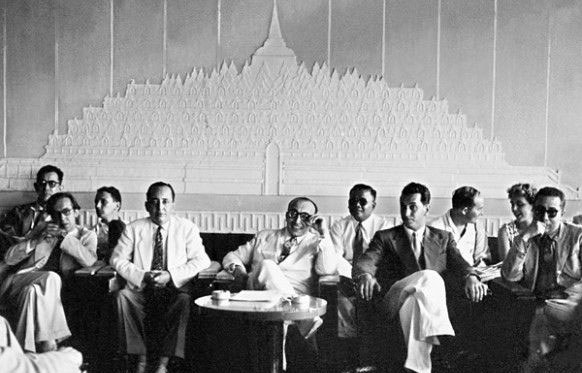
In response to the allegations from the French colonial authorities that the Algerian revolution was advancing the interests of a foreign power, the wartime FLN declared in its Soummam Charter, adopted in August 1956, “The Algerian revolution is a patriotic struggle rooted unequivocally in national, political, and social foundations.” It pays allegiance neither to Cairo, London, Moscow, nor Washington” (Algerie Presse Service, 2024Algerie Presse Service (2024). Révolution de libération: il y a 70 ans, la Proclamation du 1er Novembre 1954, Retrieved July 1, 2024 from). Initially, the FLN affirmed the autonomous nature of its liberation struggle and its dedication to non-alignment principles, inspired by the ethos of the Bandung Conference, which it participated in as an observer. The Chinese leader Zhou Enlai specifically mentioned the Maghreb nations that were subjected to French colonial rule among the peoples enduring colonial oppression. In a heartbreaking statement to the plenary session of the Bandung Conference, he asserted, “All oppressed peoples are entitled to self-determination and must not endure repression.” Nonetheless, it is imperative to recognize that individuals advocating for independence in Tunisia, Morocco, and Algeria persist in facing oppression through violence (Quotidien du Peuple, 1955Quotidien du Peuple (1955). April 20-21, Retrieved July 1, 2024 from).
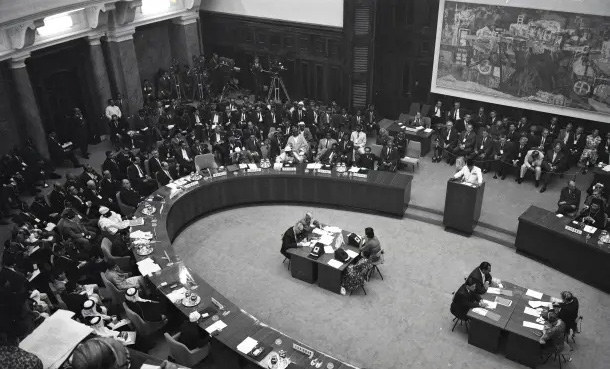
During the Bandung conference, the FLN delegation presented a wealth of nuanced arguments and tactics to ensure the voice of the Algerian populace resonated with the influential leaders of the Afro-Asian bloc, including Jawaharlal Nehru (India), Ahmed Sukarno (Indonesia), Gamal Abdel Nasser (Egypt), Josip Broz Tito (Yugoslavia), and Kwame Nkrumah (Ghana). M’hamed Yazid, an FLN delegate at Bandung, requested that the sound system operators intermittently announce to the plenary session, urging members of the FLN delegation to convene in room X, thereby signaling the FLN’s presence at the Bandung conference and drawing the attention of the participants (Bereksi, 2020Bereksi (2020). The source article does not provide a separate full bibliographic entry for this citation.). Hocine Ait Ahmed, the leader of the FLN delegation, effectively advocated for the independence of the Algerian people, despite the Algerian delegation’s status as an observer party at the conference, which precluded them from addressing the plenary session or engaging in general debates.
The Bandung Conference committed to “maintaining the territorial integrity and sovereignty of all nations, endorsing the equality of all nations and races, supporting national liberation movements against colonial powers, and advocating for non-aggression and non-interference in international relations.” This commitment resonated with the ethos and ideals of the Algerian War of Liberation, as the articulated principles aligned with the GPRA’s declarations on foreign policy and the doctrinal foundations of Algeria’s diplomacy throughout the protracted and arduous struggle for independence achieved in July 1962. This war resulted in one and a half million fatalities, hundreds of thousands of refugees enduring poor conditions in Tunisia and Morocco, two million internally displaced individuals, numerous orphans, and the devastation of utilities and essential infrastructure.
Bandung was the inaugural significant achievement of Algerian diplomacy, as numerous Afro-Asian nations endorsed the Algerian liberation struggle, particularly by facilitating the inclusion of the Algerian issue on the agenda of the United Nations General Assembly (UNGA) in 1957. The diplomatic backing from Afro-Asian nations for the Algerian cause undermined France’s assertion that the events in Algeria since November 1954 constituted not a liberation struggle but rather “merely internal events,” so exempting them from UN discourse. The FLN ultimately dispatched representatives to several nations in Africa, Asia, Latin America, and Scandinavia to solicit diplomatic backing, financial assistance, and weaponry. In September 1958, it established the Provisional Government of the Algerian Republic (GPRA) to represent the Algerian populace internationally and solicit support for its national cause. All Arab nations that were sovereign at that time swiftly extended recognition to the GPRA, while progressive Asian countries, notably China, along with Ghana’s Kwame Nkrumah and Guinea’s Ahmed Sekou Touré, subsequently did the same (Charpentier, 1959Charpentier, J. (1959). La reconnaissance du G. P. R. A, Annuaire Français de Droit International, 5, pp. 799- 816, Retrieved July 1, 2024 from).
The GPRA, representing a liberation movement, articulated its revolutionary position during the 1961 meetings in Tunis and Casablanca with Egypt, Ghana, Guinea, Mali, and Morocco, collectively referred to as the “Casablanca Group,” which was critical of Western hegemony and embraced the principles of Africanism. The GPRA declined to participate in the “Monrovia group,” composed of several African nations, including Nigeria, Senegal, and Cameroon, which rejected the establishment of an African Confederation and advocated for swift and profound continental integration. Notwithstanding the Cold War’s impact on Africa, Algerian diplomacy effectively garnered support from numerous African nations for its objectives and participated in efforts to rejuvenate Pan-Africanism, aiming to influence Africa’s destiny via solidarity, shared interests, and the principles of political unification.
A former Algerian guerrilla leader, Azzedine, elucidated that the FLN had promoted resistance movements in Senegal, Niger, Nigeria, Côte d’Ivoire, and the Portuguese colonies, spanning from Bamako to Accra and Conakry: “In Côte d’Ivoire and Nigeria, comparatively structured and advanced student unions maintained connections with the FLN. Senegal, namely the PAI (Parti Africain pour l’Indépendance), extended a harsh reception to General De Gaulle by expressing their solidarity with the Algerian revolution and Algeria’s independence.
We maintained a relationship with Niger, Sawaba (a movement against local tribal chiefs and colonial troops, led by Djibo Bakary), Osman and Sekou, the leaders of the young groups, particularly with Djibo Bakari, the unequivocal leader” (El Moudjahid, 2023El-Moudjahid. (2023). La Révolution Algérienne et l’Afrique, May 30, Retrieved July 1, 2024 from).
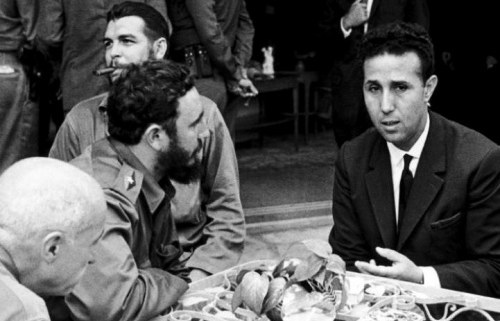
Frantz Fanon’s services, as a native of the French province of Martinique, significantly garnered sympathy for the Algerian cause from African nations, alongside the endeavors of Boualem Oussedik, the GPRA representative in Guinea-Conakry. Fanon represented the GPRA in Ghana after his tenure as a psychoanalyst at a hospital near Algiers and as a critic of colonial subjugation. He was instrumental in the backing provided by Ghana and Mali to the FLN independence fighters. This backing resulted in significant discord between the Malian president and France and conflicts with Léopold Sédar Senghor inside the Federation of Mali (Modibo-Keita site, 2024Modibo-Keita site. (2024). Soutien aux mouvements de libération nationale, Retrieved July 1, 2024 from). An infrequently promoted episode included the assistance provided by Fidel Castro to Algeria. In June 1961, Cuba was the sole nation in the Western Hemisphere to acknowledge the GPRA, and in January 1962, it supplied 1500 weapons to the FLN base in Oujda during the conflict. The vessel, “Bahia de Nipe,” returned to Cuba carrying 78 injured Algerian liberation fighters and 20 children; the majority of them were orphans (Lamrani, 2018Lamrani, S. (2018). Soutien à l’indépendance de l’Algérie, Le Monde International, Octobre 18, Retrieved July 1, 2024 from).
The GPRA attended the summit in Belgrade, Yugoslavia, in September 1961, which marked the inception of the Non-Aligned Movement to implement the ideals established at Bandung in 1955. The Belgrade Declaration delineated the principles governing the Non-Aligned Movement:
- Non-affiliation with any military or ideological bloc led by a Great Power,
- A pledge to equality in relations among nations, irrespective of size or power,
- The entitlement of each nation to self-determination, and
- The eschewal of force as a means of resolving international conflicts (Rubinstein, 1970Rubinstein, Z. A. (1970). Yugoslavia and the Nonaligned World. Princeton, N.J: Princeton University Press.).
While the participants at the Belgrade Summit were resolute in avoiding East/West confrontation, disagreements regarding the interpretation of neutrality and non-alignment emerged among the prominent members of the Non-Alignment Movement during and after the summit. The disputes contrasted those who declined to align in the Cold War with those who advocated for leveraging the Non-Aligned Movement’s influence and capacities to redefine the global order and contest the balance of power characterized by two opposing blocs. The division pertained to political and ideological conflicts between nations favoring liberal market economy values aligned with the Western capitalist bloc and those advocating for a socialist developmental trajectory aligned with the Eastern bloc.
Following the nation’s independence, Algerian diplomacy not only revitalized but also elevated with great dedication the revolutionary ideals it had developed during its struggle against French domination. During the meeting convened in Tripoli in June 1962, just days prior to the declaration of independence in July 1962, the National Council of the Algerian Revolution (CNRA) resolved to establish “a modern state founded on democratic, anti-imperialist, and anti-feudal principles, achievable solely through the initiative, vigilance, and direct oversight of the populace” (Déclaration, 1962Déclaration du Congrès de Tripoli (1962), Projet Programme, June, Congrès_Tripoli.pdf.). The revolutionary spirit of the Algerian war of liberation persisted in independent Algeria, aiming to supplant the oppressive colonial regime with a popular political system committed to fostering the political emancipation and economic advancement of the Global South.
The “Mecca” of the Revolutionaries
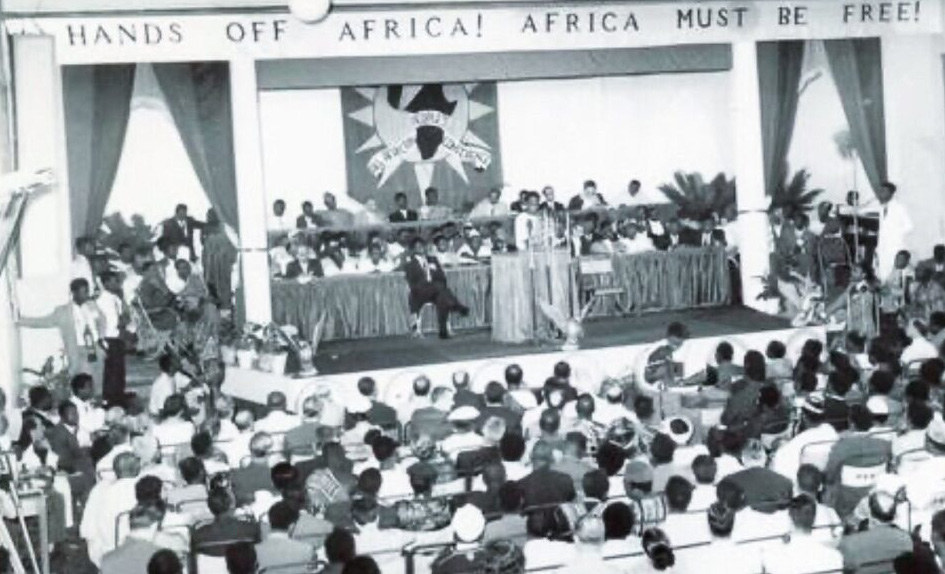
During a fervent address at the inaugural conference of the Organization of African Unity (OAU) held in Addis Ababa in 1963, Ahmed Ben Bella, the inaugural leader of independent Algeria, proclaimed, “African brothers consented to endure hardship for Algeria’s independence. Let us collectively consent to sacrifice ourselves, partially or entirely, to liberate those still subjected to colonial oppression and to ensure that African unity is not merely a hollow concept” (African Union, 1963African Union. (1963). Speeches and Statements made at the first Organization of the African Unity Summit, Retrieved July 1, 2024 from). In accordance with Ben Bella’s rhetoric, Algerian diplomacy asserted a “duty toward African brothers,” characterizing brotherhood not by blood or race, but by the intensity of revolutionary fervor and a shared history of suffering under colonialism (Bechiche, 2024Bechiche H. (2024). Home to Africa’s Guerrillas, Anti-Fascists and Liberators, New Lines Magazine, June 28, 2024, Retrieved July 1, 2024 from). The Algerian leaders established a connection between their experience as a colonized nation striving for independence and the obligation to promote global decolonization, especially in Africa. They established a connection between the post-independence construction of socialism to eradicate the adverse impacts of colonial heritage and the struggle for national sovereignty among global populations, even involving military conflict.
The Algiers Charter, enacted in 1964, proclaimed that “The Algerian War demonstrated that the alignment between liberation movements and peoples sharing a common adversary was not inherent.” To attain this harmony, it is essential to implement new concepts in international relations. The Algiers Charter encompasses the notion that the advancement of socialism in Algeria is interconnected with the struggles of other nations globally. The employment of armed conflict may be pivotal in attaining national sovereignty (Charte d’Alger, 1964Charte d’Alger. (1964). Retrieved July 1, 2024 from).
True to their revolutionary history, exemplified by a liberation struggle against colonialism, and attributing their nation’s independence to the solidarity notably demonstrated by Africa, the Algerian leaders offered consistent and diverse support to African nations still subjected to Western colonial domination.
Diplomatic support
Algeria provided official representation to several liberation movements in its capital, along with radio broadcasting capabilities and passports for its leaders and representatives. The Algerian Presidency established a committee for liberation movements, chaired by Djelloul Malaika, a seasoned veteran of the wartime Algerian Liberation Army. A Commission of External Relations inside the FLN addressed liberation groups, headed by former high-ranking officer Slimane Hoffman.
Algeria welcomed the leaders of African liberation movements through the organization of popular meetings, such as those dedicated to Samora Machel (The Front for the Liberation of Mozambique—FRELIMO), Sam Nujoma (Southwest African People’s Organization, Namibia—SWAPO), Robert Mugabe (The African National Union Zimbabwe—ZANU), and Agostinho Neto (Popular Movement for the Liberation of Angola—MPLA). All four of these leaders became the presidents of their countries after winning independence from Portuguese and British colonial rule and the South African mandate (Namibia).
Algeria endorsed liberation movements deemed popular and dedicated to eradicating colonialism from their nations without compromise or concession. This position aligned with the revolutionary ethos of the Algerian War of Liberation and the commitment to pursuing a socialist development trajectory post-independence. Consequently, Algeria distanced itself from liberation forces perceived as conciliatory towards colonial rulers or exhibiting pro-Western tendencies, such as Angola’s UNITA, led by Jonas Savimbi, or the National Liberation Movement of Angola (FLNA), headed by Holden Roberto.
The OAU Committee for Liberation, responsible for coordinating and supporting liberation movements, resolved in its July 1968 meeting in Algeria to allow the OAU Fund to extend financial assistance solely to those liberation movements that have demonstrated efficacy in combating colonialism in the field (Le Monde, 1968Le Monde (1968). Le Comité de libération de l’O.U.A. va s’efforcer de limiter les conflits entre mouvements rivaux, Retrieved July 1, 2024 from). This decision demonstrated Algeria’s considerable influence on the OAU Committee of Liberation’s directions.
With the question of Palestine emerging as the pivotal issue in Arab politics, particularly following the June 1967 conflict with Israel, Algeria sought to bolster the Palestinian struggle, recognizing it as a quest for liberation from colonial occupation, akin to Algeria’s own historical experience. Algerian diplomacy facilitated Arafat, the PLO leader, in addressing the UN General Assembly in September 1974, presided over by Abdelaziz Bouteflika, the Algerian Foreign Minister, and participating in the OAU summit session in Kampala in July 1975. In his address to the UN General Assembly, Yasir Arafat employed a poignant metaphor, stating, “I come bearing an olive branch in one hand and the freedom fighter’s gun in the other.” “Do not permit the olive branch to drop from my grasp” (Time, 1974Time (1974). Middle East: Guns and Olive Branches, November 25, Retrieved July 1, 2024 from).
Algeria augmented its support for global revolutionary movements, including the Movement for the Independence of the Canary Islands (MPAIGC) under Antonio Cubillo and the Kanak National Liberation Front of Caledonia (FLNC), which advocates for the liberation of New Caledonia from French occupation. Several leaders of the US Black Panthers, including Wooldridge Weaver, Stokely Carmichael, and his spouse Myriam Makeba, a distinguished South African folk singer and ardent anti-apartheid activist, found shelter and support in Algeria. Algeria also offered asylum to militants from leftist parties who were persecuted in their nations, including the Portuguese Adolfo Suarez and followers of Chilean President Salvador Allende, who fell victim to a violent military takeover in September 1973.
Amilcar Cabral, the leader of the National Liberation of Guinea-Bissau and Cape Verde, lauded Algiers as the “Mecca” of revolutionaries, stating, “Muslims journey to Mecca for pilgrimage, Catholics to the Vatican, and revolutionaries to Algiers.”
Algeria significantly contributed to the diplomatic triumph of suspending South Africa from the General Assembly due to its segregationist apartheid system in November 1974. Furthermore, Algeria exerted significant effort to secure a UN General Assembly resolution that classified “Zionism as a form of racism and racial discrimination” in November 1975. Algerian diplomacy had a pivotal role in providing diplomatic assistance to liberation forces during their quest for independence, which persisted until the 1990s. It showcased these endeavors within the specialized agencies of the UN and the Organization of African Unity, subsequently the African Union (AU), and aided in facilitating negotiations pertaining to the peace accords that culminated in the independence of Mozambique, Angola, Cape Verde, and Equatorial Guinea (MAE).
Over time, Algeria endorsed the Saharawi right to self-determination and extended various forms of support to the Polisario Front, subsequent to Spain’s withdrawal from conducting a referendum, as mandated by the UN, and its decision to cede this territory to Morocco and Mauritania in November 1975 (Madrid Agreements). Since that time, Algeria has supported the Polisario Front in reclaiming its national rights and challenging the “fait accompli” of military occupation in Western Sahara, which includes the settlement of Moroccan colonizers and the implementation of repressive and discriminatory policies against the indigenous Saharawi population.
The Algerian leadership views the Western Sahara as a decolonization issue, aligned with the Declaration on the Granting of Independence to Colonial Countries and Peoples, adopted by the UN General Assembly in 1960 (resolution 1514), and the various UN resolutions supporting the rights of the Saharawi people.
Given its history as a former colony that endured a protracted and arduous conflict against French colonialism, Algeria’s alignment with the Saharawi people was to be expected, despite potential discord with its neighbor, Morocco.
For the Algerians, the matter of decolonization is not open to any concessions or negotiations. King Hassan II suggested that President Boumedienne was expected to concede over the status of Western Sahara in exchange for Morocco relinquishing its claims to certain Algerian territories. This Moroccan irredentism pertains to the concept of a “Greater Morocco,” which would encompass Western Sahara, Mauritania, extending to the Senegal River, as well as extensive territories of Algeria. In a November 1977 address, President Boumedienne emphatically refuted these demands by asserting, “I am a militant, not a corrupt politician” (Boumedienne, 1977Boumedienne (1977). The source article does not provide a separate full bibliographic entry for this citation.).
Arms and military training for African freedom fighters
One of the most notable forms of support for the African liberation movements was the clandestine transportation of arms to guerrillas engaged in combat in the jungles of South Rhodesia (now Zimbabwe) and Mozambique, facilitated by the Algerian Embassy in Tanzania and various covert maritime routes to Angola and Namibia. The initial shipment of Algerian armaments to African liberation organizations transpired in 1964, when Algerian officials opted to purchase a type of tub from a European shipowner due to their inability to procure appropriate freighters at that time. This vessel, operated by a crew of ex-merchant navy sailors and commanded by Rachid Benyellès, a senior officer of the Algerian national navy, conveyed armaments along the perilous maritime path from the Suez Canal to the Gulf of Aden (Benyellès, 1997Benyellès (1997). The source article does not provide a separate full bibliographic entry for this citation.).
Samora Machel, the leader of FRELIMO, affirmed, “The initial bullet of freedom in Mozambique was Algerian,” while Sam Nujoma disclosed, “We commenced our liberation struggle with four firearms supplied by Ahmed Ben Bella.” The most notable fact included the smuggling of former Algerian high-ranking officials to recruit and train guerrilla soldiers in several African colonies. The Algerian War of Liberation against French colonialism acquainted these officers with guerrilla techniques. Mokhtar Kerkeb, a former high-ranking Algerian commander, was clandestinely transported into Angola by MPLA combatants and escorted into the wilderness following a 200 km trek to offer training and guerrilla warfare instruction (Bouraib, 2022Bouraib (2022). The source article does not provide a separate full bibliographic entry for this citation.).
Colonel Kerkeb was clandestinely transported into Zimbabwe and traversed over 1,000 km through African jungles to arrive at the strongholds of the Angolan revolutionaries. Noureddine Djoudi, the interpreter for Mandela during his military training at the casemates of the Algerian Liberation Army near the Moroccan border in 1962, revealed this account during a memorial to this Algerian high-ranking soldier in 2023. Djoudi was Algeria’s inaugural ambassador to South Africa after the conclusion of apartheid (APS, 2023APS (2023). The source article does not provide a separate full bibliographic entry for this citation.).
Numerous figures from the African liberation movements, like Samora Machel and Joaquim Chissano of the Mozambican FRELIMO, had military training in independent Algeria. As early as 1960, members of the South African National Congress (ANC) received training alongside Algeria’s National Liberation Army (ALN) in the mountainous regions of Western Algeria, adjacent to the Moroccan border, subsequent to the Sharpeville massacre, which marked a pivotal shift in the anti-apartheid movement toward armed resistance (Bounab, 2020Bounab, Y. O. (2020). Algeria’s forgotten revolutionary history, March 19, Retrieved July 1, 2024 from).
Among the ANC militants trained by the ALN was Nelson Mandela. When he returned to South Africa in summer 1962, he faced arrest by the Apartheid regime security forces and was detained in jail for 27 years. One of the charges retained against him consisted of the military training he received in wartime Algeria. Nelson Mandela revealed in his famous speech from the dock during the Rivonia trial in 1964, “In Africa, such men promised me support… Ben Bella, now the president of Algeria… it was Ben Bella who invited me to visit Oujda, the headquarters of the Algerian Army of Liberation” (Nelson Mandela Foundation, 2012Nelson Mandela Foundation. (2012).; Nelson Mandela’s military training, November 12, Retrieved July 1, 2024 from nelsonmandela.org.).
After his release from prison in 1990, Mandela paid his first visit abroad to Algeria in recognition and gratitude for Algeria’s contribution to freeing South Africa. During a popular meeting held in the Algerian capital, he attested with a deep emotion, “The Algerian army made me a man” (Larbi, 2014Larbi Y. A. (2014). The Algerian Army Made Me a Man, Transition, Indiana University, Issue 116, pp.67-79.). Algeria could not receive a more commendable acknowledgment for its role in advancing decolonization in Africa than this homage from a prominent figure who transformed his nation from a reprehensible and racist Apartheid regime to a hopeful “rainbow democracy.” Following the independence achieved in July 1962, President Ahmed Ben Bella adopted a steadfast revolutionary political position and aimed for the political liberation of the Global South. He exerted substantial effort to organize the second Afro-Asian Conference in Algiers, a continuation of the Bandung Conference, but was ousted from office following a bloodless revolution orchestrated by his Minister of Defense, Houari Boumedienne, in June 1965. The new leadership characterized this action as a “revolutionary readjustment” intended to realign Algeria with its revolutionary ethos and obligations, distancing itself from the personal and authoritarian governance of Ben Bella. The deposition of Ben Bella inadequately elucidated the inability to conduct the second Afro-Asian conference in Algiers, notwithstanding the vigorous endeavors of Algerian diplomacy to proceed with the conference as scheduled. The primary cause of this failure was the disparities among the countries, which sought to utilize the Afro-Asian Conference for appeals and propaganda that other nations may have deemed undesirable (Millar & Miller, 2008Millar, T.B & Miller, J.D.B. (2008). Afro-Asian disunity, Algiers, Australian Outlook, March 20, pp306-321, Retrieved July 1, 2024 from tandfonline.com.).
The Afro-Asian movement experienced stagnation at that time, and Algeria entered a phase of near diplomatic isolation. Nonetheless, the fire of the Algerian liberation war persisted. In this robust context, Algerian diplomacy exhibited relentless endeavors to position the nation at the forefront of global affairs, advocating for decolonization and spearheading a Non-Aligned Movement with a novel approach. The mission, therefore, sought to transcend mere neutrality between the Eastern and Western bloc dynamics and structures.
The Arduous Quest for a Militant Non-Aligned Movement
Following its independence, Algeria decisively adopted an active non-aligned position and began to impart a more pronounced intellectual foundation and a far more radical essence to the Non-Aligned Movement. It then sought to transition this movement from a merely neutral stance regarding the two superpowers to an active initiative capable of impacting the global balance of power and promoting the political and social aspirations of the Global South.
In November 1966, during his address to the national assembly of the United Arab Republic, President Boumedienne advocated for a unified front of socialist nations and newly independent states to counteract the diverse forms of imperialist coercion that compelled them to abandon non-alignment and hindered their solidarity efforts.
In February 1967, a delegation from the FLN embarked on a 20-day tour of Africa to advocate for a conference of revolutionary and progressive parties on the continent. In April, Boumedienne participated in a minor summit of revolutionary African states in Cairo, alongside Gamal Nasser, Tanzanian President Julius Nyerere, and Mauritanian leader Mokhtar Ould Daddah. Nonetheless, these endeavors proved unsuccessful, prompting the Algerian leaders to adopt a juridical approach and a more pragmatic stance, while still maintaining their support for national liberation movements. Algeria was one of the initial African nations to terminate diplomatic relations with the United Kingdom on December 18, 1965, in response to the unilateral declaration of independence by South Rhodesia. It vehemently opposed Biafra’s separation from Nigeria (1970-1973) and prohibited Biafran representatives from participating in the OAU conference staged in Algiers in September 1968. In 1984, General Yakub Gowon, the then-president of Nigeria, informed the author that the country’s avoidance of fragmentation was attributable to the Algerian leader Boumedienne. This stance exemplified Algeria’s commitment to a fundamental tenet of its foreign policy and one of the five principles outlined in the 1961 Belgrade Summit declaration, which emphasizes the respect for the sovereignty and territorial integrity of nations.
Algeria endorsed Yugoslavia’s proposal for holding a non-aligned summit, presented during Tito’s visit to Algeria in November 1969, and actively engaged in a 16-member group tasked with preparing for this summit, scheduled to occur in the Zambian capital in September 1970. From the beginning, the Algerians made it clear that they would resist the notion of a Non-Aligned Movement as only a moral and political entity, and sought, in collaboration with other progressive nations, to steer the movement towards militancy and revolutionary obligations.
Algeria successfully secured the inclusion of the Provisional Government of the Republic of Vietnam (PGRV) and the Royal Government of the National Union of Kampuchea-in-exile (GRUNK) as full participants at the ministerial assembly of the Non-Aligned Movement convened in Georgetown, Jamaica, in August 1972. This victory altered the stance of moderate nations, including Yugoslavia and Southeast Asian countries, which had only permitted the PGRV’s admittance as an observer at the Lusaka summit in September 1970. Algeria successfully passed a resolution advocating for systematic support for liberation forces in Africa and beyond, as well as for the governments of Chile, Peru, and Panama in their efforts to diminish US hegemony in Latin America.
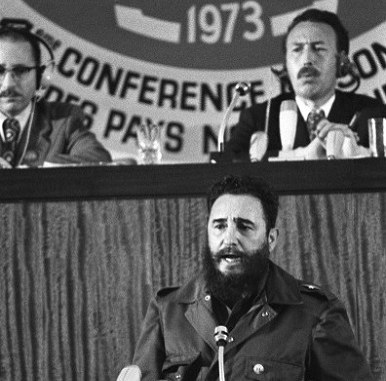
To provide a definitive interpretation of the Non-Aligned Movement, Algeria and its allies endeavored, during the ministerial conference of the Group of 77 in Santiago in August 1972, to advocate for a fundamental reconfiguration of international economic relations, countering the proposals put forth by moderate nations aimed at garnering the approval of Northern Hemisphere countries. Following extensive diplomatic endeavors, the Algerians successfully hosted the fourth summit conference of non-aligned states in September 1973, regarded by numerous political analysts as a “second Bandung,” not only due to the elevated attendance but also the presence of numerous distinguished leaders at the gathering (Perspective, 1973Perspective (1973). Tenue d’une conférence des pays non-alignés à Alger, September, Retrieved July 1, 2024 from Monde.).
The meeting experienced a significant change in focus and concern on the agenda of the non-aligned movement. The accepted resolutions acknowledged the legitimacy of the Palestinian people’s fight, advocated for the self-determination of Western Sahara, emphasized the necessity for enhanced support for liberation movements, and repudiated the dominance of superpowers. The Algiers 1973 Summit’s most notable accomplishment was the approval of a comprehensive agenda concerning the New International Economic Order (NIEO). President Boumedienne cautioned the attendees of the 1973 Algiers Summit that the policy of détente could exacerbate tensions between privileged nations and the remainder of humanity, urging Third World leaders to initiate a radical transformation of the international landscape by harnessing available resources for the benefit of their countries. In January 1974, Algerian President Boumedienne officially requested the convening of a special session of the General Assembly in reaction to the Washington Energy Conference and the French proposal for a World Energy Conference under the UN, both perceived as representing the perspectives of the Western developed world.
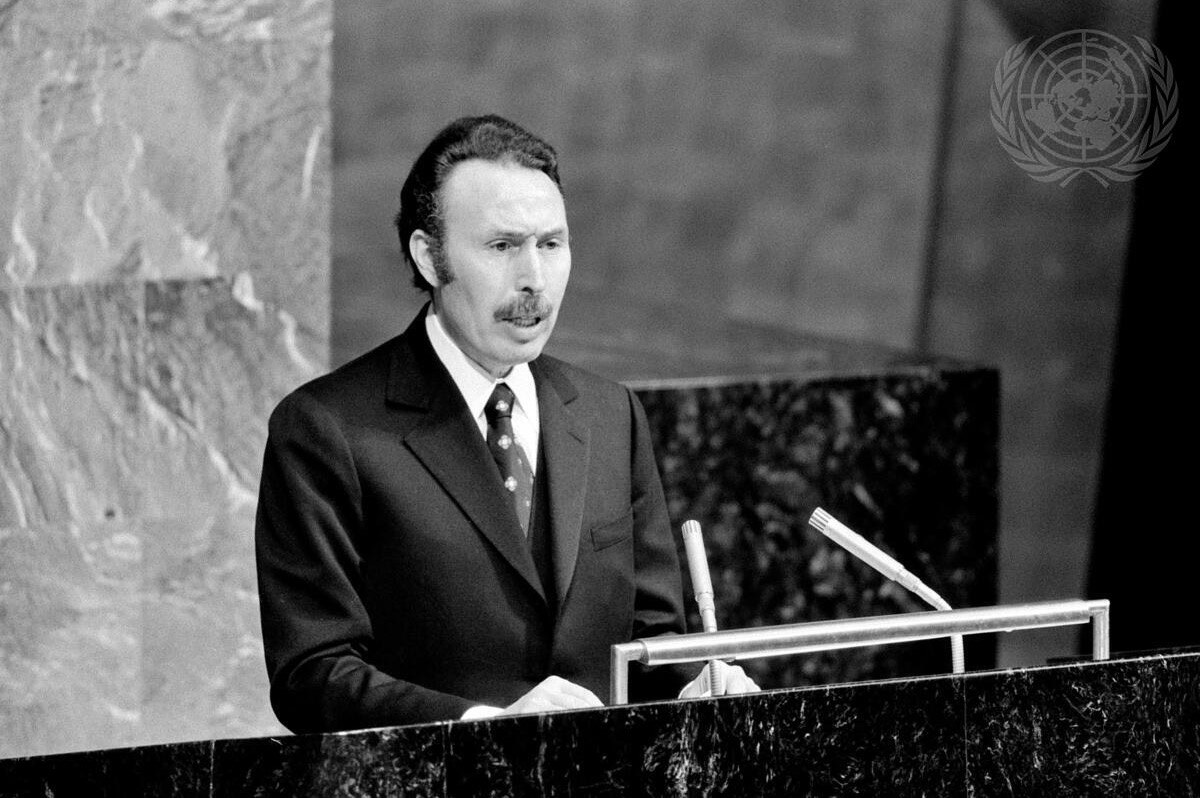
Algeria, with the backing of non-aligned nations, successfully persuaded the UN General Assembly to approve this proposal during a special session on raw materials in November 1974, presided over by President Boumedienne, who received prolonged applause and was celebrated as the leader of the non-aligned movement.
During this event, President Boumedienne articulated the requests outlined in a draft text developed by the Non-Aligned Movement and the Group of 77 in New York, facilitated by Algerian delegates, who included distinguished diplomats, senior economists, and financial specialists. The UN session ratified the Algerian-inspired Declaration of Principles, referred to as the “Declaration on the Establishment of a New International Economic Order,” along with a Program of Action.
To foster Third World solidarity, the Algerians focused on facilitating a political consensus among Arab and African nations while garnering the support of Asian and Latin American countries that had been peripheral to the non-aligned movement. The Arab-African dialogue originated from the intent of Arab nations, particularly Algeria, Egypt, and Libya, to diplomatically isolate Israel in Africa by demonstrating that the “struggle of Africans against colonialism and racial discrimination was analogous to the struggle of Arabs against Zionism and imperialist domination.” Using this reasoning, which portrayed Israel and South Africa as adhering to a similar ideology, 28 African nations voted at the UN General Assembly in November 1975 in favor of an Arab-sponsored resolution asserting the equation, “colonialism=racialism=Zionism.”
To solidify this Arab-African alliance, the Algerians successfully persuaded other Arab nations at the Arab summit they hosted in November 1973 to terminate relations with Portugal, Rhodesia, and South Africa; enforce an oil embargo against these nations; and extend oil and financial assistance to African countries. The African alliance benefited the Arab cause, as the majority of African nations severed diplomatic ties with Israel.
To amplify the influence of the non-aligned movement and fortify its stance in the forthcoming negotiations with the Northern Hemisphere regarding the NIEO, Boumedienne traveled to Cuba and Southeast Asia in March 1974 and hosted Luis Echeverría, the Mexican president and a fervent proponent of North-South dialogue, in July 1975. Algeria effectively advocated for the endorsement of a resolution expressing the solidarity of third world nations with their OPEC counterparts during the joint assembly of non-aligned countries and the Group of 77 convened in Dakar in August 1975, shortly preceding the second session of the preparatory meeting for the Paris conference on international cooperation. The aim was to counter US maneuvers to weaken the third world coalition by using OPEC member countries against non-oil developing countries. The militant strategy that Algeria ardently adopted did not yield substantial benefits for the Third World coalition. The North’s hesitance and the discord among developing nations led to the failure of the majority of economic proposals proposed by the Algerian-inspired Group of 77. If, from the perspective of Algerians, the former’s hesitation was anticipated, then the fragmentation of the Third World represented a significant regression. Algeria’s pursuit of elevated oil prices inside OPEC conflicted with Saudi Arabia’s commitment to a moderate pricing strategy, aimed at preserving its advantageous relationship with the United States. Furthermore, the solidarity among developing nations did not meet Algeria’s expectations, as the non-oil developing countries, significantly affected by the global economic crisis and rising oil prices, began to exhibit antagonism towards OPEC, which had previously refused them preferential oil pricing.
Similarly, Arab-African solidarity stagnated as African nations grew increasingly critical of the Arab position. Numerous African nations perceived no necessity to sustain a cold war with Israel following Egypt’s signing of a peace deal in 1977. At the OAU conference in Monrovia in 1979, some African nations declined to denounce the Camp David agreements, while others, including Central Africa, Gabon, Ivory Coast, and Zaire, reacted to Israel’s diplomatic initiatives in Africa aimed at countering perceived subversive Libyan activities.
In addition to these differences, the coherence of the Non-Aligned Movement was significantly weakened and degraded due to rivalries between moderate and radical states. While these divisions were evident during the non-aligned conference in Colombo in 1976, they were pronounced at the 1979 Havana meeting, ultimately leading to the cancellation of the summit conference scheduled for Baghdad in 1982. The unity of the Non-Aligned Movement became pivotal due to the Soviet invasion of Afghanistan in 1979, Soviet-Cuban activities in Africa, Israel’s intervention in Lebanon, U.S. aggressive policies in Central America (Nicaragua), the ongoing Western colonialism (the conflict between Argentina and the United Kingdom), and disagreements regarding the status of Western Sahara.
The ideological divisions among non-aligned governments, exacerbated by East-West tensions, diminished the content and efficacy of their commitment to non-alignment. The Algerian authorities considered the attempts to mitigate conflicts essential for transforming the non-aligned movement into a potent force between the Eastern and Western blocs. Algeria initially advocated for the revival of non-alignment principles and the repudiation of foreign involvement in the affairs of emerging nations. This country progressed towards political moderation, underscoring its commitment to the fundamental principles of a non-aligned state.
During his April 1981 tour of 11 African nations, President Chadli Bendjedid articulated a renewed image of moderation, reaffirming Algeria’s commitment to the OAU, its adherence to the principles of non-interference in the affairs of other nations, and the necessity for Africa to resist military alliances with foreign powers while extricating itself from East-West rivalries. He shown a genuine alignment with the Non-Aligned Movement. In April 1982, President Chadli conducted formal visits to Yugoslavia and India, advocating for a revitalization of this movement.
The Falkland Islands crisis, the stringent policies of the Reagan administration in Central America, and the economic challenges facing Latin America provided President Chadli with a favorable opportunity to persuade Argentina, Brazil, Mexico, and Venezuela to join the non-aligned movement during his visit in May 1985, following Colombia’s accession in August 1982. In April 1985, President Chadli visited the United States as a representative of a non-aligned state to emphasize the significant role the Non-Aligned Movement should assume in global affairs and to ensure its voice is acknowledged by the superpowers.
Algeria, however, moderated its aspirations for overhauling the international economic system established by the US-influenced Bretton Woods agreements. The causes arise from the staunch resistance of the industrialized nations and the hesitance of certain non-aligned countries to adopt a confrontational stance against the Western powers, with which they shared military alliances and robust economic collaboration, especially during the Cold War and its complexities.
Consequently, North-South debates ceased in forums dominated by Third World countries; they were relocated to informal assemblies lacking decision-making authority or tangible outcomes, such as the 1979 meeting in Cancun, Mexico, attended by Algerian President Chadli Bendjedid as a prominent leader of the Third World. A commission of esteemed experts, chaired by former German Chancellor Willy Brandt and including notable Algerian diplomat Layachi Yaker, finalized a report on the NIEO under the auspices of the UN, yielding no significant advancements (IFRI, 1980IFRI. (1980). Le Rapport de la Commission Brandt: Principaux Eléments de l’Analyse et des Recommandations, Politique Etrangère, Vol. 45, No2, June, pp321-337.).
Beginning in the mid-1980s, Algeria experienced a profound economic crisis accompanied by political instability. The nation experienced a significant decline in oil and gas prices, its primary sources of foreign revenue, violent incidents in October 1988, and the armed uprising initiated by the Islamic Salvation Front (FIS) following the annulment of the second round of the general elections in January 1992, which the FIS was likely to win. The decade-long political and social upheaval led to diplomatic isolation as Algeria confronted terrorism independently, amid the indifference of the international community, which perceived terrorist activities as lacking a transnational character at that time.
Following Abdelaziz Bouteflika’s ascension to power in 1999, Algerian diplomacy engaged vigorously in international matters, primarily concentrating on nuclear disarmament, global economic concerns, the Agenda for Sustainable Development in Africa, and the pursuit of self-determination in Western Sahara, regarded as Africa’s final colony (Iratni, 2015Iratni (2015). The source article does not provide a separate full bibliographic entry for this citation.). Nonetheless, Bouteflika’s illness, persisting from 2005 till his demise in 2019, has subdued Algeria’s engagement on the global stage. Similar to how the North Atlantic Treaty Organization (NATO) remained intact despite the dissolution of the Soviet Union and its Warsaw Pact, non-alignment did not diminish only due to the conclusion of the Cold War and the vanishing of the Eastern and Western blocs. A multitude of political observers contend that the movement has forfeited its objective. The conclusion of the Cold War diminished the ideological division between East and West, moderating their rivalry and weakening the efficacy of coalitions. The summits held from the 1990s to the early 2020s did not yield a beneficial effect on the activities of the non-aligned movement. Algeria, like many participants of this movement, has endeavored to rejuvenate it, remaining true to the Bandung ethos of political liberation for the Global South.
Since assuming office in 2020, President Abdelmadjid Tebboune has identified the revitalization of the Non-Alignment Movement as a principal priority amid a new internal political framework and significant, swift alterations in the geostrategic landscape, both regionally and internationally.
Adapting the Non-Aligned Movement to an Evolving Global Landscape
Algeria, with other allies, endeavored to reinvigorate the Non-Aligned Movement, which has become politically fragmented due to the absence of shared objectives and economically divergent with the ascendance of China and India as significant economic powers. The ambiguity surrounding the objectives of the Non-Aligned Movement intensified following the fragmentation of Yugoslavia, a principal non-aligned leader; the civil conflicts in Libya and Syria; the decline of Iraq; the rise of the Asian Tigers; the strengthening of the BRICS; and the ongoing strife in the Horn of Africa and the Great Lakes region. Furthermore, the rise of terrorism evolved into a transnational menace, intensifying insecurity in numerous regions worldwide, particularly following the tragic events of 9/11 and the ascendance of the Islamic State, which attained global notoriety in 2014 after seizing extensive territories in Iraq.
The ongoing war in Ukraine since 2022 may have established a new global geostrategic framework, reminiscent of the Cold War dynamics characterized by intense rivalry between East and West and a competition among world powers for the economic and geostrategic resources of the Global South, particularly Africa. The rationale of the Cold War has exacerbated disparities among nations and resulted in the destitution of numerous developing countries due to the inequitable exchanges that have defined international trade and commodity prices. A former Algerian official stated, “Predicting the definitive conclusion of non-alignment’s validity may be audacious.” The struggle of the Non-Aligned Movement may assume different manifestations as long as disparities persist in international relations” (Abba, 2023Abba, A. (2023). la politique étrangère de l’Algérie: 1962- 2022, Algiers: 2022.).
The war in Ukraine extends beyond its borders, representing a broader confrontation between the Western coalition, including the United States, Europe, and NATO, and Russia, China, along with certain allies from the Global South. The ramifications of the Ukraine conflict have instigated a significant increase in energy prices (oil and gas) and commodities, particularly wheat and fertilizers, which are critically required by the least developed nations, where substantial portions of the population are already enduring severe poverty.
A paradigm reflecting the global division among nations based on ideological affiliations, prompted by the war in Ukraine, was evidenced by the UNGA vote regarding Russia’s intervention in Ukraine. China, India, and 57 other countries from Africa and Latin America have abstained. These nations represent the majority of the global population and a significant proportion of political entities that follow a developmental trajectory centered on state authority, the prominence of the public sector in the national economy, and a propensity for authoritarian governance, thereby resisting free markets and liberal economies. The voting behaviors indicated the disassociation of numerous Southern nations from Western positions, notwithstanding their significant economic, financial, and military reliance on the United States and the European Union.
The Ukraine war has presented dilemmas and challenges for numerous Southern countries concerning alignment with one bloc over another; however, it has also provided them with significant opportunities to strengthen their standing in the global balance of power and to revitalize the Non-Alignment Movement. Algeria is ensnared in the predicament of maintaining balanced relations with significant global powers. Algeria maintains strategic ties with Russia, its most important source of armaments, and strong economic ties with the EU, to which it is a major gas supplier. It possesses shared security interests with the US as a pivotal state in combating terrorism in the Sahel-Sahara region and serves as a dependable ally of China within the context of the Belt and Road Initiative (BRI).
Algeria faced escalating tensions with Morocco, which is bolstered by the backing of Israel, and challenges in effectively mediating the conflicts in Libya, Mali, and Niger due to external meddling. Nonetheless, these alliances may be temporary and susceptible to alteration due to the fundamentally divergent interests of these nations and the significance of Algeria as a regional power and a stabilizing force, not only in the Maghreb but also in the Sahel-Sahara, despite external interference in both regions. Algeria adeptly navigates its economic and geostrategic resources in response to global uncertainties and the evolving regional and international power dynamics by reaffirming its dedication to non-alignment principles.
President Abdelmadjid Tebboune stated, “I neither endorse nor criticize Russia’s actions in Ukraine. Algeria is a non-aligned nation, and I am dedicated to upholding this principle. Our nation is destined for freedom”. To convey the equitable policy Algeria sought to uphold among significant global powers, he remarked that “Russia and the United States are our allies; all others are our allies, except for the one with whom we have a conflict regarding Palestine. Whoever wishes to adjudicate us may proceed. We are endeavoring to revitalize the Non-Aligned Movement. We observe the trajectory of global developments. Irrespective of the quantity of poles, we maintain equidistance from each one. Our commercial interests are inclusive; nevertheless, regarding political interests and stability, we prioritize our own—specifically, the interests of the Algerian populace” (Chikhaoui, 2022Chikhaoui, A. (2022). the Non-aligned posture of Algeria’s foreign policy, NESA Center, Retrieved July 1, 2024 from).
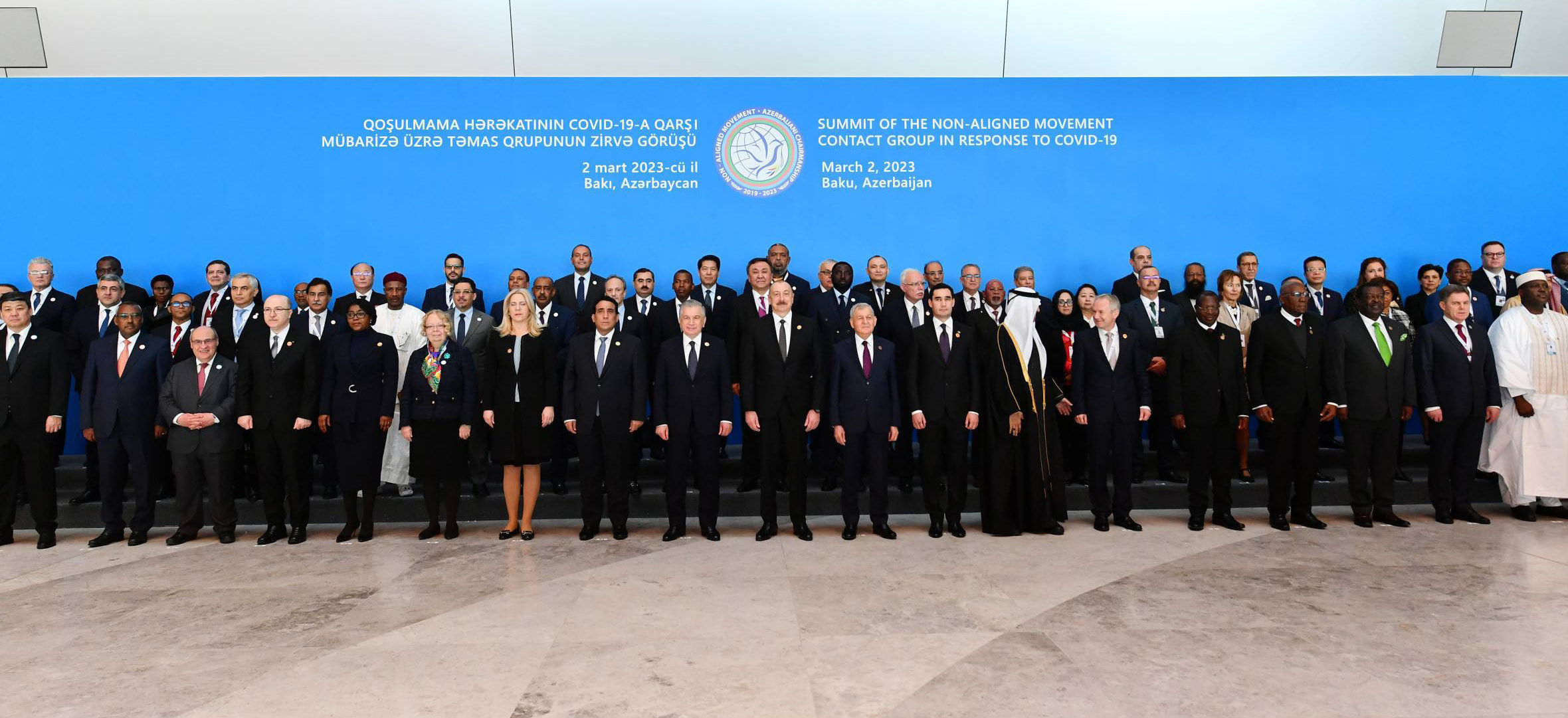
In response to a shifting geopolitical situation, Algeria seems inclined to pursue an unrestricted and non-aligned policy (Petropoulos, 2022Petropoulos, Vasilis. (2022). Algeria’s foreign policy facing a crossroads, The Washington Instutute, August 9, Retrieved July 1, 2024 from). To indicate this alternative, Algerian diplomacy extended an invitation to the Azeri president of the Non-Alignment Movement to participate in the significant Arab summit convened in Algiers in November 2022, which aimed to unify Arab positions and reconcile Palestinian factions. President Tebboune visited Moscow in June 2023 and the subsequent month to enhance business connections with these two longstanding and amicable friends. He engaged in a succinct, amicable encounter with US President Joe Biden during the G7 Summit, conducted in Bari, Italy, in June 2024. The summit, to which he was invited, provided the Algerian President the opportunity to enhance Algeria’s global influence (Saada, 2024Saada, H. (2024). G7 Summit: President Tebboune Elevates Algeria’s Global Influence, Dzair-Tube, Retrieved July 1, 2024 from).
The Algerian Prime Minister participated in the 19th Non-Aligned Summit in Kampala, Uganda, in January 2024, delivering a speech on behalf of President Tebboune. In this address, President Tebboune urged for “the reinforcement of our unity and our strategic stance as an engaged participant in the establishment of a world order characterized by inclusivity and transparency, delineating responsibilities and obligations, and mandating respect for its laws and regulations by all” (Embassy of Algeria in Beijing, 2024Embassy of Algeria in Beijing. (2024). Speech by the President of the Republic, Abdelmadjid Tebboune, on the occasion of the 19th NAM Summit, Retrieved July 1, 2024, from).
One of the objectives that Algerian diplomacy urged the non-aligned movement to pursue was “reforming the UN, rehabilitating multilateralism, and augmenting diplomatic pressure to terminate the detrimental actions of Zionism in Gaza,” as stated by Ahmed Attaf, the Algerian foreign minister (Embassy of Algeria in Beijing, 2024Embassy of Algeria in Beijing. (2024). Speech by the President of the Republic, Abdelmadjid Tebboune, on the occasion of the 19th NAM Summit, Retrieved July 1, 2024, from). The Algerian diplomatic chief commended “the steadfast and principled stance of the Non-Aligned Movement supporting the inalienable and imprescriptible right of the Sahrawi people to self-determination, in alignment with the pertinent resolutions of the United Nations Security Council (UNSC) and General Assembly” (Embassy of Algeria in Beijing, 2024Embassy of Algeria in Beijing. (2024). Speech by the President of the Republic, Abdelmadjid Tebboune, on the occasion of the 19th NAM Summit, Retrieved July 1, 2024, from). The concerns articulated are crucial not only for the preservation of the Non-Alignment Movement but also for transforming this movement into a significant influence in influencing the future of the globe. The goal is to establish a global system founded on justice and equality by expanding the UNSC, abolishing the extensive use of nuclear weapons and weapons of mass destruction, and promoting economic competitiveness among nations through equitable regulations.
Conclusion
Jorge Heine, a former US diplomat and currently a Public Policy Fellow at the Wilson International Center for Scholars in Washington, DC, forecasted, “a shifting paradigm in which active non-alignment emerges as a crucial factor in influencing foreign policy decisions, as the Global South’s prominence increases, illustrated by the recent expansion of BRICS” (Pardee School, 2024Pardee School (2024), Heine’s Vision for 2024: Active Non-Alignment in a Shifting Global Landscape, Retrieved July 1, 2024 from).
This viewpoint appears to be assertive and is predicated on the presumed cohesion and empowerment of the southern hemisphere. It also assumes the deterioration of the world’s principal powers. The transition to multilateralism is protracted and challenging, with the elements of global instability and insecurity persisting robustly.
Amidst these uncertainties, the Non-Aligned Movement can serve as a stabilizing influence, facilitating the reconciliation between East and West as well as between North and South. Furthermore, it has the potential to serve as a pivotal catalyst for international collaboration, facilitating the reform of the United Nations, promoting broader multilateralism, and preventing the dominance of a single global power.