Introduction
During the late qing dynasty, china experienced further fragmentation due to Western capitalist powers; national capitalism emerged and evolved, the agrarian economy began to fragment, the Qing Dynasty became increasingly inept and corrupt, peasant movements persisted, and new ideologies proliferated. The Westernization school did not accomplish its objective of self-improvement and prosperity, and the reformists did not meet the anticipated expectations for enhancement and affluence. The recent policies implemented at the conclusion of the Qing Dynasty did not succeed in attaining the objectives of self-strengthening and restoration. At this juncture, the bourgeois revolutionaries ascended to the historical stage.
Sun Yat-sen (1866-1925) was a distinguished patriot, a pioneering figure in China’s democratic movement, the creator of the Republic of China and the Kuomintang, and the formulator of the “Three People’s Principles.” Sun Yat-sen was born and raised during the Westernization Movement. Upon the conclusion of the Westernization Movement, the youthful Sun Yat-sen assimilated the insights derived from its shortcomings, amalgamated them with the principles of Western modernization, and proposed an economic modernization strategy to enhance China’s wealth and strength that advocated for a transition in agriculture, education, industry, and economy from traditional to modern paradigms: “People can exert their utmost, land can yield its maximum, resources can be optimized, and goods can circulate freely (Sun, 1981a: 8Sun, Y. (1981a). The Complete Works (1)., Zhonghua Book Company. ( 《孙中山全集》第1卷,中华书 局,1981年版。 )).”
Despite the failure of the 1911 Revolution to achieve its ultimate goal, Sun Yat-sen’s comprehensive reform vision for China and his ideas influenced society. Subsequently, Sun Yat-sen (1981a: 52Sun, Y. (1981a). The Complete Works (1)., Zhonghua Book Company. ( 《孙中山全集》第1卷,中华书 局,1981年版。 )) uncovered the profound corruption within the Qing government and acknowledged that: “The approach of peaceful reform is no longer viable. As the demand for governance intensifies and the urgency for reform escalates, it becomes evident that the methods of nonviolent transformation must be modified to incorporate pressure.”
He commenced the path of revolution. He initiated the Revolution of 1911, advocating for comprehensive anti-imperialism and anti-feudalism, which terminated the feudal monarchy that had persisted for over two millennia, altered the trajectory of Chinese history, and established the groundwork for China’s early modernization to progress into a new phase.
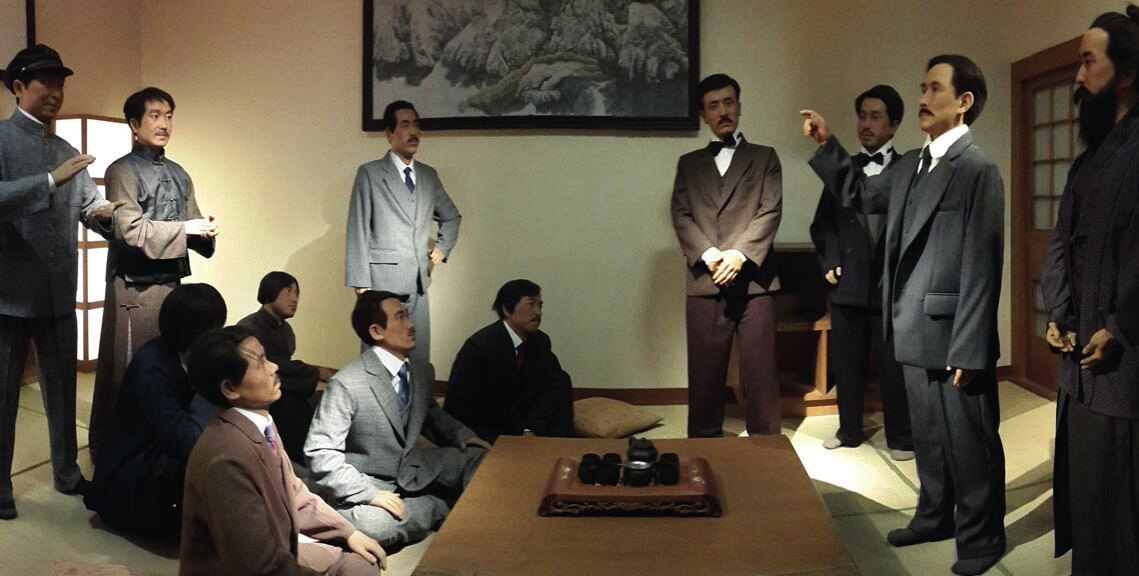
In 1894, Sun Yat-sen spearheaded the establishment of the first local bourgeois revolutionary organization in modern China, the “Xingzhonghui” Association, which advocated the revolutionary agenda of “expelling the Manchus, restoring China, and instituting a unified government” (Sun, 1981a: 20Sun, Y. (1981a). The Complete Works (1)., Zhonghua Book Company. ( 《孙中山全集》第1卷,中华书 局,1981年版。 )), reflecting the democratic revolutionary objective of entirely dismantling the Qing Dynasty and instituting a republican government akin to that of the United States. Entering the 20th century, a cohort of burgeoning intellectuals authored books and disseminated newspapers and periodicals, ardently promoting democratic revolutionary concepts. Bourgeois revolutionary factions disseminated revolutionary concepts broadly, instilling these ideas profoundly into the populace, leading to the development and expansion of revolutionary forces. Amid the swift growth of the revolutionary landscape, Sun Yat-sen united the nation’s revolutionary factions, and in August 1905, Huang Xing, Song Jiaoren, and others jointly established the inaugural national revolutionary organization— Tongmenghui Association (Chinese Revolutionary Alliance). The Tongmenghui Association adopted the goal of “expelling the Manchus, restoring China, establishing the Republic of China, and equalizing land rights” (Sun, 1981a: 276-277Sun, Y. (1981a). The Complete Works (1)., Zhonghua Book Company. ( 《孙中山全集》第1卷,中华书 局,1981年版。 )) as its agenda for a bourgeois democratic revolution and initially delineated the framework for the bourgeois Republic. In October of that year, Sun Yat-sen articulated the three ideas of “nationalism, civil rights, and people’s livelihood” (Sun, 1981a: 288Sun, Y. (1981a). The Complete Works (1)., Zhonghua Book Company. ( 《孙中山全集》第1卷,中华书 局,1981年版。 )) in his journal, People’s Daily. Nationalism signifies the expulsion of the Manchus and the restoration of China, the fall of the Manchu-led feudal dynasty by a national revolution, and the establishment of a “national state” characterized by equality among all ethnic groups: “China is the China of the Chinese; the politics of China are managed by the Chinese. Upon expelling the Manchus, we shall restore our nation (Zhang & Li, 2009: 174Zhang, H. & Li, X. (2009). A General History of Modern China, (5). New Deal, Constitutionalism and the Revolution of 1911 (1901-1912), Jiangsu People’s Publishing House. ( 张海鹏、李细珠:《中国近代通史》第 5卷:新政、立宪与辛亥革命(1901-1912),江苏 人民出版社2009年版。 )).”
The purpose of the unremitting struggle of modern Chinese people with lofty ideals is to save the country from danger and achieve national independence, so the feudal autocratic system must be overthrown. The civil rights thought refers to the establishment of the Republic of China by dismantling the feudal dictatorship through revolution and instituting a bourgeois democratic republic.
Sun Yat-sen contended that the bourgeois republic was the most evolved political system globally, asserting that China should adopt this system in accordance with the “axioms of evolution” of humanity. The principle of civic rights underpins political revolution: “Following the national revolution in the future, while it is indeed possible to eradicate the current detrimental politics, the underlying causes will persist, and it must not be neglected. For millennia, China has functioned as an absolute monarchy, a system incompatible with the principles of equality and freedom for its population. Success cannot be achieved only through the national revolution (Sun, 1981a: 325Sun, Y. (1981a). The Complete Works (1)., Zhonghua Book Company. ( 《孙中山全集》第1卷,中华书 局,1981年版。 )).”
This illustrates that the establishment of a “Republic of China” necessitates a political revolution alongside the national revolution: “In the ongoing revolution for the establishment of a national government, all citizens are equal and possess the right to engage in political power. The people elect the president. The Parliament consists of representatives elected by the people. All individuals draft and comply with the Constitution of the Republic of China (Sun, 1981a: 297Sun, Y. (1981a). The Complete Works (1)., Zhonghua Book Company. ( 《孙中山全集》第1卷,中华书 局,1981年版。 )).”
This created the foundation for the republic’s attainment of civil rights. The philosophy of people’s livelihood advocates for “equal land rights,” addressing social and economic issues related to land through social revolution, thereby achieving national wealth and strength while establishing a “social state.”
Sun Yat-sen believed that the significant disparity between the affluent and the impoverished in Europe and the United States stemmed from the inability to address the land issue. Consequently, after examining the tumultuous capitalist landscape, Sun Yat-sen endeavored to identify a lasting solution to the land issue, enhance the populace’s wealth, and fortify the nation. In the following words, he elucidates the concepts of social wealth redistribution, anti-monopoly, and the concept of public ownership: “All persons should equally reap the benefits of civilizational developments. The improvement of social and economic structures affects worldwide land valuation. The current land prices will remain with the original proprietors; the augmented value resulting from societal advancements post-revolution will be allocated to the state and distributed among the populace. The state responsible for societal formation must guarantee that every family has adequate food and clothing, ensuring that no individual is left homeless. Individuals who attempt to monopolize and dominate the lives of citizens ought to be forsaken by the populace (Sun, 1981a: 297Sun, Y. (1981a). The Complete Works (1)., Zhonghua Book Company. ( 《孙中山全集》第1卷,中华书 局,1981年版。 ))”
The concept of “average land right” encompasses “establishing land value,” “taxation based on the value,” “reverting land to public ownership according to the value,” “acquiring land based on the value,” and “state-owned land.” Sun Yat-sen (2011b: 625Sun, Y. (2011a). Selected Works (1)., People’s Publishing House. ( 《孙中山选集》上卷,人民出版社2011年 版,第14页。 )) proposed that: “When each county established autonomy, it must first determine the valuation of private land inside the county. The landlord should establish the legal framework, and the local government would impose taxes based on this valuation, with the option to purchase at any moment according to the predetermined price. If the land’s value appreciates as a result of political reform or social advancement, the advantages will be distributed among the entire county’s populace, and the original owner shall not partake. The annual agricultural yield, the appreciation of land value, the output from communal land, the benefits derived from natural resources such as mountains, forests, and waterways, as well as the profits from hydroelectric power, are all under the jurisdiction of the local government. These resources are utilized for local enterprises and to address public necessities, including child-rearing, elder care, poverty alleviation, healthcare, and familial support”.
Sun Yat-sen’s “Three People’s Principles” outlines a novel vision and methodology for achieving China’s modernization via national, political, and social change: “The objective of our revolution is to pursue happiness for all people. We do not want a small number of Manchus to monopolize, so we need a national revolution; we do not want the monarch to monopolize, so we need a political revolution; we do not want a small number of rich people to monopolize, so we need a social revolution. If we cannot achieve any of these three goals, it is not our intention. After achieving these three goals, China will become the most perfect country (Zhang & Li, 2013: 176Zhang, H. & Li, X. (2013). A General History of Modern China. (5). New Policies, Constitutionalism and the Revolution of 1911 (1901-1912), Jiangsu People’s Publishing House. ( 张海鹏、李细珠:《中国近代通 史》第5卷:新政、立宪与辛亥革命(1901-1912 ),江苏人民出版社2013年版。 )).”
The Three Peoples’ Principles program expresses the political and economic ideologies of the Chinese bourgeoisie of that period, which aimed at modernization. It delineates three primary objectives: national sovereignty, political democracy, and economic development. The “Three People’s Principles” was established based on Sun Yat-sen’s synthesis of the experiences and learning from the systems of Western capitalist nations, and it represented the theoretical culmination of his initial reflections on China’s modernization. The interpretation of the internal logic of the “Three People’s Principles” also demonstrates that Sun Yat-sen investigated the realistic path of China’s modernization in the context of the country’s national circumstances.
Sun Yat-sen, as the leader of the bourgeois revolutionary movement, aimed to rescue the Chinese nation from peril by prioritizing national sovereignty, civil rights, and the welfare of the populace, and he spearheaded the call to “revitalize China.” Under Sun Yat-sen’s leadership, numerous revolutionary party members fervently disseminated revolutionary ideas, instilled the principles of democracy and republicanism in the populace, and persistently initiated armed uprisings, which received enthusiastic support from the people nationwide. On October 10, 1911, the Wuchang Uprising initiated China’s comprehensive national democratic revolution. It terminated the two-thousand-year feudal tyranny in China and instituted the first republican state in Asia. On January 1, 1912, Sun Yat-sen assumed the role of temporary president, officially declaring the formation of the Republic of China.
The Nanjing Provisional Government was a revolutionary regime characterized as a bourgeois republic. To avert the obliteration of the revolution’s accomplishments by Yuan Shikai following his ascension to the presidency and to curtail his authority, the Senate of the Nanjing Provisional Government enacted, in March 1912, the inaugural code resembling a constitution of the bourgeois republic in Chinese history, the Provisional Constitution Law of the Republic of China, which dismantled the feudal absolute monarchy as a fundamental law. The Constitution Law comprises 56 articles organized into seven chapters: basic principles, the populace, the Senate, the interim president, the vice president, the state clerk, the judiciary, and supplemental provisions. It adheres to the Western bourgeois democratic principle of “separation of powers” and asserts that all Chinese individuals are equal and own the sovereignty of the Republic of China. It mandates the establishment of the cabinet system; the cabinet prime minister is elected by the parliamentary majority, and presidential orders require countersignature by the cabinet prime minister to become effective.
Following the foundation of the Nanjing Provisional Government, the circumstances were challenging; yet, it devised numerous policies across political, economic, military, cultural, and educational domains and endeavored to implement reforms. It implemented the policy of national unification in domestic matters and established the republic encompassing five ethnic groups of Han, Manchu, Mongolian, Hui, and Tibetan. This policy enabled the formation and advancement of the multi-ethnic Chinese state.
The Ministry of Industry was founded to revitalize industries, and a series of policies and measures were enacted to promote industrial and commercial development. It experienced a surge in industrial activity, prompting the formation of industrial and mining enterprises, including railways, mines, ships, machinery production, reclamation projects, and other factories, firms, and banks. The national industry was advanced; the military discipline was organized, and the army was restructured. The Republic implemented “five educations” of national military, ordinary, civic morality, world outlook, and aesthetics as its new educational policy while also promoting general education, thereby establishing a foundation for the advancement of school education in the Republic of China. The social reform movement illuminated every facet of social life. The promotion of public servant awareness and a clean work ethic, the alteration of titles, and the elimination of kneeling etiquette, smoking, and gambling progressively transformed individuals’ spiritual orientation, resulting in a society that exhibited a renewed environment of vigor and vitality.
The Revolution of 1911 dismantled the feudal regime and instituted a democratic republican system, signifying the commencement of the national democratic revolution. “Constrained by the historical and social conditions of the time and lacking the right path and leading force to determine the future of the country, the Revolution of 1911 could not change the semi-colonial and semi-feudal nature of Chinese society; it could not alter the bitter fate of the Chinese people; and it could not accomplish the historic missions of national independence and the people’s liberation (Xi, 2021: 3Xi, J. (2021). Speech at the Conference to Commemorate the 110th Anniversary of the Revolution of 1911. People’s Publishing House. ( 习近平:《在纪念辛亥革 命110周年大会上的讲话》,人民出版社2021年 版。 ))”.
However, it constituted the prelude of China’s comprehensive national democratic revolution. But the Revolution of 1911 dismantled feudalism, the intrinsic impediment to China’s modernization. It was a valuable exploration for the Chinese nation to achieve the national independence and liberation of the Chinese people and to find the path of China’s modernization, which would lead to a significant rejuvenation of China. The 1911 Revolution signified China’s shift from a feudal society dominated by imperial authority to a democratic and republican modern state, shifting China’s modernization from passive to active, thus representing a crucial turning point in this process (Xi, 2021:4Xi, J. (2021). Speech at the Conference to Commemorate the 110th Anniversary of the Revolution of 1911. People’s Publishing House. ( 习近平:《在纪念辛亥革 命110周年大会上的讲话》,人民出版社2021年 版。 )).
Sun relinquished the presidency on February 13, 1912. Following the usurpation of victory by Yuan Shikai, Sun Yat-sen assumed personal responsibility for industrial growth and diligently endeavored to advance China’s modernization. Upon recognizing Yuan Shikai’s true nature, Sun Yat-sen initiated the “Second Revolution” against Yuan using military forces, which included the War of Defending the Constitution against Yuan (1913-1916), the Second Revolution of Defending the Constitution (1921-1922), and the National Revolution (1925-1927) of the Kuomintang-Communist Party against the Warlords. During the revolution, Sun Yat-sen contemplated China’s modernization extensively and articulated his ideas through writing books, speeches, lectures, and proclamations, thereby systematically formulating his theory of modernization and presenting a comprehensive plan for China’s initial modernization.
Sun Yat-sen’s building of China’s modernization theory
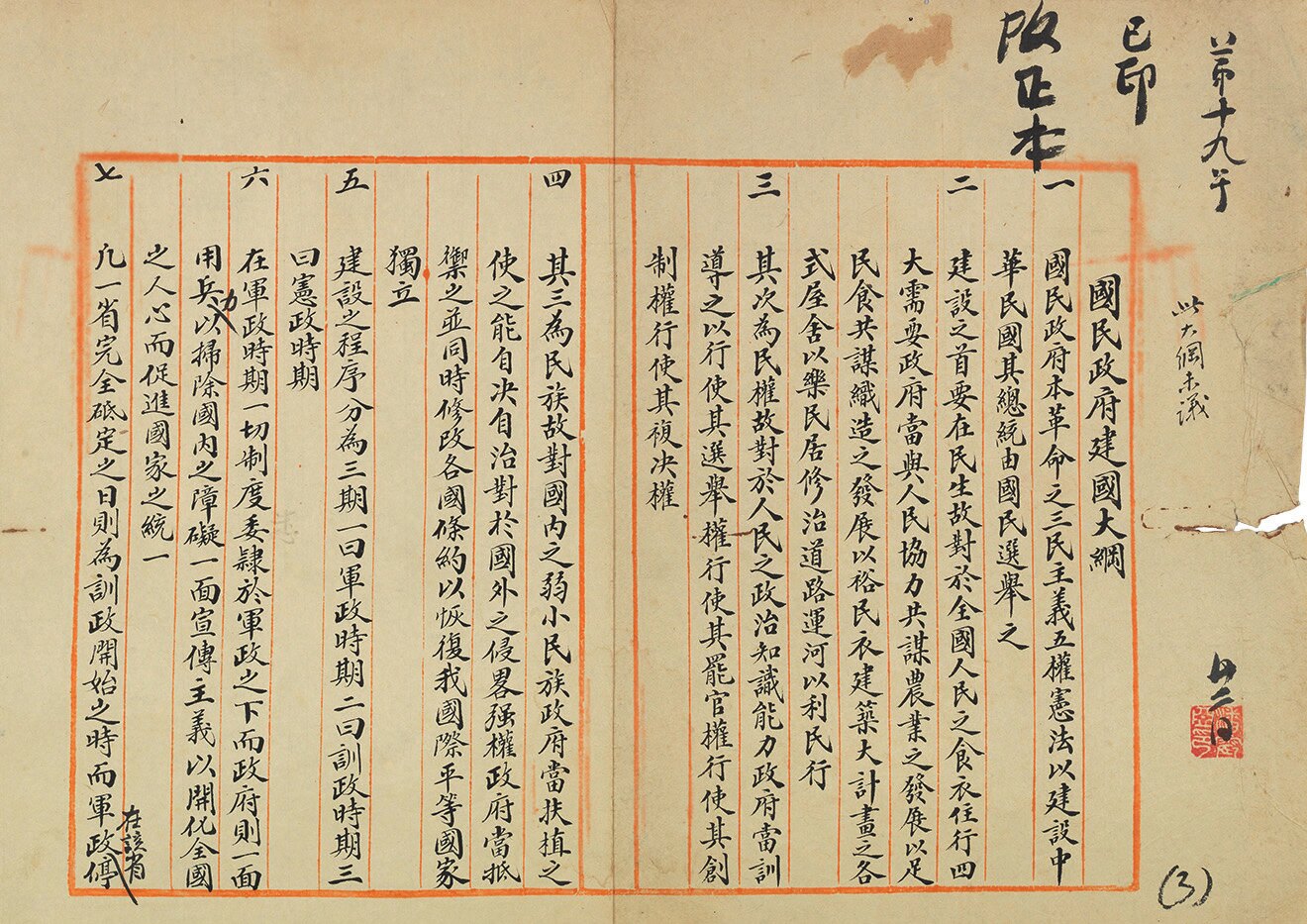
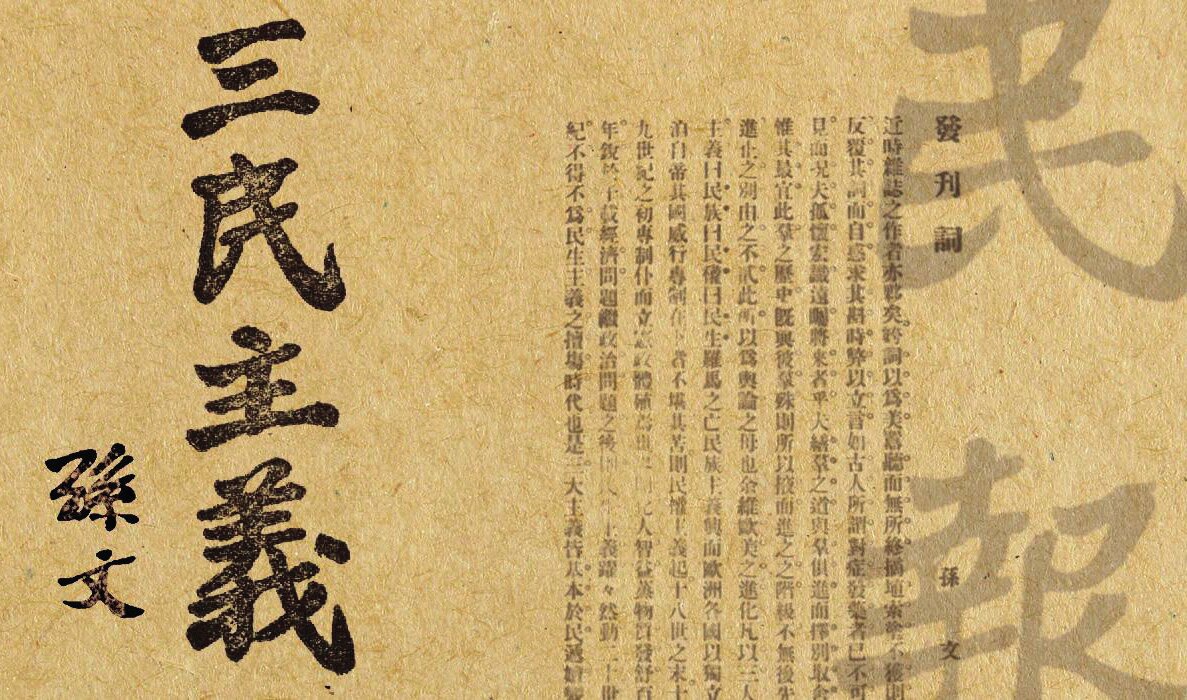
Sun Yat-sen was a major forerunner and pioneer of China’s modernization. He created the theoretical system of China’s modernization on the whole and proposed a blueprint for China to thoroughly begin its modernization under the democratic and republican social system. Although Sun Yat-sen did not have a special work on modernization, his modernization thought was reflected in his “National Construction Strategy” (including “Sun Wen Theory,” “Industrial Plan,” and “Introduction to Civil Rights”), “Constitution of the Five Powers,” “Declaration of the First National Congress of the Kuomintang,” “Outline of the National Government’s Founding,” “The Three People’s Principles,” and other works, which built a theoretical framework for modernization.
Throughout his life, Sun Yat-sen sought the ideals of national sovereignty, advancement, and revitalization. During the planning of China’s modernization, Sun Yat-sen articulated the objective of revitalizing China, emphasizing that national independence was a requirement for this renewal. By the conclusion of the 19th century, the Chinese populace endured severe adversity due to the dual oppression of imperialism and feudalism, characterized by persistent turmoil and recurrent insurrections. Notwithstanding the Westernization Movement, the Hundred Days’ Reform, and the New Policies of the late Qing Dynasty (New Deal of Qing Dynasty or Late Qing Reforms), China’s progress remained significantly inferior to that of the West. This truth was repeatedly demonstrated in the context of foreign attack. In this context, Sun Yat-sen lifted his arms and proclaimed the emphatic slogan of “revitalizing China” (Sun, 2011a: 14Sun, Y. (2011a). Selected Works (1)., People’s Publishing House. ( 《孙中山选集》上卷,人民出版社2011年 版,第14页。 )).” Sun Yatsen consistently integrated the sentiment of national misery with the aspiration for national rejuvenation, dedicating his life to the significant endeavor of national revitalization and formulating a vision for China’s future growth. Sun (2011a: 221Sun, Y. (2011a). Selected Works (1)., People’s Publishing House. ( 《孙中山选集》上卷,人民出版社2011年 版,第14页。 )) recognized that national independence was essential for China’s rejuvenation: “If the right to development is in our hands, we will survive; if it is not, we will perish. Salvation is attainable solely through renewal; national independence is the exclusive route to national prosperity; and revolution serves as the mechanism to attain national independence.”
In summary, Sun Yat-sen’s Three People’s Principles prioritize nationalism above all. Sun Yat-sen articulated (2011a: 72Sun, Y. (2011a). Selected Works (1)., People’s Publishing House. ( 《孙中山选集》上卷,人民出版社2011年 版,第14页。 )) an optimistic vision for national rejuvenation: “With the achievement of our esteemed objective of reforming China, our illustrious nation will not only enter a new epoch, but all humanity will partake in a more luminous future. The resurgence of China will undoubtedly lead to universal peace, unveiling a vast arena previously unimagined for the social and economic endeavors of the civilized world.”
Sun Yat-sen examined the historical trajectory of China’s early modernization, formulating the theory of national rejuvenation while actively engaging in the monumental endeavor of preserving the nation from obliteration and renewing China. He devoted himself to advocating to follow historical trends, the advancement of industry and social wealth, and the pursuit of economic development to position China among the civilized nations globally, thereafter embracing the historical obligation as the vanguard of China’s modernization.
“The Three People’s Principles” constitutes the essence of Sun Yat-sen’s ideology and serves as the framework for his comprehensive vision of modernization, aimed at enhancing national wealth and strength. On December 30, 1923, Sun Yat-sen addressed (Sun, 2011b: 586Sun, Y. (2011a). Selected Works (1)., People’s Publishing House. ( 《孙中山选集》上卷,人民出版社2011年 版,第14页。 )) the Kuomintang members in Guangzhou with a speech entitled “Propaganda Creates Mass Power,” underscoring the necessity of collaboration and effort to establish a nation founded on the Three People’s Principles and a five-power constitution: “We must employ the Three People’s Principles to transform public cognition. What are the Three People’s Principles? Simply put, they are of the people, by the people, and for the people.
When our future country is of, by, and for the people, its people will be the happiest in the world.”
Under the influence of the Communist International and the Communist Party of China, Sun Yat-sen resolved to restructure the KMT and adopt the three principal policies of alliance with Russia, collaboration with the Communist Party, and support for the peasantry and laborers. The original “Three People’s Principles” evolved into the “New Three People’s Principles.” Sun’s theory of the New Three People’s Principles served as the political foundation for the initial collaboration between the KMT and the Communist Party. Mao Zedong (1938Mao, Z. (1938). Speech at the Meeting to Commemorate the 13th Anniversary of the Death of Premier Sun and to Mourn the Martyrs of the War of Resistance Against Japan. New China Daily, March 15. ( 毛泽 东:《在纪念孙总理逝世十三周年及追悼抗战阵 亡将士大会上的演说词》,《新中华报》1938年 3月15日。 )) assessed Sun Yatsen’s paramount accomplishments as “the program of the Three People’s Principles, the policy of the united front, and the spirit of hard struggle,” asserting that these three “constitute the most central, essential, and significant legacy bequeathed to us by Mr. Sun.”
In comparison to the previous Three People’s Principles, the revised Three People’s Principles have attained a significant advancement and qualitative transformation. In the New Three People’s Principles, nationalism has been revised to include two dimensions: “the Chinese nation seeks liberation from itself” and “all ethnic groups in China are equal” (Sun, 2011b: 614Sun, Y. (2011a). Selected Works (1)., People’s Publishing House. ( 《孙中山选集》上卷,人民出版社2011年 版,第14页。 )), thereby incorporating the notion of “opposing imperialism.” During this period, Sun Yat-sen was influenced by the triumph of the Russian Revolution and by the Communist Party of China, leading him to comprehend that China’s modernization necessitated national independence. Therefore, the New Three People’s Principles prioritize anti-imperialism and underscore the necessity of resisting imperialist aggression.
According to the doctrine of civil rights, rooted in the principle of the separation of the five powers articulated by Sun Yat-sen—namely, the powers of legislation, judiciary, administration, examination, and supervision—citizens possess not only the right to vote but also the authority to initiate, participate in referendums, and remove officials from office. This underscores that “the Kuomintang’s doctrine of civil rights is a collective entitlement of the populace, not a privilege of the minority for personal advantage (Sun, 2011b: 616Sun, Y. (2011a). Selected Works (1)., People’s Publishing House. ( 《孙中山选集》上卷,人民出版社2011年 版,第14页。 )).” The amalgamation of bourgeois civil rights advocacy with the nationalist resistance to imperialism signifies substantial progress. Concerning people’s livelihoods, it can be encapsulated as “one pertains to equal land rights; the other involves capital control,” and the policy of “those who cultivate the land possess the land” should be enacted. Following the 1911 Revolution, Sun Yat-sen fervently promoted state ownership of large enterprises and raised the two issues: Land and capital. Regarding land, he proposed a novel interpretation of “average land rights,” introduced a policy to guarantee “land for the tiller,” and unequivocally opposed feudal exploitation. It proposed “capital control,” which entails fostering state capital while limiting private capital and employing state authority to restrain the excessive growth and monopolization of private capital. It proposes the nationalization of all substantial enterprises that cannot be entrusted with private capital, including banks, railways, and shipping routes, and for the implementation of state ownership. Furthermore, it recommends the adoption of policies to safeguard, promote, and regulate private capital to prevent substantial private interests from manipulating the national economy and the welfare of the populace. Simultaneously, it is explicitly suggested to revise the tax legislation, establish the labor law, enhance the welfare of workers, and additionally to bolster the pension system, child-rearing framework, healthcare system, and universal education system, among others (Sun, 2011b: 617Sun, Y. (2011a). Selected Works (1)., People’s Publishing House. ( 《孙中山选集》上卷,人民出版社2011年 版,第14页。 )).
The two economic initiatives of “equal land rights” and “capital regulation” were implemented to mitigate the disadvantages of capitalism. While the “state ownership” advocated by Sun Yat-sen differs from the proletarian concept of “state ownership,” it distinctly reflects Sun Yat-sen’s political acumen and revolutionary ethos.
In essence, the New Three People’s Principles constitute a unified entity. National independence serves as the foundation, civil rights act as the political assurance, and the welfare of the populace represents the ultimate objective. The trio collectively forms Sun Yat-sen’s agenda for Chinese modernization, embodying the historical necessity that Chinese society must abandon the traditional path of Western capitalism.
National survival and independence are essential for China’s modernization. Sun Yat-sen recognized that the failures of reforms under the feudal autocratic system, following the Westernization movement, indicated that China was a nation subjected to both imperialist aggression and domestic feudal autocracy. Imperialism jeopardized the existence of the Chinese nation, leading to the prospect of division and external management. The feudal autocratic system significantly impeded social and economic advancement, leading to poverty and stagnation. Consequently, uprooting feudalism and overthrowing the imperialism upon which the warlords rely for their existence was essential for the establishment of a sovereign and independent state (Sun, 2011b: 981Sun, Y. (2011a). Selected Works (1)., People’s Publishing House. ( 《孙中山选集》上卷,人民出版社2011年 版,第14页。 )).
Sun Yat-sen considered national independence the foremost political prerequisite for China’s progression towards modernization. He must first attain national independence through the use of force in a democratic revolution, replace the feudal autocracy with a republican system, and facilitate modernization. Sun Yat-sen vigorously promoted and spearheaded the revolution, initiating a new epoch through armed struggle.
Revolution and reconstruction are dependent upon one another and coexist. Sun Yat-sen posited that revolution and construction were integral components of China’s development, progress, and modernization. The revolution was destructive; however, it was not the objective. The sole objective of the revolution was construction: “Revolution can be profoundly destructive, exemplified by the dismantling of the imperial system and the overthrow of autocracy; such significant devastation necessitates equally extraordinary reconstruction. A destruction by the revolution and reconstruction are inseparably connected, like the wings of a bird (Sun, 2011a:176Sun, Y. (2011a). Selected Works (1)., People’s Publishing House. ( 《孙中山选集》上卷,人民出版社2011年 版,第14页。 )).”
In the “National Strategy,” Sun Yat-sen (2011a: 122Sun, Y. (2011a). Selected Works (1)., People’s Publishing House. ( 《孙中山选集》上卷,人民出版社2011年 版,第14页。 )) articulated profound dismay regarding the inability to implement construction following the 1911 revolution: “In the past seven years, we have missed the nation’s construction while conflicts have escalated and the people have endured hardship. Contemplation at midnight cannot evoke sadness! The construction of the Republic of China must not be delayed even for a moment.”
Faced with the stark realities of autocracy, foreign enemies oppression, poverty, and stagnation while striving for the ideals of independence, democracy, prosperity, and civilization, Sun Yat-sen not only formulated a blueprint for China’s modernization and vigorously disseminated his modernization philosophy but also engaged in practical implementation, establishing the Three People’s Principles as the nation’s foundation and the five-power Constitution as the systemic framework. Utilizing the industrial plan as a framework, he aimed to align with the modernization trajectory of advanced capitalist nations globally. On August 1, 1919, Sun Yat-sen assumed direct leadership and established the Chien-she Tsa-chih (Reconstruction Magazine)
“to advocate for construction ideology, clarify its principles, and broadly disseminate the party’s construction ideology, ensuring it became widely understood by the populace. This approach would convey that construction is an essential contemporary requirement and that it is a manageable endeavor. Consequently, through the collective endeavor of everybody, we aspire to construct a nation (Sun, 1985: 89Sun, Y. (1985) The Complete Works (5). ”Introduction to the magazine “Construction” (August 1, 1919). Zhonghua Book Company. ( 《<建设>杂志发刊词》(一 九一九年八月一日),《孙中山全集》第5卷,中 华书局1985年版。 )).”
What is China’s strategy for modernization? Sun Yat-sen advocated for transparency and a global perspective. Rather than uncritically embracing Western ideals, he embraced specific dialectical approaches and methodologies, promoting the examination of China’s internal circumstances alongside global trends, learning from others’ strengths, and leveraging new inventions (Sun, 1981c: 1Sun, Y. (1981a). The Complete Works (1)., Zhonghua Book Company. ( 《孙中山全集》第1卷,中华书 局,1981年版。 )). Sun Yat-sen believed that for China’s modernization, it should assimilate the West’s advanced experiences while considering its distinct conditions. He believed that China ought to align with global trends, adopt an open-door policy, approach both Chinese and Western cultures with scientific rigor, circumvent the issues associated with Western capitalism, and select the developmental trajectory most advantageous for China. Only through this method can China persist in enhancing its modernization, progress slowly and extensively, and gradually exceed the West. Consequently, under Sun Yat-sen’s modernization strategy, he did not entirely replicate Western capitalism and industrialization but integrated China’s own circumstances and sought a capitalist modernization path infused with Chinese local features.
To a certain extent, Sun Yat-sen adhered to the principle of using the past for the present and adopting foreign ideas for Chinese needs, rather than completely copying foreign cultures. He emphasized critical inheritance. For example, in “The History of the Chinese Revolution,” published on January 29, 1923, Sun Yat-sen articulated that his revolutionary theory, grounded in the Three People’s Principles, was an innovative synthesis of the strengths of Western doctrines and esteemed traditional Chinese thoughts: “My plans for the Chinese Revolution incorporate ideas derived from the traditional ideas inherent in our country, regulations from European doctrines and practices, as well as those formulated from my personal perspective (Sun, 1981c: 60Sun, Y. (1981a). The Complete Works (1)., Zhonghua Book Company. ( 《孙中山全集》第1卷,中华书 局,1981年版。 )).”
Concerning nationalism, he underscored independence and the importance of acquiring knowledge from others: “My nationalism entails the development and expansion of our ancestors’ legacy. All nations must preserve their sovereignty, promote their unique culture, and absorb and enhance global culture to coexist with other nations (Sun, 1981c: 60Sun, Y. (1981a). The Complete Works (1)., Zhonghua Book Company. ( 《孙中山全集》第1卷,中华书 局,1981年版。 )).”
He concentrated on the natural blending of Chinese and foreign political systems in terms of civil rights. He adopted both the Western system of separation of powers and the ancient Chinese examination and inspection systems. He employed the five-power constitution and the five-power separation to establish the institutional framework for China’s political modernization.
Regarding people’s livelihoods, he personally witnessed in Western nations that the advancement of capitalist modernization exposed the inequality between the affluent and the impoverished, a disparity that also exists in China. Consequently, the enhancement of people’s livelihoods should occur concurrently with the promotion of nationalism and civil rights. “It will achieve political success in one instance and will also catalyze an economic revolution (Sun, 1981c: 61Sun, Y. (1981a). The Complete Works (1)., Zhonghua Book Company. ( 《孙中山全集》第1卷,中华书 局,1981年版。 )).” One ought to eschew the antiquated trajectory of Western civilization and instead align with global trends, fostering national advancement in accordance with their unique circumstances. The slogan “Learn from Russia,” introduced in his later years, exemplifies Sun Yat-sen’s dialectical perspective regarding significant global trends.
Sun Yat-sen’s overall plan for national industrialization
Modernization is defined as “a process whereby a traditional agricultural society is converted into a modern industrial society, driven by the advancements in industry, science, and technology, resulting in the pervasive influence of industrialism across all sectors of the economy, politics, culture, and ideology, thereby inducing significant alterations in social organization and behavior (Luo, 2012:3Luo, R. (2012). New Theory of Modernization - China’s Road to Modernization. East China Normal University Press. ( 罗荣渠:《现代化新论——中国的现代化 之路》,华东师范大学出版社2012年版。 )).” Consequently, industrialization is the sole means for underdeveloped nations to attain modernization.
Sun Yat-sen, observing the stark disparity in material civilization between China and the West, recognized that the achievement of modernization necessitated the revitalization of industry. Sun Yat-sen dedicated his life to revitalizing the industry, achieving the country’s industrialization, and pursuing the prosperity of the nation and the well-being of its people, enabling them to live and work in peace and contentment: “My lifelong endeavors have reached their zenith here, characterized by steadfast sincerity, an indomitable spirit, resistance to the power of the Qing Dynasty, and resilience against the adversities of a dead end. My determination is unwavering, advancing persistently, becoming more resilient with each adversity, and perpetually endeavoring (Sun, 2011a: 120Sun, Y. (2011a). Selected Works (1)., People’s Publishing House. ( 《孙中山选集》上卷,人民出版社2011年 版,第14页。 )).”
After stepping down from the position of provisional president, he passionately devoted himself to industrial development. He inspected, lectured, and promoted his modernization ideas everywhere. In 1918, following the conclusion of World War I, Sun Yat-sen, in his “Industrial Plan,” expressed his desire to leverage the extensive machinery and organized labor to advance China’s industrial development and achieve significant progress for its people in the wartime period. He recognized the opportunity presented by “our 400 million excellent and civilized nation as a unique global resource” (Sun, 2011a: 221Sun, Y. (2011a). Selected Works (1)., People’s Publishing House. ( 《孙中山选集》上卷,人民出版社2011年 版,第14页。 )), asserting that “it was a matter of aligning promising people with promising land at a propitious time to elevate China to the forefront of the world” (Sun, 2011a: 170Sun, Y. (2011a). Selected Works (1)., People’s Publishing House. ( 《孙中山选集》上卷,人民出版社2011年 版,第14页。 )).
Sun Yat-sen devoted considerable effort to examining the issue of China’s industrialization and meticulously crafted a comprehensive and systematic document—“Industrial Plan,” recognized as the first relatively complete national industrialization program in Chinese history.
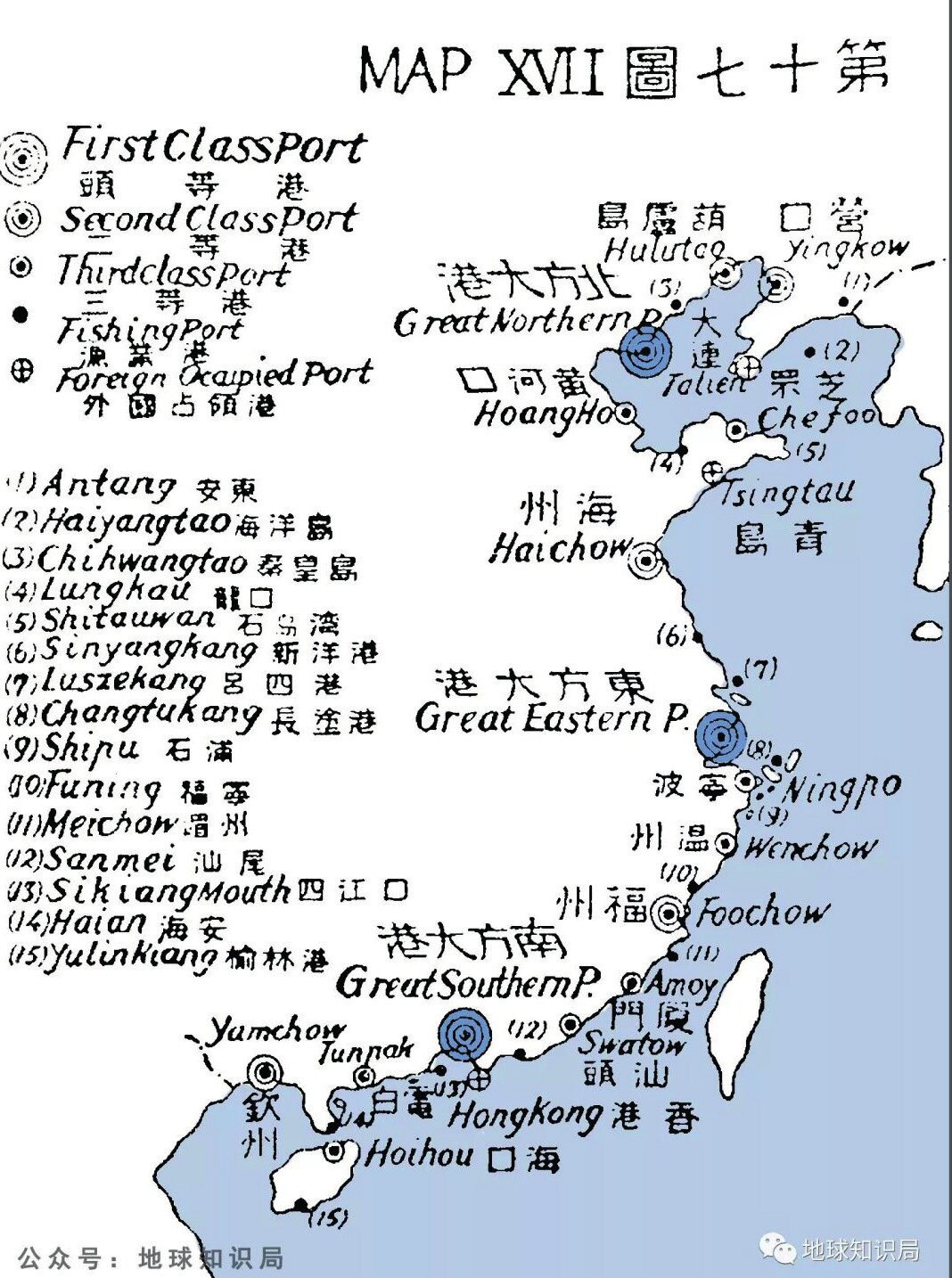
The core of Sun Yat-sen’s early thoughts on China’s modernization centered on identifying a unique path tailored to China’s characteristics in order to compete with advanced nations globally. Inspired by this philosophy, Sun analyzed global trends and China’s domestic circumstances. In his Industrial Plan (Material Construction), he delineated the framework for China’s prospective modernization with substantial ambition. This plan was segmented into six phases and 33 sections. It is proposed to construct approximately 160,000 kilometers of railways to link China’s coastal, inland, and border regions; establish 1.6 million kilometers of roads to create a national road network and access the Qinghai-Tibet Plateau; excavate and refurbish waterways and canals nationwide; erect the Three Gorges Dam; enhance inland river transportation along with water conservancy and power sectors; develop a world-class seaport along China’s northern, central, and southern coasts; and vigorously advance agriculture, manufacturing, and mining. This blueprint created by Mr. Sun Yat-sen demonstrates his exceptional insights and robust aspirations for China’s progress (Xi, 2016: 11Xi, J. (2016). Speech at the Meeting to Commemorate the 150th Anniversary of the Birth of Dr. Sun Yat-sen, People’s Publishing House. ( 习近平:《在纪念孙中 山先生诞辰150周年大会上的讲话》,人民出版社 2016年版,第11页。 )).
The six principal plans encompass nearly all facets of the national economy and citizens’ welfare, illustrating a trajectory for China’s modernization that aims to swiftly eradicate poverty and underdevelopment, thereby attaining national prosperity and strength in a brief timeframe.
The development of a nation’s transportation sector is a direct measure of its economic vitality. The development of the transport sector is crucial for dismantling the natural economic model of self-sufficiency, enhancing economic interactions between various regions, establishing a cohesive domestic market, and bolstering international economic relations.
Consequently, Sun Yat-sen considered transportation the foundation of industry, and his industrial strategy prioritized the advancement of the transportation sector, leading to the comprehensive development of China’s railway, highway, and waterway networks. Sun Yat-sen focused on the construction of a railway communication network, which he saw as the cornerstone of transport. According to him, the establishment of a national road network covering 1.6 million kilometers of roads and the development of land and maritime transport systems, including the Northern, Eastern, and Southern ports, would make these ports gateways to the world and focal points for China’s comprehensive development.
Alongside the transportation sector, Sun Yat-sen prioritized industries such as mining and smelting, emphasizing the steel industry and agriculture: “Agriculture and mining are the foundational industries for all others. When agriculture and mining thrive, all other industries will prosper. Steel is the foundation of all industries (Sun, 1981b: 134Sun, Y. (1981a). The Complete Works (1)., Zhonghua Book Company. ( 《孙中山全集》第1卷,中华书 局,1981年版。 )).”
Sun Yat-sen asserted that the nation required steel with utmost urgency. The construction of ports and railways necessitated a significant provision of steel. Agriculture underpins industrial development and the overall national economy. Sun Yat-sen championed the application of science and technology to enhance agriculture, implement the technical modernization of traditional and underdeveloped farming practices, advance agricultural mechanization, and elevate agricultural labor productivity.
Sun Yat-sen posited that clothing, sustenance, shelter, and transportation constituted the four principal livelihood concerns, asserting that the Chinese populace should have access to adequate food, apparel, suitable living conditions, and effective means of travel. This necessitates the rejuvenation of industry, the implementation of contemporary science and technology, and capitalist production techniques, alongside the advancement of agriculture, industry, mining, and transportation to fulfill the diverse essential materials required by the populace for clothing, sustenance, shelter, and mobility. Sun Yat-sen meticulously devised strategies to enhance the material and cultural living standards of the populace: “offer affordable housing,” “each household should consist of four to six rooms,” and “all households, irrespective of urban or rural status, should possess telephones (Sun, 2011a: 371-372Sun, Y. (2011a). Selected Works (1)., People’s Publishing House. ( 《孙中山选集》上卷,人民出版社2011年 版,第14页。 )).”
He proposed that the profits from industrial development be allocated partially to repay interest, partially to augment workers’ wages, partially to enhance and expand machine production, and the remainder to conserve goods and public utilities: “Thus, all individuals will partake in the pleasures of contemporary civilization (Sun, 2011a: 384Sun, Y. (2011a). Selected Works (1)., People’s Publishing House. ( 《孙中山选集》上卷,人民出版社2011年 版,第14页。 )).”
His sole ambition is to construct “the largest and most exemplary nation globally—one that is the most progressive, solemn, powerful, and peaceful, governed by the people and for the people (Sun, 2011a: 399Sun, Y. (2011a). Selected Works (1)., People’s Publishing House. ( 《孙中山选集》上卷,人民出版社2011年 版,第14页。 )).”
Sun Yat-sen asserted that China’s engagement with the outside world must preserve national independence and sovereignty, which are essential for the country’s industrialization and a significant aspect of his industrialization thought.
Sun Yat-sen’s reform and opening-up ideas primarily encompassed the inflow of foreign capital, expertise, and scientific advancements into the country. During that period, China faced a severe deficiency in construction funding, skilled personnel, and technical capabilities, with capital being the pivotal element determining the success or failure of the country’s industrialization. Sun Yat-sen assessed China’s significant advantages and asserted that China “holds the foremost position globally regarding its abundant resources and treasures.” According to him, “the population is 400 million, ranking first globally. The intellect and skill of the Chinese populace have remained unparalleled since antiquity, and their 5,000-year-old culture is unique in the world. Millennia ago, they were already the most powerful in the world (Sun, 2011a: 195Sun, Y. (2011a). Selected Works (1)., People’s Publishing House. ( 《孙中山选集》上卷,人民出版社2011年 版,第14页。 )).” By robustly infusing capital and talent, we can definitely fulfill China’s industrialization agenda.
“National initiatives can only be executed when foreign investment is secured, external expertise is proficiently organized, and aspirational strategies are formulated (Sun, 2011a: 227Sun, Y. (2011a). Selected Works (1)., People’s Publishing House. ( 《孙中山选集》上卷,人民出版社2011年 版,第14页。 )).”
Sun Yat-sen exhibited optimism regarding this matter. He referenced Japan as an illustration. By embracing European and American methodologies, Japan accomplished in merely fifty years what the United States attained in a century.
“With China’s current situation and wealth, if our people can come together as a nation, our industrial development will undoubtedly catch up with Europe and the US within a decade by embracing foreign investment and expertise while developing our production capacity (Sun 2011a: 199Sun, Y. (2011a). Selected Works (1)., People’s Publishing House. ( 《孙中山选集》上卷,人民出版社2011年 版,第14页。 )).”
Sun Yat-sen advocated international economic collaboration founded on equality and mutual advantage, aiming to integrate China’s economy into the global economic framework and establish China as a prominent economic power.
Conclusion: The Value and Limitations of Sun Yat-sen’s Modernization Thought
Sun Yat-sen devised an ambitious plan for the modernization of China; however, it was constrained by the nation’s semi-colonial and semi-feudal social and historical circumstances, along with Sun Yat-sen’s impractical perceptions of national conditions and the international landscape. The “Industrial Plan” encountered its own challenges, preventing it from evolving beyond an admirable aspiration to enhance the nation and improve the welfare of its citizens. Nonetheless, this does not diminish the rationality, originality, and progressiveness of Sun Yat-sen’s economic modernization philosophy, which retains significant reference value for China’s contemporary modernization efforts.
The Revolution of 1911 initiated the shift from feudal civilization to modern civilization. In the context of China’s early modernization during the Republic of China, the 1911 Revolution dismantled the monarchy and instituted a bourgeois republic, thereby transferring the leadership of early modernization to the modern bourgeoisie and facilitating the transition to modern civilization. It popularized the concept of a democratic republic, reinstated China’s primary national structure, marked a pivotal moment in the revitalization of the Chinese nation in modern history, and established an institutional framework for China’s initial modernization. Second, it opened the period of comprehensive development of China’s early modernization. The Nanjing Provisional Government, led by Sun Yat-sen, enacted a series of laws and implemented modernization measures, resulting in significant changes across political, economic, cultural, and social domains, all exhibiting a pronounced capitalist character. Sun Yat-sen’s vision for nation-building and his modernization philosophy significantly contributed to China’s early modernization, particularly through the New Three People’s Principles and the policies of collaboration with Russia, the Communist Party, and the agrarian and labor classes, which exhibited a socialist inclination. Third, it provided some experience for the Communist Party of China to explore the road of China’s modernization.
Sun’s petty-bourgeois ideology and policy proposals were constrained by class and historical circumstances. First, he advocated for the concepts of “equalizing land rights” and “regulating capital” (specifically private capital), underscoring the necessity for the nationalization of large enterprises and prominent universities while permitting private ownership of small and medium-sized enterprises in order to mitigate the influence of private capital on national decision-making and ensure the stable development of the economy and society. Nevertheless, he did not stress that public ownership should be the primary entity regarding quality and quantity, nor did he genuinely depend on the revolutionary forces led by workers, peasants, and the Communist Party as the vanguard of the working class, thereby failing to embody the essential interests of the proletariat. Secondly, he misjudged the challenges and resistance to China’s modernization and lacked a comprehensive understanding of the nation’s formidable feudal elements, foreign influences, and their comprador factions, rendering his modernization concepts difficult to actualize in a semi-colonial and semi-feudal society.