Introduction
Dr. sun yat-sen is one of the five individuals who have significantly influenced modern Chinese political history. Li Hongzhang (1823-1901) epitomizes 19th-century China. Sun Yat-sen (1866-1925) initiated China’s entry into the 20th century. Mao Zedong (1893-1976) is pivotal to this century. Deng Xiaoping (1904-1997) guided China from the 20th century into the 21st century. Xi Jinping (born 1953) is the prominent figure and architect of 21st-century China. Mao, Deng, and Xi exemplify a degree of continuity as leaders of the Communist Party of China (CPC); however, they have adhered to distinct political trajectories. Subsequently, all prominent leaders have adopted Sun Yat-sen’s legacy. During this time, China has deliberated on whether political ideology and agenda would align with the “Three People’s Principles” formulated by Sun Yat-sen, encompassing “Nationalism, the People’s Rights, and the People’s Welfare.” In this regard, the opportunity initiated by Sun Yat-sen remains accessible, and the “Three People’s Principles” have preserved their significance via reiterations across the historical continuum of the 20th and 21st centuries. Consequently, contemplating Sun Yat-sen is an essential prerequisite for comprehending a historical character and the ongoing issues of “nationalism, the people’s rights, and the people’s welfare” in China.
Sun Yat-sen encountered a comparable predicament to that of all modernist nationalist leaders originating from the oppressed world of the 20th century. While Western affiliations were essential for modernization, these leaders’ primary challenge was achieving equilibrium between their nation’s aspiration for autonomy and independence from the West. For an anti-modernist, essentialist thinker and anarchist activist such as Mahatma Gandhi (1869-1948), this issue is nonexistent. He may reconcile with the West in its entirety. It does not replicate any mode of existence. Nevertheless, contemporary nationalists must industrialize their nations and educate their populace. Thus, they aim to guarantee their nation possesses sufficient strength to resist future colonialist pressures.
On the other hand, they perceive their nation as “distinct” and possessing its own “essence.” This entrapment is typically addressed by constraining “universal” civilization to national ownership; hence, anything that is deemed civilized is perceived as national. The distressing occurrences during the disintegration of previously distinctive empires within the capitalist realm significantly influence the emotional context of civilizational assertions, particularly regarding development. Sun’s poignant address on December 21, 1923, welcoming students returning from the United States to Linnan, an area of Guangzhou, is profoundly illuminating. Sun asserted that China, the custodian of civilization, would encounter considerable challenges for a brief period. However, because of the potency of its national identity, it would rapidly eclipse the United States and Japan, establishing itself as the epicenter of civilization (Liu, 1999: 10-15Liu, M. (1999). The China Dream: Great Power Thinking and Strategic Posture in the Post-American Era. CN Times Books. New York.).
Indeed, what is deemed civilized is inherently imbued with the cultural codes and historical context of its origin. Consequently, the modernist and essentialist focuses of Sun’s nationalism incited much debate between two distinct nationalist factions that subsequently opposed each other regarding the relationship they would forge with China’s historical tradition. The intellectual and cultural discord surrounding the political issues at the 3rd General Congress of the Kuomintang (KMT), held from March 15 to 24, 1928, precipitated the initial major schism among the nationalists (Eastman, 1986: 111-112Eastman, L. E. (1986). “Nationalist China During Nanking Decade 1927–1937.”. The Cambridge History of China: Volume 13 Republican China 1912-1949 Part 2. Cambridge, Cambridge University Press. Ed. J. K. Fairbank–A. Feuerberker. Cambridge. 1986. 116-167.).
Sun is part of the multilingual elite, possessing proficiency in at least one Western language, originating from the socioeconomic classes that have spearheaded nationalism movements in the oppressed countries (Anderson, 2004: 132Anderson, B. (2004). Hayali Cemaatler: Milliyetçiliğin Kökenleri ve Yayılması. Metis Yayınevi. Çev. İskender Savaşır. İstanbul.). His proficiency in English, which enabled him to engage with Western literature and convey it to China, was significant. Sun is among the individuals of his generation who could most distinctly separate himself from conventional political ideology due to his socioeconomic milieu and lack of traditional Chinese schooling. Nonetheless, Sun, who commenced his political journey as a Han nationalist and concluded it as a Chinese nationalist, comprehended the significance of grasping old Chinese political principles and integrating them into China’s modern future through the accumulation of his experiences. The inscription “tianxia weigong” (all share the world) on his tombstone, derived from “Liyun datong,” a foundational text of ancient China, illustrates the link between his ideology, which transitioned from a racist viewpoint to a socialist nationalist perspective, and Chinese traditions (Chen, 2011: 4Chen, A. H. Y. (2011). “The Concept of ‘ Datong” in Chinese Philosophy as an Expression of the Idea of the Common Good.” Retrieved July 21, 2023, from 4-5.).
A parallel to Sun Yat-sen’s endeavors to reconcile the conflict between local identity and Western modernity is evident in the discord between Asianness and Westernness. As detailed below, Sun encountered the racial discrimination that Asians endured from Westerners in various locations. He had much affinity for “Pan-Asianism,” which started in Japan and was founded on the concept of the unity of the yellow race. The paramount illustration of this endeavor is the apparel he created (Schell-Delury, 2013: 152Schell, O. – Delury, J. (2013). Wealth and Power: China’s Long March to the Twenty-First Century. Published by Random House. New York.). In 1911, he conceptualized the contemporary attire of modern Chinese individuals, drawing inspiration from Japanese school uniforms and Western outfits. By adapting Japanese clothes, representative of the most advanced nation of the yellow race, to align with Western aesthetics, he established a symbol of contemporary Asian creativity. This attire was subsequently associated with Mao Zedong and emerged as a symbol of Chinese socialism.
Sun Yat-sen moved away from the revolutionary approach of relying upon intellectual circles and military factions that lacked comprehension of the mass line, influenced by the insights gained from the 1911 Xinhai Revolution and the experiences of the 1917 Bolshevik Revolution. By 1919, Sun had established himself as a revolutionary who emphasized the mass line and fostered strong connections with the grassroots. During this period, Sun was referred to as the “Sun of Eloquence,” an English translation of his surname, due to his ability to deliver extensive and uninterrupted talks on the Chinese Revolution and the issues facing China. This contrasts with the conventional Chinese political style, which prioritizes brevity, indirect communication, and even silence (Schell-Delury, 2013: 153Schell, O. – Delury, J. (2013). Wealth and Power: China’s Long March to the Twenty-First Century. Published by Random House. New York.).
Sun was a politician referred to by the title of Dr. During the time when warlords were causing trouble all over China, he started utilizing the title of Generalissimo. The utilization of both titles is remarkably impactful. It is not only coincidental that Sun was a “medical doctor” and that the vast majority of the leaders of the Young Turk movement in the Ottoman Empire were medical students. During an era when the Ottoman Empire was seen as the “sick man” of Europe and the Qing Empire as the “sick man” of Asia, these experts assumed the role of “social and political physician.” They committed themselves to rehabilitating their “ailing” nations. Consequently, they did not hesitate to compose political prescriptions. Similarly, as military elites emerged in Turkey during a critical juncture where national salvation necessitated armed intervention, Dr. Sun reemerged as the “Generalissimo,” subsequently aligning himself closely with individuals possessing military backgrounds.
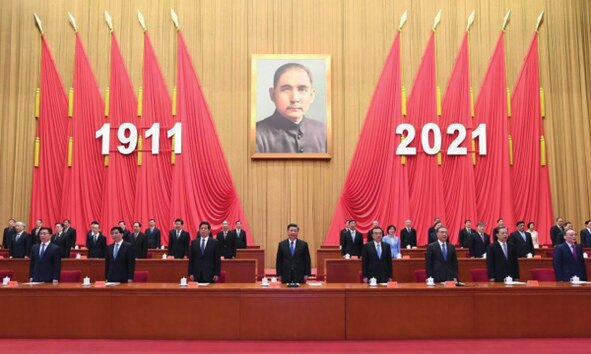
The People’s Republic of China was founded on its distinctive system, which integrates socialism, nationalism, and traditional Chinese philosophy, especially Confucianism. It is evident from Dr. Sun Yat-sen’s remarkable struggle practices that he attempted to integrate nationalism and socialism while still using traditional Chinese sources. Sun’s contribution was essential in the development of the democratic revolution initiative centered on the strategy of unifying all national classes and forces. Thus, Sun’s legacy continues to hold significance today, with the Chinese leadership asserting its rightful ownership of it (Xi, 2016Xi, J. (2016). “Speech at the Conference to Commemorate the 150th Anniversary of the Birth of Dr. Sun Yat-sen.”. Retrieved August 14, 2023, from).
This study highlights the transformations in Dr. Sun Yat-sen’s political ideology and endeavors resulting from significant milestones in his life. Dr. Sun transitioned from a Han nationalist, elitist viewpoint of democracy and its associated organizational understanding to a socialist Chinese nationalist who prioritized the mass line and advocated for an organized party model among the populace, securing a distinctive position in Chinese history as the inaugural prominent leader of the Chinese democratic revolution.
Han Nationalist Revolutionary Who Looked West
Sun Yat-sen was born in 1866 in Chuieng village, Guangdong province, South China, of Hakka ethnicity. Guangdong was among the provinces in China where capitalist production, consumption relations, and contemporary lifestyles evolved most swiftly, becoming incorporated into the capitalist world economy with the Treaty of Nanking in 1842. This circumstance was essential in establishing South China as the nucleus of modernist movements.
Six years prior to Sun’s birth, China had suffered defeat in the Second Opium War and acknowledged its inability to persist as a conventional empire. Prince Gong (1833-1898), who assumed power in 1860, initiated the inaugural reform process. With his backing, the new ruling elite, comprising young bureaucrats such as Zeng Guofan (1811-1872), Li Hongzhang, Zuo Zhongtang (1812-1885), Wenxiang (1818-1876), and Yung Wing (1828-1912), resolved to gradually modernize China and safeguard it from external threats by employing political acumen in this reform initiative termed “self-strengthening” (Liu, 1994: 4Liu, K.-C. (1994). “The Beginnings of China’s Modernization,” Li Hung-chang and China’s Early Modernization. An East Gate Book. Ed. S. C. Chu - K-C Liu. New York. 3-14.; Ulusoy, 2023: 95Ulusoy, C. (2023). Çin Siyasal Düşüncesi ve Siyasi Tarihi Bağlamında Çin Siyasal Elitleri (1840-1978). Kapadokya Üniversitesi Yayınları. Nevşehir.). In a semi-colonial empire, Sun, a product of the reform era, was raised in a nation increasingly acquainted with modern concepts.
In 1864, merely two years prior to Sun’s birth, the Taiping Rebellion, orchestrated by Hong Xiuquan (1814-1864), who amalgamated the communal practices of early Christians with an ascetic Protestant ethos and advocated for the expulsion of Western powers, concluded (Wagner, 1998: 136- 137; Spence, 1990: 174-175Spence, J. D. (1990). The Search for Modern China. W. W. Norton & Company. New York.). Audrey Wells asserts that Sun became acquainted with the Taiping Rebellion at a young age and regarded Hong as his hero (Wells, 2001: 1Wells, A. (2001). The Political Thought of Sun Yat-sen: Development and Impact. Palgrave. London.). Due to his family’s inability to finance a private tutor for civil service exam preparation, he traveled to Honolulu, Hawaii, to seek assistance from his elder brother, Sun Mei. It is noteworthy that Sun, who would later be recognized in Chinese history as a revolutionary against the Manchu-established Qing Dynasty, admired Hong in his youth. As previously highlighted, Sun, akin to Hong, was of Hakka descent (Modern China, 1998: 429Modern China. (1998). Modern China: An Encyclopedia of History, Culture, and Nationalism. Garland Publishing. Ed. Wang K.-w.. New York.). Given the substantial support provided by the Hakkas to Hong’s insurrection, it is evident that the recollections of the uprising remain vivid throughout Hakka families. The Taiping Rebellion held a significant position as Sun’s ideological framework began to develop.
The Hakka nationality can be characterized as the segment of the Chinese populace most subjected to fervent Christian missionary propaganda. The Hakkas garnered significant attention from missionaries, leading some to assert that they were one of the lost tribes of the Israelites (Bohr, 2009: 10Bohr, P. R. (2009) “Did the Hakka Save China: Ethnicity, Identity, and Minority Status in China’s Modern Transformation.” Headwaters. 26. 10-18.). Sun’s elder brother was a fervent Christian. He asserted his belief in the savior, revolutionary Jesus, rather than the Jesus represented by the churches (Schell-Delury, 2013: 356Schell, O. – Delury, J. (2013). Wealth and Power: China’s Long March to the Twenty-First Century. Published by Random House. New York.). Sun received his education at the Anglican-operated Iolani School and subsequently at Oahu College. Consequently, Sun dedicated part of his adolescence to an environment that facilitated the acquisition of different cultures and languages while also allowing him to watch and be inspired by Christianity. The influence of missionaries on the generations raised in China during this era was significant. Over the years, the inclination towards obtaining Western education and studying in the West has intensified.
Sun witnessed the indigenous populace of Honolulu’s anti-colonial resistance against the United States, which significantly impacted him (Öztürk, 2019: 47Öztürk, A. (2019). “Sun Yat-Sen’in Xinhai Devrimi’ne Yön Veren Üç Halk İlkesi SANMİNZHU Yİ.” Türkiye’de Tayvan Çalışmaları –II. Ankara Üniversitesi Yayınları, Yay. Hz. A. M. Dündar. Ankara. 45-74.). Consequently, Sun’s early intellectual development can be attributed to his birth in Guangdong, upbringing during the reform era, affiliation with the Hakka ethnicity, alignment with a revolutionary interpretation of Christianity influenced by the Taiping, acquisition of modern education in a US-associated province, and exposure to local independence movements there.
Upon his return to the village in 1883, Sun did not adjust to the conventional framework of the community and performed a modernist perspective. In opposition to child trafficking, infanticide, concubinage, foot binding, idol worship, and many other behaviors, Sun audaciously manipulated the finger of a substantial wooden statue referred to as the “Emperor of the North” and proclaimed, “Now you comprehend the type of deity required to safeguard your village. I fractured and contorted his finger, yet he maintained his grin as before.” Subsequent to this humiliating incident, Sun was deported to Hong Kong, a British territory (Weaver, 1939: 132-133Weaver, W. C. (1939). “The Social, Economic, and Political Philosophy of Dr. Sun Yat-Sen.”. The Historian. 1 (2). 132- 141.). The impact of Christian schooling on Sun’s attitude towards idols is unequivocal. He has expressed his aspiration to be recognized in history as an iconoclast akin to Abraham, regarded as the progenitor of monotheistic faiths. The primary targets of the Sun’s destruction are the Empire and its customs.
Following his journey to Hong Kong, Sun had the opportunity to travel extensively and dedicated the subsequent years to analyzing the social and political institutions of the places he explored (Weaver, 1939: 133Weaver, W. C. (1939). “The Social, Economic, and Political Philosophy of Dr. Sun Yat-Sen.”. The Historian. 1 (2). 132- 141.). Sun studied medical studies in Hong Kong and was baptized there. In 1892, he commenced his career in the Portuguese province of Macao as one of the inaugural Chinese graduates of the Hong Kong medical school. Nevertheless, he persisted in his politicization by opposing the Qing Dynasty and relegating his profession, believing that the dynasty’s failure to resist foreign forces stemmed from its corrupt and feeble governance. The Tonkin War, commencing in the year Sun was dispatched to Hong Kong and concluding in 1885, featured China’s defeat despite notable opposition against France regarding Vietnam’s status, significantly influencing Sun’s political development during this period. The conviction among China’s young intellectuals, especially Sun, that the Qing Dynasty was incapable of safeguarding the nation intensified, leading to the emergence of Han nationalism. Since 1883, it is acknowledged that Sun actively sought to dismantle gods, with the definite intention of building a nation-state centered on Han nationality (Öztürk, 2019: 49Öztürk, A. (2019). “Sun Yat-Sen’in Xinhai Devrimi’ne Yön Veren Üç Halk İlkesi SANMİNZHU Yİ.” Türkiye’de Tayvan Çalışmaları –II. Ankara Üniversitesi Yayınları, Yay. Hz. A. M. Dündar. Ankara. 45-74.).
By 1894, Sun, having established a network of like-minded young intellectuals who were modernist nationalists, composed a petition with his associates to send to the senior official Li Hongzhang as a remedy for China’s issues. Nevertheless, they could not contact Li (Bergère, 2000: 40Bergère, M.-C. (2000). Sun Yat-Sen. Stanford University Press. Trans. J. Lloyd. California.). In 1894, Sun and his associates, unable to communicate their beliefs to the authorities, resorted to the revolutionary organization and established The Society to Restore China’s Prosperity (Xing Zhong Hui) in Hawaii. The society relocated to Hong Kong in 1895 (Bergère, 2000: 49Bergère, M.-C. (2000). Sun Yat-Sen. Stanford University Press. Trans. J. Lloyd. California.).
The primary confrontation between the Han nationalists and the Qing Dynasty commenced following the First Sino-Japanese War in 1895. Despite an extensive historical period during which the Goryeo (918-1392) and Joseon (1392- 1897) Dynasties on the Korean Peninsula acknowledged their status as vassal states of China, Japan, having modernized and fortified itself through the Meiji Restoration (1868), engaged in a contest with China for dominance in Korea, culminating in the Sino-Japanese War. Subsequent to the Tonkin War, China fortified its military and naval forces, anticipating a conclusive triumph over Japan. Nonetheless, following the significant setback it endured, the Treaty of Shimonoseki (1895), which led to the forfeiture of Taiwan Island, the Pescadores Islands, and Liaodong, had a profound impact on Chinese politics. Sun and his organization’s members initiated the First Guangzhou Uprising on October 26, 1895, aiming to detach the Canton region from the Qing dynasty; however, they were unsuccessful and subsequently caught and banished (Bergère, 2000: 55-59Bergère, M.-C. (2000). Sun Yat-Sen. Stanford University Press. Trans. J. Lloyd. California.). Qing operatives abducted Sun, who persisted in his revolutionary endeavors in London following his exile, and transported him to the embassy. The objective was to transport Sun to China and carry out his execution clandestinely. His escape was facilitated by the exceptional endeavors of his pals James Cantilie and Dr. Manson (Sun, 2018: 64-84; Cantilie, 2001: 63). The unsuccessful abduction attempt by the Qing agents established the mythology of Sun Yat-sen and elevated his status as a leader among Han nationalists (Bergère, 2000: 66-67Bergère, M.-C. (2000). Sun Yat-Sen. Stanford University Press. Trans. J. Lloyd. California.).
While abroad, Sun Yat-sen asserted that modernization was an indispensable requirement for China. Despite adopting Western social decorum, particularly in attire and behavior (Schell-Delury, 2013: 151Schell, O. – Delury, J. (2013). Wealth and Power: China’s Long March to the Twenty-First Century. Published by Random House. New York.), he cultivated an independentist position opposing Western colonialism. Sun was struck by the systematic characteristics of Hong Kong’s development. The advancement of Hong Kong sharply contrasts with China’s social and economic regression, marked by ineffective and corrupt Manchu governance. Sun personally experienced the challenges he faced in his work, revealing that the Chinese were subjected to prejudice under British governance in Hong Kong and Portuguese governance in Macau (Lee et al., 2013: 357-358Lee, K. H., Wong, D. T., Ng, K. H. (2013). “Dr. Sun Yat-sen (1866–1925): Medical Doctor and China’s Founding President.” Singapore Medical Journal. 54 (6). 356-358.). Sun, who relocated to Japan in 1897, was influenced by Pan-Asianist ideologies promoting the solidarity of the yellow race against Western powers; he endorsed a policy advocating for the modernization of China, a nation-state initiative centered on Han identity, and collaboration among East Asians against Westerners. In contrast to the Japanese policy that subsequently perverted the Pan-Asianist ideology and promoted the notion of the yellow race as a component of a singular empire under Japanese dominion, he persisted in championing robust cooperation among East Asian nations founded on principles of equality (Sun, 1924Sun, Y. (1924). Pan-Asianism. Retrieved December 6, 2024, from).
The onset of Japan as a base for revolutionaries and the advocacy of Pan-Asianist ideas on a modernist basis were pivotal in the preparations for the 1911 Revolution. Post-war Chinese intellectuals and students critically assessed their nation and created a campaign to pursue education in Japan, leveraging the resources available in that country. Numerous students who traveled to Japan for education and political exiles fleeing the Qing regime became acquainted with contemporary life, scientific advancements, and political beliefs; engaged in talks regarding the introduction and adaptation of these concepts in China; and established a central hub for their organization near China. Moreover, numerous educators and advisors from Japan arrived in China, positioning themselves in history to facilitate substantial shifts in China’s future (Vogel-Harrel, 2019: 134Vogel, E. - Harrel, P. S. (2019). “Japanese Lesson for Modernizing China, 1895-1937,” China and Japan: Facing History. The Belknap Press of Harvard University Press. Ed. E. Vogel. London. 29-64.).
After the war, Japan and China had divergent objectives for reconciliation. The Japanese were uneasy that China, distressed by its defeat, is offering additional economic concessions to Western nations in exchange for backing of its territorial integrity, thus augmenting Western influence in China. The Ōkuma doctrine, named after former Prime Minister and Foreign Minister Ōkuma Shigenobu (1838-1922), aimed to enhance China’s institutional and economic fortitude in response to the increasing privileges of the West after the Sino-Japanese War. The Kokumin Shinbun newspaper, which featured Ōkuma’s remarks on the matter, underscored the inherent nature of the Sino-Japanese rapprochement by referencing the precedent of Prussia and Austria-Hungary, a comparison later commonly employed by Pan-Asianists. The publication noted that the two states, which were adversaries in 1866, subsequently became close allies and anticipated a similar reunion between China and Japan (Zachmann, 2009: 67-68). The salient aspect of Kokumin Shinbun’s elucidation is that the dynasty and a substantial portion of the populace of the two states that engaged in conflict in 1866 were German. Consequently, the justification for an alliance predicated on “racial” unity among China, Japan, and Korea, as observed in the Pan-Asianists of that era, was founded on this precedent. In this context, former Prime Minister and statesman Itō Hirobumi (1841- 1909) conferred with Emperor Guangxu in 1898 and provided counsel. Subsequent to Empress Cixi’s coup in the same year, Itō instructed Japanese authorities to embrace and assist Chinese reformers in Japan (Dreyer, 2016: 52Dreyer, J. T. (2016). Middle Kingdom and Empire Rising of the Sun: Sino-Japanese Relations: Past and Present. Oxford University Press. New York.). The Chinese, on the other hand, had a blend of jealousy and admiration for the Japanese. Moreover, significant curiosity emerged regarding Japan, which unavoidably fostered the reconciliation between China and Japan. Chinese elite circles noted Japan’s effective rejection of Western colonialism during the Meiji era, its industrialization of the economic foundation, enhanced political participation among the populace, and the attainment of universal education. Despite their thoughts being clouded by emotions such as fear, prejudice, and a sense of cultural superiority, many elites regarded Japan as the inaugural instance of a modern nation. Gina Anna Tam asserts that the relationships between Meiji Japan and China were profoundly transformative for China at the onset of a new century (Tam, 2020: 2-3Tam, G. A. (2020). Dialect and Nationalism in China: 1860-. Cambridge University Press. New York.). Following the war in 1896, Japan promptly dispatched the inaugural set of thirteen Chinese students (Dreyer, 2016: 52Dreyer, J. T. (2016). Middle Kingdom and Empire Rising of the Sun: Sino-Japanese Relations: Past and Present. Oxford University Press. New York.).
Ahead of the 1911 Revolution, numerous students studying in Japan participated in the revolutionary efforts of Sun Yat-sen and his associates, who received backing from the Pan-Asianist and anti-Qing Japanese elite. On August 20, 1905, Sun convened all nationalist organizations under the Tongmenghui (Chinese Revolutionary Alliance) and spearheaded the formation of the vanguard organization of the Chinese Revolution (Spence, 1990: 240Spence, J. D. (1990). The Search for Modern China. W. W. Norton & Company. New York.). Assisted by Huang Xing (1874-1916), a prominent leader of the Tongmenghui, and the renowned philologist and intellectual Zhang Binglin (1869-1936), Sun disseminated the organization’s democratic revolution manifesto, the “Three People’s Principles,” in the Minbao newspaper in November (Bergère, 2000: 153Bergère, M.-C. (2000). Sun Yat-Sen. Stanford University Press. Trans. J. Lloyd. California.; Öztürk, 2019: 50-51Öztürk, A. (2019). “Sun Yat-Sen’in Xinhai Devrimi’ne Yön Veren Üç Halk İlkesi SANMİNZHU Yİ.” Türkiye’de Tayvan Çalışmaları –II. Ankara Üniversitesi Yayınları, Yay. Hz. A. M. Dündar. Ankara. 45-74.).
The “Three People’s Principles” are delineated in the oath of the Xing Zhong Hui (The Society to Restore China’s Prosperity), formed by Sun in 1894, and the oath of the Qingshan Military School (Qingshan Junshi Xuexiao), founded by Sun in Japan in 1903. Objectives include: “Expel the Manchus, restore China, and establish a republic; guarantee fair land distribution.” Then, Minbao announces the formulation of the “Three People’s Principles” as “Nationalism, People’s Rights (Democracy), and People’s Well-being” (Weaver, 1939: 133Weaver, W. C. (1939). “The Social, Economic, and Political Philosophy of Dr. Sun Yat-Sen.”. The Historian. 1 (2). 132- 141.).
In articulating the concept of nationalism in Chinese, Sun preferred the term “minzu zhuyi,” which signifies ethnicity, over “guojia zhuyi,” which pertains to “sovereign state,” a political concept introduced by Emmanuel Sieyès during the French Revolution. This term encapsulated the notion of a Han-centric nation-state while concurrently acting as a safeguard against the feared threat of “racial extinction” (miezhong), in which the white race would dominate the yellow race (Schell-Delury, 2013: 167Schell, O. – Delury, J. (2013). Wealth and Power: China’s Long March to the Twenty-First Century. Published by Random House. New York.). The 1911 Xinhai Revolution expanded the notion of country to have a political aspect, expanding the term “race” to encompass all ethnicities within Chinese borders, rather than exclusively the Han.
Sun recognized the political significance of the populace, particularly in light of the lessons derived from the failures in the 1911 Xinhai Revolution and the impact of the 1917 Bolshevik Revolution, but he held a distinctly elitist perspective on the concept of “people’s rights (democracy)” throughout this period. Sun asserts that for individuals to acclimate to a genuinely democratic system, they must undergo transformation and education via revolutions. As citizens possessing “national consciousness,” they will be prepared for the challenges to democratic existence that may destabilize the nation. Sun compares the Chinese populace to a loose layer of sand, asserting that revolutionary ideals serve as the cement that would bind this loose sand into firm concrete. Undoubtedly, the state is responsible for combining this sand, cement, and water (Schell-Delury, 2013: 170-171Schell, O. – Delury, J. (2013). Wealth and Power: China’s Long March to the Twenty-First Century. Published by Random House. New York.).
The principle of “People’s Well-being” (Min- Sheng) sought to abolish the privileges of the Manchus, enhance the welfare of the Han populace, and particularly to allocate land to the peasantry. The elaboration of this idea with a more socialist interpretation was finalized in 1924, as will be argued below (Ulusoy, 2023: 180Ulusoy, C. (2023). Çin Siyasal Düşüncesi ve Siyasi Tarihi Bağlamında Çin Siyasal Elitleri (1840-1978). Kapadokya Üniversitesi Yayınları. Nevşehir.). Bergère asserts that the primary influence on Sun’s initial formulation of this principle was the concept posited by American economist Henry George (1839-1897), which contended that individuals are the proprietors of the value they generate and that the economic value of land ought to be equitably allocated among society (Bergère, 2000: 168-169Bergère, M.-C. (2000). Sun Yat-Sen. Stanford University Press. Trans. J. Lloyd. California.). In the section on the ‘land question’ of George’s Progress and Poverty, which marked the period of its publication, the land-ownership-value problem in the USA, which was articulated with capitalist production, is evaluated, and in particular the land ownership of slave labor is discussed (George, 1935: 333-394George, H. (1935). Progress and Poverty. Robert Schalkenbach Foundation. New York.). It is logical that Sun, significantly impacted by the Taiping Rebellion and well-acquainted with the USA and its intellectuals, considered George’s ideas as pertinent when addressing China’s welfare issue, predominantly involving landless peasants, during a time when socialist and Fabianist ideologies were prevalent in the USA.
During his time abroad, until he returned to China on December 21, 1911, following the victory of the Xinhai Revolution, Sun tried to spread this revolutionary program wherever he went, organized donation campaigns, and tried to gain the support of Chinese abroad and foreigners who were sympathetic to the Revolution (Weaver, 1939: 133Weaver, W. C. (1939). “The Social, Economic, and Political Philosophy of Dr. Sun Yat-Sen.”. The Historian. 1 (2). 132- 141.; Bergère, 2000: 210Bergère, M.-C. (2000). Sun Yat-Sen. Stanford University Press. Trans. J. Lloyd. California.).
The Xinhai Revolution of 1911 and Sun Yat-sen, the inaugural President of the Republic of China
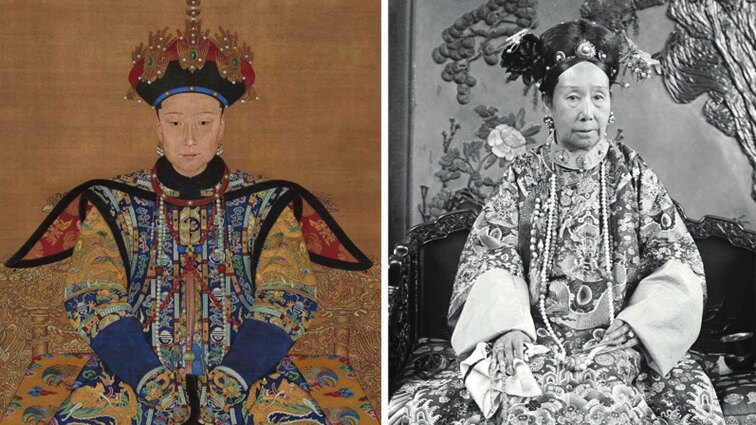
The disintegration of the Qing Empire was unavoidable with the demise of Empress Cixi (1835-1908). Subsequent to the Empress, who adeptly unified the disparate factions within the imperial bureaucracy through her authority, the Manchu bureaucrats, decimated and diminished during the suppression of the Boxer Rebellion (1899-1901), were unable to restore the Empire’s central power alongside bureautocratic elites, particularly military leaders, from other ethnicities.
The Qing administration, debilitated by several insurrections and incessant assaults, was dismantled by the rebellion that commenced with the Wuchang uprising of 1911 and proliferated across. Despite the inability of the revolutionaries led by Tongmenghui to independently dismantle the Qing dynasty, the Qing lacked the capacity to form a stable government. Consequently, the coalition of military leaders and regional powers from the north, under the command of Yuan Shikai (1859-1916), the head of the newly established Beiyan Army, opted for a provisional compromise with the Tongmenghui, notwithstanding their adherence to monarchism. The Beiyan Army and Yuan Shikai, who delivered the decisive blow to the Manchu forces defending the empire, engaged in rigorous negotiations with the imperial family, reaching an accord that Emperor Pu-Yi would reside in the “Forbidden City” in Beijing, that he would exclusively use the title of emperor there, that the imperial family treasury would remain under their control, and that the emperor would receive a stipulated monthly salary. The emperor issued an “imperial order” announcing his abdication and the establishment of a “republic” regime to administer the country (Spence, 1990: 267Spence, J. D. (1990). The Search for Modern China. W. W. Norton & Company. New York.). The proclamation of a “republic” by imperial decree is quite intriguing. Proclaiming a republic through “imperial order” may be viewed as a move by Yuan that undermines the legitimacy of the revolution. The opportunity afforded to Yuan stemmed from the power dynamics among the revolutionaries.
The Tongmenghui, a forerunner of the Xinhai Revolution, did not depend on the populace but instead mobilized the old military forces and different organizations within its reach to instigate an insurrection and established an alliance with the Beiyan Army (ÇKP Tarihi, 2012: 18 and 64ÇKP Merkez Komitesi Parti Tarihi Araştırma Enstitüsü. (2012). Çin Komünist Partisi Tarihi. Canut Yayınları. Çev. Tomas Aliyev. İstanbul.). The military forces it depended upon were feeble, and its social foundation comprised intellectuals, students, and urban elites (Wang, 2015: 99Wang, H. (2015). Çin’in Yirminci Yüzyılı: Devrim, Geri Çekilme ve Eşitliğe Giden Yol. Yordam Kitap. Çev. Ümit Şenesen. İstanbul.).
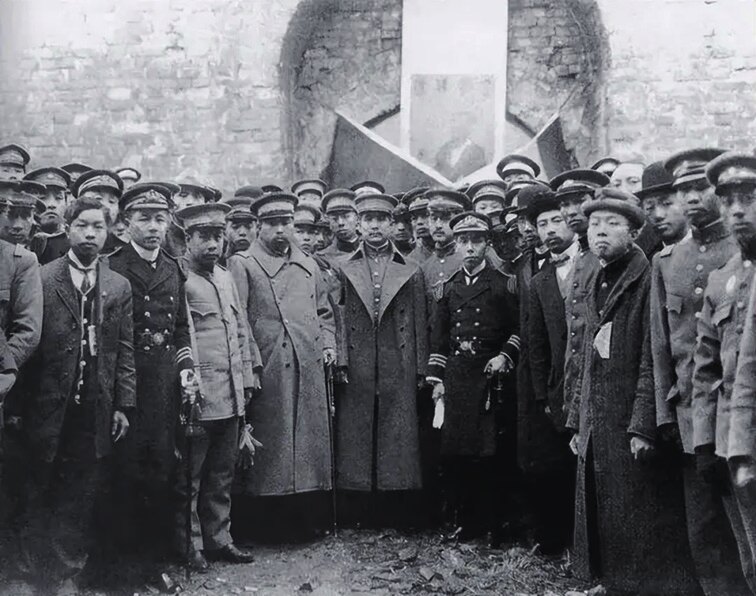
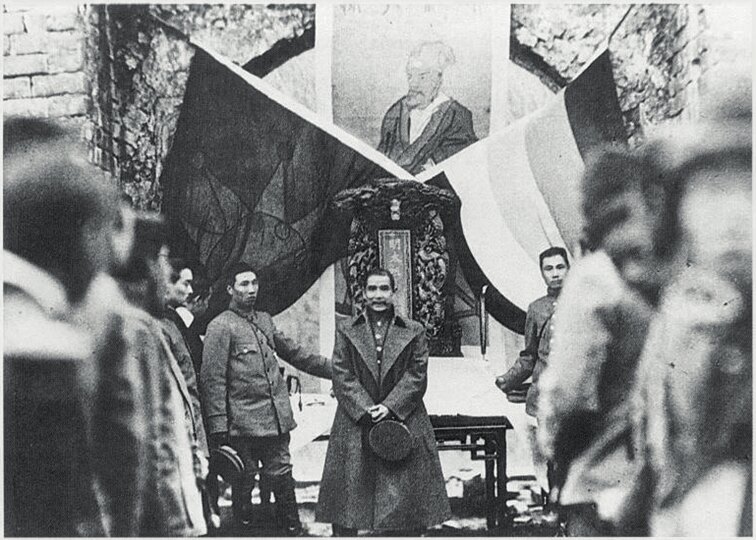
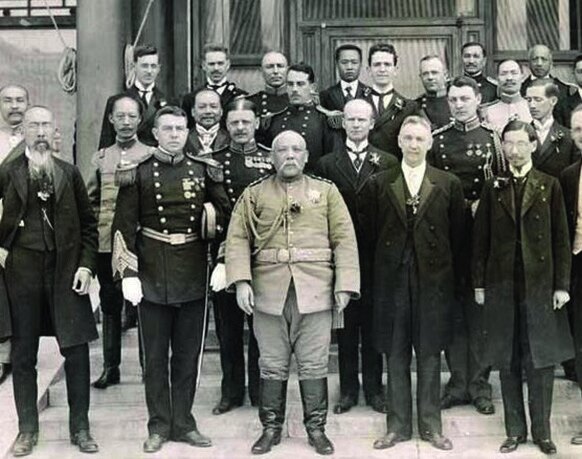
At the onset of the revolution, marked by the Wuchang Uprising on October 10, 1911, Sun was located in the United States. Sun became the first president of the Republic of China on January 1, 1912, after arriving in China on December 21, 1911 (Bergère, 2000: 209-210Bergère, M.-C. (2000). Sun Yat-Sen. Stanford University Press. Trans. J. Lloyd. California.). Upon examining the whole political landscape, he swiftly saw that his tenure in government would be short-lived. The 1911 Revolution effectively consolidated the constitutional monarchists inside the nation. Kang Youwei (1858-1927), the preeminent figure among constitutional monarchists, contended that Mongolia and Manchuria could not be retained if the Qing dynasty was abolished (Wang, 2015: 75Wang, H. (2015). Çin’in Yirminci Yüzyılı: Devrim, Geri Çekilme ve Eşitliğe Giden Yol. Yordam Kitap. Çev. Ümit Şenesen. İstanbul.), but Liang Qichao (1873-1929) returned to China post-revolution and established an alliance with Yuan. Indeed, Sun, recognizing his inability to unify the nation, summoned Yuan to assume the presidency, and Yuan was inaugurated as president on March 10, 1912 (Spence, 1990: 267-276Spence, J. D. (1990). The Search for Modern China. W. W. Norton & Company. New York.).
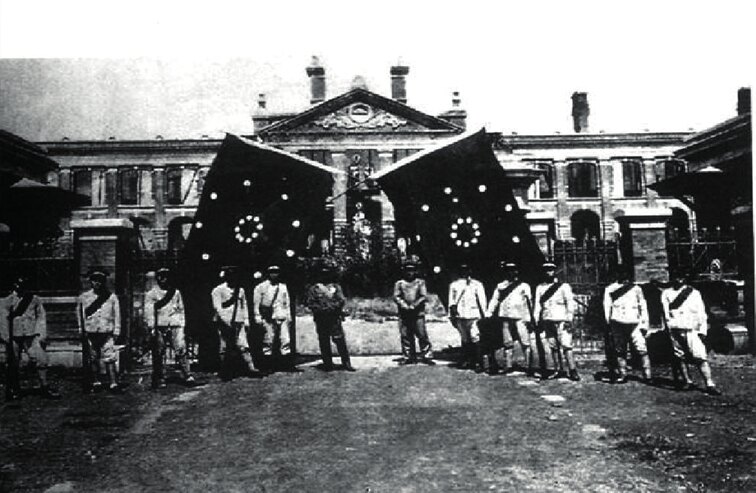
The revolutionaries, recognizing their inability to dismantle the Qing dynasty independently, relinquished the notion of founding a nation-state centered on the Han ethnicity upon their compelled collaboration with Yuan Shikai. The revolutionaries adopted the slogan of the “Five-Nation Republic,” resulting in a five-colored national flag, where “red” symbolizes the Han, “yellow” denotes the Manchus, “blue” signifies the Mongols, “white” represents the Hui, and “black” indicates the Tibetans (ÇKP Tarihi, 2012: 17ÇKP Merkez Komitesi Parti Tarihi Araştırma Enstitüsü. (2012). Çin Komünist Partisi Tarihi. Canut Yayınları. Çev. Tomas Aliyev. İstanbul.).
The complex interactions between revolutionaries and monarchists intensified during the parliamentary elections of the Republic of China, held from December 1912 to January 1913. Four parties participated in the elections. The Tongmenghui transformed into the Kuomintang (KMT - Chinese Nationalist Party) under the leadership of Song Jioren (1882-1912). The Republican Party, the Unity Party, and the Democratic Party participated in the elections as “right-wing” factions. The Republican Party explicitly endorsed Yuan Shikai and was believed to be his party. The Unity Party was founded by Zhang Binglin, a former member of the Tongmenghui. Zhang collaborated with the anti-KMT right-wing factions following the 1911 Revolution. The Democratic Party, previously known as the Progressive Party, is a constitutional-monarchist party with Liang Qichao as its de facto leader (Spence, 1990: 279Spence, J. D. (1990). The Search for Modern China. W. W. Norton & Company. New York.). Despite not securing an outright majority in the house and senate, the KMT garnered a significantly greater number of votes than its competitors, according to the election results (China National Assembly Election, 1912China National Assembly Election. (1912). Retrieved August 4, 2023, from).
The elections were structured with a distinctly elitist rationale consistent with the ethos of 1911. In China, with a population of 400 million, there are merely 40 million voters, consisting of men who pay substantial taxes. The KMT distinctly emerged as the premier party, embodying the inclination of urban elites to engage in governance. The votes obtained by the parties did not originate solely from their own constituents; rather, the results indicated that their influence was derived from fragile and dispersed “elite alliances” inside urban areas. Song Jioren, aspiring to become prime minister, believed he could dominate the government of the new Republic through his gentry-merchant allies; however, neither Dr. Sun nor other party leaders concurred with Song’s optimism (Rankin et al., 1986: 64Rankin, M. B. - Fairbank, J. K. - Feuerwerker, A. - Arbor, A. (1986). Introduction: Perspectives on Modern China History, The Cambridge History of China: Volume 13 Republican China 1912-1949 Part 2. Cambridge University Press. Ed. J. K. Fairbank–A. Feuerberker. Cambridge. 1-71.).
Subsequent to the elections, political parties except the KMT consolidated as the Progressive Party (Progressive Party - 1913) to establish a unified stance in support of Yuan Shikai. This name selection represents a captivating junction of Turkish and Chinese political history. The opposition to the national revolutionary and republican party was designated as the “Progressive Party.” Furthermore, Liang, who held the position of Minister of Justice in Yuan’s cabinet, was elected as the head of this party. Song Jioren, who struggled to establish a government, was killed on Yuan’s orders on March 22, 1913. Liang was implicated in the murder; however, all the hired assassins were inexplicably eradicated (either murdered or vanished), leading to Yuan’s exoneration by the court authorities (Schell-Delury, 2013: 135Schell, O. – Delury, J. (2013). Wealth and Power: China’s Long March to the Twenty-First Century. Published by Random House. New York.).
The assassination of Song Jioren marked the dissolution of the provisional consensus-based elite unity formed after the 1911 Xinhai Revolution. Yuan Shikai, who consolidated all monarchists, initiated a significant assault on the KMT and proclaimed his dictatorial regime. Yuan, a landowner backed by comprador bureaucratic capital, prevailed against the KMT, which lacked popular support, through his alliance with local northern chiefs and the strength of the Beiyan Army. Dr. Sun’s endeavors, having defected to Japan and advocated for a second revolution, proved insufficient, as Yuan’s army quelled the insurgents. With international backing, Yuan initiated plans to restore the monarchy and proclaim himself emperor (Bergère, 2000: 237Bergère, M.-C. (2000). Sun Yat-Sen. Stanford University Press. Trans. J. Lloyd. California.).
The Most Challenging Years of Sun Yat-sen
Neither the statist modernization of the late Qing period nor the mobilization of proto-liberal democracy advanced in the four years after the 1911 Revolution (Rankin et al., 1986: 64Rankin, M. B. - Fairbank, J. K. - Feuerwerker, A. - Arbor, A. (1986). Introduction: Perspectives on Modern China History, The Cambridge History of China: Volume 13 Republican China 1912-1949 Part 2. Cambridge University Press. Ed. J. K. Fairbank–A. Feuerberker. Cambridge. 1-71.). The historical power bloc that sustained the Qing Empire reestablished its supremacy through a new, mainly militarized coalition by 1913. Nonetheless, the dissolution of the Empire eradicated the ideological instruments, particularly Confucianism, that would direct this coalition, and the efficacy of the civil-bureaucratic systems to oversee the military diminished. Under these circumstances, there was no favorable development for China in comparison to the Qing dynasty, and the situation deteriorated slightly.
Subsequent to Yuan’s consolidation of power, he reinstated the examination system for civil servant recruitment and endeavored to enhance civil-bureaucratic oversight over the military. Nonetheless, Yuan, oblivious to the precariousness of the situation, proclaimed himself emperor on March 22, 1916, revealing his inability to secure the allegiance of the elites to whom he had assigned new roles, particularly Duan Qirui (1865-1936), whom he regarded as his closest ally (Rankin et al., 1986: 64Rankin, M. B. - Fairbank, J. K. - Feuerwerker, A. - Arbor, A. (1986). Introduction: Perspectives on Modern China History, The Cambridge History of China: Volume 13 Republican China 1912-1949 Part 2. Cambridge University Press. Ed. J. K. Fairbank–A. Feuerberker. Cambridge. 1-71.).
Dr. Sun established the Chinese Revolutionary Party (CRP) in Tokyo in 1914. The CRP’s strategy perpetuated the legacy of Tongmenghui, prioritizing outreach to military factions and clandestine organizations over bolstering the populace base, primarily orchestrating coup-like insurrections and executing assassinations (ÇKP Tarihi, 2012: 23ÇKP Merkez Komitesi Parti Tarihi Araştırma Enstitüsü. (2012). Çin Komünist Partisi Tarihi. Canut Yayınları. Çev. Tomas Aliyev. İstanbul.). Yuan quelled all forms of insurrections and coup endeavors orchestrated by the CRP. During World War I, commencing in 1914, Japan appropriated the German colony in Qingdao and presented the Chinese government with an ultimatum on January 18, 1915, known as the “Twenty-one Demands.” This ultimatum included the stipulation that China would become a Japanese protectorate, resulting in a loss of credibility for Yuan and inciting a nationalist upheaval within the nation. Although Yuan prolonged the negotiations with Japan and managed to leak the secret ultimatum to the Western states, thus preventing China from becoming a protectorate in return for certain concessions, he had to face the pressure of public opinion. Conversely, Sun assured Japan a more favorable arrangement in exchange for Yuan’s ousting; however, he was unable to elicit a reaction. This initiative by Sun demonstrates his political helplessness (Dreyer, 2016: 62Dreyer, J. T. (2016). Middle Kingdom and Empire Rising of the Sun: Sino-Japanese Relations: Past and Present. Oxford University Press. New York.). Nevertheless, this dire circumstance resulted in a transformation in Sun’s fortunes. Following this ultimatum, the United States lost confidence in Japan, undermining the longstanding US-Japan partnership against Russia in the region. The United States’ hesitance to relinquish sovereignty of China to Japan and its backing of certain military leaders expedited the disintegration of the power coalition fighting Sun (ÇKP Tarihi, 2012: 20ÇKP Merkez Komitesi Parti Tarihi Araştırma Enstitüsü. (2012). Çin Komünist Partisi Tarihi. Canut Yayınları. Çev. Tomas Aliyev. İstanbul.).
Following Yuan’s unsuccessful attempt to become emperor, Sun returned to the country amidst violent turmoil as it was swiftly disintegrating among warlords and commenced combat against the warlords in Canton. In alignment with the zeitgeist, Sun relinquished the civilian designation of Dr. and reemerged as the Generalissimo; henceforth, the second-in-command was not a Japanese-educated civilian thinker but rather a military academy alumnus, Chiang Kai-shek (1887-1975) (Gray, 2002: 66Gray, J. (2002). Rebellions and Revolutions: China from the 1800s to 2000. Oxford University Press. New York.).
In 1916, Sun Yat-sen arrived in the Canton region and attempted to build a revolutionary government, but he was exiled by the warlords. In 1917, Sun was compelled to relocate to Shanghai, where he commenced efforts to restructure the Kuomintang with the assistance of the “Green Gang,” a mafia group that had longstanding connections with the nationalists (Spence, 1990: 304Spence, J. D. (1990). The Search for Modern China. W. W. Norton & Company. New York.). On October 10, 1919, Sun reconstituted the KMT and subsequently created a military government in Guangzhou (Canton) in 1921, assuming the title of Generalissimo. The second KMT under Dr. Sun, in contrast to the first, was distinguished by its more socialist ideas and organizational practices aimed at fostering connections with the populace. The primary factors that transformed the KMT during this period and rendered it the most influential entity in the nation’s trajectory include popular support for the KMT, public fatigue from the warlords’ incessant conflicts, the May 4 New Culture Movement, the contradictions among imperialist powers following World War I, the 1917 Bolshevik Revolution, and the founding of the Communist Party of China in 1921.
The decade from 1914 to 1924 was a formative time during which the dynamics of China’s twentieth century emerged. The five years from 1914 to 1919 were highly prolific in the development of new social forces and ideological-cultural constructs upon which the KMT would depend. Also, the period from 1919 to 1924 was highly productive, during which the KMT acquired the strategy, program, organizational framework, national democratic coalition, and foreign backing necessary to unify all of China. The pinnacle of Dr. Sun’s leadership occurred during this decade. The domestic and global variables contributing to this success have been enumerated above. The subsequent observations can be made concerning these factors: Following World War, the reduction in imports and the rise in exports catalyzed fast industrial growth in China to satisfy foreign demand. The “Twenty-One Demands” ultimatum issued by Japan to China prompted a significant boycott of Japanese products within China, thereby elevating the local demand for Chinese goods. In this era, referred to as the golden years of Chinese industry, the emergence of the industrial proletariat facilitated the rise of class-oriented political philosophies. The national bourgeoisie, unable to execute the democratic revolution independently, commenced collaboration with the working class and other laboring masses based on shared interests against bureaucratic comprador capital and huge landowners. The “national classes,” opposed to allocating the surplus value generated by the nation’s industrial development to warlords and their associated classes, commenced efforts to construct a unified political agenda. The foundational class basis for the cooperation between the KMT and the CPC was predicated on the coalition of the national bourgeoisie, the working class, intellectuals, the petty bourgeoisie, and other laboring classes (ÇKP Tarihi, 2012: 21-27ÇKP Merkez Komitesi Parti Tarihi Araştırma Enstitüsü. (2012). Çin Komünist Partisi Tarihi. Canut Yayınları. Çev. Tomas Aliyev. İstanbul.).
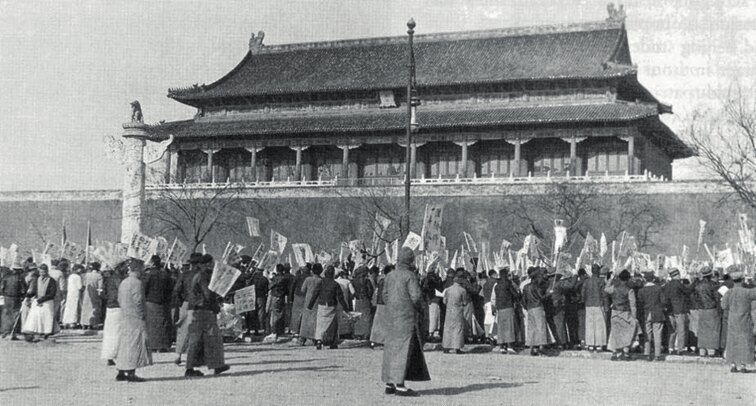
The actions extended to more than twenty provinces and over one hundred cities, introducing novel struggle practices and organizational approaches to China. The emergence of the working class demonstrated that class struggle and the quest for independence were inextricably linked during the democratic revolution, establishing an indissoluble connection between Marxist ideology and patriotism in China through class dynamics. Alongside demonstrations and strikes, several institutions, including newspapers, periodicals, seminars, student organizations, and research institutes, were established to address the challenges faced by China. In 1920, over four hundred periodicals existed, encompassing patriotic-nationalist, socialist-anarchist, and communist ideologies (ÇKP Tarihi, 2012: 37-39ÇKP Merkez Komitesi Parti Tarihi Araştırma Enstitüsü. (2012). Çin Komünist Partisi Tarihi. Canut Yayınları. Çev. Tomas Aliyev. İstanbul.). The “New Culture Movement” of May 4 emerged from the intellectual discourse surrounding these institutions.
The May 4th Movement is pivotal in the shift of intellectual paradigms in China. The political culture has been significantly influenced by this mental metamorphosis. Politics, the arena in which public judgments are rendered and the allocation of social surplus value is determined, had until then been perceived in China as a process of negotiation and conflict among elites. Nonetheless, in the presence of mass movements that exceed the social influence of all factions and groups, politics has acquired a new political agent. Dr. Sun and the CPC, emerging from the May 4th movement, recognized the significance of the bond forged with the masses during this process (Wang, 2015: 127Wang, H. (2015). Çin’in Yirminci Yüzyılı: Devrim, Geri Çekilme ve Eşitliğe Giden Yol. Yordam Kitap. Çev. Ümit Şenesen. İstanbul.).
On July 25, 1919, Lev Karakhan (1889–1937), the Deputy Foreign Commissar of Soviet Russia, issued an official document subsequently referred to as the “First Karakhan Manifesto,” formally titled “Declaration to the Chinese People and the Northern and Southern Governments of China.” As per the manifesto, Soviet Russia proclaimed the nullity of all agreements reached during the Tsarist era concerning economic and political sovereignty against China and showed its determination to rectify all wrongs done to China. The paramount article in the manifesto addressed the restitution of the Chinese Eastern Railway, a segment of the Old Siberian Railway, to China without compensation. Nevertheless, Soviet Russia subsequently asserted that there was no subject “restitution railways without compensation” in the Manifesto and attributed the confusion to an erroneous translation from the French of the Manifesto (Spence, 1990: 307Spence, J. D. (1990). The Search for Modern China. W. W. Norton & Company. New York.). Nonetheless, the Manifesto was acclaimed as an exceptionally commendable declaration for its era. Subsequent to this declaration, Sun reached out to the Bolshevik Party and the Comintern, and in January 1918, the KMT’s media channels disseminated reports commending the Bolshevik Revolution. Several days later, Sun Yat-sen dispatched a congratulatory telegram to Lenin (Spence, 1990: 305Spence, J. D. (1990). The Search for Modern China. W. W. Norton & Company. New York.). Representatives of the Comintern arrived in China to foster mutual communication. The Comintern’s intervention and the Bolshevik Party’s example significantly impacted both the CPC and the KMT. Wang Hui asserts that “the Party’s politicized army and the notions of resisting armed counter-revolution were originally innovations not of the CPC but of the KMT, which remained under the influence of the Comintern during its revolutionary phase” (Wang, 2015: 128Wang, H. (2015). Çin’in Yirminci Yüzyılı: Devrim, Geri Çekilme ve Eşitliğe Giden Yol. Yordam Kitap. Çev. Ümit Şenesen. İstanbul.).
The Final Initiative: Unifying All National Forces for the Consolidation of China
In the early 1920s, Sun traversed between Canton and Shanghai. Sun was designated president of the People’s Government of China, formed by the remnants of the former Beijing Parliament under the auspices of the Guangdong Warlord Chen Jiongming (1878-1933) during the years 1921 to 1922. Chen ejected Sun from Guangdong when he attempted to establish the region as a base for the unification of China (Spence, 1990: 334Spence, J. D. (1990). The Search for Modern China. W. W. Norton & Company. New York.). In 1921, while Sun remained aligned with Chen, Comintern envoy Maring (born Henk Snevlieet, 1883-1942) conferred with Sun, resulting in a preliminary agreement to sustain their collaboration. In January 1923, Sun met with Soviet envoy Adolf Joffe (1883-1927) and subsequently issued a declaration of understanding between Soviet Russia and the KMT. Reports indicated the absence of objective conditions for the establishment of socialism or a Soviet government in China, asserting that the historical task was to ensure China’s national unity and complete independence, with the Comintern pledging various forms of support for this objective (Bergère, 2000: 317- 321Bergère, M.-C. (2000). Sun Yat-Sen. Stanford University Press. Trans. J. Lloyd. California.; Spence, 1990: 334-335Spence, J. D. (1990). The Search for Modern China. W. W. Norton & Company. New York.). By this decision, CPC members joined the KMT through individual involvement. Dr. Sun and the KMT administration were unprepared for the formation of a coalition among the uniting organizations (ÇKP Tarihi, 2012: 73ÇKP Merkez Komitesi Parti Tarihi Araştırma Enstitüsü. (2012). Çin Komünist Partisi Tarihi. Canut Yayınları. Çev. Tomas Aliyev. İstanbul.).
The dynamics of power among warlords in China were perpetually fluctuating. Two months subsequent to this deal, warlord Chen Jiongming (1878-1933) was compelled to vacate Guangzhou. Sun, returning to Canton from Shanghai, consolidated military units from Yunnan, Guangxi, Hunan, and Henan, and was subsequently proclaimed Generalissimo and commander-in-chief of the army to centralize control over the weaponry in his possession and that of the KMT (Bergère, 2000: 324Bergère, M.-C. (2000). Sun Yat-Sen. Stanford University Press. Trans. J. Lloyd. California.; Spence, 1990: 335Spence, J. D. (1990). The Search for Modern China. W. W. Norton & Company. New York.).
Comintern envoy Michail Markovich Borodin (Michael Gruzenberg, 1884-1951), who arrived in Canton on October 6, 1923, was appointed as an advisor to the KMT by Sun (Bergère, 2000: 324Bergère, M.-C. (2000). Sun Yat-Sen. Stanford University Press. Trans. J. Lloyd. California.; Spence 1990: 335Spence, J. D. (1990). The Search for Modern China. W. W. Norton & Company. New York.). It can be said that Borodin indeed exerted influence on the CPC during his tenure, shaped the dynamics between the CPC and the KMT, and orchestrated the assistance allocated to the KMT (ÇKP Tarihi, 2012: 75ÇKP Merkez Komitesi Parti Tarihi Araştırma Enstitüsü. (2012). Çin Komünist Partisi Tarihi. Canut Yayınları. Çev. Tomas Aliyev. İstanbul.).
Upon the emergence of the potential for Chen Jiongmin to assault Canton once more, Borodin recommended that Sun implement drastic measures. Borodin, who underscored the necessity of incorporating workers and peasants into the military, asserted that the implementation of an eight-hour workday, a minimum wage, and the expropriation of large landowners’ assets would garner substantial support from the workers and peasants. Sun refrained from initiating this program to avoid alarming his military supporters; nonetheless, he asserted that choices about the democratic revolution program would be determined at the KMT Congress. Borodin supported the integration of the democratic revolution with the effort to unify the nation, whereas Sun aimed to achieve the democratic revolution through the formation of a comprehensive alliance and seizing power (Spence: 1990, 335Spence, J. D. (1990). The Search for Modern China. W. W. Norton & Company. New York.).
Sun, who initiated preparations for the 1st General Congress of the KMT alongside Borodin, was alerted by foreign allies that he was becoming “Sovietized” before the Congress. In response, Sun declared that he would join up with the CPC if they did not endorse the partnership. Sun replied “Lafayette” to the Chinese, particularly those in America, who mentioned Borodin’s Jewish heritage and inquired about his name (Spence, 1990: 337Spence, J. D. (1990). The Search for Modern China. W. W. Norton & Company. New York.). Sun’s emphasis on the cohesion of all national forces illustrates the pivotal role he occupied in this process. Indeed, the discussions occurred not just inside the KMT ranks but also exhibited fluctuations within the CPC ranks during the Congress.
From January 20 to 30, 1924, the First National Congress of the Kuomintang convened in Guangzhou, attended by 165 delegates, 15 percent of whom were communists, and presided over by Sun Yat-sen. Sun appointed Li Dazhao (1889- 1927), the library director and Mao Zedong’s colleague at Peking University, to the congress presidency council, while the communist Tang Pingshan (1886-1956) was assigned to present a working report on behalf of the KMT Provisional Central Executive Committee. Notwithstanding this, Chen Duxiu (1879-1942), the main leader of the CPC at that time, criticized Sun’s “Three People’s Principles” and the “Five Power Constitution” (legislative, executive, judiciary, control, evaluation) that delineated constitutional powers (Caldwell, 2017: 5Caldwell, E. (2017). “Chinese Constitutionalism: Five-Power Constitution. Max Planck Encyclopedia of Comparative Constitutional Law. Oxford University Press. Ed. R. Grote - F. Lachenmann - R. Wolfrum. Oxford. Retrieved December 11, 2024, from). Chen asserts that they failed to offer a theoretical foundation for the Chinese Revolution. Veteran KMT member Deng Zeru (1868-1934) delivered a discourse elucidating that the Three People’s Principles, which acquired a socialist dimension through the party program developed by Sun and Borodin, were not in conflict with the tenets of communism (Bergère, 2000: 326-327Bergère, M.-C. (2000). Sun Yat-Sen. Stanford University Press. Trans. J. Lloyd. California.). Notwithstanding the concerns from Duxiu’s from the left and certain KMT members from the right, under Sun’s leadership and with the backing of Soviet Russia, China’s democratic revolution program and its subsequent trajectory were sanctioned.
Upon the announcement of Lenin’s death at the Congress, Sun recalled Lenin as the “Great Man” and stated, “I wish to pursue the path you have illuminated, and even in the face of opposition from my adversaries, my people will pay tribute to me” (Spence, 1990: 338Spence, J. D. (1990). The Search for Modern China. W. W. Norton & Company. New York.).
The Three People’s Principles were amended to “anti-imperialist nationalism, democracy, and socialism” during the Congress. The term “democracy” delineated the application of democratic rights by the general populace, while the notion of “guaranteeing favorable living conditions for the populace” was supplanted by “equitable land ownership” and “capital regulation.” In contrast to Sun’s prior elitist perspective on democracy and his economic comprehension confined to developmentalism, it is evident that the agenda has moved further to the left. Furthermore, Sun proposed the motto “Land Belongs to Those Who Work,” which gained prominence in Turkey throughout the 1960s and 1970s (Spece, 1990: 338-339; ÇKP Tarihi, 2012: 75ÇKP Merkez Komitesi Parti Tarihi Araştırma Enstitüsü. (2012). Çin Komünist Partisi Tarihi. Canut Yayınları. Çev. Tomas Aliyev. İstanbul.). Mao Zedong quoted that in a speech delivered on April 22, 1945, Sun’s following words: “The Kuomintang’s principle of nationalism possesses a dual significance. The first is ‘the liberation of the Chinese nation,’ and the second is ‘the equality of all nationalities in China.’ The Kuomintang formally asserts its acknowledgment of the right to self-determination for all nationalities within China, declaring that upon the triumph of the revolution against imperialism and warlords, a free and unified Republic of China will be established” (Mao, 2013: 317Mao, Z. (2013). “Koalisyon Hükümeti Üzerine (22 Nisan 1945)” Seçme Eserler Cilt III, Kaynak Yayınları, İstanbul. 259-332.).
The progression of Sun’s nationalist ideology, originating from Han nationalism with pronounced racial overtones, transitioned from a five-nation republic to a conceptualization of a homogeneous “Chinese nation” and ultimately evolved into a political identity encompassing diverse nationalities, reflecting a collective historical aspiration for coexistence, is noteworthy (Wang, 2015: 343Wang, H. (2015). Çin’in Yirminci Yüzyılı: Devrim, Geri Çekilme ve Eşitliğe Giden Yol. Yordam Kitap. Çev. Ümit Şenesen. İstanbul.).
The congress identified the three policies of the KMT as “alliances with the Soviet Union, collaboration with the CPC, and support for the peasants and workers” (ÇKP Tarihi, 2012: 75ÇKP Merkez Komitesi Parti Tarihi Araştırma Enstitüsü. (2012). Çin Komünist Partisi Tarihi. Canut Yayınları. Çev. Tomas Aliyev. İstanbul.). In May 1924, the Wampoa Academy was founded as the Soviets began to provide military support to the KMT. Chiang Kai-shek, who traveled to Moscow with the KMT delegation, focused on military organization here and then was appointed head of the Academy by Sun. Zhou Enlai (1898-1976), a prominent CPC cadre, also held the position of vice president as the political commissar of the Academy (Spence, 1990: 338Spence, J. D. (1990). The Search for Modern China. W. W. Norton & Company. New York.). The Chinese People’s Government commenced the training of thousands of officers and soldiers with the founding of the Academy, secured financial assistance from the Soviets to equip the army, and expedited preparations for the operation aimed at national unification.
Sun, who dedicated his final months to strategizing the Northern Expedition for national unification, accomplished the preparations for the military operation that would commence in 1927. Dr. Sun Yat-Sen, who established the foundational concept and tactics for the Chinese democratic revolution, died on March 12, 1925.
Conclusion
22025 marks the centenary of Sun Yat-sen’s death. In these past 100 years, China has faced significant challenges in effectively executing its democratic revolution. China asserts that it has established a unique path for China (an intrinsic path to China’s modernization) as a consequence of these processes. Post-1978, China emerged as the manufacturing hub for the West, characterized by its inexpensive workforce and disciplined state structure. The West, a hub of technology, finance, and services, sought to transfer the onerous task of production to emerging nations while preserving its profitability through high-value-added products. On the centenary of the Republic of China, China disrupted this cycle, established its technological preeminence, and emerged as a nation with the most advanced productive capabilities.
China’s unique path is characterized by its capacity to transcend the “development spiral” imposed by the West on oppressed nations. In reaction to the substantial social, economic, environmental, and bureaucratic costs associated with globalization and the shift to a market economy, a comprehensive rectification initiative was launched following Xi Jinping becoming the General Secretary of the CPC in 2012, yielding notable outcomes. China has currently attained the objectives that Sun Yat-Sen envisioned in his poignant address to Chinese students from the USA at Linnan on December 21, 1923, following its significant and laborious long march.
The century-long journey of China has been greatly impacted by the seventy-five years of struggle from the Taiping Rebellion to 1925. Sun Yat-sen is unquestionably the most significant individual who has influenced the past thirty years of these seventy-five years. Following Sun’s demise, the entirety of Chinese leadership has grappled with fulfilling the objectives of the democratic revolution he initiated and advancing it farther. In this regard, Sun is crucial to the history of China’s modernization.
Sun’s most significant legacy, which remains pertinent today, is his transition from Han nationalism to Chinese nationalism, encompassing all Chinese individuals while repudiating Han chauvinism, his shifting of an elitist political approach to mass engagement, his focus on the linkage he forged between socialism and nationalism, and the recognition of the working class and laborers as the most national and patriotic demographic.