Introduction
The architecture of international governance is undergoing a profound transformation. The post-World War II global order, underpinned by institutions like the United Nations (UN), the Bretton Woods financial institutions (IMF, World Bank), and U.S.-led security alliances (NATO), was built on the assumption of U.S. primacy and the promotion of free trade and democracy (Ikenberry, 2018Ikenberry, G. J. (2018). The end of liberal international order? International Affairs, 94(1), 7–23.). While this order-maintained authority during the Cold War and early post-Cold War period, it has shown its limitations in addressing contemporary global challenges that we face today (Acharya, 2017Acharya, A. (2017). After Liberal Hegemony: The Advent of a Multiplex World Order. Ethics & International Affairs, (3), 271–285.; Ikenberry, 2018Ikenberry, G. J. (2018). The end of liberal international order? International Affairs, 94(1), 7–23.). Institutions designed for the mid-20th century now face questions about their relevance in a multipolar world characterized by transnational issues and the rise of the Global South (Acharya, 2017Acharya, A. (2017). After Liberal Hegemony: The Advent of a Multiplex World Order. Ethics & International Affairs, (3), 271–285.; Acharya et al., 2023Acharya A., Estevadeordal A., Goodman, L.W. (2023) Multipolar or multiplex? Interaction capacity, global cooperation and world order, International Affairs, Volume 99, Issue 6, November 2023, Pages 2339– 2365).
Recent events, such as the African Union (AU)’s admission to the G20 in 2023, symbolize the push for more inclusive, multipolar governance (Acharya & Singh, 2023Acharya, S., & Singh, S. C. (2023, September 9). G20 admits African Union as permanent member. Reuters.). The UN Security Council remains paralyzed by great-power vetoes, and the World Trade Organization (WTO)’s dispute settlement system is dysfunctional, reflecting divisions between developed and developing states (Araya, 2025Araya, D. (2025, February 13). Transforming the United Nations for a multipolar world order. Centre for International Governance Innovation.). The IMF and World Bank also face legitimacy crises, with slow reforms failing to adequately represent emerging economies (Ikenberry, 2018Ikenberry, G. J. (2018). The end of liberal international order? International Affairs, 94(1), 7–23.; Acharya, 2017Acharya, A. (2017). After Liberal Hegemony: The Advent of a Multiplex World Order. Ethics & International Affairs, (3), 271–285.). As Acharya (2017Acharya, A. (2017). After Liberal Hegemony: The Advent of a Multiplex World Order. Ethics & International Affairs, (3), 271–285.) notes, the liberal order has long been exclusionary, and its claims of benign governance ring hollow in the developing world. This credibility crisis has fueled calls for alternative frameworks more suited to today’s global challenges in a more inclusive way (Scholz, 2023Scholz, T. (2023). Ascending order: rising powers and the politics of status in International Relations, International Affairs, Volume 99, Issue 3, May 2023, Pages 1316–1317).
Emerging regional blocs and new institutions are filling this void, with a focus on development, security, coordination, and inclusivity. It’s crucial here to note that this research makes a distinction between regional blocs and institutions. Although it’s difficult to clearly separate the effects and roles of both in global politics, for this article, the regional blocs will refer to an informal tendency among countries that face the same/similar challenges with the same/similar objectives to group and act in harmony together. The institutions, on the other hand, will cover and refer to the formal settings and systems in which these countries act with relatively equal voices on decision making and within legal status with long-term governance frameworks. Coalitions of the Global South have become more assertive, particularly in climate negotiations, trade, and UN votes, advocating for sovereign equality and development solidarity (Acharya, 2017Acharya, A. (2017). After Liberal Hegemony: The Advent of a Multiplex World Order. Ethics & International Affairs, (3), 271–285.). Additionally, new multilateral institutions like BRICS and the Asian Infrastructure Investment Bank (AIIB) challenge the dominance of Bretton Woods institutions by offering alternative development finance with fewer political conditions (Prates & Peruffo, 2016Prates, D. M., & Peruffo, L. (2016). Rise of the global South and descent of the North? Bretton Woods Project Briefing, 1 March 2016.). These new actors show that global governance is shifting from a U.S.-led order to a more decentralized, networked multilateralism (Acharya et al., 2023Acharya A., Estevadeordal A., Goodman, L.W. (2023) Multipolar or multiplex? Interaction capacity, global cooperation and world order, International Affairs, Volume 99, Issue 6, November 2023, Pages 2339– 2365).
In this context, this paper examines the transformation of global governance through emerging regional institutions. It categorizes institutions of global stage into three groups: (1) traditional institutions with declining influence (UNSC, NATO, WTO, G7, IMF/World Bank), (2) traditional institutions undergoing adaptation (G20, African Union, Arab League), and (3) new institutions reshaping governance (BRICS, SCO, AIIB, ASEAN, and others). By analyzing these developments, this paper explores how regional blocs are reshaping governance in ways that reflect a more diverse, multipolar international system.
The Traditional Global Governance System:
The Traditional Global Governance System: Origins and Limits
The Architecture of the Post-WWII Order
In the aftermath of World War II, the victorious Allied powers led by the U.S. sought to construct a new international architecture to prevent future global conflicts and foster stability. This post-1945 order was built around a set of interlocking institutions and alliances that reflected the era’s power distribution and liberal ideals (Ikenberry, 2018Ikenberry, G. J. (2018). The end of liberal international order? International Affairs, 94(1), 7–23.). Its core pillars included the establishment of the UN for global peace and security, the Bretton Woods institutions for economic and financial stability, a security alliance (NATO) to contain geopolitical threats, mechanisms of economic leadership like the G7 anchored by U.S. dollar primacy, and the European integration project as a regional embodiment of liberal order values. Over time, these institutions provided a framework that underpinned decades of relative stability and growth. However, their institutional logic and representational structures, frozen mainly in the mid-20th century, have struggled to adapt to a dramatically changed world. As emerging powers and new challenges have arisen, the post-WWII architecture is increasingly seen as old-fashioned or inadequate for today’s layered and polarized international system.
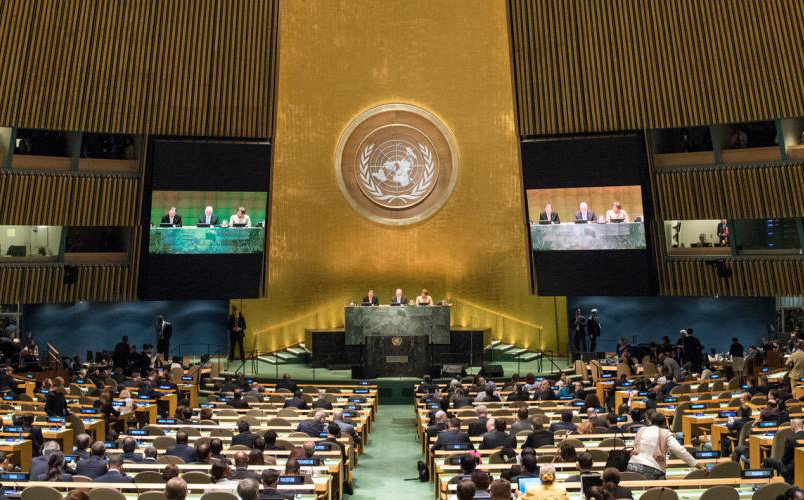
The UN, as the core agency, was created in 1945 as a universal organization for peace and security. At its heart lies the UN Security Council (UNSC), which was endowed with primary responsibility for maintaining international peace. The UNSC’s structure reflected the geopolitical realities of 1945: five great powers, the U.S., Soviet Union (now Russia), China, Britain, and France, were given permanent seats with veto power, alongside a rotating set of non-permanent members. This arrangement, intended to guarantee that no significant action would occur without great-power consensus, entrenched the primacy of the “P5” in global security decisions. Yet the inherent inequality built into its design has become one of its greatest limitations. The Council’s composition remains essentially unchanged since 1945, even as global power has diffused. Many critics argue the UNSC fails to represent many regions of the world today, noting that its permanent membership reflects a bygone era (Mahbubani, 2021Mahbubani, K. (2021). Has the West lost its mind? Oxford University Press.). Major countries like India, Brazil, South Africa, and others have no permanent voice, while entire continents such as Africa and Latin America lack any P5 representation. Efforts to reform and expand the Council, to make it more representative of 21st-century realities, have repeatedly stalled, in part because any structural change requires the approval of the very P5 members whose privileged status would be diluted. The veto power is another key institutional logic now seen as anachronistic: while intended to prevent great-power war, the frequent use (or threat) of veto by P5 members has often crippled the UN- SC’s ability to act on pressing conflicts, for example, vetoes on Gaza or Ukraine resolutions (Ikenberry, 2018Ikenberry, G. J. (2018). The end of liberal international order? International Affairs, 94(1), 7–23.). This has led to perceptions that the UNSC is increasingly obsolete, unable to respond decisively to crises due to geopolitical deadlock and unrepresentative governance. Even UN leaders acknowledge the problem: Secretary-General António Guterres has argued that the Council’s makeup is “outdated” and has urged adding permanent seats for underrepresented regions like Africa and Latin America (Mahbubani, 2021Mahbubani, K. (2021). Has the West lost its mind? Oxford University Press.). In sum, while the UN remains a cornerstone of the global order, the dominance of a few post-WWII powers in the Security Council exemplifies how the traditional governance structure struggles to address the needs and voices of a far more multipolar world.
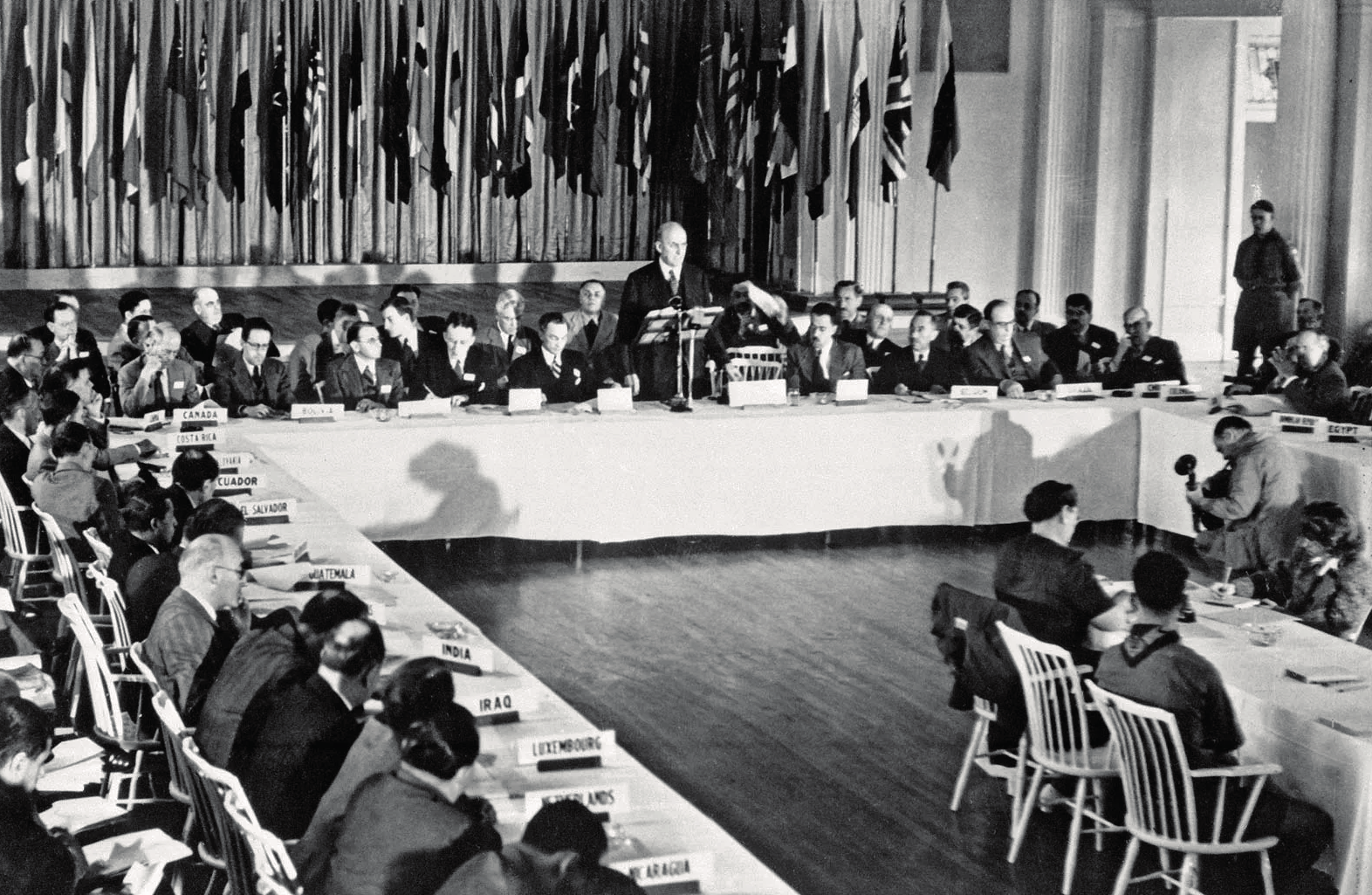
Alongside the UN, the Bretton Woods system formed the economic arm of the post-war order. In 1944, as World War II was ending, Allied nations met at Bretton Woods to design a new financial architecture. This yielded the International Monetary Fund (IMF) and the World Bank in 1945, tasked with ensuring monetary stability and postwar reconstruction/development, respectively. A complementary pillar was the General Agreement on Tariffs and Trade (GATT) in 1947, which was later succeeded by the World Trade Organization (WTO) in 1995, to promote freer trade and avoid the protectionist disasters of the interwar period (Ikenberry, 2018Ikenberry, G. J. (2018). The end of liberal international order? International Affairs, 94(1), 7–23.). The Bretton Woods institutions were founded on liberal principles of open markets and cooperation but also reflected U.S. leadership: the U.S. dollar was established as the linchpin currency, and the IMF and World Bank’s governance gave the largest voice to the U.S. and its Western allies. Decisions in the IMF and World Bank are driven by weighted voting shares based on economic size, yet those weights still largely mirror the power distribution of 1944, not 2025. The U.S. retains by far the largest share (over 15% in each institution), effectively giving it a veto over major decisions, which often require 85% approval. American and European influence was cemented through an informal agreement that an American heads the World Bank and a European head the IMF. This gentleman’s agreement, once taken for granted, is now widely criticized by developing countries as an anachronism that undermines the legitimacy of these institutions (Mahbubani, 2021Mahbubani, K. (2021). Has the West lost its mind? Oxford University Press.). Indeed, as emerging economies like China, India, and Brazil have grown to be major engines of global growth, they remain under-represented in Bretton Woods governance. For example, China, now the world’s second-largest economy, still has a voting share in the IMF and World Bank well below its weight in the world economy, only about 6% in the World Bank as of 2021. By contrast, small European countries often enjoy outsized influence. The distribution of quotas and votes has mainly remained the same. Reforms have been painfully slow: a modest IMF quota adjustment agreed in 2010, which slightly increased emerging market shares, took five years for the U.S. Congress to ratify, and further reforms have since stalled amid great-power disagreements (Acharya, 2017Acharya, A. (2017). After Liberal Hegemony: The Advent of a Multiplex World Order. Ethics & International Affairs, (3), 271–285.). It has undermined the credibility and effectiveness of the IMF/World Bank in the eyes of the Global South, and spurred countries like China and India to establish alternative institutions such as the Asian Infrastructure Investment Bank (AIIB) and the New Development Bank (NDB: the BRICS bank).
Likewise, on the commercial aspect, the WTO, which succeeded GATT as the guardian of global trade rules, has struggled to update its rules due to splits between advanced and developing economies. The once-ambitious Doha Round of trade negotiations collapsed, and the WTO’s dispute settlement mechanism was crippled in recent years, reflecting deep disagreements over issues like subsidies and development rights.
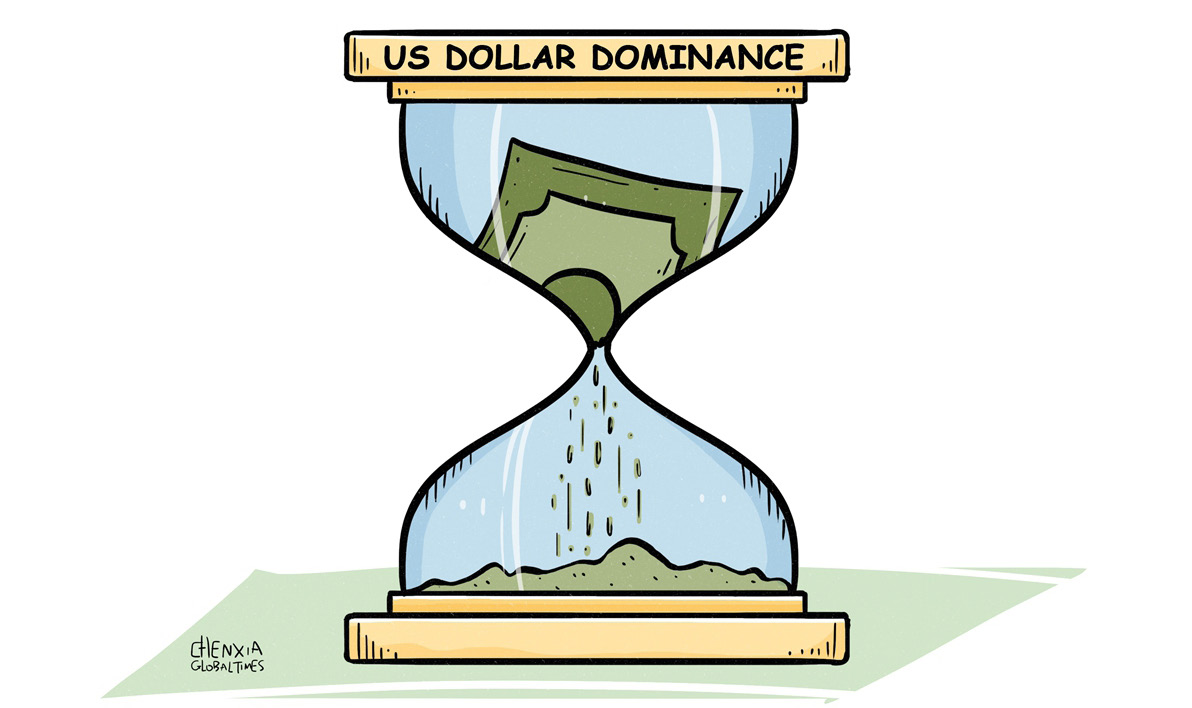
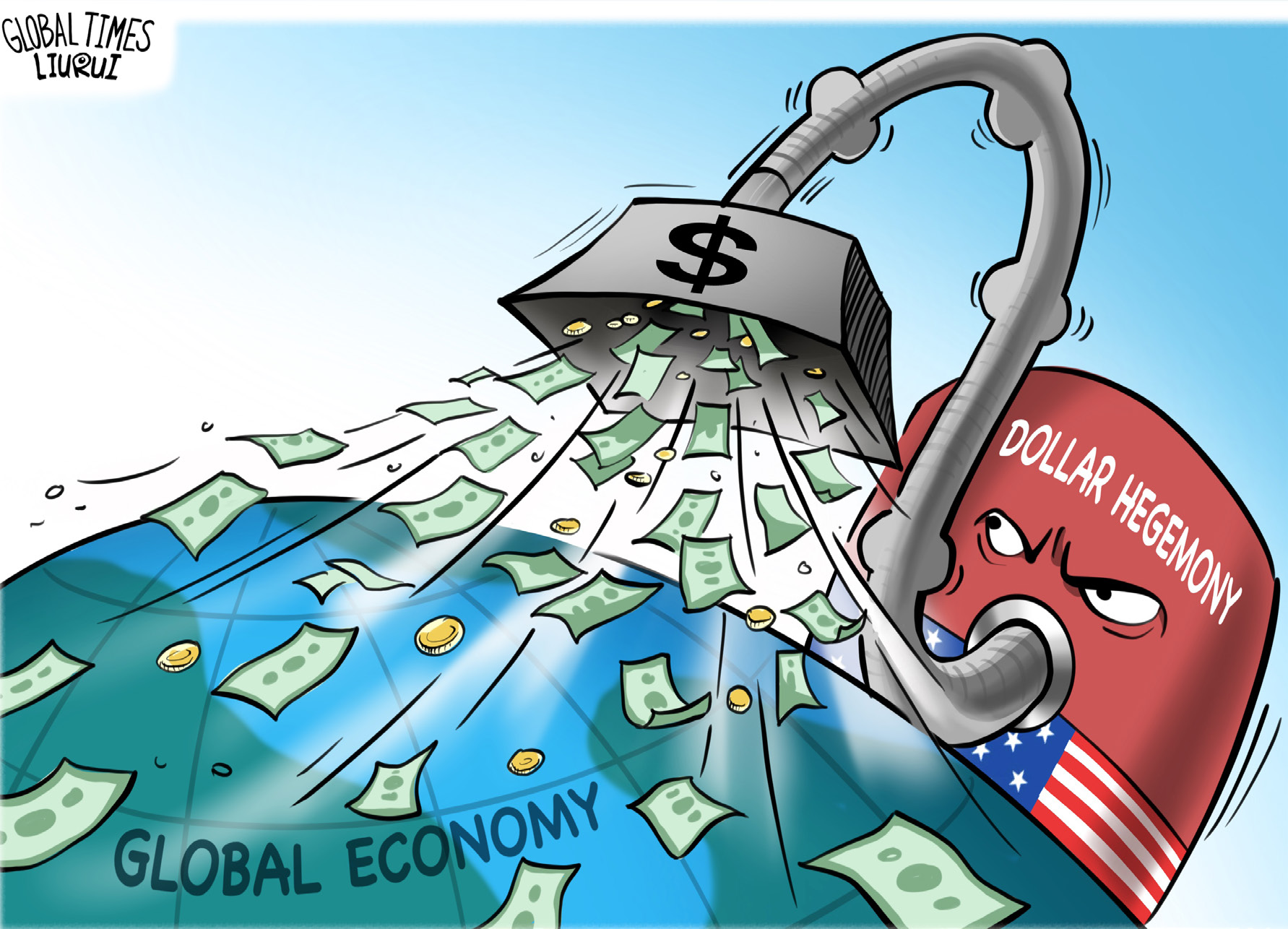
As this article focuses both on institutions as formal settings and blocs as informal tendencies, it’s also crucial to see the informal groupings and monetary arrangements that entrenched Western leadership back then. A prime example is the Group of Seven (G7), an informal bloc of advanced economies (the U.S., Canada, the UK, France, Germany, Italy, and Japan) that began meeting in the 1970s. The G7 emerged in 1975 as a response to the oil shocks and global recession, providing a forum for the world’s richest democracies to coordinate economic policy. Over the years, the G7 became a kind of steering committee for the liberal economic order, addressing issues from debt relief to financial crises and setting norms on development and trade. Crucially, the G7’s influence has always rested on the economic might of its members; in the late 20th century, they collectively accounted for the majority of global GDP, and on their shared commitment to open markets and stable, dollar-centric finance. The U.S. dollar itself became the lynchpin of the post-war international monetary system (hence, now scholars use the term “dollar hegemony”).
These arrangements worked when the G7 economies dominated the world and when most countries saw benefits in tying into a dollar-led system. Today, however, the limits of this exclusive economic leadership model are increasingly evident. The G7 now represents a much smaller share of the world economy, around 29% of global GDP by the mid-2020s, or ~44% if the EU is counted, down from the majority in decades past. Dynamic emerging economies, China, India, Brazil, and others, are not part of the G7, meaning key decisions made by this club can lack legitimacy or buy-in from the rest of the world. Analysts note that the G7’s global influence has been chipped away by external dynamics, and many argue the G7 lacks relevance without China and other emerging powers. Indeed, the G7’s priorities risk failure unless they garner support from beyond the club (Ikenberry, 2018Ikenberry, G. J. (2018). The end of liberal international order? International Affairs, 94(1), 7–23.). G7’s unsuccessful outcomes and ineffectiveness can be seen more with each summit they have. In fact, the last summit in Canada in June 2025 could not declare a joint statement as expected due to the internal disagreements among members. Recognizing this, the G7 has at times invited leaders from outside, such as India or Brazil, to its summits, and since 1999, the broader Group of Twenty (G20), which includes emerging giants, has taken center stage in global economic crisis management.
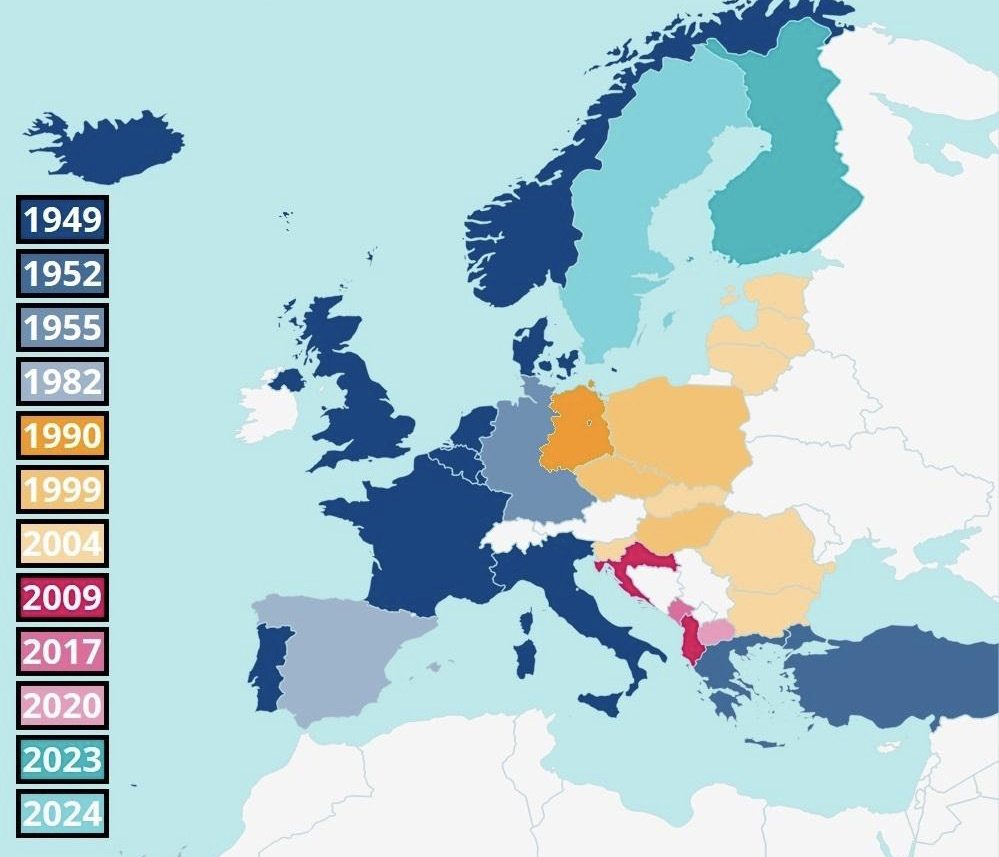
While the UN aimed to provide collective security universally, Bretton Woods agencies aimed to support this financially, and informal groupings aimed to accommodate these principles, a parallel security structure was formed in 1949 explicitly for the Western bloc: the North Atlantic Treaty Organization (NATO). NATO was conceived as a mutual defense pact to protect Western Europe against Soviet aggression, binding the U.S. and Canada to the defense of Western European nations. During the Cold War, NATO became the military backbone of the liberal order, containing the Soviet Union and preserving the security of the democracies in North America and Europe. After the Cold War, NATO did not dissolve but rather expanded, taking in former Eastern Bloc countries and assuming new roles (such as crisis management in the Balkans and a security presence in Afghanistan). This expansion solidified NATO’s position as the predominant security alliance even in the post-Soviet era. However, the very success and Western-centric nature of NATO also expose its limits in the eyes of a diversified world. NATO’s institutional logic is that of a selective club; it provides security for its members but excludes others, sometimes creating a dividing line in global security. Russia, for instance, has long viewed NATO’s eastward expansion as a threat to its own security sphere, a grievance that underlies tensions and conflicts in Europe (Yan, 2020Yan, X. (2020). Global politics in the 21st century: China’s perspective. Cambridge University Press.). Other rising powers outside the trans-Atlantic realm (China, for example) have little connection to NATO and may see it as a relic of Western dominance. Even within the alliance, questions have been raised about its adaptability. Without the Soviet threat, critics have periodically questioned whether NATO is obsolete. This issue was dramatically highlighted in 2017 when a U.S. president publicly questioned the alliance’s relevance (CBS News, 2017CBS News. April 12, 2017. A guide to Trump’s past comments about NATO.). While NATO proved its ongoing relevance by banding together in response to challenges like the Russia-Ukraine crisis, it remains true that NATO’s scope is geographically and culturally bounded. It does not directly incorporate the security concerns of other regions (e.g., Asia, Africa) except through partnerships, nor does it address non-traditional threats well (such as pandemics or cyber warfare) without expanding its mandate. In effect, NATO exemplifies both the strength and the limitation of the traditional post-war system: it powerfully binds a like-minded set of nations with shared values, yet in doing so it also underscores the divide between those inside the Western security umbrella and those outside.
The Architecture of the Post-WWII Order consist mainly of UN at the core with its UNSC influence depending on its 5 permanent members with veto power, IMF and World Bank as the financial body to ensure the stability of US dollar and growth of major economies of 1944 and a WTO facilitating these principles on the commercial side while NATO was standing there as a hard power tool for and against certain actors, far from inclusivity. This system could respond to the problems back then and provide some growth with solutions. Yet, as the world is transforming, a 1944-based outdated system started feeling its inability to respond to contemporary challenges. That’s where their functional decline appeared.
Functional Successes and Decline
By the post-Cold War era, the liberal order supported globalization, expanding world trade, and improving living standards. The last few decades have seen dramatic wealth creation and poverty reduction, with a sharp drop in interstate conflict, marking a historic success for the multilateral system.
Despite these successes, the liberal international order has faced growing legitimacy crises, particularly in the 21st century. The 2003 U.S.led invasion of Iraq, without UN Security Council authorization, severely undermined the credibility of the UN and the global order. The Iraq War exposed flaws in international institutions and fueled global perceptions of double standards. The 2008 financial crisis further weakened the order, revealing the vulnerabilities of Western financial systems and diminishing faith in institutions like the IMF and World Bank. The collapse of the Doha Round and the WTO’s dispute settlement paralysis exemplify the breakdown of multilateral trade. These crises, coupled with stalling global cooperation, have sparked a reevaluation of the effectiveness of the liberal order.
Over the past two decades, a series of global shocks, from the war on terror to populist movements in the West, have further strained the liberal order. Most recently, the COVID-19 pandemic and the Russia-Ukraine crisis have highlighted the inadequacies of the existing system. The pandemic exposed gaps in global cooperation, and Russia’s war has paralyzed the UN Security Council. The same is seen again when it comes to Gaza. One hand raised in the UNSC was enough to put aside the decision to send humanitarian aid to the region made by a strong majority both in the General Assembly and the UNSC. Some scholars argue that these kinds of events signal the end of unipolarity and the rise of competing blocs, while others contend that the liberal order must evolve to remain relevant (Layne, 1993Layne, C. (1993). The Unipolar Illusion: Why New Great Powers Will Rise. International Security, Vol. 17, No. 4, pp. 5-51). The future of global governance will depend on its ability to address the legitimacy deficits and power imbalances exposed in the contemporary era, as well as its capacity to adapt to the emerging multipolar world.
Structural Rigidities
The capacity to adapt emerging multipolar world, however, cannot be accomplished without reforming the bodies. Yet, when it comes to reforming, the structural rigidities pose a strong barrier. In other words, the post-war institutions anchoring global governance face structural inertia that impedes adaptation to 21st-century realities. A prime example is the UNSC, which has resisted reform for decades. Proposals to expand permanent membership or curb the veto have stalled due to competing national interests and the veto power of the P5 (Langmore & Thakur, 2024Langmore J. & Thakur, R. (2024, July). Transform or die: the case for reforming the UN Security Council, University of Melbourne Initiative for Peacebuilding.). There is no realistic prospect of fundamentally reforming UNSC permanent membership in the foreseeable future, even as its static composition erodes legitimacy and breeds resentment among emerging powers. The Council’s credibility suffers from a representation deficit; it reflects the geopolitics of 1945, not today’s diverse multipolar world, undermining its authority to speak in the name of the whole international community.
Similar rigidities plague the Bretton Woods institutions. IMF and World Bank quota structures remain skewed toward the Global North, lagging shifts in economic power. Incremental quota adjustments since 2010 have barely dented the dominance of the U.S. and major European states (Wade & Vestergaard, 2024Wade, R. & Vestergaard, J. (2024, September). World Bank governance reform. “Puppet on a string”? Global Policy.). For instance, by 2013, developing countries accounted for over half of world GDP but held only ~47% of World Bank voting power. This misalignment of voting shares leaves emerging economies underrepresented and undermines the legitimacy of these institutions. Analysts warn that without bold quota and governance reforms to reflect emerging economies’ weight, the IMF risks losing legitimacy and becoming less effective in tackling global financial challenges. Yet reform is slow and politically fraught; any change that significantly reduces Western control (e.g., ending the U.S. veto at the IMF) remains politically unfeasible under current conditions (BU Global Development Policy Center, n.d.BU Global Development Policy Center, (n.d.). A Challenging Imperative: IMF Reform, the 17th Quota Review and Increasing Voice and Representation for Developing Countries.). The result is a stalemate, where governance structures no longer match reality, but power politics block meaningful change.
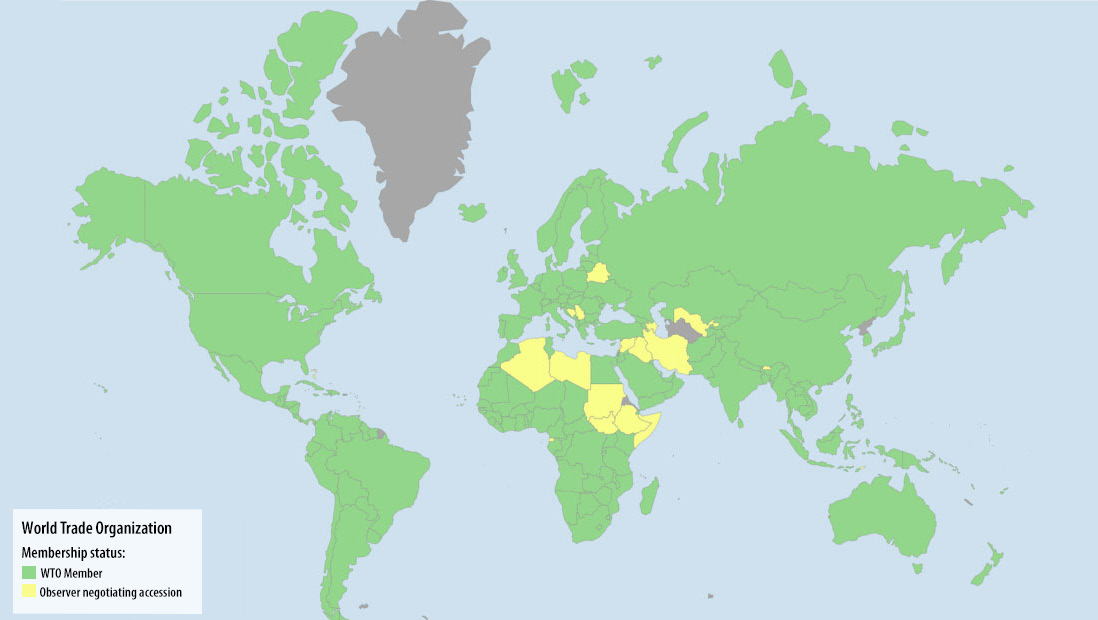
In the trade realm, the World Trade Organization (WTO) suffers from decision-making paralysis due to its consensus rule. The WTO’s one-country-one-vote consensus system, meant to ensure inclusivity, has instead become a recipe for gridlock, as even a single holdout can stall progress (Yap, 2025Yap, C.W. (2025, April). Defending the multilateral trading system: Survey findings on WTO reform. Hinrich Foundation.). With 164 members at vastly different development levels, achieving unanimous agreement on new trade rules has proven nearly impossible. Indeed, since its founding in 1995, the WTO has failed to conclude a single new multilateral round of trade negotiations, and the Doha Round languished for years before its collapse. Contentious issues like agricultural subsidies, e-commerce rules, or special treatment for developing countries become impassable when any dissenting member wields a veto. Recent reform surveys find an overwhelming consensus that modernizing the WTO’s consensus procedure is urgent to restore its efficacy. Yet here too, entrenched interests make change difficult: some members fear losing influence if majority voting or plurilateral agreements dilute the strict consensus norm. The WTO’s stagnation exemplifies how rigid decision-making procedures hamper global governance in an era when agility is needed.
Underpinning these institutional challenges is a persistent North–South divide in agenda-setting and norm creation. Since the Cold War’s end, developing nations have demanded a greater voice in defining global norms, from economic rules to human rights, yet the Global North still largely sets the global agenda, reflecting its outsized influence in international forums. Wealthy industrialized states dominate leadership positions and bureaucracies in organizations like the UN, allowing them to shape the rules of the game to their advantage (Harig & Jenne, 2022Harig, C. & Jenne, N. (2022, August). Can the Global South shape international norms through the appointment of leaders who implement these norms in peace operations? British International Studies Association.). Meanwhile, the Global South often finds its priorities sidelined or must accept norms it had little role in formulating. This imbalance has long bred frustration. As far back as the 1970s, coalitions of developing countries advanced the New International Economic Order and other initiatives, articulating new norms and alternatives to Western-dominated systems (Braveboy-Wagner, 2022Braveboy-Wagner J. (2022, July). The Challenge to the Liberal Order: Norms of the Global South.). Many such efforts were stymied by resistance from developed nations, entrenching a sense of inequity. Today, issues like climate change, development financing, and digital governance reveal sharply divergent perspectives between North and South. Developing countries emphasize sovereignty, developmental rights, and fairness, whereas developed countries often prioritize liberal values and existing rules. This enduring split complicates norm-building: global negotiations from trade to climate become protracted battles of contested values and interests across the North–South divide. In effect, the lack of a shared vision between developed and developing blocs is itself a structural rigidity, a political fault line that impedes consensus on updating global governance.
The Rise of Regional Institutions and Blocs: Reshaping Global Governance
With the status quo under mounting stress, the world faces a choice: either gradually adapt and reform the existing order, or see it give way to new arrangements. While the existing institutions and blocs are trying to agree on one of the options, new powers emerge with the potential to build pathways toward a more inclusive and resilient world order. This section will analyze how these powers are affecting the world governance system shift. To do so, a typology-based classification will be utilized, mainly grouping them into three categories with characteristic words of declining, evolving, and emerging. It should be noted here that the distinction between old and new is not dependent on the establishment date but rather depends on the dates of the active status of the relevant institution.
Classification of Institutions and Blocs
Traditional Institutions/Blocs with Declining Influence (Declining)
Many post–World War II institutions now attract criticism for being outdated or insufficiently representative. As a typical example, the UNSC’s 15-member structure (with five permanent veto-wielding members) reflects 1945 power balances, not today’s world. Notably, two-thirds of UN members are from the Global South, yet the Council includes less than 8% of all states (ed. Patrick, S., 2023Patrick, S. (2023, June). UN Security Council Reform: What the World Thinks. Carnegie Endowment For International Peace.). African and other developing countries have even formed an informal “A3” caucus on the Council to press their priorities. U.S. leaders have likewise backed proposals to add two permanent African seats without veto rights to improve representation (Yade, 2024Yade, R. (2024, September). What would it mean for Africa to have two permanent UN Security Council seats? Atlantic Council.). But with veto rules unchanged, the Security Council still often stalls on pressing global issues from climate change to pandemics, fueling complaints that it has become an anachronism in urgent need of reform. Critics note that when the Council is deadlocked, many Global South states simply turn to other forums or coalitions to advance security agendas rather than wait for consensus (Global Policy Reform, n.d.Global Policy Reform (n.d.) Global South perspectives on Security Council reform.).
Similarly, NATO, long a premier military alliance, faces questions about its strategic vitality. The 2025 Hague summit did yield a new defense declaration and commitments (e.g., spending 5% of GDP on defense by 2035), but many analysts saw it as more of a performative display than a true renewal (Kim, 2025Kim, S. (2025, June). Managing Decline? NATO’s Uneasy Future After the 2025 Summit.). Beneath the summit optics, deep divisions remain: burden‐sharing disputes, unclear priorities in Europe versus the Indo-Pacific, and skepticism about the U.S. commitment all persist. In effect, NATO’s track record on operations (Afghanistan withdrawal, deterring Russia) is hailed as success, but those actions may obscure unresolved questions about NATO’s future relevance in a multi-power world.
The World Trade Organization likewise appears diminished. Multilateral negotiations have essentially stalled, so much so that, as one trade economist notes, the negotiation of multilateral agreements has stalled at the WTO, with members instead cutting deals in smaller groups (Wolff, 2022Wolff, A. (2022, May). 22-7 WTO 2025 Getting Back to the Negotiating Table. Peterson Institute for International Economics.). Indeed, regional and plurilateral pacts, like RCEP in Asia or new e-commerce agreements, have become the norm. Meanwhile, the WTO’s dispute-resolution body is paralyzed: the U.S. has blocked all new appeals judges, meaning most panel rulings are now appealed into the void, leaving no enforceable outcome (Lester, 2022Lester, S. (2022, March). Ending the WTO Dispute Settlement Crisis: Where to from here?). In practice, this undermines confidence in the multilateral system and warns that the WTO risks further marginalization. Its consensus rules make it difficult to address novel global challenges such as climate, pandemics, digital economy at the world level without major reform.
The G7 (Group of Seven), an informal club of advanced democracies, similarly suffers from shrinking scope and reach. Its combined share of global output has fallen steeply: from around 65% in the early 2000s to roughly 43% today (Council on Foreign Relations, 2025Council on Foreign Relations (2025, July). What Does the G7 Do?). After expelling Russia in 2014 (and permanently in 2022), the G7 presents itself as a like-minded coalition of market democracies. U.S. strategists have even floated expanding it into a “D10” by adding Australia, India, and South Korea (Atlantic Council, 2021Atlantic Council (2021). From the G7 to a D-10: Strengthening Democratic Cooperation for Today’s Challenges.). Yet many scholars argue that the G7’s lack of emerging economies and its shrinking share of global power limit its legitimacy (Dong, 2024Dong, Y. (2024, 19 April). Why the G7 has become a declining political club.). Its annual communiqueés on climate, security, etc., carry political weight, but critics say the G7 cannot substitute for broader forums like the G20 or the UN.
Finally, Bretton Woods financial institutions, the IMF, and the World Bank, also face growing scrutiny. Many experts from the Global South complain that these institutions impose onesize-fits-all policies and fail to respect different national pathways to development, nor guarantee fair access to global capital (Hamilton, 2024Hamilton, M. (2024). What Is Bretton Woods? The Contested Pasts and Potential Futures of International Economic Order.). They note that the IMF/Bank are often slow to respond to climate and development: in effect, sclerotic on the very issues like climate finance that most affect vulnerable economies. Recent reform initiatives, such as the G20’s Bridgetown Initiative and related proposals, seek to redirect more lending and grants toward climate-vulnerable states, effectively treating the IMF/Bank as a multilateral “infrastructure” that needs upgrading (Bridgetown Initiative, n.d.Bridgetown Initiative (n.d.) Bridgetown Initiative On The Reform Of The International Development And Climate Finance Architecture.). But underlying governance remains dominated by rich-country shareholders, so many question whether new funds or minor mandate tweaks can bridge the trust and inequality gap. In short, analysts acknowledge that the IMF and World Bank still play crucial roles, but their dated rules and conditionalities have weakened their influence and legitimacy compared to past decades.
Traditional Institutions with Evolving Roles (Evolving)
The fall of traditional institutions comes mainly from their inability or unwillingness to adapt and change to respond to current conditions. Yet, if a traditional institution can change and is willing to broaden its horizon in a more inclusive way, its role is not declining only because they have the label of being traditional. On the contrary, they provide a stronger role in the system. There lies the difference between G7 and G20. Established after the 1998-99 Asian financial crisis and elevated during the 2008-09 global meltdown, the G20 brings together the world’s major rich and emerging economies (roughly two-thirds of the global population and about 80–85% of GDP) (Dstatis, n.d.Dstatis (n.d.). G20 in Figures.; G20 India, n.d.G20 India (n.d.). About G20.). It proved its worth as a crisis manager in 2008– 09, injecting liquidity, recapitalizing institutions, creating the Financial Stability Board, and stabilizing the economy, and at Pittsburgh 2009, leaders even declared it the “premier forum for our international economic cooperation” (Patrick, 2024Patrick, S., (2024, October). BRICS Expansion, the G20, and the Future of World Order.).
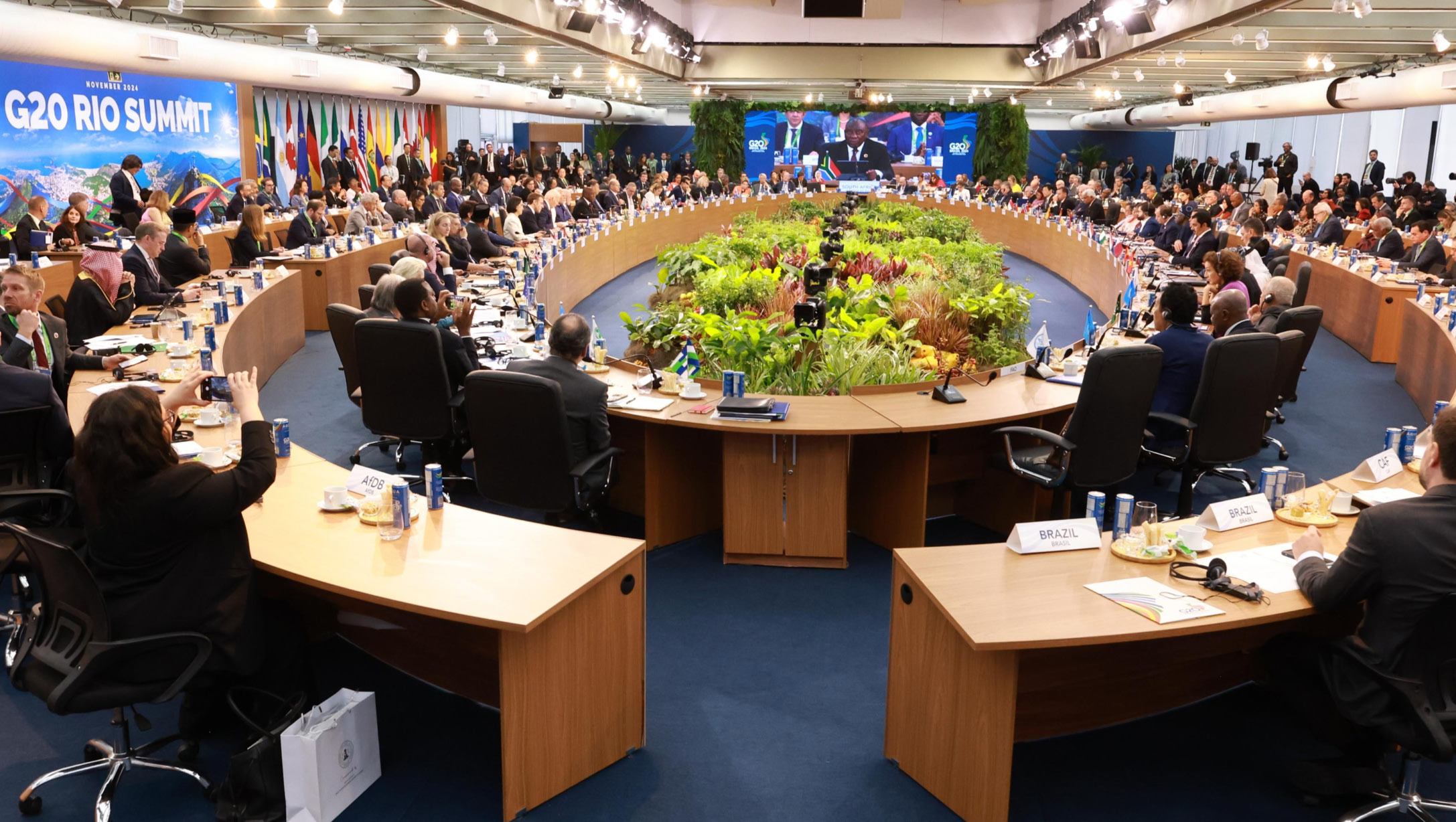
With the new conjuncture, many expected its role to decline in parallel with the G7. Yet, the G20 could bring a new vision to the table thanks to its non-G7 members. Brazil, for instance, played a strong role in ensuring the G20 will maintain its inclusivity. The summit in 2024 was, therefore, both a symbolic and practical appearance to show the world that the G20 does not depend on the G7 and could draw its own line for its members’ development. The voice of the Global South could be heard strongly this time, opening paths to direct collaborations between the South-South. In fact, with the involvement of AU officially in 2023, and practically in 2024, a move widely welcomed as giving Africa a stronger voice in global economic governance (Munyati, 2023Munyati (2023). The source article does not provide a separate full bibliographic entry for this citation.), marked a significant milestone, turning the Global South into a Global Majority. The majority today is now aware of its own potential to make an impact, independent of the traditional limiting settings of those called major powers. South Africa’s G20 presidency in 2024 underscored this recognition. Meanwhile, inside Africa, the AU has deepened integration. The flagship African Continental Free Trade Area (AfCFTA) has taken hold: by early 2025, some 48 countries had ratified the agreement, and the AfCFTA’s “Guided Trade” pilot, designed to expedite tariff cuts, now involves 39 nations (Xinhua, 2025Xinhua (2025). AfCFTA gains momentum as 48 African countries ratify agreement.; African Union, 2024aAfrican Union (2024a, September). Significant Progress on AfCFTA Implementation Highlighted at the Conference of Speakers of Parliaments.). Observers say such steps are already giving Africa “stronger agency and voice in international arenas” (Mangeni et. al., 2024Mangeni, F., Mold, A. & Signe, L. (2024, October). The promise of free trade and integration across Africa’s nations.).
African leaders have also sought to reform global finance. For example, a February 2024 AU summit agreed to channel development finance through African-led institutions (like a new stabilization facility at the African Development Bank) and formally launched an “Africa Club”, an alliance of Africa-owned multilateral banks (Afreximbank, AfDB, etc.), to coordinate funding and press for change (African Union, 2024bAfrican Union (2024a, September). Significant Progress on AfCFTA Implementation Highlighted at the Conference of Speakers of Parliaments.). Despite setbacks (coups in parts of the Sahel, political fractures), the AU is increasingly treated as a key interlocutor, even broaching the idea of a permanent African seat on the UN Security Council, reflecting its evolving, more proactive role.
Another old institution with the potential to shape itself in the future is the Arab League. Founded in 1945 as a loose confederation of Arab states, the Arab League has long struggled with internal divisions. Its charter makes consensus difficult: a majority decision binds only those members that accept it, and the League has no enforcement mechanism. Critics, therefore, call it a “glorified debating society” (Masters & Sergie, 2023Masters, J. & Sergie, M. (2023, May). The Arab League.). Yet the League still meets annually and maintains a collective agenda on some issues. For decades, it has championed Palestinian statehood: for example, at a 2002 summit, it endorsed the Saudi‐sponsored Arab Peace Initiative calling for a two-state solution, and it has reaffirmed that stance amid Gaza and broader Middle East crises. The League has also pursued economic integration (establishing the Greater Arab Free Trade Area, steps toward a customs union, etc.), though progress is slow. On security, the record is mixed: it backed the 2011 Libya intervention but failed to resolve the wars in Syria or Yemen. As the situation in the Middle East still maintains an unresolved crisis within itself, it’s too early to state that the Arab League has as much potential as other institutions mentioned above. Yet, it does not mean to ignore its potential. Especially with the withdrawal of the U.S. from the region gradually, with the new government in Syria, with Türkiye playing more of a regional role, and with major actors like China playing a mediator role between regional powers, both the region and the Arab League may be reborn from its ashes. But as true for declining traditional institutions, its success will also depend on how well it fits with multipolar tendencies and inclusive principles.
New and Emerging Institutions (Emerging)
Of course, the most advantageous category within this conjuncture of global governance is the new institutions, which are already founded by those who were mainly oppressed in the traditional ones. Therefore, the core principles like multipolarity, co-existence, and cooperation are already written down in these institutions’ charters. As one of the leading ones, BRICS (Brazil, Russia, India, China, South Africa), founded in 2009, has rapidly expanded (to include Egypt, UAE, Iran, Saudi Arabia, Ethiopia in 2024) as an alternative platform for emerging economies. Its leaders explicitly aim to challenge existing unequal systems and give a louder voice to emerging economies. For example, the Western efforts to isolate Russia have failed, and BRICS showed that Russia still has many friends among developing countries, contrary to what traditional institutions attempt to make people believe. In practice, BRICS has built a web of South– South forums, including the NDB and Contingent Reserve Arrangement (CRA) established in 2015 to “tinker” with the global economic order (Patrick, 2024Patrick, S., (2024, October). BRICS Expansion, the G20, and the Future of World Order.). These institutions still remain modest in scope: the NDB’s cumulative loans ($60+ billion over its first decade) are still small compared to the World Bank (e.g., ~$5 billion vs $72.8 billion in a recent year) (AIIB, 2025AIIB (2025). AIIB Reports USD8.4 Billion in 2024 Project Financing, Underscoring Long-Term Impact Through Sustainable Development Bonds.; John&George, 2024John, M. & George, L. (2024). BRICS gathers pace as shared grievances with West fuel alliance.).
Similar to NDB, the AIIB is a China-initiated multilateral development bank that began in 2016 and has grown rapidly. It now has 110 member states, including many Western countries, and $100 billion authorized capital (AIIB, 2025AIIB (2025). AIIB Reports USD8.4 Billion in 2024 Project Financing, Underscoring Long-Term Impact Through Sustainable Development Bonds.). In its first decade, AIIB approved roughly $60 billion for over 300 projects across 38 countries, spanning infrastructure from African roads to Asian renewables, with a strong “green” orientation. Notably, AIIB’s governance is multinational, and it often co-finances projects with the World Bank or Asian Development Bank (AIIB, 2025AIIB (2025). AIIB Reports USD8.4 Billion in 2024 Project Financing, Underscoring Long-Term Impact Through Sustainable Development Bonds.). Analysts attribuite AIIB’s appeal to its nimbleness and to environmental/social safeguards comparable to those of established MDBs (AIIB, 2025AIIB (2025). AIIB Reports USD8.4 Billion in 2024 Project Financing, Underscoring Long-Term Impact Through Sustainable Development Bonds.). In 2024, the bank unveiled a strategy to double annual lending to ~$17 billion by 2030 (with over $50 billion in climate finance) (AIIB, 2025AIIB (2025). AIIB Reports USD8.4 Billion in 2024 Project Financing, Underscoring Long-Term Impact Through Sustainable Development Bonds.). This suggests the AIIB is carving out a legitimate role as a modern development financier: its focus on sustainable projects and partnership with existing MDBs makes it complementary to the Bretton Woods institutions, rather than a hostile rival. The World Bank often ties loan conditions to stringent economic reforms, focusing on neoliberal policies like market liberalization. In contrast, the AIIB emphasizes more flexible terms, with a focus on sustainable development with less conditionality and quicker implementation compared to World Bank loans.
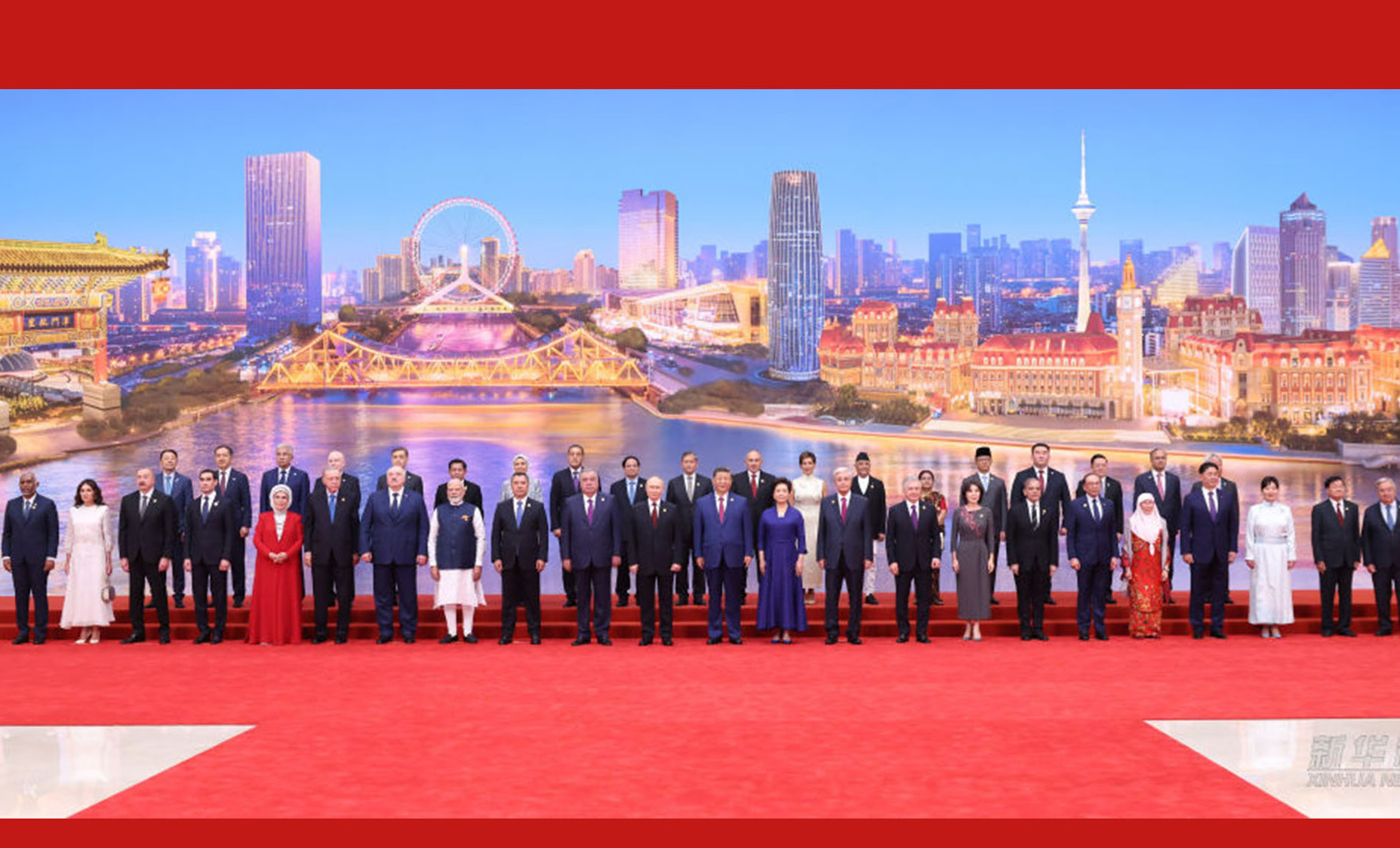
The Shanghai Cooperation Organization (SCO), successor to the Shanghai Five, began its activities in 2001 as a Eurasian security forum led by China and Russia. Today, it has expanded significantly (adding India, Pakistan, Iran, etc.), and more are waiting on the list to join. It offers more pragmatic solutions to long-term crises and an understanding of security independent of Western understanding, which will be detailed in the upcoming chapters of the article. The SCO provides a collective security platform for Eurasia that pointedly does not follow the Western alliance model. Instead of a formal defense pact like NATO, the SCO operates on principles of voluntary cooperation, mutual respect for sovereignty, and consensus. Its original mandate focused on combating the “three evils ” (terrorism, separatism, extremism) and fostering stability across Central and South Asia. Over two decades, the SCO’s membership has grown to cover over 80% of Eurasia’s landmass and 40% of the world’s population, without eliciting the kind of geostrategic backlash that NATO’s eastward expansion did (Assaniyaz, 2024Assaniyaz, A. (2025). SCO RATS Committee Director Highlights Achievements in Security Collaboration, Cooperation Program.). Notably, as an SCO expansion, countries like India and Pakistan joined simultaneously in 2017, an inclusion made not against anyone but to broaden regional integration. This illustrates how the SCO pursues security through inclusivity rather than exclusive blocs. In practice, the organization has built up robust cooperation instruments: for example, its Regional Anti-Terrorist Structure (RATS) headquartered in Tashkent facilitates intelligence sharing and joint operations against militant threats. By one account, in just the past year SCO members jointly dismantled 73 terrorist cells and prevented 69 terrorist attacks in member territories, tangible security outcomes that underscore the SCO’s effectiveness (Assaniyaz, 2024Assaniyaz, A. (2025). SCO RATS Committee Director Highlights Achievements in Security Collaboration, Cooperation Program.). Regular “Peace Mission” exercises and border security operations are conducted under its auspices.
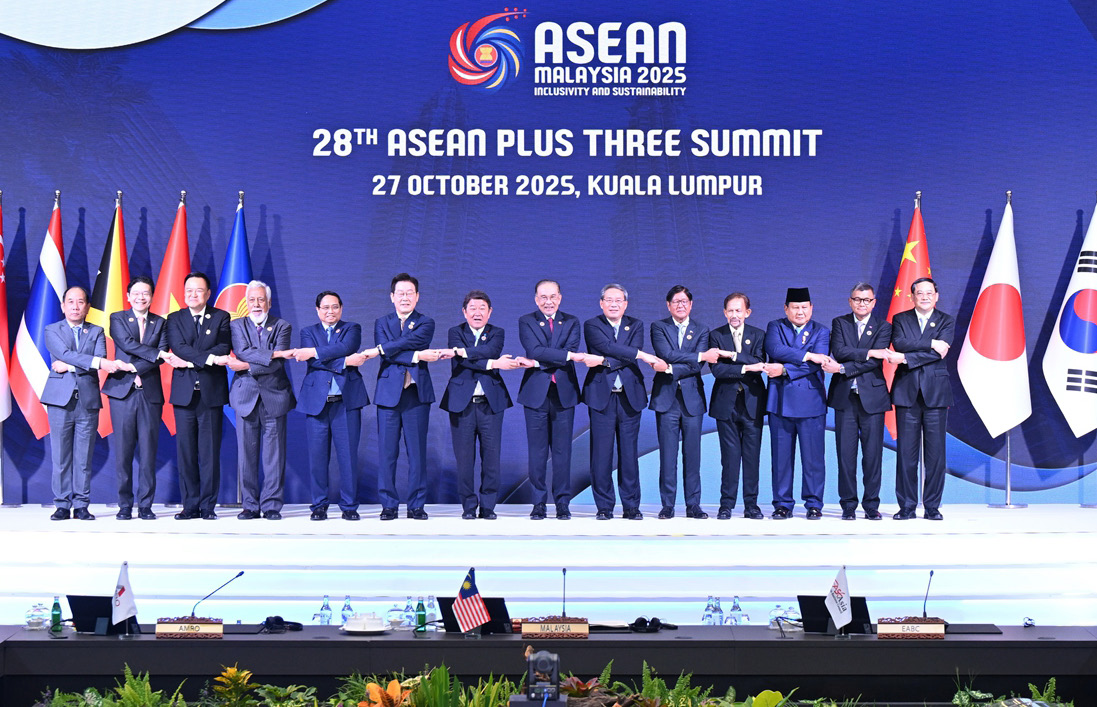
What is more unique for Asia, especially in terms of trade, is ASEAN (Association of Southeast Asian Nations). ASEAN, established in 1967, is a mature regional bloc of 10 countries, often praised for its ASEAN Centrality, the idea that it should lead regional cooperation. ASEAN has deepened economic integration, launched the ASEAN Economic Community, and championed broader trade pacts (e.g. RCEP in 2020). It also anchors multilateral dialogue (hosting the ASEAN Regional Forum, East Asia Summit, etc.) and promotes inclusive norms (e.g. the Treaty of Amity). ASEAN’s appeal lies in balancing big powers: it has long been the neutral broker for U.S.–China rivalry. In fact, as analysts note, Southeast Asian states insist on not taking sides in that rivalry and seek strategic autonomy (Mingjiang et. al., 2025Mingjiang, L., Hiep, L.H., Bing, N. C. & Chandarith, N. (2025, April). How Southeast Asia Sees Xi Jinping’s Regional Push Amid U.S.-China Tensions.). In practice, ASEAN convenes leaders to foster connectivity (e.g. digital economy, climate change) and shape Indo-Pacific discussions. However, its consensus-based decision‐making produces mixed results on hard issues. For example, ASEAN made very little progress in addressing Myanmar’s 2021 coup; leaders even agreed to ban Myanmar’s generals from meetings until they honor the bloc’s Five-Point Consensus. Overall, ASEAN remains influential as a convenor and norm-shaper. It also has a symbolic importance for most of the ASEAN members as it’s something from them and a part of them.
As the Arabic version of ASEAN, the Gulf Cooperation Council (GCC), established in 1981, groups six wealthy Arabian Gulf monarchies. After reconciling the 2017–2021 Qatar crisis, the bloc has reasserted unity. In mid-2025, the GCC explicitly endorsed moving “from the cooperation phase to the union phase”, indicating plans for shared institutions (even a common currency) and tighter integration (GCC, 2025GCC (2025). Final Statement Issued by the Ministerial Council in its 164th Session.). Its ministers affirmed commitment to “strength and cohesion” and coordination “in all fields,” including mutual defense. Economically, the GCC continues to harmonize (e.g., coordinating sovereign wealth funds and investment rules). Politically, it often speaks with one voice: recent GCC communiqueés strongly supported the Palestinians and condemned Israeli actions in Gaza. The GCC countries, with high wealth and small populations, have quietly pursued integration, joint military exercises, a Gulf common market, etc., and generally maintained a consistent external stance. Currently, the bloc is again moving toward a fuller Gulf union. If achieved, this deeper integration would mark a notable evolution; the GCC remains an older regional institution that is currently revitalizing its integration agenda and political influence.
As the last institution with a more identity-based approach, the Organization of Turkic States (OTS) (successor to the Turkic Council) unites Turkic-speaking countries (members are Türkiye, Azerbaijan, Kazakhstan, Kyrgyzstan, Uzbekistan; and observers are Hungary, Turkmenistan, Turkish Republic of Northern Cyprus, Economic Cooperation Organization). Its mission is cultural, economic, and political cooperation among “Turkic World” members. Recent summits have been highly ambitious. For example, the 2024 Bishkek summit with the theme “Empowering the Turkic World: Economic Integration, Sustainable Development, Digital Future, and Security” saw leaders pledge to deepen economic, digital, and security ties. They endorsed initiatives to enhance connectivity like a Middle Corridor trade route and a Digital Silk Way project and to harmonize customs and trade rules. The OTS also agreed on new measures on labor, education exchanges, and even a cross-border “Turkic Red Network” for humanitarian response. Institutionally, it has launched a Turkic Chamber of Commerce and a $500 million Turkic Investment Fund to boost intra-bloc projects (OTS, n.d.OTS (n.d.). Economic Cooperation.). While still small in global scope, the OTS is a rising sub-regional bloc: it leverages shared language and heritage to forge a niche in Eurasian diplomacy. Its 11th summit reaffirmed “a shared destiny” for its members and signaled intent to project influence together (e.g., a unified position on Gaza and Palestinian statehood).
In sum, the OTS exemplifies how a modest, identity-based grouping is carving new cooperative channels in international relations, shifting from a unipolar to a multipolar setting. This identity-based principle highlights the importance of one for all, all for one idea in the sense that if one chooses any blocs or institution types in the future, that member will have significant influence to inspire other members as well. The influence here, however, should be seen as a natural outcome of an identity-based grouping because identity-based paths naturally share the same or similar desires or concerns in common among members, which automatically increases the possibility of acting in a similar way and choosing the same options.
Regional Blocs and Institutions as Functional Coalitions
The contemporary Global South alliances appear to prioritize issue-based cooperation over rigid ideological blocs. For example, it can be said that India values BRICS as a vehicle to assert its strategic autonomy and preference for flexible, issue-based partnerships while still engaging with Western powers. In this multipolar context, developing states form coalitions that allow them to hedge risks and advance shared goals without taking sides in a new Cold War. Such groups focus on concrete projects, from infrastructure to climate financing, where members’ interests overlap, rather than on grand ideological agendas. By pooling their bargaining power in forums like the UN or G20, these blocs promote more equitable global norms and champion multipolarity from the ground up. In that sense, rather than serving as a pole, these regional blocs serve as functional coalitions, especially on specific issues that require unity to overcome traditional settings.
BRICS (Brazil, Russia, India, China, South Africa) exemplifies this functional approach quite well thanks to its de-dollarization efforts. In 2015, it created the New Development Bank (NDB) and a Contingent Reserve Arrangement (CRA) to finance infrastructure and provide liquidity support independently of Western institutions. These BRICS institutions reflect South–South experimentation: each member contributed equally to the NDB, and the CRA pools reserves in proportion (China 41%, others less). In practice, the NDB finances development on the bloc’s terms, and the CRA helps guard against balance-of-payments crises, both without IMF conditionality. More recently, BRICS countries have pursued de-dollarization: they are settling some trade in local currencies and even discussing a shared payment system, which will be detailed in the upcoming chapters. BRICS leaders seek financial channels less vulnerable to U.S. and European sanctions by increasing non-dollar transactions. This shift is driven by economic pragmatism, not ideology: avoiding excessive dollar exposure protects developing economies from external shocks (e.g., U.S. sanctions or Fed rate shocks). That is also why, for instance, G77+China is another accelerator from the Global South perspective. On the financial side, the 134-member G77+China platform has pressed for a comprehensive reform of the international financial architecture, demanding that institutions like the IMF and World Bank give developing countries more voice. In terms of technology and equity, its 2023 Havana summit denounced “digital monopolies” and other unfair practices that hurt developing countries, underscoring technology’s role in development (Lopes, 2023Lopes, G. V. (2023, September). In final declaration, G77 rejects “digital monopolies” and calls for “reform” of the financial system.). Leaders also called for more climate adaptation and loss-anddamage funds for vulnerable nations. Instead of enforcing a uniform ideology, the G77+China advances concrete South–South goals. Member governments span divergent systems (from socialist Cuba to market-oriented Singapore) but unite on issues like debt relief, vaccine access, and technology transfer.
It is not only major powers that shape the blocs. Gulf states, for instance, have formed agile coalitions centered on their energy interests. The OPEC+group (including OPEC’s Gulf core and Russia) is a loose, price-focused cartel formed in 2016 by a Saudi-Russia pact. Its sole mission is market stability: by jointly cutting output, members have at times supported global oil prices and safeguarded revenues. In fact, econometric studies find that without OPEC+ cuts during 2017-2020, oil prices would have been about 6% lower (Quint & Venditti, 2020Quint, D. & Venditti, F. (2020). The influence of OPEC+ on oil prices: a quantitative assessment.). Scholars even call OPEC+ a unique model for global cooperation among resource exporters from the Global South. Importantly, this alliance spans very different regimes (monarchies, democracies, autocracies) and is strictly issue-specific: it binds members on oil policy but imposes no broader political commitments. The Gulf bloc has thus bolstered its bargaining power in world energy markets while retaining flexibility: for example, OPEC+ has resisted external pressure to flood the market, asserting Gulf producers’ autonomy in global energy governance.
In sum, 21st-century South–South coalitions are pragmatic and flexible, pursuing development and reform goals. They advance shared interests (finance, trade, climate, health, tech) through collective institutions and consensus, injecting equity and multipolar perspectives into global governance. By avoiding ideological litmus tests and formal bloc commitments, these coalitions maximize member autonomy while gradually rebalancing world power.
China’s Role and the Strategic Alternatives to the Old System
China has emerged as a primary architect of new global governance mechanisms, providing much of the soft infrastructure underpinning a multipolar order. Through a suite of major initiatives, often termed the four global initiatives, Beijing is offering conceptual and institutional alternatives to the Western-led system and frames it with principles of co-existence and holism. The most well-known one is the Belt and Road Initiative (BRI), a transcontinental development strategy, launched in 2013 by Chinese leader Xi Jinping, financing infrastructure and connectivity projects across Asia, Africa, and beyond, creating physical, economic, cultural, and conceptual linkages outside Western frameworks. Over three-quarters of the world’s countries have signed onto BRI cooperation, underscoring its broad reach. Which inspires as much as BRI is Global Development Initiative (GDI), announced by President Xi in 2021, the GDI aligns with the UN Sustainable Development Goals and focuses on poverty alleviation, health, food security, climate, and other development challenges of the Global South. China has backed this with a $10 billion fund and a UN Group of Friends, gaining support from over 100 countries and endorsement by the UN Secretary-General (Gross, 2025Gross, S. (2025). China’s Global Initiatives: Implications and Recommendations for Israel.). However, as all these should be done in a secure environment, the Chinese government pays special attention to the Global Security Initiative (GSI), which was unveiled in 2022. The GSI is China’s vision for a new global security order. It rejects military blocs and zero-sum alliances, instead advocating common, comprehensive, cooperative, and sustainable security grounded in respect for sovereignty, non-interference, and dialogue. In essence, the GSI serves as a manifesto for an alternative system of international relations to the USled rules-based order, encapsulating China’s core diplomatic principles (state sovereignty, territorial integrity, opposition to unilateral sanctions, and bloc confrontation). Beijing has credited the GSI’s approach for recent diplomatic breakthroughs, for example, mediating the Saudi–Iran rapprochement in 2023, showcasing how Chinese facilitation can fill gaps left by traditional Western diplomacy.
Lastly, the Global Civilization Initiative (GCI), launched in 2023, emphasizes respect for cultural diversity and civilizational pluralism. It calls for dialogue among civilizations and rejects the notion of universal value imposition, aligning with China’s critique of Western democracy and human-rights evangelism. In Chinese commentary, the GCI is described as “offering Chinese wisdom” to promote common human values while celebrating diversity (Yin, 2025Yin, H. (2025). China’s global vision: a call for inclusive governance and shared prosperity.). Dozens of countries have voiced support for the GCI, viewing it as a counterweight to Western cultural dominance (Global Times, 2025Global Times. 2 September, 2025. Multiple countries join or express support for China-proposed Global Governance Initiative: reports.).
Together, these four initiatives form a comprehensive framework for China’s vision of reformed global governance. They are frequently articulated as components of building a “community with a shared future for mankind,” signaling a move away from the old order’s norms. Beyond rhetoric, China is also investing resources into these initiatives: for instance, it reports 1,100+ projects under the GDI and extensive cultural exchange programs under the GCI (Yin, 2025Yin, H. (2025). China’s global vision: a call for inclusive governance and shared prosperity.). This multipronged approach, development, security, and cultural/normative leadership, bolsters China’s role as an enabler of new global public goods and an agenda-setter in a multipolar world.
Another pillar of China’s contribution to a multipolar system is its central role in expanding inclusive coalitions and institutions that serve as alternatives to Western clubs. A prime example is the BRICS bloc and its associated institutions. Under China’s prodding, BRICS has pursued a path of enlargement and institutional innovation. In 2023, BRICS invited six new members, Saudi Arabia, UAE, Iran, Egypt, Ethiopia, and Argentina, dramatically increasing its economic weight and geographic representation (though Argentina’s entry was later put on hold). The expanded BRICS now encompasses major oil producers and regional powers; a development Beijing and Moscow have hailed as amplifying the Global South voice in world affairs. Indeed, officials note that BRICS collectively has surpassed the G7 in share of global GDP and in population, bolstering claims to represent a “global majority” (Patrick & Hogan, 2025Patrick, S. & Hogan, E. (2025). BRICS Expansion and the Future of World Order: Perspectives from Member States, Partners, and Aspirants.).
More concretely, China spearheaded the creation of the New Development Bank (NDB) by BRICS as a new source of development finance outside the Bretton Woods system. Headquartered in Shanghai, the NDB began operations in 2015 with equal capital contributions from the original five members, embodying a principle of greater equality among shareholders than the World Bank’s weighted voting. The NDB and a BRICS Contingent Reserve Arrangement are meant to provide developing countries with alternative avenues for infrastructure funding and financial safety nets, without traditional Western conditionalities. By 2021, the NDB had approved over $30 billion for nearly 100 projects ranging from clean energy to transportation. It has also innovated in financing by lending in local currencies (e.g., issuing bonds in RMB, INR, ZAR, and RUB) to reduce dependence on the US dollar. The impetus behind these efforts is a sense that Bretton Woods institutions have not adequately met developing nations’ needs, a view echoed by the UN Secretary-General’s remark that the current system was created by rich countries to benefit rich countries, leaving poorer regions underserved. Through BRICS and the NDB, China and its partners are forging South-South cooperation mechanisms intended to democratize development finance and diminish the hegemony of Western-led lenders. While skeptics note the NDB remains much smaller than the World Bank and has faced start-up challenges, its existence has already introduced friendly competition that pressures traditional institutions to be more responsive. Importantly, the NDB filled critical gaps during the COVID-19 crisis by quickly disbursing emergency loans, validating the original rationale for its creation.
In the security realm, China has led the development of parallel institutions that lie outside Western military alliances. Chief among these is the SCO, a regional security forum founded in 2001 by China, Russia, and Central Asian states, later expanded to include India, Pakistan, and now Iran. While the SCO is sometimes dubbed an Eastern NATO, its structure and ethos differ markedly: it has no mutual defense clause and instead relies on political cohesion and trust-building measures. This model aligns with China’s Global Security Initiative vision of cooperative security with holistic perspectives, acknowledging that no security is possible in isolation. Overall, by providing an alternative venue for regional security governance, the SCO reduces reliance on U.S.-led security arrangements and gives Asian powers greater agency in solving their own security issues.
Finally, China has driven institutional diversification in global governance, creating or empowering new institutions to complement the traditional Western-led bodies. For instance, the establishment of the AIIB in 2015, with China as the largest shareholder, introduced a new multilateral lender focused on infrastructure in Asia. China launched the AIIB after frustration with slow reforms at the World Bank; notably, many U.S. allies joined the AIIB despite Washington’s objections, signaling confidence in a more inclusive approach. The AIIB’s governance gives developing Asian nations a stronger voice and its project processes are seen as more streamlined. During the COVID-19 pandemic, the AIIB was able to swiftly expand a crisis recovery fund to $20 billion and adopt quick and flexible disbursement procedures to help members, a responsiveness that drew praise (AIIB, n.d.AIIB (n.d.) AIIB Expands COVID-19 Crisis Recovery Facility to USD20 Billion.). In parallel, China’s promotion of the GSI can be seen as an attempt to offer a conceptual alternative to NATO’s security paradigm. Beijing explicitly critiques U.S.-led alliances as a Cold War mentality contributing to instability, and through mechanisms like the SCO and forums under the GSI banner, it advocates a more multipolar security architecture with a more holistic vision. This institutional crossover is evident: the AIIB versus the World Bank, the NDB versus the IMF, the SCO (or GSI) versus NATO’s logic, in each case, China and partners are broadening the options available to states. Rather than overturn the existing order overnight, this strategy adds new platforms alongside old ones, gradually diminishing the dominance of any single power bloc. In sum, China’s role in the emerging multipolar system is multifaceted: it is supplying ideological vision, concrete development projects, financial capital, and security cooperation, all through new or revitalized institutions that challenge the monopoly of the West’s post-1945 architecture. These efforts, largely framed in terms of true multilateralism and greater equity for the Global South, have already begun to reshape global norms and power alignments in the 2020s.
Performance-Based Analysis (Function-Specific Effectiveness)
Obviously, it is not just strategic principles that make new institutions new or emerging. Their practical success in real life would be the core element making them more suitable for today. In other words, beyond strategic vision, the effectiveness of these new institutions and frameworks can be assessed in specific functional areas, especially where they provide faster and more effective concrete solutions. A performance-based analysis may show that many of the emerging multipolar institutions are delivering outcomes that meet or exceed those of their traditional Western counterparts in key domains listed below: Development Finance: New multilateral banks like the NDB and AIIB have demonstrated more equitable governance and faster response times compared to the IMF/World Bank system. The NDB, for example, operates on a one-country-one-vote founding principle (the BRICS each hold equal shares) and emphasizes greater equality among shareholders and borrower-friendly flexibility. This stands in contrast to the World Bank and IMF, where voting power is skewed toward G7 economies and loans often come with stringent policy conditions. In practice, the BRICS bank has been nimble: during the COVID-19 crisis, the NDB activated approximately $10 billion emergency facility and disbursed funds within weeks, whereas normal development bank procedures can take months. Chinese provinces received NDB emergency loans just 3–4 weeks after approval, thanks to expedited fast-track processes (Maasdorp, 2020Maasdorp, L. (2020). COVID-19: How multilateral development banks can lead through a crisis.). Similarly, the China-led AIIB quickly set up a Crisis Recovery Facility and scaled it up to $20 billion, enabling rapid support for dozens of countries with simplified procedures. Borrowers have noted that AIIB and NDB financing entails less bureaucracy and more respect for local priorities, addressing long-standing complaints about the traditional lenders (Humphrey & Chen, 2021Humphrey, C. and Chen, Y. (2021) China in the multilateral development banks: evolving strategies of a new power. Report. London: ODI (www.odi.org/en/publications/china-multilateral-development-banks).). While the IMF and World Bank remain larger in absolute capacity, these new banks are outperforming in procedural equity: their governance gives developing nations a stronger voice, and they have pioneered innovations like local-currency lending and green bonds to tailor development finance to client needs. The result is quicker delivery of funds and development projects that are aligned with borrower countries’ own strategies, thereby potentially increasing the effectiveness and ownership of development outcomes.
Security Cooperation: The SCO illustrates how a non-Western security platform can be effective on its own terms. Unlike NATO, the SCO does not bind members in a mutual defense pact, but it has excelled as a forum for collective security cooperation against shared threats. Its Regional Anti-Terrorist Structure has facilitated intelligence sharing and joint operations that yielded concrete results: SCO members together foiled dozens of terror plots and broke up extremist cells that endangered member states (Eurasian Group, 2009Eurasian Group. 30 March, 2009. SCO for combating drug, terror, crimes in Afghanistan.). Such achievements speak to the SCO’s value as a pragmatic security provider in Central Asia. The SCO also regularly convenes joint military exercises (e.g., the “Peace Mission” drills) and coordinates border security and counter-narcotics operations across its vast region (Anadolu Agency, 2024Anadolu Agency. 23 July, 2024. SCO nations conduct 1st joint counter-terrorism drill in China.). These activities have built trust and interoperability among members, including historical rivals like India and Pakistan, in ways that would be impossible under exclusively Western alliances. Moreover, the SCO’s consensual decision-making ensures procedural equality: each member, large or small, has an equal say in framing security initiatives, fostering a sense of shared ownership in regional stability. This inclusive approach has allowed the SCO to expand without provoking the hostile reactions that NATO’s expansions have, thereby maintaining a cooperative atmosphere. In functional terms, the SCO has helped fill a security vacuum in Eurasia by tackling issues (like militancy and border management) that Western-centric institutions were less focused on. As a result, it provides an effective collective security complement to the global system, one that is rooted in regional cooperation rather than power projection. Its performance in quelling insurgent threats and managing conflicts (e.g., mediating between member states when tensions arise) underscores the viability of non-Western security models in a multipolar era.
International Finance: The emerging powers have also made significant strides in financial cooperation and de-dollarization, reducing reliance on Western-controlled payment systems. Within BRICS and beyond, there is a clear agenda to diminish the primacy of the US dollar in trade and investment, both to gain monetary autonomy and as a shield against unilateral sanctions. In practice, this agenda is advancing on multiple fronts. The BRICS New Development Bank has begun issuing loans in local currencies (about 20% of its portfolio is in Chinese Renminbi, for instance) to bypass dollar funding. Bilateral trade among these countries is increasingly conducted in national currencies, e.g. Russia and India trade oil for Rubles/Rupees, and China settles more purchases in Renminbi, thereby chipping away at the dollar’s dominance. BRICS+ nations have been actively de-dollarizing their financial flows, as seen in a declining share of USD in their cross-border banking, debt, and reserve transactions over the past few years. For example, BRICS+ now control roughly 42% of global foreign exchange reserves, and many members have pivoted those reserves toward gold and other currencies. They have also developed alternative payment networks to complement or eventually compete with SWIFT, the Western-controlled interbank messaging system. Russia’s SPFS and China’s CIPS have been linked to enable direct bank transfers outside SWIFT, and BRICS countries are exploring a joint payments platform and even central bank digital currencies (CBDC) for cross-border settlements. These efforts gained urgency after Western sanctions on Russia’s financial sector, prompting not only Moscow and Beijing but also other BRICS partners to seek sanctions-proof transaction channels. While a new BRICS reserve currency remains a crucial proposal, the bloc’s practical work, increasing local-currency trade, launching digital payment pilots (like the m-CBDC “mBridge” project), and coordinating currency swap lines, has begun to erode the dollar-centric system at the margins. The development of cross-border payment systems within BRICS, alongside parallel initiatives like the Pan-African Payment and Settlement System (for African integration), is creating a more multipolar financial infrastructure. These innovations mean that emerging economies can transact more freely on their own terms, reducing exposure to exchange-rate volatility and Western monetary tightening. In summary, although the dollar still reigns globally, the BRICS-led financial collaboration is incrementally strengthening financial resilience in the Global South, a performance marked by faster growth of non-dollar trade and the first real alternatives to a US-centric international financial system.
Diplomacy and Global Governance: In the diplomatic arena, the shift to multipolarity is perhaps most evident in the rising prominence of the G20 relative to the G7. The G20, which brings together developed and developing powers, has effectively outperformed the G7 in terms of representational legitimacy and problem-solving capacity. While the G7 was once seen as the steering group for the world economy, it now represents a shrinking share of global output and population. It can be said that the G7 looks increasingly anachronistic in an era when countries like China, India, and Brazil are major economic engines. By contrast, the G20 includes all those emerging giants alongside the G7 members, giving it far greater representativeness. G20 countries account for roughly 85% of world GDP, 75% of global trade, and two-thirds of humanity, a scope that no exclusively Western forum can match. This inclusivity has translated into enhanced legitimacy: for example, on issues from financial stability to pandemic response, the G20’s decisions carry weight because they reflect both North and South perspectives. Notably, during the 2008 global financial crisis, it was the G20 (not the G7) that coordinated the effective response, injecting liquidity and reforming financial rules with emerging economies at the table. The G20 has also eclipsed the G7 as the primary forum for discussing climate action, debt relief, and sustainable development, areas where developing nations’ input is indispensable. In terms of diplomatic outpu t, the G20 in recent years has brokered agreements on a global minimum tax, facilitated dialogue between great-power rivals, and, under Indonesia’s and India’s presidencies, produced joint communiqueés even amid geopolitical tensions, outcomes the G7 alone could not achieve. Furthermore, the African Union’s admission as a permanent member of the G20 in 2023 has widened its representational breadth to 21 members (covering 55 additional countries), reinforcing the G20’s claim to be the premier inclusive platform on global issues. All this underscores that a more inclusive multilateralism is replacing the old Western-centric diplomacy. Forums like the G20 (and BRICS, SCO, etc.) provide a voice to emerging powers and developing regions, improving the legitimacy and effectiveness of global governance by ensuring that decisions are not made by a narrow clique. Indeed, leaders from the Global South often note that the G20, despite its informal nature, appears a better-equipped forum than the G7 to navigate global challenges, precisely because it brings all key stakeholders to the table. The growing clout of such inclusive institutions is a performance indicator of the multipolar system: global decisions increasingly require consensus across East and West, North and South. In practical terms, initiatives like the G20’s debt relief framework for poor nations or its coordination on vaccine distribution have filled gaps that the G7’s limited membership could not address. Additionally, Keohane’s concept of fragmented multilateralism explains BRICS and ASEAN’s cooperation as decentralized, flexible networks (Morse & Keohane, 2014Morse, J. C., & Keohane, R. O. (2014). Contested multilateralism. The Review of international organizations, 9(4), 385-412.). These coalitions prioritize issue-based cooperation and functional interdependence, coordinating on specific domains (e.g., climate, trade) without formal hierarchical structures, allowing diverse members to retain autonomy while advancing common goals. Similarly, nonstate actors, including multinational corporations, NGOs, and international organizations, significantly influence the governance networks of BRICS, G20, and ASEAN. These actors shape policy agendas by advocating for issues like sustainable development, trade reforms, and climate action. Their expertise and advocacy amplify the voices of developing countries, fostering more inclusive and issue-focused cooperation within these multilateral frameworks. The Future of Global Governance:
The Future of Global Governance: From Hierarchy to Multipolar Networks
When we look at the broader picture, we see that in today’s world, the focus of global governance has shifted from classic great-power rivalry to managing shared crises. Climate change, pandemic preparedness, digital technology, and financial stability now top the international agenda. As Arancha González notes, “today’s defining global issues” include a rapid energy transition, preparing for the next pandemic, managing economic fragmentation, and designing governance for AI and other emerging challenges (CCG Update, 2024CCG Update (2024). Arancha González: Reclaiming Multilateralism.). This signals a move away from a singular, hierarchical order built for interstate conflict, toward networks of cooperation tailored to specific issues. In practice, states and other actors are collaborating in new ways even amid geopolitical tension. For example, after years of gridlock on climate, the UN’s COP 28 (2023) agreed for the first time on language to transition away from fossil fuels and swiftly establish a loss-and-damage fund for vulnerable countries. Likewise, WHO member states in 2025 reached consensus on a draft Pandemic Agreement to strengthen global prevention and response; the UN chief hailed this as proof that multilateralism is alive and well and that nations can still work together on shared threats (WHO, 2025WHO (16 April, 2025). WHO Member States conclude negotiations and make significant progress on draft pandemic agreement.). In the digital realm, world leaders adopted a Global Digital Compact (2024) to close the digital divide and set human-rights-based AI standards, even calling for a global AI funding mechanism and an international scientific panel on AI akin to the IPCC. And on finance, groups like the G20 and IMF are reforming the global financial architecture: developing countries recently welcomed IMF updates that integrate climate and debt risks into lending frameworks, expanded use of Special Drawing Rights (SDRs) to support sustainability goals, and coordinated plans (MDB Roadmap) to make multilateral development banks more responsive to crises (IMF, n.d.IMF (n.d.). Special Drawing Rights.).
These initiatives illustrate functional cooperation decoupled from power politics. Even as great-power rivalry and trade “decoupling” persist, states have repeatedly set aside their disputes to address transnational problems. Climate talks have drawn in both the U.S. and China despite their trade feud, and the pandemic treaty negotiations involved delegates from all regions working by consensus. In fact, recent analyses note that trade decoupling has simply produced multipolar clusters, deepening ties within blocs like the G7 and BRICS, rather than eliminating engagement. On global public goods such as health, environment, and digital infrastructure, countries increasingly cooperate through issue-based coalitions and frameworks. This pattern is a far cry from a single hegemon dictating policy; instead, it reflects a world where networked governance adapts flexibly to diverse challenges.
Underneath these trends lie enduring structural changes. Power in world affairs is dispersing, not coalescing under one authority. Many scholars now describe an emerging “multiplex” or “poly-centric” order instead of a uniform hierarchy (Gaens et. al., 2023Gaens, B., Sinkkonen, V., & Vogt, H. (2023). Connectivity and Order: an Analytical Framework. East Asia (Piscataway, N.J.), 1–20. Advance online publication.). In a multiplex world, there is no global hegemon. Instead, established and rising powers alike, from the U.S., EU, and China to India, Brazil, and regional blocs, operate through overlapping institutions and partnerships. Acharya’s analogy of a multiplex cinema captures this: audiences may choose among different movies, but actors and narratives under one roof (Acharya, 2015Acharya, A. (2015). In Defence of the Multiplex World. Japanese Journal of Political Science, 16(3), 456–458.). In practice, this means multiple coexisting centers of influence. For example, global economic and security leadership is shared across the G20, IMF, BRICS arrangements, regional associations (EU, ASEAN, African Union), and emerging minilateral formats (e.g. the Quad, Arctic Council, or digital alliances). Governance functions are also diffused: rule-making and implementation occur at global forums, regional bodies, and even private or civil-society platforms. Each issue may see different coalitions; the same country might be in one alliance on climate, another on cybersecurity, so authority is neither hierarchical nor static.
Regionalization is another key element of this networked governance. As global institutions face strains, regional and inter-regional clusters are taking on larger roles. In Europe, Asia, Africa and the Americas alike, states are building institutions that address their specific needs while linking to the world system. In recent years, multilateral cooperation has become complex interregionalism, with entities like the EU forging tailored bilateral and minilateral ties as much as broad treaties. For example, the EU has deepened tech and security partnerships in Asia-Pacific and Africa (often in response to China’s Belt & Road initiative), while African nations are advancing continental plans (like the African Continental Free Trade Area) and South–South cooperatives. In Asia, the notion of an Indo-Pacific super-region has emerged, stitching together ASEAN, Pacific Island states, and East Asian powers into a strategic network. These interlinked clusters create a multi-layered order: global rules still exist, but their application and enforcement often run through regional forums, cross-border networks, and even public– private partnerships.
Overall, the evidence points toward a pluralistic, functionally differentiated network of governance rather than a revived single superstructure. Global leaders and experts increasingly accept that no country can unilaterally manage climate, health, or digital challenges. Instead, policy now flows through a tapestry of institutions: thematic bodies (like WHO and climate regimes), financial networks (IMF, MDBs, G20 processes), and regional organizations, all interwoven with civil society and the private sector. When WHO Director-General Tedros hailed the new pandemic treaty as proof that in our divided world, nations can still work together, he captured this spirit of shared purpose within diversity (European Council, 2021European Council. (30 March, 2021). “COVID-19 shows why united action is needed for more robust international health architecture” - Op-ed article by President Charles Michel, WHO Director General Dr Tedros Adhanom Ghebreyesus and more than 20 world leaders.). In technical terms, order in the 21st century is being built on consent and cooperation across many nodes, rather than on command by any single power.
This emerging networked order has the potential to be more equitable and adaptive. By embedding voices from different regions and sectors, it can better represent varied needs and values. The new frameworks explicitly highlight inclusion and because this system is decentralized, it can respond more nimbly to change: if one approach fails, others can be tried in parallel. Of course, a multiplex order brings challenges, such as coordination and legitimacy, but by tolerating multiple norms and enabling tailored coalitions, it promises a global governance architecture that is more resilient than any single hierarchy could be. In sum, the future is likely a pluralistic network of networks, a true multipolar system, through which states and societies collectively tackle planetary challenges with both diversity and solidarity.
Conclusion
The global governance system is undergoing a profound shift away from the hierarchical, Western-dominated model established after World War II. Traditional institutions, especially those from the Bretton Woods system and Western security structures, are increasingly ill-equipped to address contemporary global challenges. Their failure to adapt to the complexities of a multipolar world has paved the way for regional blocs and institutions and flexible coalitions that are central to reshaping global governance. Institutions like BRICS, SCO, G20, and new development banks such as the AIIB and NDB offer viable alternatives that better reflect the needs of emerging powers and the Global South. These institutions are not merely replacing traditional power structures; they are creating new frameworks that promote inclusivity, equity, and diverse approaches to global issues such as climate change, pandemic preparedness, and development finance.
This article’s findings contribute significantly to the literature by asserting that the future of global governance lies in multipolar networks rather than the unipolar, hierarchical systems of the past. While traditional institutions remain important, regional blocs and new institutions are increasingly taking center stage. This shift fundamentally alters the governance architecture to accommodate a more pluralistic and flexible approach. The evolving global system acknowledges that power is now distributed across various centers of influence, with regions such as Africa, Asia, and Latin America no longer excluded from decision-making processes. This transition moves beyond the outdated Westphalian state model, offering a vision of governance that is more responsive to global challenges due to its diversity.
The theoretical implications are profound, challenging the long-standing assumption that Western liberalism is the ultimate framework for global governance. Instead of positioning the West as the sole arbiter of international norms, this article demonstrates how South-South cooperation and regionalism are creating alternative governance paradigms, thereby rebalancing the global order. These new approaches reflect a growing plurality of norms, where diverse governance models coexist, from state-centric systems like China’s to regional integration efforts in the EU and AU. The article also highlights how new institutions, based on performance legitimacy, are gaining prominence, focusing on tangible results and diverse interests rather than structural hierarchy or historical precedence.
The policy implications are clear. First, there is an urgent need to reform existing institutions such as the UNSC, WTO, and IMF, which struggle to address the complexities of today’s world. Reforms should focus on enhancing representation, improving decision-making efficiency, and incorporating emerging powers into leadership roles. For example, expanding the UNSC to include Global South countries would increase the legitimacy of the UN system. In fact, while avoiding giving up their veto power would be an expected and understandable reaction from P5 members, reforming the UNSC structure in a way that it will have at least 1 member with veto power from each continent can be seen as an agreeable solution. This may also accelerate the role of the regional blocs and allow regional bloc members to overcome their regional problems faster in order to have a common veto power. Another reform that will enhance the representativeness of the UNSC council can be that if organizations like the African Union, BRICS, SCO, etc. were given a veto power as a one-vote structure applied based on their internal decision. In this scenario, however, members who have both the veto power as their own at the UNSC and who also have influence and membership at these organizations should be excluded from the internal voting system of the organization to prevent dual voting. Similarly, reforming trade and financial institutions to better represent developing countries would enhance inclusiveness in global economic governance. Second, the success of coalitions like BRICS and the G77+China underscores the growing importance of South-South cooperation and inter-bloc diplomacy. These alliances are actively constructing new norms and institutions to serve the collective interests of the Global South, particularly in climate finance, de-dollarization, and global development. Policymakers should support these alliances, as they are crucial in building a more equitable and sustainable global order.
In conclusion, this article shifts the focus of global governance discussions from a static, hierarchical worldview to one that embraces the dynamic, issue-driven cooperation of a multipolar networked system. The findings suggest that regional institutions and coalitions are not merely supplementary but foundational to a new, pluralistic world order. The theoretical and policy implications highlight a future where governance is decentralized, diverse, and responsive to the needs of the global population. Future research on regional cooperation dynamics, the role of emerging powers, and institutional reform will be essential to understanding the trajectory of global governance in the 21st century.