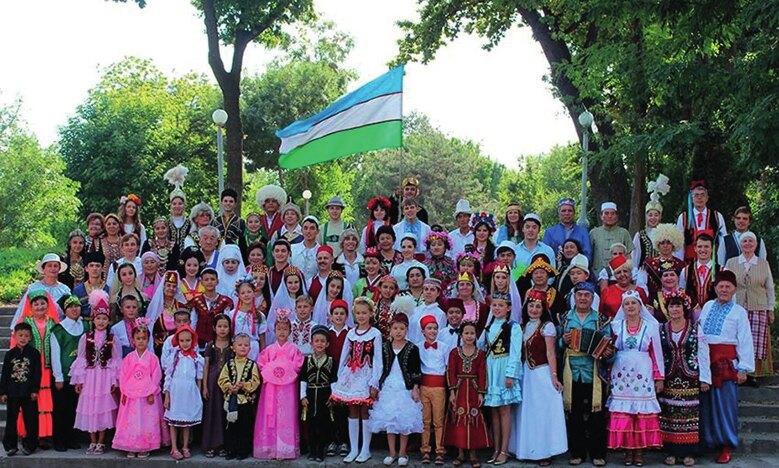
Public diplomacy is a crucial tool that entails the active engagement of civil society in fostering international relations. In contrast to traditional diplomacy, which involves government officials, public diplomacy engages the general populace, encompassing non-governmental groups, scientists, cultural leaders, corporate representatives, and youngsters.
Throughout its years of independence, Uzbekistan has significantly advanced its foreign policy. The reforms implemented under President Shavkat Mirziyoyev have elevated the significance of public diplomacy. Uzbekistan seeks to cultivate robust relationships with the international community, enhance alliances, and bolster its reputation as a nation receptive to global engagement.
Today, the Committee on Interethnic Relations and Friendly Cooperation with Foreign Countries, founded in 2017 under the Ministry of Culture of the Republic of Uzbekistan, oversees the operations of friendship societies.
The initial friendship societies in our nation were established in the 1920s. Following Uzbekistan’s independence, extensive cultural and educational connections with international nations began to flourish. Since 1997, over 40 friendship societies have been established.
In the surroundings of globalization, friendship societies, regarded as a vital component of public diplomacy, undertake several significant responsibilities, including: - Enhancing mutual trust and amicable relations between nations, fostering interethnic and interreligious harmony, and promoting dialogue among civilizations; - Broadening friendly and cultural-humanitarian relations with countries globally, cultivating a favorable national image in the international sphere; - Employing public diplomacy tools to bridge nations and their populations, reinforcing the ethos of mutual trust and neighborly relations.
Recently, representatives of friendship societies of Uzbekistan have orchestrated musical and artistic evenings, as well as art exhibitions, commemorating Navruz, Independence Day, and other events across more than 30 nations, including the USA, Belgium, Bulgaria, Finland, Germany, Latvia, Lithuania, Estonia, France, Turkey, Kazakhstan, Kyrgyzstan, Mongolia, China, the Republic of Korea, Japan, Vietnam, and Malaysia.
To enhance mutually advantageous collaboration with relevant organizations and civil society entities engaged in interethnic relations and amicable international ties, the Committee on Interethnic Relations and Friendly Cooperation with Foreign Countries and Friendship Societies has executed approximately 40 memoranda with partner organizations, including the National Ethnic Affairs Commission of the People’s Republic of China, the All-China Association for the Promotion of Friendship, the “Germany-Uzbekistan” Friendship Society, the House of Friendship of Mongolia, the Central Asia – Republic of Korea Cooperation Forum, Rossotrudnichestvo, the Assembly of People of Kazakhstan, the Assembly of People of Kyrgyzstan, and the Tajik Society for Friendship and Cultural Relations with Foreign Countries. A significant mechanism of public diplomacy is the facilitation of spiritual and educational round tables with international audiences. The Committee and friendship societies, in collaboration with affiliated organizations, conducted over 200 round tables focused on the history, culture, and art of Uzbekistan, as well as the social and economic transformations in our nation, across more than 20 countries, including the USA, Bulgaria, France, Germany, India, Kazakhstan, Tajikistan, China, North Macedonia, and Vietnam.
To enhance amicable relations between Uzbekistan and China, robust connections have been forged between the Committee and various friendship organizations, including the Chinese People’s Association for Friendship with Foreign Countries and the All-China Association for the Promotion of Friendship. International conferences, forums, and roundtables are consistently conducted in both nations. In October of this year, the exhibition “Greetings to Uzbekistan from Sichuan” was conducted in collaboration with the delegation from the Society for Friendship with Foreign Countries of Sichuan Province, China.
The Committee on Interethnic Relations and Friendly Cooperation with Foreign Countries effectively functions on the principles of preserving and comprehensively advancing the history, culture, spiritual values, national traditions, and customs of all ethnic groups residing in Uzbekistan by fostering regular and mutually advantageous connections with expatriates and enhancing amicable and cultural-educational relations with foreign nations. Currently, about 10 million ethnic Uzbeks reside in around 100 countries globally, with the majority located in Central Asian nations next to Uzbekistan, as well as in Europe, Asia, and America. A considerable number of nationals residing abroad for education, employment, or other purposes, together with ethnic communities in foreign nations, consistently uphold connections with Uzbekistan today. Uzbeks residing in Central Asia, Europe, and America have established over 170 national cultural institutions and societies. The Committee on Interethnic Relations and Friendly Cooperation with Foreign Countries has maintained regular communication with around 50 entities. Scientific and educational collaboration among friendship clubs and compatriots is also advancing. Recently, expatriate communities have gotten approximately ten thousand copies of fiction, textbooks, and magazines in the Uzbek language.
Specifically, from September 9 to 13, 2024, the Days of Culture of Uzbekistan, commemorating the anniversary of the Republic of Uzbekistan’s Independence, were conducted alongside our compatriots in Riga (Latvia) and Vilnius (Lithuania). The creative team from the regional branch of the Uzbek Native Center of Maqom Arts in the Navoi region presented our native melodies and songs.
The sister city movement, a significant component of public diplomacy, is presently evolving in both qualitative and quantitative dimensions.
The Committee for Interethnic Relations and Friendly Cooperation with Foreign Countries facilitates the enhancement of fraternal connections between Uzbekistan’s towns and regions and foreign nations.
Studies indicate that cities and regions in Uzbekistan have formed sister-city partnerships with around 70 overseas locales.
The Committee has been diligently pursuing this initiative and has formalized sister city partnerships between Samarkand and Mianyang, Urgut and Duqiang, as well as Pastdargom and Sqigong.
The effective operation of friendship societies is of significant political and social importance in enhancing our nation’s connections with neighboring and foreign countries, cultivating a favorable perception of Uzbekistan among the international community, fostering close relations with compatriots, and offering them practical support, thereby ensuring peace and stability in Uzbekistan.