Introduction
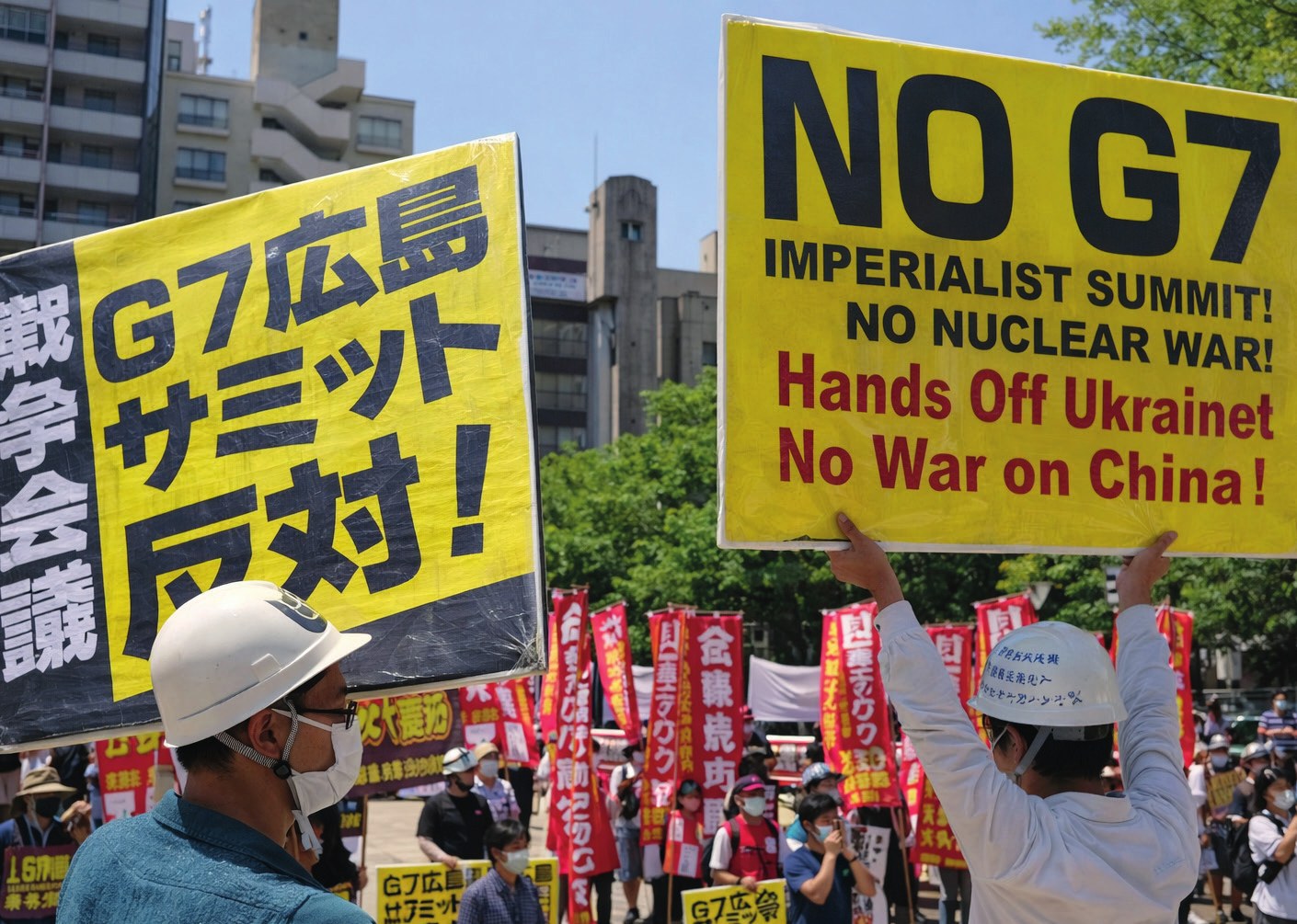
In the election for the upper house on July 20, 2025, the Sanseito Party achieved a significant success in Japan. While it took only three seats three years ago, it has taken fourteen seats this time. In terms of the number of votes in the proportional election districts, its number was the next to that of the major ruling party, the Liberal Democratic Party. Therefore, it has now become a significant topic of discussion in almost all Japanese media on how to understand this phenomenon. This is the starting point of the discussion on my topic: Possible Alliance between “Right wing” and “Left wing” against the US occupation in Japan. Because this party prioritized the diplomatic issue, it differed from other internal matters, such as consumption tax rates, vaccine problems, and inflation problems.
This paper discusses the attention-getting issue in Japan and presents my provocative idea.
How to Understand the Sanseito Party’s Big Wave
To tell the truth, because this party’s slogan “Japanese first” is regarded as a new type of exclusionism like AfD in Germany, significant reactions by the media are very negative, especially in the liberal media, and it is reasonable. However, in my opinion, its attitude also has a possible meaning against the US, which has too many military bases in Japan and now puts intense pressure on increasing military spending and reducing the trade surplus with the US. Such a US attitude is unacceptable to the Japanese people.
However, what is difficult to understand is the newly emerging party’s characteristic, which is that their main external target is not the US but China and other countries’ workers and tourists. This point has become the most crucial populist policy, as it has caused irrational enthusiasm for exclusionism among the Japanese. I believe this type of significant political change can be observed in Taiwan in 2014 and Hong Kong in 2019. Taiwan’s Glass-Roof Movement had caused a big wave in 2014, as the “Sunflower Movement” selected a new target against the investment and service agreement with mainland China. Hong Kong’s student movement also caused a significant wave in 2019 against the extradition criminal regulations, as a form of alliance with the treacherous capitalists who commit crimes on the mainland. Their movement in 2014 to call for a “true universal suffrage system” was a form of class struggle against capitalists. These two exclusionist movements had the potential to spark people’s enthusiasm in the face of their extremely challenging economic circumstances.
Japan has a long history of coexistence with China and has imported many cultural traditions from China. Buddhist religion, Confucianism, political systems, and Chinese characteristics. In this sense, intelligent people respect China, and many business people also want to maintain a good relationship with the Country. However, while the late Qing dynasty’s exclusionism had delayed China’s modernization, Japan had become the nearest imperialist power and invaded China. Additionally, Japan’s economic superiority over China in the post-war period sparked enthusiasm for the perceived superiority of the Japanese people. It has evolved into Japanese exclusionism against China, notably as China’s economic power has surpassed that of Japan. It’s the result of a kind of “complex” feeling. I think it’s very similar to the European complex with the Jewish people before WWII, and now with the Muslim people.
The Communist Party’s Original Standpoint
However, one of the Sanseito Party’s founders, Joichiro Shinohara, was a member of the Communist Party, and one of his purposes in establishing this party was to oppose the US occupation. In this sense, the Sanseito Party’s proposal for a new constitution includes a slogan, “Free Japan from all the foreign bases,” which implies the dissolution of the US-Japan Security Treaty. If we focus on this point, it’s very revolutionary. This slogan is maintained by only two political parties: the Sanseito Party and the Japanese Communist Party (JCP).
As I mentioned above, the Japanese Communist Party declared such an anti-US slogan as a basic task of the Japanese revolution soon after the anti-US great campaign in 1960 by identifying two basic enemies in Japan: the Japanese monopoly capital and the US imperialism, and Joichiro Shinohara also learned this slogan when he was a communist member. Of course, I’ve also learned and accepted it from the bottom of my heart, due to the real situation in Japan.
However, the real focus of the Japanese Communist Party has shifted from this slogan to the slogan of maintaining the peace constitution, especially Article 9, which renounces war and prohibits the holding of military forces, based on the widely held public opinions of the Japanese people. However, it had a problem because Article 9 has been a part of the US-Japan Security Treaty. The US-Japan Security Treaty has led Japan to reduce its military expenditure, and therefore, many supporters of Article 9 have also been supporters of the US-Japan Security Treaty. The Japanese Communist Party founded the “Article 9 Association” in 2004, and one of the proposers was the wife of the former prime minister Takeo Miki, who was famous as a pro-US Article 9 protector. It was a kind of alliance between the light armament independence group and the light armament subordination group, and allowed the present subordination to the US.
This standpoint differs from the original position of the Japanese Communist Party, which allowed for an independent self-defense force but opposed the US occupation. This type of strategic shift is illustrated in the figure below. The Japanese Communist Party’s strategy has been shifted from the A-B bloc to the A-C bloc.
Of course, such a shift also had a specific reason in real politics, because the US’s strategic theory has been changed from the “bottle cap theory” to the “burden sharing theory,” and the true meaning of the latter theory is to accelerate the Japanese remilitarization. That’s why the Japanese Communist Party changed its strategy to the A-C. The mainstream movement against heavy armament had become A, not C. In this sense, we should understand this shift.
However, what we should understand more is that the US requirement has become dramatically more radical under the Trump administration, and Trump also wants to withdraw the US army from the Eastern Globe. Furthermore, under the new condition where the Chinese military force has grown so rapidly and no longer needs any “bottle cap” from US pressure. Therefore, even if Japan wants to accelerate its military expansion independently after the dissolution of the US-Japan alliance, it alone cannot initiate war with China. In this sense, the most crucial task for the East Asian peace has become not the Article 9, which prevents the Japanese military expansion, but the dissolution of the US-Japan alliance. In other words, the US withdrawal that Donald Trump wants from the bottom of his heart.
What Makes JCP Stick to the Former Strategy
Therefore, we should change our peace strategy from the former one to the new one. That is the A-C strategy to the A-B strategy, and the Sanseito Party is reflecting this need to some extent, even if its anti-US declaration was not explicit at the last Upper House election.
However, in my opinion, this shifteven if it is a return to the original strategyis very difficult for the Japanese Communist Party, because its fundamental theoretical standpoint has changed from communism to liberalism, in fact. Or in other words, the real and actual supporters have been changed from the people trained in communist ideologies to the people just trusting in liberalist ideas, which focus on human rights and democracy only. This fundamental shift was triggered by the so-called “failure of socialism” around 1990.
Of course, each liberal idea does not have any problem, because the results of the severe capitalist exploitation and imperialist oppression all violate the liberal ideas. These ideas can become the tool of our struggle. In fact, I’m now strongly supporting a liberal Democrat in the general election to reform US-Japan relations. It is truly necessary for Japan’s new diplomacy.
However, we cannot stop at that “reform” but should go further to a “revolution” under these
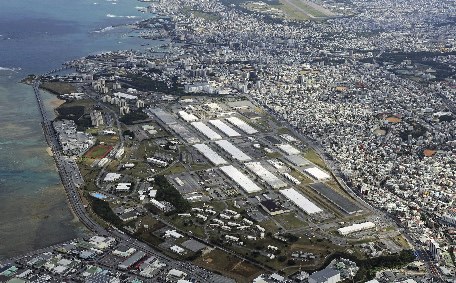
challenging circumstances. For example, almost every month, the Japanese people are suffering violent crimes, especially in the Okinawa islands, where 70 percent of the US military forces in Japan are concentrated, and three-fourths of the rape criminals are not prosecuted due to a kind of extraterritoriality of the US soldiers. This ratio, three-fourths, might be underestimated because victims are not willing to report such incidents. That is why we need the dissolution of the US-Japan Security Treaty right now, and there are only two parties: the Communist Party and the Sanseito Party, even if the latter’s claim was not clear in the last election campaign.
In fact, I should confess that we Japanese communists claimed “Yankee go home!” in front of the US bases, and this slogan sounds like an exclusionist slogan. Yes, we were exclusionists like the Sanseito Party, just having the difference that our target is the US, while the Sanseito Party’s real focus is China, at least in appearance.
Another type of problem caused by liberalism is its ideological bias for Western values and against socialist ideas. For example, because liberalism focuses on the value of “human rights” and democracy, it does not consider the real living conditions of the people themselves. They say: “We gave you the right to vote. Therefore, we do not concern ourselves with the outcome of governmental policies. It’s a matter of your self-responsibility.” This way of thinking is opposite to the Marxist ideas that focus on the matter of death or life as the “result” of real living. In other words, the Marxist concept of human rights differs significantly from the liberal concept. For this purpose, political rights are sometimes restricted, as a more critical point is not the process but the result. I think the latter philosophy is better for the people, but if we cannot understand this type of advantage in Marxism, people tend to support Western liberalism. This is the reason why many people want to be friends with Western countries and hate the socialist countries.
The Japanese Communist Party does not have any ethnic bias because of its internationalism, and many members have a sympathy for China because of its deep understanding of the modern history of the Japanese invasion. It is true. But once it is affected by the liberal bias, it tends to be a member of the Western countries, and keep a distance from the communist countries like China, Cuba, and Vietnam. In this case, its claim against the US becomes very weak, while that against China becomes very strong. That is why the Japanese Communist Party’s anti-US campaign has become very weak, and the Sanseito Party has stolen its slogan.
JCP’s Original Two-Stage Revolution Theory
Besides, there is one more difficulty on the side of the Sanseito Party, as its populist purpose provides no reason to ally with the Communist Party. The same applies to other countries, such as Germany, France, England, and the Netherlands, among others. Exclusionism of the newly emerging “far-right parties” cannot be shared by the communists. If the communist parties want to form an alliance with them, they will lose many of their supporters. In this sense, the title of this paper is too optimistic.
However, as I mentioned above, under the situation of Trump’s America First strategy, JCP has an objective role to strengthen its anti-US characteristics. In this case, JCP and the Sanseito Party will compete with each other to be more against the US. The July 15, 2025 edition of the Nikkei Shimbun, Japan’s most popular business newspaper, reported that a group led by Vice President J. D. Vance and Secretary of State Marco Rubio, known as the “New Right” or “New Conservatives,” is adopting policies that were once the exclusive domain of the left, such as state-led industrial policy, emphasis on labor unions, stricter regulation of large corporations, and protectionist trade policies. Furthermore, they have jointly submitted a bill in March to strengthen labor unions with Senator Cory Booker, a Democrat who is close to Senator Bernie Sanders. They could not choose the liberals in the Democrats, but the so-called “democratic socialists” as friends.
Therefore, whether these two Japanese parties can cooperate or not, they must sharpen their anti-US standpoints. If the JCP does not do so, it will lose its value, and if the Sanseito Party does not do so, it will also lose its popularity in the newly emerging situation.
As far as JCP is concerned, what we must remember is that it had a two-stage revolution theory: a democratic revolution initially, followed by a socialist revolution. One of the most critical points of the first stage was the anti-US revolution for independence. Furthermore, this sequence of revolutions is identical to the Chinese Revolution. First, as the anti-Japan revolution for independence, and then went to the anti-feudalist revolution for internal liberation. In this case, the Communist Party of China formed an alliance with the nationalist party at the first stage. It should be a lesson for us.
In any case, it is essential to understand how the Japanese social contradictions, as reflected in the big wave of the Sanseito Party, should be addressed, and how anti-US slogans should be handled. By identifying the similarities and differences with the political situation seen in Western countries, we must explore the direction we should take.