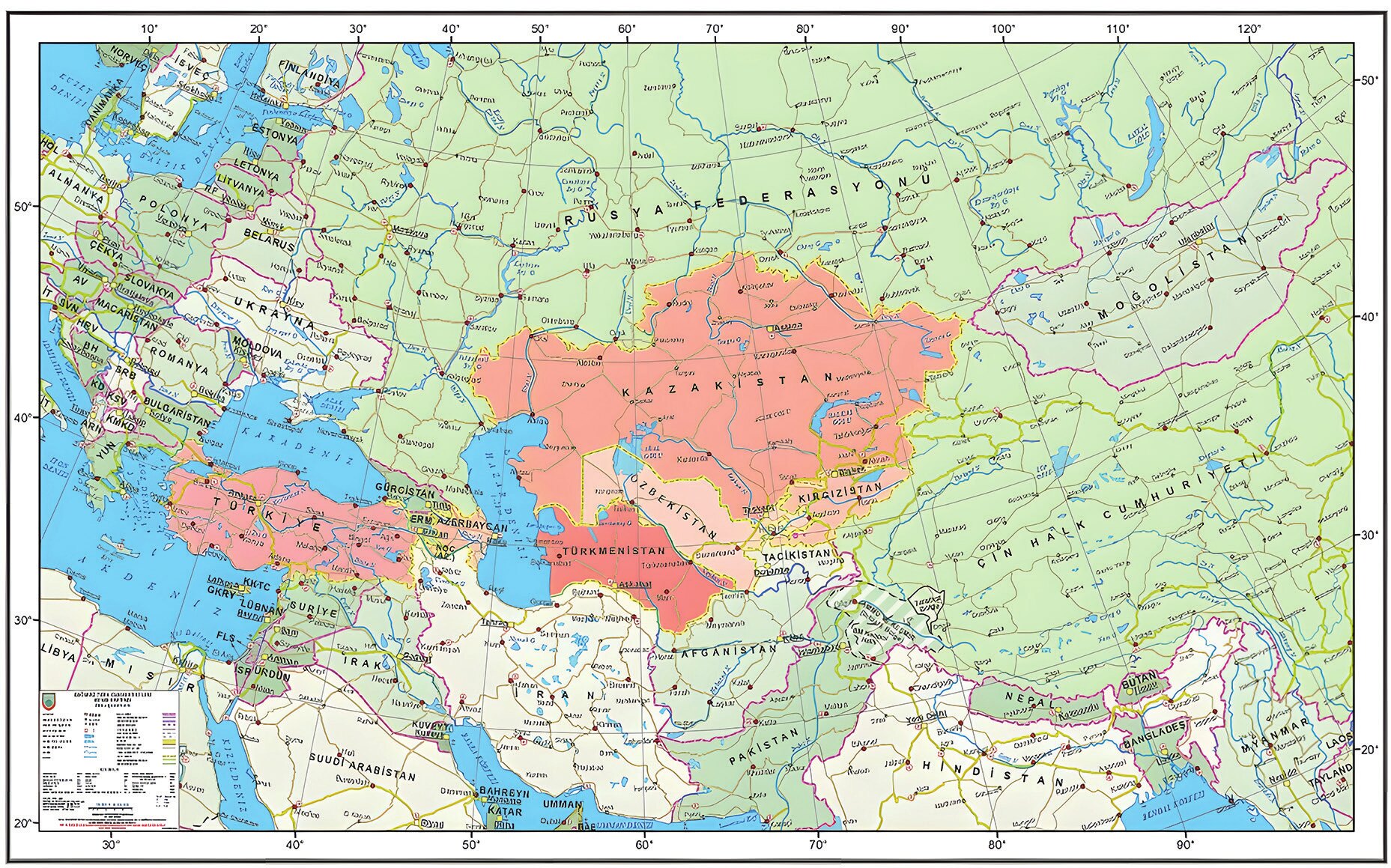
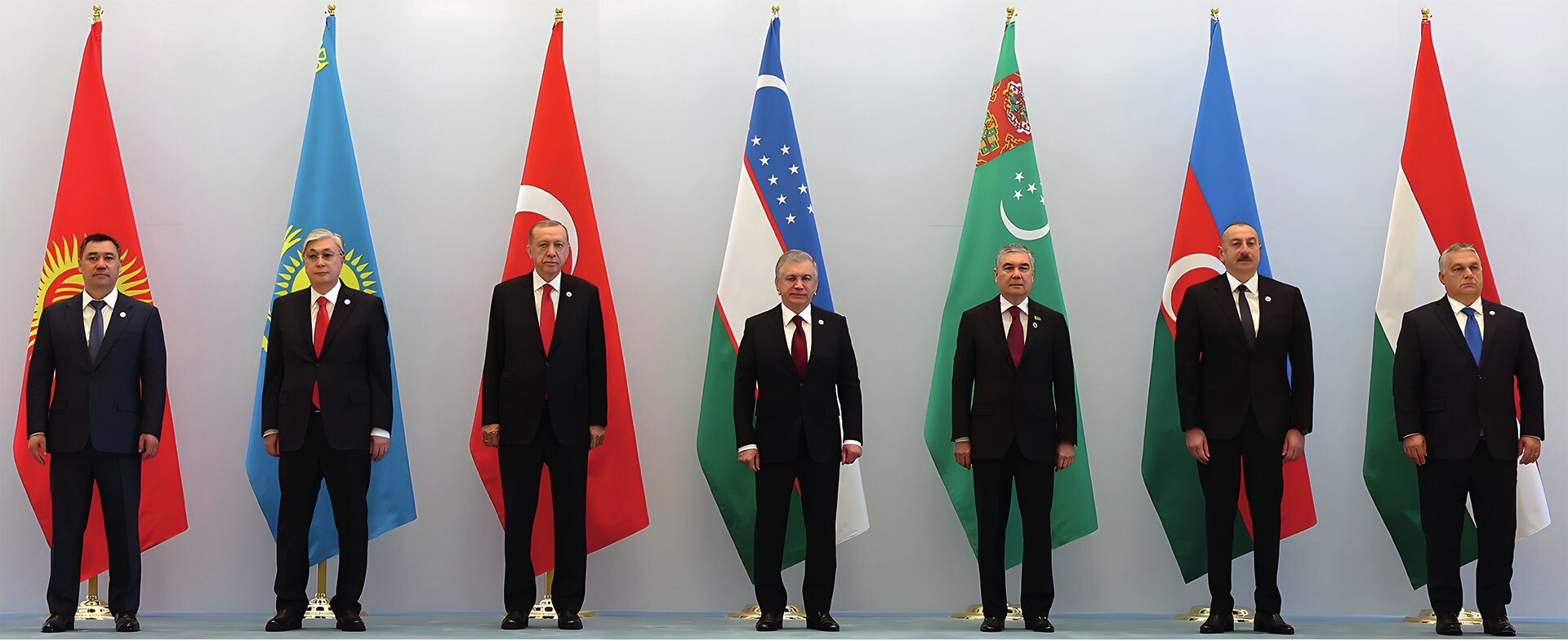
In the past 10-15 years, there has been a noticeable “trend of Eastern nations increasingly resisting” the globalist neoliberal ideology of the West. Countries such as Russia and Türkiye, which straddle Europe and Asia, along with Iran and China, are at the forefront of this movement. These nations appear to be forming closer regional collaborations, both within their own spheres of influence and with each other, to counter Western hegemonic pressures. How would you evaluate the Organization of Turkic States, which brings together Türkiye and the Turkic republics of Central Asia, in light of this new global trend?
Aleksandr Sotnichenko: I concur that integration processes are currently unfolding in Eurasia. These processes have two main objectives: one is indeed to counter Western neoliberal dominance. However, this is not the primary goal for the key players in this integration - China, Iran, Russia, and Türkiye. Until recently, these states have primarily focused on strengthening their own sovereignty and security through political, economic, and cultural alliances.
In this context, the Organization of Turkic States (OTS) exemplifies a structure designed to bolster Türkiye’s sovereignty and influence in Eurasia. According to its foundational documents, the OTS does not aim to confront the West in any specific way. Unlike Western criticism towards other alliances and integration programs such as the Shanghai Cooperation Organization (SCO), the Belt and Road Initiative, and the Collective Security Treaty Organization (CSTO), the activities of the OTS have not been similarly targeted.
Which Strategic Course Will Türkiye Follow? Russia is one of the primary opponents of a unipolar world based on the Atlantic consensus. What role do you think the Organization of Turkic States can play in a multipolar world?
Aleksandr Sotnichenko: The role of the OTS in a multipolar world depends largely on Türkiye’s position as the central figure of the organization. The growth of Türkiye’s influence and the strengthening of its sovereignty in Eurasia, facilitated by the OTS, can have both positive and negative implications for the development of a multipolar world. If Türkiye establishes itself as an independent and autonomous power center, it will inevitably oppose U.S.-led global order. In this scenario, the OTS’s development would occur through dialogue and consideration of the interests of other geopolitical centers on the continent, particularly Russia, China, and Iran.
Simultaneously, Türkiye remains a military and political ally of United States as a member of NATO and an EU candidate. These institutions are adversaries of a multipolar world. Türkiye’s foreign policy, which delicately balances pro-Western and Eurasian orientations, is inherently unstable and could shift at any moment. Currently, Türkiye’s stance in the global confrontation between Russia and the West cannot be deemed impartial. Ankara supplies weapons to Ukraine, which are used against Russian soldiers in a conflict driven by U.S. ambitions for global dominance. Furthermore, Türkiye has repeatedly expressed support for Ukraine’s NATO membership. A pivotal moment in Russian-Turkish relations was Türkiye’s unilateral decision to withdraw from an agreement to hold captured commanders of the Ukrainian neo-Nazi group Azov on its territory, allowing their return to Kiev where they continue to fight against Russia.
Both China and Iran have grievances regarding Türkiye’s regional policies. Ankara aligns with Washington in criticizing Beijing’s policy in the Xinjiang Uygur Autonomous Region. There are also significant disagreements with Iran concerning Syria, Iraq, and other areas.
Given these circumstances, many in Russia question whether Türkiye and its supported institutions, such as the OTS, will become agents of neoliberal globalization in Eurasia. Will the activities of the OTS contribute to the disintegration of Eurasian peoples?
The Way to Overcome Insecurities The Central Asian states that are members of the Organization of Turkic States have historical ties and deep relations with Russia, both individually and collectively. These states, which opened to the West following Soviet Union’s collapse in 1991 and experienced the adverse effects of globalization, also hold strategic positions within China’s Belt and Road Initiative. How will Türkiye’s involvement in the OTS with the Turkic Republics of Central Asia affect its relations with Russia and China?
Aleksandr Sotnichenko: The states that constitute the OTS have not only profound historical and cultural connections with Russia. For instance, Kazakhstan and Kyrgyzstan are military and political allies of Russia within the CSTO and members of the Eurasian Economic Union (EAEU). Millions of citizens from these member states live and work in Russia, while millions of Russians reside in these countries. For security reasons, neither Russia nor China would welcome unfriendly political regimes in the OTS countries.
To date, neither Russia nor China is assured of the OTS’s friendly stance. There are concerns that Türkiye, as a military-political ally of U.S., might facilitate U.S. influence in the OTS countries, potentially transforming the OTS from a cultural-economic entity into a military-political organization. This apprehension is heightened by numerous Turkish and Turkic world experts advocating for such a transformation.
However, this issue could be mitigated if the OTS takes steps to address the concerns of Russia, Iran, and China regarding the growing integration of Turkic states. Involving the leadership of these states in the OTS’s activities would be a significant step. In 2019, Russian Foreign Minister Sergey V. Lavrov indicated Moscow’s willingness to consider joining the Cooperation Council of Turkic-speaking States if the organization is open to accepting states where Turkic-speaking populations are present but not dominant. The OTS has an observer institution that could involve Russia, Iran, and China, thereby reducing mistrust significantly.
OTS Should Establish Dialogue with SCO Most members of the Organization of Turkic States are also members of the Shanghai Cooperation Organization (SCO), which includes Russia, China, and Iran. What impact do you think the establishment and strengthening of the Organization of Turkic States will have on the SCO?
Aleksandr Sotnichenko: The impact of the OTS on the SCO largely depends on Türkiye’s stance towards the SCO. Currently, Türkiye holds only a partner status and has not applied for membership. Not only Russian but also American officials recognize that Türkiye’s membership in NATO, whose goals are fundamentally at odds with those of the SCO, is the main obstacle to its accession to the alliance.
The SCO is known for its active cooperation with other regional institutions in Eurasia, including partnership agreements with the Commonwealth of Independent States (CIS), CSTO, EAEU, and ASEAN. Representatives of these organizations participate in SCO summits. However, the Organization for Security and Co-operation in Europe (OSCE) is not among its partners. To advance integration, the OTS should initiate dialogue with the SCO leadership to align organizational goals.
Will Türkiye become a sovereign center of power or a tool of Western policy in Eurasia? Some circles in Russia, China, and Iran perceive the establishment of the Organization of Turkic States as a threat, believing that United States is behind it. Do you think this is a realistic concern given the current circumstances where U.S. and Türkiye’s strategic interests are largely conflicting?
Aleksandr Sotnichenko: Russia, Iran, and China closely monitor the evolving interactions between U.S. and Türkiye, as well as Türkiye’s participation in various Western integration institutions. Unfortunately, we observe a fairly successful development of Türkiye’s dialogue with the West, particularly within NATO, including discussions on the alliance’s expansion, Ukrainian issues, and participation in the EU customs union. Türkiye’s involvement in institutions aimed at strengthening Western political and economic dominance complicates its participation in Eurasian structures such as the SCO and EAEU, especially amid rising international tensions. This is the root of the mistrust that Russia, China, and Iran harbor towards Türkiye-led integration projects.
Over the past 20 years, Türkiye has adeptly balanced the interests of the West and various Eurasian power centers. However, with growing international tensions, Türkiye will inevitably have to make a strategic choice. The West has repeatedly shown an unwillingness to consider Türkiye’s interests as an independent state in major strategic areas. In Syria, U.S. and several European countries openly support separatists in the country’s northeast. Regarding Middle East, U.S. unequivocally sides with Israel. Cyprus issue remains unresolved within the context of EU integration, with the West taking an anti-Turkish stance.
Equally critical is the issue of values propagated by the West. Values of alienation, liberalism, disregard for tradition, and open encouragement of LGBT rights are unacceptable to Turkish society. These issues continually push Türkiye to reconsider its geopolitical alignment. In the near future, will Türkiye become a sovereign center of power or a tool of Western policy in Eurasia? The future of the OTS and its relations with other Eurasian integration projects depend on this decision.