Giriş
Central asia has gained greater geopolitical importance, especially after the collapse of the Soviet Union, which resulted in the independence of the former Soviet republics in the region. The early 1990s independence of Central Asian states led to a re-evaluation of their domestic and international roles. During the late 20th and early 21st centuries, the region’s transitional phase, marked by significant sociopolitical tensions and compounded by instability in Afghanistan, was perceived as highly securitised within international Relations. New independent states, Uzbekistan, Kirgizstan, Kazakhstan, Turkmenistan, Tajikistan, as well as Azerbaijan, Georgia and Armenia in the Caucasus region turned out to be new actors in post-colonial geography that still suffer under various conflictual issues. The evolving political landscape in Asia makes the continent a strategic region that draws increasing attention from the global and regional powers. Central Asian political processes are closely connected to new and conflict-oriented interest relations between the big powers that strive to acquire and protect the values that they believe to be theirs. Semi-conductors, energy resources, trade transport routes and security issues dominate the diplomatic efforts of the region’s states and others from outside.
The term geopolitics, first coined by Rudolf Kjellen (1864-1922) and then Frederic Ratzel (1864-1922), a thinker, who served as one of the intellectual brains of the NAZI ideology, consolidated the concept that shaped the political geography-related power relations. Robert Strausz-Hupé (1903- 2002) and Karl Haushofer (1869-1946) were prominent supporters of Hitler’s Lebensraum ideology (Dodds, 2007Dodds, K. (2007). Geopolitics: A Very Short Introduction. Oxford University Press, New York.) (İlhan, 2019İlhan, S. (2019). Jeopolitik Güç Odağı Kuramı. Kırmızıkedi, İstanbul.). Geopolitics is still fundamental to international relations (Brzezinski, 2016Brzezinski (2016). The source article does not provide a separate full bibliographic entry for this citation.). Geopolitical consent is part of national identity. Events, narratives and policies continuously reproduce it. For nations, landscapes and sites are considered sacred and iconic of their heritage. However, the persistent identity imagination may also be modified under the influence of current power constellations.
In the following, the pivotal role of the Organization of Turkic States (OTS) as a new actor in the shifting landscape of Asian geopolitics, considering the evolving conditions and power relations in this highly distressed region that still carries the footprints of its colonial past, is discussed. Within this framework, the impacts of regional or global powers and former and future hotspots like Afghanistan and conflicts in the Chinese Sea have to be considered. Geopolitical elements such as security, foreign policy, trade, culture, education, environmental issues, energy, other natural resources, and transportation routes provide a closer overview of the current situation. Historical context and partnerships in different fields, as well as the cultural ties that bind the OTS States together, are explored.
In this study, one of the primary questions is the capacity of the OTS to accomplish regional cooperation that may have definitive impacts on the region’s geopolitics. The neo-functional approach tells that the regional dimension could downplay global influences, considering the European case (Ünver, 2022Ünver (2022). The source article does not provide a separate full bibliographic entry for this citation.). Despite similarities, the OTS’s development cannot be compared with the European Union’s vast experience with different backgrounds – at least for the time being (Ünver, 2023Ünver, D. (2023). The Analysis of the Organization of Turkic States From a Neo- Functionalist Perspective. METU, Ankara.).
This article delves into the OTS’s geopolitical influence in Central Asia and the Caucasus, examining its impact on economic collaboration, cultural unity, security alliances, and strategic partnerships while also addressing its challenges.
Playground of Multilateral Geopolitical Interests
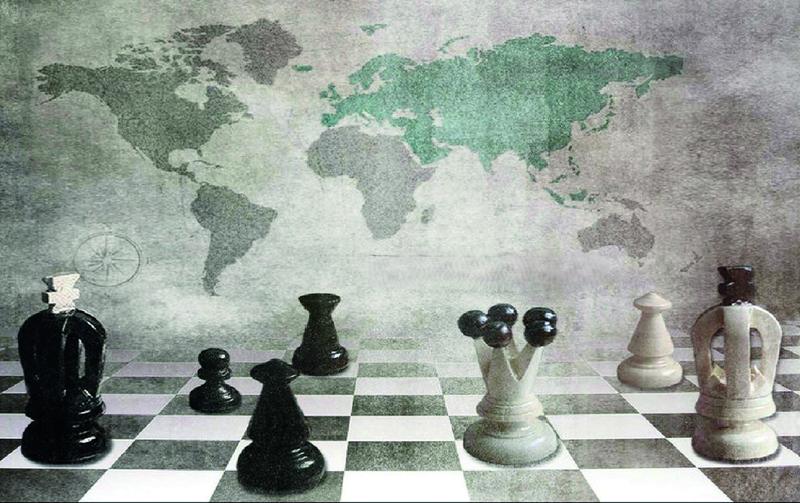
Geopolitics, as a crucial factor and acknowledged political and academic discipline in making foreign policy, influences the interaction between the states and shapes and addresses regional and relevant global challenges. Beyond the nation-states, new geopolitical actors such as multinational companies and civil society impact the political processes on regional and global levels. Former unemancipated spectators of foreign policy, such as ordinary citizens, seem more interested in international relations and reluctant to stay beyond the fence of political theatre. Political decision-making became consequently more complicated in the light of new influential actors representing their interests in a noisy marketplace of multilateral interests. Those interests are mainly in the broad context of strategic locations, natural resources, regional and global conflicts, and economic, cultural and ideological factors. Rivalries between the geopolitical players, i.e. primarily regional states and global powers that intervene in regional affairs, shape strategies and interactions in the political arena (Marshall, 2021Marshall, T. (2021). The Power of Geography Ten Maps That Reveal the Future of Our World. Elliott Thompson, London.).
Suat İlhan discusses the power-related geopolitics induced by excellent power rivalry under the theory of locus of power (İlhan, 2019İlhan, S. (2019). Jeopolitik Güç Odağı Kuramı. Kırmızıkedi, İstanbul.). Beyond this classical geopolitical understanding, there is a shift to image-building processes of nations that judge their patria as sacred and emblematic of their heritage. Geopolitical consent is part of national identities, and image-building enjoys a broad revival globally. So, identities and political and social ideologies are also credible factors in geopolitical understanding. Social constructivism seems to contain acceptable views for forming identity-based geopolitics (Demir, 2022Demir, C. (2022). The Organization of Turkic States: Implications for the Regional Balance of Power. Güvenlik Stratejileri Dergisi TDT Özel Sayısı, 39-71.).
Foreign policies, although evolved rapidly in the last 30 years, still carry the features of the past. A nation-state system supported by established orders that resist radical change dominates the world. The current world order is deeply geopolitical, i.e. connected to geographical locations and political connotations as before. However, new instruments and technological improvements have directed the development of geopolitics; Mackinder, Mahan, and others have suggested different power relations within their geopolitical frameworks. Hence, they were predominantly based on power politics initiated in the 20th Century, inherited from the 19th. Century. New political and military alliances and other multi- and bilateral cooperations in the Asian power swing address multidimensional parameters (Dodds, 2007Dodds, K. (2007). Geopolitics: A Very Short Introduction. Oxford University Press, New York.).
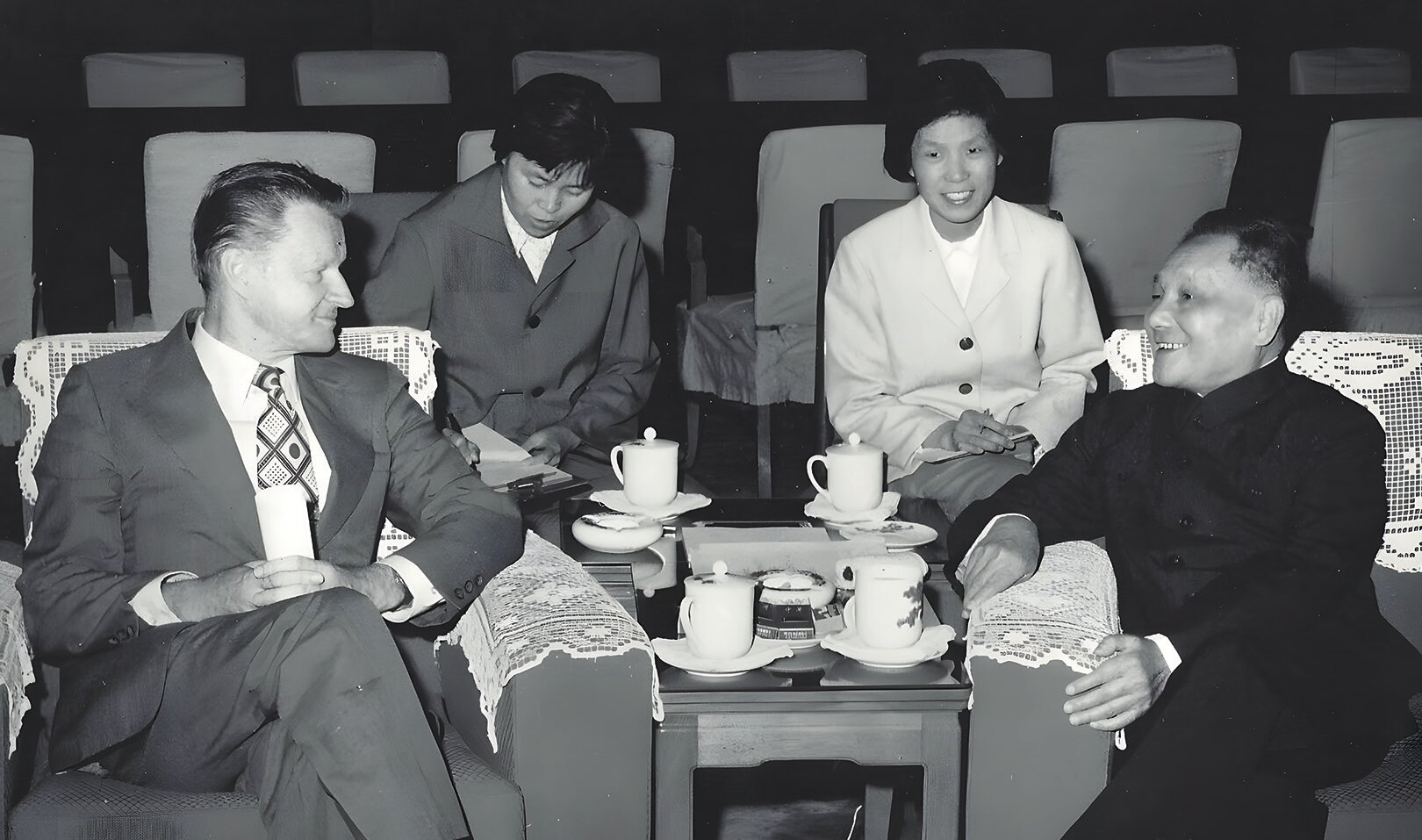
Central Asia is one of the regions with the most conflicting geopolitical interests, regional powers, and global actors, and it significantly influences political, strategic, and economic issues. Some of these impacts can be traced back to the legacy of history. Current needs and factors shape others, and the emerging dynamics constitute a basis for multilateral political conflicts. The involvement of the US in Afghanistan after the 9/11 terror attacks trembled the power balances in the region. Zbigniew Brzezinski’s standpoints in this respect cannot be underestimated. For Brzezinski, the US, as the predominant non-Eurasian power, is preeminent in the region – “…and America’s global primacy is directly dependent on how long and how effectively its preponderance on the Eurasian continent is sustained” (Brzezinski, 2016: 30Brzezinski (2016). The source article does not provide a separate full bibliographic entry for this citation.). The aftermath of the takeover of power by the Taliban in Afghanistan must have impacted this rather pretentious opinion to some extent.
Although more attentive to the Russian-Ukrainian War currently, Russia is still the leading geopolitical actor in Central Asia today. Its political, economic, and cultural influence in the former Soviet Republics strengthened Russia’s position, which the Shanghai Cooperation Organization and China consolidated. China’s geopolitical transportation initiative, “One Belt One Road” (OBOR), should enhance the trade frequency between the countries of the region and accelerate the exports to the West is one of the most significant geopolitical steps (Barman, 2023Barman, J. (2023). China’s Belt and Road Initiative: An Analysis. Journal of Contemporary Politics, 2(3), 97-102.).
China’s recent global economic advances impact Central Asia and the neighbouring countries in the region in a multifaceted way. How China geopolitically influences the region should be discussed in consideration of its technological precedence and economic priorities. The region has rich natural resources such as oil, natural gas, and rare earth elements, which attract China.
Shanghai Cooperation Organization (SCO) is a significant intergovernmental organization founded in Shanghai, China, on June 15, 2001. The founding members were China, Russia, Kazakhstan, Kyrgyzstan, Tajikistan, and Uzbekistan. The Organization has expanded to include India and Pakistan as full members in 2017, and Iran became a full member in 2023. Observer States include Afghanistan, Belarus, and Mongolia and Dialogue Partners Armenia, Azerbaijan, Cambodia, Nepal, Sri Lanka, and Türkiye (Bailes et al., 2007Bailes, A. J. K., Dunay, P., Troitskiy, M. (2007). The Shanghai Cooperation Organization. Stockholm International Peace Research Institute.).
SCO has a set of objectives, with security cooperation at the top of the list. Economic and developmental cooperation among the members and encouragement of cultural, technological and educational interaction. The formation of the SCO caused some anxiety in the West because of the global rivalry structures. The position of the SCO with central Asian countries reflects the regional powers’ geopolitical intentions and interests. The alliances tell us that the interplay of those powers, whatever their interests, makes Central Asia with its neighbouring areas extend even to western Eurasian territories.
Organization of Turkic States: A New Geopolitical Actor in Asia
The formation of the OTS is rooted in the Turkic-speaking nations’ shared historical and cultural heritage. The idea of Turkic unity dates back to the early 20th Century. The dissolution of the Soviet Union made it possible to forge closer ties between Türkiye and the Turkic-speaking countries in Central Asia and the Caucasus. After the dismemberment of the Soviet Union, Türkiye enthusiastically welcomed the independence of Central Asian Turkic states and Azerbaijan. It was a reunion with kids under a foreign power’s dominance. Türkiye was the first country to recognize the independence of every single Turkic state in the region. This was a sign of perceived proximity for the kins whose contacts were interrupted during the colonial times. The step forward to establish a cooperation council based upon common heritage and ethno-identity of Turkic nations of Central Asia and Caucasus became a primary diplomatic goal of Türkiye. However, it took almost eight years to establish a council. The Turkic Council was accepted only by Türkiye, Azerbaijan, Kazakhstan, Uzbekistan and Kirgizstan. Turkmenistan was not eager to participate in the first hour to create a unified “Turkic world” with an emphasis on cultural identity. Those initial attempts were valuable, for they initiated the thoughts on the practicability of such a cooperation body. Russian Federation, as the successor of the Soviet Union, was not strong enough to intervene in any geopolitical developments in the region in recent years.
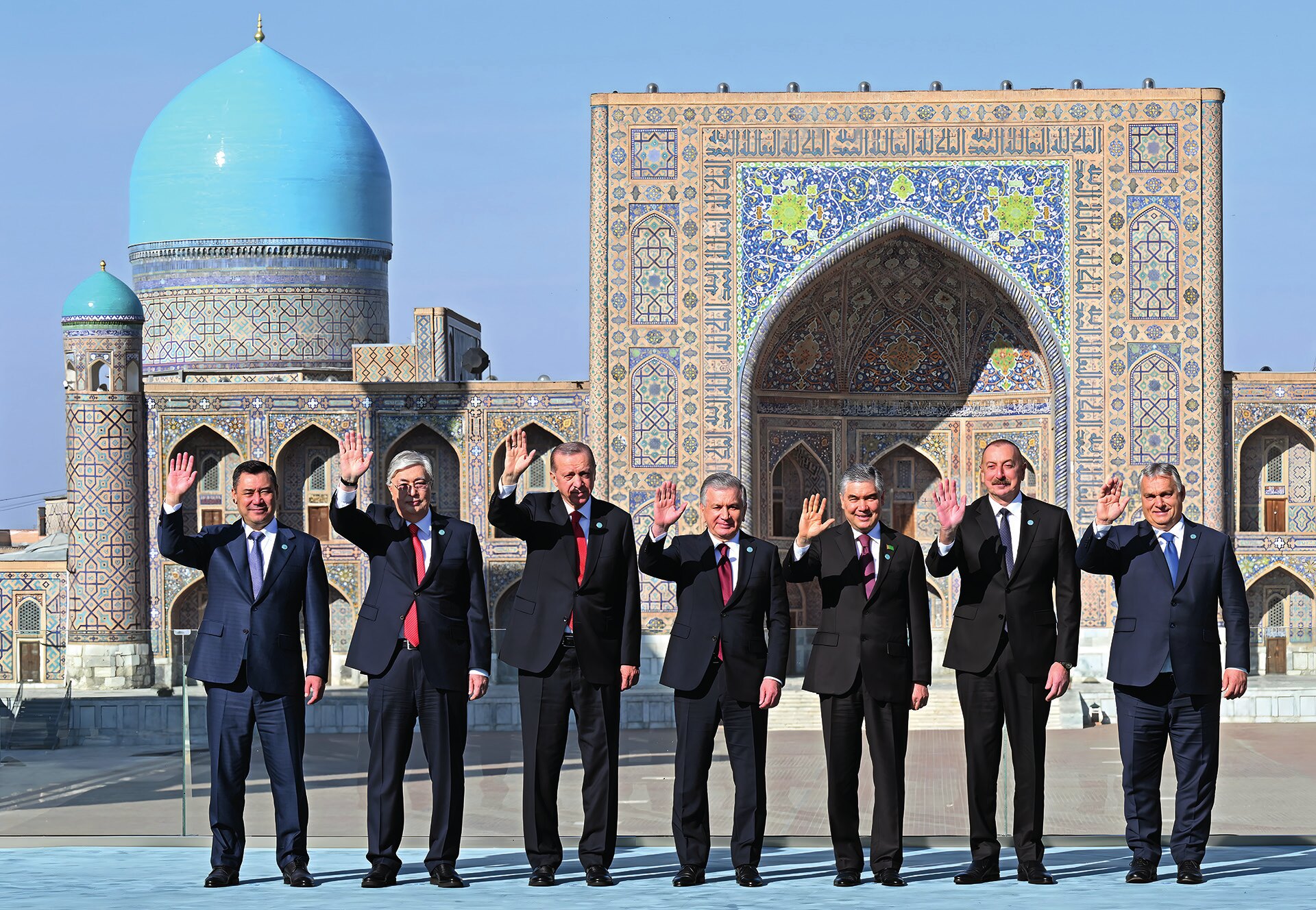
Today’s Organization of Turkic States, previously known as the Turkic Council, was established in 2009 in Nakhichevan to enhance comprehensive cooperation among Turkic-speaking countries. Comprising member states such as Türkiye, Azerbaijan, Kazakhstan, Kyrgyzstan (founding members), and Uzbekistan (2019), the OTS has been a pivotal player in fostering economic, cultural, and strategic ties within the Turkic world. The Organization’s goals are the following as exposed by itself: “Organization is committed to the purpose and principles of the Charter of the United Nations (UN) and other universally recognized principles and norms of international law, including sovereign equality, territorial integrity and inviolability of internationally recognized borders of states, as well as the maintenance of international peace, security and development of good-neighbourly and friendly relations” (Turkic States, 2024Turkic States. (2024). Retrieved July 10, 2024 from).
The OTS comprises currently Azerbaijan, Kazakhstan, Kyrgyzstan, Türkiye, and Uzbekistan as member states, with Hungary (2018), Turkmenistan (2021)and the Turkish Republic of Northern Cyprus (2022) with observer status. The Organization aims to promote comprehensive cooperation among Turkic-speaking countries. The OTS encompasses a vast geography that stretches from the Adriatic to the Great Wall of China. The primary target of the OTS is to constitute a network of shared cultures and cooperation in different fields. It builds a platform that should eliminate the effects caused and be caused by ‘geopolitical schisms’ and ‘layered imbalances’ caused by the intensifying tensions between the ‘power centres’ in and outside of the region. The OTS holds significant potential for influencing regional stability, economic development, and cultural cohesion in the contemporary geopolitical arena. This paper assesses the OTS’s role against new Asian geopolitics, focusing on its strategic importance and potential future developments. The OTS offers significant chances for further strengthening ties and, therefore, presents a decent opportunity for peace.
The Turkic Council, renamed to OTS (2021), has organized 2009 11 Summits of Heads of State. At the Istanbul Summit, November 12, .2021, the breaking point of the history of OTS, declared that the Turkic world would, in compliance with the Nakhichevan Declaration principles, continue its development path as an effective intergovernmental organization (D. Ünver, 2021Ünver, D. (2021). The Turkic World on Rise. Retrieved July 12, 2024 from). The Turkic World Vision, as adopted in this Summit, constitutes the first strategic document of the Organization established in 2009 with the Nakhichevan Agreement (Baki, 2022Baki Musabay, P. (2022). Turkic World Vision–2040: A Step Forward for the Resilience of Turkic Cooperation. PERCEPTIONS, Spring-Summer, Volume XXVII, Number 1, 26-52.).
The Turkic World Vision’s content is multifaceted and multidimensional. It addresses a broad spectrum of regional and global issues, raising it to the level of a pivotal actor in the region. The objectives of the Vision Document comprise, first, intra-organizational interactions between the member states and, second, all-encompassing issues with suggestions and intentions for future relations.
Political and security cooperation is at the top of the list of suggested interactions of the OTS political agenda. Political cooperation should be introduced to strengthen mechanisms of multilateral political consultations on policy issues of common interest. Furthermore, institutional cooperation and coordination with related Turkic institutions such as Türksoy, Turkic Academy, Turkic Culture and Heritage Foundation, and TURKPA (Turkish Parliamentary Union) should empower Turkic efforts for coherent action. Those initiatives should also enhance closer relations and common projects with relevant UN entities.
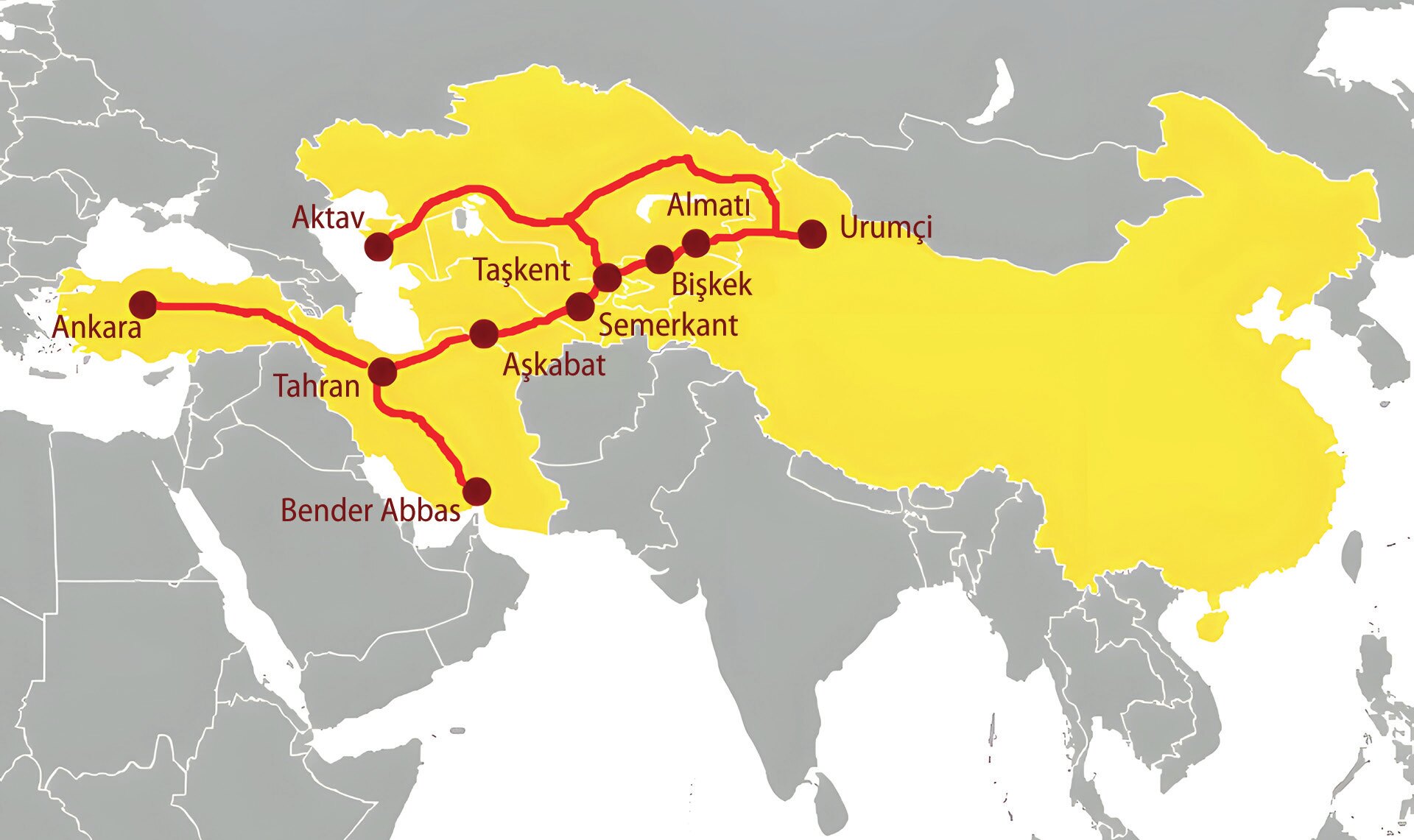
Enhancing economic collaboration and connectivity among its members is one of the primary objectives of the OTS. Trans-Caspian Transport Route (Middle Corridor) is outstanding in this respect. Middle Corridor connects Türkiye, Azerbaijan and Central Asian countries, providing an essential link between China and Europe. It aligns simultaneously with the Belt and Road Initiative (BRI). This connectivity opportunity is a significant instrument for the economic empowerment of related countries. In the same context, energy cooperation is critical to the OTS’s economic influence. The Trans-Caspian Gas Pipeline between Turkmenistan and Azerbaijan and its prolongation Trans Anatolian Natural Gas Pipeline (TANAP), as well as the proposed Trans Adriatic Pipeline to convey Central Asian natural gas to Europe, are geopolitically essential projects (Demir, 2022Demir, C. (2022). The Organization of Turkic States: Implications for the Regional Balance of Power. Güvenlik Stratejileri Dergisi TDT Özel Sayısı, 39-71.).
Member states of the OTS should cooperate on common grounds to combat radicalization and terrorism and share information about different security threats, such as transborder criminality, cyber threats, money laundering, irregular migration, and human smuggling.
An important area is the military cooperation. Türkiye’s active military support to Azerbaijan in its dispute on Karadağ against Armenia showed that the military cooperation among the members could be part of the vision of alliance within the framework of the OTS. However, a broad range of military cooperation is still far from being a reality. Türkiye’s support to Azerbaijan had somewhat different dynamics that could not be carried to an OTS strategy that is primarily not a military alliance. Large-scale military engagement would also disturb other alignments, such as the SCO and major individual powers of the region, such as Iran, India, and Russia.
Challenges and Limitations
The geopolitical landscape of Central Asia and the Caucasus is marked by the interplay of multiple powers, especially by global geostrategic players, each trying to achieve more influence over the region. Although the OTS’s geopolitical influence today is more extensive than before, leveraging historical, economic, cultural, and strategic ties among its member states, there still needs to be more consistency as regards unity with its multifaceted collaboration options. Strategic autonomy provided by the OTS to its member states and the emergence of a counterbalance against great powers allows the member states to exercise their interests. However, changing geopolitical interests, both regional and global, forcing the OTS and its member states to adopt more cautious progress is one of the most severe challenges for the future of the OTS.
Disparities in the economic development levels and differing political landscapes between the member states influence the understanding of national interest in individual member states. Past and future inconsistencies between member states, Uzbekistan vs. Kirgizstan, and Kirgizstan vs. Tajikistan—a non-member state—are significant political issues that should be solved within the OTS. This situation may complicate collective decision-making, which could slow down effective cooperation. Over time, decisive behaviours of the OTS states’ consent leaderships may overcome those challenges.
The OTS is a young intergovernmental organization that must enjoy more international political recognition. Hungary’s inclusion into the OTS with observer status is an opening to a region outside Central Asia and the Caucasus. Although Hungarian membership was considered very unusual by Europeans who were not familiar with the ethnic identity of Hungarians, it should be seen as a significant achievement for the OTS’s expanding to EU-region. However, it does not change that this development has not yet been subjected to an international organization, which is broadly perceived as an efficient actor.
The late joining of Turkmenistan only with observer status was a concern for the institutional development of the OTS. Turkmenistan’s posture in this respect was initially justified by its political neutrality. Turkmenistan should not be part of any alliance and keep its impartial foreign policy. Anyhow, this policy was modified in the 2021 Summit in Istanbul, and Turkmenistan joined the OTS as an observer state.
The rivalries and conflicts of interest of global powers in different regions currently overshadow the strategic position and power of the OTS. However, this situation will likely change within the US-China and Russian relations framework. Therefore, it may not be surprising to see the OTS in different roles in the future. The power vacuum that was predominant in the aftermath of the dissolution of the Soviet Union could be filled with the OTS and its member states as a pivotal geopolitical player in the region. In this respect, emphasis should be put on deeper strategic cooperation of a political nature beyond economy and culture. Security and military cooperation could pave the path for an efficient strategic alliance. However, there is still a long way to go.
Türkiye’s Possible Role in the Future
Türkiye is aware of its geopolitical role and reflects it in its diplomatic doctrine marked by geopolitical realism (Dönmez, 2024: 256-259Dönmez, G. (2024). Dış Politikada Türkiye Doktrini. Ötüken, İstanbul.). Türkiye took the lead in the formation of the OTS. Newly independent Turkic states joined the former Turkic Council, which was renamed OTS under the informal leadership of Türkiye. Türkiye, as the most developed country in the Turkic world, displayed a decisive will to reach greater unity in the Turkic world. The Turkic World Vision 2040 document outlines this political will, particularly in cooperation fields like security, military, economy, trade, culture, education and strategic partnership. The sensitive geopolitical situation in the region compels the OTS to be a one-of-a-kind Organization, taking the competing interests of other actors into account, both regional and global. Navigating these tensions and ensuring that the OTS can effectively promote its agenda without alienating other influential players in the region is a significant objective of the OTS at the highest level. In consensus with the member states, Turkish diplomacy pays attention to delicate relations in the region.
Türkiye’s leading role certainly does not aim to establish hegemony over the member states of the OTS. The responsible political figures of Turkish diplomacy have repeatedly revealed this stand. There is no doubt among the member states that the joint working methods and aims of the OTS should enhance internal unity. Leader summits and the close interaction of different ministerial-level technical committees at all levels promote and encourage the OTS and its member states. Those activities construct a proper leverage for the effectiveness of the OTS. With the OTS, member and observer states started to demonstrate a collective identity conducive to solving various intra-group problems. Türkiye has always tried to defuse these problems. The solidarity of member states in the Karabagh conflict and the riots in Kazakhstan (2022) demonstrates the common will and the shared position of the OTS in general.
Conclusion
Political geography today remains a critical consideration in international affairs. New technological improvements have broadened the geopolitics from lands and seas to air space and cyber world. Nonetheless, geographic location is still the primary asset of a nation. Robin Niblett states in his recent book that, in the light of the “New Cold War”, the ideological division between the West and China is geopolitical and ideological simultaneously (Niblett, 2024:163Niblett, R. (2024). The New Cold War. How the Contest Between the US and China Shape Our Century. Atlantic Books, London.). The level of ideological clash, whether it can endure in the shadow of changing geostrategic interests, is currently challenging to envisage.
The Organization’s mission is to promote comprehensive cooperation among Turkic-speaking countries in various fields, including politics, economics, culture, education, and more. Among others, the list of cooperation contains expanding free trade agreements among member states that can boost economic cooperation and increase intra-regional trade. Furthermore, investing in transnational infrastructure projects like transportation networks, energy pipelines, and digital connectivity will enhance the region’s development. Joint business ventures and cross-border investments in crucial sectors such as energy, tourism and agriculture will contribute to the principal establishment aims of the OTS.
Collective security measures and defence cooperation to ensure regional stability are anticipated in the context of political and diplomatic cooperation. Foreign policy stances on international issues to increase diplomatic influence are also on the agenda of the OTS. The Organization should play a proactive role in mediating and solving regional conflicts.
Promoting cultural heritage and implementing education measures should serve as a unified cultural basis for the Turkic world. The OTS’s major task since the very beginning has always been introducing culture-based projects. In this respect, transitioning from the Cyrillian alphabet to the Latin alphabet and fostering the Turkish language have been priorities.
Further activities focus on technological and scientific cooperation, environment, expansion and inclusion of new members, healthcare, human assistance, social welfare programs and tourism. The success of these initiatives will depend on the commitment of the member states to work together, allocate resources, and navigate the complexities of regional and global politics. All these initiatives can contribute to the geopolitical power of the member states of the OTS.
One of the significant questions of the geopolitical weight of the OTS in the future can be tested in its relations with major world powers like China and Russia. Whether the OTS can counterbalance through its region-based cooperation in every possible field remains to be observed. Rapid changes in global political conflict-oriented behaviours, emerging conflict sources, recently in the Middle East and western Eurasia, and an upcoming clash between China and Taiwan make almost every part of the world anxious. Central Asia’s transition from a power vacuum to a more balanced regional relation must be evaluated as an asset. The OTS endeavours to establish a region labelled with its serenity, serving Central Asia and our globe that is tired of conflicts.
Establishing OTS has been an assertive undertaking, especially as an initiative driven by Türkiye. During that time, member and observer states joined the OTS without hesitation. It was a geopolitical overhaul in the region to fill the vacuum that emerged with the dissolution of the Soviet Union. A strong OTS could be a balancing power in the region, an intergovernmental organization that would avoid intervention by non-regional powers. The capacity to protect the member states’ economic and political interests will boost the OTS’s further development.