Introduction
In the contemporary intricate security landscape, intelligence emerges as a pivotal factor in influencing state strategic decisions and safeguarding national security. The processes of globalization have rendered the dangers and risks encountered by states more complex, hence increasing the significance of intelligence (Scott & Jackson, 2004Scott, L., Jackson, P. (2004). The Study of Intelligence in Theory and Practice. Intelligence & National Security, 19(2), 139-169.). Global threats that surpass national boundaries, including terrorism, cyberattacks, and organized crime, pose risks that exceed the capabilities of conventional military forces. Intelligence, with its profound analytical capabilities and information dissemination, is crucial for effectively confronting these challenges (Gill, 2012Gill, P. (2012). Intelligence, Threat, Risk and the Challenge of Oversight, Intelligence and National Security, 27(2), 206-222.; Andrew, 1997Andrew, C. (1997). The Future of European Security and the Role of Intelligence. Irish Studies in International Affairs, 8, 49-56.; Moran, 2015Moran, A. (2015). Intelligence and security. International Security Studies: Theory and Practice, 178-190. Routledge.; Scott & Jackson, 2004Scott, L., Jackson, P. (2004). The Study of Intelligence in Theory and Practice. Intelligence & National Security, 19(2), 139-169.).
Countries of considerable strategic significance, such as Türkiye, are perpetually faced with both internal and external threats. The geographical position and regional dynamics of Türkiye complicate its security policies, underscoring the essential role of intelligence in shaping these policies. Thus, the capacity of intelligence to deliver precise, dependable, and prompt information is crucial for the efficient implementation of Türkiye’s security strategies. In this framework, intelligence information and analysis safeguard Türkiye’s national, political, and economic interests from both internal and external threats (Hastedt, 2022Hastedt (2022). The source article does not provide a separate full bibliographic entry for this citation.; Hoffman, 2022Hoffman (2022). The source article does not provide a separate full bibliographic entry for this citation.). Consequently, the significance and influence of intelligence are paramount in the development and execution of Türkiye’s security strategies. This article seeks to analyze the role of intelligence agencies in shaping Türkiye’s security policies.
The essay examines the importance of cybersecurity technologies in security policies. The analysis examines the impact of national and international cyber security policies on Türkiye’s security plans. In what ways do diverse regional dynamics and multiple internal and external threats influence Türkiye’s intricate geography, and how do its intelligence operations enhance national security? Which kind of intelligence influence the formulation of Türkiye’s security policies? This article will examine the responses to these inquiries.
Security in Theories of International Relations
Realism serves as a crucial foundation for comprehending the security and foreign policy decisions of governments (Booth, 1991Booth, K. (1991). Security in Anarchy: Utopian Realism in Theory and Practice, International Affairs, 67(3), 527-545.; Walt, 2010Walt, S. M. (2010). Realism and security. Oxford Research Encyclopedia of International Studies.). This theory posits that the principal objective of states within the international system is to safeguard their national security and uphold sovereignty. From a realist viewpoint, the primary determinant of inter-state relations is the balance of power, wherein states endeavor to safeguard their national interests (Karabulut, 2015Karabulut, A., Değer, F. (2015). Uluslararası İlişkilerde Güvenlik Kavramı ve Realist Yaklaşım’a Genel Bakış. İstanbul Gelişim Üniversitesi Sosyal Bilimler Dergisi, 2(2), 69-79.). In an anarchic system characterized by a deficit of trust in international relations, each state is accountable for its own security and formulates strategic plans to safeguard itself against threats from other states.
The realist view posits that governments perpetually have security concerns within the international system. This apprehension arises from the chaotic nature of the international system, compelling governments to secure their own safety. At this juncture, intelligence becomes a pivotal component in the realist perspective of security. Intelligence denotes the collection and analysis of information to anticipate the intents, military capabilities, and strategic actions of adversaries in the global context. The realist theory perceives this process as central to governments’ endeavors to maintain the balance of power and to prepare for possible threats. National security operations of states depend on precise and prompt intelligence. Intelligence enhances governments’ comprehension of other states’ military readiness, strategic partnerships, and foreign policies, facilitating the formulation of suitable policies. In this context, intelligence is essential for maintaining security and developing tactics to manage the balance of power from a realist viewpoint.
The recognition of uncertainty and insecurity as inherent aspects of international relations in realist theory compels states to develop robust intelligence systems. States utilize intelligence to diminish ambiguities in the international system, render threats more predictable, and appropriately formulate their national security plans. Intelligence enables states to assume a more proactive position against external dangers and enhances their endeavors to safeguard national security. Another crucial role of intelligence in realist theory is its impact on the balance of power. Realist theory posits that states must devise balancing tactics to counteract the power growth of competitor states. In this context, intelligence enables a precise comprehension of adversarial states’ military and political capabilities, hence helping governments to more effectively control the balance of power. The Cold War era serves as a significant historical example of this phenomenon. Throughout the nuclear weapons race between the United States and the Soviet Union, both parties conducted comprehensive intelligence operations to observe one other’s strategic maneuvers and military capabilities. This case explicitly illustrates the role of intelligence in realism security measures.
In the security and balance-of-power framework of realist theory, intelligence is a crucial component in how nations safeguard national security and regulate power dynamics within the international system. States utilize intelligence to anticipate the military capabilities and political maneuvers of their adversaries, adjust their security strategies appropriately, and endeavor to safeguard their national interests. Consequently, within the realist paradigm, intelligence is regarded as a crucial element in the mechanisms of safeguarding security and maintaining the balance of power in the international sphere (Kolasi, 2014Kolasi, K. (2014). Eleştirel Teori ve Güvenlik: Kimin İçin Güvenlik?. Uluslararası İlişkilerde Güvenlik Kavramı: Teorik Değerlendirmeler, 121-154.).
Liberal theory offers an outlook in international relations emphasizing state collaboration, the significance of international institutions, and the pursuit of peaceful resolutions. This perspective contends that state collaboration and the establishment of global norms are essential for maintaining international security. Liberalism posits that military weapons alone do not ensure security; instead, collaboration, economic integration, democratization, and the efficient operation of international institutions enhance it. In this framework, intelligence assumes a distinct role within the liberal conception of security, functioning as a mechanism for establishing trust among states and promoting collaboration against shared threats (Birdişli, 2011Birdişli, F. (2011). Ulusal güvenlik kavramının tarihsel ve düşünsel temelleri. Erciyes Üniversitesi Sosyal Bilimler Enstitüsü Dergisi, 1(31), 149-169.).
From a liberal viewpoint, intelligence not only protects national security but also promotes international collaboration and security. This idea promotes state collaboration in addressing common security threats instead of pursuing individual power rivalry. In this context, intelligence facilitates information exchange, fosters confidence-building initiatives, and addresses shared dangers including international terrorism, organized crime, and global crises. Liberal theory posits that governments ought to tackle security issues by employing systems that enhance mutual interdependence, rather than concentrating only on their own interests in international relations. Governments utilize intelligence as a mechanism to cultivate trust and enhance collaboration. In the realm of international organizations and alliances, intelligence sharing enhances governments’ collaboration in tackling global security concerns. International institutions, such as the United Nations and NATO, promote intelligence sharing among member states, facilitating the formulation of collaborative policies for sustaining global security. This collaboration not only bolsters national security for governments but also enhances the global security landscape.
Liberal theory underscores the pivotal function of international institutions in comprehending world security. States utilize these institutions to exchange intelligence, establish confidence-building measures, and mitigate the dangers of prospective wars. Such collaborations enhance mutual trust among nations and diminish the probability of conflict. Moreover, international institutions enhance the transparency of governments’ security policies and foster peace in the global context. In this context, intelligence sharing is regarded as a crucial component that bolsters security cooperation (Doyle, 2005Doyle, M. V. (2005). Three Pillars of the Liberal Peace. American Political Science Review, 99(3), 463–466.; Jones & Davies, 2012Jones, R., Davies, G. A. M. (2012). Democratic Peace or Clash of Civilizations? Target States and Support for War in Britain and the United States. The Journal of Politics, 74(4), 1038-1052.; Layne, 1994Layne, C. (1994). Kant or Cant: The Myth of the Democratic Peace. International Security, 19(2), 5-49.). Economic integration and trade linkages hold significant importance in the liberal conception of security. The enhancement of economic relations fosters interdependence among nations, hence diminishing the likelihood of war and conflict. Consequently, intelligence sharing not only supports security measures but also functions as a strategic instrument to ensure economic collaboration and the security of international trade (Baylis, 2008Baylis, J. (2008). Uluslararası ilişkilerde güvenlik kavramı. Uluslararası İlişkiler Dergisi, 5(18), 69-85.). For instance, the dissemination of economic intelligence across nations enhances the secure execution of international trade, hence strengthening the principle of interdependence.
A crucial aspect of liberalism is the democratization process. Liberal theory posits that interactions among democratic governments are characterized by greater peace and stability. Democratic states exhibit greater internal transparency and accountability, resulting in the more open execution of their security measures. Within this framework, intelligence exchange and collaboration are crucial for maintaining security among democratic nations. Liberal thinkers contend that democratization fosters international peace and assert that the probability of conflict among democratic states is diminished. Consequently, intelligence collaboration among democratic nations enhances the worldwide security landscape.
Marxist theory examines security through the prism of economic disparities, class conflicts, and imperialist strategies inherent in the capitalist framework. This viewpoint posits that economic structures and class relations, rather than political dynamics among states, determine international security (Birdişli, 2011Birdişli, F. (2011). Ulusal güvenlik kavramının tarihsel ve düşünsel temelleri. Erciyes Üniversitesi Sosyal Bilimler Enstitüsü Dergisi, 1(31), 149-169.). The capitalist mode of production enforces economic exploitation, and policies designed to protect the ruling classes influence security discourse. From a Marxist viewpoint, capitalist governments employ intelligence as a mechanism to protect the interests of the ruling classes and uphold the capitalist system (Booth, 2007: 155–156Booth, K. (2007). Theory of world security. Cambridge University Press.).
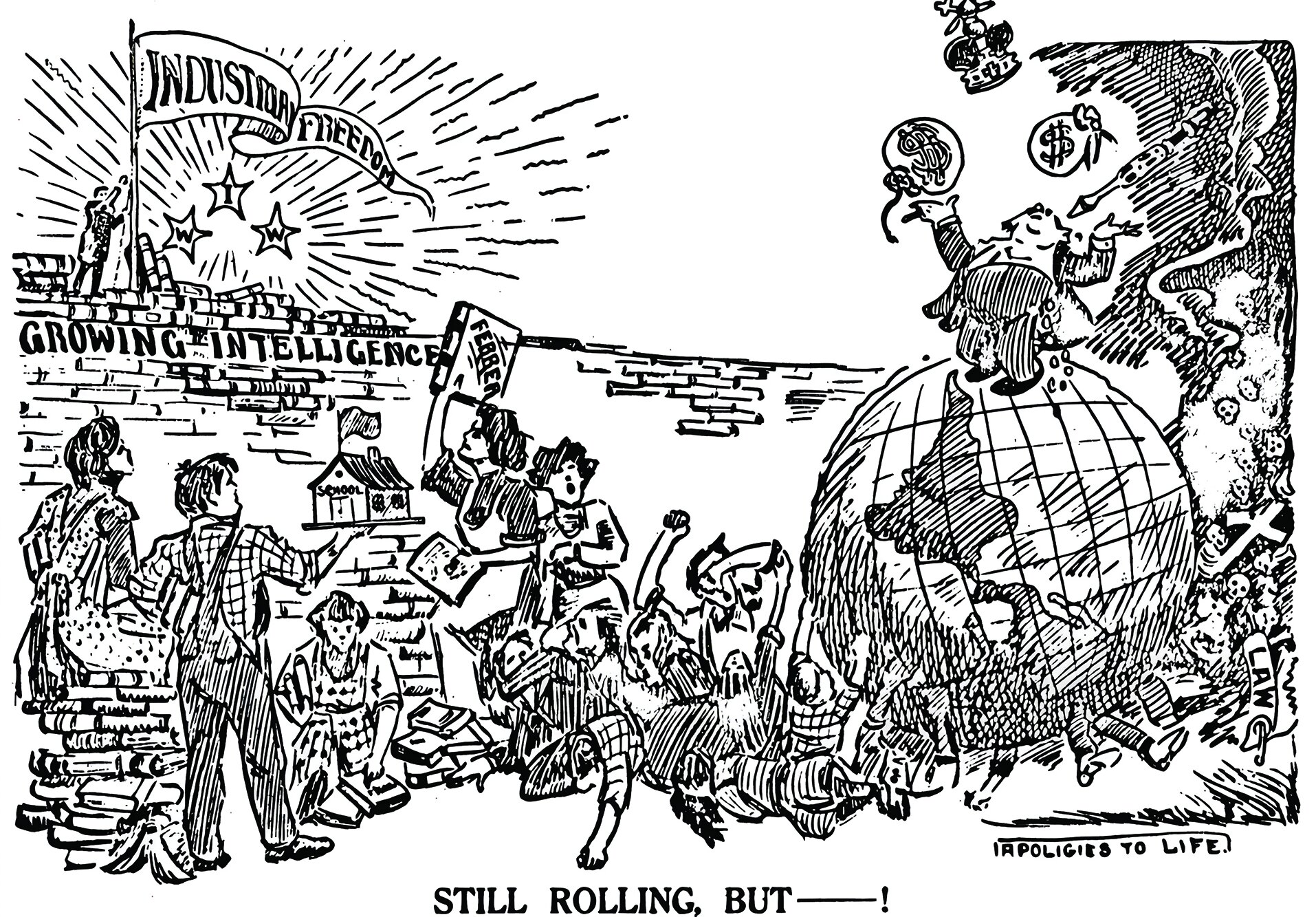
Marxist theory asserts that capitalist states employ intelligence as a tool to protect the global economic system and the interests of the ruling classes. In this environment, intelligence operations seek to minimize military threats, protect economic and political interests, exert pressure on the working class, and legitimize imperialist policies. Marxists employ intelligence as an instrument in class conflict, shifting security measures from a focus on national security to the preservation of the capitalist system. Capitalist nations employ intelligence operations to detect factors that jeopardize their economic interests and implement countermeasures against these risks. Marxist theorists contend that nations utilize intelligence to stifle revolutionary movements, inhibit the ascendance of the working class, and preserve the capitalist system. The Marxist perspective regards intelligence not as a means to regulate power dynamics among states, but as a mechanism to navigate conflicts of interest between class formations and to maintain the supremacy of the ruling class.
According to Marxist theory, capitalist states implement imperialism as a strategy to broaden their economic interests and exert control over resources. Cognition is important to the execution of these policies. Imperialist nations depend on intelligence operations to safeguard their military and economic dominance, facilitating strategic choices for resource management and market proliferation. Within this paradigm, intelligence operates as an instrument facilitating the implementation of imperialist policies. Capitalist nations collect intelligence regarding the economic and military capabilities of other nations and utilize this information to advance their strategic objectives. The Marxist perspective contends that the principal objective of these intelligence operations is to uphold the global capitalist system and safeguard the interests of the elite classes. In this context, intelligence serves not to foster collaboration or peace among governments, but to strengthen the economic hegemony of capitalist nations.
From a Marxist viewpoint, class hierarchies and economic disparities assess security and intelligence. Security encompasses not only military aspects but also the pursuit of economic and social justice. Individuals perceive the disparities inherent in the capitalism system as the principal catalyst for wars and conflicts. Consequently, from a Marxist viewpoint, the assurance of security necessitates the eradication of economic systems and class-based disparities. In this context, intellect is perceived as a tool employed to perpetuate these disparities. Marxist ideology posits a direct correlation between the fundamental deficiencies of the capitalist system and security practices. In this environment, intelligence operates to safeguard the economic and political interests of the ruling classes and acts as an instrument of repression against the emergence of the working class or revolutionary movements. In this setting, the resolution of class conflicts and economic disparities attains security, with intellect functioning as an instrument in this class fight.
Constructivist theory regards the concept of security in international relations as a socially produced phenomena. This viewpoint asserts that the perceptions, identities, and social interactions of states influence their comprehension of security. From a constructivist perspective, security is not a static fact but a process shaped by identities, norms, and shared values across states. Consequently, mutual perceptions and societal norms influence governments’ security strategies, which acquire significance within a social environment (Ertem, 2012Ertem, H. S. (2012). Kimlik ve güvenlik ilişkisine konstrüktivist bir yaklaşım: “Kimliğin güvenliği” ve “güvenliğin kimliği”. Güvenlik Stratejileri Dergisi, 8(16), 177-236.). In this perspective, constructivist security perceives intelligence as an essential instrument for cultivating mutual trust and comprehension in inter-state relations (Newman, 2001Newman, E. (2001). Human security and constructivism. International studies perspectives, 2(3), 239-251.).
The constructivist hypothesis asserts that the interactions, perceptions, and identities of states influence interstate security. Intelligence is crucial in establishing trust or mistrust among states. Constructivists utilize intelligence not alone to evaluate the military capabilities of governments, but also to understand their connections and cultivate trust grounded in common social norms. In this context, intelligence influences perceptions, identities, and collective norms among states, facilitating the establishment of a peaceful and cooperative framework for security in international relations. The constructivist view highlights the significance of norms, values, and social structures in shaping the security concerns of governments. Intelligence significantly influences states’ opinions of each other, hence determining security strategies within a social framework.
Intelligence collects information that might modify the perspective of allies and adversaries, which in turn informs interstate security strategies. Intelligence is essential for understanding the formation of identities and perceptions in the establishment of security policy. The constructivist view asserts that social interactions and the formation of social institutions, alongside military and material might, influence security strategies. States utilize intelligence operations to comprehend the intents, identities, and security policies of other nations, subsequently formulating their security strategies based on this intelligence. Intelligence significantly influences interstate perceptions and their effects on security policies.
From a constructivist viewpoint, security is not a static entity but a fluid process influenced by changing social norms and interactions. Intelligence contributes to the formation and alteration of states’ perceptions and identities of each other. For instance, engagement through intelligence between one state and another regarded as an adversary may result in a transformation of this perception, facilitating the establishment of a new trust-based relationship. Intelligence facilitates the understanding of the social development of security policies via norms and relationships.
Constructivist theory influences the security policies of states based on identities and social norms. In this sense, intelligence aids states in comprehending their identities and their relationships with other states. Identity is a crucial factor that influences state behavior in the international arena and informs the formulation of their security policies. Governments utilize intelligence to comprehend the identities of other governments and formulate corresponding security policies. Moreover, intelligence functions as an essential tool in understanding the development of international norms and their manifestation in security policies. The constructivist approach informs the comprehension of security about the identities and norms of nations. Intelligence is crucial in shaping views and identities among states throughout this process. Given that a social environment imparts significance to security policy, intelligence can utilize collected information to reorganize security dynamics among nations (Ertem, 2021Ertem, H. S., Düzgün, A. N. (2021). Uluslararası İlişkiler Disiplininde Ontolojik Güvenlik Teorisi: Kavram ve Literatür Odaklı Bir İnceleme. Güvenlik Stratejileri Dergisi, 17(37), 39-83.). For example, intelligence acquired by a state can enhance trust in its interactions with another state, so facilitating the creation of a peaceful security environment between them.
The Role of Intelligence in Security Policies
Intelligence is crucial in formulating and protecting a nation’s security policies (Söylemez, 2019Söylemez, Z. (2019). Ulusal Güvenlik ve Türk İstihbarat Sistemi. (Doctoral Dissertation). Karabük University. Karabük.). The influence and role of intelligence on these policies are examined from various perspectives within each theoretical framework. Realist theory posits that intelligence is a key instrument for states in their quest for security amid international anarchy. From a realist standpoint, intelligence primarily functions to identify the intentions and military capacities of external entities that may threaten a state’s national interests, facilitating the execution of strategic actions to mitigate these dangers. In this context, intelligence is vital for the state’s existence by influencing its power dynamics and security strategies. The realist theory underscores the significance of intelligence in assessing external threats and formulating defense strategies accordingly.
Liberal theory posits that intelligence is essential not just for safeguarding national security but also for fostering peace through collaboration among nations and international institutions. A liberal worldview regards intelligence as a mechanism that cultivates trust between governments and promotes collaboration in addressing shared dangers. From a liberal perspective, intelligence sharing within international security alliances and collaboration among democratic nations enhances global peace and security. This viewpoint perceives intelligence as not merely a means of protecting national interests, but also as an essential mechanism for promoting global peace and enhancing international collaboration.
Marxist theory posits that capitalist nations employ intellect as a mechanism to protect the interests of the ruling classes. From this viewpoint, imperialist nations utilize intelligence to uphold class hierarchies and broaden their economic interests. The Marxist perspective asserts that the competition among states for economic interests and resources influences international security and conflicts. Capitalist nations employ intelligence to navigate these conflicts and eradicate factors that could jeopardize their economic interests. Marxist ideology perceives intelligence as an instrument in class conflict, designed to protect the interests of the ruling classes within the capitalist framework.
The constructivist view intricately associates the function of intelligence in security policies with the formation of states’ perceptions, identities, and social norms regarding one another. From a constructivist viewpoint, social relationships and identities among states influence security threats and national security measures. Intelligence is crucial in shaping identities and attitudes among states. For example, a state’s intelligence operations can collect information that enhances trust in interactions with other states or alters perceptions of dangers (Kavsıracı, 2020Kavsıracı, O., Demirbaş, M. (2020). İstihbarat Faaliyetlerinin Devlet Güvenliği Açısından İncelenmesi. Anadolu Strateji Dergisi, 2(1), 49-64.). In this context, intelligence influences the formulation of security policies as an element of social processes within the constructivist framework.
The Historical Context of Türkiye’s Security Policies and Threats
Türkiye has historically been a country with a strategic location that has faced various internal and external threats. Türkiye’s geographic location at the intersection of various cultures and its historical context have significantly influenced its security policy (Bilgin, 2007Bilgin, P. (2007). Only strong states can survive in Turkey’s geography: the uses of “geopolitical truths” in Turkey. Political geography, 26(7), 740-756.; Karakullukçu, 2014Karakullukçu, M. (2014). Middle East Regional Security Challenges: The View from Turkey. Bulletin of the American Academy of Arts and Sciences, 67(2), 31-35.; Diez, 2012Diez, T. (2012). Insulator, Bridge, Regional Center? Turkey and Regional Security. (ed. Ebru Canan-Sokullu) Debating Security in Turkey: Challenges and Changes in the Twenty-first Century, 45-54. Lexington Books.; Fidan, 1999Fidan, H. (1999). Intelligence and Foreign Policy: A Comparison of British, American and Turkish Intelligence Systems. (Doctoral Dissertation). Bilkent University. Ankara.). The transition from the Ottoman Empire to modern Türkiye saw considerable alterations in the country’s borders, regional dynamics, and foreign ties, which greatly influenced the development of its security policy. During the Cold War, factors such as Türkiye’s NATO membership and the Soviet menace significantly influenced the nation’s security policies. The strategic decisions undertaken during this period impacted Türkiye’s relations with the West and enhanced the prominence of intelligence services. Subsequent years witnessed developments, including regional conflicts and terrorism, that altered Türkiye’s security policies and introduced new dimensions to the operational actions of its intelligence agencies. Grasping the historical context of Türkiye’s security policies is essential for understanding the nation’s strategic response to internal and external challenges, along with the involvement of intelligence services in these policies (Aydın, 2014Aydın, M., Ereker, F. (2014). Türkiye’de güvenlik: algı, politika, yapı. Uluslararası İlişkiler Dergisi, 11(43), 127-156.).
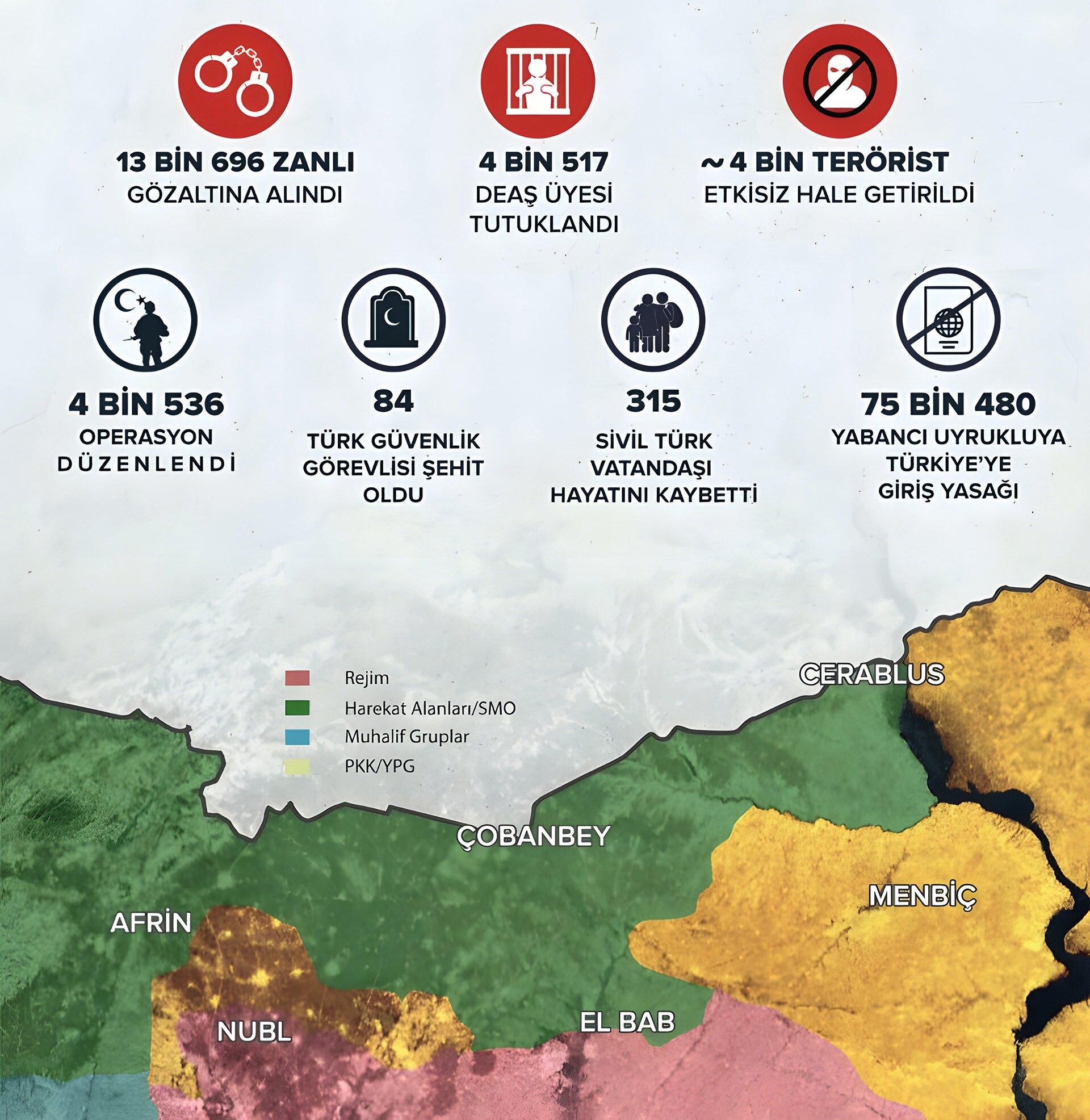
Türkiye confronts several security risks influenced by regional and global factors. Recent geopolitical shifts and regional conflicts have presented numerous threats to the nation’s security. Instability in adjacent nations, the existence of terrorist groups, ethnic and religious schisms, cyberattacks, and global ambiguities are critical to Türkiye’s security. The internal strife in Syria and Iraq, regional volatility, and the existence of terrorist groups pose significant security threats along Türkiye’s borders. The operations of the PKK, ISIS, and other terrorist entities jeopardize national security, while the intricate circumstances in Syria impact Türkiye’s border security. Moreover, cyberattacks have emerged as a substantial danger, underscoring the necessity for Türkiye to enhance its cybersecurity capabilities. These risks require a reevaluation of Türkiye’s security policy and the efficient reaction of intelligence services (Açıkbaş, 2022Açıkbaş, A. E. (2022). Türkiye’nin Milli Güvenlik Politikası. Avrasya Sosyal ve Ekonomi Araştırmaları Dergisi, 9(2), 50-65.).
Türkiye prioritizes intelligence activities due to its geopolitical location, regional dynamics, and the security risks it encounters. Intelligence agencies are created to actively safeguard national security by researching internal and external threats, conducting counterterrorism operations, securing borders, and facilitating strategic decision-making in international relations (Yılmaz, 2012Yılmaz, S. (2012). Türkiye’nin iç güvenlik yapılanmasında değişim ihtiyacı. Çukurova Üniversitesi Sosyal Bilimler Enstitüsü Dergisi, 21(3), 17-40.). The principal intelligence agencies in Türkiye comprise the National Intelligence Organization (MİT), the Intelligence Department of the General Directorate of Security, and Gendarmerie Intelligence. These agencies function in diverse domains to safeguard and uphold national security (Dağdeviren & Kedikli, 2023Dağdeviren, I., Kedikli, U. (2023). Devletin Güvenlik ve Terörle Mücadele Aracı Olarak İstihbarat Yöntemleri ve Önemli Uygulama Örnekleri: İngiltere, ABD, İsrail ve Türkiye. Abant Sosyal Bilimler Dergisi, 23(3), 1351-1368.).
The National Intelligence Organization (MİT) is crucial to Türkiye’s security strategies addressing both internal and external threats. The MİT is pivotal, particularly in counterterrorism initiatives. The intelligence supplied by MİT is an essential asset for surveilling the operations of terrorist entities such as PKK, ISIS, and FETÖ, incapacitating their leaders, and disassembling their networks. In 2019, MİT’s information enabled the identification of ISIS leader Abu Bakr al-Baghdadi’s position in Syria, permitting his neutralization via an international operation. These actions unequivocally illustrate MİT’s efficacy in countering international terrorism and its tangible contribution to Türkiye’s security (Acar, 2019Acar, Ü. (2019). Yönlendirici Güç: İstihbarat Servisleri. Uluslararası Kriz ve Siyaset Araştırmaları Dergisi, 3(2), 103-134.).
The Intelligence Department of the General Directorate of Security is essential for maintaining Türkiye’s domestic security. Intelligence regarding internal threats, organized crime, illicit arms trade, drug trafficking, and the urban operations of terrorist organizations informs the operational activities of security forces. This department’s intelligence has thwarted multiple possible terrorist assaults in urban areas and eliminated city-based terrorist cells.
The Gendarmerie Intelligence plays a crucial role in security operations in rural regions and border protection. The information gathered by Gendarmerie Intelligence is crucial for identifying unlawful border crossings, surveilling the actions of terrorist groups in rural regions, and strategizing cross-border missions. For example, Gendarmerie Intelligence in the field gathers comprehensive data for operations designed to obstruct terrorist organizations from traversing the borders of Syria and Iraq.
A significant concern for Türkiye’s national security is border security. Intelligence agencies are essential for maintaining border security, especially in combating illegal immigration, human trafficking, and transnational terrorist threats. In light of the Syrian civil war and the refugee crisis along Türkiye’s border with Syria, intelligence operations concerning border security are crucial for sustaining control and mitigating security threats. Intelligence units consistently gather data to thwart illegal migration, observe cross-border terrorist operations, and fortify borders; they disseminate this information to border security units.
Intelligence is crucial in regional and international interactions. Türkiye’s vigilant observation of political and military events in adjacent nations profoundly impacts its foreign policy approaches. These agencies furnish Türkiye with intelligence that enhances its comprehension of regional power dynamics, facilitates the management of its ties with neighboring countries, and informs its stances on international forums. The intelligence supplied by MİT in war zones including as Libya and Syria is crucial for strategizing Türkiye’s military interventions and evaluating the security landscape in these areas.
In summary, intelligence agencies play a vital role in Türkiye’s national security. Their information bolsters Türkiye’s capacity to address internal and external threats in counterterrorism, border security, international collaboration, and the development of foreign policy strategies. The efficient operations of intelligence agencies strengthen Türkiye’s national security against threats, while prompt strategic judgments influence the nation’s security policies. The precision and efficacy of intelligence are fundamental factors that enhance Türkiye’s position in both regional and global contexts.
Cybersecurity has emerged as a vital element of national security strategies. Cyberthreats can inflict significant harm on the military and political frameworks of nations, as well as their economic systems (Singer & Friedman, 2014Singer, P. W., & Friedman, A. (2014). Cybersecurity and Cyberwar: What Everyone Needs to Know. Oxford University Press.). Türkiye seeks to establish a strategic advantage by advancing cybersecurity solutions in response to the rising incidence of cyberattacks.
Currently, both economic security and national security acknowledge cyber security as an essential element. The appropriation of superior semiconductor technologies by China from the Netherlands-based ASML corporation underscores the critical significance of cybersecurity in economic interactions. This episode prompted the Western world to formulate stricter policies towards China and elevated cyber espionage and economic security concerns to a prominent position on the international agenda (Segal, 2022Segal, A. (2022). The Hacked World Order: How Nations Fight, Trade, Maneuver, and Manipulate in the Digital Age. New York: PublicAffairs.). In this context, cybersecurity technologies have evolved into both a military imperative and a facet of commercial rivalry. Turkiye has acknowledged the significance of cyber security and has implemented numerous measures to enhance its capabilities in this domain. Türkiye has delineated its strategy in this domain through publications such as the National Cyber Security Strategy and Action Plan, promoting the advancement of national cyber security solutions in collaboration with both public and private sectors.
The establishment of the National Cyber Incident Response Center (USOM) represents a significant advancement in Türkiye’s cyber security efforts. This center seeks to enhance national security by augmenting Türkiye’s early warning and response capabilities against cyber attacks. Furthermore, domestic software and hardware development initiatives are substantially augmenting Türkiye’s cyber security capabilities. Specifically, defense industry firms like Aselsan and Havelsan want to diminish foreign reliance by developing cybersecurity software and solutions. Turkiye formulates its cyber security policies in tandem with its national security plans, emphasizing the critical role of collaboration between the public and private sectors in this domain. Universities, research institutions, and technology firms collaborate under this partnership to develop local and national cyber security solutions.
In the future, the strategic significance of cybersecurity technology in international relations will persist in its escalation. Cyberattacks aim not only at data expropriation but also at undermining the economic and political authority of nations by assaulting essential infrastructures (Healey, 2013Healey, J. (2013). A Fierce Domain: Conflict in Cyberspace, 1986 to 2012. Washington, DC: Cyber Conflict Studies Association.). Turkiye will persist in enhancing its cyber security capabilities and devising national cyber security solutions to address these challenges. Aiming to become a regional leader in this domain will be a primary factor influencing Turkiye’s security strategies.
Cybersecurity has emerged as a critical element of Turkiye’s national security strategies. The rise in cyber threats underscores the necessity of investing in cybersecurity technologies, with autonomy in this domain regarded as a crucial objective for national security. Türkiye’s pursuit of cyber independence through the development of domestic cybersecurity solutions will enhance its standing in both national and international security policies.
Conclusion
This paper analyzes the impact of intelligence on national security strategies via the lens of various international relations theories. Each theory assesses the influence of intelligence on security strategies according to its core methodology.
Realist theory posits that governments perpetually seek security within the anarchic framework of the international system. In this environment, intelligence serves as a crucial instrument enabling governments to surveil their adversaries, maintain a balance of power, and implement strategic measures. Realists regard intelligence as an essential component for states to safeguard their national interests and sovereignty.
Liberal thought perceives intellect as both a means of securing safety and a catalyst for fostering international collaboration. The liberal worldview regards inter-state cooperation as essential for peace and considers intelligence sharing as a mechanism that strengthens this cooperation. The utilization of intelligence via international institutions and partnerships enhances global security.
Marxist theory perceives intelligence as an instrument utilized by capitalist regimes to protect the interests of their ruling classes. This theory asserts that intellect functions as an instrument in the class struggle to maintain the capitalist system and protect economic interests associated with imperialist activities. The Marxist perspective influences security policy in relation to economic disparities and class conflict.
Constructivist theory emphasizes the significance of intelligence in shaping socially created security perceptions and the development of identities in interstate relations. According to this theory, security threats and national security plans are influenced by the perceptions that states have about one another as well as the social norms that shape these perceptions. Intelligence is regarded as a fundamental component in shaping these perceptions and is essential in fostering trust between states.
Cybersecurity technologies hold strategic significance in international relations. Türkiye’s national security plans and cybersecurity policies are evolving concurrently. The public and business sectors cooperate to develop domestic and national cybersecurity solutions. Enhancing the capability to counter cyber attacks has emerged as a critical element in formulating security policy. Developing national solutions in cybersecurity is a crucial measure Türkiye has implemented to enhance its standing in both national and international security policies and to achieve cyber independence.
In conclusion, while intelligence fulfills many purposes across different theories, it is crucial in influencing states’ national security policy. Intelligence is deemed essential in both national and international security, serving as a means to build a balance of power, facilitate international cooperation, or exert control in class conflict.