Introduction
After the rise of western colonial powers in the 18th century, European countries conquered and colonized China and other parts of Asia. In the following three centuries, Asia was marginalized. In the new era, world power is dispersing, with the Atlantic and the Pacific being the two power hubs. In the backdrop of the prolonged Russia-Ukraine war and Israel-Hamas hostility, the Western liberal order is giving way to multiple orders. Asia is rising on the world stage, generating system transformation and power rebalance.
With the accelerated pace of multi-polarity, China, Russia, India, Kazakhstan, Iran, Türkiye, Saudi Arabia, and other non-Western countries have rediscovered their historical affinities and legacies and have built closer political and economic ties. These countries are regrouping, making full use of their respective geographical advantages and carrying out a new strategic layout in the process of the rising “Global East”, a grey zone between Global North and Global South.
Current research on the “Global East” is sparse. Some scholars argue that the Global North and Global South dichotomy is problematic because it has neglected the “middle ground” of “Greater Asia”. In thinking of the world as divided into a Global North and a Global South, the East has ended up in some sort of netherworld. Its interstitial position – not quite rich or poor, not a colony or colonizer – has made it difficult to categorize (Müller, 2020, 748Müller, M. (2020). In Search of the Global East: Thinking between North and South. Geopolitics, 25(3).). In the face of the Global South’s diversification and Greater Asia’s emergence, Professor G. John Ikenberry of Princeton University divides the current world into three groupings: the Global West, the Global East, and the Global South. The first is led by the US and Europe, the second by China and Russia, and the third by an amorphous grouping of non-western developing states led by India, Brazil and others. Each ‘world’ offers grand narratives of what is at stake in the Ukraine conflict and how it fits into the larger problems and prospects for twenty-first-century world order (Ikenberry, 2024Ikenberry, G. J. (2024). Three Worlds: the West, East and South and the competition to shape global order. International Affairs, 100(1).). This paper probes the origins, dynamics, features, and hurdles of the “Global East” and its implication for China’s greater periphery diplomacy in the new era.
The Concepts of “East” and the “Global East”: A Historical Survey
“East” is not only a geographical concept but also political and cultural terminology. The concept of “East” differs greatly in historical and sociological contexts. “East” and “West” have different connotations in different historical periods. In the wars between Persia and Greece in the 5th century BC, “East” referred to Persia and “West” to Greece. After the rise and fragmentation of Western Christian civilization, “East” referred to the Orthodox world and “West” to the Catholic world.
In the 7th century, religion was the determinant of East-West division. With the rise of the Arab Empire and the spread of Islam, the connotation of “East” and “West” changed again. During the medieval “Crusades”, the “East” referred to the Islamic world in West Asia and North Africa, and the “West” referred to the Christian world in Europe. In modern times, colonization determined the boundary of East and West. With the rise of Western maritime powers, colonies in the Middle East, South Asia, and East Asia were called the “East”, and European colonial powers were called the “West” (Yongbin, 2017Yongbin, L. (2017, 2 27). The Origins of ‘East’ and ‘West’ Dichotomy. Guangming Daily.). In the 20th century, “East” was understood as Asia, the cradle of Babylon, Indian, Chinese, Persian, Islamic, and Slavic civilizations, while “West” was understood as European and North American countries.
After World War II, political ideology became the key to the East-West division. The socialist camp headed by the Soviet Union belonged to the “East”, while the capitalist camp headed by the US belonged to the “West”; ideological competition resulted in the distinction between East and West. With the collapse of the Soviet Union in the early 1990s, the boundary of “East” faded away. Seeking to capture the new “regimes of historicity” created by late 1980s/early 1990s transformations, various terms have appeared, such as “post-communist,” “post-Soviet,” “post-totalitarian,” “ex-communist,” and “transition countries,” among others (Chelcea, 2023Chelcea, L. (2023). Goodbye, Post-socialism? Stranger Things beyond the Global East. Eurasian Geography and Economics, 8.). These are similar to the terminology of the “Global East”.
In the current era of transformations and conflicts, “East” and “West” have been endowed with new connotations. The geographical location of “East”, in the context of Russian scholars, includes Russia, Central Asia, and Central and Eastern Europe, i.e. the “socialist camp” during the Cold War (Trubina, 2020, 628Müller, M., & Trubina, E. (2020). The Global Easts in Global Urbanism: Views from beyond North and South. Eurasian Geography and Eco¬nomics, 61(6), 628.). Swiss scholars believe the “Global East” includes the Middle East, Central and Eastern Europe and Asia, which is the eastern world vis-à-vis Western European countries (Müller & Trubina, 2020: 628Müller, M., & Trubina, E. (2020). The Global Easts in Global Urbanism: Views from beyond North and South. Eurasian Geography and Eco¬nomics, 61(6), 628.)
The rise of the “Global East” is the outcome of world power transformation. In the new era of great power competition, the US is reconstructing its global alliance system, forging a hybrid of security, politics, economy, science, and technology. The US sticks to institutional hegemony and prevents non-Western powers from challenging the US-led international order.
The U.S., the U.K., and the E.U. have a sense of crisis. On the pretext of “defending the civilization and its political values”, Western countries have politicized economic issues, weaponized mutual dependence, and securitized scientific and technological cooperation with non-Western markets, which has posed new challenges to Eurasian non-Western countries.
The current world order faces vicissitude. The global economic system is shifting from the Atlantic to the Pacific, and world economic growth is shifting from the West to the East. The third industrial revolution, represented by information technology, is giving way to the fourth industrial revolution, which merges the physical, digital, and biological worlds. Rivalry among great powers is extending from geopolitics to identity politics. Russia, Kazakhstan, Iran, Türkiye, and Saudi Arabia, which were not regarded as “Asia”, are now looking east and are rediscovering their Asian identities.
After the outbreak of the Russia-Ukraine War in 2022, the US, the UK, and the European Union countries collectively sanctioned Russia, and Moscow’s strategy of keeping an equilibrium between the East and the West has fallen apart. President Putin’s strategy of pivoting to the East is to develop Siberia and the Russian Far East and use East Asia’s dynamism to spur that development. In the rapidly changing environment, Beijing came to be seen by Moscow as a source of money, investment, and even technology (Trenin, 2015Trenin, D. (2015). From Greater Europe to Greater Asia? The Sino-Russian Entente. Carnegie Endowment for International Peace, s. 4-6.). Modernizations, which had only a Western model, now have diverse versions. The flow of energy, commodities, and personnel was mostly between Western and non-Western powers in the old times, but now it is shifting inside the Oriental countries.
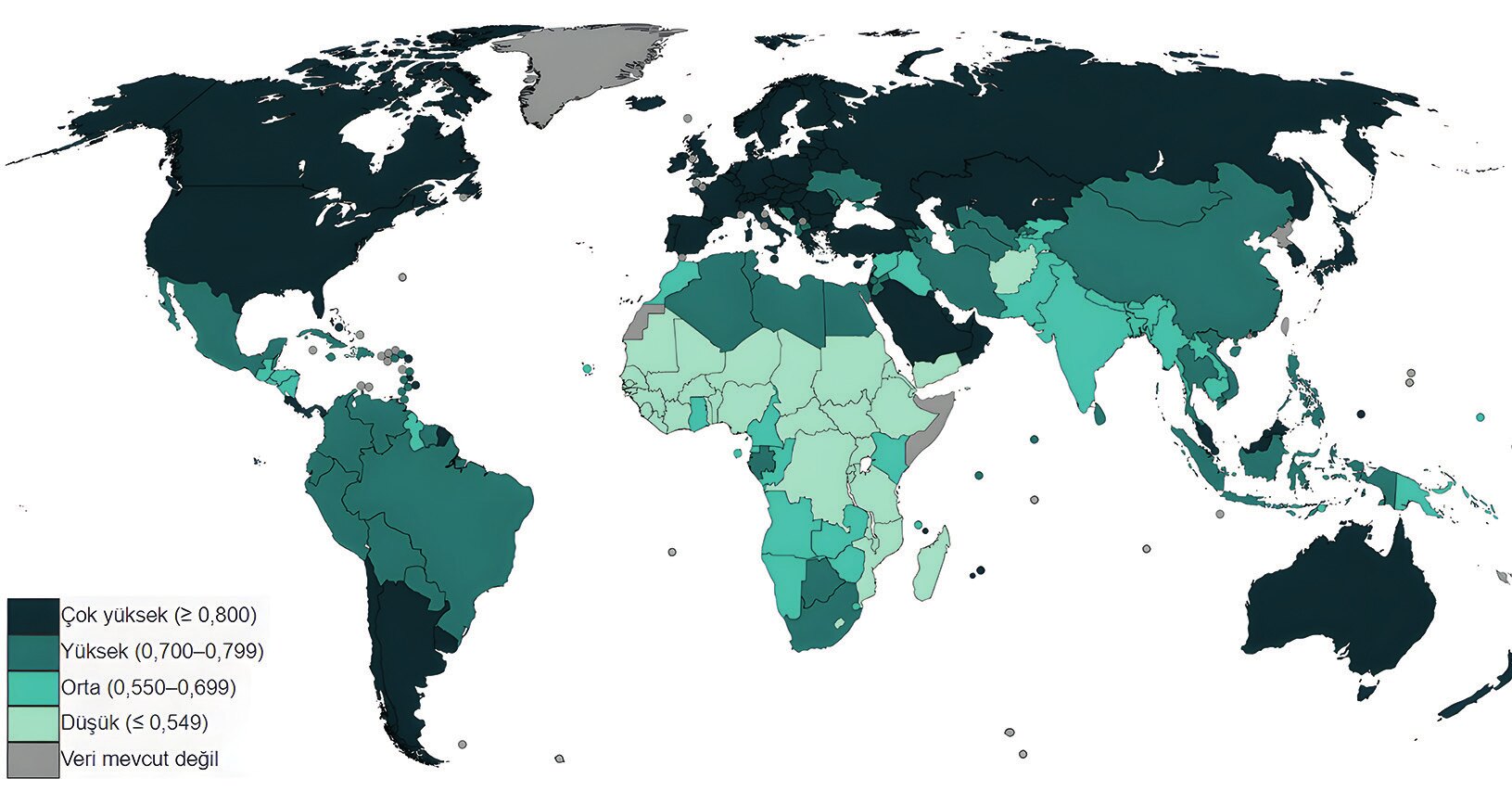
China’s conception of the “Global East” differs from Russia’s or Europe’s. The Chinese version of the “Global East” refers to the geographical part of Pan-Asia or Greater Asia, including the five sub-regions of East Asia, West Asia, South Asia, North Asia, and Central Asia, consisting of both developed economies such as Japan, South Korea, the UAE, and Qatar, as well as developing economies such as Central Asian and South Asian countries.
With the changing international environment, China’s periphery diplomacy is expanding, aiming to integrate all Asian countries and economies into one through the Belt and Road Initiative (BRI). China’s diplomacy strives to promote infrastructure connectivity, use strategic resources, practice good-neighborly diplomacy with Chinese characteristics, increase cross-regional ties, and cope with uncertainties and instability brought about by the changing international order.
Although countries of the “Global East” differ greatly in their political systems, economic development, and resource endowments, they all geographically identify as Eastern countries in terms of their cultural mindset. From China to India, from Kazakhstan to Türkiye, from Russia to Saudi Arabia, these “Global East” countries are no longer second-class citizens but the major players in the Asian arena.
The “East” and the “West” belong to two different worlds. The “Global West” is a political grouping defined as much by its political principles and affinities as its geographic location (Ikenberry, 2024Ikenberry, G. J. (2024). Three Worlds: the West, East and South and the competition to shape global order. International Affairs, 100(1).). Represented by Europe and North America, the “West” sharply contrasts the “Global East” dominated by Asian states politically and culturally. The former advocates individualism, freedom and democracy, while the latter emphasizes collectivism, order, and justice. The former belongs to the Christian world and developed capitalist countries, while most of the latter belong to multi-ethnic and civilizational countries with a long history and splendid culture; Islam, Hinduism, Buddhism, Eastern Orthodoxy, Confucianism, Taoism, and other religions coexist.
Rising from the victims of modern Western colonialism to the masters of their own land, the “Global East” countries have moved from the margins of world power to the center of the world stage. It arouses the collective historical memory of ancient oriental civilizations and profoundly impacts the world order (Lim, 2022Lim, S. J.-H. (2022). Global Easts: Remembering, Imagining, Mobilizing. Columbia University Press.).
Dynamics of the “Global East” Renaissance
The “Global East” has different values to the “Global West”. The former emphasizes collectivism while the latter focuses on individualism; the former underlines civilizations while the latter focuses on nation-states; the former underscores sovereignty while the latter on human rights. However, it does not necessarily mean that the “Global East” will race with the “Global West”. In fact, most countries in the “Global East” are development-oriented and have no intention of engaging in political or military confrontation with the “Global West”. They do not seek “Asia-centrism” or “Asian Monroe Doctrine,” nor do they seek to build a “parallel system” to the Western liberal world. Although China and Russia claim their relations have no limits, they are unwilling to form a bloc to oppose the West militarily (Trubina, Gogishvili, Imhof, & Müller, 2020Trubina, E., Gogishvili, D., Imhof, N., & Müller, M. (2020). A Part of the World or Apart from the World? The Postsocialist Global East in the Geopolitics of Knowledge. Eurasian Geography and Economics, 61(6), s. 636-662.).
That being said, some Western scholars are skeptical about the rise of the “Global East”. They view Asian powers’ economic and cultural revitalization as a threat to Western values and democracies and underscore that the US seeks an international order that protects and advances the interests of liberal democracy. “In their own way, China and Russia seek an international order that protects authoritarian rule from the threatening forces of liberal modernity” (Ikenberry, 2024Ikenberry, G. J. (2024). Three Worlds: the West, East and South and the competition to shape global order. International Affairs, 100(1).). This is an exaggeration of the “Global East” ambition.
The “Global East” is not offering an alternative governmental or political mode; these countries do not come up with a new ideology to supplant Western liberal democracy. Some argue that Beijing and Moscow will seek to provide an alternative to the existing Western-designed systems governing global finance, regional security systems, and Internet freedom (Trenin, 2015Trenin, D. (2015). From Greater Europe to Greater Asia? The Sino-Russian Entente. Carnegie Endowment for International Peace, s. 4-6.), but in fact, they are too weak to offer a new mode. Rather, they seek to build a more balanced world against the backdrop of Western hegemony and monopoly; they aim to build a multiple world with political de-colonization, economic de-centralization and cultural diversification. Since the rise of the Western marine powers, the “Global West” has built a “core-periphery” order, and most Asian countries belonged to the periphery or semi-periphery blocs. In the new epoch, countries of the “Global East” crave to be respected by the West, stressing that Asian countries’ sovereignty and the right to development should not be denied.
The “Global East”, a combination of power, geography and ideas, is not a monolithic military alliance but a political-economic-civilizational complex formed by the interplay of different subregions of Asia. With increasingly frequent political, economic, trade, and cultural exchanges among North, East, Southeast, South, Central, and West Asia, Asia’s regional integration has achieved great headway, the cross-regional linkage has been enhanced, and the consciousness of the “Global East” has been consolidated.
First, countries of the “Global East” will seize the dividends of the fourth industrial revolution. Since modern times, the Industrial Revolution has gone through three historical stages: the age of the steam engine, the age of electricity, and the age of computer science. In the first three industrial revolutions, the Oriental societies prioritized their relations with the West; Japan, Russia, Israel and Türkiye walked away from “Asia” and re-identified themselves as Western countries. West Asian countries formed an inner circle of the “Middle East”; South Asian countries formed their local “subcontinental” identities; Central Asia was regarded as part of “Eurasia”; the so-called “Asia” was understood as East Asia and Southeast Asia.
In the context of the fourth industrial revolution, Asian countries such as China, India, Vietnam, Kazakhstan, Saudi Arabia, Türkiye, and Iran have become new growth engines. Their largest trading partners are no longer the US or European countries but their immediate neighbors of China or India. Instead of the US or UK, China is the largest trading partner of most Asian countries.
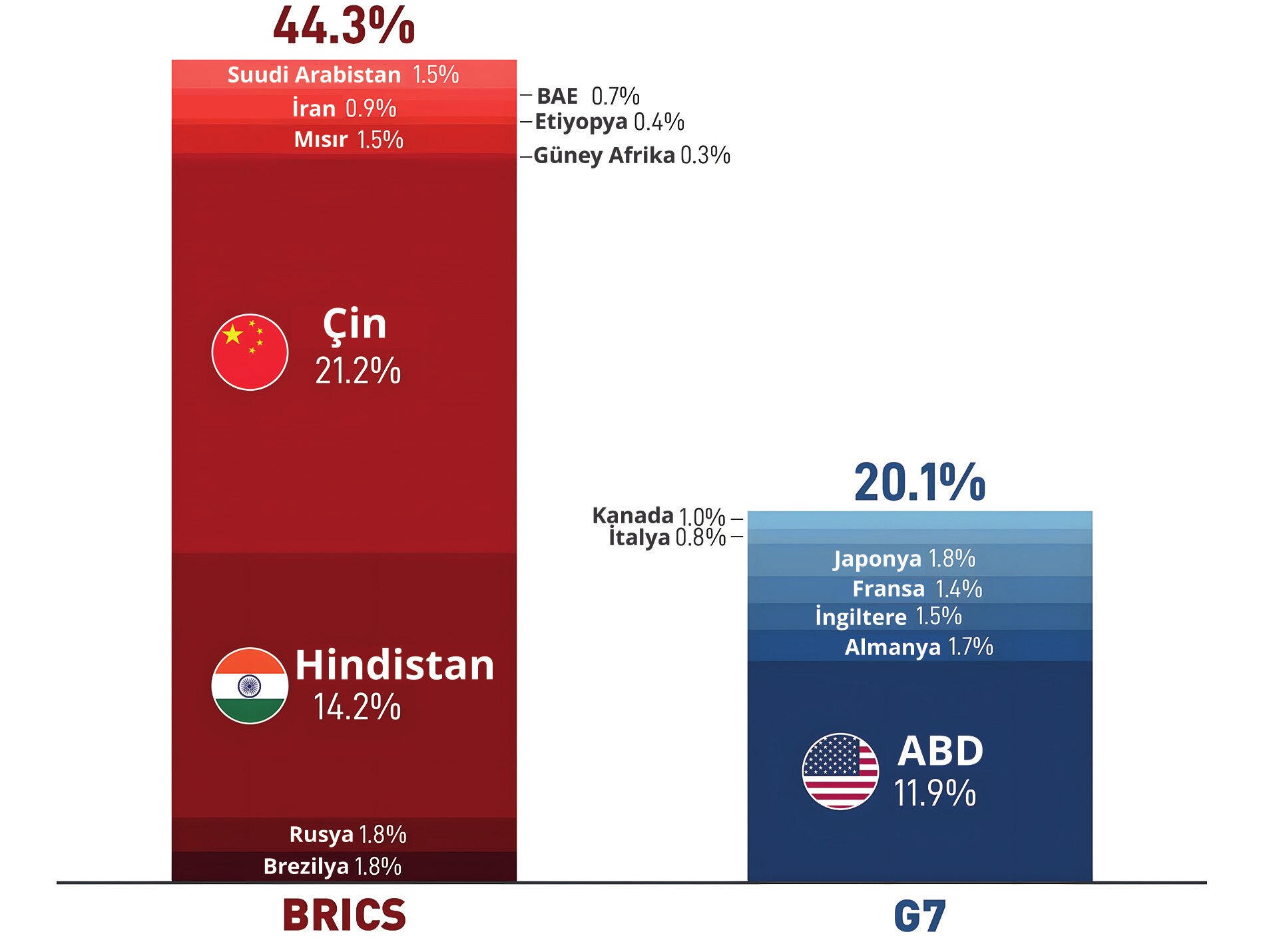
At present, the “Global East” accounts for approximately the same share of the world economy as the “Global West”, and its contribution to world economic growth will constantly increase in the future. The “Global East” is increasingly dependent on intra-Asia trade. Countries in East and Southeast Asia are “looking west”, countries in West Asia are “looking east”, and Russia in North Asia is reconnecting countries in the South Asian subcontinent. Central Asian countries are striding at the corridors of the “Global East”, enhancing the cohesion of Asia.
Since the outbreak of the Russia-Ukraine conflict in 2022, Russia has left Europe and entered Asia due to the US, UK and European sanctions. Moscow’s pivot to Asia predates the Ukraine crisis, and the Russia-Ukraine war has accelerated Moscow’s “looking east” process. What was originally Moscow’s “marriage of convenience” with Beijing has become a much closer partnership that includes cooperation on energy trade, infrastructure development, and defense. Putin’s vision of a “Greater Europe” from Lisbon to Vladivostok, comprised of the European Union and the Russian-led Eurasian Economic Union, is being replaced by a “Greater Asia” from Shanghai to St. Petersburg (Trenin, 2015Trenin, D. (2015). From Greater Europe to Greater Asia? The Sino-Russian Entente. Carnegie Endowment for International Peace, s. 4-6.). Russia-China solidarity has further consolidated the “Global East”.
Likewise, Iran, Türkiye, and Arab countries have slowly but surely regained their Asian identities, and these countries have actively integrated into the Shanghai Cooperation Organization (SCO) and BRICS, further promoting the awareness of the “Global East”.
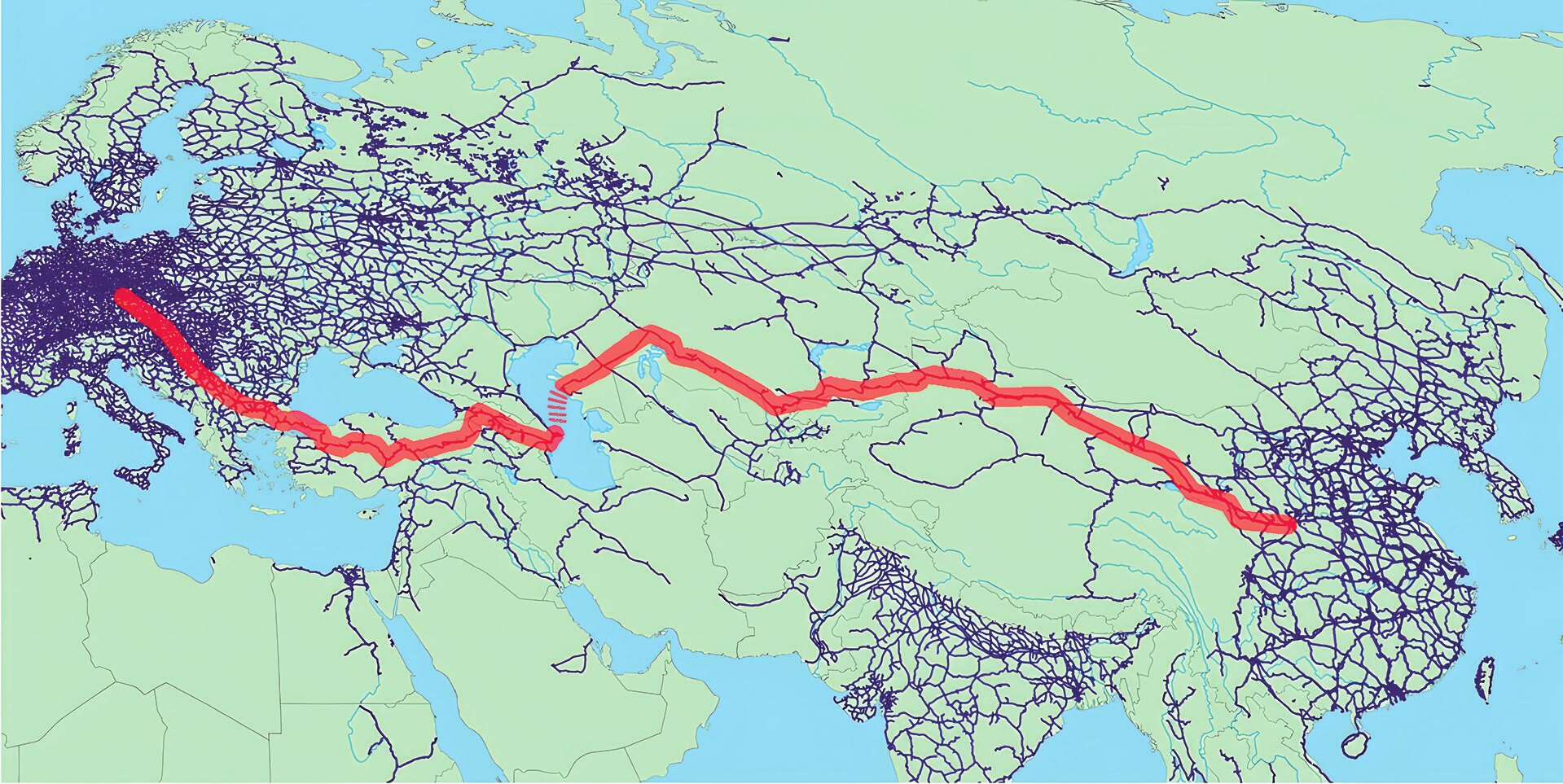
Second, countries of the “Global East” strive to promote logistical connectivity. Asian countries were geographically adjacent in history but were blocked and isolated due to their natural environment. Having been long cut off by mountains, the Gobi, deserts and rivers, and with time-consuming and costly land transport, historically, Asian countries had to rely on the Western maritime powers of Europe and the US, which were their main economic and trade partners. Under the new circumstances, the construction of highways, railways, power grids, and information networks has accelerated, enhancing connectivity among Asian countries. This effort has overcome the natural disadvantage of land power in the past two centuries.
In the past three centuries, land power was inferior to sea power because maritime traffic was cheaper; currently, land power is increasingly important due to logistical interconnectivity through highways, railways, bridges, and air routes. As June Wang puts it, the unbounded geographies of the Global East foreground topics of (im)mobility of people, ideas and materials, capital and commodities, information and technology; the agency of networking, infrastructure development and bordering that unpin, coordinate and control these flows, and the new social, economic and political landscape in the forming (Wang, 2021Wang, J. (2021). Understanding Scalar Politics through the Framework of Relational Archipelagos: The Case of Shenzhen Fair. International Journal of Urban & Regional Research, 45(4), s. 716-731.).
Railways, in particular, are significant geo-economically and geo-politically. The China-Europe Express and China-Laos Railway have promoted economic and trade exchanges in East, Central, West, North, and Southeast Asia. The Russia-Turkmenistan-Iran-India “North-South Transport Corridor” will promote economic integration in South Asia, Central Asia, and the Eurasian hinterland. In recent years, conflicts among South Asian and Central Asian countries have de-escalated, and the peace dividend has been translated into a development dividend, promoting regional economic integration in Asia. The “Global East” countries have formed a network by exchanging people, ideas, goods, capital, commodities, information, and technology (Wang, 2021Wang, J. (2021). Understanding Scalar Politics through the Framework of Relational Archipelagos: The Case of Shenzhen Fair. International Journal of Urban & Regional Research, 45(4), s. 716-731.).
Finally, the “Global East” countries have strengthened the rejuvenation of Oriental civilizations and cultural consciousness. In recent years, the ebb of global democracy, the rise of populism and nationalism, the emergence of new authoritarianism on the stage of history, and the prominent problem of social polarization brought about by Western democratization have compelled Greater Asian countries to reflect on their respective modernization paths (Chan, Gentile, Kinossian, Oakes, & Young, 2018Chan, K. W., Gentile, M., Kinossian, N., Oakes, T., & Young, C. (Dü). (2018). Theory Generation, Comparative Analysis and Bringing the “Global East” into Play. Eurasian Geography and Economics, 59(1).). Initiated by the US, the “Greater Middle East Initiative” and the democratic reforms in Iraq, Afghanistan, and other Central Asian and West Asian countries failed to have a good outcome; strategic autonomy of the “Global East” is on the rise.
Economic rise gives birth to identity politics. In the 21st century, the consciousness of strategic autonomy of Asian countries has increased, and identity politics has played an important role in the political life of each country. Türkiye’s change of its English name to “Türkiye” and India’s intention to change its name to the Hindi word “Bharat” are just two examples. In the process of civilization interactions and value reconstruction, Asian countries are actively seeking their own collective identities and traditional values.
For thousands of years before the Industrial Revolution, which began in modern Europe in the 18th century, the world’s empires were concentrated in the Oriental territories, and so was the center of world power. With the rise of modern European maritime powers, these Oriental empires gradually declined and were replaced by the modern sovereign state system. Under the new circumstances, the cultural revival of the “Global East” has enhanced the sense of strategic autonomy of Asian countries so that these countries have transformed from “looking up to the West and learning from the West” to “re-evaluating the West and even criticizing the West”, and have changed from junior partners to equal partners of the West.
China’s Greater Periphery Diplomacy in the “Global East”
The rise of the “Global East” has transformed the international architecture. First, trade, energy, and investment dependence between the “Global West” and the “Global East” has faded away, while the internal trade relations among the “Global East” countries have increased; neighbors are becoming primary stakeholders and promoters of regional integration. China, for instance, is the largest trading partner of Central Asia, Russia, Iran, the Cooperation Council for the Arab States of the Gulf (GCC) countries, and Pakistan.
Second, peace dividends give birth to development dividends. Competitors in the “Global East” have seen a de-escalation of internal conflicts, and their regional integration is speeding up. Conflicts between India and Pakistan, between Kyrgyzstan and Tajikistan, and between Saudi Arabia and Iran are decreasing, terrorism is receding, and development has become a priority for many states. The “Global East” countries seek mutual trust and steadily build an economic and security community with their neighborhood.
Third, as aforementioned, the advancement of science and technology has enabled the “Global East” countries to overcome natural barriers, and the connectivity of Asian infrastructure has reduced the political mistrust among the “Global East” countries. While American interest has waned since the Biden administration decided to pull out forces from Afghanistan and the Middle East, other Asian powers are more engaged with each other. Turkmenistan, Uzbekistan, and Iran all entered into agreements with the new Taliban government of Afghanistan to link their railroad networks. Joined by Azerbaijan and Afghanistan, Turkmenistan dubbed its new railroad line the “Lapis Lazuli Corridor,” which would link Türkiye, the Caucasus, Pakistan, and India via Afghanistan. Meanwhile, the Turkmenistan-Afghanistan-Pakistan-India (TAPI) Gas Pipeline project connecting Turkmenistan with Pakistan and India was advancing. Electricity projects were also proliferating, with Uzbekistan working to provide Kabul with electricity and the World Bank developing a large project to transmit electricity from Kyrgyzstan and Tajikistan via Afghanistan to Pakistan (Starr, 2022, 5Starr, S. F. (2022). Rethinking Greater Central Asia: American and Western Stakes in the Region and How to Advance Them. Central Asia-Caucasus Institute & Silk Road Studies Program.). The “Global East” countries are investing in each other’s mega projects, which are conducive to reducing security deficits.
China welcomes the “Global East” revitalization. As the largest developing country in the world, China is a natural member of the “developing world”. However, the US's does not recognize China’s status as a “developing country” and has tried to cut off the natural ties between China and the vast number of developing countries. In March 2023, the US House of Representatives passed an act denying China’s status as a developing country (Minghao, 2023Minghao, Z. (2023). Global South, Global East and Sino-US Rivalry. Retriebed April 1, 2024 from).
In June 2023, the US Senate also passed a similar bill, demanding the US executive department to develop a project to terminate China’s developing country status in many international organizations. However, the US endeavors do not change the fact that China is both a member of the “Global South” and “Global East”. In 2013, China launched the BRI. From 2021 to 2023, China put forward the Global Development Initiative, the Global Security Initiative, and the Global Civilization Initiative respectively to offer China’s proposals for global governance. These concepts aim to foster national economic growths and promote progressive common prosperity. Beijing strives to sketch a regional security community of common interest and diverse civilizations, prioritizing the “Global East”.
In the context of great power competition and the looming “Global East”, China has seized the opportunity to actively carry out its greater periphery diplomacy, provide international public goods, participate in regional integration, promote infrastructure connectivity among Asian countries, and advocate dialogue among civilizations and modernization of governance systems. China actively promotes the institutionalization of the “Global East”. The core mechanism is represented by the SCO, the key mechanisms are represented by the “regional organizations”, and the extended mechanism is represented by the “multilateral organizations + China”. The three rings constitute the three arenas for China to shape its surrounding environment for peace, development, and prosperity.
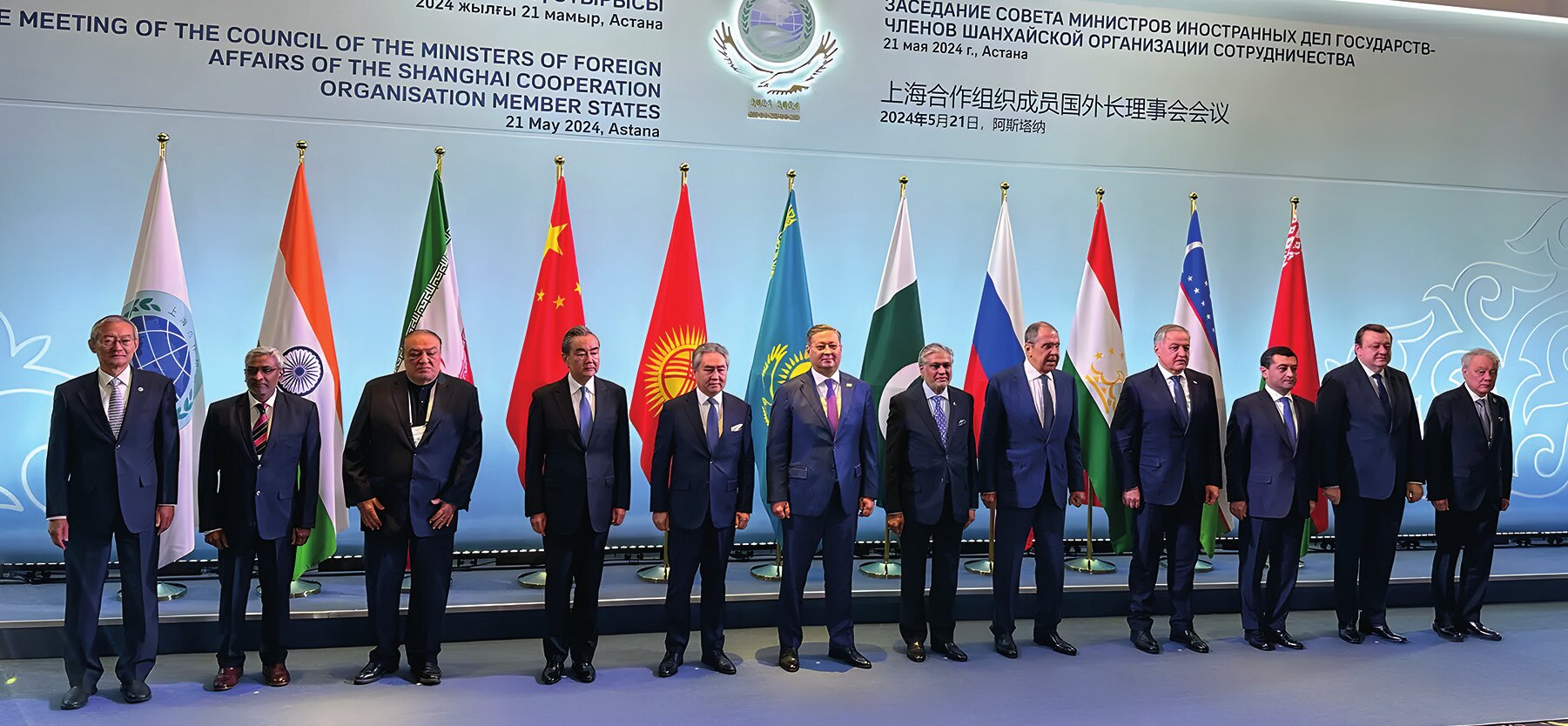
First of all, based on the above cooperation mechanisms, the SCO acts as the core mechanism for the “Global East” integration. From the “Shanghai Five” to the establishment of the SCO, from Indian and Pakistani memberships to Iranian entry into the SCO, the number of SCO members has increased in integrated and multi-track ways, changing the architecture and patterns of the Eurasian continent. The strengthening of ties between West Asian countries and the SCO has contributed to the rise of the “Global East”.
As of 2024, the SCO consists of nine member states (China, India, Iran, Kazakhstan, Kyrgyzstan, Pakistan, Russia, Tajikistan, and Uzbekistan), three observers (Afghanistan, Belarus, and Mongolia) and 14 partners for dialogue (Azerbaijan, Armenia, Bahrain, Egypt, Cambodia, Qatar, Kuwait, Maldives, Myanmar, Nepal, UAE, Saudi Arabia, Türkiye, and Sri Lanka). The regional organization accounts for 25% of the world’s land and 45% of the world’s population, with the world’s most populous countries and huge market potential. The SCO members constitute the core force for the non-Western group to have a bigger voice (Pron, 2021Pron, S. E. (2021). International Institutions in China’s Foreign Policy: The Case of the Shanghai Cooperation Organization. Wydawnictwo Adam Marszałek.).
As the most important political organization established by non-Western powers, the SCO includes four nuclear powers (China, Russia, India, and Pakistan) and holds two permanent seats in the UN Security Council. The formal members and the observers have used the SCO as a platform to integrate and embed themselves in the four major fields of security, politics, economy, and culture (Sun & He, 2023Sun, D., & He, F. (2023). “GCC Countries” Future Relationship with the Shanghai Cooperation Organisation: Motivation and Prospect. Asian Journal of Middle Eastern and Islamic Studies, 17(1), 5.). This has promoted the interdependence of maritime, land, and amphibious states in the Asian subregions and has created a favorable surrounding environment for the security and development of Asian countries.
Secondly, based on the “1+ more” cooperation mechanism, the key areas of the “Global East” cooperation are coming into being. In Central Asia, the successful holding of the first China-Central Asia Summit in 2023 has pushed the cooperation between China and the five Central Asian countries to a new level. In North Asia, the China-Mongolia-Russia Economic Corridor is an important economic and trade route to promote the “Steppe Silk Road”. In East Asia, China, Japan, and South Korea try to overcome political obstacles. These three countries have sought common ground while shelving differences and have promoted pragmatic cooperation.
In Southeast Asia, the Association of Southeast Asian Nations (ASEAN) is currently China’s largest trading partner and the “10+1” cooperation mechanism between China and ASEAN has undergone an upgrade from a “golden decade” to a “diamond decade”. In South Asia, China is the largest trading partner of Pakistan, Bangladesh, and Maldives, and the China-South Asia Expo has promoted economic and trade cooperation between the two sides.
In July 2023, Iran joined the SCO as a full member; Türkiye, Saudi Arabia, Kuwait, the UAE, Bahrain, and Qatar are SCO partners for dialogue. In August 2023, BRICS approved five countries as its new members, three of whom (Saudi Arabia, Iran, and UAE) are from West Asia. With increasing economic and political engagement with other parts of Asia, West Asian countries have gradually strengthened their sense of “Global East” identities.
Finally, based on the “many +1” cooperation mechanisms, more arenas have become zones of the “Global East” cooperation. Beijing has actively engaged in dialogue and consultation with multilateral organizations formed by small and medium-sized countries in the “Global East” to seek strength through unity. The small and medium-sized countries of the “Global East” have launched various regional mechanisms, such as the Organization of Islamic Cooperation (OIC), Conference on Interaction and Confidence Building Measures in Asia (CICA), Economic Cooperation Organization (ECO), D-8 Organization, GCC, Organization of Central Asian Cooperation (CAC), Organization of Turkic States (OTS), ASEAN, South Asian Association for Regional Cooperation (SA- ARC), and more. China plays a constructive role in various Asia-related multilateral mechanisms dominated by small and medium-sized countries and is an steadfast supporter of regional organizations.
The Prospect of the “Global East” and its Implication to China
In the new era, the collective rise of Asian countries has changed the global geopolitical and geo-economic landscape. Although these countries are not as advanced as the “Global North” in terms of economic and social development indicators, they have surpassed most countries of the “Global South” and become a “middle ground” and independent political bloc between the North and the South (Müller, 2020Müller, M. (2020). In Search of the Global East: Thinking between North and South. Geopolitics, 25(3).).
The “Global East” is a complex of North and South countries, the former being Japan, Russia, and South Korea; the latter being India, Pakistan and so on. While seizing the key grouping of the “Global South”, Asian countries’ diplomacy also aims to seize the strategic opportunity of the rise of the “Global East”, give play to their respective geographical advantages, and take the “Global East” as a breakthrough. Regarding China’s overall diplomatic layout, academic circles at home and abroad often start from the dichotomy of “Global South” and “Global North” and propose China’s agendas for South-South cooperation, North-South dialogue and global governance initiated by the BRI. In fact, China is both a Southern and Eastern country. While seeing the rise of the “Global South”, Beijing is also paying attention to the rise of the “Global East”.
With the rise of the “Global East”, China has upgraded its neighborhood diplomacy to “greater periphery diplomacy”, expanded its strategic depth in the Eurasian hinterland, and integrated the diplomacy of major powers, neighboring countries, developing countries and multilateral diplomacy. With the “Global East” at its centerpiece, China strives to serve as a bridge and bond, connecting countries in the North and the South, actively cultivating a strategic in-depth for its peace and development.
Since Xi Jinping took the presidency in 2012, the Chinese administration’s dual tasks have been overcoming the “middle-income trap” at home and the “middle-technology trap” internationally. The “Global East” is the strategic zone for China’s peaceful development. However, the “Global East” is volatile and fragile. The move away from the widely criticized First/Second/Third World perspective and toward the equally problematic North-South distinction shifted the perception of global geography and its divisions. Once “East” melted into North and South, its distinct modernization project and experience of modernity fell into oblivion (Zysiak & Marzec, 2020Zysiak, A., & Marzec, W. (2020). Historicizing the Asynchronous Modernity in the Global East. Eurasian Geography Liand Economics, 61(6), 664-665.).
In fact, the “Global East” countries greatly differ in political systems, religions and industrial structures. They need to overcome multiple obstacles in the process of reconstructing Asian political, security, economic and cultural architecture, such as the local geopolitical rivalries of ethnic, sectarian, and territorial disputes, the spillover of regional hot issues, the homogenization of industrial structures and competition of development models of various countries, and the geo-economic rivalry such as disputes over cross-border river resources.
The first is to manage institutional competition within the countries of the “Global East”. The SCO, CICA, BRICS, and Asian Infrastructure Investment Bank (AIIB) all have different priorities. Russia relies on the Collective Security Treaty Organization (CSTO) to build a Eurasian buffer zone. By relying on the “Indo-Pacific Quartet”, the “Middle East Quartet”, and the SCO, India attempts to become the spokesperson of the “Global South” and “Global East” simultaneously. Türkiye builds a “Turkic world” based on the OTS. Iran actively builds an anti-Israeli coalition of resistance. Under the GCC-Central Asia engagement framework, Saudi Arabia launched the summit mechanism of the six GCC countries and the five Central Asian countries to consolidate Arab-Islamic linkage. Eight Islamic countries, including Iran, Pakistan, Bangladesh, and Malaysia, established the D-8 organization to build an Oriental Islamic club. Institutional competition within the countries of the “Global East” is prone to “institutional excess”; institutional competition should be avoided in case they might dilute each other.
The “Global East” countries are diverse, with multiple political and cultural orientations. Russia and Iran are revolutionaries against the US-led liberal order, Japan and South Korea are adaptors, and Saudi Arabia, Türkiye, the UAE, and India are improvers. By raising the banner of building a community with a shared future for mankind, China, together with other Asian countries, upholds multilateralism with the United Nations as its core and defends the rights of Asian countries to development. The “Global East” countries are reformers and followers of the Western-led international order.
The “Global East” is not monolithic; it can be divided into several sub-regions. These countries have established different cooperation trajectories based on the characteristics and strengths of their Asian counterparts. For example, China, Japan, and South Korea manage political differences and focus on economic, trade, and cultural cooperation. China’s cooperation with South Asian countries is mainly bilateral. China’s cooperation with GCC countries mainly focuses on energy.
Secondly, the “Global East” countries should address the West’s “divide-and-rule” tactics. Under the profound changes of the new era, the contradictions between Western and non-Western powers are on the rise, and the interaction paradigm between the Western and Eastern powers is shifting from strategic coordination to strategic competition. Geographical rivalry, scientific and technological contest, and institutional competition are the three key areas of great power competitions (Degang & Jieying, 2023, 29-30Degang, S., & Jieying, Z. (2023). On the Evolution of the Middle East Pattern in the Background of Great Power Competition. Journal of Peace and Development(2).). The game between the US and Russia features geopolitical competition, the game between the US and China is dominated by scientific and technological competition, and the game between the US and the middle powers of the “Global East” is characterized by institutional competition.
If the “Global East” is to make any difference, it should become a collective endeavor between multiple Easts – of all those currently not represented or misrepresented in the current literature. The West does not agree that West Asia is part of Asia or “Global East”. In the Middle East, the US implemented a “divide and rule” strategy and established the “Negev Forum” with Israel, the UAE, Bahrain, Morocco, Egypt, and other countries, and held the “US-Arab summit” with the leaders of nine Arab countries, including the six GCC countries, Egypt, Jordan, and Iraq. The Biden administration hopes to build a “Middle Eastern Air Defense Alliance” to form a “strategic triangle” between the US, Israel and the Arab allies, linking the European allies with the Middle Eastern partners and the Indo-Pacific fellows.
In East Asia and Southeast Asia, the US has seized Japan, South Korea, and the Philippines, the three “swing states” in the Global East, to drive a wedge between maritime and continental Asian countries. In South Asia, the US takes advantage of the contradiction between India and Pakistan to adopt a dual-track strategy. In the Middle East, the US is dependent on the “moderate allies” (Israel, the UAE, Saudi Arabia, Egypt, etc.) to contain the “resistance alliance” led by Iran. America’s divide-and-rule has undermined the centripetal forces of the “Global East”.
Thirdly, the “Global East” should uphold the principle of “open regionalism”. No country is an isolated island. Unlike the highly homogenous “Global West,” the countries of the “Global East” differ greatly in their political systems, ideologies, and development strategies. The “Global East” is currently nothing but an “imagined community”, fluid and fragile. As the Romanian scholar Liviu Chelcea pointed out, the “Global East” is held together by a logical possibility, not a fait accompli. Asia’s sub-regional integration and inter-regional connectivity face various internal and external, political, and economic hurdles, such as external interference, hedging strategies of the members, and separatism (Chelcea, 2023, 4Chelcea, L. (2023). Goodbye, Post-socialism? Stranger Things beyond the Global East. Eurasian Geography and Economics, 8.). Countries of the “Global East” should transcend the old zero-sum mentality and form an Asian community in the process of interacting with the “Global West”.
Thus, the “Global East” still has a long way to go before it becomes a coherent entity. Japan, South Korea, Israel, and others put relations with the West first. Türkiye, India, Saudi Arabia, etc., seek an East- West equilibrium. Small and medium-sized Asian countries generally adhere to the “hedging policy” of “geopolitical reliance on the West and geo-economic dependence on the East”. Russia, Iran, Syria, and North Korea are sticking to a policy of confrontation with the West. The diverse strategies make the “Global East” countries lack a common policy orientation. Besides, the multilateral cooperation mechanisms in the “Global East” are mostly “soft laws”, which are fairly inclusive and open; the internal competition and confrontation in the “Global East” may be as fierce as their competition and confrontation with the outsiders.
Finally, academia should avoid falling into the discourse trap of cultural imperialism and West-centrism in probing the “Global East”. As Edward Said explained in his book Orientalism, the West creates and describes the Orient as part of imperial self/other relations. The West becomes strong, masculine, rational, and scientific only when it is contrasted with the East as weak, feminine, mysterious, and exotic (Callahan, 2023, 2084Callahan, W. A. (2023). Chinese Visions of Self and Other: the International Politics of Noses International Affairs, 99(5).). After 30 years, post-socialism is still the standard moniker to refer to the former socialist countries of the East, and it reflects some of this uneven power relationship (Trubina, Gogishvili, Imhof, & Müller, 2020Trubina, E., Gogishvili, D., Imhof, N., & Müller, M. (2020). A Part of the World or Apart from the World? The Postsocialist Global East in the Geopolitics of Knowledge. Eurasian Geography and Economics, 61(6), s. 636-662.).
The rise of the “Global East” signifies the “Asian Renaissance”. Compared to Western countries, the “Global East” countries have heterogeneous political systems, multicultural values, and lifestyles. They are reshaping the Western discourse about world politics, breaking out of the discourse trap of “the democratic West versus the authoritarian and aristocratic East”, and forming an “oriental narrative” of political modernizations to help build an Asian community of common destiny and provide intellectual discourse for regional integration. Despite scholarship which has pushed knowledge and perspectives from the “Global South,” often within the lens of postcolonial theory, into the midst of contemporary academic debate, it seems increasingly important to actively argue the same for knowledge and theory from the “Global East” (for want of a better term), a region which strangely remains at times somewhat marginalized in geographical knowledge and debates (Chan, Gentile, Kinossian, Oakes, & Young, 2018, 1-2Chan, K. W., Gentile, M., Kinossian, N., Oakes, T., & Young, C. (Dü). (2018). Theory Generation, Comparative Analysis and Bringing the “Global East” into Play. Eurasian Geography and Economics, 59(1).).
Conclusion
For thousands of years before the rise of European sea powers in the 18th century, Asian civilizations were the center of world politics. In the new era, these civilizations have rediscovered their historical linkage and are shifting from “back-to-back” to “face-to-face”. Since the outbreak of the conflict between Russia and Ukraine and between Israel and Palestine, the concept of the “Global East” has caught more and more attention from international studies scholars. The “Global East”, with Asian countries as its main body and Central Asia as its heart, has stood up to the pressure of the US and the West on the Ukraine crisis and generally adopted a position of not taking sides, forming a distinctive feature (Qinqsong, 2023Qinqsong, W. (2023). Wither the Central Asia within three Fold Dilemma: Towards the Global East? Retrieved April 2, 2024 from). The Russia-Ukraine conflict and the Israel-Palestinian hostility have been protracted, and the US has increased sanctions on Russia and Iran-led resistance factions, strengthening the determination of the two countries to “leave Europe and enter Asia” and “leave the Middle East and enter Asia” respectively.
In great power competition in the Middle East, the Biden administration wants to take advantage of Türkiye and its Arab allies, using them as “pawns” in strategic contests with China and Russia. It has boosted the resolve of these countries to “look east” among great power competition. They choose the US for security cooperation but rely on Asian countries for economic affairs. Asian countries have actively participated in the Ancient Civilizations Forum, which has fostered the rejuvenation of ancient Asian civilizations and strengthened their ambition to revive their own cultures.
Under the transformation from US hegemony to multi-polarity, identity politics is ascending, and Asian countries are awakening to nationalism and strategic autonomy. The ebb of globalization and the lack of liberal economic growth has made neighborhood diplomacy a top priority for Asian countries. Thus, the “Global East” countries have moved from the periphery and semi-periphery to the center of the world stage, taking bottom-up economic development rather than top-down democratic transformation as the basic path to modernization (Zysiak & Marzec, 2020Zysiak, A., & Marzec, W. (2020). Historicizing the Asynchronous Modernity in the Global East. Eurasian Geography Liand Economics, 61(6), 664-665.). Most of these countries insist on “looking for friends” rather than “looking for foes”. They are seeking “partnership” rather than “alliance” and are reconstructing their Asian identities in the regional integration process.
In prospect, the US “divide-and-rule” strategy and China’s “integration” strategy will become the major contradiction in the Greater Asia. For the US, it would be for the “Global East” and “Global South” to combine in a way that left the “Global West” on the outside, weaker and smaller in its global position. For China, the nightmare coalition would be for the West and the Global South to swing into alignment (Ikenberry, 2024Ikenberry, G. J. (2024). Three Worlds: the West, East and South and the competition to shape global order. International Affairs, 100(1).). Under the concept of open regionalism, the flow of goods, people, and knowledge among Asian countries has increased, and the “Global East” has become a key region in China’s greater periphery diplomacy and for China’s partnership network. In the future, the “Global South” and “Global East” may become the “two wings” of China’s diplomacy in the developing world.