Introduction
A socialist political economy with Chinese characteristics is a new economic approach first publicly and explicitly proposed by Xi Jinping and the Party Central Committee at the Central Economic Work Conference in December 2015. It has been repeatedly emphasized that there is a need to adhere to, study, apply, innovate, and develop this political economy. However, various understandings and interpretations remain regarding fundamental questions, such as the nature of a socialist political economy with Chinese characteristics, its research object, starting point, logical thread, framework, theoretical system, and its basic content and main methods. Addressing these questions requires in-depth discussion and accurate explanation. Therefore, before discussing the major and difficult issues, this paper briefly explains the author’s views on these fundamental questions.
The Research Object and Definitions of Socialist Political Economy with Chinese Characteristics
Multiple Definitions of the Research Object and Connotation of Socialist Political Economy with Chinese Characteristics
What constitutes a socialist political economy with Chinese characteristics? This is the first question to be clarified; however, multiple definitions have emerged. This is because the research object determines the discipline’s content, system, structure, and boundaries. Consequently, due to different understandings of the research object, definitions of a socialist political economy with Chinese characteristics vary. In summary, there are currently six representative viewpoints in academia: 1. The research objects are the mode of production and the corresponding production, exchange, and political and state relations. Therefore, a socialist political economy with Chinese characteristics is defined as “the science that studies the mode of production of socialism with Chinese characteristics and the corresponding production, exchange relations, and political and state relations.” This is the broadest definition, encompassing the widest scope and richest content.
2. The research object is a socialist economy with Chinese characteristics. Therefore, socialist political economy with Chinese characteristics is defined as “the science that socialist economics studies with Chinese characteristics.” This is an abstract concept.
3. The first view holds that the objects of study are economic activities, economic relations, and laws. Therefore, it defines a socialist political economy with Chinese characteristics as “the science that studies economic activities, economic relations, and their laws within the framework of socialism with Chinese characteristics.” This understanding is slightly more specific than the previous one, defining “economy” as “economic activities and economic relations,” and specifying that the object of study includes economic laws.
4. The other view is that the object of study is the mode of production and its developmental laws. Therefore, it defines a socialist political economy with Chinese characteristics as “the science that studies the mode of production and its development laws within the framework of socialism with Chinese characteristics.” This is a relatively narrow understanding that limits the object of study to the scope and content of the mode of production.
5. Another interpretation defines a socialist political economy with Chinese characteristics as “the science of studying the mode of production and its development laws,” considering its research object as the productive forces and relations of production and their development laws. This interpretation is essentially another way of expressing the first viewpoint: the connotations are the same, but this definition clarifies two major aspects of the mode of production.
6. A final interpretation defines a socialist political economy with Chinese characteristics as “the science of studying the relations of production and their development laws,” considering its research object as the relations of production (economic relations) and their development laws. This interpretation had the smallest scope and the lowest content.
A Multi-Level Analysis of the Research Object of Socialist Political Economy with Chinese Characteristics
What exactly is the research object of socialist political economy with Chinese characteristics, and how should the six different understandings and definitions mentioned above be evaluated appropriately? The author believes that the research object of economics, including socialist political economy with Chinese characteristics, can be analyzed and understood at multiple levels, angles, and stages, from the abstract to the concrete, and from simple to complex. The six different understandings and definitions mentioned above are definitions formulated from various levels, angles, and degrees of complexity, and all have a certain degree of correctness.
The first level of research is the economy, which is the most abstract and general definition.
The second level includes economic activities (i.e., the operation and development of the national economy, including the four major links of production, exchange, distribution, and consumption, the two aspects of supply and demand, economic structure, resource allocation methods, operating mechanisms, development modes, resource conservation, environmental protection, etc.) and economic relations (economic base, economic system). This is a more specific definition of the constituents of an economy.
The third level provides the most concrete and comprehensive definition of the economy, encompassing four aspects: production and mode of production, productive forces (including material resources, environment, labor, technology itself, and the relationship between people and things), relations of production (the relationship between people in production, exchange, distribution, and consumption), and the interrelationship and combination of productive forces and relations of production (the relationship between people and things, and the relationship between people themselves, including the combination of labor and means of production, the organization of production, specialization, mechanization, automation, intelligence, networking, digitalization, greening, large-scale production, standardization, batch production, personalization, customization, flexibility, etc., and the liberation, protection, and development of productive forces).
The fourth level extends beyond the scope of the economy because the economic base determines the superstructure, which in turn reacts to the base. Therefore, economic research must not only study productive forces and relations of production, especially the interrelationship between productive forces and relations of production, but also the relations of production in conjunction with the superstructure, examining the relationship between the economic base and the superstructure (including politics, the state [government], ideology, culture, and management). This is a key reason why political economy includes the word “political.”
The primary task of the classical Marxist political economy is to scientifically analyze and reveal the contradictory movement and development laws of the capitalist economy. Based on this, it proposes the inevitability of a trend towards socialism and communism, objectively providing a theoretical basis for the proletarian revolution, the overthrow of the capitalist economic system, and the establishment of a new socialist system. However, this does not mean that Marxist political economy is merely “revolutionary economics,” because it is first and foremost a scientific economics. Its role is not only to guide the proletarian revolution but also to guide the general direction of socialist construction. To say that Marxist political economy is merely “revolutionary economics” can easily lead to the misunderstanding that the Chinese revolution has succeeded and that the main task now is construction, rendering Marxist political economy ineffective and outdated. This often becomes a pretext for some to deny and oppose Marxist political economy.
Classical Marxist political economy focuses on studying the contradictory movement of the capitalist mode of production and the evolutionary trend of production relations, rather than on consolidating and improving the capitalist system or on achieving sustained and effective development of the capitalist economy. The main tasks of Western economics were to consolidate and improve the capitalist system and achieve sustained and effective development of the capitalist economy. The difference lies in the fact that, as the main task of contemporary Chinese Marxist political economy, a socialist political economy with Chinese characteristics provides a theoretical basis and guidance for establishing and improving the socialist economic system, developing the socialist economy, and ultimately realizing communism. It should focus on studying how to sustainably and effectively develop the socialist economy; this can be called the “economics of socialist construction” (including socialist development economics and managerial economics). However, it cannot be simply called “construction economics”; it should also be called “reform economics,” and even “revolutionary economics.” This is because revolution is a form of social change that can take the form of armed struggle or reform. To sustainably and effectively develop a socialist economy or build socialism, it is necessary to improve socialist economic and political systems continuously through socialist reforms. Socialist reform can also be considered as a second socialist revolution. The first socialist revolution established a socialist system, and the second was intended to improve it.
Whether economics should study productive forces has long been a subject of debate. Most scholars now believe that a socialist political economy with Chinese characteristics cannot only study production relations but must also study productive forces, because the essential requirement and fundamental task of socialism is to develop productive forces. This is very correct. However, it must be clarified that the productive forces studied in economics are not the material attributes of productive forces and their laws of change; those are the research objects and tasks of natural sciences and engineering technology. Economics studies productive forces from the perspective of the relationship between people and things; studying the mutual relationship and combination between productive forces and relations of production; studying how to liberate, protect, and develop productive forces; and studying the development, allocation, utilization, organization, operation, and management of productive forces. Economics cannot study productive forces in isolation from relations of production and the superstructure; it must study them in conjunction with the superstructure and should focus on relations of production. This is because the relations between production (economic base) and the superstructure have a significant countereffect on productive forces; they can both promote and hinder their development. Moreover, the development, allocation, utilization, organization, operation, management, liberation, protection, and development of productive forces are not only relationships between people and things but also relationships between people. For example, specialization and the division of labor involve not only the relationship between people and things in production but also the relationship between people and the division of labor and cooperation between people, rather than just between people and things. The allocation of productive forces, or “resource allocation,” primarily operates through market mechanisms and planning mechanisms. Market mechanisms fall under the category of production relations, whereas planning mechanisms involve establishing political and institutional arrangements. Liberating productive forces” means eliminating economic and political institutional barriers that hinder the development of productive forces, forming economic and political systems conducive to the development of productive forces, and promoting the development of productive forces. Developing productive forces requires mobilizing enthusiasm for production and management. The key to mobilizing this enthusiasm lies in forming incentive mechanisms that mainly involve production relations, economic systems, and political systems.
Terminological Clarification of Socialist Political Economy with Chinese Characteristics
Currently, several economic terms related to a socialist political economy with Chinese characteristics are used in the Chinese economic community. However, there is no clear consensus on the connotations, denotations, differences, and connections among these terms. What constitutes a socialist political economy with Chinese characteristics? What is its relationship with economics, political economy, Marxist economics, Marxist political economy, the contemporary Chinese Marxist political economy, and Marxist political economy with Chinese characteristics? What are the differences and connections between them? These questions must be understood correctly in terms of learning, researching, innovating, developing, and applying a socialist political economy with Chinese characteristics.
Economic theory has existed since ancient times, but has only become an independent discipline since the advent of a capitalist society. The author believes that economics is the general term for all disciplines that study human socioeconomic activities (behaviors) and economic relations, as well as their laws and applications, including two major categories: theoretical economics and applied economics. Political economy is the most important branch of economics, studying the mode of production, especially the relations of production and their laws of change; it is the theoretical foundation of all other branches of economics. Economic classification primarily relies on the research object and its characteristics. According to differences in scientific rigor, class nature, historical era, social form, and national/regional origin, political economy can be further classified in various ways: According to scientific rigor, there is scientific political economy and vulgar political economy (i.e., non-scientific political economy); according to class nature, there is bourgeois political economy, proletarian political economy, and petty-bourgeois political economy; according to historical era, there is classical political economy (or ancient political economy) and modern political economy; according to the social form of the research object, there is capitalist political economy and socialist political economy; according to the scope of the social form of the research object, there is broad political economy (all societies) and narrow political economy (a specific society); according to the national/regional origin of the research object, there is British political economy, American political economy, Soviet political economy, Chinese political economy, etc.
Furthermore, these different classification criteria can be combined to create new classifications of political economy. For example, combining the class nature, historical era, and national origin of political economy resulted in the British classical bourgeois political economy.
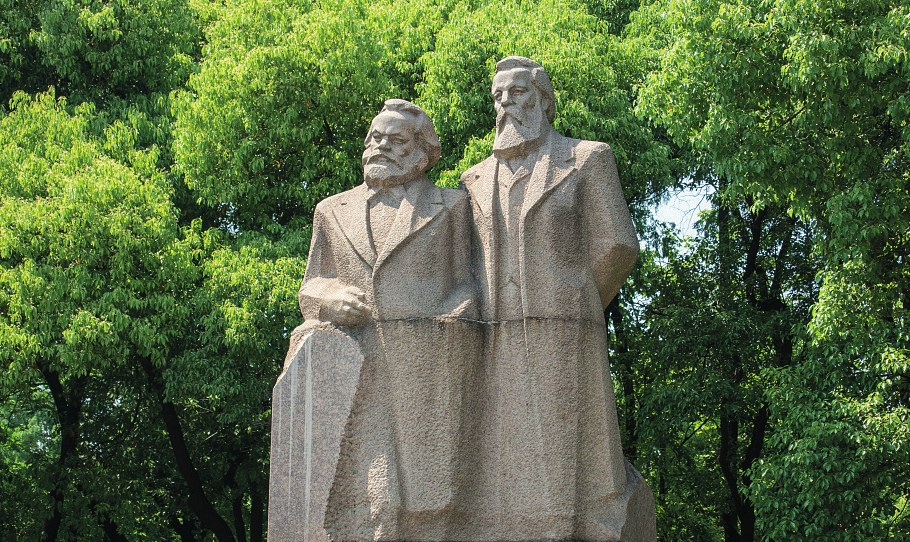
Marxist political economy is a scientific proletarian political economy founded by Marx and Engels. Marxist economics is an abbreviation for Marxist political economy. Marx and Engels founded the classical Marxist political economy, which the contemporary Marxist political economy inherited and developed. As its research objects mainly include capitalist and socialist economies, it is further divided into the capitalist part of the Marxist political economy (also called capitalist political economy, which studies primarily capitalist economies) and the socialist part of the Marxist political economy (also called socialist political economy, which mainly studies socialist economies). Contemporary Chinese Marxist political economy is the Marxist political economy developed in China by applying its standpoint, viewpoints, and methods to study contemporary economies (including Chinese, world, developed Western, and developing country economies). Furthermore, as China’s current socialist economy is in the primary stage of socialism with Chinese characteristics, a Marxist political economy that studies this stage is also called a socialist political economy with Chinese characteristics.
The Formation and Development of Socialist Political Economy with Chinese Characteristics
A socialist political economy with Chinese characteristics is guided by Marxist political economy, drawing on its standpoints, viewpoints, and methods to study the socialist economy in China. It is a product of the combination of the basic principles of Marxism and socialist practices with Chinese characteristics, a theoretical summary of the practical experience in developing a socialist economy with Chinese characteristics, and an essential component of the latest research achievements in the contemporary Chinese Marxist political economy. However, the exploration of the Chinese socialist political economy began with the founding of the People’s Republic of China, and a socialist political economy with Chinese characteristics gradually formed and developed in China after the reform and opening up, especially after the proposal of socialism with Chinese characteristics. The process of China’s reform and opening-up is also the process of exploring and building socialism with Chinese characteristics, as well as the process of the formation and development of a socialist political economy with Chinese characteristics. After 40 years of reform and opening up, economic development practices and related theoretical research, a socialist political economy with Chinese characteristics can be said to have taken shape. Reviewing and summarizing the formation and development of a socialist political economy with Chinese characteristics since the reform and opening up is of great significance for adhering to, learning from, applying, and further innovating and developing it.
This article discusses the relevant research context regarding the formation and development of a socialist political economy with Chinese characteristics, its main achievements, shortcomings, and future development tasks. Western economists do not examine a socialist political economy with Chinese characteristics, which they do not endorse; despite numerous foreign scholars analyzing China’s reform, opening up, and economic development, they do not consider it within the framework of a socialist political economy with Chinese characteristics. Therefore, we discuss the relevant research conducted by Chinese scholars.
The formation and development of a socialist political economy with Chinese characteristics can be roughly divided into the following stages: the initial proposal stage from 1978 to 1986, the basic formation stage from 1987 to 1996, the development stage from 1997 to 2011, and the finalization and maturation stage, beginning with the 18 National Congress of the Communist Party of China (CPC) in 2012.
Research in the Initial Stage (1978-1986)
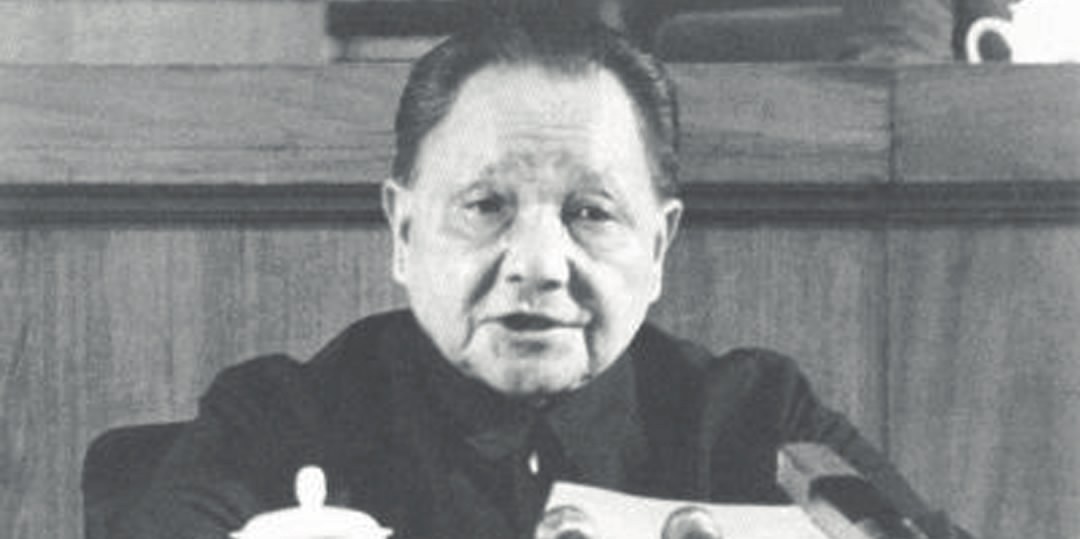
In 1978, China began its reform and opening up, and it can be said that the exploration of socialist political economy with Chinese characteristics also started simultaneously. The most significant landmark achievements were: the “Resolution on Certain Historical Issues of the Party Since the Founding of the People’s Republic of China,” adopted by the Sixth Plenary Session of the 11th CPC Central Committee in 1981, which for the first time explicitly stated that “China’s socialist system is still in its primary stage”; Deng Xiaoping, in his “Opening Address to the 12th National Congress of the CPC” on September 1, 1982, which for the first time explicitly stated that “combining the universal truth of Marxism with my country’s specific realities, taking our own path, and building socialism with Chinese characteristics—this is the basic conclusion we have drawn from summarizing longterm historical experience” (Xiaoping, 1993: 3Xiaoping, D. (1993). 《邓小平文选》 [Selected Works of Deng Xiaoping Volume III], Beijing: People’s Publishing House.); the 12th National Congress of CPC in 1982, which proposed “developing diverse economic forms”; and the Third Plenary Session of the 12th CPC Central Committee in 1984, which for the first time proposed “a planned commodity economy based on public ownership.” The research achievements at this stage are concentrated in the first programmatic document on China’s reform and opening-up. In 1984, Deng Xiaoping pointed out that the “Decision of the CPC Central Committee on Economic System Reform” “constituted a preliminary draft of political economy, a political economy that combines the basic principles of Marxism with the practice of socialism in China,” marking the initial proposal of socialist political economy with Chinese characteristics (Xiaoping, 1993: 83Xiaoping, D. (1993). 《邓小平文选》 [Selected Works of Deng Xiaoping Volume III], Beijing: People’s Publishing House.). Party and state leaders, with Deng Xiaoping as their primary representative, played a decisive role in the proposal and subsequent basic formation of a socialist political economy with Chinese characteristics, whereas older generation economists, represented by Sun Yefang, Xue Muqiao, Yu Guangyuan, Xu Dixing, and Hu Qiaomu, made significant contributions to its initial proposal and subsequent basic formation.
A prominent feature of the exploration and research during this stage was the dispatch of relevant leaders and economists to Eastern Europe to investigate the economic systems and reforms of Eastern European socialist countries, with a strong emphasis on learning from and referencing the theories of the socialist economy by Eastern European economists such as Oscar Lange, Bruce, Korné, and Sik.
Research on the Basic Formation Stage (1987-1996)
This stage can be considered the basic formation of a socialist political economy with Chinese characteristics. This is because the 13 National Congress of the CPC in 1987 systematically elucidated the theory of the primary stage of socialism, and the 14 National Congress of the CPC in 1992 explicitly proposed, for the first time, a theory of a socialist market economy. In particular, the 1993 “Decision of the CPC Central Committee on Several Issues Concerning the Establishment of a Socialist Market Economy System,” the second programmatic document of China’s reform and opening up, put forward a relatively comprehensive theory of a socialist market economy, the theory of ownership of socialism with Chinese characteristics, and the theory of income distribution, marking the basic formation of the main contents of socialist political economy with Chinese characteristics.
The socialist market economy theory is a new economic theory developed by China during the reform and opening-up period. This is the most significant innovation of contemporary Marxist political economy, in keeping with the times, the most essential content of socialist political economy with Chinese characteristics, and the fundamental theory guiding China’s remarkable achievements in economic reform and development since its reform and opening up.
The prominent feature of this stage of exploration and research is that it began to introduce, absorb, and learn from Western economics, especially the theories and methods of the modern market economy, and enriched them into a socialist political economy with Chinese characteristics. This played an essential role in the formation and development of a socialist political economy with Chinese characteristics, especially the socialist market economy theory. However, to a certain extent, there was also a tendency to believe that Marxist political economy was outdated, or even to deny it completely, and to vigorously promote and admire Western economics, especially modern Western economics.
Research on the Stage of Some Development (1997-2011)
This stage saw limited theoretical breakthroughs and was significantly impacted by Western neoliberal economics, but it continued to develop through exploration, hence the term “stage of some development.” The main achievements of this stage include: the 16th CPC National Congress in 2002 proposing a new path of industrialization for China; the Third Plenary Session of the CPC Central Committee in 2003 proposing a people-centered, comprehensive, coordinated, and sustainable scientific development concept; and the 17 National Congress of CPC in 2007 proposing a new path of industrialization with Chinese characteristics, a path of urbanization with Chinese characteristics, a path of agricultural modernization with Chinese characteristics, a path of independent innovation with Chinese characteristics, and the construction of a resource-saving and environmentally friendly “two-oriented society.” Significant progress has been made in the theory of economic development.
At this stage, although the theory of a socialist market economy had been proposed, it remained immature and incomplete. In his article “A Re-understanding of Developing a Socialist Market Economy,” published in the fourth issue of Southeast Academic Journal in 2001, Comrade Xi Jinping pointed out that “in the practice of establishing and developing a socialist market economy, on the one hand, there is the problem of deeply ingrained traditional planned economy consciousness, with some people consciously or unconsciously resisting the market economy; on the other hand, there is also the problem of some people completely copying Western economic theories and using Western capitalist private ownership market economy theories to guide the new practice of a socialist market economy. Almost all the works on the socialist market economy to date are restates of Western market economy theories; no one has clearly explained the connotation, characteristics, and operating mechanism of the socialist market economy, or how socialism and the market economy are combined, making it even more difficult to conduct a theoretical comparison and demonstration between the socialist market economy and the capitalist market economy” (Xi, 2001: 4Xi, J. (2001). “《对发展社会主义市场经济的再认识》 [A Re-understanding of Developing a Socialist Market Economy]” 《东南学术》 Southeast Academic Journal, 4 期。).
The most prominent feature of this stage of exploration and research is that the socialist political economy with Chinese characteristics has been significantly impacted by Western economics, leading to the “marginalization” of the Marxist political economy. Faced with the impact of neoliberal economics, older generation economists, such as Liu Guoguang, Song Tao, Wei Xinghua, Jiang Xuemo, Wu Shuqing, Gu Shutang, Wu Xuangong, Wu Yifeng, and Zhou Xincheng, along with some middle-aged and young economists, combined the realities of China’s reform and development with the persistence of Marxist political economy research, thus contributing to the development of a socialist political economy with Chinese characteristics.
Research on the Formulation and Maturation Stage, Beginning with the 18 National Congress of the CPC in 2012
Since the 18th National Congress of the CPC in 2012, China’s economic development has entered a new normal with many new situations, characteristics, problems, and tasks emerging. There is a need to innovate, develop, and apply a socialist political economy with Chinese characteristics that adhere to its fundamental principles. Although socialist political economy with Chinese characteristics has been basically formed after the exploration and research of the previous three stages, the name “socialist political economy with Chinese characteristics” has not yet been formally and explicitly proposed, its main content and general framework have not been clearly summarized and confirmed, and the deviations that occurred in the first two stages have not been effectively corrected. It is against this backdrop that Comrade Xi Jinping has repeatedly delivered essential speeches in recent years, formally and explicitly using the term “socialist political economy with Chinese characteristics,” emphasizing the need to adhere to it, develop it, learn from it, and effectively apply it.
On July 8, 2014, at a symposium with experts on the economic situation, President Xi Jinping pointed out that Party committees and governments at all levels must study and apply political economy effectively; consciously understand and better follow the laws of economic development; and continuously improve their ability and level in promoting reform and opening up, leading economic and social development, and enhancing the quality and efficiency of economic and social development.”
On November 23, 2015, during the 28th collective study session of the Political Bureau of the CPC Central Committee, President Xi Jinping emphasized that it was necessary to study, research, and apply Marxist political economy based on the country’s national conditions and development practices, and to develop a contemporary Chinese Marxist political economy. He specifically pointed out that this is a compulsory course for upholding and developing Marxism and clearly summarized many important theoretical achievements of the contemporary Chinese Marxist political economy since the Third Plenary Session of the 11th CPC Central Committee.
At the Central Economic Work Conference, which concluded on December 21, 2015, President Xi Jinping explicitly proposed “adhering to the major principles of socialist political economy with Chinese characteristics,” and publicly used the term “socialist political economy with Chinese characteristics” for the first time.
In his speech at the Party School Work Conference in April 2016, Xi Jinping clearly pointed out that the decisive stage of building a moderately prosperous society in all respects presents unprecedented challenges to our Party’s governance: “The rapid changes in the situation and environment, the heavy tasks of reform, development, and stability, the numerous contradictions, risks, and challenges, and the magnitude of the tests are all unprecedented.” He sharply emphasized: “Some people regard Western theories and discourses as golden rules, unknowingly becoming cheerleaders for Western capitalist ideology. If we use the Western capitalist value system to tailor our practices, and use the Western capitalist evaluation system to measure our country’s development, deeming it acceptable as long as it conforms to Western standards, and dismissing anything that doesn’t as backward and outdated, then the consequences will be uunimaginable! Dare to speak out and draw your sword, be adept at resolving doubts, and dispel confusion. Marxism is the ‘true scripture’ for us Communists. If we don’t study the ‘true scripture’ well and always think about ‘going to the West to obtain scriptures,’ we will jeopardize important matters!” (Xi, 2016Xi, J. (2016). 《在全国党校工作会议上的讲话》 [Speech at the National Conference on Party School Work], 《求是》 [Qiushi], 5 期。).
In his speech at the Symposium on Philosophy and Social Sciences on May 17, 2016, Xi Jinping pointed out sharply: “Some believe that Marxism is outdated and that what China is doing now is not Marxism; some say that Marxism is merely an ideological indoctrination, lacking academic rationality and systematicity. In practical work, Marxism has been marginalized, rendered abstract, and labeled in some fields, becoming ‘silent’ in some disciplines, ‘missing’ from textbooks, and ‘silent’ in forums. This situation must be considered seriously.” He also pointed out: “Some people say that Marxist political economy is outdated, and ‘Capital’ is outdated. This statement is arbitrary” (Xi, 2016aXi, J. (2016). 《在全国党校工作会议上的讲话》 [Speech at the National Conference on Party School Work], 《求是》 [Qiushi], 5 期。).
On July 8, 2016, President Xi Jinping, while presiding over a symposium with experts on the economic situation, pointed out: “To uphold and develop socialist political economy with Chinese characteristics, we must take Marxist political economy as our guide, summarize and refine the great practical experience of my country’s reform and opening up and socialist modernization, and at the same time draw on the beneficial elements of Western economics. A socialist political economy with Chinese characteristics can only be enriched and developed in practice and must also withstand the test of practice, thereby guiding practice. We must strengthen research and exploration, summarize the understanding of laws, continuously improve the theoretical system of socialist political economy with Chinese characteristics, and promote the construction of an economic discipline that fully reflects Chinese characteristics, style, and spirit.” (Xinhua, 2016Xinhua. (2016). 《习近平主持召开经济形势专家座谈 会》 [Xi Jinping chairs symposium with experts on the economic situation], People’s Daily, July 9, 2016.). This speech clarified the relationship among a socialist political economy with Chinese characteristics, Marxist political economy, and Western economics, outlined the basic tasks and paths for innovating and developing a socialist political economy with Chinese characteristics, and had important guiding significance.
Inspired by these speeches, a surge in learning, research, innovation, development, and the application of a socialist political economy with Chinese characteristics began to emerge. Several important newspapers and journals began publishing related research papers one after another, marking the beginning of a stage in which a socialist political economy with Chinese characteristics eliminated interference, corrected deviations, conducted comprehensive and in-depth research, and moved towards a mature, well-defined stage. This marked the beginning of the golden era of research on a socialist political economy with Chinese characteristics. Some scholars have even said that the spring of research on Marxist political economy has arrived.
The Main Content and Theoretical Structure of Socialist Political Economy with Chinese Characteristics
In the process of economic reform and development with Chinese characteristics, after 40 years of exploration, research, and innovation, a socialist political economy with Chinese characteristics has achieved fruitful results. It can be said to have taken shape from its main content to its general framework. However, what are the main achievements–that is, the main contents of the socialist political economy with Chinese characteristics– and what framework should be adopted to constitute its current theoretical system? The views of the Chinese academic community are not entirely consistent, particularly regarding basic content. Some summarize it into six aspects, others into seven, and others into ten or more. Furthermore, some summaries suffer from duplication, overlap, and a lack of coordination and unity at the summary level (Xinhua & Jiang, 2016Xinhua, J. and Jiang, Y. (2016). :《发展和运用中国 特色社会主义政治经济学的若干问题》 [Several Issues in Developing and Applying the Political Economy of Socialism with Chinese Characteristics], 《中 国高校社会科学》 [Social Sciences in Chinese Universities] , 期。).
For example, some consider the new theory of socialist economic development as the main content, while also listing the Scientific Outlook on Development; the people-centered development philosophy; the new development concepts of innovation, coordination, green development, openness, and sharing; and the new type of industrialization, urbanization, agricultural modernization, informatization, and the path of independent innovation with Chinese characteristics as parallel main contents. This results in unclear levels of summary and duplication, even though the latter are precisely the main components or specific contents of the new development theory and should be included.
For example, some treat basic economic system theory and ownership theory as parallel fundamental components of a socialist political economy with Chinese characteristics. This also suffers from an unclear hierarchy and overlap, as the basic economic system primarily concerns ownership.
Regarding the main content and theoretical system of a socialist political economy with Chinese characteristics, this book’s preliminary view is that the main achievements of the socialist political economy with Chinese characteristics since the reform and opening up have yielded eight main components with the following structure: First, answering the question What is socialism? This is the essential theory of a socialist economy. What is the current stage of socialism in China? In other words, it was the primary stage of socialism. Next, we study and discuss the basic economic and distribution systems of socialism with Chinese characteristics, that is, ownership theory and the closely related distribution system theory. Based on clarifying the basic economic and distribution systems, we analyze the operational characteristics and modes of socialism with Chinese characteristics, that is, the theory of a socialist market economy. Finally, it focuses on the development of socialism with Chinese characteristics, completing the research and explanation of socialism with Chinese characteristics–that is, the theory of socialist economic development.
A socialist economy with Chinese characteristics is formed and developed through reform; therefore, further research and explanation of reform are needed, namely, the theory of socialist economic reform. A socialist economy with Chinese characteristics still relies on opening up to the outside world for its formation and development, and cannot be separated from international economic ties. Following a logic from domestic to international, the discussion then moves to the study and discussion of opening up to the outside world, namely, the theory of socialist opening-up.
In Conclusion in light of the new era’s circumstances, it reiterates and clarifies the general direction of the development of socialism with Chinese characteristics: the realization of communism, namely, the theory of communism.
Summarizing the main content and framework of a socialist political economy with Chinese characteristics according to this logical connection can yield a hierarchical structure and a more systematic framework, making them clearer, more accurate, and more rigorous. According to this logic and method, the main content of a socialist political economy with Chinese characteristics includes the following eight fundamental aspects: 1. The first is the theory of socialist essence: liberating and developing productive forces, eliminating exploitation and polarization, and ultimately achieving common prosperity.
2. The theory of the primary stage of socialism: the inevitable historical stage that China must go through to achieve socialist modernization under conditions of backward productive forces, an underdeveloped commodity or market economy, and an immature and imperfect socialist system.
3. The theory of socialist ownership, with public ownership as the mainstay, common development of multiple forms of ownership, implementation of modern enterprise systems in state-owned enterprises, and the development of a mixed economy.
4. The theory of socialist distribution, with distribution according to work as the mainstay, the coexistence of multiple distribution methods, taking into account efficiency and fairness, allows some people to get rich first and ultimately move towards common prosperity.
5. The theory of a socialist market economy, which combines the market economy with socialism, including public ownership, allows the market to play a decisive role in resource allocation while better leveraging the government’s role.
6. A new theory of socialist economic development, including the people-centered development philosophy; the scientific outlook on development (people-oriented, comprehensive, coordinated, and sustainable); the five major development concepts of innovation, coordination, green development, openness, and sharing; the path of new industrialization, urbanization, informatization, agricultural modernization, and independent innovation with Chinese characteristics; the transformation of the economic development model; the adjustment and optimization of the economic structure; the shift from high-speed to high-quality growth; the construction of a modern economic system; the new normal, new drivers of growth; and the new economy.
7. The theory of socialist economic system reform under the leadership of the Communist Party is characterized by self-improvement and development, a gradual approach (combining trial and error with top-level design and experimentation before implementation), and the coordinated unity of reform, development, and stability.
8. Under globalization, we must uphold independence and self-reliance; implement an all-round, broad-ranging, multi-level, and high-level opening-up; fully utilize both domestic and international markets and resources; participate in, promote, and lead economic globalization; build a community with a shared future for humanity; and truly realize the socialist theory of opening-up to the outside world based on openness, inclusiveness, equal cooperation, mutual benefit, and peaceful development.
In conclusion, the final analysis examines the major trends in the evolution of a socialist economy with Chinese characteristics and, in light of the new characteristics of the times, reiterates and demonstrates that communism is a lofty ideal that can ultimately be realized, not a utopian fantasy. These key points are reflected in the important documents and decisions of the Party and the State regarding reform, opening-up, and economic development as well as in the speeches of major leaders. Many scholars have made significant contributions to this study.
The Necessity and Urgency of Developing and Applying Socialist Political Economy with Chinese Characteristics
In the article titled China’s Era of Knowledge Shortage, published in the Lianhe Zaobao on January 26, 2016, renowned Singaporean scholar Zheng Yongnian sharply pointed out that “China’s supply of effective knowledge is insufficient. Over the past 30 years, China’s reforms have achieved tremendous success and have accumulated rich practical experience. However, neither theoretical nor policy research circles have been able to explain China’s experience. For a long time, China has only possessed economics imported from the West, and Marxist economics have not developed by combining it with China’s actual situation. How can China’s economic practices be explained without an economic theory unique the China? Various economists imported from the West are even less able to explain the problems facing the Chinese economy; using them to solve China’s problems often exacerbates these problems.” The author believes that Zheng Yongnian’s assessment of the current state of Chinese economics is not entirely accurate and is partly right and partly wrong. This is wrong because Chinese economics, since the reform and opening up, has not been entirely useless. Rather, it has gradually formed and developed a socialist political economy with Chinese characteristics, creating many new theories not found in Western economics and making unique and significant contributions to China’s economic reform and development. As mentioned earlier, China has proposed a new socialist market economy theory that combines public ownership as the mainstay with multiple forms of ownership and a market economy. Through continuous trial and error, and by summarizing experiences and lessons learned in the process of reform, the Chinese people created a new theory of socialist economic system reform that had never existed before, guiding China’s reform, opening up, and economic development to achieve remarkable success. This is because Chinese economic theory lags behind practice. The basic theoretical research on socialist market economies is relatively weak. The reforms of state-owned enterprises, rural land and agricultural management systems, and property and income distribution systems remain unclear. Faced with numerous difficult practical problems, effective solutions are lacking. Indeed, there is a tendency to blindly worship and copy Western economic and management practices. Recent examples include the blind introduction of the stock market circuit breaker mechanism and the tendency of a few researchers to simply apply Reaganomics supply-side economics.
In his article, Zheng Yongnian also stated, “China has also had a period of abundant knowledge supply, namely the 1980s and early 1990s, the time of transition from a planned economy to a commodity economy, and then to a socialist market economy. At the time, although few people held doctoral degrees, they were a generation that truly understood China and bore a strong sense of responsibility for its national development.” This generation researched, formed, and developed a socialist political economy with Chinese characteristics, and used it to guide China’s reform and development to achieve tremendous success.
For reform and development to continue, it is important to conduct in-depth research, develop, and apply a socialist political economy with Chinese characteristics. China’s economic development has now entered “a new normal” and is once again in a period of major turning points, reforms, adjustments, and transformations, with new characteristics emerging in all important aspects of economic development. The economic development goal has shifted from solving the problem of basic needs to building a moderately prosperous society in all respects, and then to realizing socialist modernization; the economic operating state has shifted from a shortage economy to a relatively surplus economy, and now needs to be further transformed into an economy with a basic balance between supply and demand; the economic growth rate has declined from high speed for six consecutive years to medium-high speed, and needs to continue to be maintained at medium-high speed; the industrial structure has shifted from heavy industry being too heavy, light industry being too light, service industry being too small, and agriculture lagging behind, to general manufacturing being oversupplied, high-end manufacturing being insufficient, service industry developing, and agriculture still lagging behind, and then to high-tech industries, high-end manufacturing, and service industry, especially modern service industry, as the mainstay, while agriculture is modernized; the urban-rural structure has shifted from severely lagging urbanization to rapid advancement, with the gap between industry and agriculture and between urban and rural areas widening and the urbanization rate exceeding 50%, and needs to be further transformed into actively and steadily promoting high-quality and healthy new urbanization, with the urbanization rate exceeding 60%, narrowing the gap between industry and agriculture and between urban and rural areas, and achieving urban-rural integration; the regional structure has shifted from a relatively small gap to widening, and then to narrowing; the growth drivers have shifted from mainly relying on The Chinese economy is shifting from being driven primarily by investment, external demand, and traditional industries to being driven mainly by innovation, consumption, domestic demand, and modern industries.
The development model is shifting from extensive, inefficient, and quantity-driven expansion–which leads to resource consumption, environmental pollution, imbalances, incoordination, and unsustainability–to intensive, quality-prioritized, resource-saving, environmentally friendly, balanced, coordinated, and sustainable development. The ownership structure is shifting from a one-sided pursuit of a single public ownership system to the coexistence of multiple ownership systems, with a significant decrease in the proportion of public and private ownership exceeding 50%, and then continuing to unswervingly develop private ownership while strengthening, optimizing, and expanding public ownership, truly achieving the common development of multiple ownership systems, with public ownership as the mainstay. The distribution of wealth and income is shifting from prioritizing fairness and exhibiting a strong tendency towards egalitarianism, to prioritizing efficiency and widening the gap, and then to a balance between fairness and efficiency, narrowing the gap, sharing the fruits of development, and gradually moving towards common prosperity. The economic system is shifting from a traditional planned economy to a socialist market economy and then to a mature and perfect socialist market economy.
China’s new economic norms are confronting many new situations, characteristics, and problems, requiring the completion of complex and arduous tasks. Under the new normal, China faces several major theoretical and practical dilemmas: It must leverage the effectiveness and advantages of the market in allocating resources while overcoming market failures caused by spontaneity and blindness; it must better utilize the government’s role in overcoming market failures while preventing government failures caused by informational and interest-based limitations; it must give full play to the leading role of the public sector while overcoming its existing problems and shortcomings, effectively strengthening, optimizing, and expanding the public sector to truly achieve integration (combination and compatibility) between public ownership and the market economy; it must continue to develop the private sector and give full play to its positive role while minimizing its adverse effects; it must appropriately widen the gap in wealth and income to pursue efficiency while also paying attention to fairness and reasonably narrowing the wealth gap, truly achieving a balance between fairness and efficiency, ultimately moving towards common prosperity; it must eliminate “shortage economy” while avoiding “oversupply economy,” striving for a basic balance between supply and demand (Xinhua, 2016Xinhua. (2016). 《习近平主持召开经济形势专家座谈 会》 [Xi Jinping chairs symposium with experts on the economic situation], People’s Daily, July 9, 2016.). These are global challenges that existing economics, including modern Western economics, have failed to address, and neither Keynesianism nor Reaganomics can solve them. The only solutions lie in Marxist political economy, in-depth practical exploration, and theoretical innovation.
This situation demonstrates that China needs to further develop and adopt a political economy with Chinese characteristics, which is a matter of utmost urgency. This is likely one of the key reasons why the Party Central Committee and President Xi Jinping have repeatedly emphasized the need to study, research, and apply Marxist political economy, and to develop a contemporary Chinese Marxist political economy, especially one with Chinese characteristics.
It is especially important to enhance further understanding of the importance of a socialist political economy with Chinese characteristics, address its marginalization, establish it as mainstream economics in China, vigorously cultivate young Marxist political economists, expand the research team, and improve research capabilities. In particular, it is essential to be guided by major issues in China’s reform and development, rather than merely discussing empty, abstract principles. The focus should be on closely following the practice of China’s reform, opening up, and development; organizing research to explore major issues in China’s reform and development and global challenges; scientifically summarizing China’s experience; elevating practical experience into a systematic economic theory; and contributing ideas and suggestions for China’s reform and development in the new stage, proposing more targeted, operable, and correct and reasonable countermeasures and recommendations.
Shortcomings and Future Development Tasks of the Study of Socialist Political Economy with Chinese Characteristics
After 40 years of formation and development, a socialist political economy with Chinese characteristics, while possessing its basic content and general framework, is still in its early stages. Compared to a complete, scientifically sound, logical system such as Capital, it still has significant gaps and shortcomings. For example, its initial scope and overarching theme remain unclear, making it difficult to reach a consensus. Many theoretical and practical problems related to these main components remain unresolved. A socialist political economy with Chinese characteristics has yet to gain its own voice in domestic and international economic communities. The unresolved or scientifically unanswered problems mainly include the following: 1. Faced with the significant decline in the proportion of the public sector economy, it is necessary to both maintain and give full play to the dominant role of the public sector economy, overcome the existing problems and defects, and effectively strengthen, optimize, and expand the public sector economy (including the reform and development of state-owned enterprises and the effective development of rural collective economies), and prevent the problem of “privatization.”
2. Faced with the current situation where the proportion of the private sector economy has exceeded 60% and the problems are becoming increasingly prominent, we must both continue to unswervingly develop the private sector economy and give full play to its positive role and minimize its negative effects as much as possible, especially the labor-capital conflicts and wealth polarization that the private sector economy may cause.
3. Faced with excessive income and wealth disparity, we must overcome egalitarian tendencies, appropriately widen the gap in wealth and income distribution, pursue efficiency, simultaneously pay attention to fairness, reasonably narrow the wealth gap, truly achieve a balance between fairness and efficiency, share the fruits of development, and ultimately move towards common prosperity.
4. The coordination between the principle of class struggle in Marxist political economy and the practice of building a socialist harmonious society in China, and how to truly ensure that China’s reform and opening up does not “lead to polarization” or “create a new bourgeoisie,” as Deng Xiaoping pointed out.
5. The theory of a socialist market economy concerns the system, mechanism, and basic characteristics of the operation of a socialist economy with Chinese characteristics. This is the most important theoretical innovation in a socialist political economy with Chinese characteristics. The most significant theoretical and practical challenge facing a socialist market economy is the necessity, possibility, correctness, and effective means of combining socialism with the market economy (mainly public ownership and the market economy).
6. Faced with various phenomena of “market failure,” we must both leverage the effectiveness and superiority of the market in allocating resources and overcome the problems of “market failure” caused by spontaneity, blindness, and ex-post nature.
7. Faced with situations where the government is still interfering in areas it shouldn’t, and failing to manage areas it should adequately, we must both better utilize the government’s role in macro-control and overcoming “market failure,” and prevent “government failure” caused by information limitations and vested interests.
8. Faced with a continuous economic downturn, insufficient adequate supply, excessive ineffective supply, insufficient effective demand, and a challenging task of stabilizing growth, how can we eliminate the “shortage economy” of the traditional planned economy, avoid the “oversupply economy” of the capitalist market economy, and develop the socialist market economy into a “balanced supply and demand economy,” and what is the relationship between this and supply-side structural reform? (Xinhua, 2016Xinhua. (2016). 《习近平主持召开经济形势专家座谈 会》 [Xi Jinping chairs symposium with experts on the economic situation], People’s Daily, July 9, 2016.).
9. Faced with the prominent reality of “three rural issues” (agriculture, rural areas, and farmers), how can we reform and innovate China’s rural land system and agricultural management methods? When and how should we achieve the “second leap” in China’s socialist agricultural reform and development, as proposed by Deng Xiaoping, fundamentally solving the “three rural issues”? 10. New Stage, New Normal, New Concepts, New Drivers, New Economy, New Industries, New Business Formats, New Business Models, and New Paths that China is currently facing.
Besides the aforementioned difficult issues, there are also questions such as: What should the initial scope and overarching theme of a socialist political economy with Chinese characteristics be? What are the fundamental contradictions and production goals in socialist societies with Chinese characteristics? How can socialist production goals be reconciled with the pursuit of maximizing market economic returns? How can the contradiction between the potential for exploitation and widening income inequality arising from factor-based distribution and the socialist essence’s requirement to eliminate exploitation and polarization between the rich and the poor be reconciled? Does capital exist in a socialist market economy, and what are the similarities and differences between capital in a socialist market economy and that in a capitalist market economy? Is labor power a commodity in a socialist market economy? How should this be understood? Does China’s primary stage of socialism possess the dual economic characteristics and operating laws of a socialist market economy based on public ownership and a capitalist market economy based on private ownership? Why is a socialist economy with Chinese characteristics not entirely the same as the economy of scientific socialism envisioned by Marx and Engels, and how should this be correctly understood? And so on.
The immaturity and imperfection of the socialist political economy with Chinese characteristics stem from two main reasons. First, there are limitations imposed by practice. Thus, mature theories must adapt to mature practices. Since socialism with Chinese characteristics is still under construction and socialist modernization has not yet been achieved, many practical problems remain unresolved or only partially addressed, requiring continued exploration in practice. Therefore, a complete and mature socialist political economy with Chinese characteristics has not yet been formed; it may only mature and be perfected when China’s socialist modernization is realized. Second, there are shortcomings in existing research. Research on a socialist political economy with Chinese characteristics is not comprehensive or in-depth, and there are instances in which theory lags behind practice. Furthermore, many difficult problems exist in the reform and development of socialism with Chinese characteristics, and new problems have emerged. Some of these issues cannot be scientifically answered or explained in theory, nor can reasonable, practical, and operable solutions be proposed.
Theory is a summary and a guide for practice. Practitioners without theoretical guidance were blinded. Therefore, the main task for the future development of a socialist political economy with Chinese characteristics is to conduct comprehensive and in-depth investigations and research; scientifically answer and effectively solve various existing problems, especially major and difficult ones; summarize and discover laws; enrich and improve content; construct a complete and systematic scientific theoretical system; and form a discourse power to better guide the sustained, efficient, and high-quality development of the socialist economy with Chinese characteristics and gradually move towards common prosperity.