Introduction
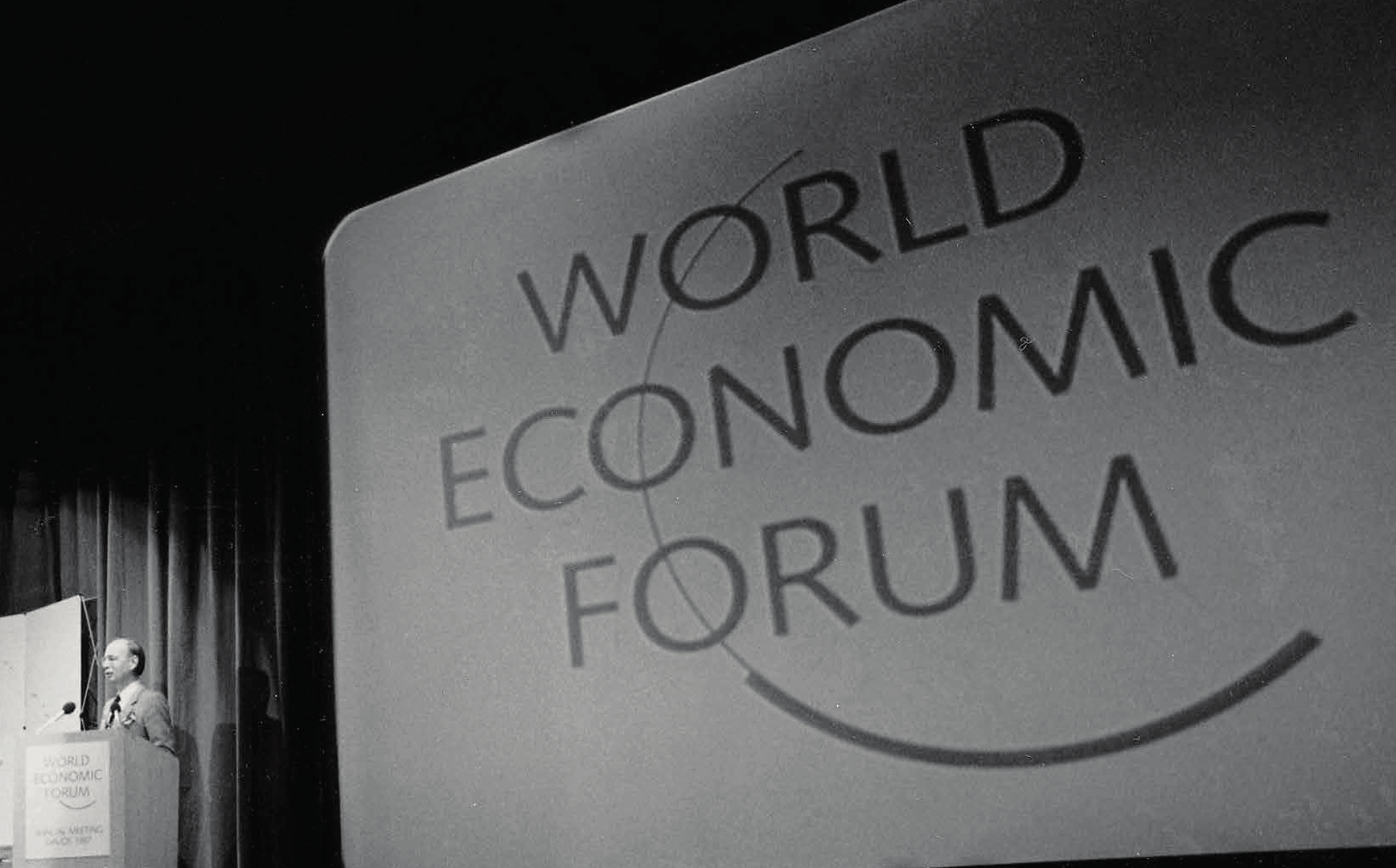
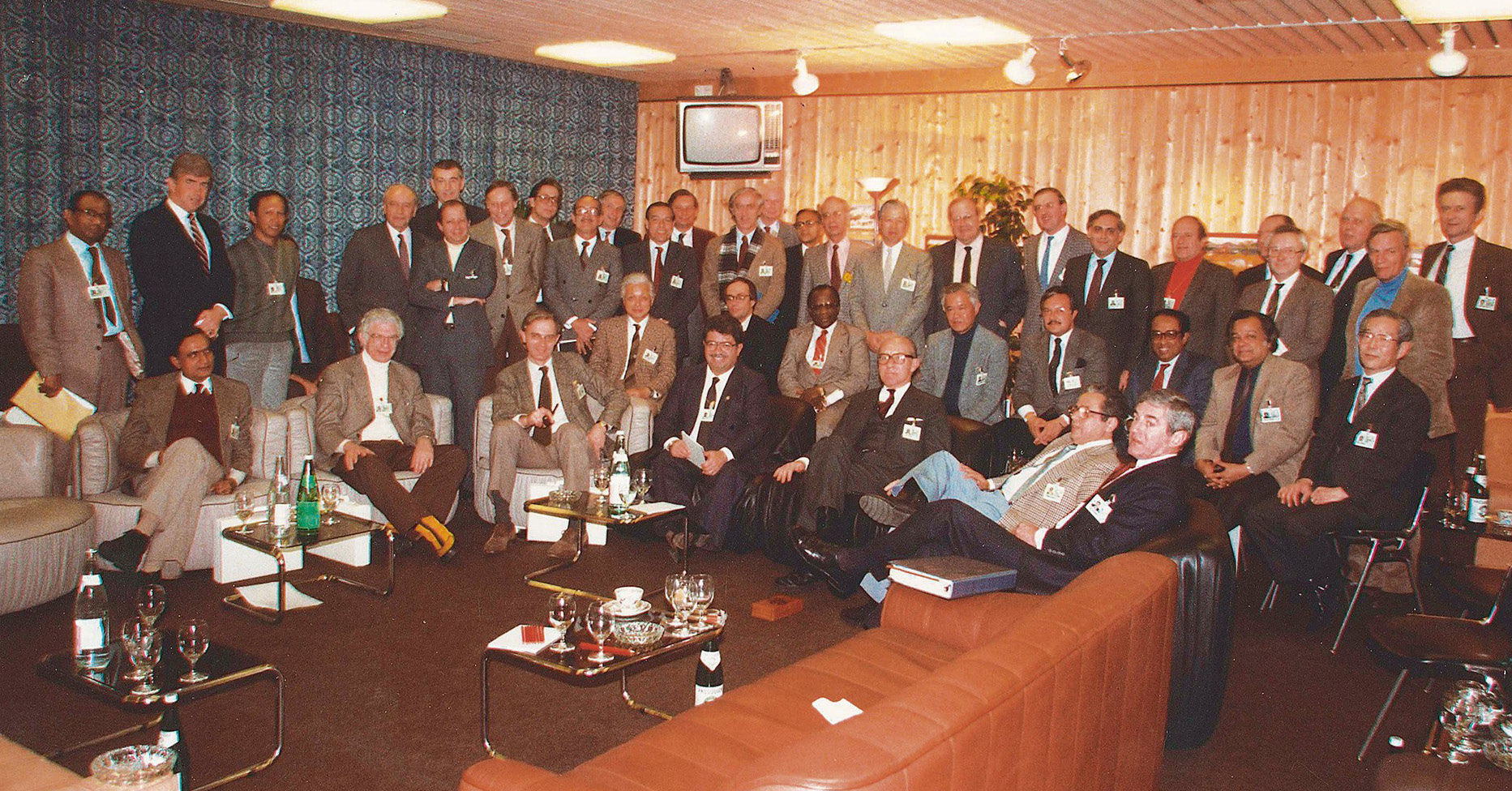
The World Economic Forum (WEF), also known as the “Davos Forum” due to its first meeting held in Davos, Switzerland, in 1971, has traversed over half a century of development in a complicated and volatile international political and economic situation. It has exerted profound and extensive influence on the globalization and expansion of the world economy, the evolution and reconstruction of the international economic order, the guidance and direction for the flourishing of the world economy, and appeals for and promotion of responses to global economic crises. However, the economic history of capitalism shows that the long-term existence and development of forums have failed to solve the universal problems of economic globalization. For instance, Dambisa Moyo, a neoliberal economist, admitted at a 2017 forum themed “Globalization Governance” that globalization has indeed “suffered a considerable loss,” and “I do not know what remedial measures can be taken under the present situation (Saval, 2024Saval, N. (2024, 3 15). The arrogance of globalization and the counterattack of anti-globalization.).”
From the perspective of the organizational mode, this stems mainly from the fact that the system and mechanism of the WEF have realized a systematic and comprehensive transformation in the rapid development of economic globalization. Firstly, its functional objective has shifted from enhancing the core competitiveness of European enterprises to promoting international economic cooperation and exchange. The founder and executive chairman of the forum, Professor Klaus Schwab of the University of Geneva in Switzerland, originally intended to promote and apply to the European business community the stakeholder theory he had drawn from the advanced management experience of US enterprises in the 1960s. That is, to maximize the long-term interests of the enterprise, managers should not only serve shareholders but also all related interest groups, to guide European enterprises to enhance their international competitiveness through innovative management methods and effectively cope with the massive pressure of market competitiveness from US enterprises. Therefore, the three consecutive forums from 1971 to 1973 focused on discussing building the relative competitive advantages of European enterprises. However, after the forum was held successfully in January 1971, the USled Bretton Woods system collapsed in August of that year and exited the historical stage. As a result, the capitalist economic order was severely affected, with the formation and emergence of capitalist stagflation. Thus, the forum’s development goals gradually shifted to find a way to improve international economic cooperation and exchange to preserve the stability of the capitalist economic system and achieve the full recovery and long-term development of the capitalistic economy. Klaus Luft, the former vice chairman of Goldman Sachs Europe, summed it up: “This is precisely because of globalization and also reflects globalization (Ren, 2022Ren, K. (2022). The World Economic Forum takes the pulse of the challenges and changes facing globalization. Reference News. 2022-05-27. (in Chinese)).”
Secondly, its focus has shifted from concentrating on innovation in modern enterprise management to cooperation in global economic governance. Klaus Schwab initiated the WEF as the European Management Forum in 1971. The primary focus was on boosting the international competitiveness of European enterprises by implementing innovative management practices. However, in 1987, it was officially renamed the World Economic Forum, aiming to “ study and discuss issues in the world economy, promote international economic cooperation and exchange, and concentrate on public-private cooperation to improve the state of the world.” The European Management Forum began its transformation and development in 1974, as the forum invited political leaders to the annual meeting beginning in that year. So the focus of the content has undergone a substantive transformation, widening from business management to numerous fields of world politics and economy, and shifting from a European orientation to the capitalist camp led by the USA. Therefore, the “European Management Forum” has been more in name than reality. Since then, the themes of the annual meeting have revolved around the hotspot issues of the world economy and have expanded to cover a wide range of areas, including global geopolitics, policy negotiation, social stability, and environmental governance. In particular, in 1987, the forum began to include the foreign economic and trade issues of underdeveloped countries in its discussions, thus taking on a truly “global” form, often referred to as the “Economic United Nations” or the “bellwether of the world economy.” However, in general, they are all based on the global political and economic order to formulate the global governance mechanism to contribute to the long-term stable development of the capitalist world economy.
Finally, its actions shifted from an unofficial communication platform for private enterprises to semi-official public-private partnership institutions. Schwab’s initial motivation for advocating the establishment of the European Management Forum was to provide a platform for business managers in Western Europe to improve their management skills by accepting and applying stakeholder theory; the forum initially self-identified and publicly claimed to be a nonprofit, non-government organization. However, the concept of stakeholders theoretically includes all entities related to the interests of an enterprise, not only shareholders but also directly related ones such as consumers, managers, employees, and related enterprises, as well as indirectly related ones like the home country, host country, and other countries with business ties, governments, international institutions, and regional organizations. This provides an a priori hypothesis for the subsequent public-private partnerships. Since 1974, it has become routine for the forum to invite national leaders to its annual meetings. In 1982, the participants were expanded to include other government members and leaders of international economic institutions. More importantly, the forum began to employ former national leaders or party officials from developed capitalist countries as managers of its institutions. This pattern not only expanded the depth and breadth of the forum’s topics, which were no longer confined to the scope of business management, but also became a form of public-private partnership and an effective way for national politics to influence the development of the world economy logistically.
Many hot issues of globalization, in fact, have not been resolved effectively due to the enormous concern of the WEF; instead, they have been further intensified.
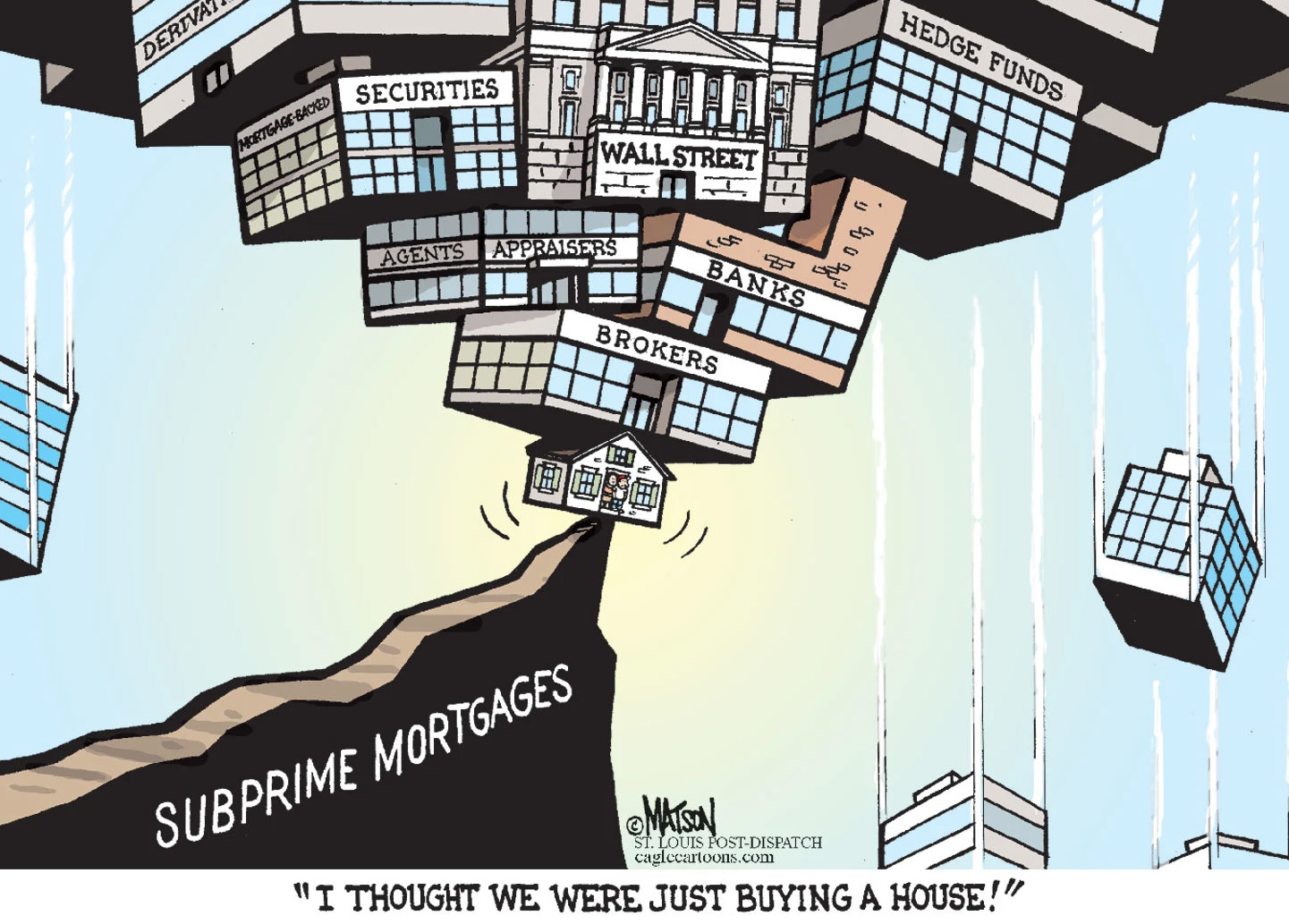
Firstly, economic crises were even more destructive due to the forum’s initiatives. The forum alleviated partly the effects of the global economic crisis. Still, it did not fundamentally eliminate or effectively prevent the cyclical emergence and systemic spread of crises: examples include the oil shock in Europe and the USA from 1973 to 1975, the global stock market crisis in 1987, the financial crisis in Southeast Asia from 1997 to 1998, the US subprime mortgage crisis from 2007 to 2009, and the European sovereign debt crisis from 2010 to 2011.
Thus far, the world economy is still growing sluggishly due to the effects of these crises, and high inflationary pressure and unemployment rates remain widespread in various countries. According to the “World Economic Outlook 2023,” the growth rate of global output was projected to drop to just 1.9% in 2023, hitting a multi-decade low. It was expected to rebound to approximately 2.7% in 2024, falling short of the roughly 3% recorded in 2022. Meanwhile, the IMF predicted that the global average inflation rate would decline to 6.8% in 2023 and 5.2% in 2024, yet it would remain above the pre-COVID-19 pandemic level of around 3.5%.
Secondly, the imbalance in the world economy has become more apparent. Generally, due to the significant differences in the development process and path pattern of industrialization among different countries throughout history, the “North-South gap” between developed countries, between developed and developing countries, and especially between developed and underdeveloped countries, has been continuously expanding due to the self-reinforcing effect of path dependence. Importantly, many newly independent countries that had escaped from colonial rule after World War II mainly chose the path of industrialization that developed countries took to pursue development. However, the results were only marginally satisfactory, and the imbalance in the world economy has worsened significantly. Although the emergence of the forum has stabilized the world economic order and provided a relatively stable competitive environment for less developed countries, it has also offered more favorable development opportunities for the economic prosperity and crisis response of developed countries. In the winter 1995 issue of Foreign Affairs, it was noted that while over 20 countries were rich, only about 10 were closing the gap with them, while the gap between 140 or more countries and the rich countries was widening. The “World Economic Situation and Prospects 2022” produced by the United Nations Department of Economic and Social Affairs (UN DESA) shows that the gap between rich and poor among different countries and within countries has become even wider after more than 20 years of development. The World Bank also reported that the output levels of developed countries in 2023 will basically recover to the pre-COVID-19 pandemic level, while most developing countries will be about 4% lower than before the pandemic, and some others will even be about 8% lower. The World Bank President, David Malpass, described the situation: “Global macroeconomic imbalances have reached an unprecedented level” (Li, 2022Li, Z. (2022). The global macroeconomic imbalance has intensified. International institutions such as the United Nations have called for strengthening unity and cooperation to promote inclusive development. People’s Daily, 2022-02-03. (in Chinese)).
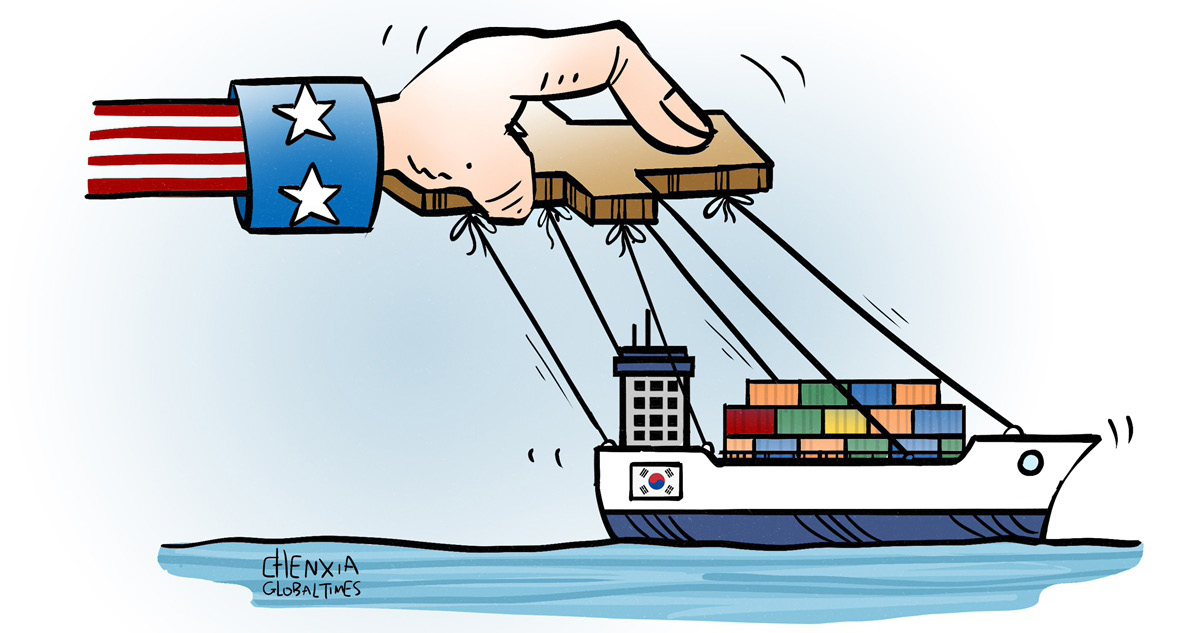
Finally, anti-globalization has a strong political edge. The endogenous gene of anti-globalization has not completely degenerated during the forum’s promotion of globalization, integration, and the liberalization of the world economy. Politicization has always been present and repeated in line with the interests and demands of hegemonic power. For example, during the first informal gathering of world economic leaders at the forum’s 1982 annual meeting, US President Reagan publicly demanded that the capitalist camp maintain the oppositional Cold War position against the socialist camp led by the former Soviet Union. He urged obstructing close economic ties with the Soviet Union and promised that the USA “would work together with our allies.” Former US Secretary of State Condoleezza Rice said at the 2008 forum, “Despite the subprime mortgage crisis, we still have deep confidence in the fundamentals of the global economy and will continue to put the belief in a free economy into practice” (Er, 2008Er (2008). The source article does not provide a separate full bibliographic entry for this citation.). However, the forum has remained unmoved or has paid no heed to the trade protectionism initiated by the USA and other developed capitalist countries, the attempts to decouple and cut off supply chains from China, the so-called “de-risking” measures, high-tech sanctions, and Trump’s “America First” policies, all of which run counter to the mechanisms of free competition and the contractual spirit. Bob Sternfels, the global managing partner of McKinsey & Company, who participated in the release of the “Global Cooperation Barometer” in 2024, for example, said with a studied understatement, “We have used too many divisive terms, such as ‘decoupling’” (Yu, Yan, & Xu, 2024Yu, L., Yan, H., & Xu, H. (2024). The World Economic Forum Annual Meeting focuses on ‘Rebuilding Trust’ - ‘Only through cooperation can the impetus to solve problems be reignited’. People’s Daily, 2024-01-19. (in Chinese).), but—he went on—it is not about bringing the word “decoupling” but rather the word “cooperation” into Davos. Such a statement of neither breaking nor establishing is not reassuring in pursuing the forum’s mission and declaration. More seriously, the neoliberal values of the forum have led to its obvious double standards, exposing an instrumentalist nature that is prone to being “politicized” and “weaponized.” The forum successfully facilitated the signing of a non-aggression agreement between Greece and Turkey in 1988, known as the “Davos Declaration,” and also played a role in resolving several similar armed incidents that occurred subsequently. However, the situation was quite the opposite in 2022. On the one hand, in response to the military conflict between Russia and Ukraine, unilateral sanctions were imposed on Russia. Not only were Russian government officials sanctioned, but ordinary Russians were also prohibited from participating in the forum.
On the other hand, there are comprehensive criticisms of the relevant actions taken by Russia. These include George Soros’ “theory of China and Russia posing a threat to the free world” and the EU’s response of imposing an oil embargo on Russia, as well as Ukrainian President Zelenskyy’s criticism and appeal for Western countries to unite in the face of external threats. Even in 2024, Zelenskyy was still invited to publicly accuse Putin and emphasize to Western countries the importance of continuing to support Ukraine to defeat Russia that year. Meanwhile, 18 Asian and 12 African countries attended the Forum meetings, including the four BRICS countries of India, Brazil, Saudi Arabia, and South Africa. However, the consistent double standards of the Biden administration (USA) in supporting Israel during the Israel-Palestine conflict, along with Zelensky’s support for Israel, have undoubtedly deepened the differences in political stances and widened the breach in relations with the Global South.
Therefore, the WEF has long been questioned and criticized, with dissenting voices never ceasing. One representative argument suggests that the forum, influenced by neoliberalism, primarily serves as a means of control that protects the core interests of large capitalists and facilitates their monopolization of global wealth distribution. Some even consider the forum to be the initiator of the polarization of world wealth, the destroyer of the natural environment, and a threat to social peace and stability.1 Larry Summers, a vigorous advocate of globalization, former chief economist of the World Bank, and economic advisor to former US President Obama, for example, holds the extreme belief that the “free market” can solve all social problems. He even proposed blatantly that “the optimal behavior for rich countries to deal with toxic waste is to decide to dump it in poor countries, simply because it is more economical.” Thus, the forum is often criticized for not only failing to contribute to the development of economic globalization but also potentially leading it astray. Consequently, economic globalization has been opposed superficially, with the essential critique of capitalist hegemonism being overlooked in a case of “missing the forest for the trees.” Neoliberalism cannot escape the historical limitations of capitalism and cannot understand the exploitative nature of the globalization of private monopoly capital. Therefore, they cannot propose effective countermeasures to solve the crisis of capitalist economic globalization. Regrettably, contemporary academic inquiry exhibits three structural deficiencies rooted in political-economic analysis. Firstly, historical materialist frameworks fail to adequately theorize the critical interrogation of the World Economic Forum’s neoliberal ideological orientation. Secondarily, the dual instrumental nature of its globalized influence—simultaneously constituted as mechanisms for capital accumulation coordination and vectors of crisis displacement— has yet to be systematically dialecticized in scholarly discourse. A particularly revealing aspect is the lack of a materialist critique that deconstructs the institution’s structural impotence in addressing capitalism’s cyclical crises, especially its inability to overcome the metabolic contradictions between globalized productive forces and capital’s transnational accumulation regime.
In light of this, grounded in Marx’s theory of capital accumulation, this study constructs a theoretical framework for systematically critiquing the “spatio-temporal fix” logic of international monopoly capital. Employing a historical materialist analysis, it demonstrates that the WEF’s neoliberal orientation inherently embodies insurmountable structural limitations in addressing and preventing global economic crises, thereby failing to substantively advance balanced and sustainable economic globalization.
The so-called key global economic governance issues are institutional solutions to the contradictions of extractive accumulation in global capital accumulation. The forum mechanism under the domination of capital logic is unable to overcome the parasitic accumulation characteristics of imperialism as revealed by Lenin, nor can it solve the structural ruptures in capital circulation between center and periphery countries in light of time-space compression, as pointed out by Harvey. This institutional paradox leads to a dialectical and confrontational evolution between capitalist economic globalization and deglobalization; that is, the more the expansion impulse of capital accumulation relies on global spatial reorganization to achieve value appreciation, the more it deconstructs the existing accumulation system through the cross-border opposition between labor and capital. It is evident that due to the profit-seeking, exploitative, and monopolistic nature of capital globalization and its accumulation and evolution laws, they play a fundamental and decisive role in economic globalization. Therefore, if the world economic order does not undergo reform, reconstruction, and institutional innovation, the liberal policy framework and deliberative system of the forum will be unable to effectively alleviate and prevent the capitalist crisis associated with economic globalization while also achieving balanced and sustainable development.
The Major Issues of the World Economic Forum Influencing Globalization
On the question of influencing globalization, one of the major problems with the WEF is that it not only has certain interests in and connections with transnational monopoly capital, but that, to a considerable extent, it may also be subject to the dominant impact of transnational monopoly capital. The globalized accumulation of capital serves as the root cause of cyclical crises characterized by relative overproduction in the world economy. Consequently, under the neoliberal paradigm that dominates the WEF, the institution not only proves structurally incapable of proposing effective governance strategies for global economic crises but also perpetuates the squandering of capital resources through rent-seeking activities. Furthermore, this operational logic intensifies the spatial-temporal contradictions of monopoly capital, thereby amplifying the crisis’s destructive impacts across globalized value chains.
The connection between the WEF and capital interests
The forum’s operating agency mainly consists of two parts: the Fund Board and the Management Committee. The former is the highest authority of the forum, responsible for the behavioral decision-making of the forum’s strategic planning and targets. The latter is the permanent administration of the forum, responsible for organizing and implementing, managing services, and arranging activities. The important foundation for their normal functioning is that the forum has a balanced income and expenditure and a continuous investment of monetary funds.2 The major sources of these funds are the profits of member enterprises and their donations. Therefore, the forum has specific interests that align with private capital, particularly transnational monopoly capital.
In addition to the direct accumulation of constant and variable capital, private capital also undergoes indirect accumulation in a roundabout way, which is known as “capital rent-seeking.” Capital rent-seeking generally functions in two major ways. In domestic settings, capital is invested in non-productive political fields, and the monopolistic resources are obtained by influencing government policies, which is called “power rent-seeking.” In foreign settings, capital is invested in non-productive international economic organizations, and the reconstruction of the international economic order is guided by influencing the world economic outlook and international economic cooperation among governments, thereby maintaining future monopolistic power, which is referred to as “expectation rent-seeking.” Both of these rent-seeking behaviors squander the surplus value currently available for direct production and instead channel capital into the potential capital accumulation that may be achieved in the future. The difference is that “power rent-seeking” is capital directly “kidnapping” the government, influencing its regulation, and achieving an unequal monopolistic distribution of resources in the short term, and “expected rent-seeking” is capital’s indirect “inducement” of macroeconomic policy coordination among governments, influencing the globalization of the world market and achieving an unequal monopolistic distribution of resources in the long term. In 2004, the forum established the “Global Young Leader” award to improve the performance of “rent-seeking” and expand the forum’s global influence. It selects young talents with primary influence and development potential from different industries in various countries to strengthen cooperation with it and serve the realization of its global strategic planning and targets. This indicates that, compared with other organizations, the WEF has a stronger connection with and is more dependent on capital. If we follow the evolving logic of capital’s form of movement from competition to monopoly, the WEF’s neoliberal tendency makes it difficult to effectively cure the three fundamental natures of capital globalization, namely, its profit-seeking, exploitation, and monopoly, as well as the inherent “chronic disease” of capital formed by its transnational monopoly.⁴
Has the WEF reconciled substantively the inherent contradiction between capital’s globalized profit-seeking imperatives and the systemic opportunism endemic to neoliberal financialization?
The WEF’s ostensible nonprofit constitution exists in dialectical tension with the capital-reproduction imperatives of its embedded transnational oligopolies, whose opportunistic investments manifest capital’s self-valorization process through philanthropic institutional capture. The auteurist paradigm in cinematic production— wherein directorial fidelity to aesthetic ontology systematically subordinates commercial viability—exists in structural homology with capital’s subsumption of philanthropic spaces: just as film investors enforce market discipline through profit-reproduction imperatives that inevitably deform artistic integrity, so too does transnational monopoly capital instrumentalize the World Economic Forum’s nonprofit façade to advance value-accumulation strategies, rendering any sustainability claims limited by capitalism’s inherent crises. Marx (1976: 254Marx, K. (1976). Capital (Vol. 1). (B. Fowkes, Trans.) London.) pointed out incisively that “it is only insofar as the appropriation of ever more wealth in the abstract is the sole driving force behind his operations that he functions as a capitalist, i.e., as capital personified and endowed with consciousness and a will”. More importantly, “nor must the profit on any single transaction. His aim is rather the unceasing movement of profit-making” (1976: 254). “These profits not only form a source of accelerated accumulation, they also attract into the favored sphere of production a large part of the additional social capital that is constantly being created and is always seeking out new areas of investment” (1976: 578). This reveals capital’s ontological drive: private capital’s existential purpose transcends ephemeral gain, actualizing as the perpetual pursuit of limitless profit accumulation embedded in capital’s self-valorizing metabolism—a process inherently bound to capitalism’s expansionist totality. The WEF’s nonprofit activities thus constitute a dispositif of neoliberal governance—its philanthropic theater strategically mystifies the extractive operations of “stakeholder capitalism.” No institutional reformism can suspend capital’s law of value, for such “humanitarian” facades are themselves value-forms through which financialized capital resolves its overaccumulation contradictions via the spectacle of ethical production.
The forum’s financial records reveal a distinct pattern of surplus value realization under capitalist reproduction cycles. Notwithstanding the tendencies for cyclical crises inherent in capitalist reproduction—manifest in the overaccumulation of capital during the 1973-1974 WELCOM initiative and pandemic-induced disruptions to labor commodification in 2020-2021 that precipitated substantial fiscal deficits—annual surplus maintenance demonstrated an upward trajectory. Fiscal reserves consistently exceeded CHF 10 million across non-crisis intervals, while aggregate member contributions approximated CHF 0.25 billion. This paradox of expanded primitive accumulation amidst stagnation in global capital accumulation rates exposes the dialectical tension between the falling rate of profit and ruling-class fractions’ strategic reinvestment of expropriated surplus under late capitalism. A statement once quoted by Marx (1976: 254Marx, K. (1976). Capital (Vol. 1). (B. Fowkes, Trans.) London.) can explain this seemingly irrational behavior of capital, that is, “Though the merchant does not count the profit he has just made as nothing, he nevertheless always has his eye on his future profit”. This, however, is a dialectical contradiction between capital’s primitive-accumulation-style expansion through exploitative appropriation of surplus value and perpetual capital accumulation in market competition. The “altruism” proclaimed by the World Economic Forum essentially constitutes systematic nurturing of monopoly-finance capital, which ensures the sustainability of super-profit extraction through crisis-prevention institutional mechanisms. Such an evolution of the capital form transmutes the risk-laden value augmentation in anarchic markets into a structural rentier system anchored in global governance architecture, thereby institutionalizing the restructuring of the order of surplus-value transnational distribution while obscuring capitalism’s fundamental contradictions. The World Economic Forum’s membership capital demonstrates structural symbiosis with its corporate members’ capital accumulation processes, materially manifested through capital circuits operationalized in initiatives like the Tropical Forest Alliance and Global Plastic Action Partnership. The forum systematically coordinates transnational monopoly capital’s strategic planning by establishing institutionalized investment governance frameworks. This evolution indicates a strategy for capital valorization that shifts from spontaneous short-term arbitrage to long-term strategic deployment aligned with governance, characterized by planetary-scale value extraction.
Has the WEF critically unmasked the structural asymmetries inherent in the exploitative logic of globalized capital under neoliberal hegemony?
The WEF’s “stakeholder capital accumulation regime” dialectically reproduces the value-alienation inherent in generalized capital accumulation, while its profit-engineering mechanisms epistemically conceal the unequalized exploitation matrices constitutively engineered within capitalism’s social metabolism. Irrespective of its phenomenological manifestations, capital’s profit remains fundamentally constituted by the expropriative apparatus through which surplus labor— crystallized as surplus value—is systematically appropriated without equivalent exchange. Whether it is industrial capitalism, financial capitalism, or digital capitalism, as long as it is in a system of the private ownership of the means of production, the mode of production in which capital exploits wage labor will not change. What changes are the production methods for directly appropriating surplus value and the distribution forms for indirectly appropriating surplus value?
The universal digitalization of productivity, for example, dialectically intensifies the degree of capital exploitation: extremely exploitative working systems (represented by the “996”/“997” model) systematically extract absolute surplus value through time deprivation, while large-scale layoffs by tech oligopolies (such as Microsoft, Twitter, and Apple) artificially expand the industrial reserve army. This dual mechanism of increased labor intensity and instability, through the real-time optimization of labor redundancy by digital Taylorism, expands the surplus population available for exploitation as described by Marx. So the “stakeholder capitalism” advocated by the WEF constitutes a three-tiered exploitation mechanism: although there is no direct form of exploitation by capital’s stakeholders in the forum’s performance, their financialized capital achieves a derivative value extraction through the redistribution by rentiers who have already divided the surplus value. It should be noted that this type of extraction is different from the relatively independent and indirect exploitation of different functional capitals that are dispersed. Instead, it is a concentrated and relatively united form of indirect exploitation. That is to say, to a certain extent, the forum has accelerated and facilitated an organized alliance among capitalists with different functions, which entails a unified exploitation of wage labor by the entire bourgeoisie and also manifests what Marx foresaw as the “collective capitalist” ( Gesamtkapitalist ). Furthermore, this kind of exploitation will not only fail to narrow the wealth gap in capitalism but also continuously widen the inequality of polarization. The historical record conclusively refutes the neoliberal myth of Kuznetsian optimism—five centuries of capital’s historical motion demonstrate that bourgeois society’s “wealth polarization law” systematically intensifies exploitation matrices. What Kuznets’ inverted-U hypothesis framed as transitory inequality now stands exposed as capital’s eternal law of motion: the inexorable concentration of surplus-value in financialized circuits, wherein expanded reproduction perpetually widens the gulf between capital’s organic composition and labor’s subsistence wage basket. Thomas Piketty used nearly 300 years of historical data on wealth and income in Europe and America to verify the continuous intensification of inequality in capitalist countries (Piketty, 2014Piketty, T. (2014). Capital in the Twenty-First Century. Beijing: Citic Press.).
Joseph Stiglitz (2018Stiglitz, J. E. (2018). Inequality and Economic Growth. Political Economy Quarterly (2), 146-171.) pointed out that the average real income of the top 1% in the United States increased by 169% from 1980 to 2014, while the median household income only rose by 11%. In particular, wage growth was significantly slower than productivity growth, which is basically consistent with the intensification of exploitation. It was concluded that “the law of accumulation excludes every diminution in the degree of exploitation of labor and every rise in the price of labor, which could seriously imperil the continual reproduction, on an ever larger scale, of the capital relation” (Stiglitz, 1976: 771-772).
Throughout the themes of the WEF’s annual meetings over the years, we discover that the focus has expanded gradually from economy and management to other fields such as public policy, social governance, climate and environment, and international disputes. However, the imbalance in the development of the world economy has never been discussed specifically. Even when it comes to the issue of the growth of pauperization in developing countries, it has never touched upon the topics of domestic and international exploitation or increasing the welfare of the majority. Furthermore, China’s experience in eradicating absolute poverty has also been ignored, with a lack of any further discussion and extensive publicity. A more serious issue is the absence of representatives from the working class or labor unions at the annual meetings, which prevents them from advocating for their reasonable interests against capital. Isn’t such an approach supposed to be the essence of the forum’s mission? Otherwise, how could the highly progressive World Social Forum⁵ make a fresh start and compete with the WEF (Ding, 2006Ding (2006). The source article does not provide a separate full bibliographic entry for this citation.)?
Has the World Economic Forum substantively attenuated the dialectical tension between capital’s globalized monopoly formation and the regulatory paradoxes embedded in transnational governance frameworks?
The globalization paradigm promoted by the WEF manifests a historically bounded character that fails ultimately to transcend its stated objectives, conditioned fundamentally by the inexorable laws of capitalist accumulation. The operational logic of capitalist accumulation undergirding the WEF manifests tripartite determinations: in its material foundation through economic backing from transnational monopoly capital, in its teleological orientation toward valorization dynamics of transnational oligopolies, and in its procedural mechanism for strategic channeling of capital flows. This triadic articulation not only adapts to but also accelerates the globalization of monopolistic competition under late capitalism.
The World Economic Forum has engineered a neoliberal institutional reform in its funding apparatus, transforming the unstable participation fee model that general nonprofit forums mainly rely on into an incentive model that prioritizes stable and guaranteed membership fees and strategic partner equity participation fees, with participation fees playing a secondary role. This structural recomposition entrenches capital logic through the structural embeddedness of accumulation regimes, prioritizing capitalized membership dues and equity participation fees from strategic partners over contingent participation fees. These members are classified mainly into four types of partnerships based on their participation in forum activities: industry, strategic, quasi-strategic, and regional. All of them are multinational enterprises with total revenue or assets exceeding 5 billion US dollars and ranked among the top 1000 globally. They possess “pillar” or “dominant” market power in their respective industries and regional economies.⁶ The so-called pillar partners can have a decisive impact on the overall strategy of a specific industry, a particular region, or even different industries and regions. By contrast, leading partners are mainly global growth enterprises that play a leading role in the future development of industries and regions (Song, 2016Song, S. (2016). An Analysis of the International Value of the Development Paths of China’s Economic Relations with Foreign Countries. Journal of Management (6), 13-18.). Therefore, the member enterprises carefully selected by the WEF have three basic attributes: transnational penetration, concentrated accumulation, and monopolistic hegemony. They fully reflect the organization of leading transnational monopolistic capital. The few owners who determine the enterprises, namely the controlling shareholders, are the personification of leading transnational monopolistic capital. Does such an arrangement not raise the question of the “credibility orientation” of the forum?⁷ Does this organic composition not dialectically necessitate the forum’s structural complicity in reproducing capital’s metabolic domination through its governance protocols?
Further discussion reveals that the profit-seeking nature of capital determines that monopoly capital exists if and only if, for the realization of monopoly profits, evolving and operating exclusively through the metabolic process of profit accumulation. This inherent motion necessarily crystallizes into transnational configurations of monopoly capital—or more precisely, capital’s globalized monopolization—the spatial-temporal dynamics of which are structurally accelerated by the WEF’s institutional architecture. The 1960s witnessed the ascendance of transnational corporations as historical vehicles for capital’s spatial fix, a process superseded in the 1970s by financialized capitalism’s global metabolic regime. This dual movement qualitatively transformed monopoly capital’s globalization trajectory, which is different from the traditional monopolization of market investment in foreign securities. Instead, it utilizes foreign direct investment to monopolize and control the industrial economic chain of the host country of this investment and, to the greatest extent, excavate and seize its residual value. This behavior is also regarded as a typical feature of neo-imperialism (Cheng, 2019Cheng, E. (2019). Five characteristics and features of neo-imperialism - an analysis based on Lenin’s imperialism theory. Studies on Marxism (5), 49-65.). The WEF’s emergence constituted a historically conjunctural apparatus that structurally aligned with the valorization imperatives of monopoly capital’s globalization. Its institutional architecture facilitates oligopolistic capital blocs’ rentier-aligned coordination matrices to allocate in a predatory manner future global monopoly profits.
Marx pointed out that “world trade and the world market date from the sixteenth century, and from then on the modern history of capital begins to unfold” (1976: 247). Further, the competition on the world market is “being the very basis and living atmosphere of the capitalist mode of production” (Marx, 1981: 205Marx, K. (1981). Capital (Vol. 3). (D. Fernbach, Trans.) London.). With the expansion of the world market, capital accumulation has been exported from domestic to foreign, evolving from disorderly individual free competition to a large-scale and orderly monopolistic game. It has shifted from industrial monopoly to national monopoly and then to monopoly by multinational enterprises, from multinational enterprise alliances, mergers, and acquisitions to joint ventures and other forms of outward expansion. Additionally, by “selflessly” supporting the WEF and further strengthening the so-called “public-private partnership,” these efforts aim to promote a form of globalization characterized by “private production unchecked by private ownership” (1981: 569). Through the globalization of capitalism, the movement aims to establish and consolidate the permanent international monopoly position of capital (Robert, 2020Robert, G. (2020). The Political Economy of International Relations. Shanghai: People’s Publishing House.). and ultimately seeks to achieve the global unification of the transnational bourgeoisie (Robinson, 2009Robinson, W. (2009). A Theory of Global Capitalism: Production, Class and State in a Transnational World. Beijing: Social Sciences Academic Press.). This evidence indicates that the global influence of the WEF has played a typical proactive role in the evolution and advancement of the movement of monopoly capital.
The Formation Logic of the Paradox of the Globalization Impact of the World Economic Forum
The limitations of the WEF’s influence on the process of economic globalization are rooted in the inherent logic of the dual paradox of capital accumulation, which can also be defined as the influence paradox in the process of globalization by the forum. Capital accumulation, through the operational mechanism of the forum, has formed the function of dynamic balance regulation in specific historical contexts during the evolution of the capitalist global economic system. The inherent operational logic within the mechanism of free competition will inevitably lead to structural imbalances in the system dominated by transnational monopolistic capital. Even if such inherent contradictions are temporarily alleviated through short-term policy interventions, their fundamental resolution still depends on a systematic reconstruction of the power structure of capital. During the 2018 WEF Annual Meeting, which coincided with the 10th anniversary of the global financial crisis, then British Prime Minister Theresa May stated that the UK would firmly uphold the principles of free trade and the “global rules” system and advocated deepening the construction of relevant mechanisms. Even against the backdrop of the UK having initiated the Brexit process, the country continued to play a leading role as a key advocate of the global free trade system (Deng, 2018Deng, Q. (2018). The British Prime Minister expressed support for free trade and the global rules-based system. 28 Mart 2025’te adresinden alınmıştır.). US President Donald Trump (2018Trump, D. (2018). The full text of Trump’s speech at the Davos Economic Forum. Retrieved April 15, 2025, from) also said, “We implemented the broadest deregulation. I promised to eliminate two unnecessary regulations for every new one added”.
With the deepening process of capital liberalization, inequality within the capitalist-dominated global economic system has been intensifying. Nobel laureate in economics Joseph Stiglitz emphasizes that the root cause of global polarization “does not lie in the process of globalization, but in the inherent contradictions of the capitalist system” (Ren, 2022Ren, K. (2022). The World Economic Forum takes the pulse of the challenges and changes facing globalization. Reference News. 2022-05-27. (in Chinese)). This assertion is theoretically corroborated by the empirical research conclusions of Thomas Piketty based on cross-century economic data (Piketty, 2014Piketty, T. (2014). Capital in the Twenty-First Century. Beijing: Citic Press.). The inherent inevitability of this capital logic has led to the continuous accumulation of systemic risks in the global economy, which in turn has forced multinational monopolistic capital groups to implement a contraction of the globalization system driven by the demand to maintain profits. This reveals that the forum can only offer superficial governance solutions to the structural imbalances in the process of capitalist globalization. It cannot address the inherent contradictions in the capital accumulation mechanism, which is the deep-seated problem. This governance limit is essentially determined by the inherent paradox of capital growth and spatial expansion.
The WEF’s difficulties in effectively alleviating the historical roots of inherent imbalances in the capitalist global economic system
The institutional commitment of the forum has always revolved around the discussion of the desirability of “building a new order of international cooperation.” Jagdish Bhagwati, an authority on international economics at Columbia University, argued that, based on the theory of comparative advantage, free trade can achieve a trickle-down effect of “high growth rate decline in poverty rate” through a growth transmission mechanism (Saval, 2024Saval, N. (2024, 3 15). The arrogance of globalization and the counterattack of anti-globalization.). Free trade agreements under the capitalist framework essentially build a collaborative proliferation network for transnational monopolistic complexes of capital, achieving adaptive reproduction of the capitalist world system through the global reorganization of factor allocation. The dual effect of this institutional arrangement lies in maintaining the dynamic balance of the center-periphery structure while continuously reinforcing the North-South divide through technological monopolies, financial leverage, and intellectual property barriers. The practical logic of this eventually leads to underdeveloped countries being trapped in a debt-based accumulation trap and forming a mechanism for the reproduction of poverty through being locked at the lower end of the global value chain.
This phenomenon is determined by the generating mechanism of the geographically uneven development of capital accumulation. Essentially, it is the institutionalized manifestation of the contradiction of time-space compression in capitalism’s production of space. This regional disparity has a dual structural dimension: in the historical dimension, it is manifested as the time-lag effect of primitive accumulation; in the spatial dimension, it forms a gradient of potential difference in the transfer of surplus value. The two together constitute the unbalanced geographical landscape of capital expansion. The divergence in the path of capitalist transformation stems from the diachronic break of primitive accumulation. This break, which is characterized by the time lag of the “property rights revolution” as defined by Brenner, results in asynchronous establishment of institutions. In the process of breaking through the threshold of expanded reproduction, this time-lag effect interacts in complex ways with the pre-modern institutional legacies of specific regions, ultimately forming a topologically differentiated spectrum in the accumulation system. This interactive process essentially constitutes the spatio-temporal concretization of the “integration/marginalization” dual movement in Wallerstein’s world-system theory.
Overall, capitalism spread gradually from the major Western European countries that first began colonial expansion to the North American colonies, and then it was further implanted in the later-developing regions of Asia, South America, and Africa from the advanced capitalist regions of Europe and North America. Deficiencies in the accumulation system of late-developing countries are rooted in the dual predicament of original accumulation deficits and a lack of scale in potential energy. This structural dependence is essentially the spatialized practice of Amin’s theory of “unequal development.” Historically, capitalist hegemony has undergone three spatio-temporal iterations: commercial capital hegemony (the Netherlands in the 17th century), industrial capital hegemony (Britain in the 19th century), and financial capital hegemony (the United States in the 20th century). Currently, it is undergoing a paradigmatic reconstruction to become digital capital hegemony (platform capitalism). Each hegemonic cycle corresponds to the iteration of the accumulation system in Braudel’s chronology of the world economy and obeys the law of technology-institution symbiosis in Kondratieff’s long-wave cycle. The evidence indicates that the evolution of capitalism presents an accumulation paradox of increasing levels of systemic vulnerability, with each hegemonic cycle deepening rather than resolving its institutional fractures. As the Marx-Polanyi dual-movement theory reveals, from the integration of colonial plundering in the stage of commercial capitalism to the derivative transfer of crises in the stage of financial capitalism and up to the extraction of data value in the stage of digital capitalism, this systemic imbalance exhibits the feature of technologically enhanced efforts at spatial repair. The profundity of Schiller’s insight lies in that digital capitalism, by reconfiguring the mechanism of “technological rent” appropriation, upgrades the traditional center-periphery structure into a new hierarchy of computational hegemony and data colonialism, which is essentially the topological transformation of the law of growing organic composition of capital in the cybersphere (Schiller, 1999Schiller, D. (1999). Digital capitalism: networking the global market system. Cambridge: MIT Press.).
From the perspective of the logic of the topological reconstruction of capitalist accumulation, the unevenness of the capitalist world system is a self-reinforcing feature of the mechanism of the production of space. According to Arrighi’s theory of systemic cycles, the accumulation advantage of the core area has always been based on a triple-nested structure: the layer of technological monopoly (Dutch navigation technology/British steam engine/US chip), the layer of institutional hegemony (Westphalian system/gold standard/ Bretton Woods system), and the layer of value coding (silver standard/pound hegemony/dollar-data dual circulation). This topological reconstruction forces the peripheral regions into a state of “gradient lock.” This development went through two major stages: outward diffusion before the late 1870s and inward accumulation, especially after World War II. The former was characterized by vertical trade division between the core and peripheral countries before the free flow of capital was achieved on a global scale. The latter, under the premise that the free flow of capital was basically realized on a global scale, was dominated by horizontal intra-industry trade division and foreign direct investment among core countries, leading to the continuous deepening of the imbalance in economic development among regions at different levels.⁸ Anwar Shaikh, based on the long-term economic fluctuation data of nearly 500 years of capitalism as compiled and statistically analyzed by Maddison, found that during the stage of concentric outward diffusion, the overall living standards of the global capitalist economic system have maintained an upward trend, but the economic growth of some developing countries in Asia and Africa has stagnated or even declined over a period of almost 300 years. What is more serious is that the ratio of per capita GDP between the most developed and the least developed regions was 2.2 in 1600, slightly rose to 2.4 in 1700, further increased to 2.8 in 1820, and then soared to 6.7 in 1900. By 2000, it had risen to an astonishing 18.5 (Shaikh, 2005Shaikh, A. (2005). The economic mythology of Neoliberalism. In A. Saad-Filho & D. Johnston, Neoliberalism: A Critical Reader (pp. 41-49). London: Pluto Press.). Over more than 200 years of capitalist globalization, the inequality of economic growth has jumped by 5.6 times. Even if a few peripheral countries break through the bottleneck constraints of the system, their distribution is still quite unbalanced, and they all have exclusive comparative advantages that are difficult to replicate. Thomas Weiskopf, for example, made a statistical comparison of the 20 countries and regions with a population of over one million in the Third World that had the fastest growth in output value since 1950. Among them, five were oil-producing countries, two were regions with developed service industries, and five were the regions and countries that received the most aid from the USA (Wilber, 1979Wilber, K. (1979). The political economy of development and underdevelopment. New York: Random House.). Furthermore, during the inward accumulation stage of the concentric circle system of globalization, Susan Berger and Ronald Dore’s statistics indicate that free-flowing global capital has been highly concentrated in developed capitalist regions, especially in the USA and EU countries, since the 1980s. The total volume of global foreign direct investment also showed a significant downward trend, but instead, it was inwardly accumulated and expanded in the capitalist core regions after the 1990s (Berger & Dore, 1996: 72-73Berger, S., & Dore, R. (1996). Diversity of Nations and Global Capitalism. New York: Cornell University Press.). In 1986, the EU’s process of market integration made a breakthrough, and this landmark event became a paradigmatic practice for the transformation of the system of global economic governance from global integration to regional aggregation. From this perspective, both the core and peripheral regions of the capitalist economic system are showing a trend toward generalizing institutional regional integration arrangements. This practice not only strengthens the institutional barriers of regional protectionism but also, through the effect of gradient locking, gives rise to the spatial fragmentation of the global value chain. Eventually, it leads to the emergence of a new model of asymmetric capital accumulation under the centrifugal reconstruction of globalization. It is no surprise that during the opening ceremony of the 1994 Forum Annual Meeting, German Chancellor Helmut Kohl urged European countries to adopt more unified approaches to address unemployment, tackle the new challenges of the global economy, and sustain Europe’s competitive position in international trade and investment.
The WEF’s difficulties in effectively alleviating the structural contradictions behind the destructive effects of capitalist economic crises
The forum has never conducted a relatively objective discussion on or evaluation of the structural contradictions behind the destructive effects of capitalist economic crises. Taking the severe impact of the 2008 global financial crisis on the world economy as an example, Condoleezza Rice, then US Secretary of State, emphasized in her keynote speech at the forum that the US economy still had strong risk-resistance capabilities, its institutional framework was inherently reasonable, and its longterm fundamentals remained stable (Quotations from the 2008 World Economic Forum Annual Meeting, 2008Quotations from the 2008 World Economic Forum Annual Meeting. (2008). Retrieved March 14, 2025, from). Chevron’s CEO, David O’Reilly, explained at the Energy Industry Leaders’ Roundtable that the U.S. economy has an inherent self-correcting mechanism. He held a cautiously optimistic stance regarding the possible extent of cyclical adjustments and, based on the effectiveness of market mechanisms, believed that its long-term prospects remain positive (“Quotations from the 2008 World Economic Forum Annual Meeting,” 2008Quotations from the 2008 World Economic Forum Annual Meeting. (2008). Retrieved March 14, 2025, from). However, from the perspective of international political economy, the current situation presents three paradoxes. First, the capitalist economic system shows a trend of de-globalization, and there is a structural contradiction between its appearance and internal logic. Second, the international community finds it difficult to reach a global consensus on establishing a systematic solution in the face of cyclical economic crises. The current governance framework, more seriously, has failed to effectively regulate the regular trend of developed economies transferring crisis costs to developing countries, especially peripheral economies, through systemic risk transfer mechanisms such as monopolistic capital flows and debt chains. Third, at its core, the deep-seated problem of the current predicament of global economic governance lies in the inherent institutional flaws of the world capitalist system. This dilemma is specifically manifested as the structural imbalance between the excessive accumulation of financial capital and the development of the real economy under the neoliberal globalization paradigm, the fundamental conflict between the profit extraction mechanism of transnational monopolistic groups and large-scale socialized production, and the ultimate contradiction between the infinite nature of capital accumulation and the limited capacity of the ecological system to bear it. These systemic failures are precisely the inevitable outcome of the inherent contradictions of capitalist accumulation as revealed by Marx’s theory of capital circulation in the stage of financial capitalism.
Marx (1976: 667Marx, K. (1976). Capital (Vol. 1). (B. Fowkes, Trans.) London.) pointed out that “the capitalist mode of production, while it enforces economy in each individual business, also begets, by its anarchic system of competition,” and “the fact that the movement of capitalist society is full of contradictions impresses itself most strikingly on the practical bourgeois in the changes of the periodic cycle through which modern industry passes, the summit of which is the general crisis (1976: 103).” This historical inevitability is rooted in the inherent contradiction of the capitalist mode of production: on the one hand, the increase in the organic composition of capital drives the maximization of the rate of surplus value; on the other hand, the shrinking effective demand of laborers leads to the dilemma of realizing surplus value. As Marx showed in Volume III of Capital, “Since the first general overproduction crisis in Britain in 1825, the contradiction between the unlimited nature of value increment and the limited capacity of the market has always been an insurmountable constraint on the expanded reproduction of capitalism.”
The historical evolution of financial capital exhibits the characteristics of distinct phases. From the 1870s to the 1960s, it primarily served as a lubricant for industrial capital’s circulation, with its operational logic subordinate to the demands of expanded reproduction. From the establishment of the forum in 1971 to the onset of the 2008 global financial crisis, financial capital underwent a qualitative transformation into a derivatives-dominated accumulation regime. This shift represents the contemporary evolution of the dominance of financial capital as described by Lenin (1981: 598), manifesting itself in three dimensions : 1) The creation of self-propagating systems detached from the real economy through financial engineering technologies such as capital securitization and leverage operations; 2) The formation of a global arbitrage network centered on Wall Street and the City of London under the wave of neoliberal globalization; 3) The resultant severe divergence between the global virtual economic scale (618 trillion in 2023, BIS data) and output of the real economy (global GDP of 104 trillion), exposing the fundamental contradiction of financialized capital accumulation. Marx held that “their market values receive a determination differing from their nominal values, without any change in the value of the actual capital (even if its valorization does change). (…) It is determined not just by the actual revenue but rather by the anticipated revenue as reckoned in advance.”
Thus, when there is an excess of production capital in the commodity market, the financial market can draw this in and integrate it into the cycle of accumulation of financial capital, which is known as “deindustrialization” (He et.al., 2021He, Z. et. al. (2021). Industrialization, Anti-globalization and the Normalization of Economic Stagnation: A New Perspective on Observing Contemporary Capitalism. Beijing: Economic Science Press.).⁹ This has a positive effect in alleviating the crisis of overproduction. The monopoly capital school represented by Harry Magdoff and Paul Sweezy (1987Magdoff, H., & Sweezy, P. (1987). Stagnation and the Financial Explosion. Monthly Review Press.) found that when Keynesianism was at a loss in dealing with the stagflation of Western capitalist economies in the 1970s, the rapid expansion of speculative financial capital promptly absorbed the economic surplus of the commodity market, reducing the destructive nature of the stagflation crisis while accelerating the deindustrialization trend of capitalism. David Harvey further explains that the transformation from the primary circulation of capital in productive sectors to the secondary circulation mediated by the state and financial institutions is a sign of financial capital’s dominance over socialized production.10 According to statistics, the proportion of the refinancing of monopoly capital debt to GDP has risen from 20% in 1980 to 116% in 2007. The global MBS market size reached 12 trillion US dollars in 2008, the CDS market size soared from 0.6 trillion US dollars in 2001 to 62 trillion US dollars in 2008, and the Federal Reserve’s holdings of securities reached 8.3 trillion US dollars in 2023. Therefore, Sweezy refers to this process as the “financialization of the capital accumulation process” (Sweezy, 1970Sweezy, P. (1970). The theory of capitalist development. New York: Monthly Review Press.).
However, Marx (1981: 596Marx, K. (1981). Capital (Vol. 3). (D. Fernbach, Trans.) London.) was once convinced that, “no matter how these transactions are multiplied, the moment these promissory notes become unsaleable, the capital of the national debt remains purely fictitious.” Further, “in the way that even an accumulation of debts can appear as an accumulation of capital, we see the distortion involved in the credit system reach its culmination” (1981: 607-608). The monopoly capital school represented by John Foster and Fred Magdoff has deepened Marx’s theory on financialization, pointing out that excessive accumulation of financial capital not only fails to promote the sustainable growth of the capitalist economy in the long term and evolves into a compound crisis form of coexistence of overcapacity in the real economy and bubble expansion in the virtual economy under the accumulation system dominated by financial capital, but also intensifies the severity of financial crises (Magdoff & Foster, 2014Magdoff, F., & Foster, J. (2014, 5). Stagnation and Financialization: The Nature of the Contradiction. Monthly Review, 66(1).). The global financial crisis of capitalism in 2008 was unprecedented in its destructiveness (IMF data showed that global GDP shrank by 0.1% and the unemployment rate peaked at 8.5%) and revolutionary in its impact on the capitalist mode of production. It prompted a reversal of the “deindustrialization” model of capitalist production towards “reindustrialization,” and also drove the evolution and development of financial capitalism into digital capitalism (the global market value of cryptocurrencies exceeded 2 trillion US dollars, and venture capital investment in artificial intelligence reached 93.5 billion US dollars), resulting in the emergence of a new form of “surveillance capitalism” as described by Shoshana Zuboff. Overall, speculative financial capital has promoted the “deindustrialization” process by absorbing excess production capital in the real economy, which helps alleviate the risk of overproduction in the short term. However, excessive “deindustrialization” will lead to the scarcity of production capital in the real economy and intensify the excessive accumulation of financial capital, thereby continuously increasing the risk of financial crises. Eventually, this risk will spread from developed capitalist countries to other countries and regions, triggering a global financial crisis and pushing capitalist economies into a new round of the “reindustrialization” stage. As a result, the accumulation of productive capital and financial capital has shown a structurally cyclical change in a “W” shape that slopes downward to the right. Economic development history indicates that although the forum has to some extent promoted this structural capital accumulation, it has not effectively reduced the scope and severity of the impact of financial crises in the global capitalist system.
The WEF’s difficulties in effectively alleviating the real predicament of global conflicts and divisions under capitalism
In the 1996 forum, which was themed around “The Globalization of Progress,” Schwab emphasized that global economic integration had become an irreversible trend. Jean-Claude Trichet, then governor of the Central Bank of France, also pointed out at the meeting that no country could escape this process of global economic integration. However, the global financial crisis triggered by the 2008 US subprime mortgage crisis has made it increasingly obvious that the trend of economic globalization, which was led by the developed countries in the West, has gone into reverse. According to WTO statistics, the average trade dependence of G countries decreased by 9.6 percentage points from 2009 to 2022, and the number of tariff and non-tariff barriers increased by 43%, confirming Paul Krugman’s theoretical deduction of the “trilemma of international trade.” This crisis not only intensified the implementation of trade protectionist measures but also posed a severe challenge to the global model of economic cooperation based on neoliberalism. The global economic governance system based on neoliberalism has shown institutional decline, specifically manifested as: 1) The proportion of multilateral trade agreements dropping from 82% in 2000 to 61% in 2022; 2) The average number of cases handled by the WTO dispute settlement mechanism decreased by 37%; 3) The coefficient of global FDI flow volatility expanded to 2.3 times that before the crisis.
Even Summers, a staunch defender of neoliberalism, has changed his stance, acknowledging that the crisis has led to a slowdown in the economies of developing countries, while developed countries have struggled to shake off its impact. Paul Krugman had already pointed out before the outbreak of the financial crisis that the globalization dominated by neoliberalism had a “guilty conscience” (Saval, 2024Saval, N. (2024, 3 15). The arrogance of globalization and the counterattack of anti-globalization.).
In this regard, the annual theme of the forum has evolved from “Shaping the Post-Crisis World” in 2009 to “Strengthening Cooperation in a Fractured World” in 2023 and then to “Rebuilding Trust” in 2024.
The focus of the discussions has consistently been on promoting sustained cooperation and restructuring for the development of the global capitalist economic system. However, the forum’s efforts at systematic reform over the past fifteen years have yet to achieve the expected results. In the current global economic landscape, the “divided situation” formed by ideological boundaries remains a structural obstacle to the process of a new type of equal economic globalization and the recovery of the world economy. More controversially, the Western countries led by the United States have, through systematic policy tools (including supply chain decoupling, technology disconnection, and the so-called “de-risking” strategy), essentially constituted a systemic violation of the principle of market fairness. The World Bank’s 2023 report shows that the non-symmetric regulatory measures set by G countries against emerging markets have increased by 28% year-over-year. This exclusive competitive strategy aimed at maintaining technological hegemony has been criticized by international observers as a “new type of economic coercion.” More seriously, in line with the old and unequal international political and economic order, developed capitalist countries are empowered to set rules and standards and can maintain high monopoly profits. Taking the global climate governance system as an example, the per capita carbon emissions of OECD countries are 3.2 times those of developing countries (World Bank data from 2022). Yet, they shift 70% of the emission reduction costs to latecomer manufacturing countries through carbon border adjustment mechanisms. The unequal distribution of global carbon emission rights is a hegemonic act that “strangles” and “puts shackles on” the relatively equal industrialization of developing countries. As with the older form, the neo-colonial and neo-imperialist systems are the root causes of undermining mutually beneficial global economic cooperation.
From the perspective of the historical logic of the movement of capital, the current real predicament can be attributed to the cyclical law of monopoly capital accumulation. During the paradigm shift of the capitalist form from “deindustrialized” financial capitalism to “reindustrialized” digital capitalism, the major capitalist countries have systematically advanced the system of trade protectionist policies. The strategic goal is to improve the efficiency of global digital industrial capital accumulation and ultimately create a monopolistic pattern of national competitive advantages that exhibit generational characteristics. This is the basic model of a capitalist trading power.11 During the development of capitalism, the Netherlands, as a typical representative of the commercial capital form, was the first to achieve the primitive accumulation of commercial capital under the protection of the government’s mercantilist policies and thus established itself as the first capitalist core country. This evolutionary trajectory not only completed the structural transformation of the capital accumulation paradigm but also achieved the reconstruction of the economic order from regional radiation to global expansion by establishing a global and commercial economic system framework centered on Western Europe. Subsequently, the British government ensured the intensive leap of capital accumulation in the textile industry through institutionalized enclosure movements and legalized industrial policies. During this process, it not only successfully established the hegemonic position of free trade in industrial capitalism but also, relying on the colonial policy system, systematically integrated the late-developing capitalist countries and their colonial economies into the global industrial economic framework dominated by Britain through the institutional arrangement of the center-periphery structure, ultimately achieving the structural reorganization of the capitalist world system. However, empirical studies taking Germany and the United States as typical samples have shown that in response to the development demands of latecomer capitalist countries to break through their “marginalized” economic status, only through a phased industrial protection policy system led by the government and the implementation of strategic industrial cultivation plans can the targeted and optimized allocation of production factors be achieved, thereby establishing a dynamic mechanism for cultivating competitive advantage for participating in global free trade. Friedrich List (2006: 209-210) concluded that “government intervention and the proper use of protective measures, subsidies and other non-tariff barriers, selective provision of credit, and sometimes even the suppression of competition—all of these can be very helpful for enterprises to strengthen their competitiveness in the world market”. Historical evolution shows that Germany successfully replaced the UK as the core hub in the global industrial capitalist system, while the USA not only achieved the transatlantic shift of the geographical axis of industrial capitalism but also, based on its structural power as the world’s largest creditor, restructured the institutional hegemony of the dollar standard under the Bretton Woods system, thereby completing the construction of the center-periphery system in the global financial capitalist system.
However, from the perspective of the theory of neo-imperialism, the “deindustrialization” accumulation system dominated by US financial capital has caused structural imbalances in capitalist circulation. The shock to the “center-periphery” system resulting from the decline of its hegemony has become the deep-seated cause of the 2008 global financial crisis. In the practice of crisis governance, while facing the historical opportunity presented by the intelligent production revolution, the USA strategically promoted a transformation in the digital capital accumulation paradigm. Through policy tools such as the “Chips and Science Act,” it built barriers to technological nationalism and implemented closedloop industrial chain projects in strategic fields like semiconductors and clean energy, with the aim of reshaping the hegemony of digital capital and recentralizing the global value chain. At the 2018 Forum Annual Meeting, Trump mentioned, “The world’s largest company, Apple, announced plans to bring back $245 billion of its overseas profits to the United States. Over the next five years, their total investment in the US economy will exceed $350 billion (Trump, 2018Trump, D. (2018). The full text of Trump’s speech at the Davos Economic Forum. Retrieved April 15, 2025, from).” Professor Jia Genliang’s research on the transformation of the research paradigm of historical institutionalism in developmental economics, which is based on Neo-Lisztism, shows that institutional tariff barriers and industrial protectionist policies implemented during the period of the construction of US economic hegemony essentially constituted a barrier to national economic sovereignty. This strategy gradually formed a closed-loop development mechanism of “import substitution— technology internalization—industrial upgrading” within the 100-year cycle from 1870 to 1970 by systematically excluding the flow of international direct investment.
However, under the cognitive obscuring effect of neoliberal dogma, this “economic nationalism toolbox” that supported the original accumulation of the USA has not only been turned into a theoretical taboo, but its three-stage leap mechanism of “market cultivation–technology absorption–innovation iteration” has also been selectively forgotten in the contemporary narrative of developmental economics (Jia, 2011Jia, G. (2011). Successful Experience of Autonomous Innovation in the Period of the US’s Economic Rise and Its Implications. Teaching and Research, 53-60.). Historical practice shows that the core country group generally follows the phased evolution path of “industrial protectionism, completion of technological catch-up, expansion of free trade.” This practical logic of the reconstruction of the center-periphery structure is rooted in the gradient cultivation of dynamic comparative advantages by the strategic system of industry. Only when its organic composition of capital achieves a generational leap can capital globalization enter the stage of large-scale expansion. However, the structural contradiction of excessive capital accumulation will inevitably be periodically intensified, eventually giving rise to a new mercantilist paradigm oriented towards the reconfiguration of the interests of the core countries and forming a long-term cycle of alternating oscillations in capital accumulation between economic globalization and reverse globalization (Cheng, 2003Cheng, E. (2003). Analysis of Economic Globalization and Anti-globalization: Excerpts from Professor Cheng Enfu’s Lecture at Fudan University. Wenhui Daily, 2003-4- 20. (in Chinese).).
Conclusions and Insights
In conclusion, the globalization impact and transformational development model of the WEF essentially reflects the governance strategy of international monopoly capital to deal with the crisis effect through “spatio-temporal fix.” However, its core concept, rooted in neoliberalism, makes it difficult to achieve substantive results when addressing the inherent parasitic and external expansionary contradictions that accompany the process of capital globalization accumulation. Further speaking, the core of the World Economic Forum’s supposed “purpose”—“international economic cooperation and exchange”—lies in promoting the cooperation and synergy of transnational capital. The longterm focus of the forum on world economic issues emphasizes how it should alleviate the structural imbalances and systemic risks caused by excessive capital accumulation in the process of globalization through international cooperation. In particular, the globalization process advocated by the World Economic Forum is essentially a reconstruction of the global economic system dominated by a few developed countries. This unbalanced governance model has exacerbated the institutional power disparity between the North and the South and has given rise to systemic contradictions, such as the imbalance in global value chain distribution and the cross-border transmission of financial risks. Its development paradigm has significant inherent fragility. It should be made clear that although the neoliberal policy framework of the forum can maintain the superficial stability of the capitalist global economic system within a specific historical cycle, its institutional design has structural flaws in dealing with systemic crises in the long-wave cycle. This paradigm is not only unable to effectively block the crisis transmission mechanism between core and peripheral countries but also fails to curb the increasing marginal returns of monopoly capital. Moreover, it lacks the institutional supply capacity to regulate asymmetric trade protectionism and reconstruct the global reproduction system and other deep-seated contradictions.
An analysis from the perspective of historical materialism reveals that the historical form of economic globalization is essentially the result of global capital movement. Its fundamental driving force lies in the inherent contradictions, such as value appropriation embedded in the logic of capital accumulation, the alienation of labor-capital relations, and the tendency of market domination, as well as the dual effects of the spatio-temporal repair mechanism of capital accumulation. This dominant inherent logic constitutes the structural constraints of the globalization process. Further speaking, the global agenda of the forum is essentially dependent on the uneven accumulation system of the capitalist world system. This model not only faces a sustainability predicament due to exceeding the material carrying threshold but also maintains the geopolitical economic dominance of the central countries through a technology-financial-digital complex hegemony. Its institutional core has a deep isomorphism with the colonial international division of labor and imperial governance structure. By comparison, studies indicate that the World Social Forum has achieved a substantive transcendence of the neoliberal order in the alternative globalization movement by building a transnational advocacy network. Its theoretical construction of replacing the Washington Consensus with a pluralistic solution to modernity, especially the institutional innovation experiment of integrating global justice demands with the right to decolonized development, has been evaluated by UNESCO as a key social force in reconstructing public goods for global governance. Samir Amin pointed out that the anti-systemic movement of the World Social Forum has substantially weakened the global governance effectiveness of the new imperialism (Amin, 1976Amin, S. (1976). Unequal development: an essay on the social formations of peripheral capitalism. New York: Monthly Review Press.). This deconstructive effect is not only reflected in the improvement in the collective bargaining power of Global South countries, as shown by the suspension of the Doha Round development agenda, but also in the transfer of the right to regulate cross-border capital flows caused by the legitimacy crisis of the International Monetary Fund’s structural adjustment policies, as well as the systemic crisis of the neoliberal accumulation system exposed by the 2008 global financial crisis. This provides material conditions for the reconstruction of a new international order that reconfigures the reproduction relationship between the center and peripheral countries. In the absence of institutional supply for the structural transformation of the world system, the neoliberal policy framework of the World Economic Forum can only be trapped in the deep contradictions of the capitalist world system. Its institutional effectiveness not only fails to achieve a stable development path for global capital movement but also, due to the institutional fetishism characteristics of the reproduction process, presents a paradoxical predicament of governance failure and value illusion when periodic economic crises break out.
In today’s world, only the establishment and development of new regional economic and political governance organizations and their forums, such as the Belt and Road Initiative for international cooperation, BRICS, and the Shanghai Cooperation Organization, have facilitated truly equal cooperation and effective dialogue in the global economy and have become truly important platforms for high-level multilateral cooperation. China, in particular, has put forward successively seven major initiatives, with the core being the advocacy of building a community with a shared future for humankind and extending to the Belt and Road Initiative, global development, security, civilization, artificial intelligence governance, and the commitment of no first use of nuclear weapons. These have opened up new ideas for the scientific governance of the world economy and politics.
Fund Project: This article is a phased achievement of the General Project of the National Social Science Foundation of China, “Research on Marx’s Law of International Value and Its Contemporary Value from the Perspective of Unbalanced Development of the International Digital Economy” (20BKS017).