Interview
What was the role of the Bandung Conference and the Non-Aligned Movement for the developing world in the post-World War II world geopolitical alignment?
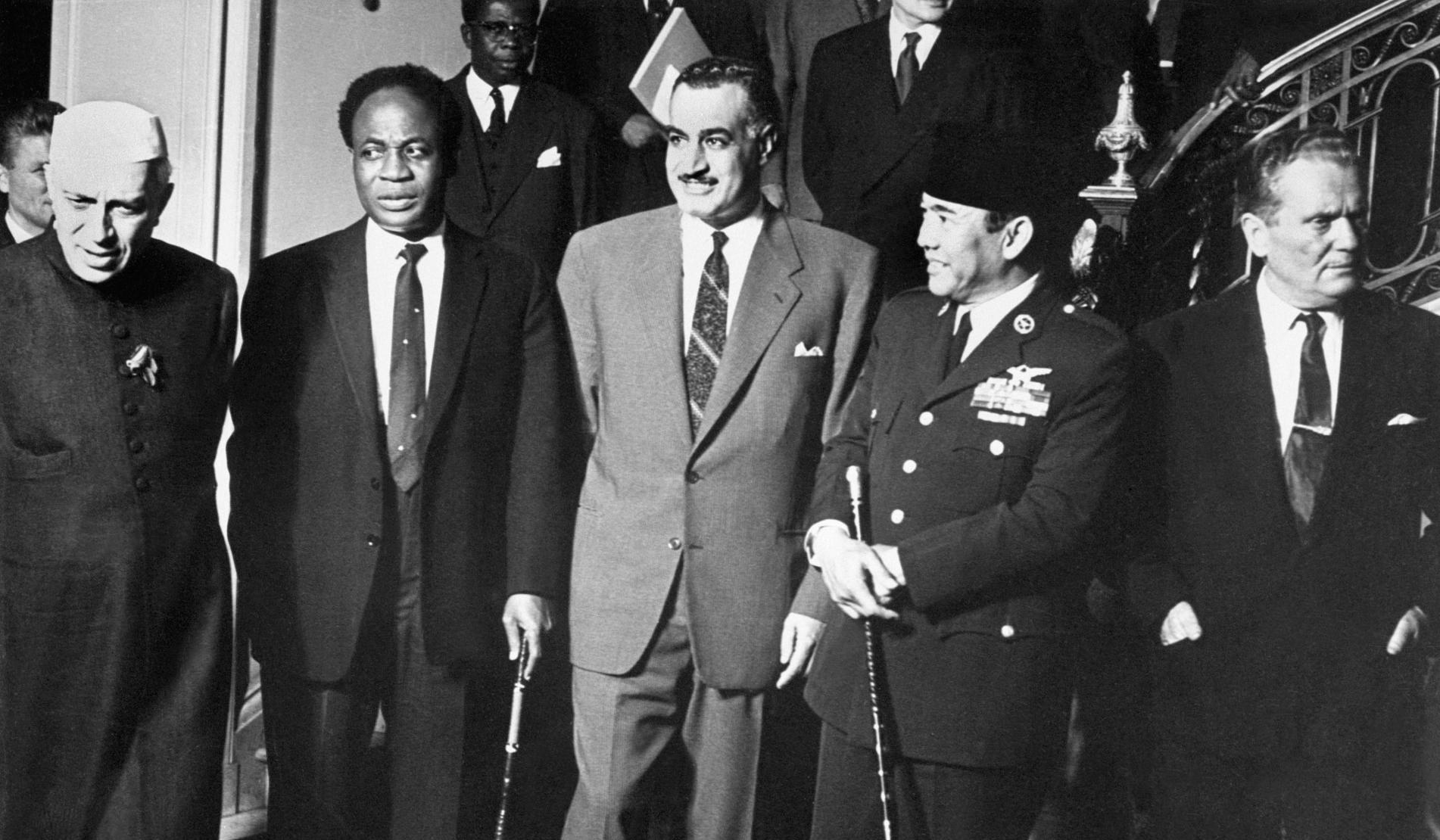
Prof. Dr. Semih Koray: The Bandung Conference, which marked the founding of the Non-Aligned Movement, was a conference to promote cooperation and solidarity among Asian and African countries. It was a meeting for the newly independent Asian and African states to find common
ground to share their opportunities and experiences. “Non-Alignment” reflects the strategy of developing by maintaining ‘independence’ without relying on the ‘great powers’ struggling for hegemony in the world. Taking the national state as the main force in the struggle against hegemony is one of the most important components of the “Bandung Spirit,” which has become stronger and stronger until today. Bandung was the emergence of Asia and Africa as the “Third World” on the international political stage.
The Non-Aligned Movement has an approach that aims to combine the principles of nationalism and populism. Relying on one’s own strength for independence and strengthening the national state naturally brings with it the need to rely on the people. This approach was particularly important in an environment in which the US sought to create “Americanist ‘nationalist’ movements against communism” in its spheres of influence. During this period, the US tried to confront nationalism and populism in the Third World on the basis of anti-communism. The Non-Aligned Movement’s rejection of anti-communism is a reflection of its joint defense of nationalism and populism. The Bandung Conference adopted the “Five Principles of Peaceful Coexistence” as an alternative to the imposition of bloc membership. These principles not only protect the independence of national states against hegemony but also enable relations between different countries to be based on equality and mutual benefit. This approach adopted by the Non-Aligned Movement is still valid today as the basic principles of a new and equitable international order.
The ‘Bandung spirit’ significantly contributed to the growing revolutionary movement around the world, driven by the desire for ‘independence of states, liberation of nations, revolution of peoples’ in the post-Second World War period.
Despite the countries participating in the Bandung Conference having a small share of the world
economy at that time, this conference had a significant impact on the international political arena. The ‘Bandung spirit’ significantly contributed to the growing revolutionary movement around the world, driven by the desire for ‘independence of states, liberation of nations, revolution of peoples’ in the post-Second World War period. Indeed, Bandung was both a product of this rising revolution and a contributor to it. By the 1980s, all the former colonies had established their own states.
The political impact of the Non-Aligned Movement was not limited to the Third World but also had significant repercussions among intellectuals in the West. I believe that it would not be wrong to interpret this as humanity longing for a new civilization, seeing the Non-Aligned Movement as a beacon that responded to this search.
The Path of National States against Imperialism
On the 70th anniversary of the Non-Aligned Movement, what is the economic and political landscape in today’s world in terms of its aims and objectives? What are the similarities and differences between the period when the Bandung Conference was convened and the Non-Aligned Movement was established and today?
Prof. Dr. Semih Koray: While the Bandung Conference was a source of hope for humanity’s search for a new civilization, and the Non-Aligned Movement was one of the initial stages of the road map leading to this civilization, today we are witnessing the rise of a new civilization from Asia that constitutes an alternative to the imperialist system in every aspect of life.
Just as “you cannot bathe in the same river twice,” a river continues to be “called by the same name” as long as its bed remains largely unchanged despite the changes it undergoes. Therefore, it is necessary to consider historical processes with both their “variables” and their “constants.”
Since the early 20th century, humanity has been passing through the “Age of Imperialism, National Democratic Revolutions, and the Opening to Socialism.” The obstacle blocking the development of humanity is the imperialist system. This obstacle will be overcome by national democratic revolutions. The imperialist system is uniform. Different nations are at different stages of their development, and the historical and cultural factors that guide their nationalization processes differ. Therefore, the revolutionary process of each country is unique. Despite their differences, national revolutions have another important common point beyond being “national.” A national democratic revolution that does not include an opening to socialism cannot be sustained and will end in regression.
In the last century, both world wars weakened the imperialist system, and revolutions took place in the weakened links of the imperialist chain. While the First World War led to the Russian and Turkish Revolutions, the Chinese Revolution triumphed after the Second World War, and the rising wave of revolution in the world reached its peak with the defeat of the USA in Vietnam, Laos, and Cambodia.
The maximum goal of the imperialist system is to establish absolute domination over the world. The US, believing that it could achieve this goal with the collapse of the Soviet Union, embarked on a campaign to destroy the national states and dismantle the nations of the Oppressed and Developing World. In this campaign, the USA has a right and a wrong from its point of view. The “right” is the determination that the obstacle to the absolutization of its domination is national states and that the way to dismantle a nation is to weaken and destroy its national state. Its “mistake” is that the US assumed that with the collapse of the Soviet Union, the main obstacle to its absolute world domination had disappeared.
The seemingly miraculous development of the People’s Republic of China, accompanied by great strides in science and technology in a short period of time, is also due to two fundamental factors: the redefinition of the nation as the main force of the revolution and the insistence on socialism.
When the shadow of the rivalry between the two superpowers was lifted over the world and the United States came into direct confrontation with the nation-states, the global alignment was radically transformed. The conservative classes and sections of societies have also come to see with the naked eye that the life they want to preserve is no longer threatened by communism but by the United States. The US offensive to destroy the national states
of the developing world has led to a rediscovery of the importance of the “national state” as a central element of the Bandung spirit all over the world. The US offensive triggered the resistance of national states and national armies.
The world’s economic and political landscape today is vastly different from both the 1950s and the 1990s. The center of gravity of global production has shifted from the West to the East, particularly China. India’s share of world production is expected to rise to second place in the near future. It is projected that, when considered separately, European countries will fall out of the top 10, while Turkey will enter it.
However, the shift in the center of production to the East is not the only issue. If this shift in production did not seriously affect US hegemony over the world, there would be no reason for the imperialist system to worry about it. They might even think they had found a way to ‘consume without producing’ and ‘earn without working.’ However, as a result of this process, the world has become multipolar, with political centers of gravity shifting and US hegemony beginning to crumble. Moreover, a new civilization is emerging from Asia that offers an alternative to the imperialist system in all areas of life, including production, politics, science, technology, art, culture, and ideology.
The Bandung Conference was held at a time when the newly independent states of the Third World were fighting for their survival and development. Today, however, it is the imperialist system itself that is under threat.
The Dynamics of Multipolarity: How Today Differs from Yesterday
What does the Non-Aligned Movement represent for developing countries today? Is there a need for a new Non-Aligned Movement? In terms of the interests of developing countries and the future of humanity, what path should be taken against hegemonism, and what model should be built? Which developing nations should follow which path?
Prof. Dr. Semih Koray: The Non-Aligned Movement represents the experience of a new world order, free from hegemony and imposition at the international level, which enables each country to benefit from international cooperation on the basis of equality and mutual interest, in line with its own development and security strategies. The main social power of such an order is the nations, and the main actors are the organized form of these nations, the national states. Since newly independent states play an important role in the Non-Aligned Movement, there is also a quest to benefit from each other’s experiences in transforming the national state into an organized form of the nation. This is a quest that remains important even today.
Today, we do not possess either a bipolar world, reminiscent of the period characterized by the hegemonic rivalry between the two “superpowers,” or a unipolar world, which was momentarily relevant following the dissolution of the Soviet Union. The globe has become multipolar, and this trend continues to evolve and intensify across various domains of existence. The ramifications of this multipolarity are evident within the United States and therefore in the Atlantic System. Currently, the United States is undergoing its most profound division since its inception following the American Civil War, a division that is mirrored throughout the Atlantic System.
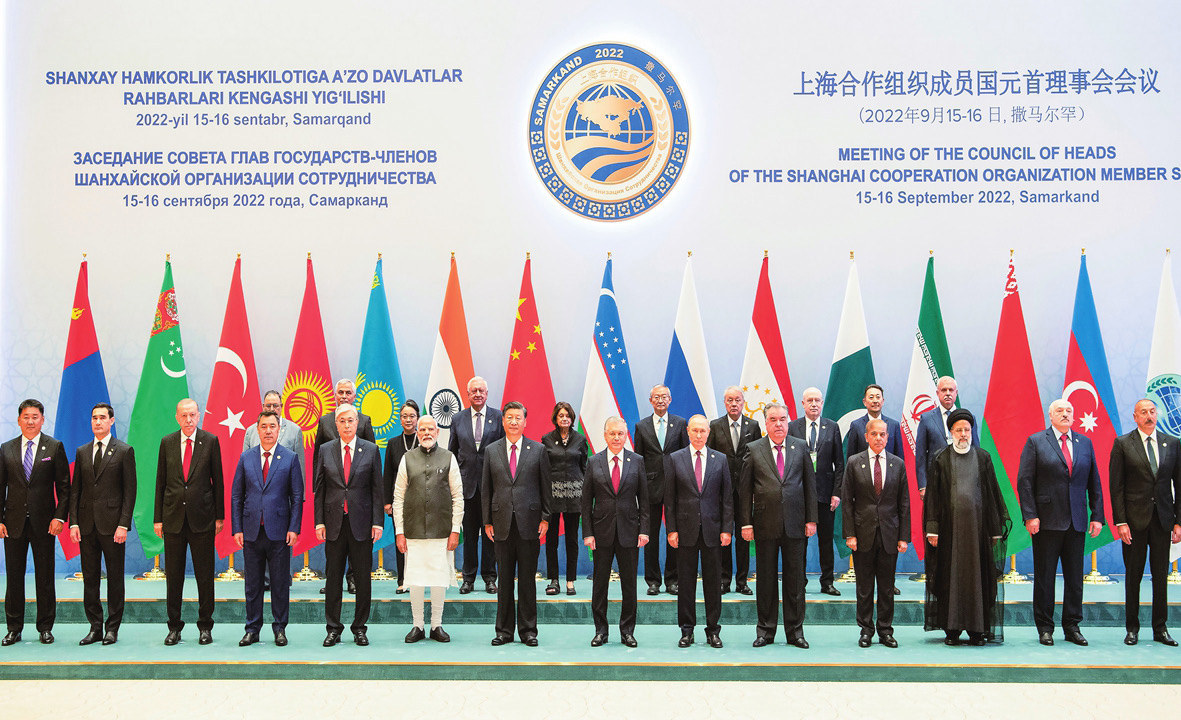
Thus, “non-alignment,” which was a precondition for independence in the oppressed and developing world at the time of the Bandung Conference, is no longer a defining concept today. Although the Non-Aligned Movement still formally exists, the Shanghai Cooperation Organisation, the BRICS, the Belt and Road Initiative, and related organizations and activities are now prominent international formations in the developing world. The common characteristic of these organizations is that the main factor that unites and mobilizes the participating countries in the same direction is their common interests and goals. In this respect, they differ significantly from military, political, economic, and financial international organizations such as NATO, the Warsaw Pact before the collapse of the Soviet Union, or the IMF and the World Bank. The common characteristic of the international institutions of the imperialist system is that they are institutions that impose the program of this system on the participating countries and are equipped with sanction mechanisms to ensure the successful outcome of this imposition. The effective maintenance of these institutions also requires the existence of a “world gendarme.”
The fact that nation-states are the main actors in the developing world is not a factor that trivializes international cooperation, but on the contrary, it makes it all the more important to create and develop appropriate orientations, instruments, and institutions to strengthen coordination in pursuit of common interests and objectives. In this respect, I will highlight three areas to emphasize the importance of the issue and illustrate the challenges to be overcome.
Today, if a new world war breaks out, it will no longer be a new war of division between imperialists but a war of the Atlantic System, with the US at its head, to strangle the new civilization rising from Asia. No matter how much a social system stumbles, it will continue to exist unless an alternative is created. But as we have already mentioned, the new sharingist civilization rising from Asia is perceived by the imperialist system as a “serious threat to its existence” because it has created an alternative.
No power would engage in a war that it is clear from the outset that it cannot win. The loss of power of the US and the Atlantic System in parallel with the multipolarization of the world prevents the US from waging such a war in the short term. The line it is pursuing aims to elevate itself
to a position where it can win an open war again by cutting off the developing world, tampering with international fault lines, and trying to divide the anti-hegemonic forces. Terrorist organizations are among the tools that the US systematically uses for this purpose. The divisions within the US stem not from a split over this imperialist objective but from the failure of attempts to date to achieve it.
Every new position that America gains brings it closer to its goal. Every position it loses moves it further away from its war objective. It is of the utmost importance that the developing world accept this strategic approach as the decisive and guiding principle. Different priorities at the tactical level must not be allowed to undermine this strategic approach. In this respect, the more developed and powerful countries have a greater responsibility.
Today, an America that cannot turn Europe and the Second World into a reserve force cannot wage a war that will cut off the new civilization rising from Asia. An approach that takes this into account is important in the relations of the developing world with different parts of the imperialist system.
Although weakened by multipolarity, the global dominance of the US in the financial sphere remains. This dominance depends on the use of the dollar as an international medium of exchange and therefore as a reserve currency. The continuing decline of the US share of world production is eroding the economic power on which the “reign of the dollar” is based and reducing “naked force” to the sole basis of this reign. Today, artificial intelligence technologies offer significant opportunities for creating alternative means of international exchange, and work in this field
continues intensively. But even more important for success is the building of a broad consensus on this issue in the developing world.
Throughout the 1970s, neoliberalism worked to eviscerate all the concepts that had gained prestige during the period of the rise of the revolution and to falsify them in fancy packaging to serve the counter-revolution. An ideological offensive based on this falsification of concepts was launched in the 1980s and accelerated in the 1990s after the collapse of the Soviet Union. Although the impact of this offensive has diminished with the transition to multipolarity, the field of ideology is still an important area where the imperialist system is still strong. The developing countries are still mainly on the defensive against this ideological offensive.
A new civilization means new concepts. The new civilization rising from Asia is undoubtedly creating its own concepts. But much more intensive work and international cooperation are needed in the creation and consolidation of new concepts to counteract the impact of neoliberalism’s concept falsification on the masses. It is necessary to develop much more intensive relations and activities between universities, scientific and artistic organizations and people, writers, poets, and cultural figures of developing countries. Such cooperation will also contribute to the design and construction of political, military, economic, financial, scientific, artistic, and cultural international governance institutions, which are new to humanity and therefore require innovation.
The Strategy Turkey Needs
What role should Turkey play in cooperation with developing countries?
Prof. Dr. Semih Koray: Turkey is a country that has just won a victorious war of independence, which was one of the important inspirations of the Bandung Conference. Despite the diversity among developing countries, there is a common program that unites them, and the Six
Arrows of the Kemalist Revolution succinctly reflect this program. Today, humanity is faced with the task of building a new civilization, not a simple change of system. Turkey is the country that recorded this longing of humanity at the beginning of the 20th century with Mehmet Akif Ersoy in the Turkish National Anthem, describing the imperialist system as “the one-toothed monster you call civilization.” Therefore, it is Turkey’s duty to play a pioneering, exemplary, and reassuring role in
the cooperation of the developing world.
It is a significant disaster and a blemish that Turkey served as “America’s representative” at the Bandung Conference in 1955. The economic and power alliances of developing nations are “voluntary unions.” The paramount cohesive element of voluntary associations is “mutual trust.” Attitudes that erode confidence, particularly in a strategic alliance, render collaboration unfeasible.
Collaboration with regional nations, Eurasia, and the developing world is not only advantageous for Turkey but also essential for its interests. Currently, the epicenter of the confrontation between the USA and emerging nations is the Eastern Mediterranean. The United States, having established Greece as a military base, has its artillery directed toward Turkey in conjunction with Israel, the Greek Cypriot administration of Southern Cyprus, and Greece. The “Immediate Response 2025” drill, conducted collaboratively by the USA and NATO, is evidently directed towards Turkey.
Therefore, it is of great importance for Turkey to prioritize a strategic approach in its international relations. The multipolarization of the world also serves the function of relatively increasing the tactical freedom of action of individual countries. This increased room for tactical maneuver can only yield positive results if it is utilized in the service of the right strategy. The strategic price of the strategic cost of a build-up error, which would lead to tactical policies in line with the imperialist system by chasing short-term so-called gains, would be great.
It is thanks to the strategic approach adopted by the conference and the Non-Aligned Movement that the Bandung Conference has left a valuable legacy to humanity despite all the changes in the world in the past 70 years. It would be in Turkey’s interest above all to learn the necessary lessons from both the grave mistake it made during the Bandung Conference and the experience of Bandung that sheds light on today.